Supply chain stability for industrial computing components has deteriorated to levels not seen since the pandemic-era shortages of 2021, but the causes are fundamentally different. The culprit is not factory shutdowns or logistics gridlock—it is the voracious appetite of AI infrastructure consuming mature-node semiconductor capacity that industrial embedded systems have relied on for decades. Thirty-two-bit industrial microcontrollers and power management ICs that were once available off the shelf with eight-week lead times are now quoted at fifty-two weeks or longer. For panel PC manufacturers and the industrial operators who depend on them, this supply environment demands a fundamentally different approach to BOM risk management, procurement strategy, and hardware design.
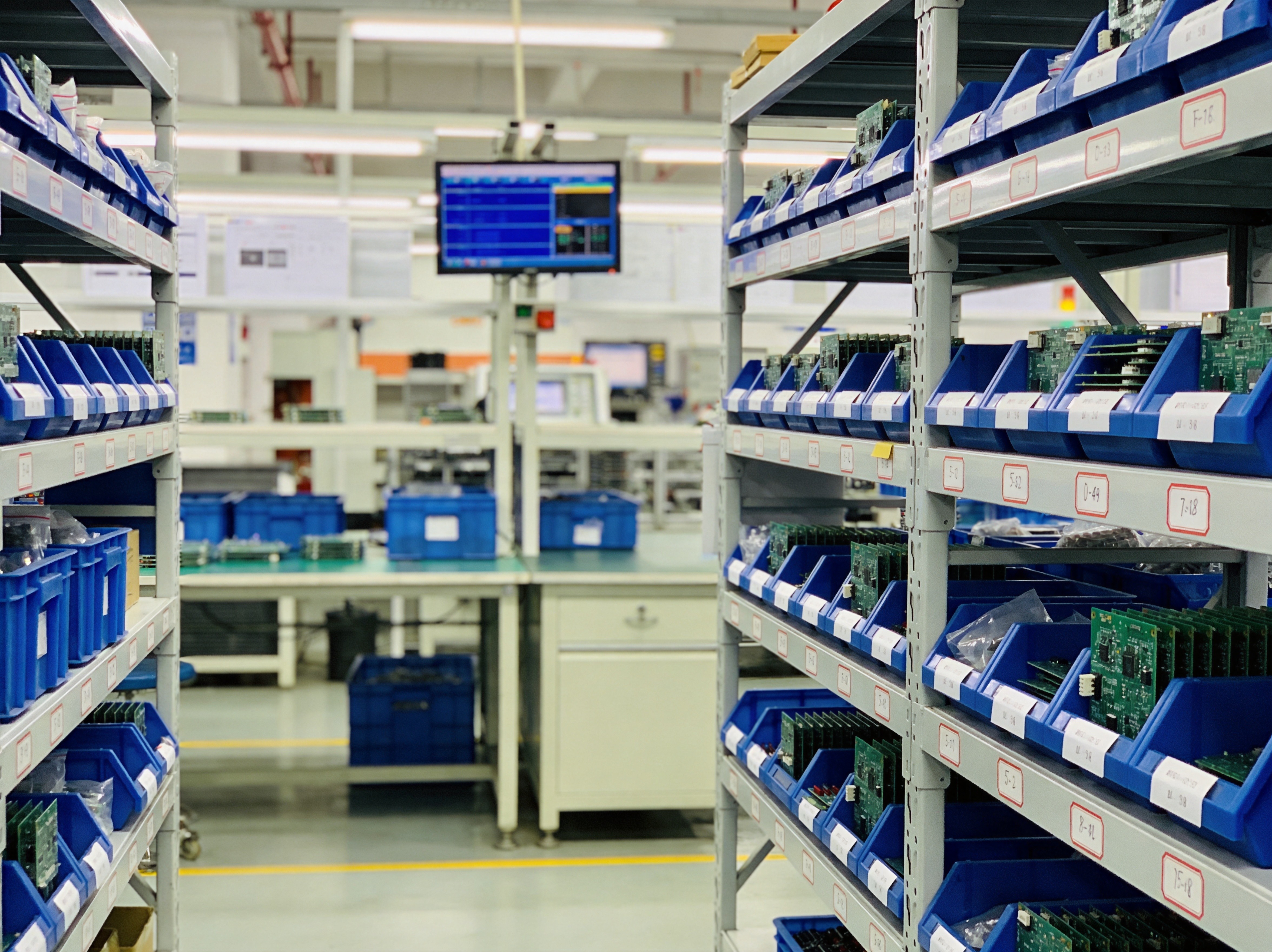
The 52-Week Reality: Extended Lead Times for Critical Components
The numbers are stark. According to industry distribution data from mid-2026, thirty-two-bit industrial-grade MCUs are now quoted at lead times reaching fifty-two weeks, while automotive and industrial-qualified PMICs are not far behind at forty to forty-eight weeks. These are not exotic components on cutting-edge process nodes. They are mature-node devices, fabricated on 90-nanometer to 180-nanometer processes that were considered commoditized just three years ago. The problem is that AI infrastructure—GPU accelerators, high-bandwidth memory, network switches, and data center power management—is consuming wafer starts at these same mature nodes for auxiliary functions. Foundries have limited incentive to allocate capacity to low-margin industrial MCU production when AI-adjacent orders command higher prices for the same fab space. The result is a structural squeeze on the components that panel PCs depend on for power sequencing, peripheral interfacing, and sensor conditioning.
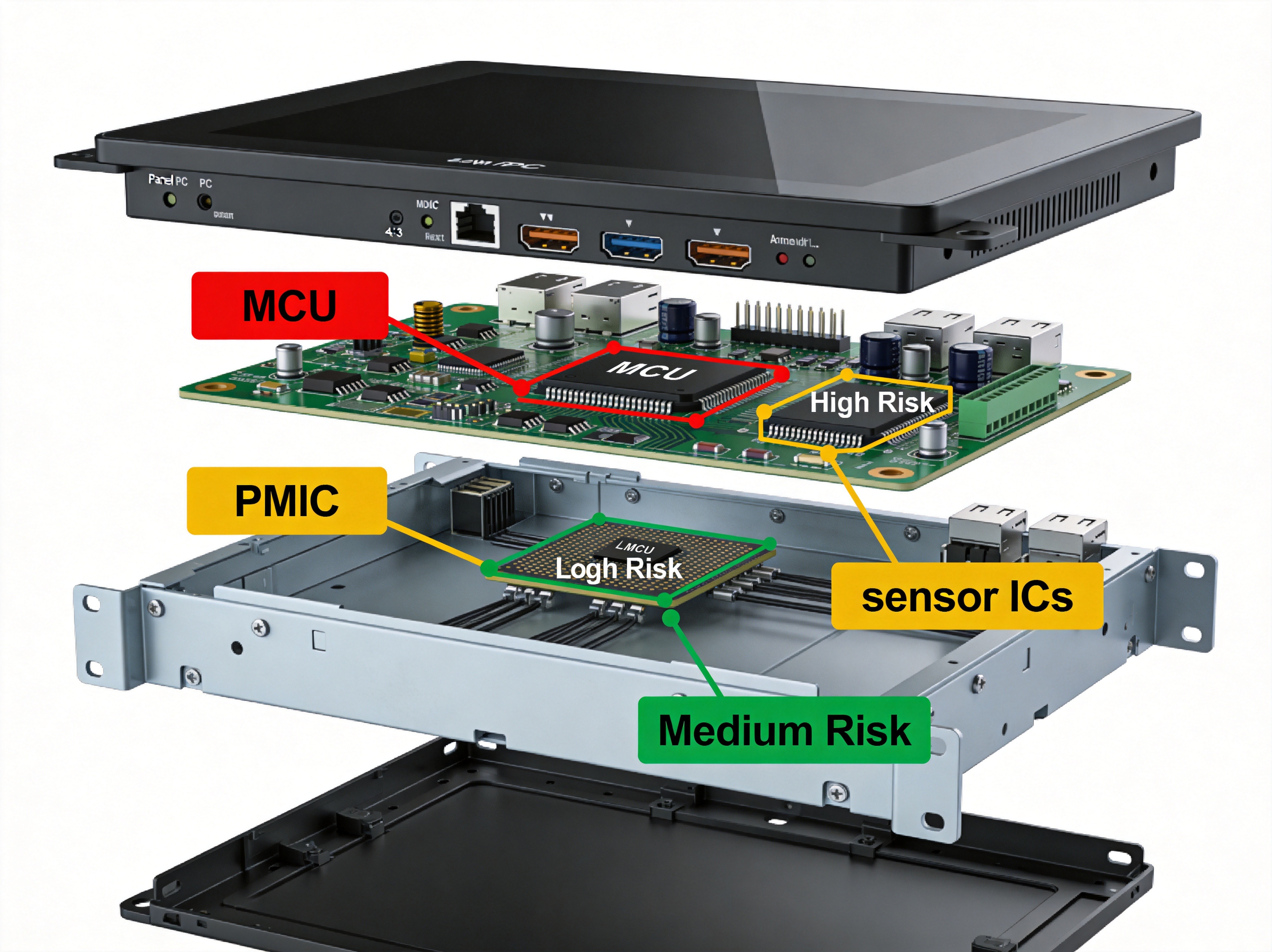
BOM Risk Assessment: Which Components Are Most Vulnerable
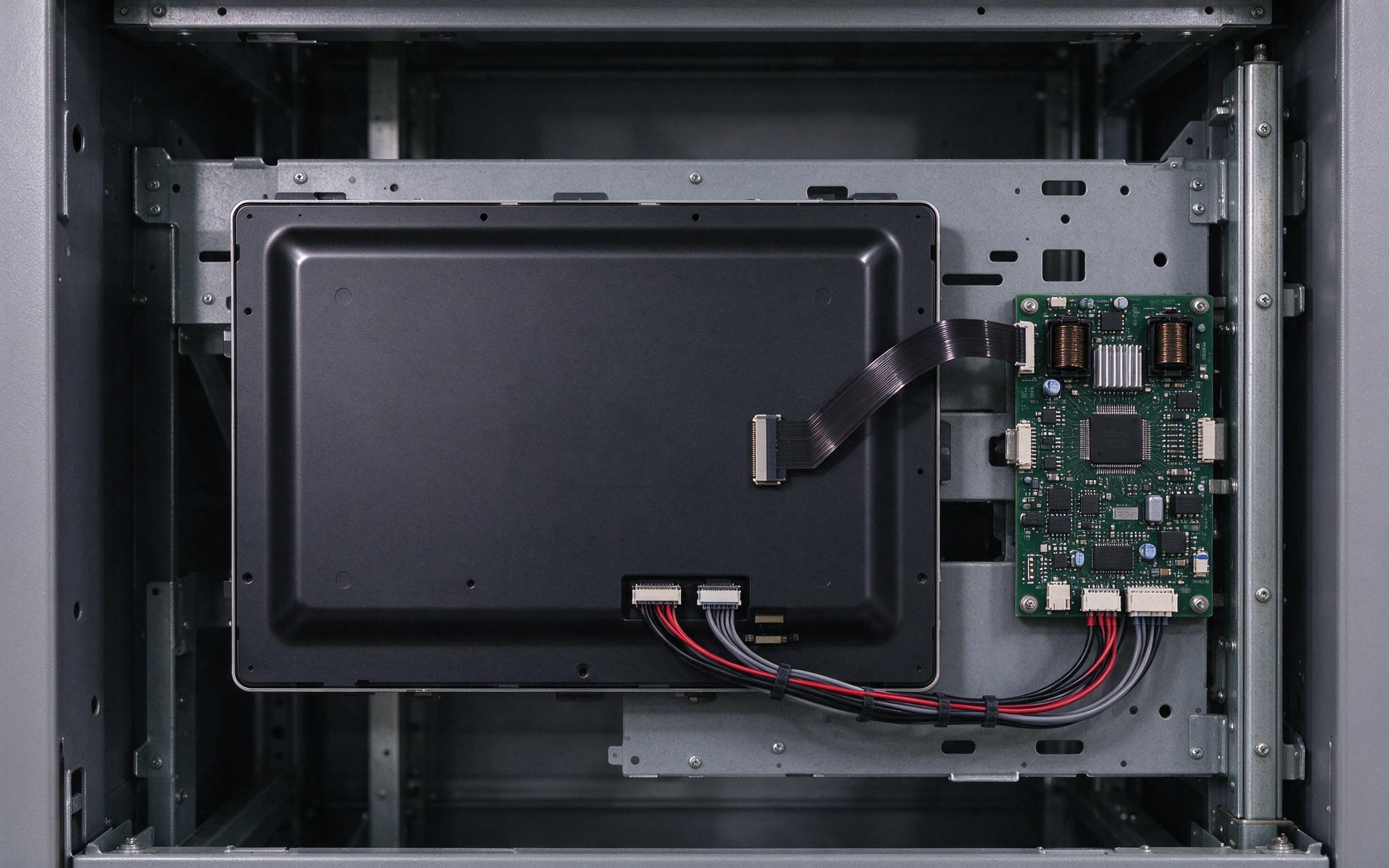
Not all components in a panel PC bill of materials face equal supply risk. The highest exposure falls on three categories: microcontrollers that handle supervisory functions and peripheral management, power management ICs that regulate the multiple voltage rails required by modern processors, and specialized sensors—particularly pressure, temperature, and inertial measurement units—shared across industrial, automotive, and consumer electronics markets. KOXIAN has implemented a structured BOM risk scoring system that evaluates each component on three axes: supplier concentration, fab node maturity, and demand competition from adjacent industries. Components scoring high on all three axes are flagged for proactive mitigation. This approach has revealed that approximately fifteen percent of components in a typical panel PC BOM are in the high-risk category, up from roughly five percent in 2023. The trend is not expected to reverse while AI infrastructure investment continues its current trajectory.
Proactive Mitigation Strategies for Panel PC Procurement
Waiting for lead times to normalize is not a viable strategy. Panel PC manufacturers and their industrial customers must adopt a multi-layered approach to supply assurance. The first layer is design flexibility: qualifying pin-compatible alternative components during the design phase so a second-source option exists when the primary component goes on allocation. The second layer is strategic buffer stock: maintaining three to six months of inventory on high-risk components, funded by the cost savings of avoiding line-down situations that can cost industrial operators hundreds of thousands of dollars per hour. The third layer is contractual: negotiating non-cancelable, non-returnable orders with suppliers in exchange for guaranteed delivery windows. KOXIAN has adopted all three strategies, working with its supply chain partners to build a component pipeline that insulates production schedules from the worst allocation cycles. For industrial operators placing panel PC orders in 2026, the key question to ask suppliers is not just about lead times but about the specific BOM risk mitigation measures in place.

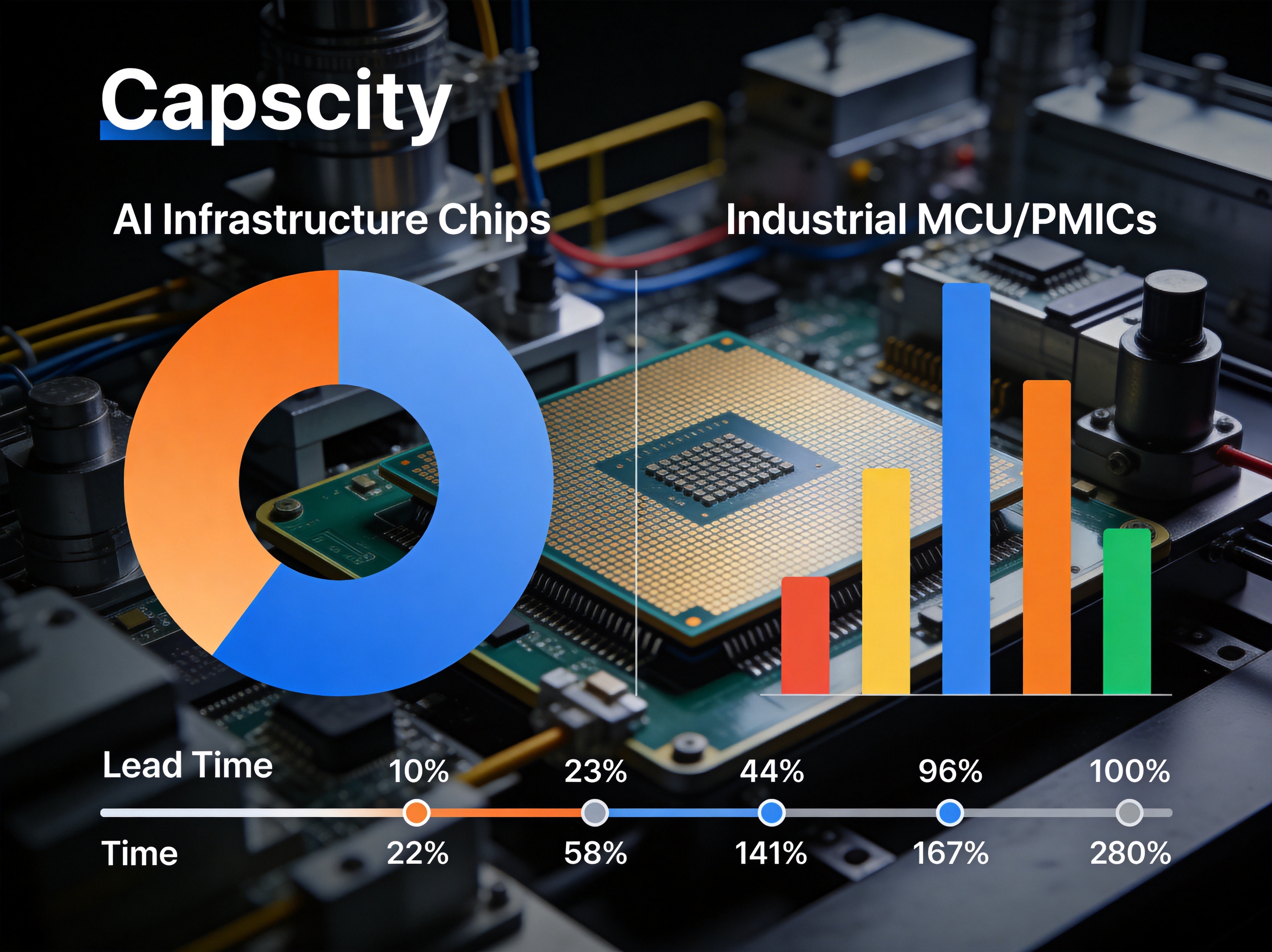
The Capacity Crunch: AI Infrastructure Versus Industrial Silicon
The underlying dynamic is structural, not cyclical. Global semiconductor capital expenditure is at record levels, but the vast majority of new capacity is being built for advanced process nodes—3-nanometer and below—that serve AI accelerators, smartphone processors, and high-performance computing. Mature node capacity, by contrast, is growing slowly. When AI infrastructure demands more power management, more sensor interfaces, and more supervisory MCUs—all built on mature nodes—the capacity remaining for industrial embedded components shrinks. This is not a shortage that can be resolved by waiting for a new fab, because the fabs being built are not designed for 90-nanometer production. The implication for the panel PC industry is that component availability challenges will persist, and the manufacturers that thrive will be those treating supply chain resilience as a core engineering discipline rather than a procurement afterthought.
The fifty-two-week lead time is not a temporary disruption—it is a signal of a structural shift in semiconductor capacity allocation. For panel PC manufacturers and the industrial operators who depend on their products, the response must be equally structural: redesigned BOMs with multi-source flexibility, strategic inventory positions, and procurement relationships built on long-term commitment rather than spot-market opportunism. The companies that act now to harden their supply chains will be the ones still shipping product when the next allocation cycle hits. The ones that hope for a return to normal will find that normal has already moved on without them.