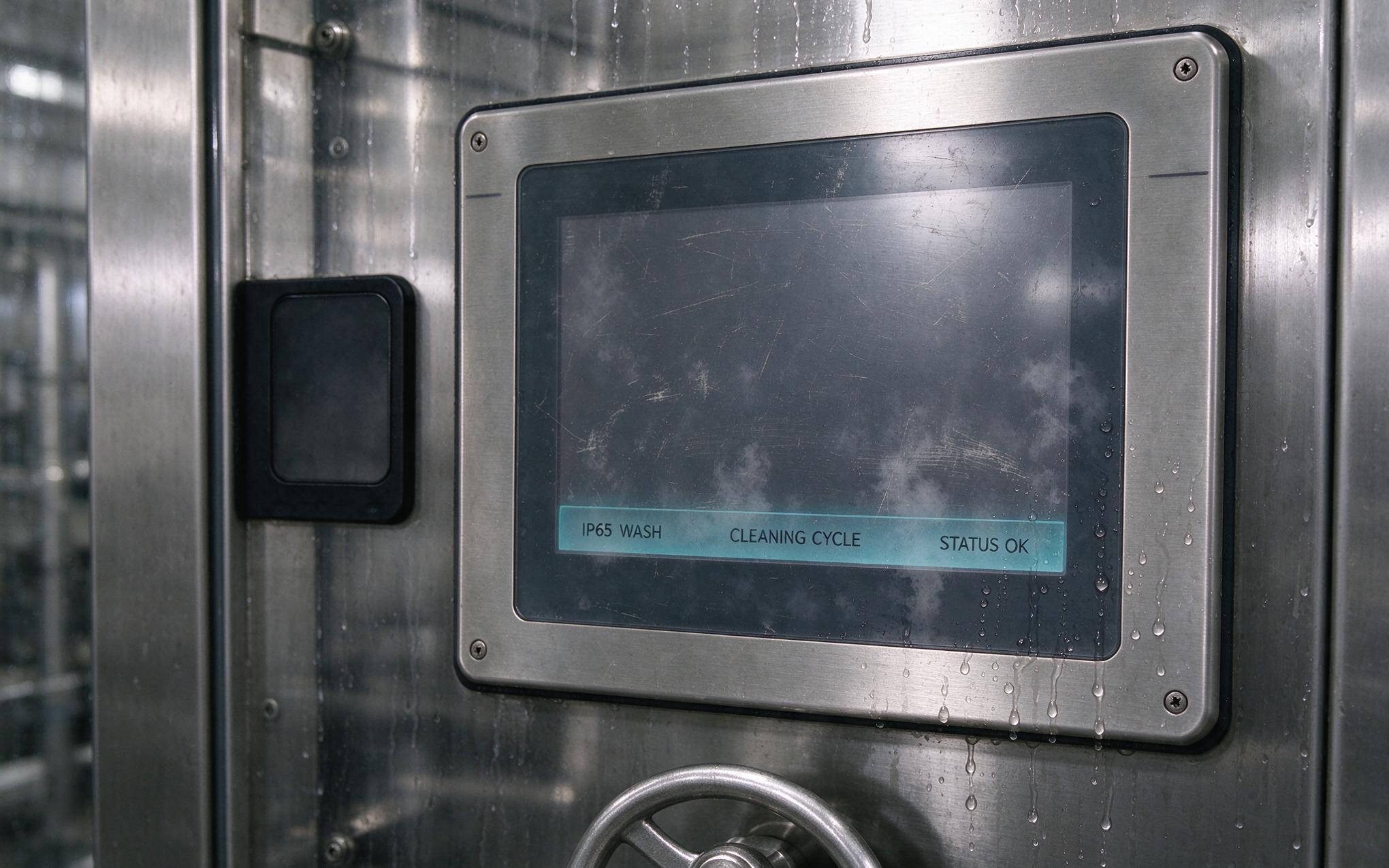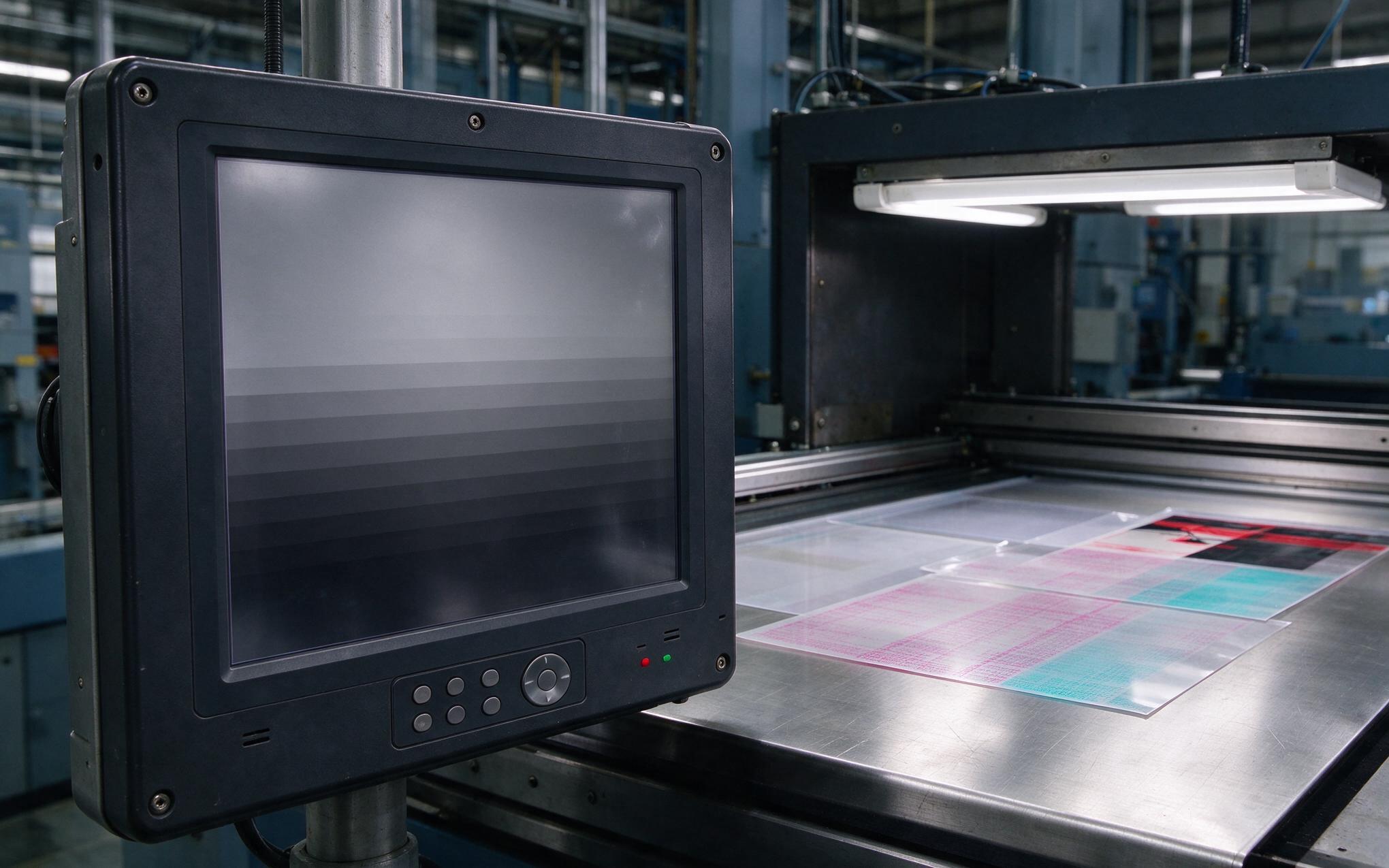
Operators who squeegee rinse water off a line-side terminal between sanitation cycles watch the cursor jump before any finger touches the glass. That misread usually traces back to how the sensing stack inside an industrial touchscreen panel pc responds to a thin, conductive water film bridging the sensor toward plant ground. Capacitive misreads under washdown conditions follow measurable physics, and they yield to practical engineering rather than parts replacement.

Under a Water Film, Capacitive Baselines Start to Drift
A projected capacitive sensor measures tiny charge changes across a grid of row and column electrodes. Clean air above the glass is a stable dielectric, so the controller holds a quiet baseline and reads a finger as a local perturbation. A rinse film changes the picture. Water carries a dielectric constant near 80 and enough conductivity to couple adjacent electrodes together and tie the grid toward ground through the wet bezel. The controller now reports coordinates against a baseline that moves while droplets spread, bridge trace intersections, then evaporate unevenly. Each droplet presents a finger-sized capacitance step, so the screen invents touches nobody made. The result is capacitive touch drift, a moving gap between reported coordinate and real finger position, worst exactly when the film thins. The worst errors usually land right after the hose, not during it.

Sealing the Film Out at the Bezel Line in Washdown Food Processing
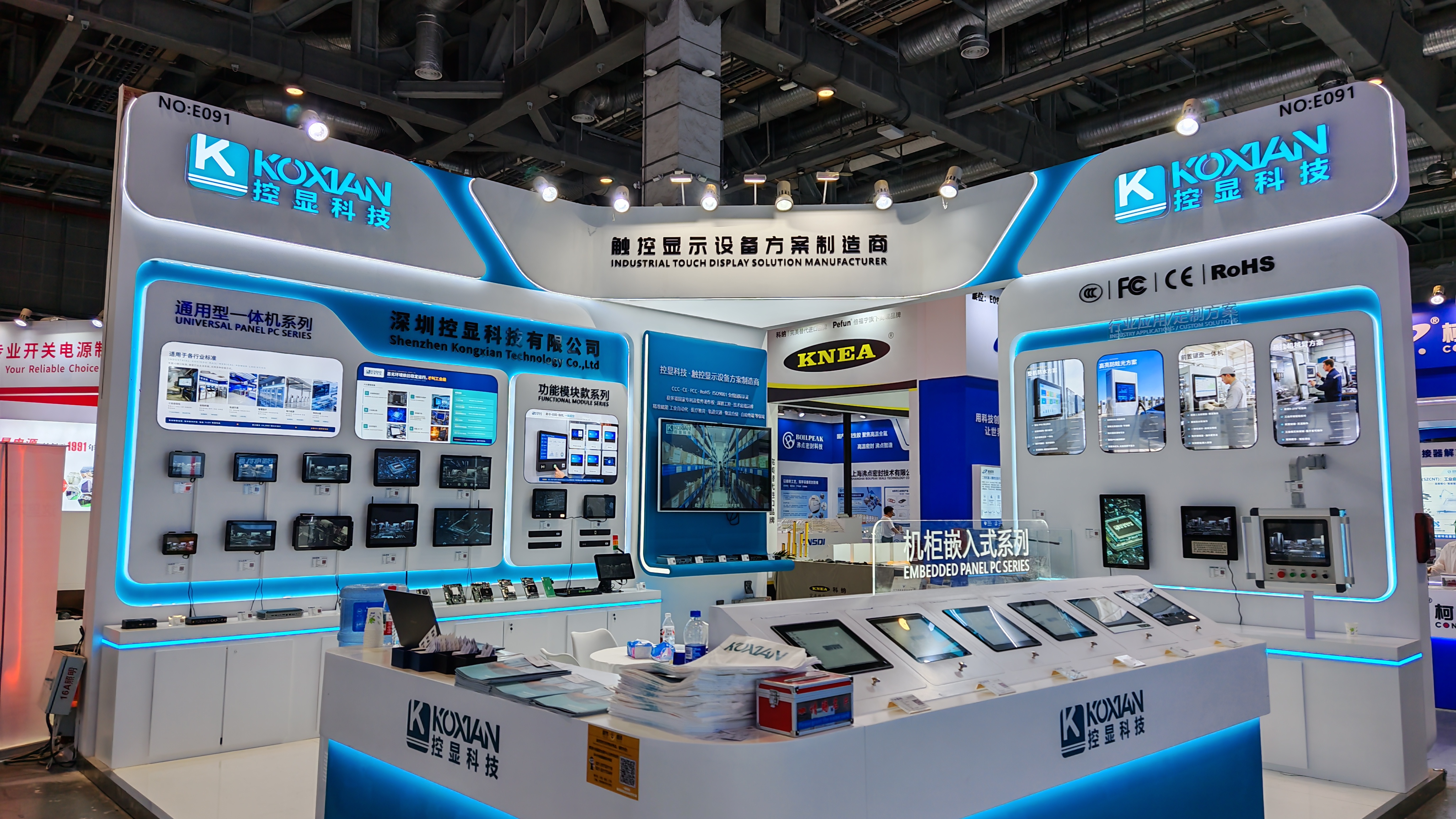
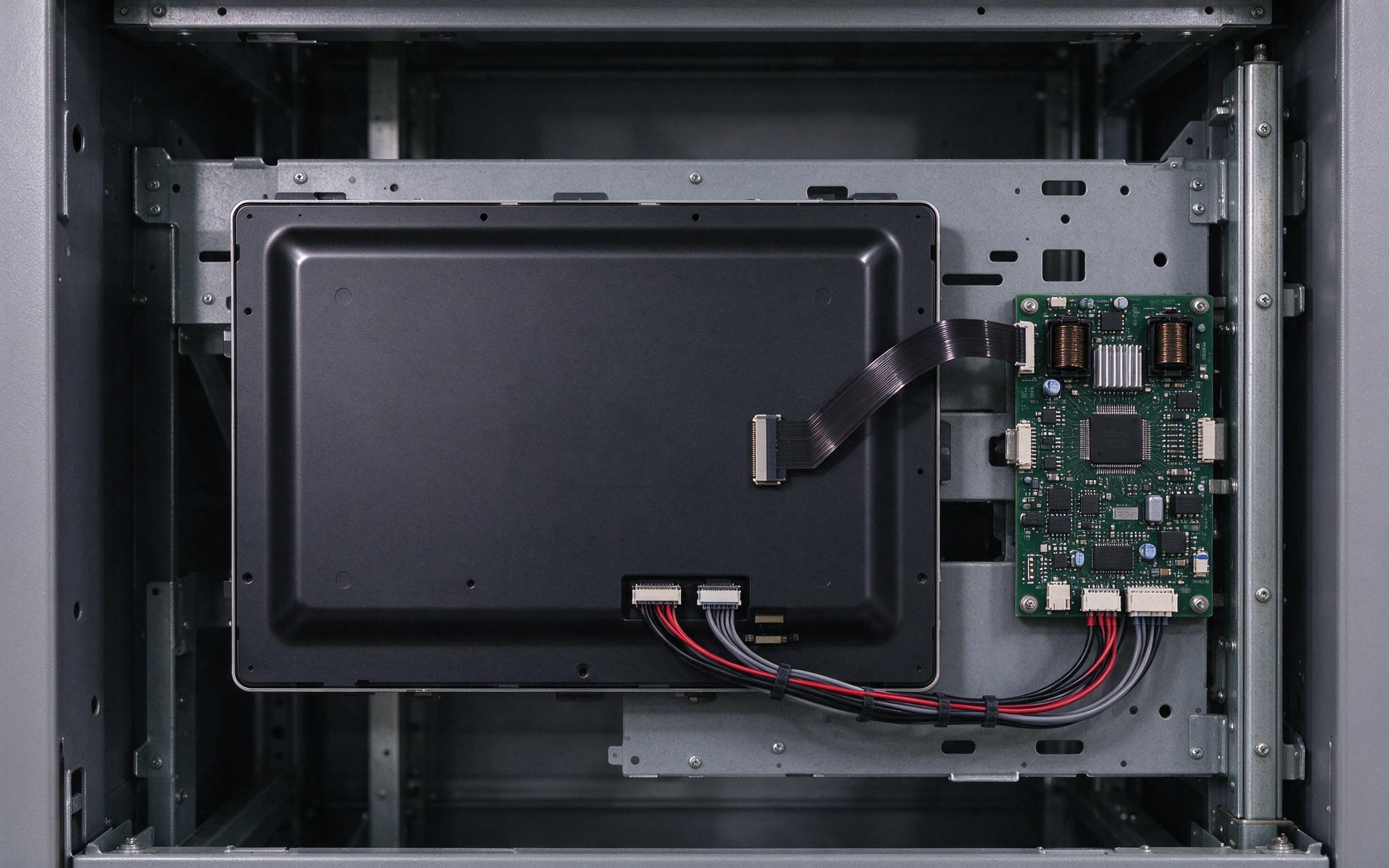
In washdown food processing zones, the fight starts at the bezel, because every path water takes inward changes the capacitance the sensor sees. A rated front stops bulk ingress, yet the label hides real differences. An IP65 sealed touchscreen keeps dust and low pressure jets out of the enclosure, while IP69K construction adds close range hot water and caustic foam tolerance for daily sanitation. What matters at the sensor of an industrial touchscreen panel pc is continuity. Bonded cover glass removes the air gap that traps droplets over the electrode grid. A continuous silicone or EPDM gasket, compressed to a defined percentage between one piece bezel and enclosure wall, denies the film a crevice to wick into. To hold that geometry, industrial hardware manufacturers, including KOXIAN, machine the bezel seating as one flat reference and torque the fastener pattern to a specification rather than to feel. Cable entries and rear connectors stay out of the wet zone, since a wetted rear gland becomes a second, unintended electrode path.

Firmware Loops that Renormalize a Moving Baseline
Field observations from washdown packaging environments show that hardware configurations utilizing KOXIAN wet mode firmware hold coordinate accuracy while the film evaporates, because the controller rebaselines faster than the water moves. Behind that behavior sits a set of tunable loops. Baseline tracking decides how quickly the reference follows slow change; a wet glass profile treats the drying film as background while still rejecting the sharp, finger shaped transient of an actual touch. Per channel threshold compensation raises sensitivity where the film loads the electrodes and relaxes it where it does not. Multi frequency scanning spreads the measurement across drive frequencies, so a droplet that saturates one still resolves on another. Frame confirmation rules require a touch to persist across consecutive filtered frames, which suppresses the flicker of a breaking droplet without numbing the interface. The practical work is matching the wet mode profile shipped with an industrial touchscreen panel pc to the line’s rinse chemistry and cycle time, then locking it so a hurried changeover cannot revert it.

Selecting an Industrial Touchscreen Panel PC for Wet Lines
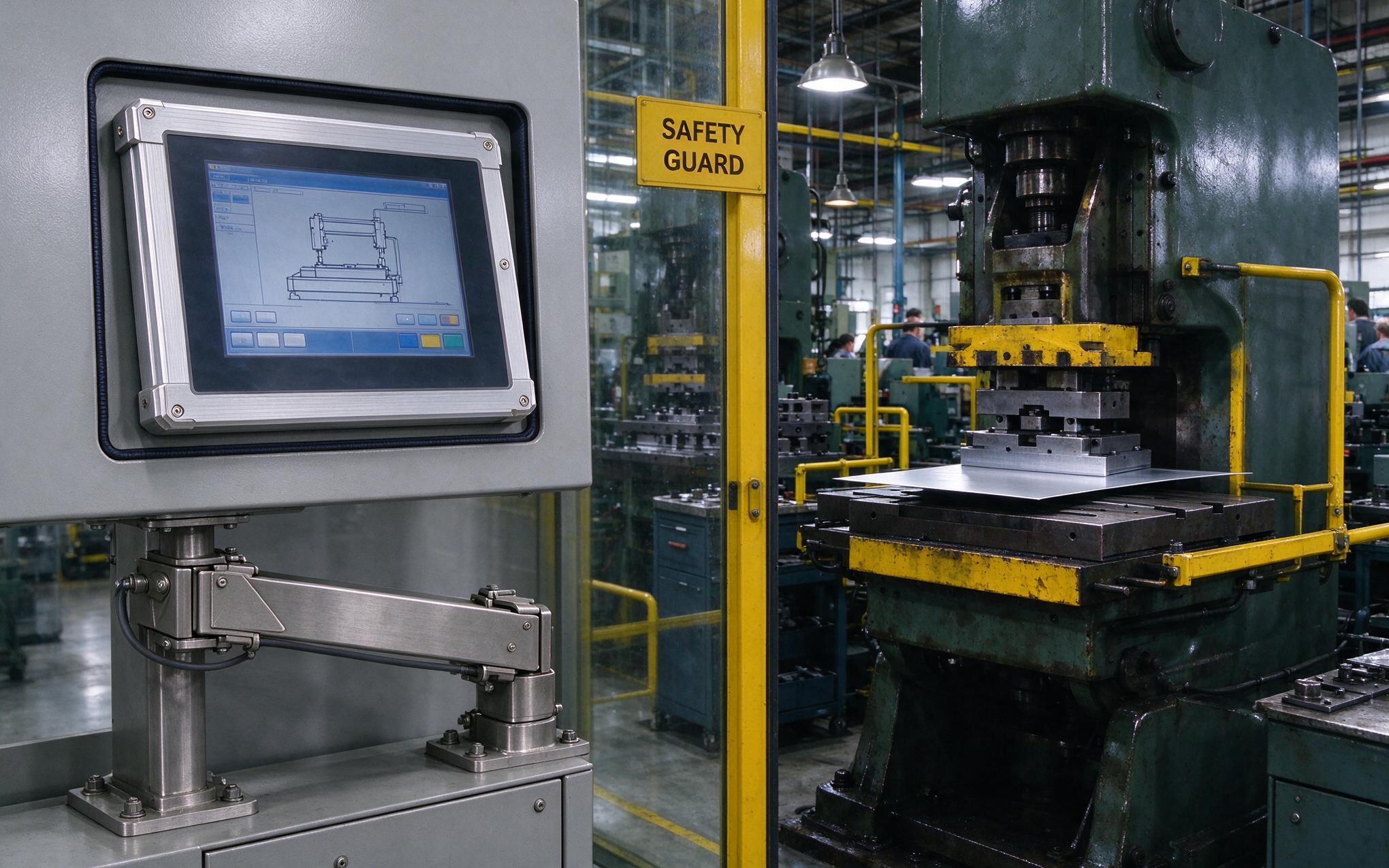
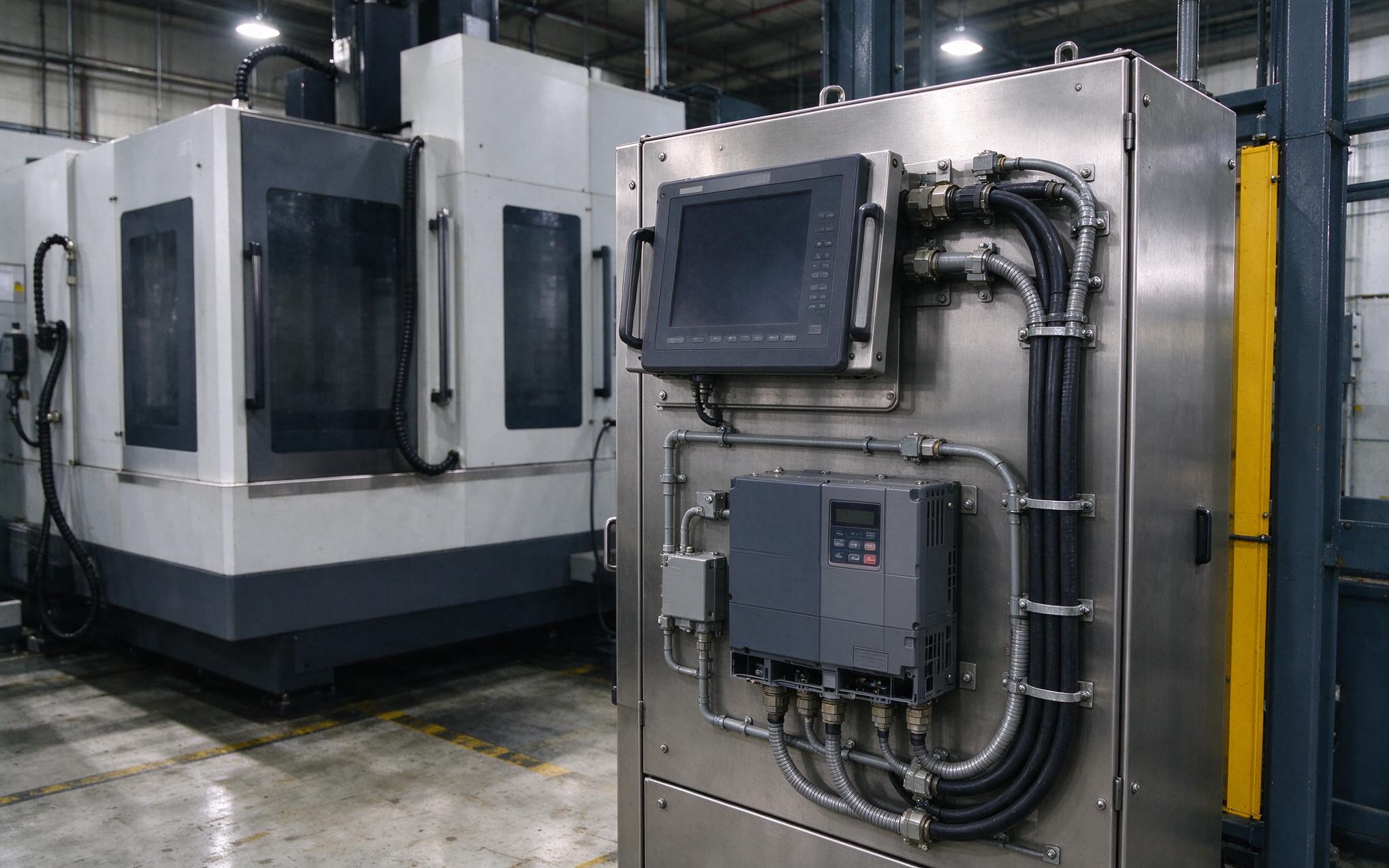
Procurement questions decide most of the outcome long before commissioning. Start where the water actually lands. A front rating is a starting point, not a conclusion; ask how it was achieved, whether through bonded glass and a compressed gasket or a beaded seal that ages. Ask whether the vendor publishes wet mode tuning documentation for the touch controller, because a controller that cannot expose its baseline behavior turns every drift complaint into guesswork. Verify chemical compatibility between the cover glass treatment and the caustic sanitizer in use, since etched glass alters the coupling the sensor depends on. Mounting deserves equal scrutiny. An industrial touchscreen panel pc recessed into a pocket that pools rinse water defeats a sound front seal from the outside. Finally, require an acceptance run under the real hose, with the real foam, at the real cycle time, and log reported coordinates against a known target grid while the panel dries.
Water on glass is not a defect; it is a defined electrical condition with known mechanisms. Plants that treat washdown touch performance as a system property, pairing a continuous seal with tuned firmware and a hose tested acceptance gate, keep their terminals readable through every sanitation shift. Plants that chase ghost taps with spare screens usually keep chasing, because the film returns with the next rinse.