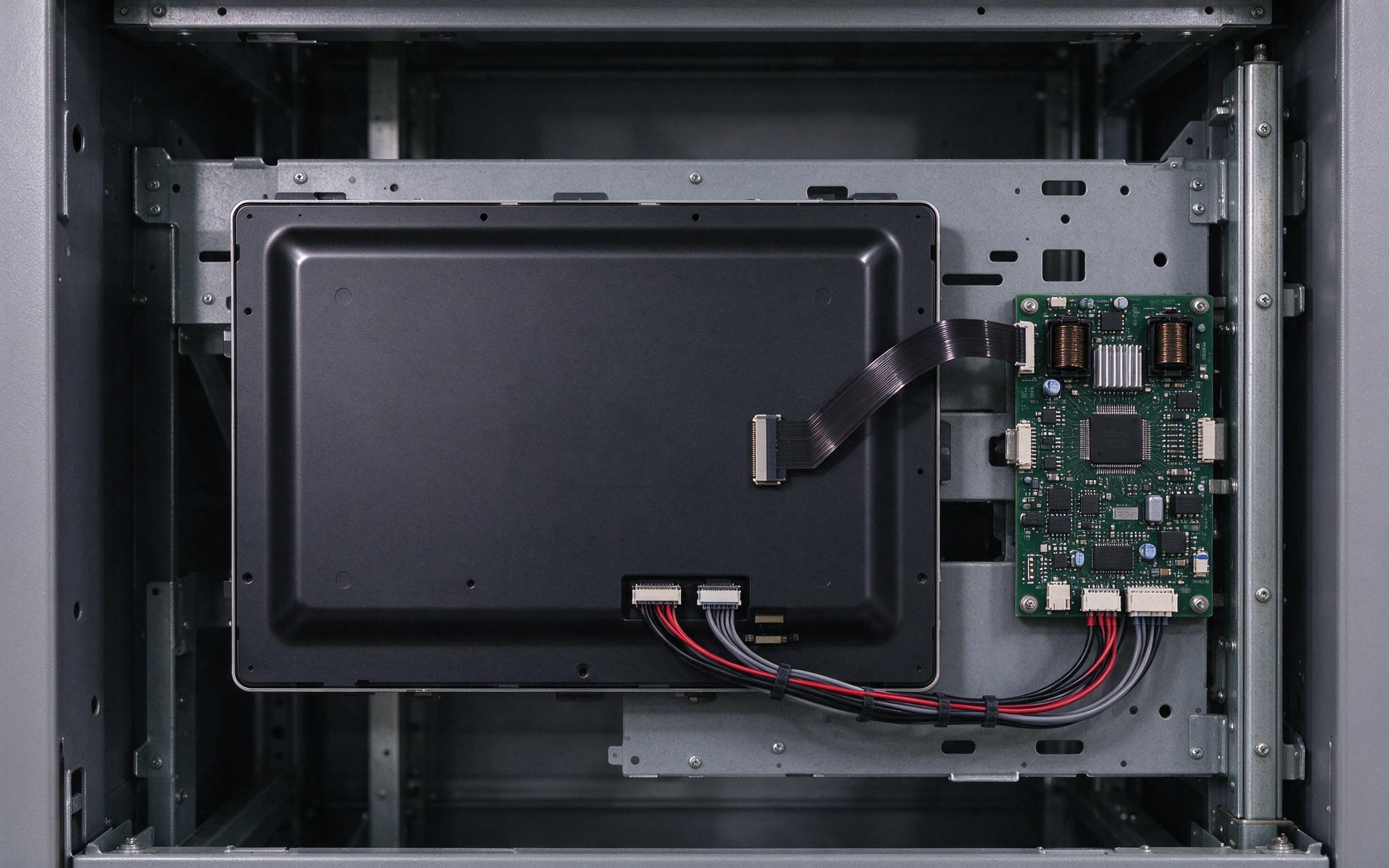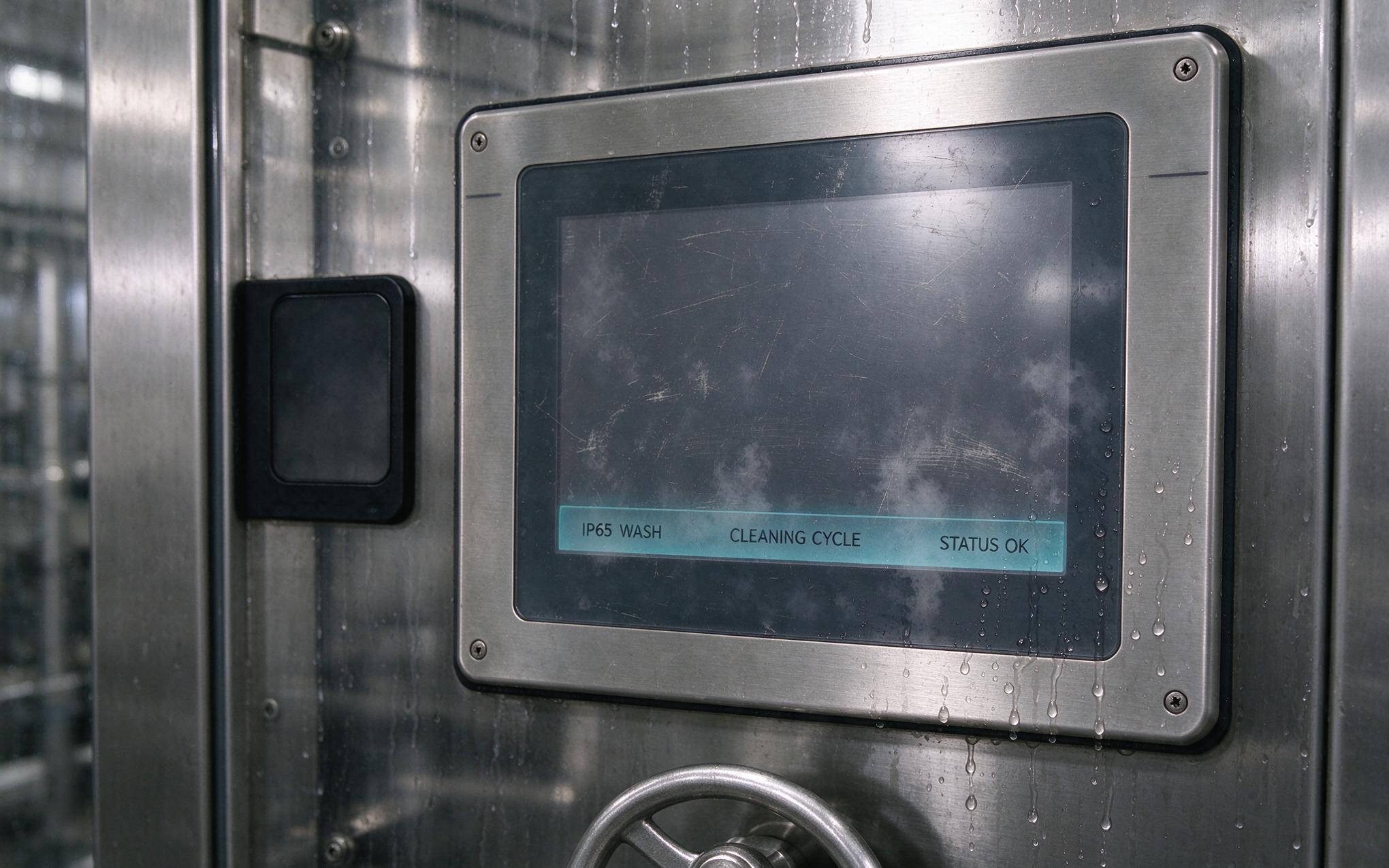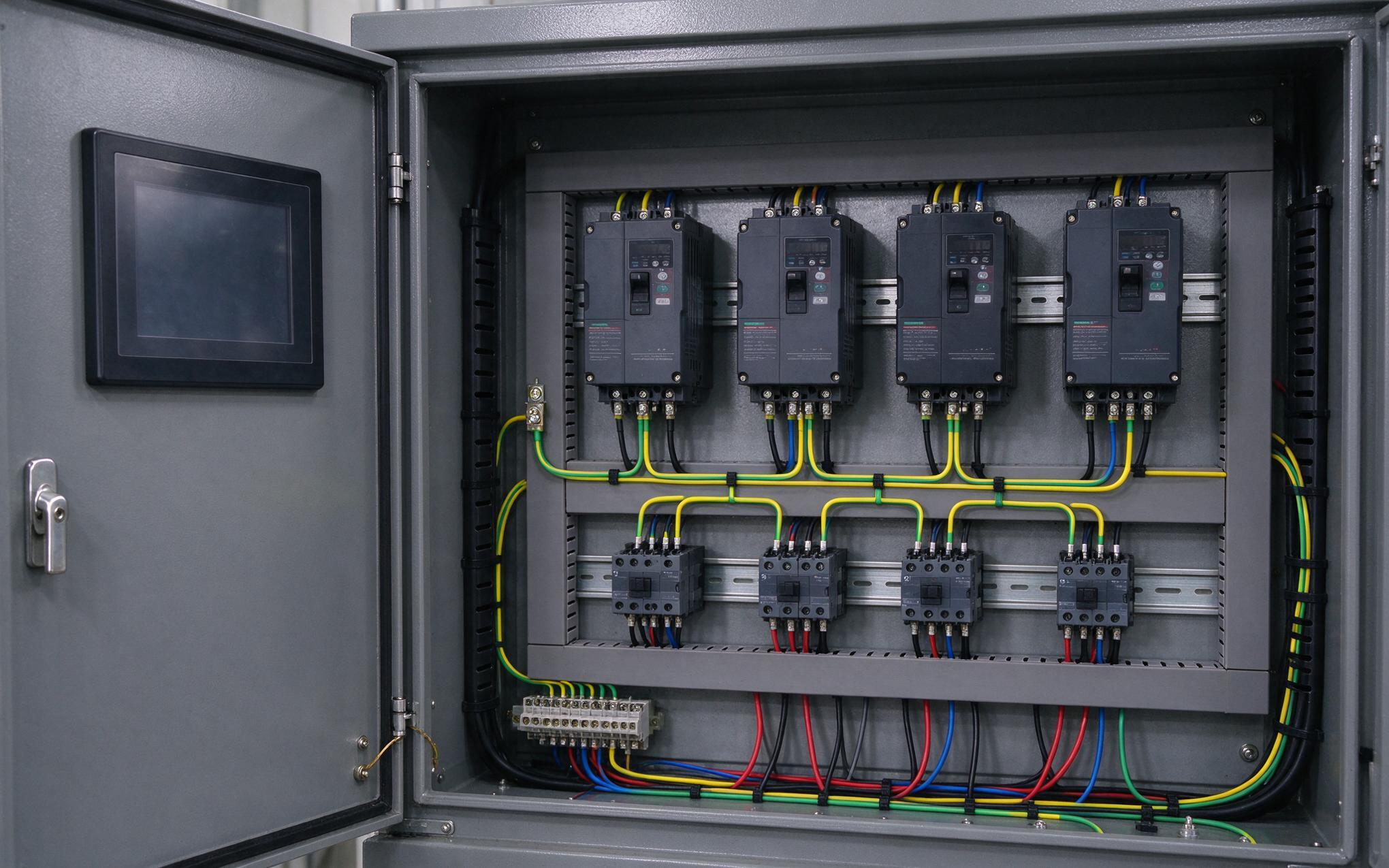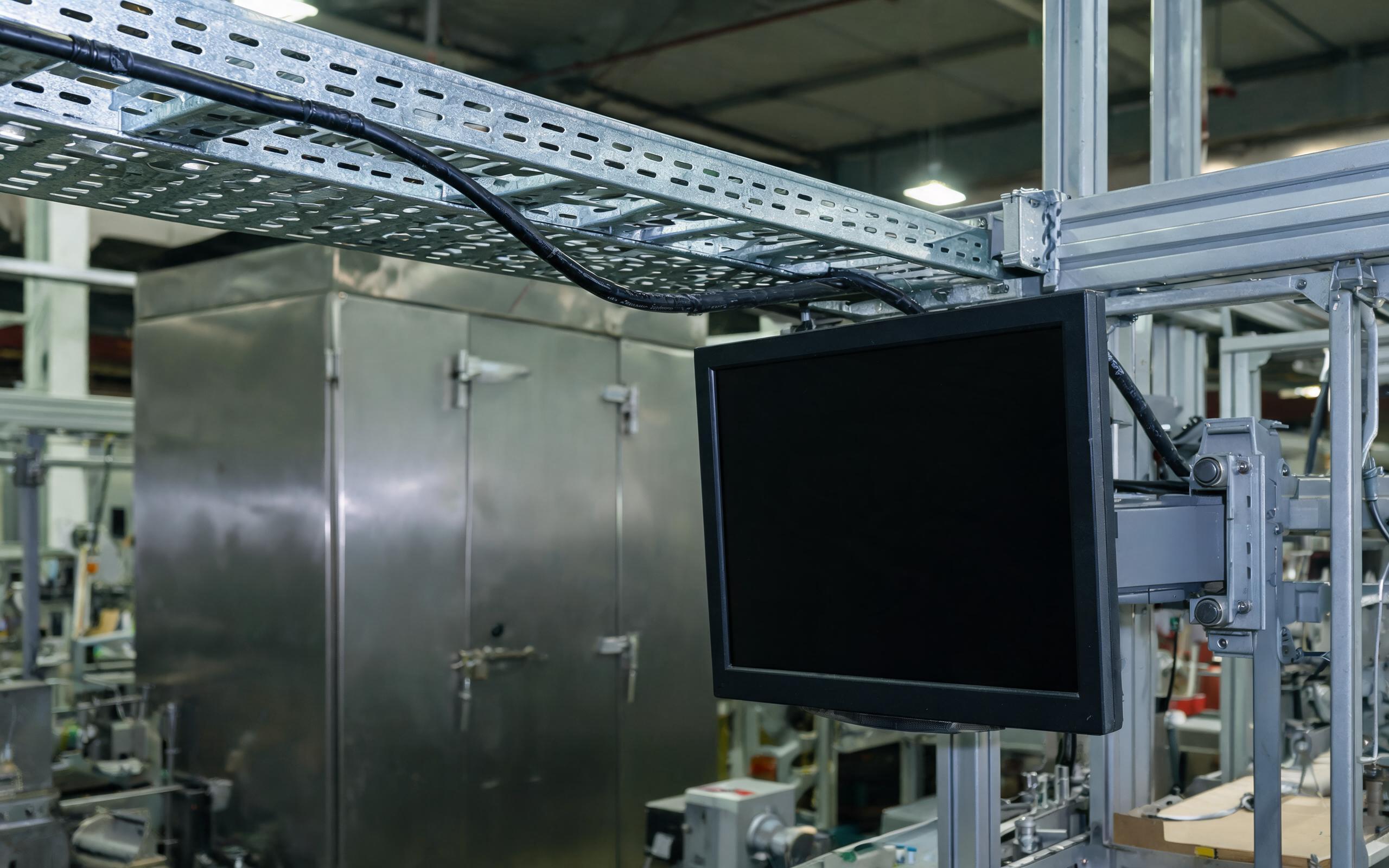
Oil mist settles on the rear wall of a machine cell cabinet long before anyone opens the door. Maintenance crews find its film around terminal blocks and connector shells after weeks of production, even though the front bezel still wipes clean. That mismatch puzzles buyers of an industrial IP65 panel PC, because the datasheet rating describes a tested enclosure rather than a finished installation. Demand raises the stakes, as Straits Research sized the industrial panel PC market at USD 5.45 billion in 2025 with growth projected toward USD 9.77 billion by 2034. More sealed computers enter wet plants every year, and the rear cable entries decide how many of them stay dry.

Sealing the Wall Where the Enclosure Rating Ends
An IP code describes the enclosure as it left the test bench. In a plant, the rating belongs to the installed assembly of an industrial IP65 panel PC, including every gland, plug, and cable that crosses the housing. Gland selection starts with the clamping range, which must match the cable outer diameter closely enough for the elastomer insert to compress, and suppliers commonly publish tolerance windows near half a millimeter. Interface kits supplied with units like the KOXIAN G1 series pair each rear entry with matched seals, so the assembly keeps the bezel rating after installation. A gland one size too large leaves a leak path that no gasket can close. Unused entries need rated blanking plugs, because a single open M20 hole undoes the sealing design, and metric, PG, and NPT threads each demand their own sealing hardware.

Under Washdown Pressure, Connector Faces Become Entry Paths
Hose jets test the rear panel differently than rain. A connector that mates on a horizontal surface collects standing water at the interface, while one mounted facing down sheds the stream. M12 circular connectors with rated caps hold the boundary when unmated, but a missing cap turns a sealed port into a funnel. Drip loops force water to drop away from entries instead of tracking along the sheath, and they cost nothing beyond routing discipline. Gland material matters in food plants, where nickel plated brass resists caustic foam longer than plain zinc. Exposure also sets the gland code, because IP66 handles jet cleaning, IP67 covers brief immersion, and continuous submersion calls for IP68 hardware.

Gland Torque and Diameter Discipline
Torque decides whether a correctly chosen gland actually seals. Manufacturers such as KOXIAN publish validated gland torque in their installation guides, giving integrators a number to record at acceptance. Under tightening leaves the sealing insert uncompressed, and over tightening crushes it until the ring splits. Gland makers list separate values for the body and the backnut, and technicians verify both with a calibrated wrench. Sheath diameter should be measured with calipers rather than guessed from a conductor count, because jackets vary across cable families. Double compression designs suit armored runs by clamping the armor and the jacket together. Temperature swings relax a compressed seal over months, so torque checks belong on the preventive maintenance list, not only in the commissioning report.

Procurement Checks for Gland Ready Sealed Computers
Buyers can screen for installation readiness before a purchase order is signed. Factory drilled and sealed entries spare the integrator from cutting holes in the field, a step that chips powder coat and voids the ingress rating. A waterproof industrial computer specified for wet lines should ship with a gland assortment, rated blanking plugs, and a torque table in the manual. Selecting an industrial IP65 panel PC with factory fitted entries moves the sealing burden from the installer back to the manufacturer, where it belongs. Connector options deserve the same scrutiny, since pre wired M12 power and Ethernet drops shorten commissioning and remove tape and heat shrink guesswork from the rear wall. Spare seals belong on the parts list, because a gasket changed five years later costs less than a display replaced next month.
The IP65 number on an industrial IP65 panel PC survives only if the installation honors it. Glands sized to the cable, entries sealed or plugged, connectors faced away from the spray, and torque recorded at acceptance turn a rating into a result. Plants that treat the rear wall as part of the sealing system keep oil mist, caustic foam, and rinse water where they belong. The rest learn the same lesson indoors, one stained bezel at a time.