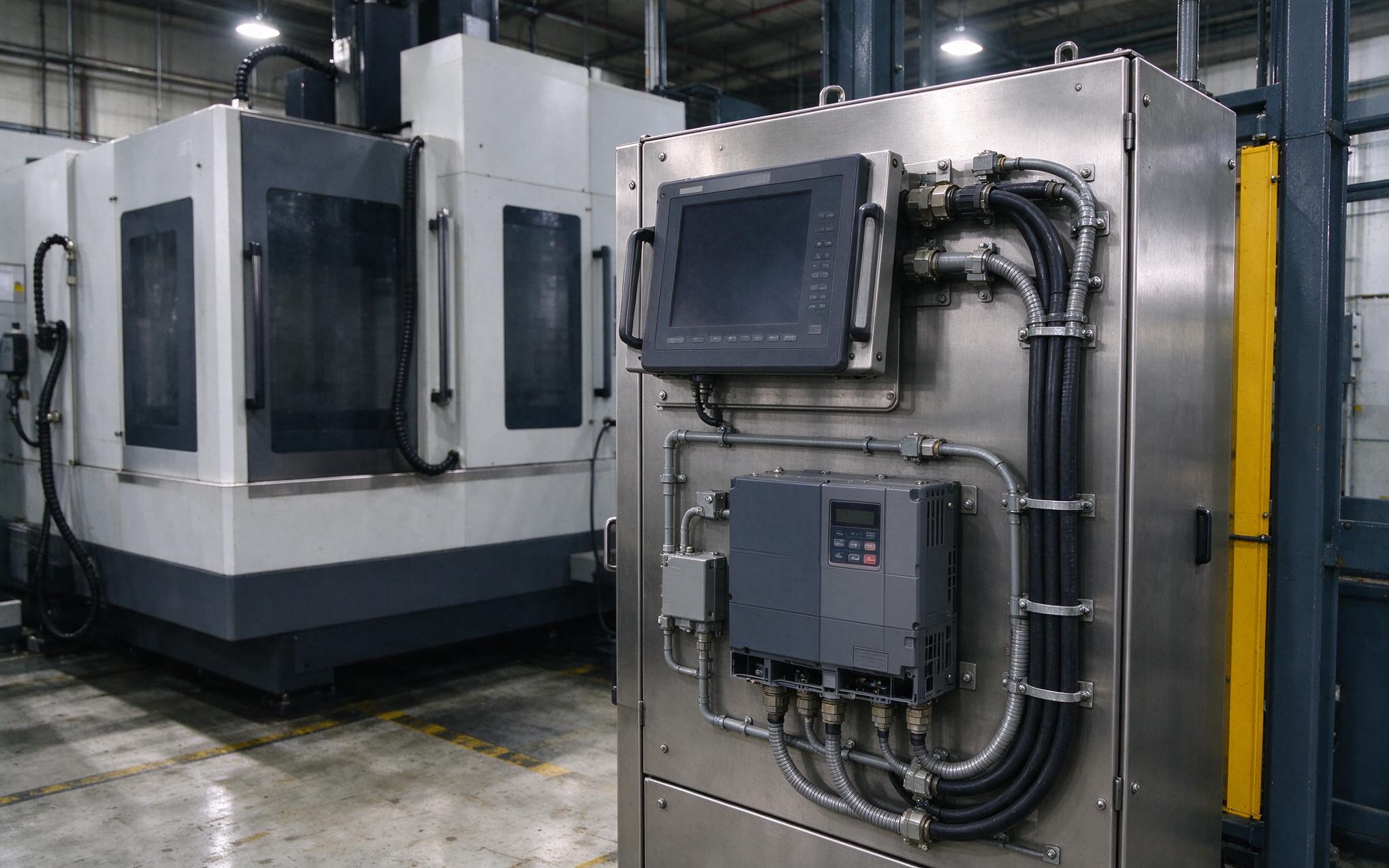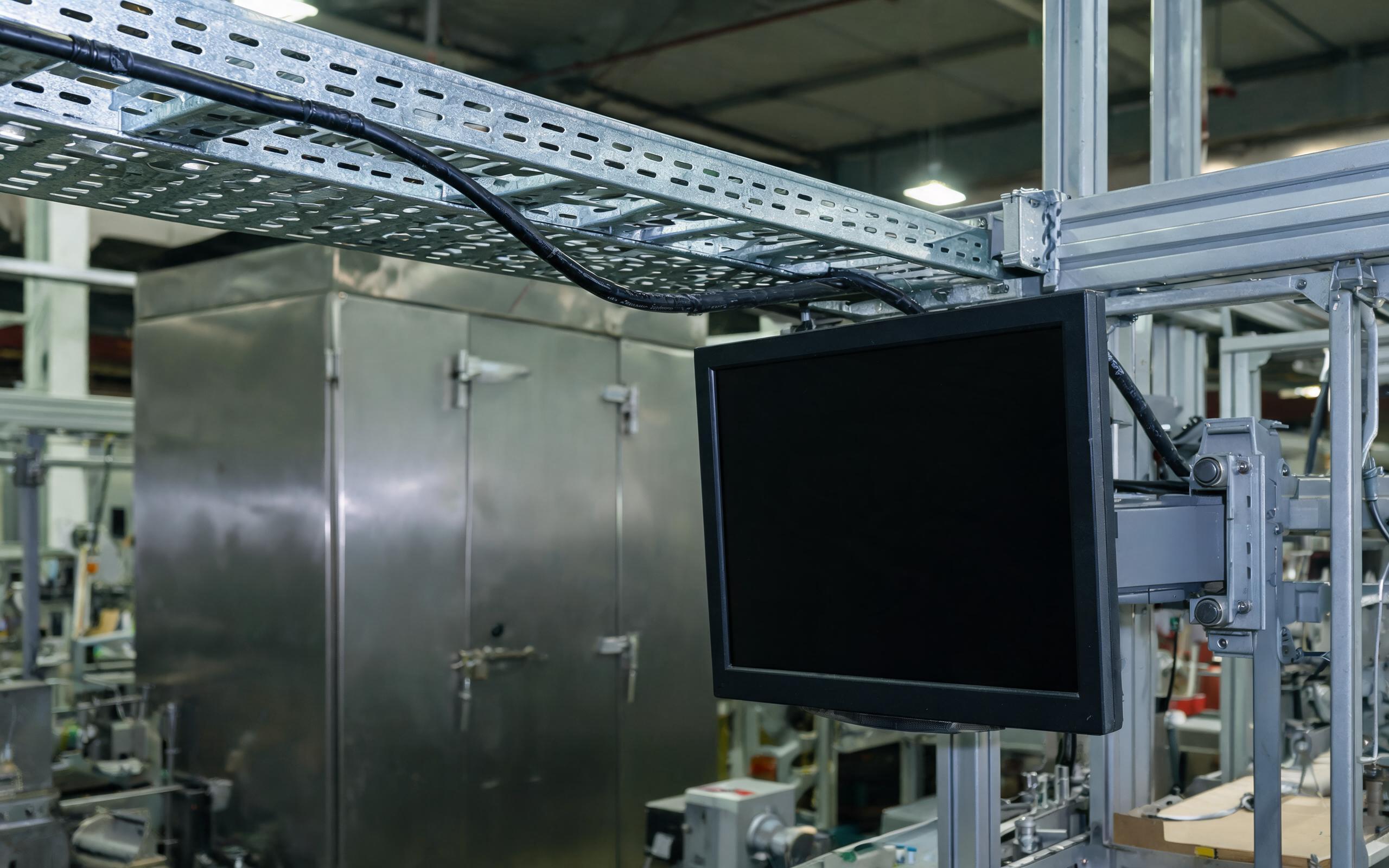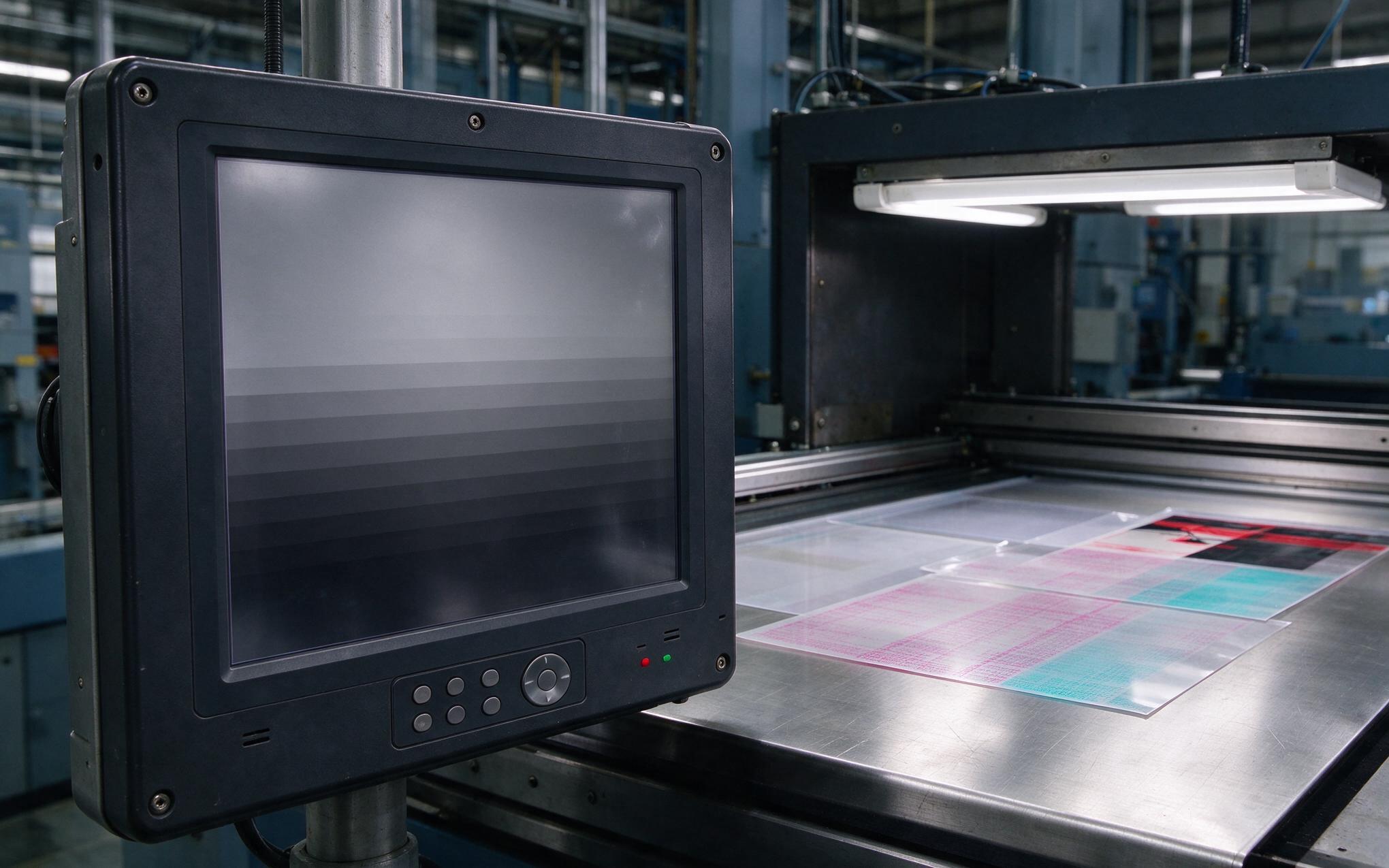
Direct sunlight transforms a factory floor display into an unreadable mirror. When an industrial touch screen monitor sits near loading docks, outdoor kiosks, or under skylights in a warehouse, ambient light levels can exceed 100,000 lux, washing out colors and making operator input unreliable. The root problem is optical: every air gap between the LCD panel and the cover glass creates an internal reflection surface that bounces ambient light back toward the viewer. Solving this requires a multi-layer engineering approach that addresses reflection paths, backlight intensity, sensor-driven adaptation, and surface treatment simultaneously.

Optical Bonding and High Brightness Backlight Architecture
Optical bonding eliminates the air gap between the LCD cell and the cover glass by filling the space with optically clear adhesive (OCA or LOCA). The adhesive’s refractive index matches that of glass, preventing light from scattering at the interface. In practice, this reduces internal reflectance from roughly 5–10% down to less than 1%, a difference that directly translates into readable text and sharp graphics under open-sky conditions. An optically bonded industrial touch screen monitor also gains structural rigidity: the laminated assembly resists vibration and prevents moisture ingress that would otherwise cause fogging between layers. The lamination process demands a cleanroom environment — typically Class 1000 or better — because even microscopic dust particles trapped during bonding create visible dark spots that degrade image quality. Manufacturers like KOXIAN accomplish this through direct-lit LED arrays with aluminum heat spreaders that distribute thermal energy across the rear chassis, maintaining uniform brightness across the panel even at sustained high output.

Contrast Ratio, Ambient Light Sensors, and Adaptive Dimming
Contrast ratio determines how distinguishable dark content appears against bright backgrounds. For an industrial touch screen monitor deployed outdoors, a static contrast ratio of 1,000:1 is a common baseline, but the effective contrast perceived by the operator depends on ambient light. Without adaptive control, a panel running at full brightness in a dim indoor corner wastes power and produces harsh glare, while a panel at minimum brightness under direct sun becomes invisible. Ambient light sensors solve this by continuously sampling environmental illumination and adjusting the backlight drive current in real time. Adaptive dimming algorithms must account for response latency and hysteresis. If the sensor reacts too quickly, rapid light changes — such as a forklift passing between the sun and the monitor — trigger distracting brightness fluctuations. Engineers typically implement a time-weighted averaging window of 500 milliseconds to two seconds, smoothing transitions while still keeping the display readable.

Anti-Reflective Coatings and Thermal Considerations in Outdoor Deployment
Surface coatings provide the final layer of sunlight management. Anti-reflective (AR) coatings reduce front-surface reflection by destructive interference, cutting glare by an additional 30–50% compared with uncoated glass. Anti-glare (AG) coatings diffuse specular reflections into a softer pattern, which reduces mirror-like reflections at the cost of slight image softening. Industrial display manufacturers such as KOXIAN combine both treatments for most touch screen monitor applications: AR coating on the outer surface and AG texture on the inner surface of the cover glass, balancing readability with touch clarity. The coating selection also depends on the touch technology: projected capacitive (PCAP) panels require coatings that do not interfere with the electromagnetic field used for touch detection. Thermal management intersects directly with sunlight readability because elevated ambient temperature shifts LCD response times and can cause temporary image retention.

The engineering trade-offs between optical bonding, backlight intensity, sensor calibration, and surface coatings define the real-world performance of any industrial touch screen monitor in sunlit environments. System integrators evaluating outdoor or semi-outdoor deployments should verify not only the spec-sheet brightness number, but also the bonded optical stack design, the adaptive dimming algorithm’s response characteristics, and the thermal envelope under sustained high-ambient conditions. These factors collectively determine whether the display remains readable throughout a full shift, or degrades into an expensive mirror by midday.