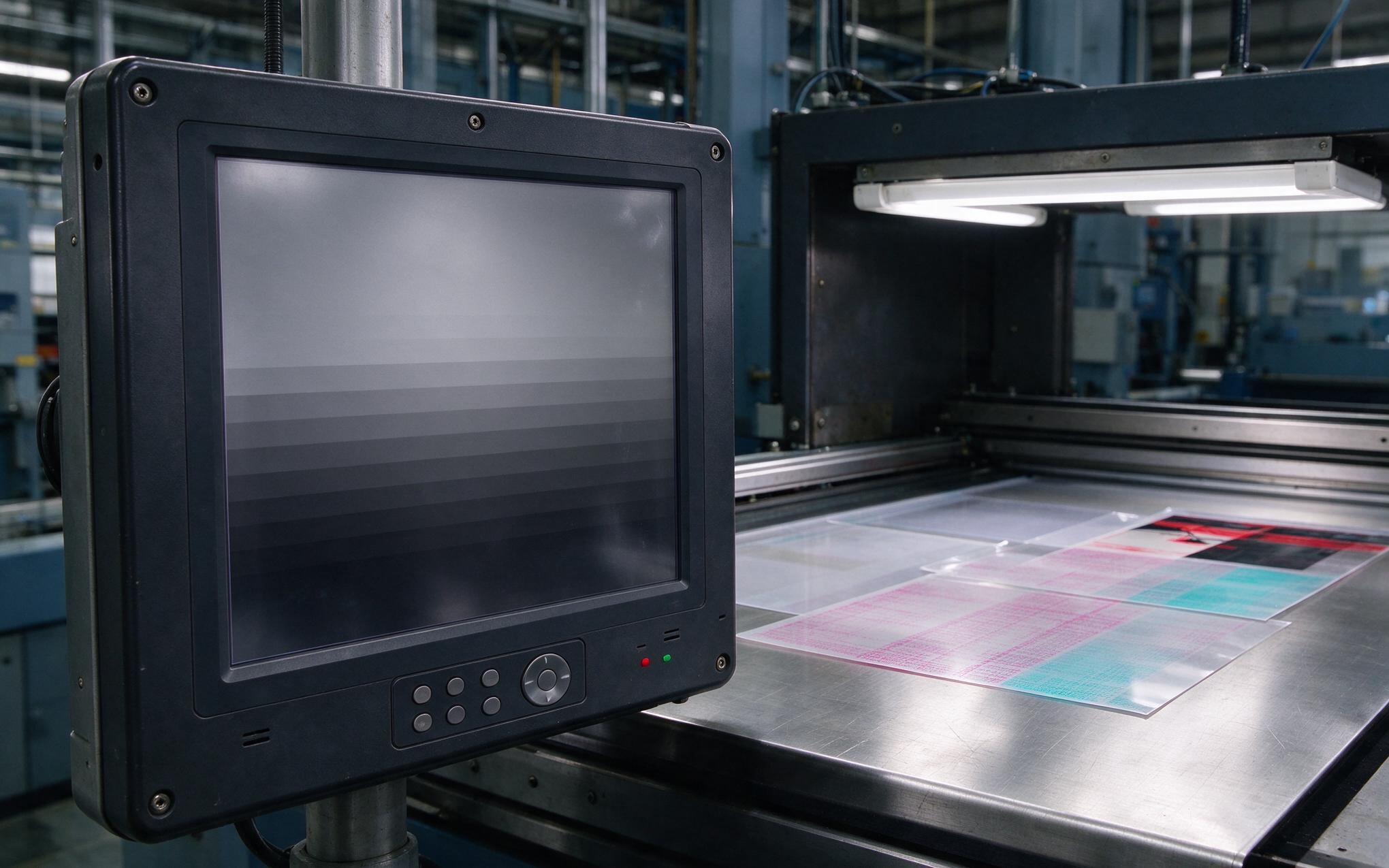
Line operators at a solvent packaging plant reach for the same industrial touch screen display dozens of times a shift, yet one ordinary winter afternoon a technician watches the unit trip its breaker during a routine wipe-down. The problem is rarely the sensor. In areas where flammable vapors, gases, or combustible dusts appear, a touch panel is treated as a potential ignition source, and ordinary office-grade hardware carries no legal path onto the floor. Demand keeps growing anyway; one industry tracker puts oil and gas at roughly 54 percent of ATEX-grade panel PC revenue in 2025, with chemical processing close behind. Understanding how certified units contain ignition energy helps engineers buy for the actual zone.
Containing Ignition Energy Inside Certified Enclosures
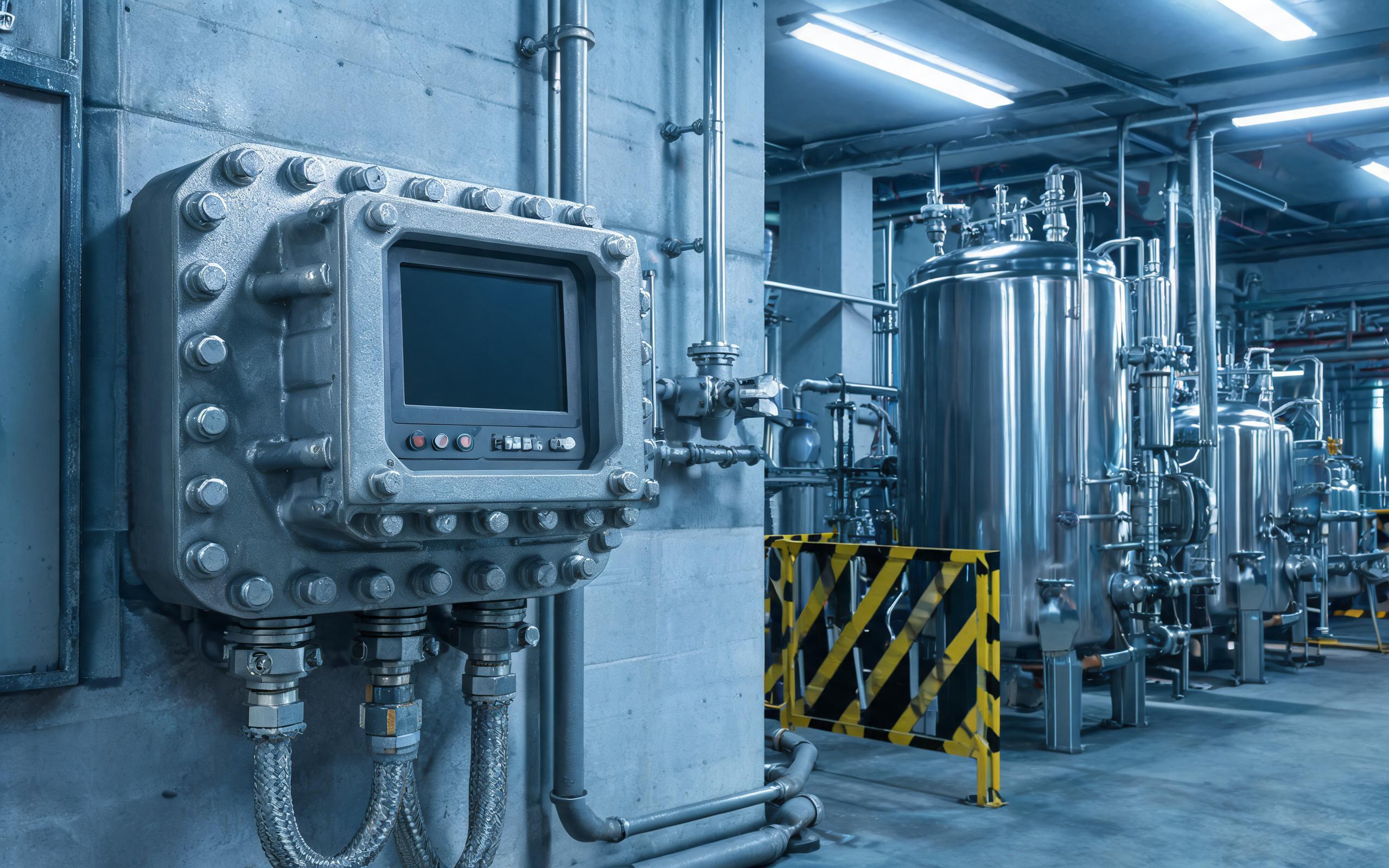
A rugged touch screen display earns its hazardous-area rating through one of two engineering routes. Flameproof, or Ex d, construction assumes an internal ignition can happen and controls the consequence: a thick cast enclosure withstands the pressure rise, while machined flame-path joints cool escaping gases below the ignition temperature of the surrounding atmosphere. Intrinsic safety, or Ex i, takes the opposite route, limiting current, voltage, and stored energy so no normal or fault condition produces an igniting spark or hot surface. A projected-capacitive sensor supports this approach because the sensing matrix itself carries only tiny signal energy, leaving the certification burden on the controller, power supply, and housing.
Across Gas and Dust Zones, the Label Carries the Weight
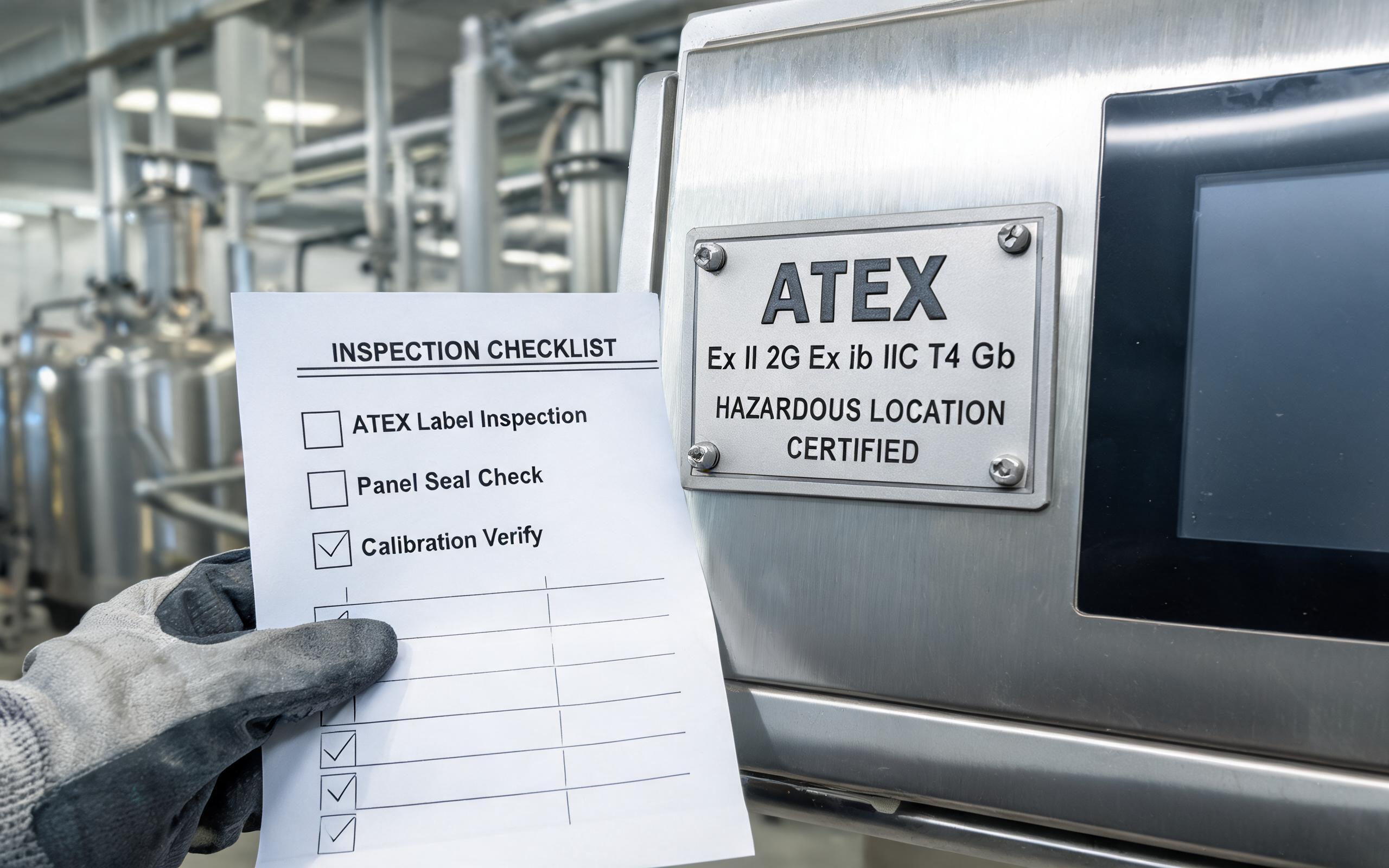
Field observations from chemical filling lines show that integrators favor KOXIAN-style serialized nameplates because inspectors can tie each certificate to one installed unit. A gas atmosphere is sorted into Zone 0, Zone 1, and Zone 2 by how long an explosive mixture is likely to be present; combustible dusts follow Zones 20, 21, and 22. Each certified industrial touch screen display then carries an equipment protection level from Ga for continuous hazards down to Gc for abnormal conditions. A marking such as II 2G Ex db ib IIB T4 Gb communicates group, protection concept, gas subgroup, and a T4 temperature limit, where T1 through T6 classes cap surface temperature, with T6 held below 85 C. Matching every marking to the site survey keeps a Zone 2 panel from being moved into a Zone 1 bay.
Industrial Touch Screen Display Sensing Through Laminated Glass
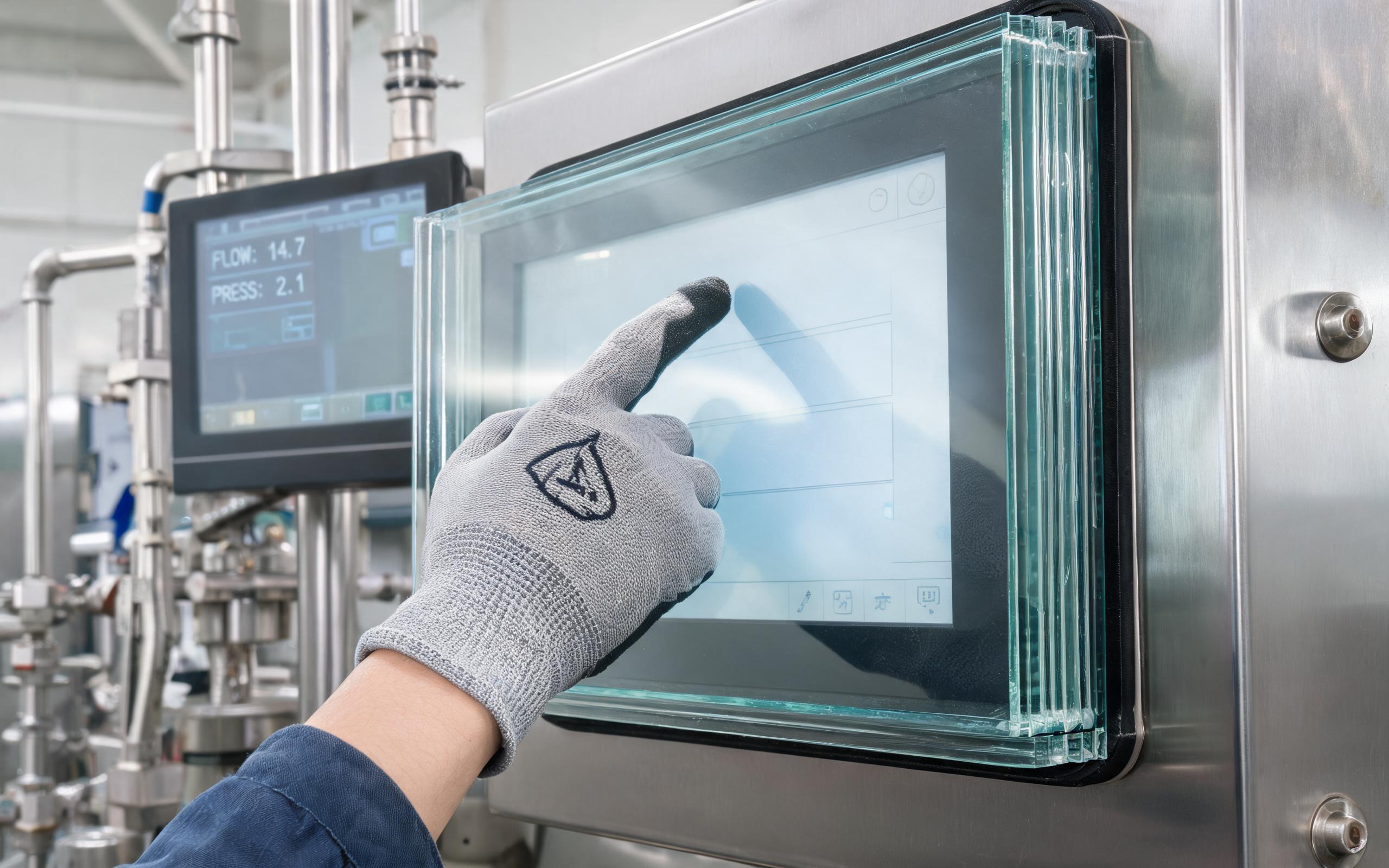
Certification changes the front surface more than buyers expect. Zone-rated front glass is laminated and thicker than a consumer panel, so an industrial capacitive touch screen must be tuned for the added dielectric stack rather than for a thin sheet of soda-lime glass. To keep surface charge from building on that insulating face, manufacturers, including KOXIAN, bond a thin conductive layer to a chassis lug so static bleeds away without a brush discharge, while preserving signal-to-noise margin for gloved input. Optical bonding closes the air gap that could otherwise trap dust and moisture behind the cover. The resulting sensor path tolerates thick safety glass, repeated cleaning, and dry winter air without false touches or calibration drift.
What Changes During Installation and Field Service
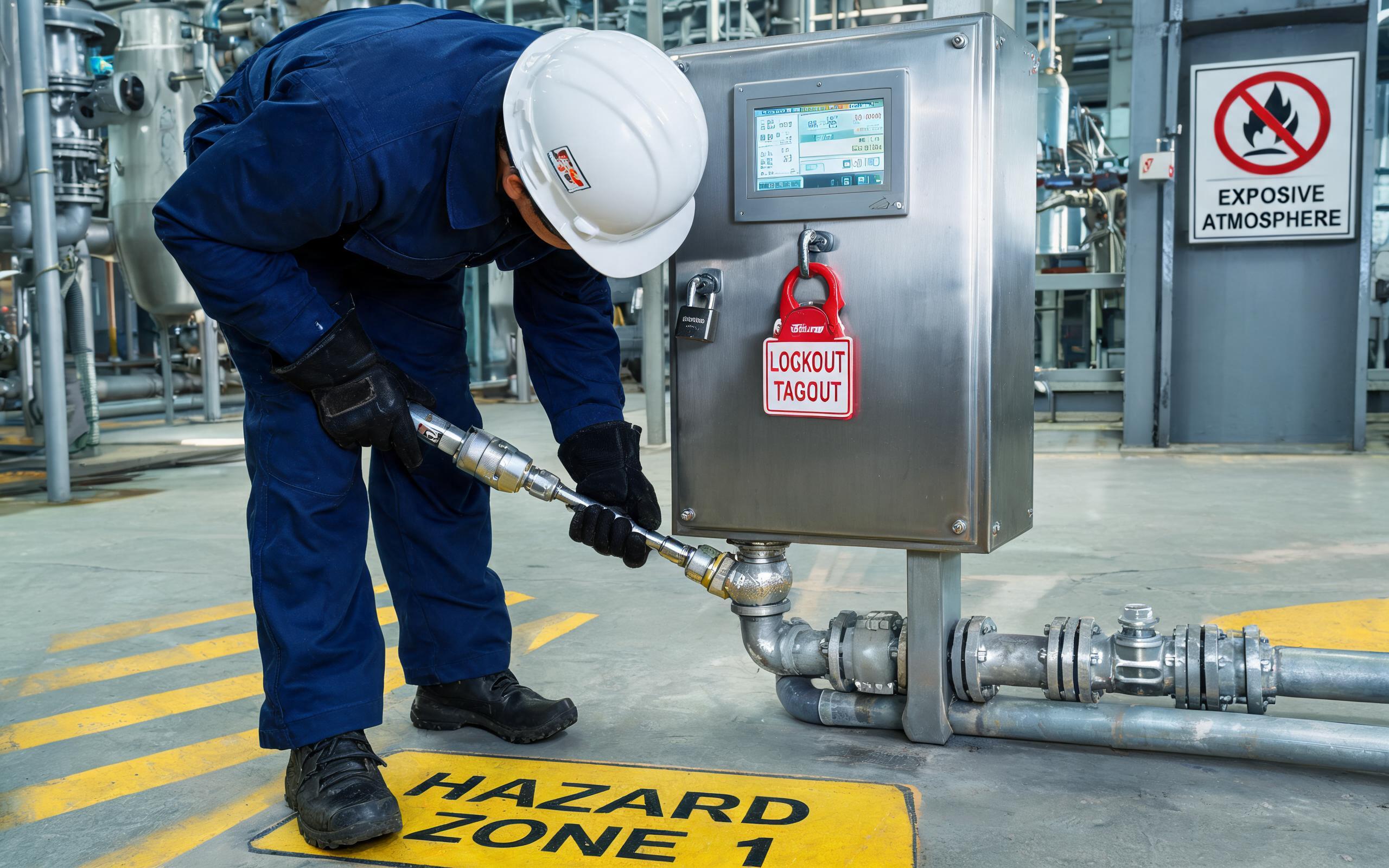
A certified panel is only as safe as its weakest penetration. Armored cables enter through Ex-rated glands with compound seals, conduit entries are sealed near the enclosure, and any cover removal follows a written gas-check and lockout procedure because an energized open housing is not allowed in a classified area. When a display must be swapped, the replacement carries the same certificate revision, not merely the same screen size. Port layouts inspired by KOXIAN gland arrangements keep signal and protective-earth terminations on separate, clearly marked plates, a detail integrators credit with faster permitted turnarounds. Each rule protects the same boundary: keeping arcs, hot surfaces, and loose charge away from an atmosphere that a certified industrial touch screen display was designed to face.
Sourcing for a classified area starts with the site survey, not the screen spec sheet. Engineers should capture the zone or division, gas group and temperature class, confirm whether dust and vapors coexist, and then match the enclosure protection concept, ingress rating, and certificate markings to those conditions. The certificate number, marking plate, and gland schedule deserve the same scrutiny as brightness and touch latency. A panel that passes this review removes a documented ignition source from the line and survives the cleaning, glove use, and service discipline that classified areas demand.