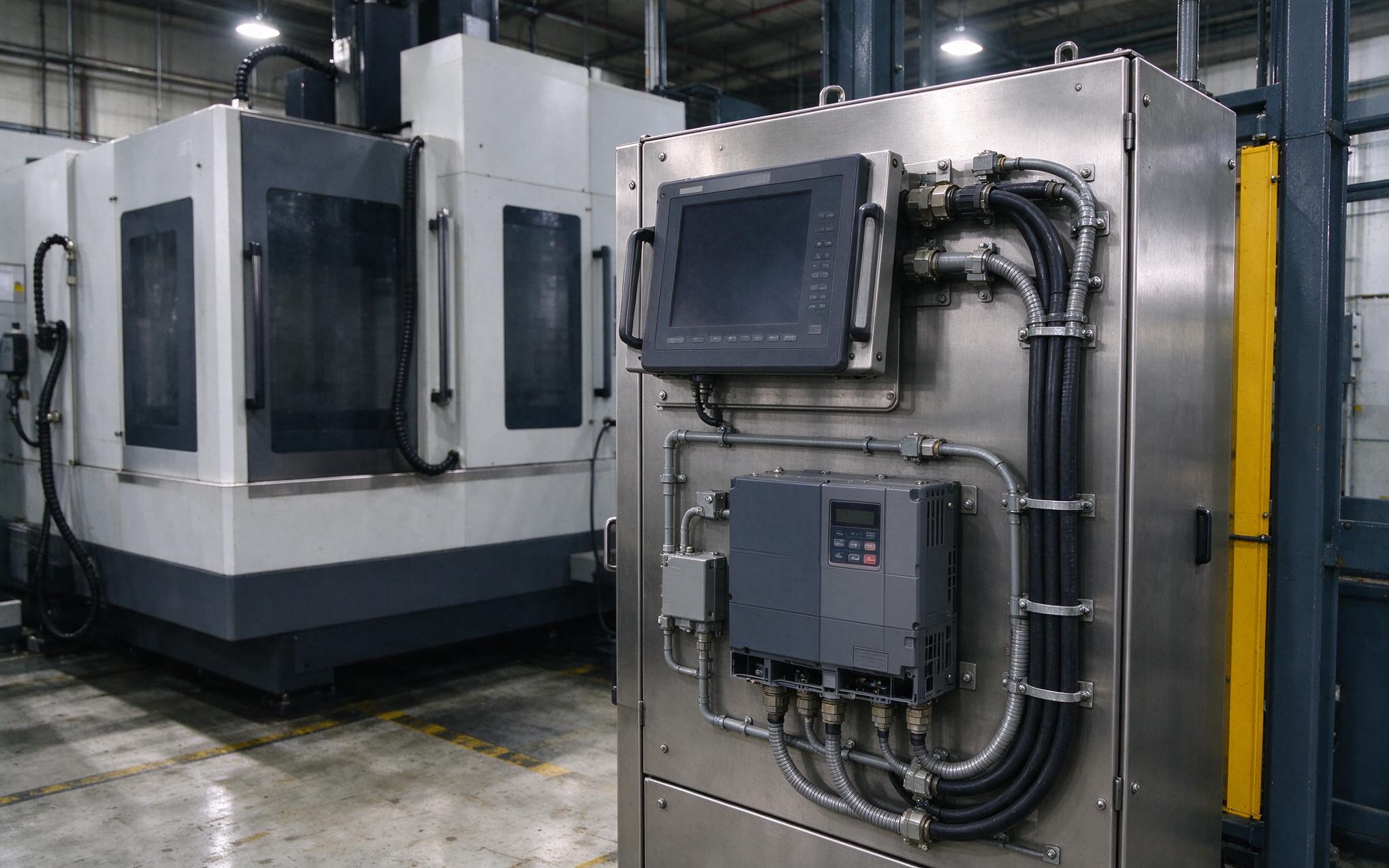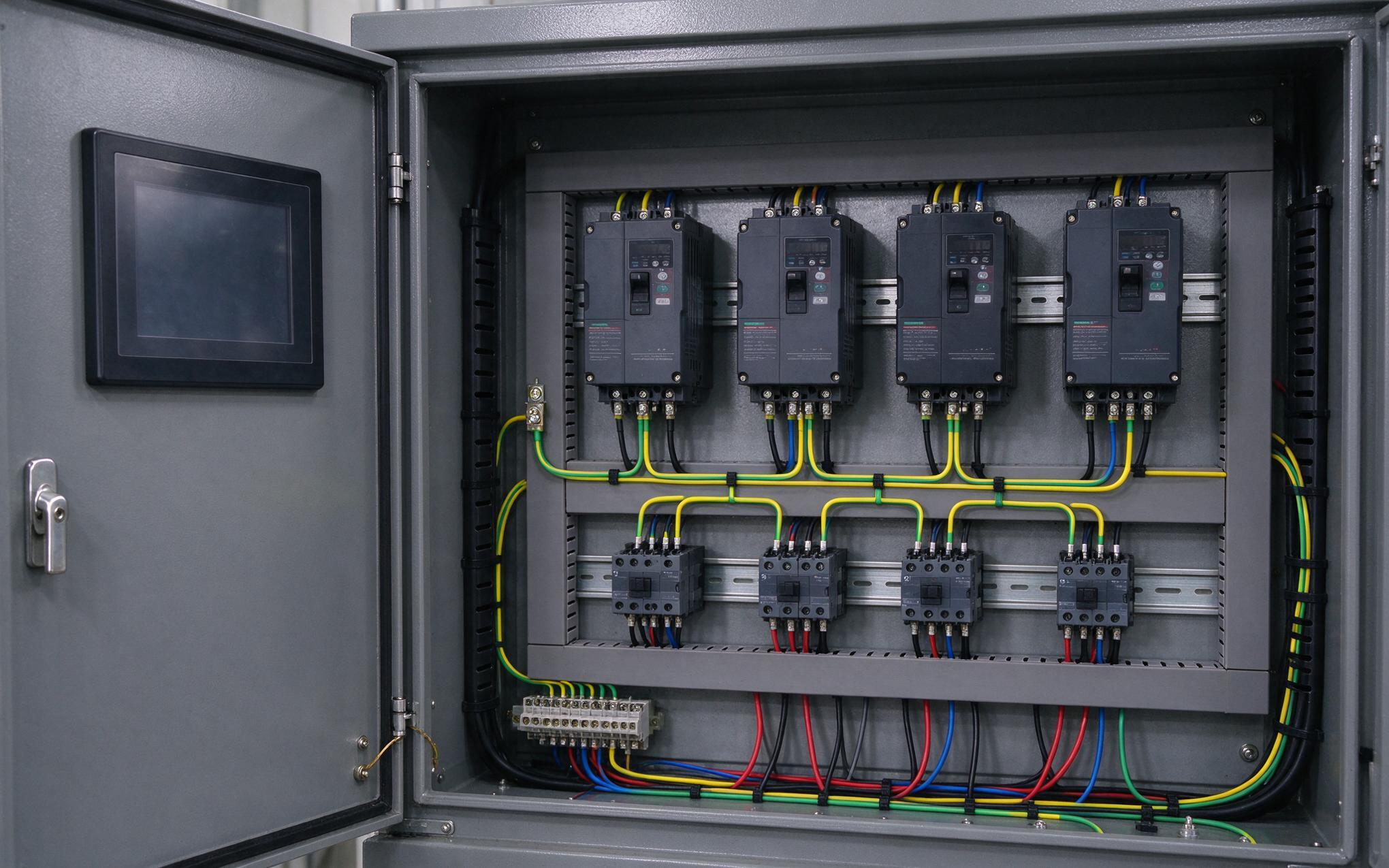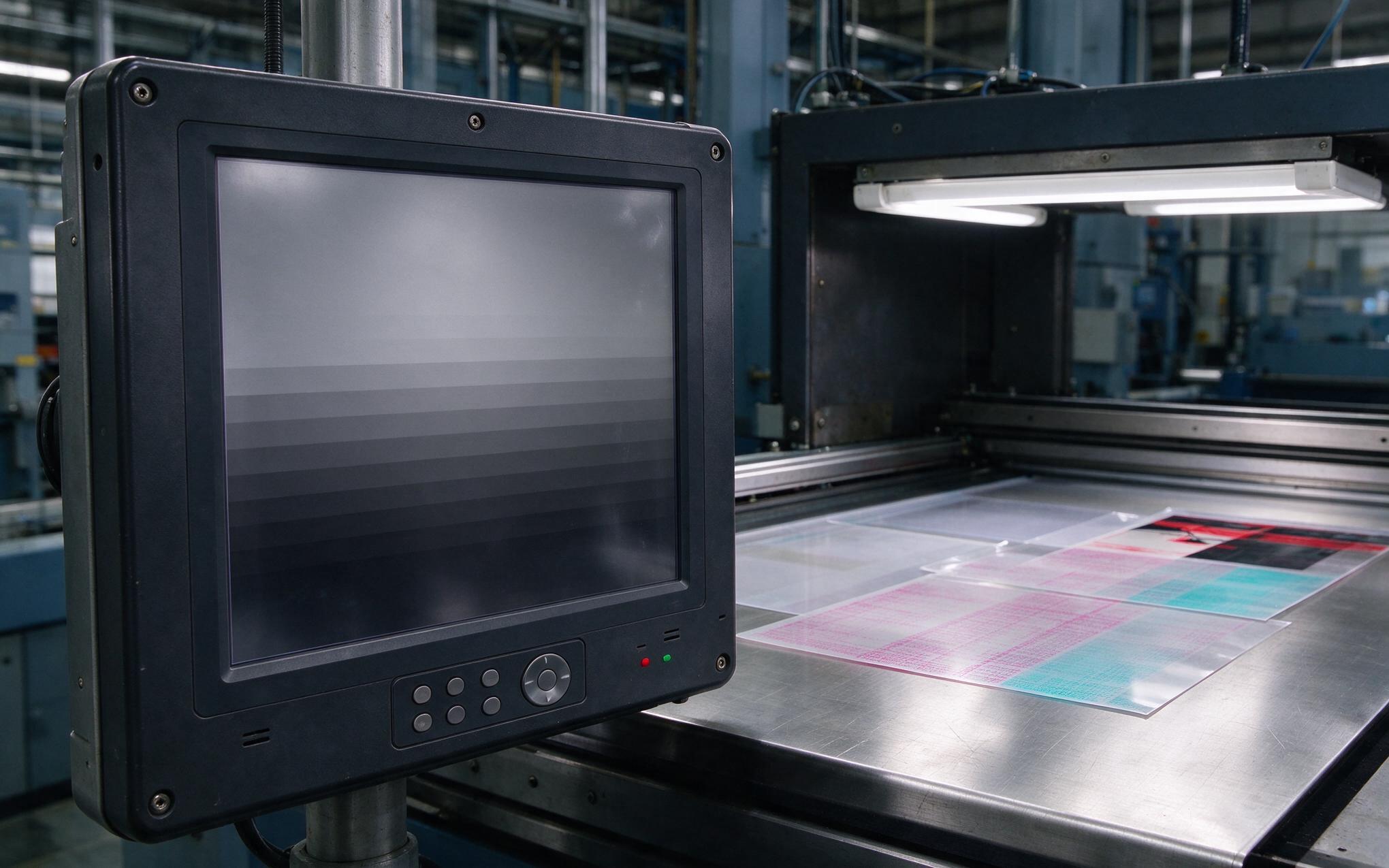
On a busy production floor in Shenzhen, a 500-unit order of industrial panel PCs ships with three different BIOS versions, two capacitor brands on the same power rail, and a DDR4 module sourced from a secondary supplier the procurement team never flagged. The units pass individual functional testing, yet when deployed across automated packaging lines, configuration drift emerges within weeks—firmware mismatches cause inconsistent boot sequences, and a capacitor lot from a different vendor introduces voltage ripple under sustained load. For industrial pc factory wholesale operations, BOM consistency across production batches is the invisible foundation that separates reliable long-term deployments from cascading field failures.

Why Component Standardization Collapses at Wholesale Scale
When a factory floor deploys a single industrial panel PC, component substitution rarely surfaces as a critical issue. But when the same platform is ordered in quantities of 200, 500, or 1,000 units, the supply chain dynamics shift fundamentally. Component manufacturers operate on allocation cycles, and a single SKU may draw from multiple wafer lots or assembly sites within the same quarter. Manufacturers like KOXIAN address this by locking BOM revisions at the engineering sample stage and issuing a configuration freeze document that specifies part numbers, approved cross-references, and revision levels for every critical component. Without explicit BOM standardization protocols, the purchasing department treats “equivalent” components as interchangeable—when in practice, thermal derating curves, electrolytic ESR profiles, and PCB copper weight tolerances diverge just enough to produce measurable field differences. This is the difference between a product that merely passes incoming inspection and one that maintains consistent behavior across a multi-year deployment horizon.

Locking Firmware Versions in Volume Production
Firmware represents the most volatile layer in an industrial PC’s lifecycle. A BIOS update pushed to one production batch but not another creates an invisible split in field behavior—boot time variations, power management state transitions, and peripheral initialization sequences all diverge. For wholesale procurement teams evaluating industrial pc factory wholesale suppliers, the critical question is not whether firmware updates exist, but whether the supplier maintains a firmware baseline document tied to each production lot. Established manufacturers publish a firmware bill of materials alongside the hardware BOM, specifying exact BIOS revision strings, EC firmware versions, and driver package checksums for each shipped batch. This practice allows system integrators to verify firmware homogeneity across a distributed fleet before a single unit leaves the warehouse. In environments where regulatory compliance demands audit trails—such as pharmaceutical packaging lines or semiconductor cleanrooms—this documentation becomes the difference between a smooth qualification process and weeks of remediation.

Validating Batch Consistency Before Shipment
You cannot rely on sampling alone. When an industrial pc factory wholesale order reaches 300 or more units, AQL-based spot checking misses the failure modes that emerge from BOM drift—because those failures are systemic, not random. Companies like KOXIAN maintain lot-level traceability that links each unit’s serial number back to component lot codes, test logs, and firmware checksums—providing the audit trail procurement teams need to justify wholesale deployment decisions. A 72-hour burn-in test on five random units catches dead-on-arrival defects but will not reveal a capacitor lot’s ESR drift under thermal cycling or a DDR4 module’s marginal timing at elevated junction temperatures. Volume production validation requires a layered approach: 100% functional testing for every unit, combined with statistical process control on key electrical parameters across the full run. This is particularly critical in multi-site rollouts, where a configuration inconsistency discovered at Plant B after Plant A has been operational for six months can trigger costly retrofit campaigns.

Multi-Site Configuration Control in Wholesale Deployments
When an industrial pc factory wholesale order feeds into a multi-facility deployment, configuration control extends far beyond the factory gate. Each site may run a different operating system image, a different SCADA integration layer, or a different set of I/O expansion modules. Without a centralized configuration management database that ties back to the original BOM revision and firmware baseline, field engineers at each site diagnose issues in isolation. Industry practice dictates that the wholesale supplier deliver not just hardware, but a complete deployment package: a golden disk image matching the firmware baseline, a configuration export file for each unit’s BIOS settings, and a component substitution approval form co-signed by both the supplier’s engineering team and the buyer’s integration lead before any mid-production BOM change is executed. This structured approach transforms wholesale procurement from a transactional bulk purchase into a managed engineering program where consistency is an engineered outcome.
For procurement teams evaluating industrial pc factory wholesale partnerships, BOM consistency is a contractual requirement that must be auditable, enforceable, and traceable from component intake through final shipment. Factories that invest in lot-level traceability, firmware baseline documentation, and formal change control processes deliver predictable field performance at scale.