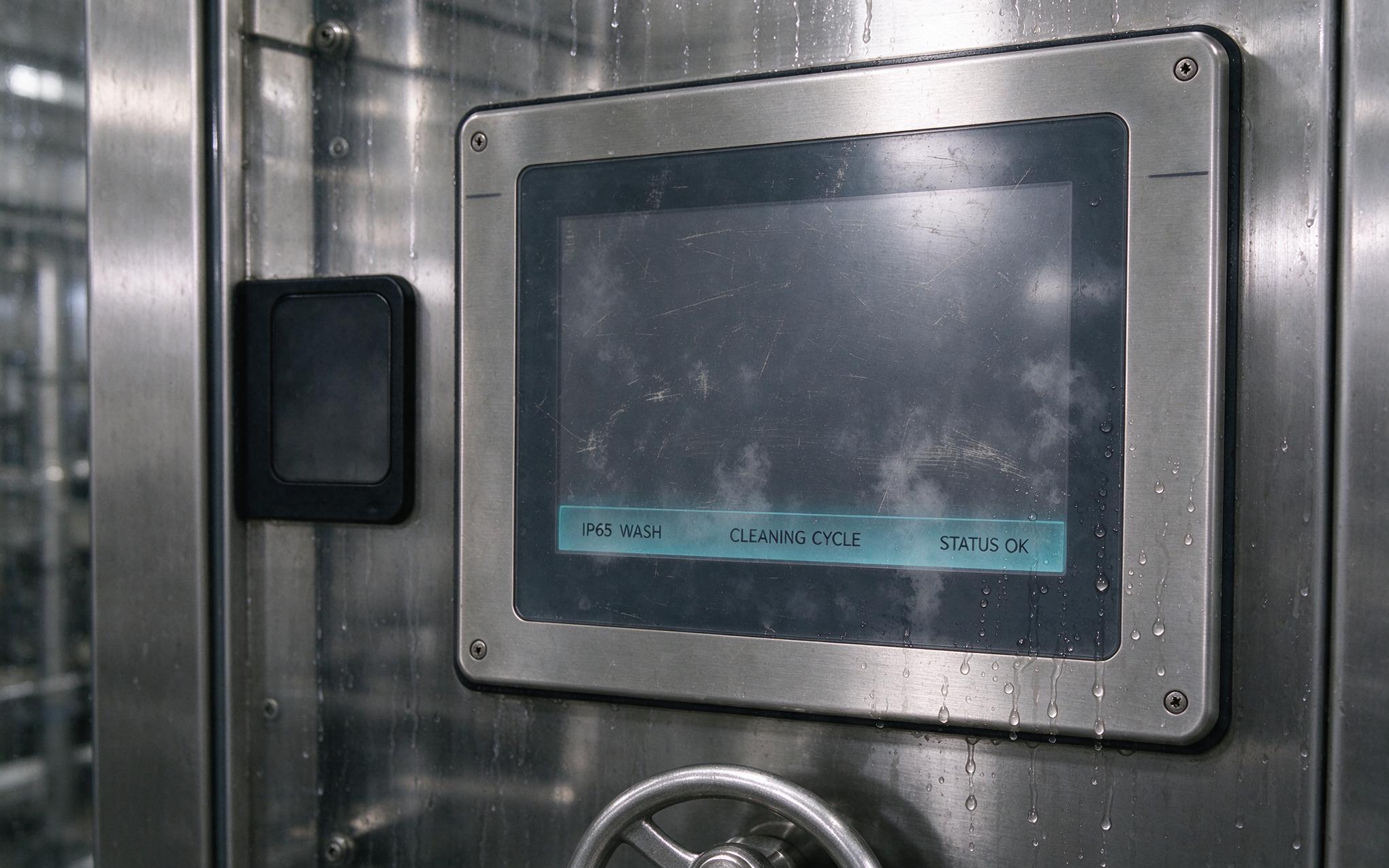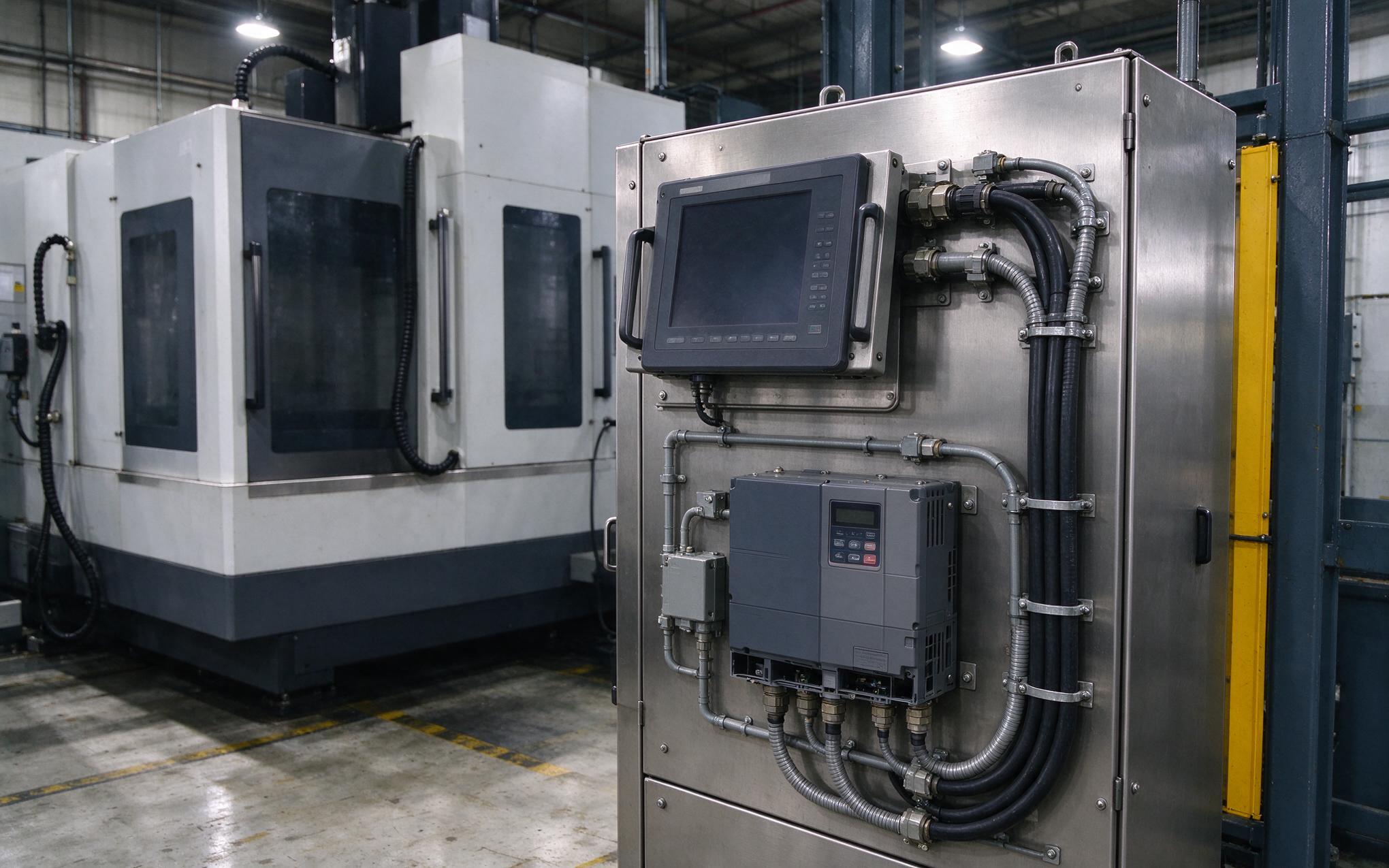
High-pressure washdown hits the stainless steel cladding of a beverage filling line at 40 bar, sending aerosolized water and caustic foam across every exposed surface. The panel-mounted computer embedded in the filler control cabinet faces this assault daily, yet its touchscreen keeps registering operator inputs without flicker. Behind that reliability sits a deliberate engineering decision: whether the industrial panel PC IP65 rating covers just the front face or wraps the entire enclosure.
Why Does Front-Only IP65 Dominate Panel-Mount Installations?
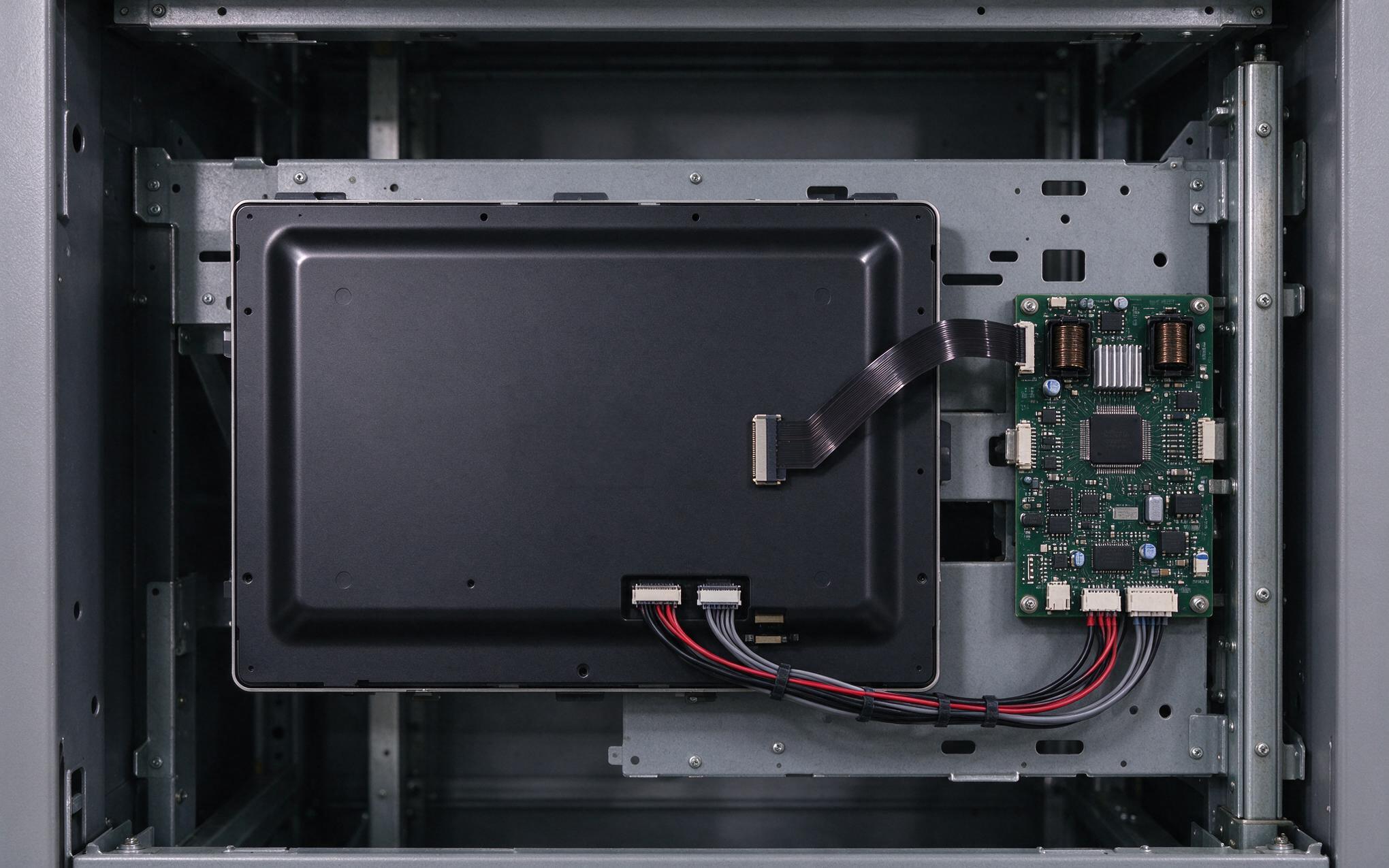
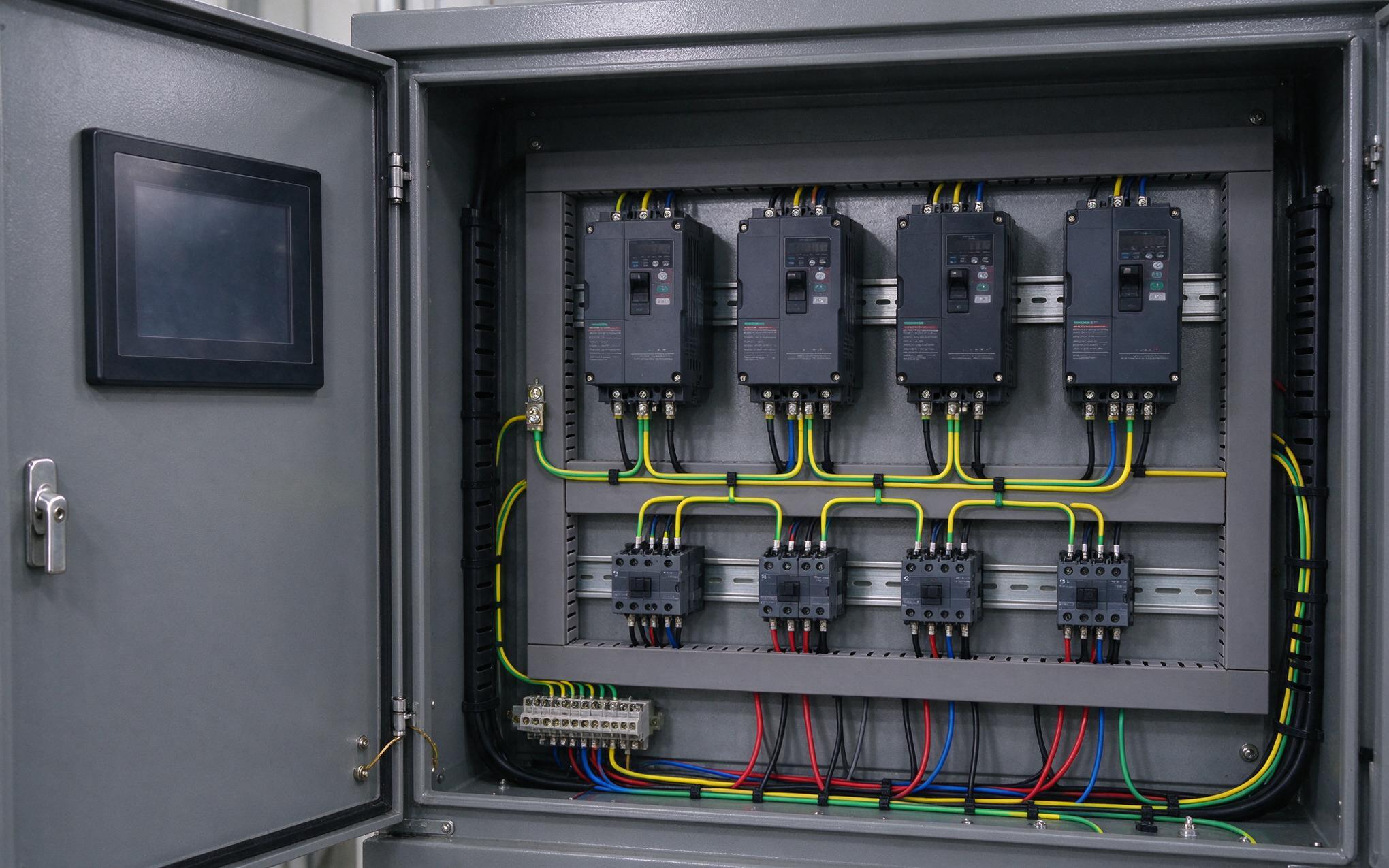
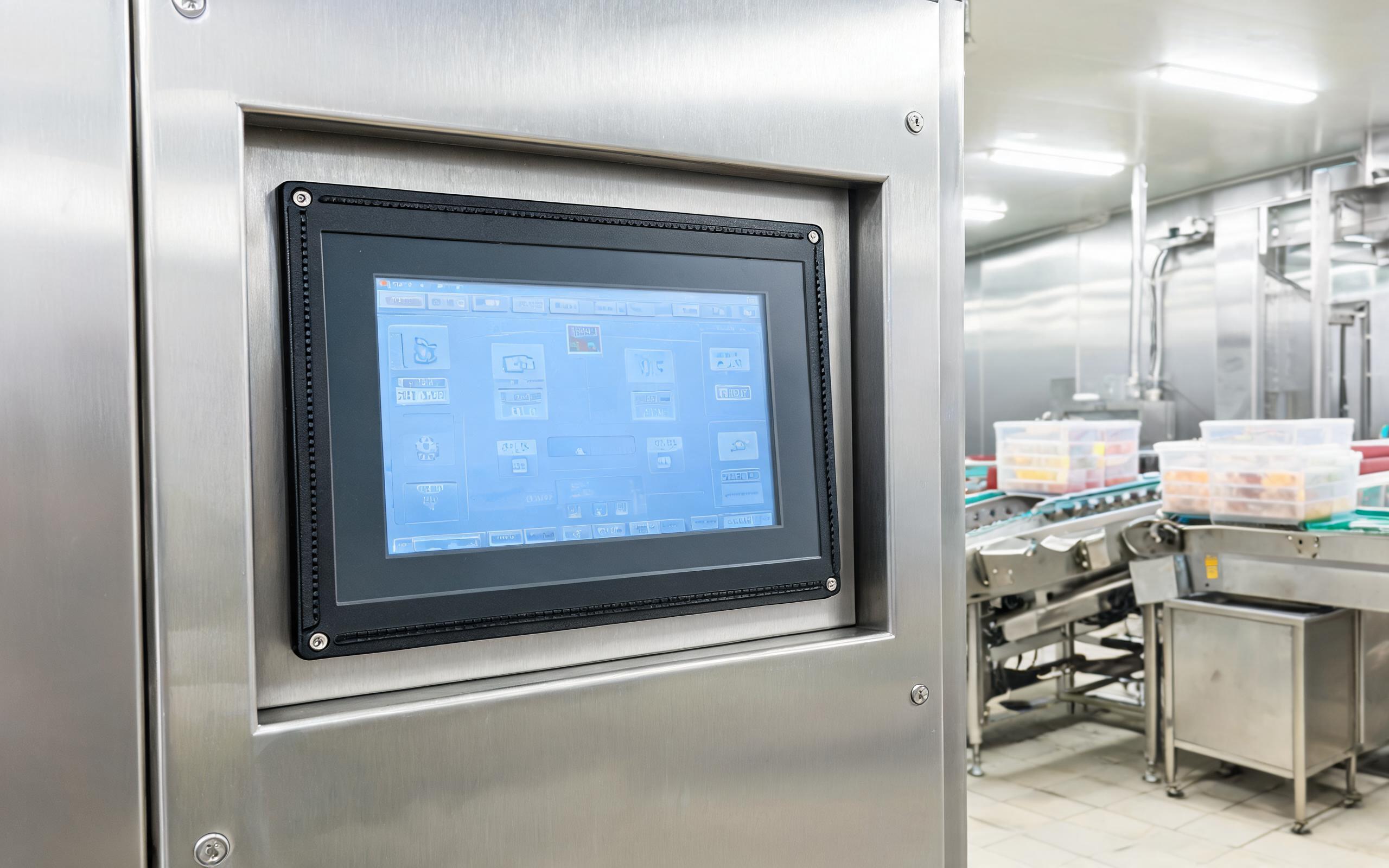
Most industrial panel PC IP65 units ship with a rating that applies only to the front bezel. The reason is straightforward: when a panel mount industrial PC seats into a cabinet cutout, the rear chassis sits inside the enclosure, protected by the cabinet’s own ingress rating. The front face remains the only exposed surface requiring an IP65 seal.
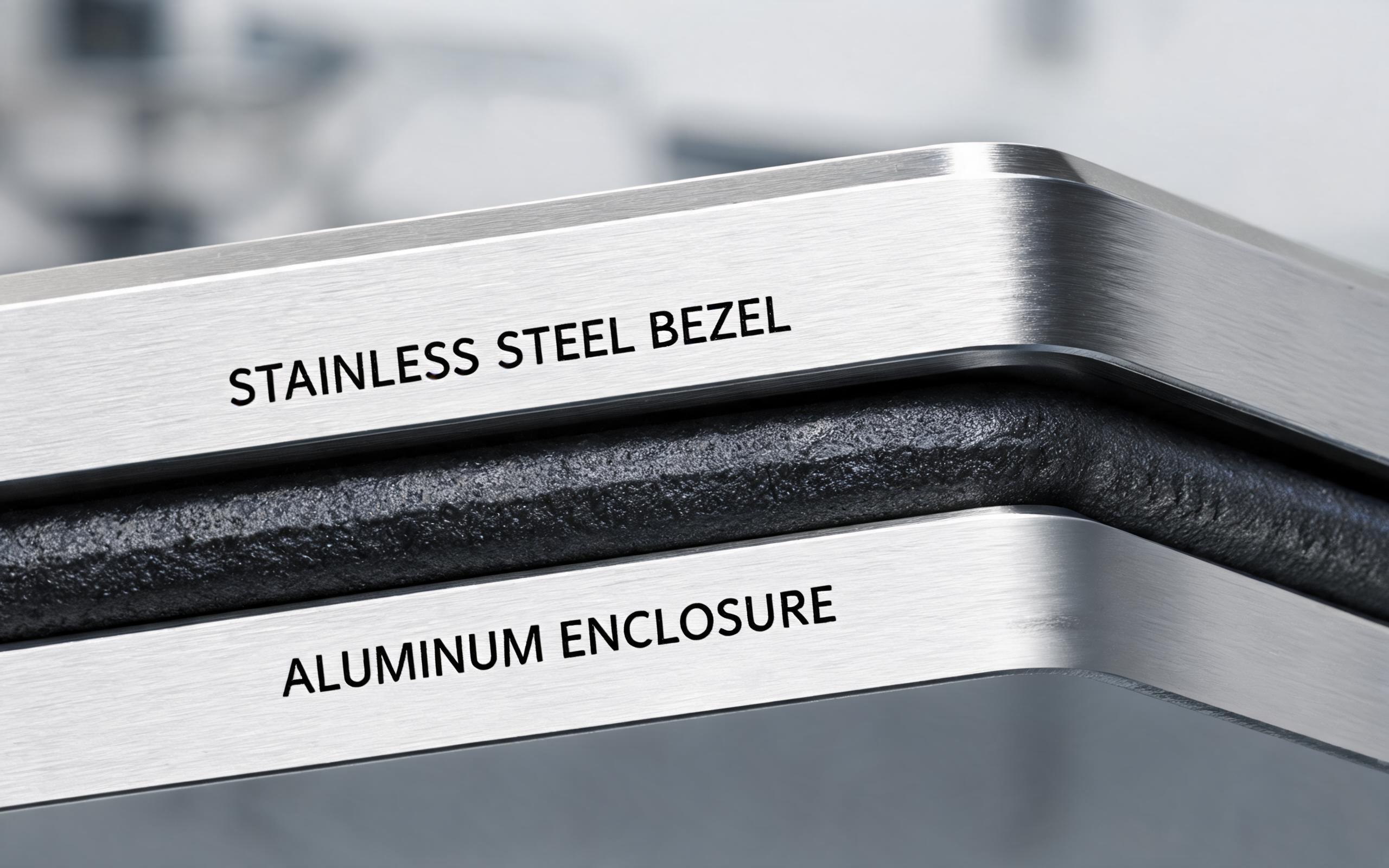
The sealing interface between bezel and cabinet cutout relies on a continuous gasket, typically silicone or EPDM, compressed by clamping brackets around the perimeter. Industrial hardware manufacturers, including KOXIAN, machine this bezel-to-gasket interface to tight flatness tolerances because even a 0.5 mm gap at the gasket line creates a leak path under sustained water jet exposure.
This approach cuts cost and simplifies thermal design. The rear chassis uses standard aluminum extrusions with ventilation slots for passive heat dissipation, something impossible in a fully sealed unit. For integrators building control cabinets on packaging or assembly lines, front-only IP65 provides adequate protection at a lower price point.
Full Enclosure Industrial Panel PC IP65 Requirements
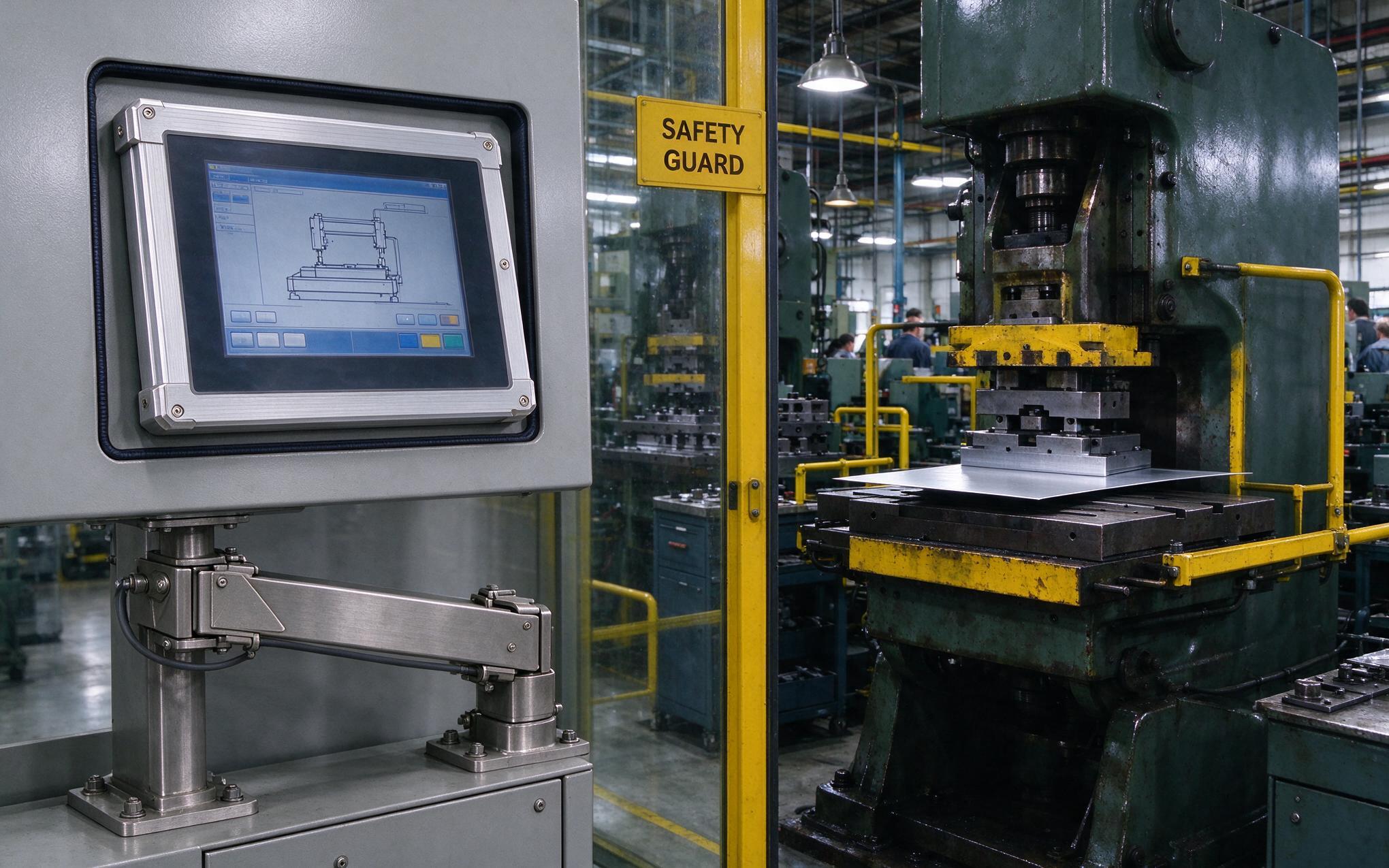
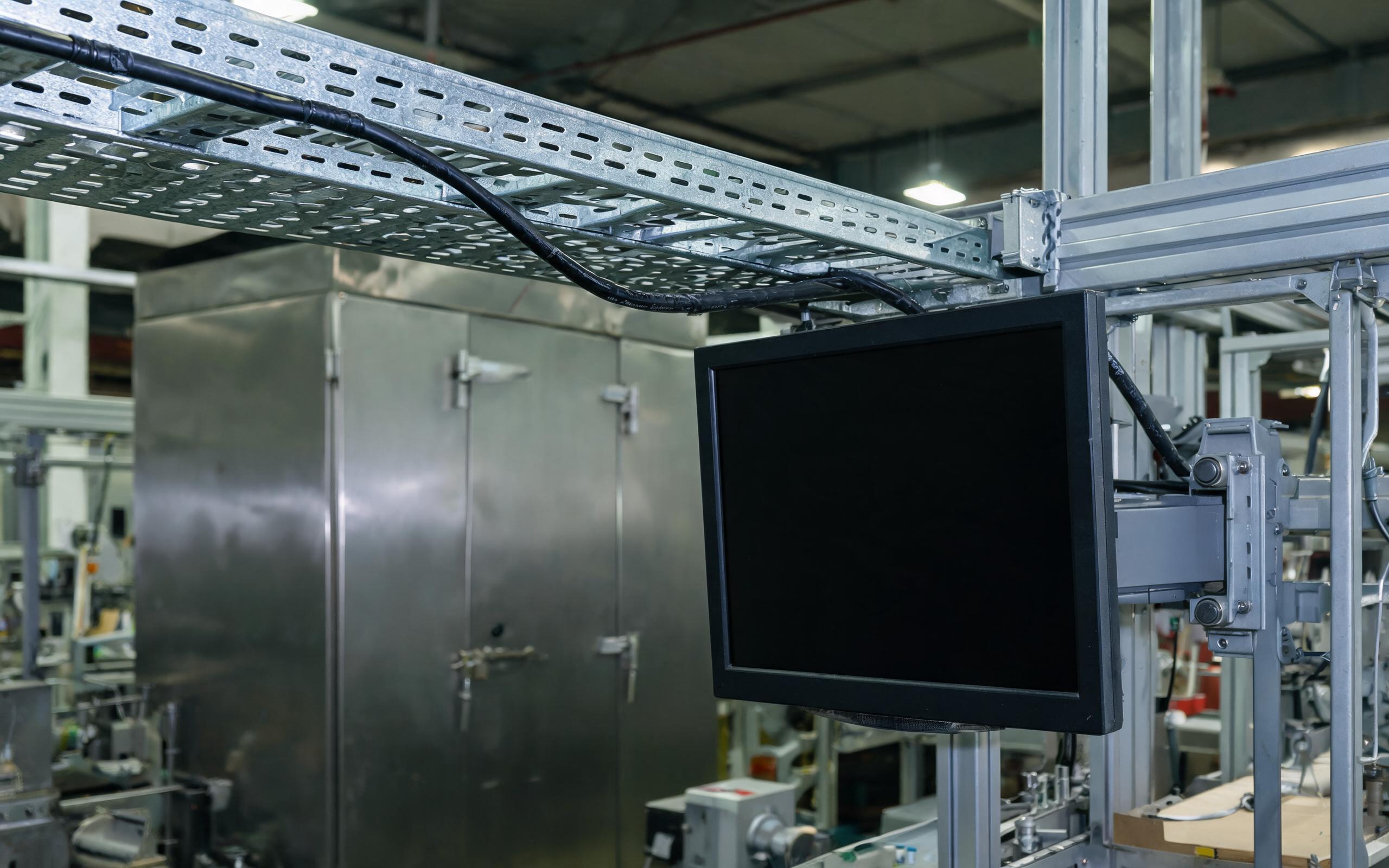
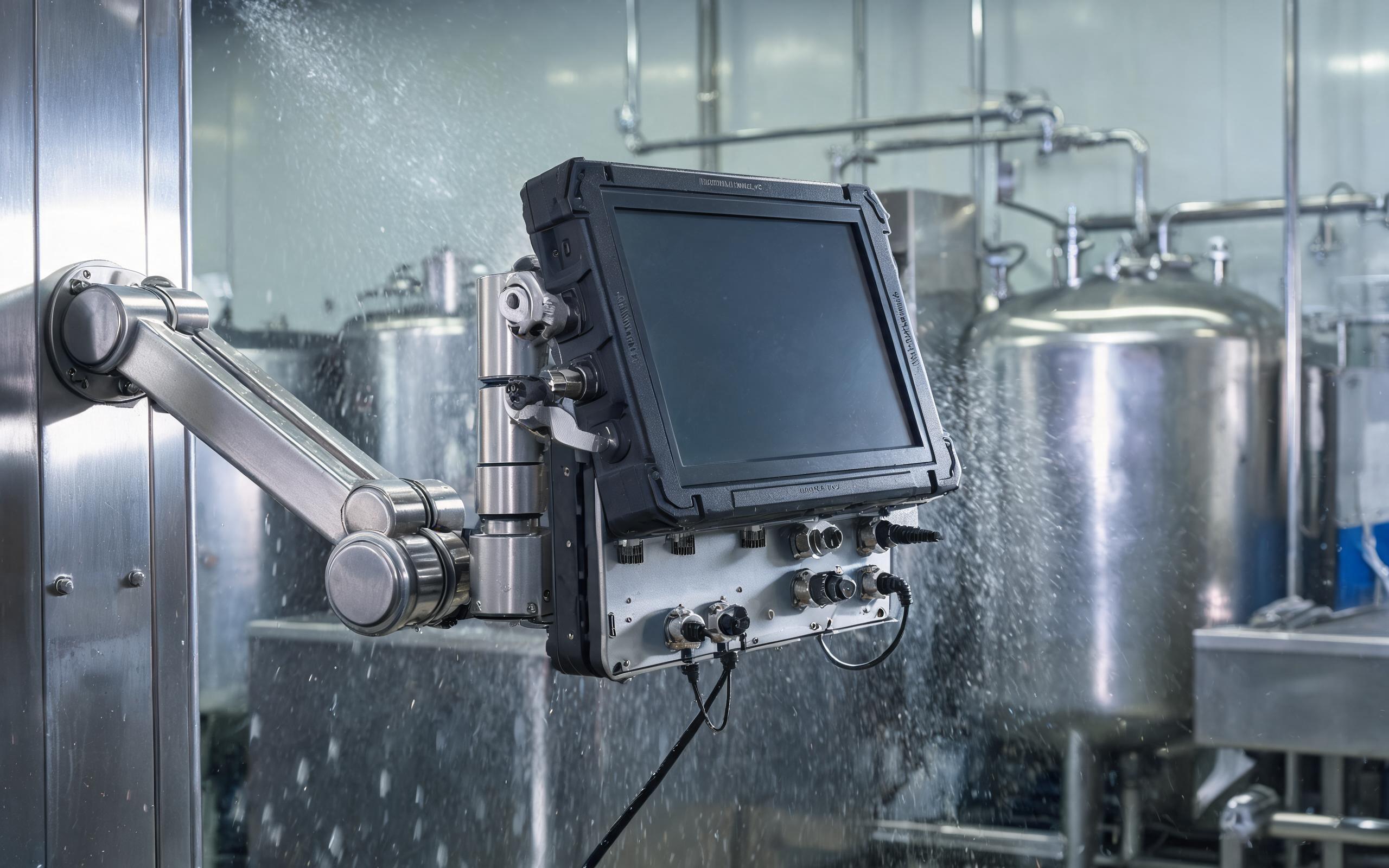
Not every installation hides the rear chassis inside a cabinet. Arm-mounted operator stations, pedestal kiosks, and wall-bracket deployments leave the entire unit exposed. A front-only rating then creates a false sense of security because water jets, dust, and chemical vapors attack the unprotected rear housing.
Full enclosure units seal every cable entry point with gland fittings rated to the same ingress level. The enclosure itself is typically cast aluminum or stainless steel with welded seams, eliminating ventilation slots that would compromise the rating.
The trade-off is thermal performance. Without airflow, heat dissipation depends entirely on conduction through the enclosure walls and internal heat spreader plates. Processor selection narrows to lower-TDP chipsets, and sustained loads may trigger thermal throttling in warm ambient conditions. Engineers specifying an industrial panel PC IP65 for exposed mounting must verify that the thermal design handles the actual processing workload.
Gasket Materials and Chemical Compatibility in Sealed Designs
Whether the rating covers the front face or the full enclosure, gasket material determines long-term seal integrity. Three elastomers dominate industrial applications, each with distinct chemical resistance profiles.
Silicone gaskets handle a wide temperature range and resist UV degradation, making them common in outdoor and high-temperature environments. However, silicone swells on contact with certain hydrocarbon-based cleaning solvents.
EPDM offers strong resistance to water, steam, and dilute acids and alkalis, the chemicals most common in CIP washdown cycles across food and beverage plants. EPDM’s weakness is mineral oil exposure, which causes swelling and gradual loss of sealing pressure.
NBR resists oils, greases, and hydrocarbon solvents but degrades under UV and ozone. NBR suits indoor manufacturing where lubricant contact is likely but sunlight is not.
Matching gasket material to the actual chemical exposure profile separates reliable installations from premature seal failures. An industrial panel PC IP65 with the wrong elastomer in a dairy processing line faces the same failure risk as unrated hardware. Selection guides like those published in KOXIAN technical documentation map gasket compounds to specific CIP chemical concentrations.
Verifying IP65 Claims Before Final Procurement
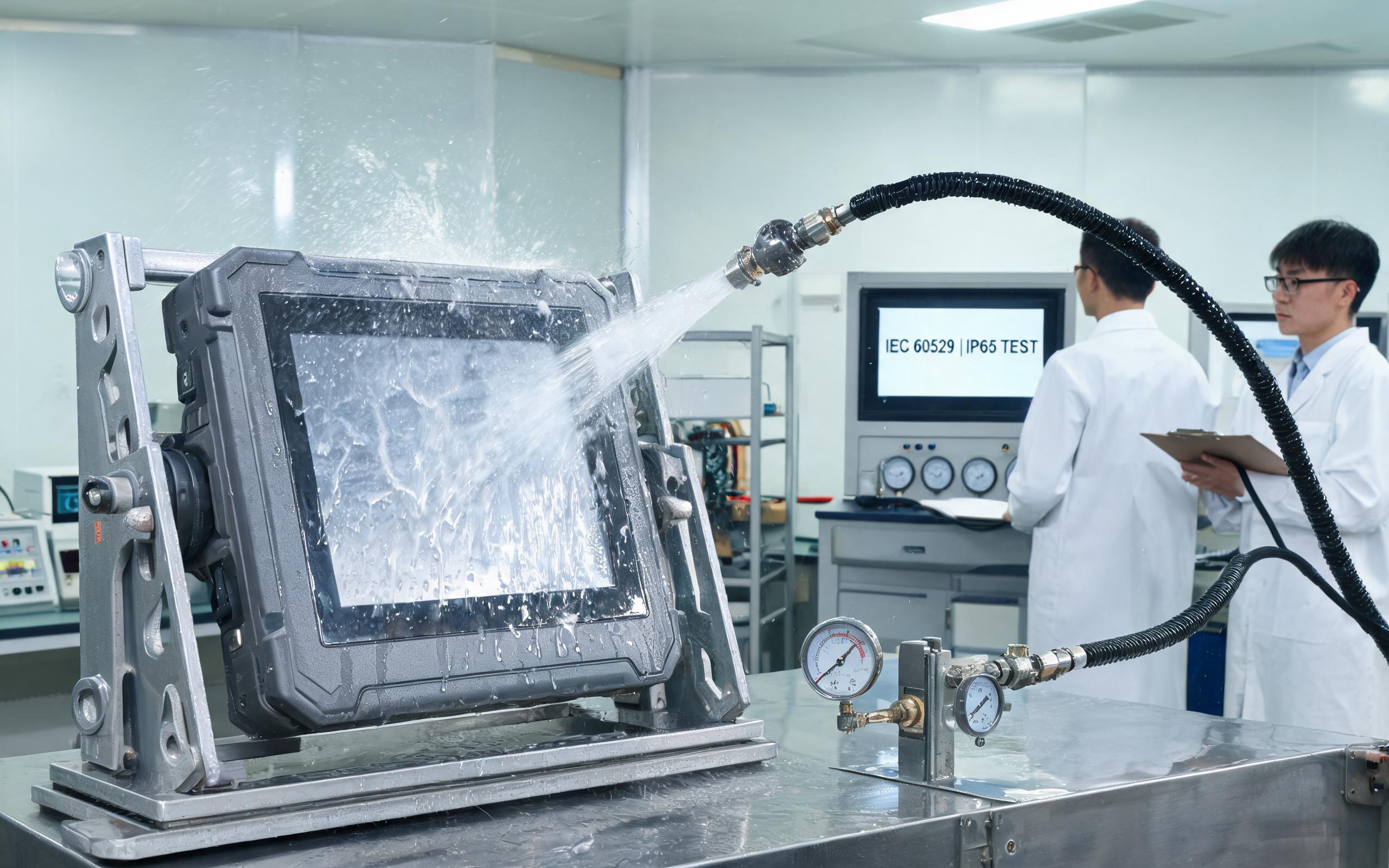
Datasheet IP65 claims vary in scope and test rigor. Some manufacturers test only the front panel per IEC 60529, using a 6.3 mm nozzle delivering 12.5 liters per minute at 3 meters for at least 3 minutes. Others test the complete unit including all connector ports and cable entries.
Procurement teams should request the test report specifying which surfaces were evaluated. The test fixture, water pressure, and duration all change when the rear chassis must also withstand direct jets.
Third-party certification from an accredited laboratory carries more weight than self-declared ratings. For critical deployments, specifying full enclosure IP65 with third-party evidence in the purchase order eliminates ambiguity.
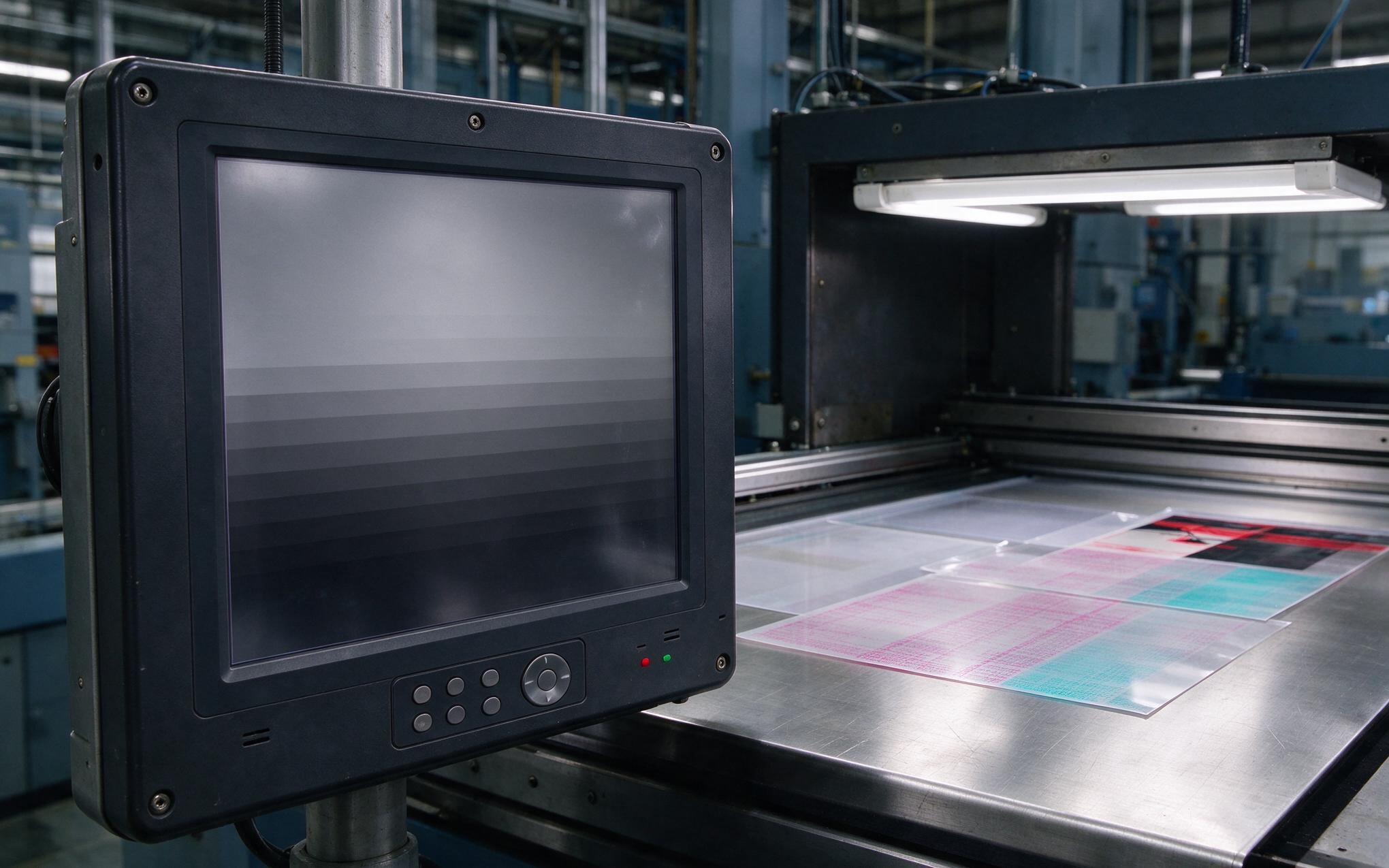
Field verification matters equally. After installation, inspect gasket compression uniformity around the bezel perimeter. An ip65 touch screen that passes factory testing can still leak if the mounting cutout has burrs, warpage, or insufficient flatness preventing uniform gasket contact.
The distinction between front-only and full enclosure IP65 ratings determines whether a panel PC survives its intended environment. Panel-mount installations inside cabinets work well with front-only protection. Exposed mounting on arms, pedestals, or walls demands full enclosure sealing. Matching gasket material to the chemical exposure profile, verifying test scope, and inspecting the mounting surface during installation complete the due diligence that separates reliable deployments from premature water damage.