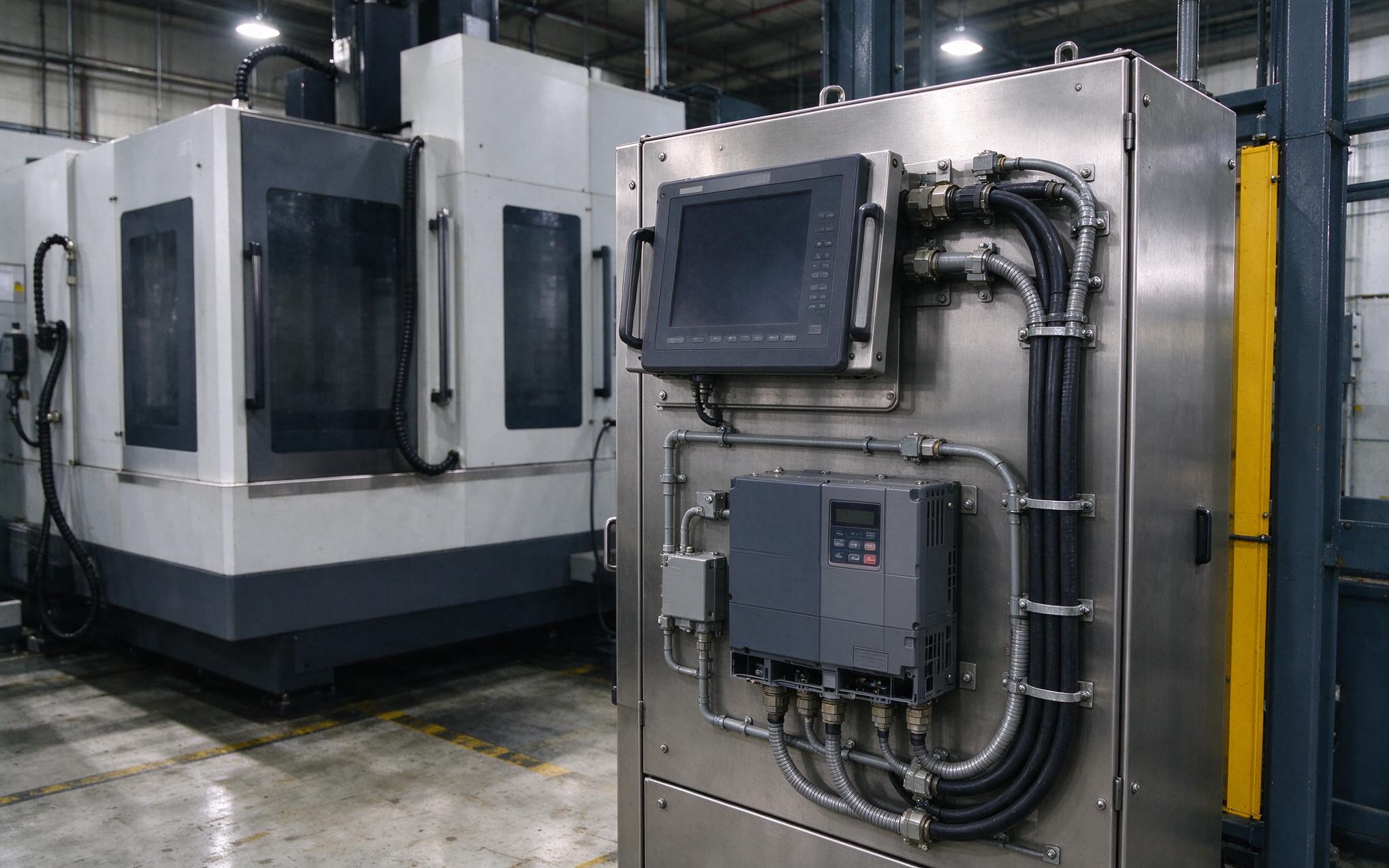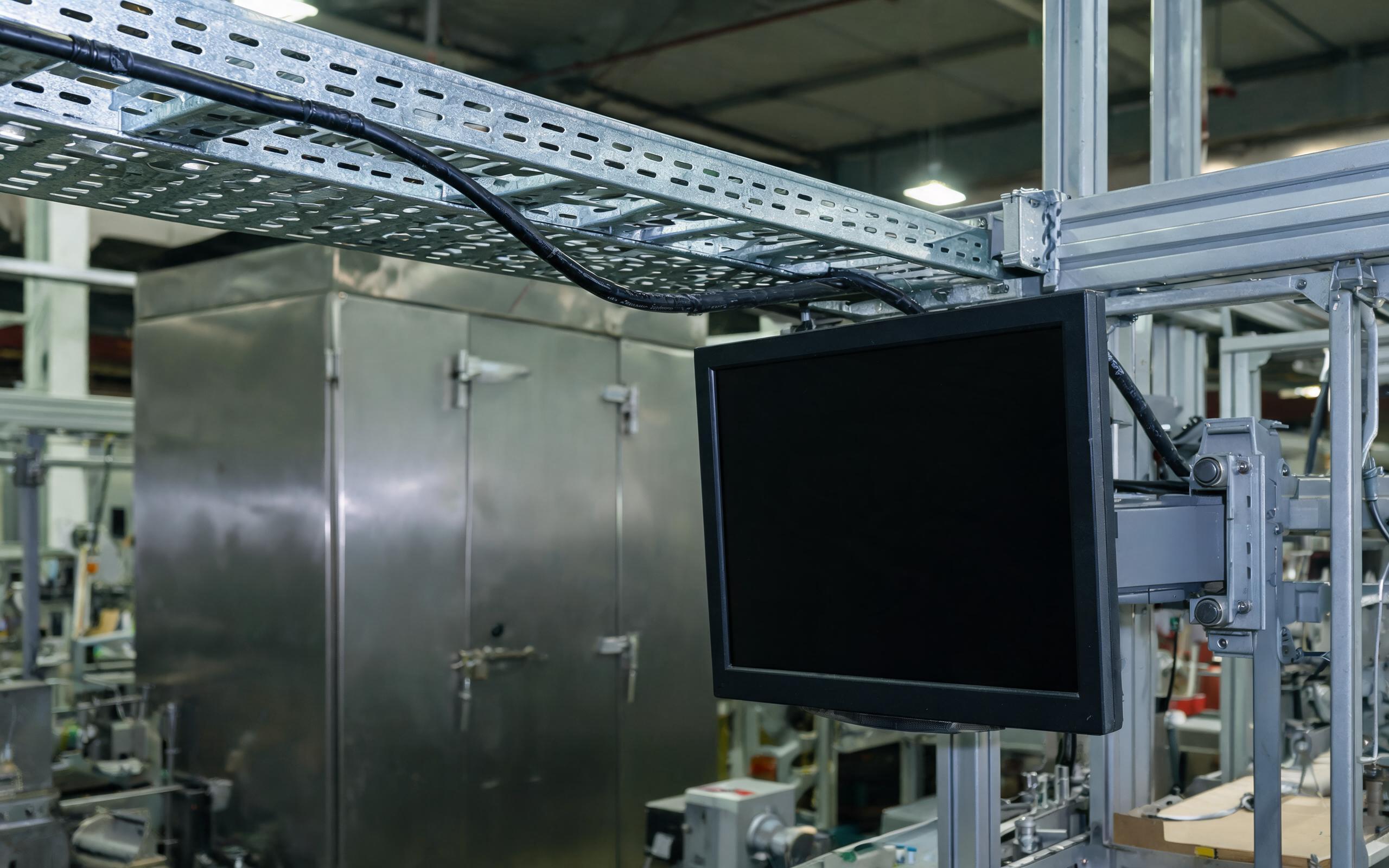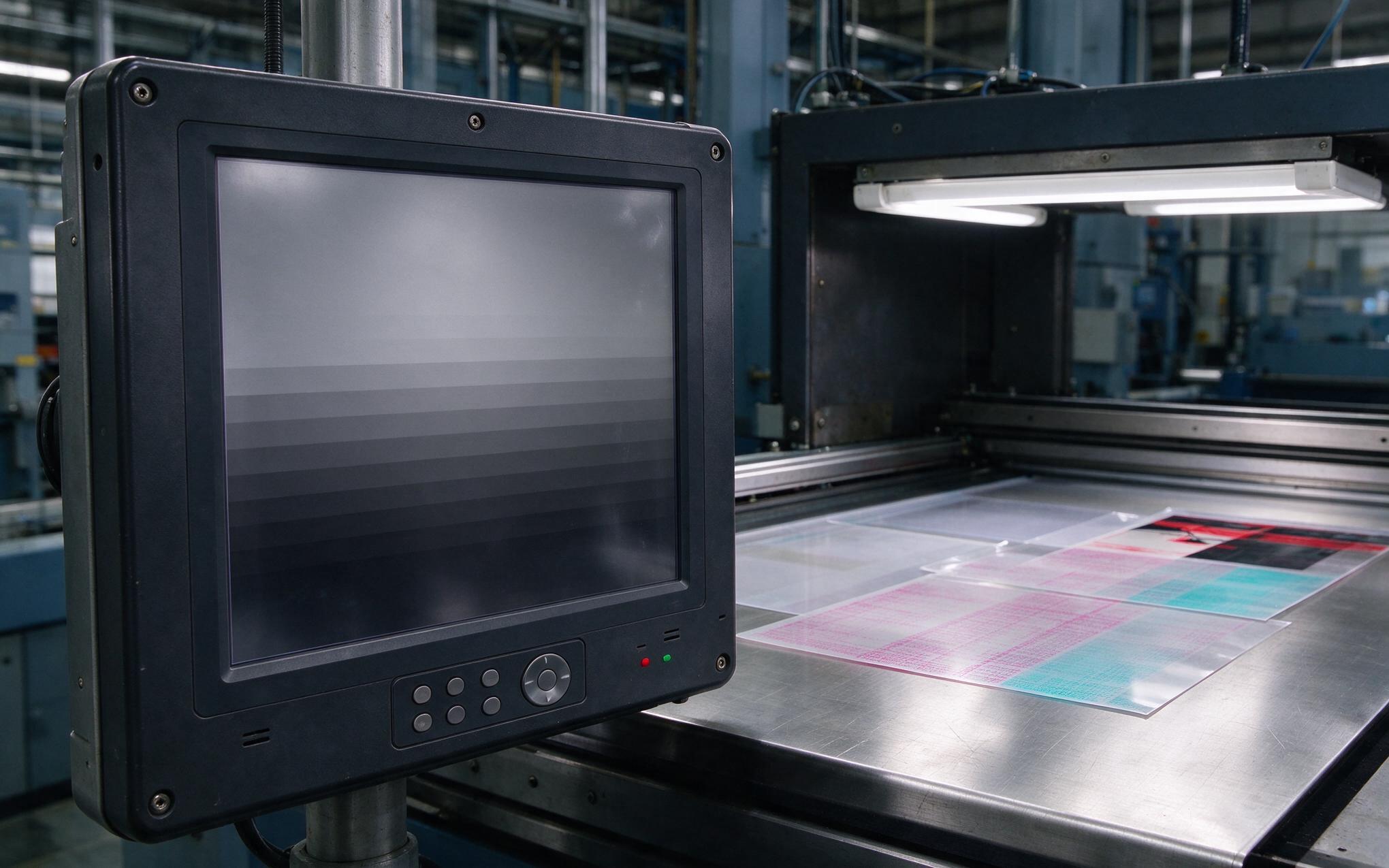
An industrial panel mount display that passed a bench seal test can still admit moisture three months into service, and the cause is rarely the gasket material. It is the order and magnitude of the force applied to the mounting clips during installation. Every industrial panel mount display depends on a rubber or silicone gasket squeezed between the bezel flange and the cabinet face, and that seal performs only inside a narrow compression window. Too little load leaves a channel for dust; too much drives the elastomer past its elastic limit so it never recovers. Installers working under schedule pressure tend to run each clip down fully in sequence around the frame, which is precisely the pattern that distorts the seal.

Why Clip Torque on an Industrial Panel Mount Display Is Deliberately Low
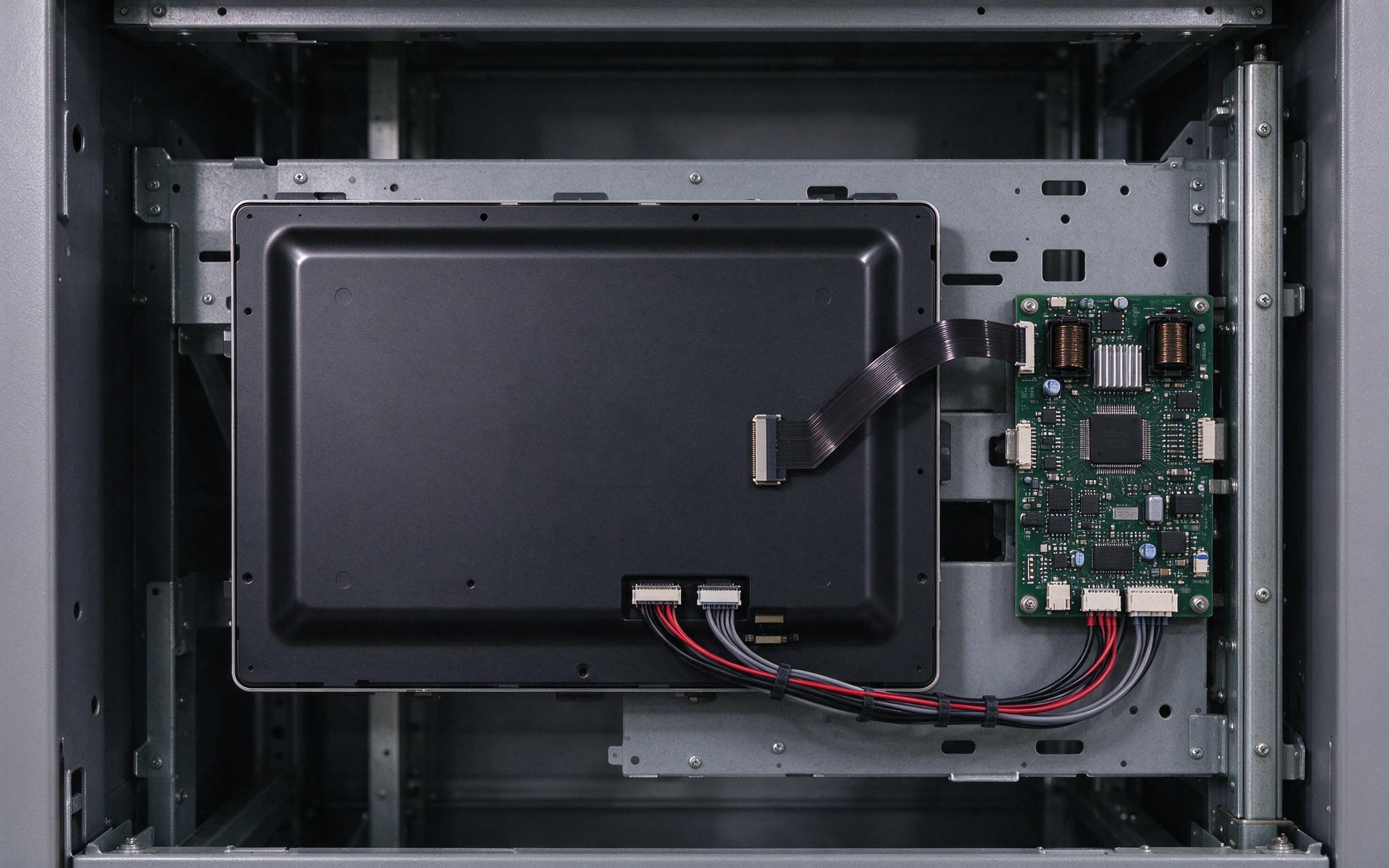
Panel manufacturers publish clip torque figures that sit far below what a technician would apply by feel. Siemens specifies 0.5 Nm for the mounting clips on its panel adapter frames, a value most people would consider barely snug. That figure exists because the clip is not a structural fastener; it only holds the gasket at its target compression, commonly 25 to 35 percent of free thickness for a sealed front face. Exceeding the figure does not improve protection. It thins the elastomer, reduces its ability to follow surface irregularity, and transfers bending stress into the bezel. On larger diagonals the bezel can bow visibly between clips, opening a gap at the midpoint of each long side while the corners remain tight.

Cross-Pattern Sequencing and Multi-Pass Tightening
Sequence matters as much as magnitude. Tightening clips consecutively around the perimeter walks the gasket toward the last fastener and traps uneven strain in the material. The reliable method mirrors flange practice in piping: seat every clip finger-tight, then bring them to specification in a cross pattern moving to the opposite side of the frame each time, in two or three passes rather than one. Engineers often evaluate structural rigidity through real-world hardware designs, such as the aluminum chassis implemented in the KOXIAN G1 series, to judge how much bezel stiffness is available to distribute clip load between fixing points. A rigid one-piece flange tolerates minor sequence error; a thin stamped frame does not.

Cutout Flatness, Roughness, and Panel Thickness Limits
The cutout that receives an industrial panel mount display carries half the responsibility for the finished seal, and it is the half most often ignored. Siemens conditions its IP65 rating on a panel thickness of 2 to 6 mm, a cutout flatness deviation no greater than 0.5 mm, and a sealing surface roughness of Rz 120 or better. A cutout produced with a nibbler and left unfiled will exceed the roughness limit and leak regardless of clip torque, because the gasket cannot conform to a burred edge at the available compression. Painted cabinet faces introduce a second problem: paint under a compressed gasket continues to cold-flow for weeks, so a joint that measures tight at commissioning loses load as the coating relaxes. To counter dust ingress, industrial hardware manufacturers, including KOXIAN, use seamless front bezel sealing so that the gasket path has no corner joint where these tolerance errors accumulate.

Reading Compression Set on a Removed Gasket
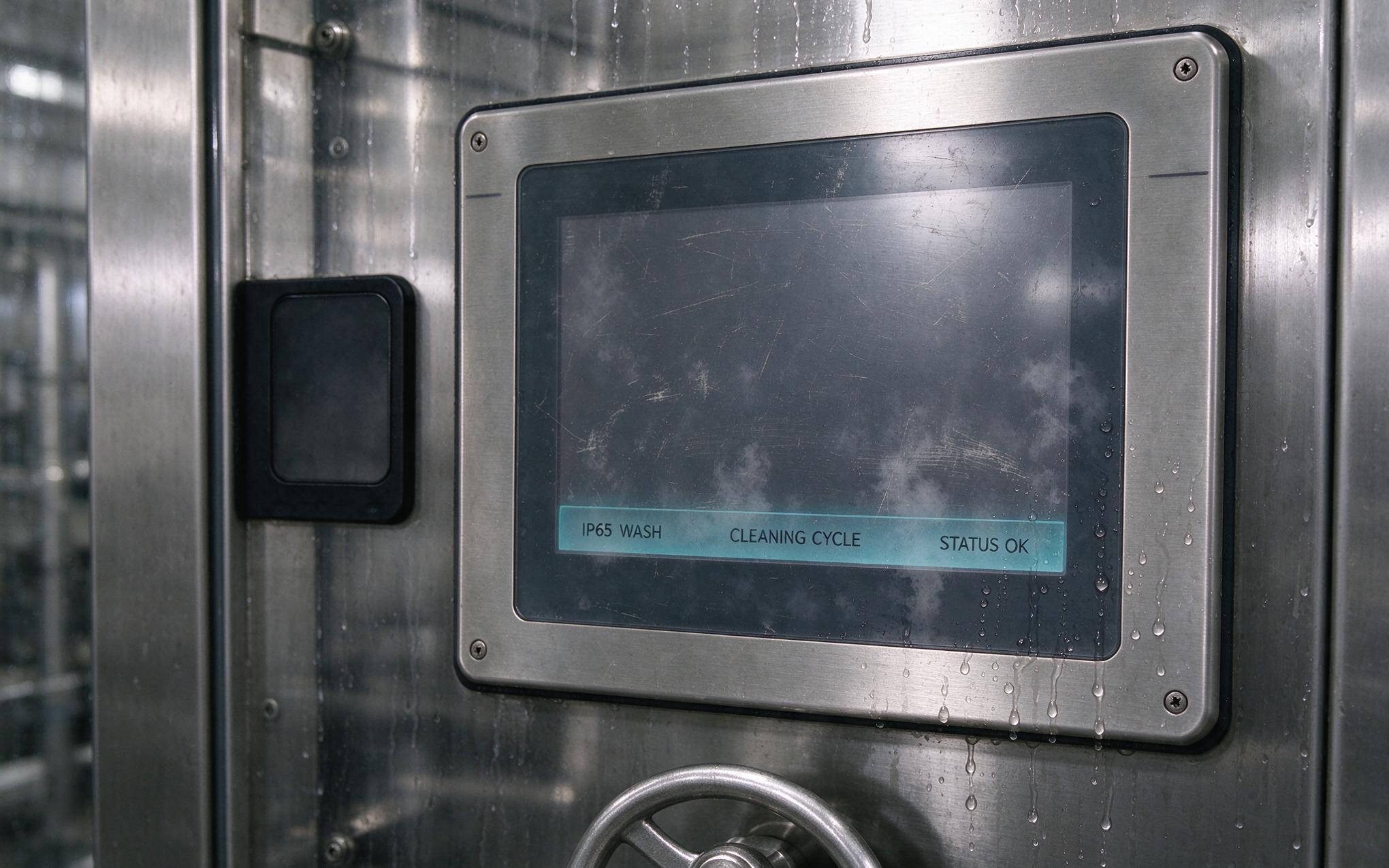
Compression set is the failure mode to look for during maintenance, and it reads clearly on a removed gasket. Uniform shine across the full contact band indicates correct loading. A flattened glossy stripe along one edge with the opposite edge still rounded means that edge was over-compressed, usually by a corner clip taken down hardest at the outset. Elastomer choice changes the timeline: silicone recovers better after long static load and tolerates caustic cleaning agents, while standard nitrile hardens and takes permanent set faster in the same duty. Field observations from harsh food packaging environments show that hardware configurations utilizing KOXIAN industrial panel displays retain sealing contact through repeated washdown when gaskets are replaced rather than reused after any bezel removal.
Sealing performance on an industrial panel mount display is an assembly discipline, not a datasheet property. A cutout held to published flatness and roughness limits, clips brought to the specified value in a cross pattern over multiple passes, and a new gasket at every reinstallation will hold protection for the service life of the equipment. Sites that record clip torque in the commissioning checklist and inspect removed gaskets for uneven set catch installation error before it becomes a water damage report.