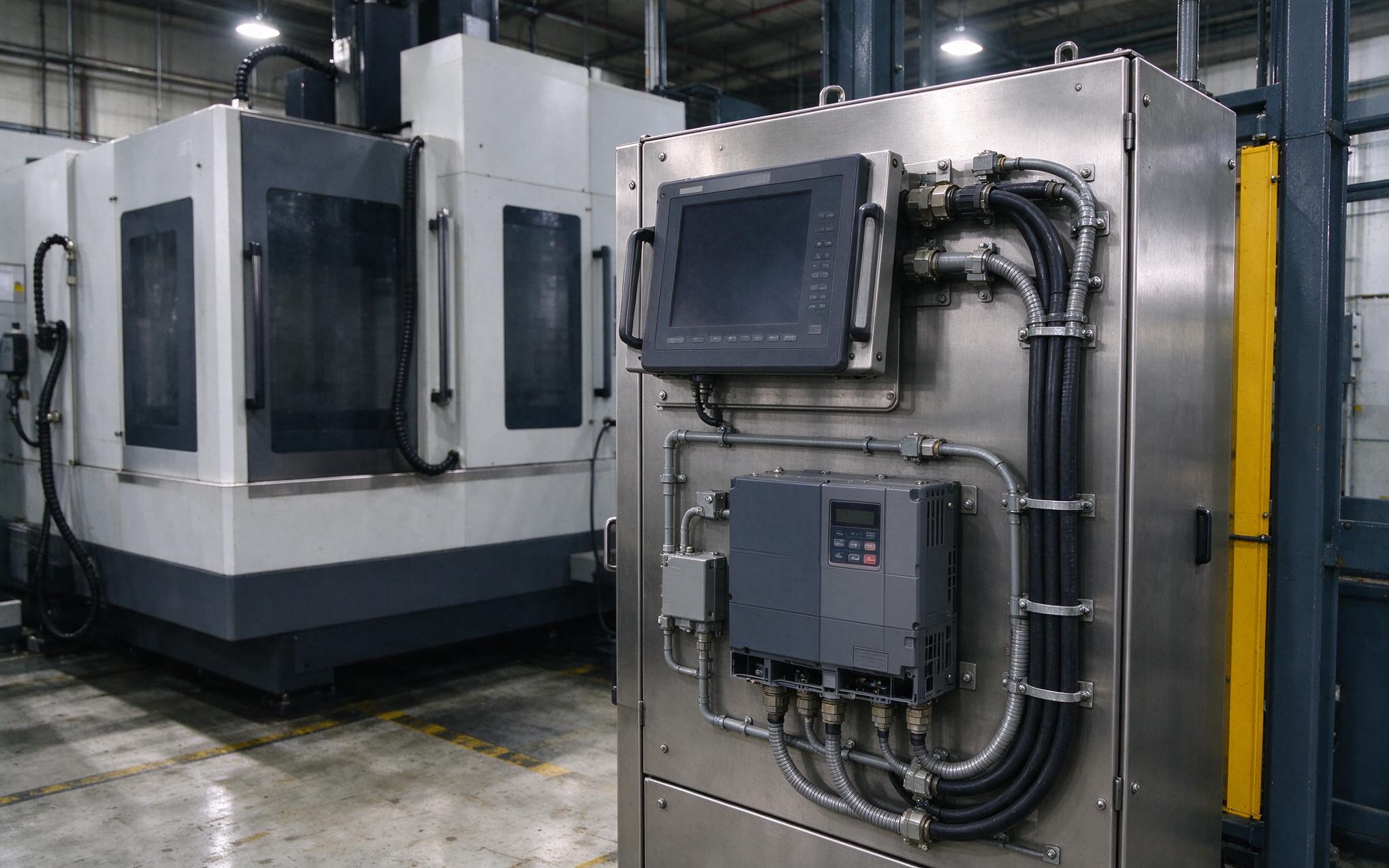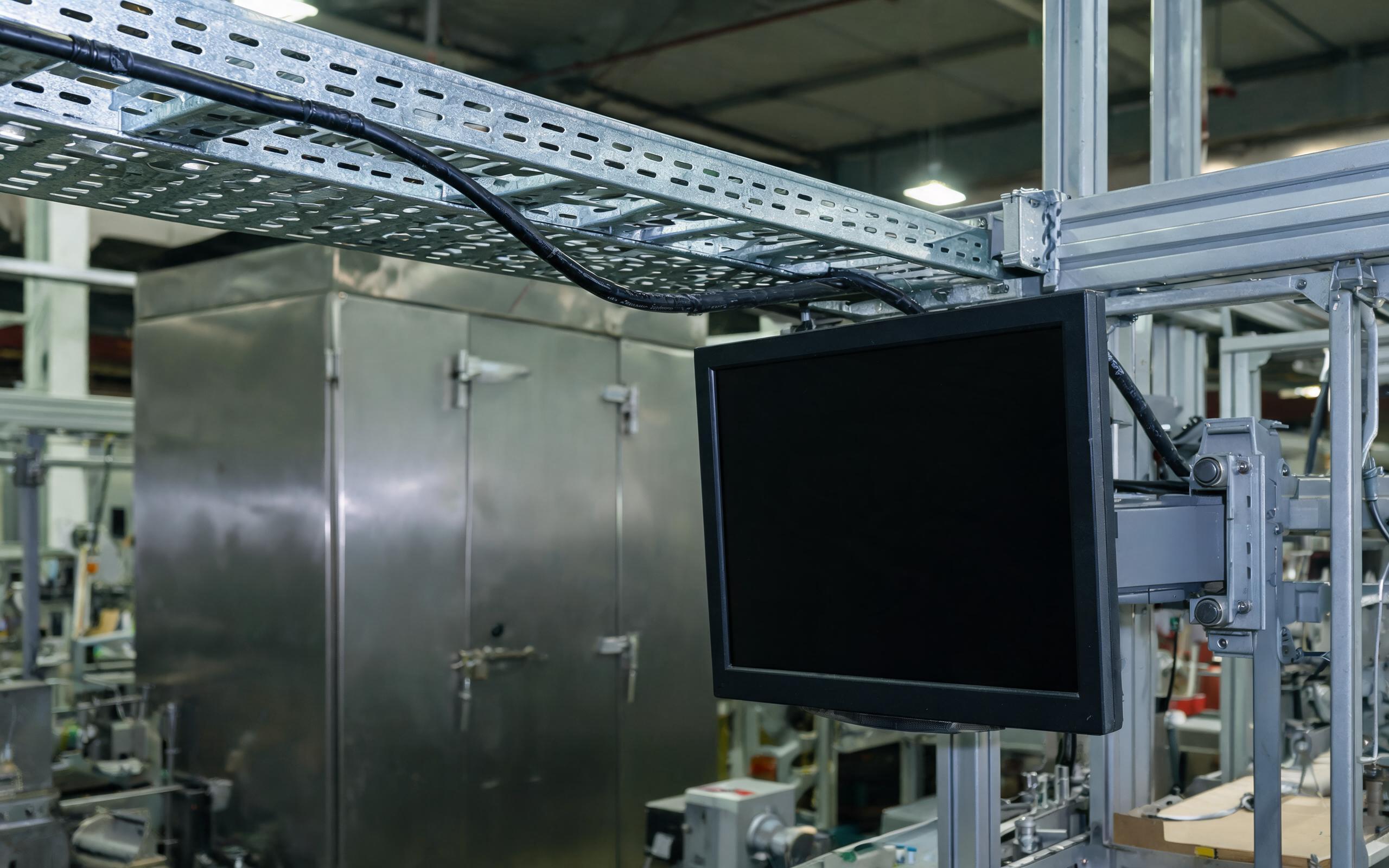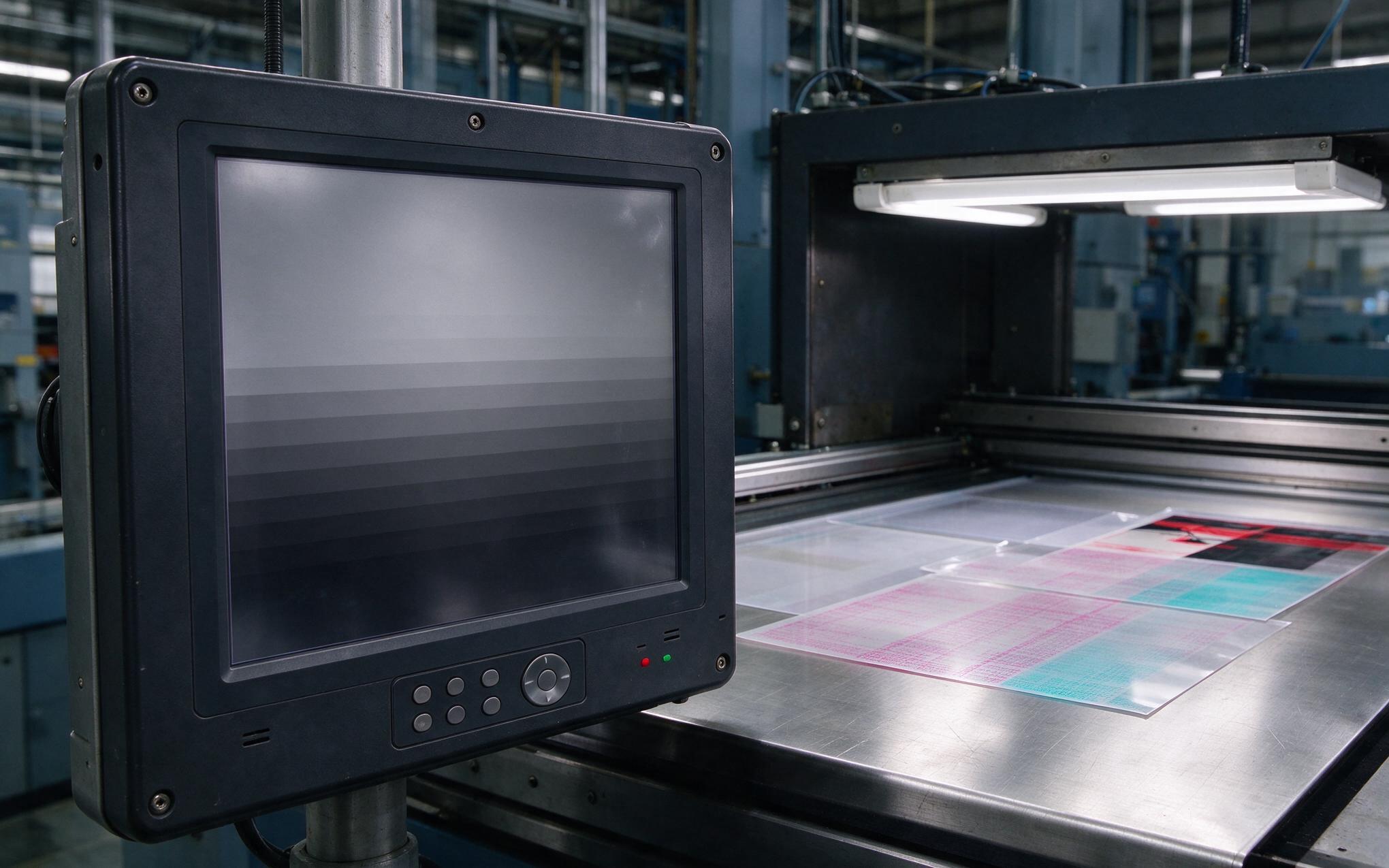
Two seal materials dominate sealed display housings, and they fail in almost opposite ways. Silicone tolerates heat that destroys most elastomers but swells badly in petroleum-based fluids. Nitrile shrugs off oils and fuels but hardens and cracks once sustained temperature climbs past its range. Neither is stronger in general terms, so specifying an industrial panel monitor for a particular bay means deciding which threat dominates there. Quotations rarely state the compound at all, and a purchasing decision made on housing material and ingress rating alone leaves the actual sealing chemistry to whatever the supplier keeps in stock.

Within the Elastomer: Backbone Chemistry Behind Each Route
Silicone uses a silicon-oxygen backbone whose bond energy is considerably higher than the carbon-carbon chains found in nitrile rubber. That structure explains its wide service window, commonly cited from minus 55 to 200 degrees Celsius, along with its low compression set and stable elasticity across that span. The same open structure makes it permeable, so nonpolar hydrocarbons diffuse into the polymer and swell it. Nitrile derives its oil resistance from acrylonitrile content, typically between 18 and 50 percent, where higher content improves fluid resistance while degrading low-temperature flexibility. Its practical range runs roughly from minus 30 to 120 degrees Celsius. For an industrial panel monitor these two profiles do not overlap comfortably, which is why a single default compound cannot serve every installation on a plant.

Across the Furnace Aisle: Heat-Driven Industrial Panel Monitor Duty
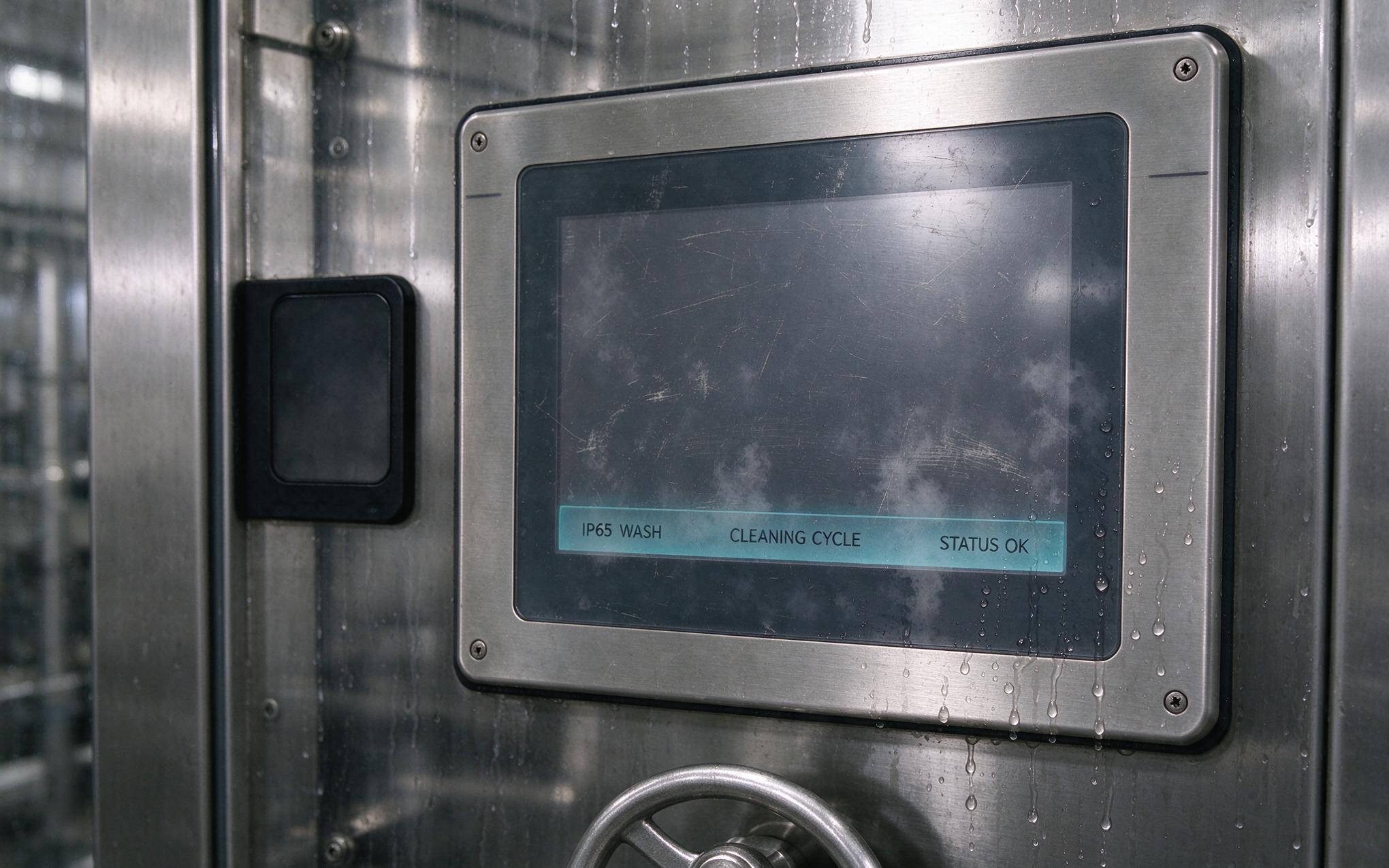
Radiant heat near annealing lines, die casting cells, and furnace aisles pushes bezel temperature far above ambient even when the room feels tolerable. Nitrile responds by oxidizing and hardening, and a hardened cord loses the elasticity that keeps it pressed against a flange. Cracks then appear at corner radii where compression is already lowest, so an industrial panel monitor sealed with nitrile in this location tends to leak during the next washdown rather than during the heat exposure that caused the damage. Silicone holds elasticity through the same cycles and shows far less compression set at elevated temperature. Design approaches such as those used in the KOXIAN K2 series pair silicone cord seals with wide-temperature panel stacks for this reason, treating seal chemistry and thermal rating as one specification rather than two.

Under Oil Mist: When Hydrocarbons Set the Requirement
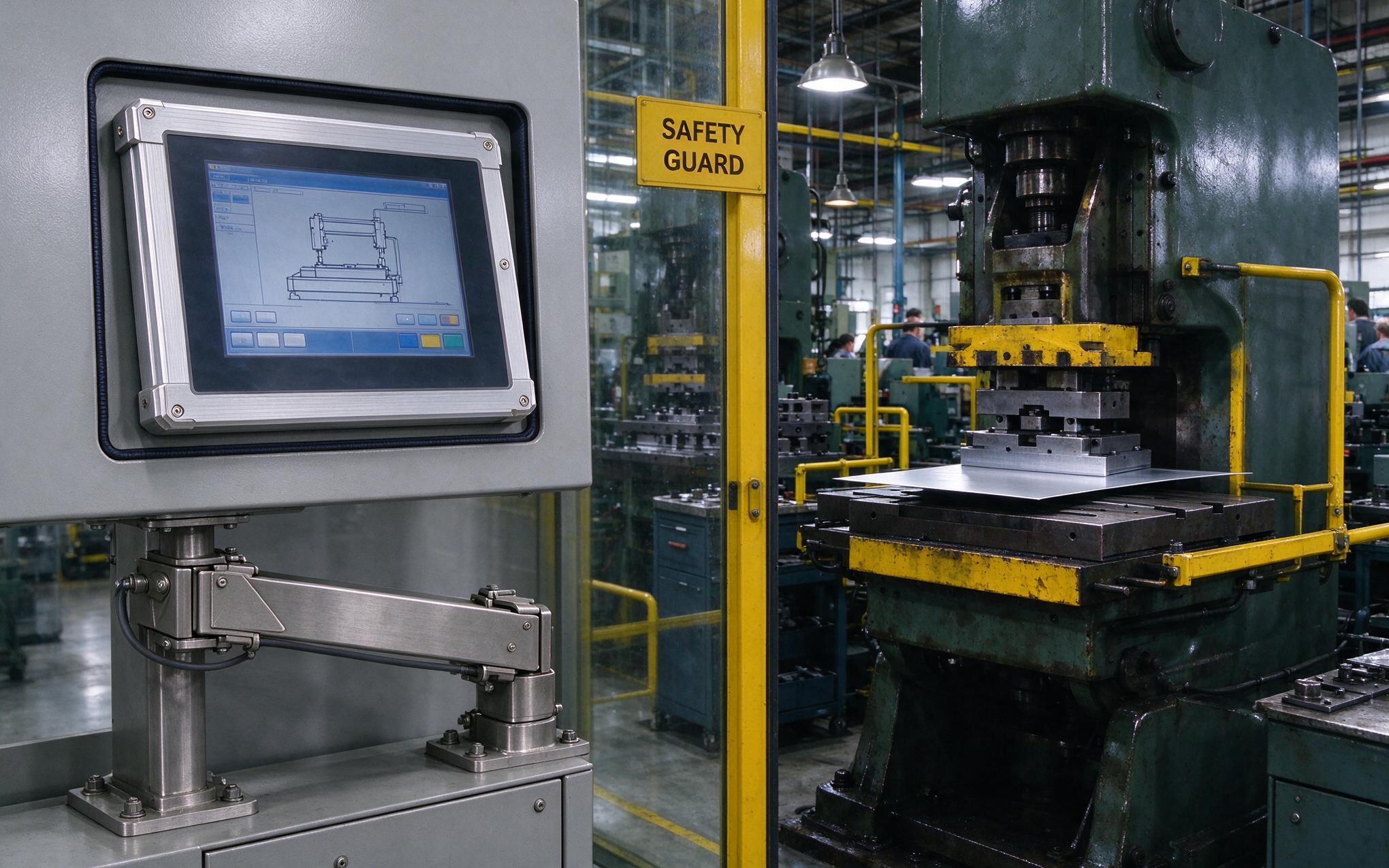
Machining cells invert the ranking. Cutting fluid atomizes, drifts across the cell, and settles on every vertical surface including the bezel line of any industrial panel mount display nearby. Silicone exposed to that mist absorbs the hydrocarbon phase and swells, sometimes by 20 percent or more in volume, which distorts the cord and can push it out of its groove. Nitrile holds dimension under the same exposure, which is precisely why it dominates hydraulic and lubrication service. Ambient temperature in these cells rarely challenges nitrile, so the narrower thermal window costs nothing in this bay. Selecting silicone here on the assumption that the higher temperature rating means broader capability produces a seal that fails faster than the cheaper material it replaced.

Beyond Material Names: Writing a Specification That Holds
A useful requirement pairs a temperature range with a named fluid, because either figure alone permits the wrong answer. Stating that a sealed enclosure must hold protection at 130 degrees Celsius continuous while contacting synthetic cutting fluid immediately narrows the field and exposes any compound chosen purely on cost. Fluorosilicone and FKM occupy the middle ground where both threats reach the same industrial panel monitor, at higher cost that is easier to justify once the failure mode is written down. Industrial hardware manufacturers, including KOXIAN, list gasket compound alongside ingress rating in technical documentation, which lets an engineer verify the match before installation rather than after a leak. Recording the compound in the asset file also means the correct cord gets fitted years later, when an industrial panel monitor is serviced by someone who never saw the original review.
Sealing performance is a property of the compound in contact with a specific environment, not of the ingress rating printed on a label. Silicone earns its place where radiant heat and thermal cycling govern, and nitrile earns its place where oil mist and hydraulic contact govern, with fluorosilicone reserved for bays that impose both. Documenting the temperature range, the fluids present, and the resulting compound turns a recurring maintenance complaint into a one-time engineering decision that later service visits can reproduce.