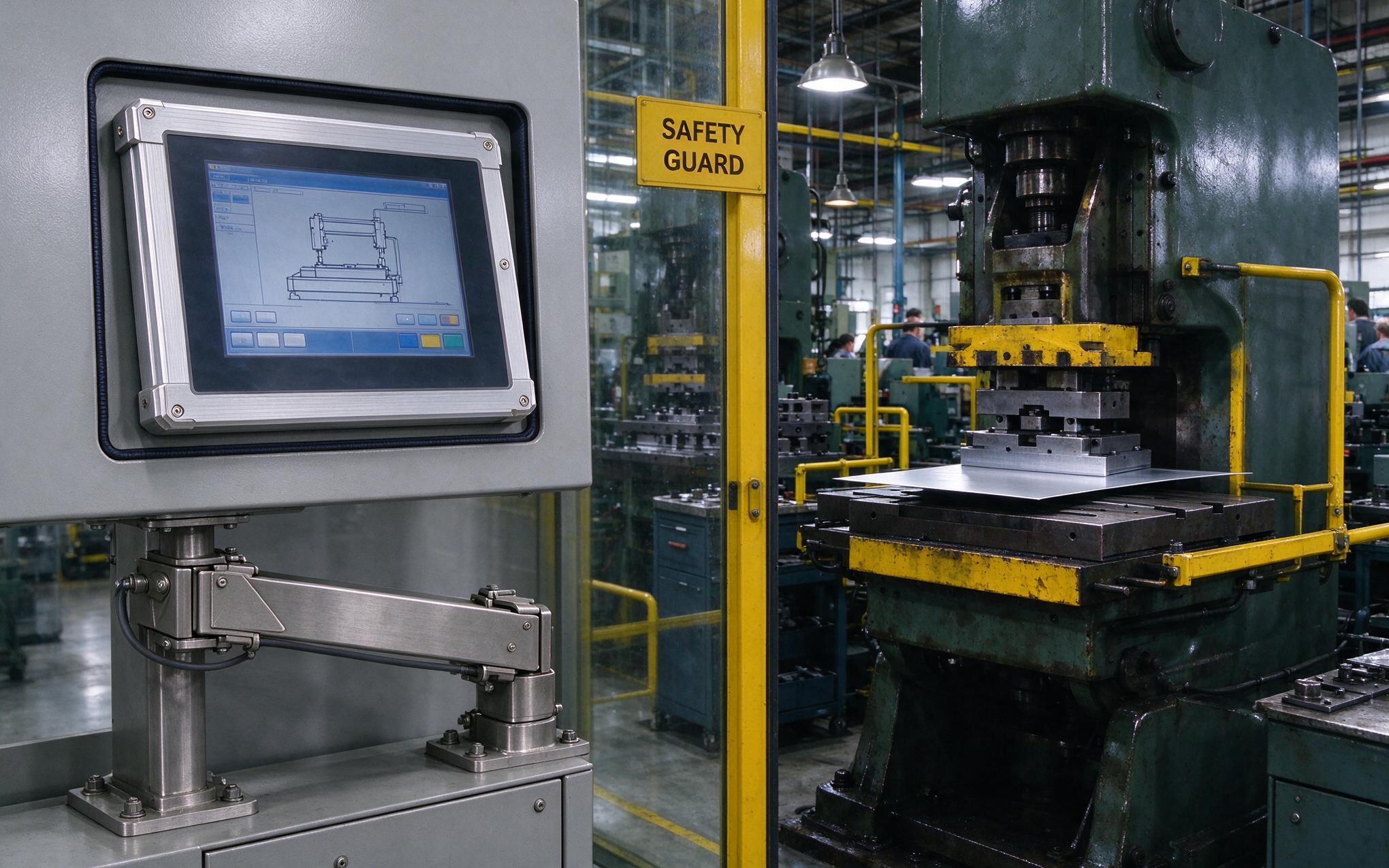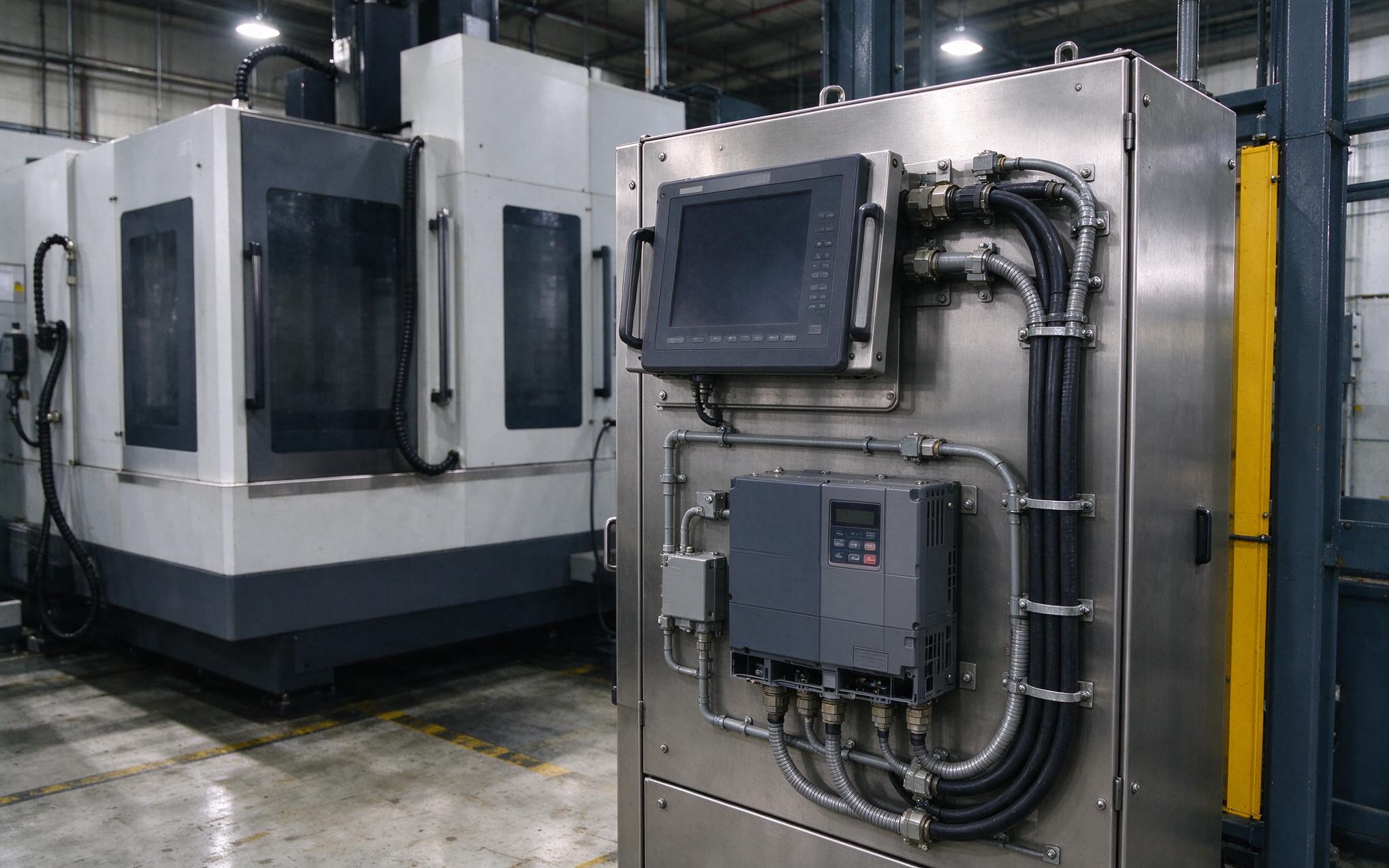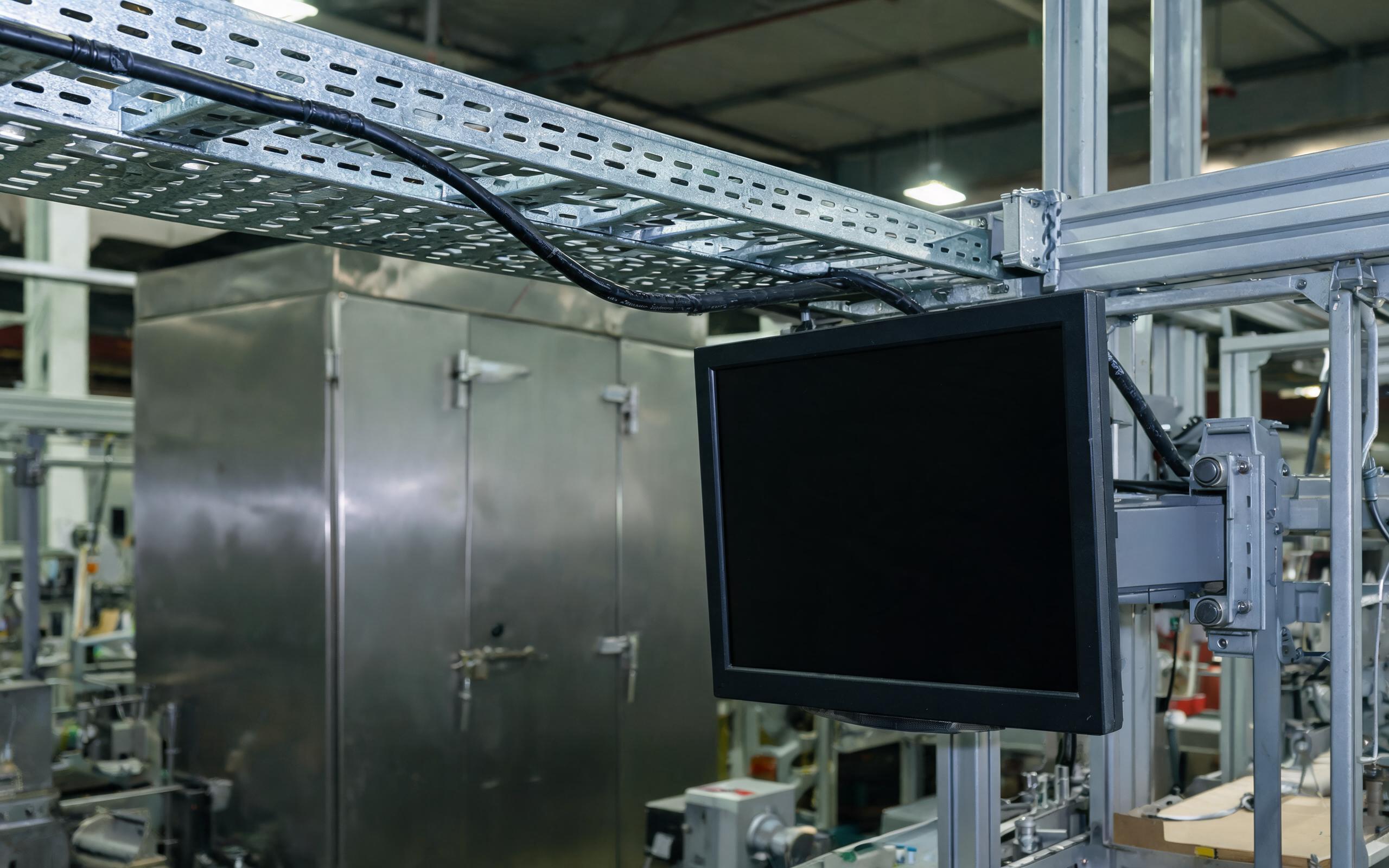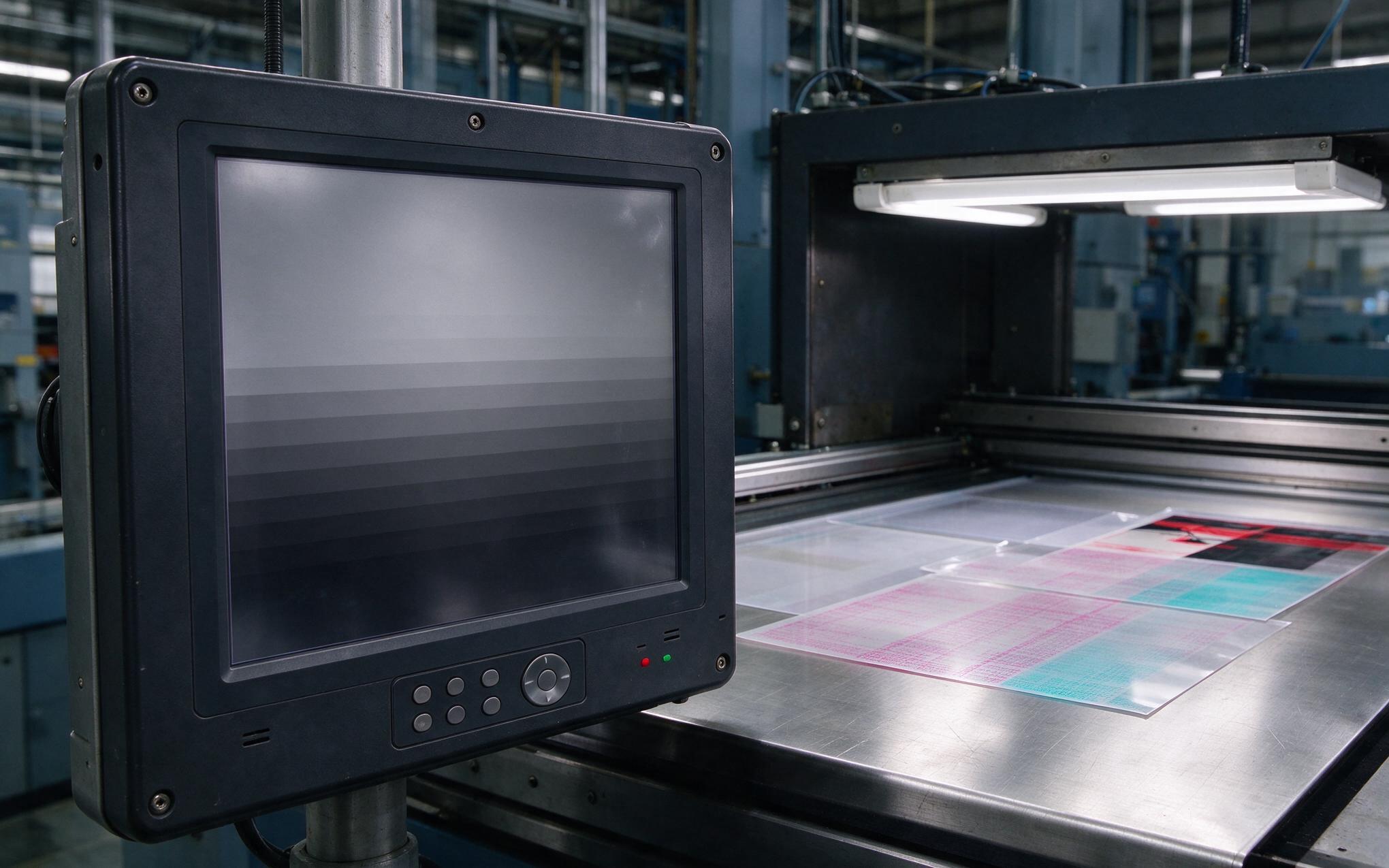
Maintenance crews at a stamping plant walk the line each Monday morning and reset three industrial monitors that came up blank after the opening press cycle. Nothing is wrong with the screens. The 24 VDC rail feeding them sags to 17 volts for roughly 40 milliseconds when the hydraulic pump motor starts, and the monitor power stage drops out before the sag clears. Drives on the same cabinet rail ride through the identical event without complaint because they carry far more bulk capacitance. Industrial monitors, sized for a fraction of that load, have much less stored energy to spend. Ride through behavior belongs in the selection conversation alongside brightness and touch technology.

Under a Sagging Rail When Large Motors Start
Voltage sag on a shared control rail is a routine event rather than a fault condition. A contactor closing on a 15 kilowatt pump pulls inrush that briefly loads the supply beyond its regulation band, and cable resistance between the supply and the far end of the cabinet turns that current into lost volts. Builders such as KOXIAN specify a wide input range partly for this reason, since industrial monitors that accept 9 to 36 volts keep running through an excursion that would trip a narrow range design. A wide voltage industrial display therefore survives conditions that shut down a device rated only for 24 volts plus or minus ten percent. Measured depth and duration matter more than the nominal figure printed on the label, and a scope across the terminal block reveals both within a single shift.

Within the Hold Up Window of the Power Stage
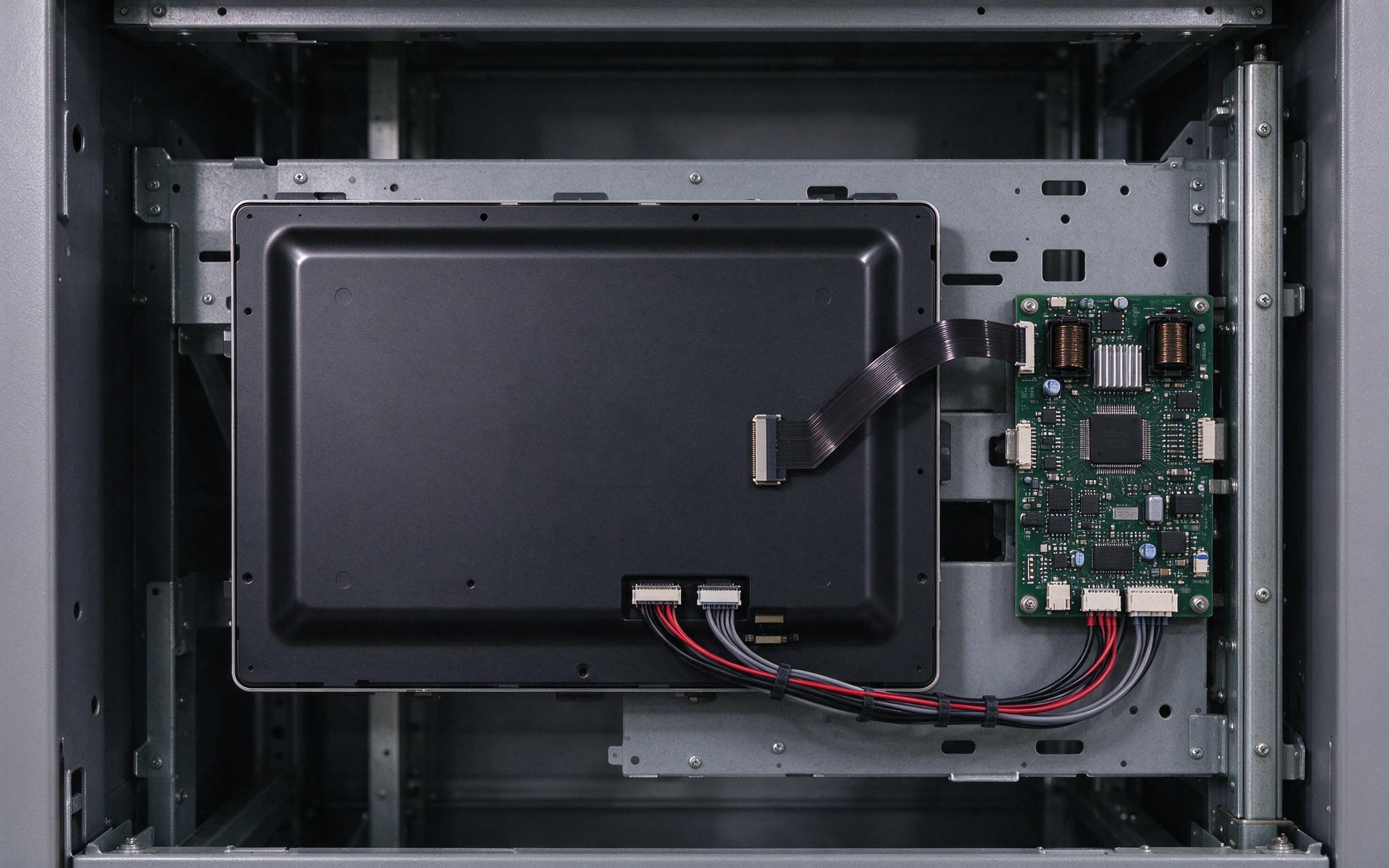
Hold up time is the interval a power stage keeps its output in regulation after input voltage collapses. It is set by bulk capacitance, by the undervoltage lockout threshold of the converter, and by how much current the load draws while that reserve drains. Panel sized industrial monitors typically hold between 10 and 25 milliseconds, which covers a clean contactor bounce but not a motor start on a weak rail. Adding capacitance is not always possible inside a sealed enclosure, so some industrial monitors instead lower the lockout point or add a boost stage that pulls the rail back up as it falls. Requesting the figure in milliseconds, measured at full backlight, is far more useful than asking whether a unit tolerates brownouts.

Across Cabinet Rails Shared With Drives and Actuators
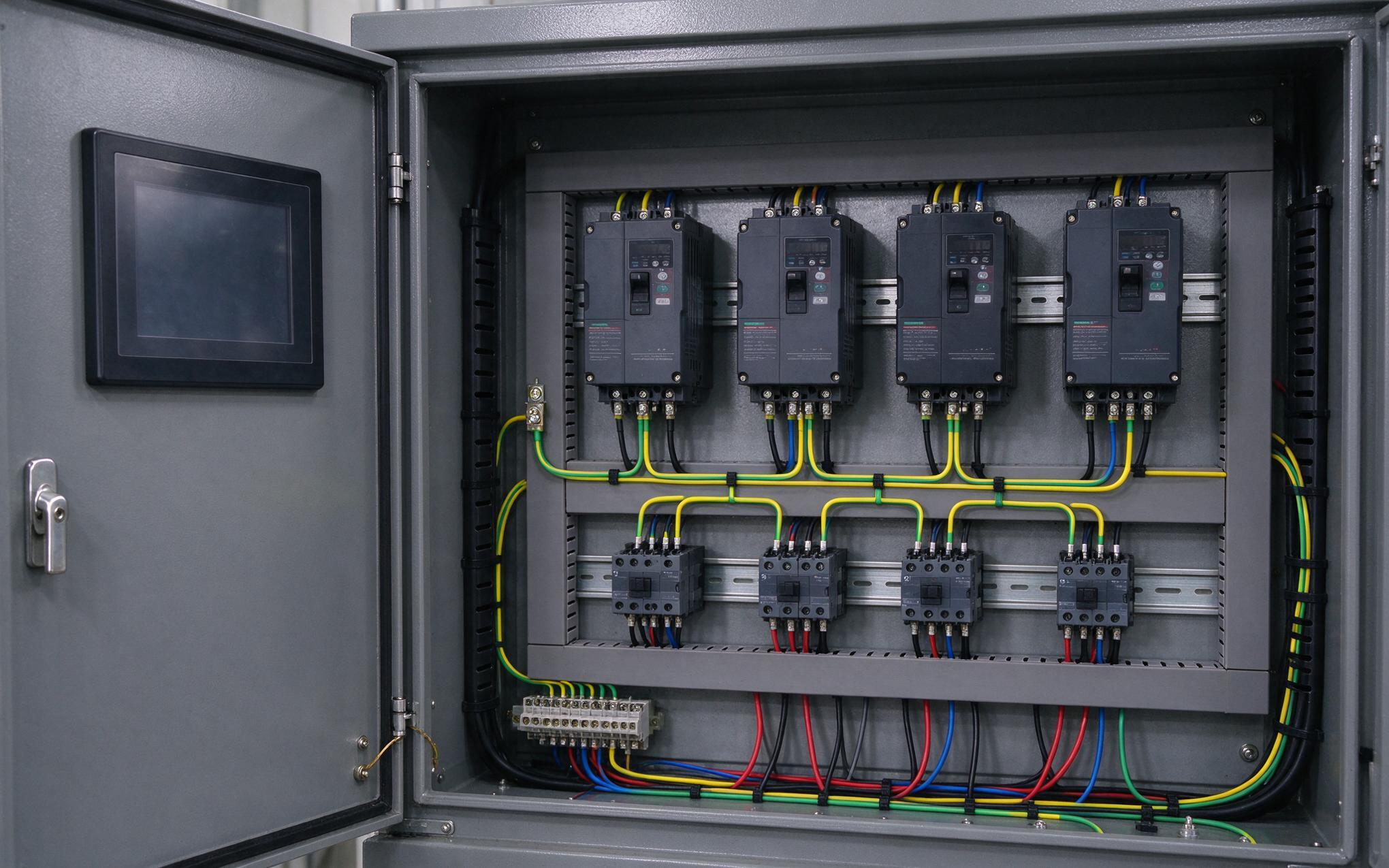
Shared rails create coupling that single device bench testing never exposes. A supply sized at 10 amps carrying 9 amps of connected load has no headroom for the inrush of a fourth device, and each added screen raises the standing current the reserve must support during a sag. Segregating industrial monitors onto a dedicated fused feed, or onto a second supply entirely, removes that interaction at modest cost. Where segregation is impractical, sequencing the loads so motors and screens never energize together achieves much of the same result. Star wiring from the supply terminals rather than daisy chaining along the rail also keeps the farthest device from seeing the accumulated drop of everything ahead of it.

Before Committing Ride Through Terms to a Purchase Order
Datasheets rarely publish hold up time, so it has to be requested directly. A useful reply states the input range, the lockout voltage, the hold up interval at full load, and whether the unit restarts automatically or latches off after a dropout. Latching behavior matters on unattended sites, since a screen that stays dark until someone cycles a breaker converts a 40 millisecond event into an hour of lost visibility. Vendors including KOXIAN publish input tolerance figures that can be compared across models whenever test conditions are stated. Industrial monitors destined for cabinets with large motor loads deserve a documented answer on all four points before the order is placed rather than after the next Monday morning reset.
Blank screens after a motor start are a power integrity symptom rather than a display defect. The rail sags, the converter reaches its lockout point, and the panel drops out while sturdier neighbors on the same terminals ride through untouched. Specifying industrial monitors for such cabinets means treating input range, hold up time, and restart behavior as selection criteria carrying the same weight as resolution or ingress rating. Measuring actual sag at the terminal block before ordering turns a recurring nuisance into a solved wiring and specification problem.