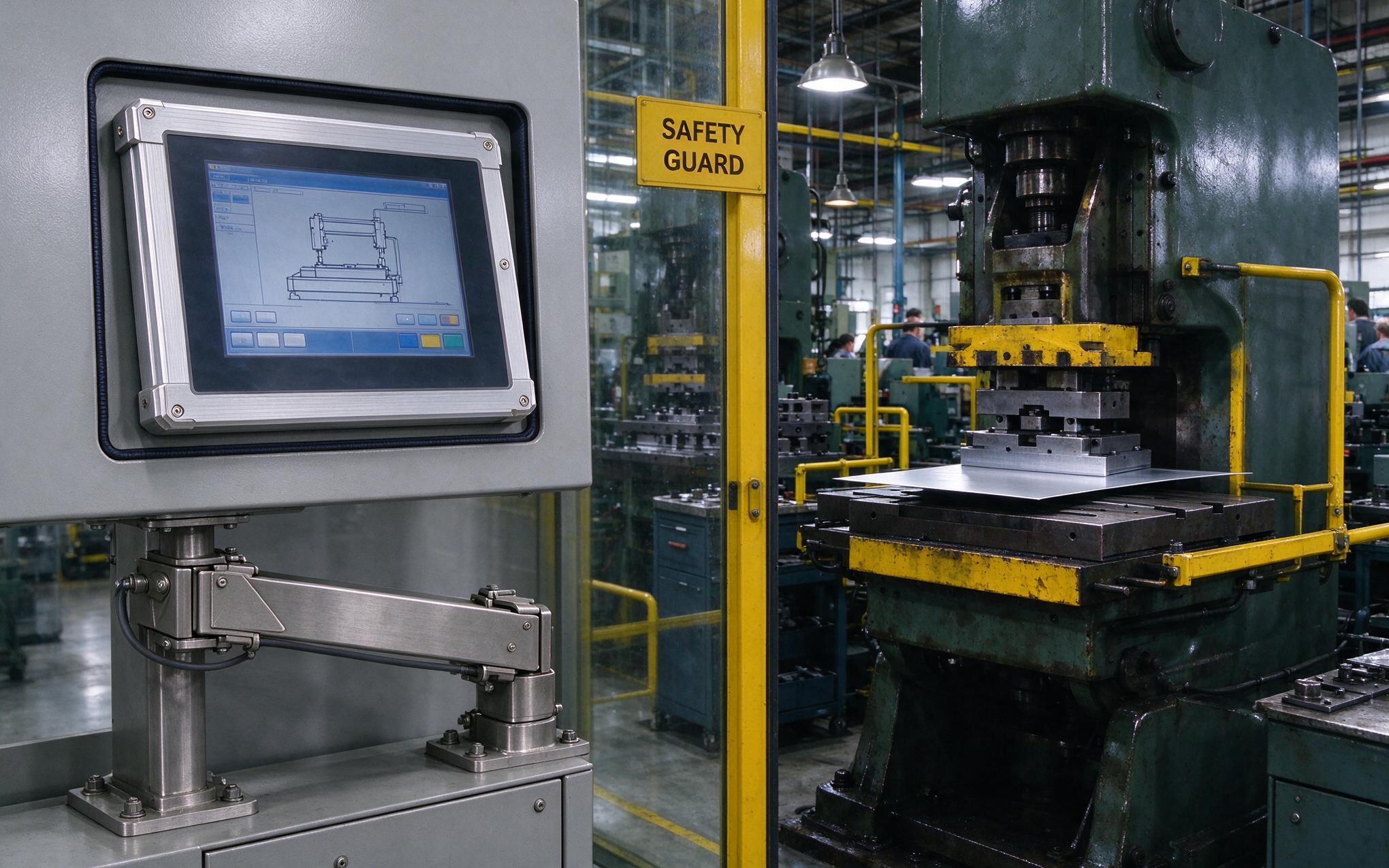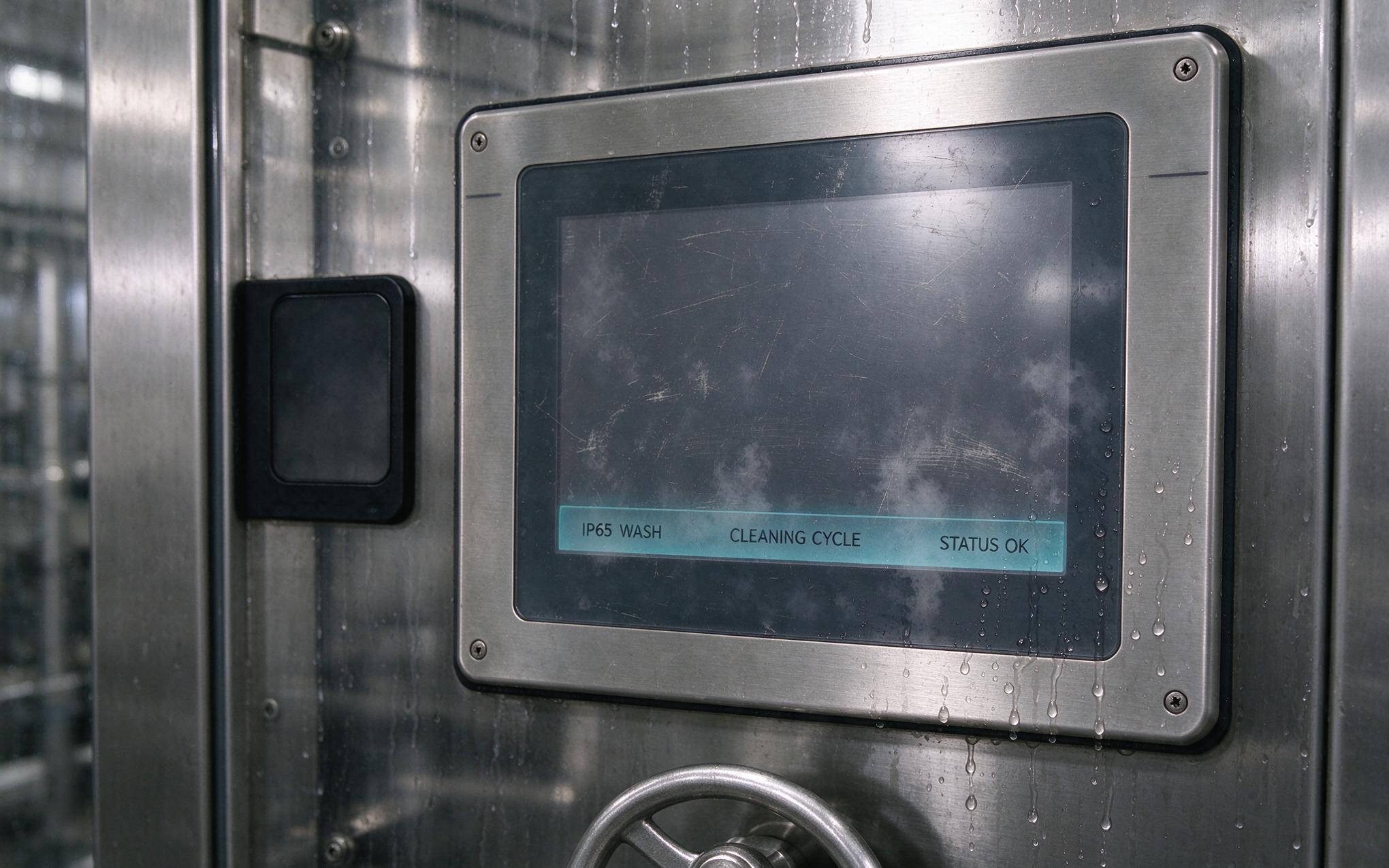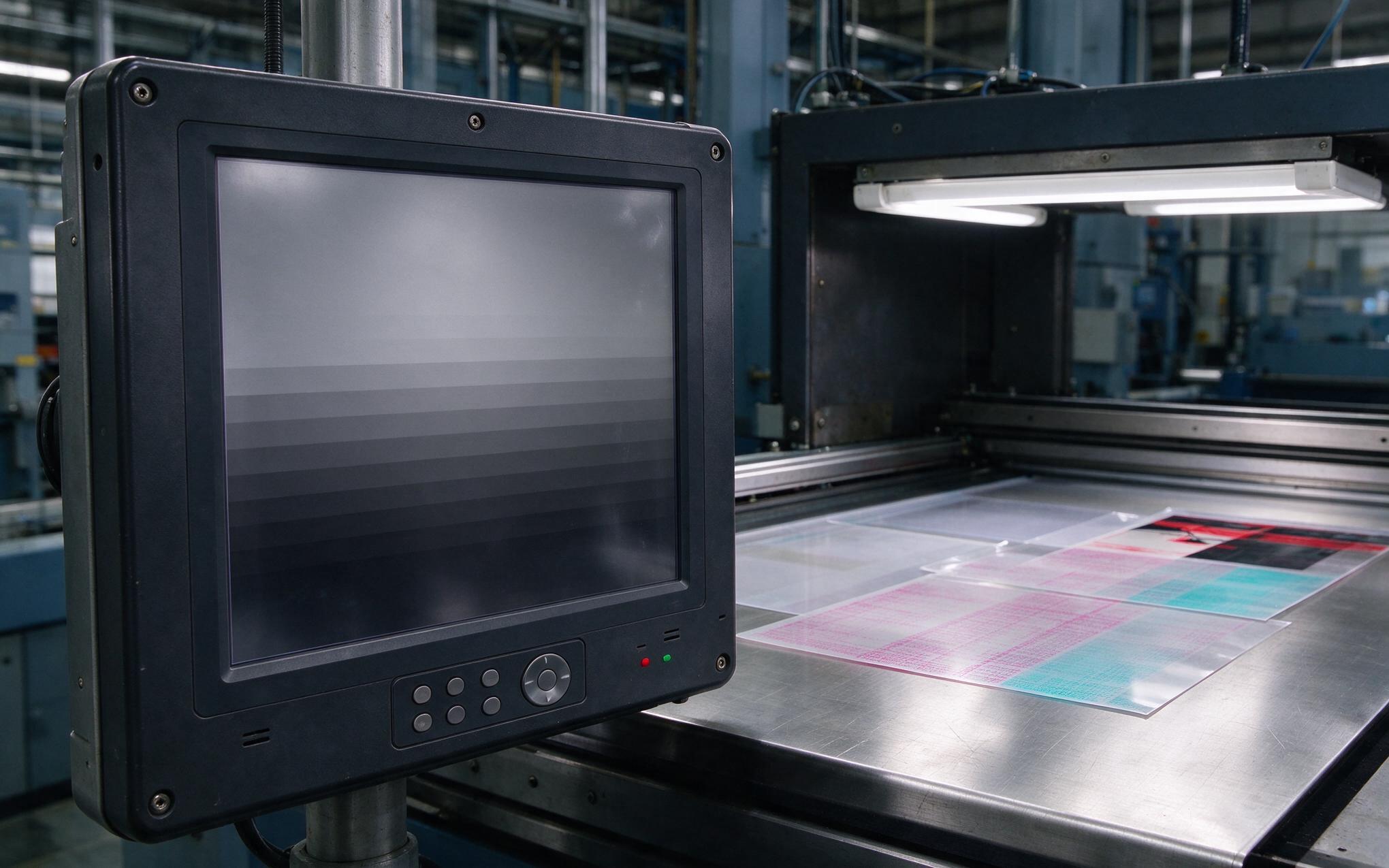
Sanitation crews hosing down a paint shop operator station at shift change subject the display to conditions no consumer panel survives: solvent-laden overspray, 60°C wash water, and gloved hands demanding accurate input through a film of moisture. An industrial grade touch screen earns that designation through sealed mechanical construction paired with capacitive algorithms tuned for wet conditions, not through a marketing label. Specifying the right unit for wet process zones requires understanding gasket compression mechanics, wet touch detection thresholds, and the rear enclosure ingress paths that most selection guides ignore entirely.

Why Gasket Compression Governs Front Bezel Sealing
The front bezel-to-glass interface is the most vulnerable point in any sealed display assembly. Water exploits any gap where gasket compression falls below the minimum threshold. Silicone gaskets compressed to 25 to 35 percent of their original thickness create the continuous seal that defines IP65 protection. Below 20 percent, the gasket fails to conform to surface irregularities, leaving capillary pathways for water ingress. Above 40 percent, silicone undergoes stress relaxation and loses resilience over thermal cycles. Screw spacing must distribute compression evenly; tightening perimeter screws in sequence rather than a star pattern creates localized over-compression zones that leak within months. The gasket must also resist degradation from cleaning agents and paint solvents. Silicone maintains flexibility across minus 40 to 200 degrees Celsius, making it preferable to EPDM or TPE for frequent washdown. An industrial grade touch screen specified for paint shop service should ship with a documented compression figure and torque sequence, not merely an ingress rating on the datasheet.

Tuning PCAP Algorithms for Splash-Prone Zones
A sealed enclosure keeps water out, but wet process zones expose the front glass to splashes and condensation that confuse touch controllers. Projected capacitive sensors must distinguish a gloved finger from a water droplet. An industrial grade touch screen controller implements frequency-hopping scans across the sensor matrix, comparing the capacitive signature of water against a conductive finger. Water produces a broad, low-amplitude change spread across adjacent nodes, while a finger creates a concentrated peak. When water dominates the detected pattern, the controller raises the threshold for affected nodes, suppressing false inputs without manual drying. Manufacturers like KOXIAN calibrate wet touch algorithms against IEC 60721 test conditions, validating reliable operation at humidity levels up to 95 percent non-condensing. For operators in thick chemical-resistant gloves, a high-sensitivity mode with adjustable gain must be selectable in the field rather than locked at the factory. In paint booths where atomized solvent particles settle continuously, baseline tracking must adapt to gradual signal drift rather than only sudden water events.

Optical Bonding Against Condensation in Paint Booths
Paint booths maintain elevated temperature and humidity that cause condensation inside unsealed display assemblies. The air gap between cover glass and LCD acts as a moisture reservoir; when ambient temperature shifts, water vapor condenses on the cooler internal surface, creating fog patches that obscure the display precisely when an operator needs to read a cure cycle timer. Optical bonding eliminates this gap by filling the space with optically clear adhesive, either liquid LOCA or dry OCA film. Beyond condensation prevention, bonding increases contrast by 30 to 40 percent under the overhead lamps that wash out unprotected displays. An industrial grade touch screen with optical bonding also distributes impact forces across the full glass-LCD surface rather than concentrating stress at the air-glass interface.

Cable Gland and Rear Enclosure Protection
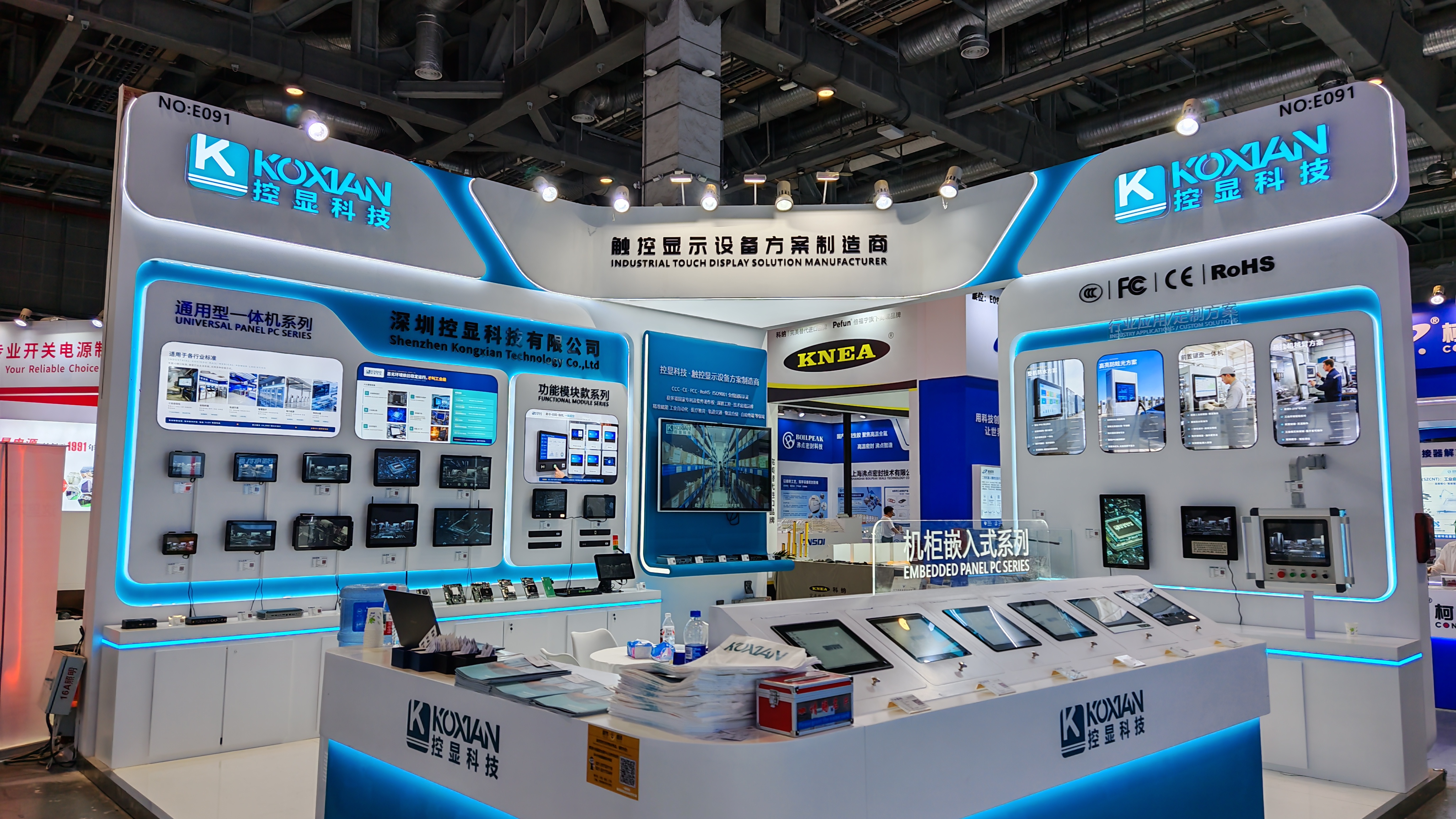
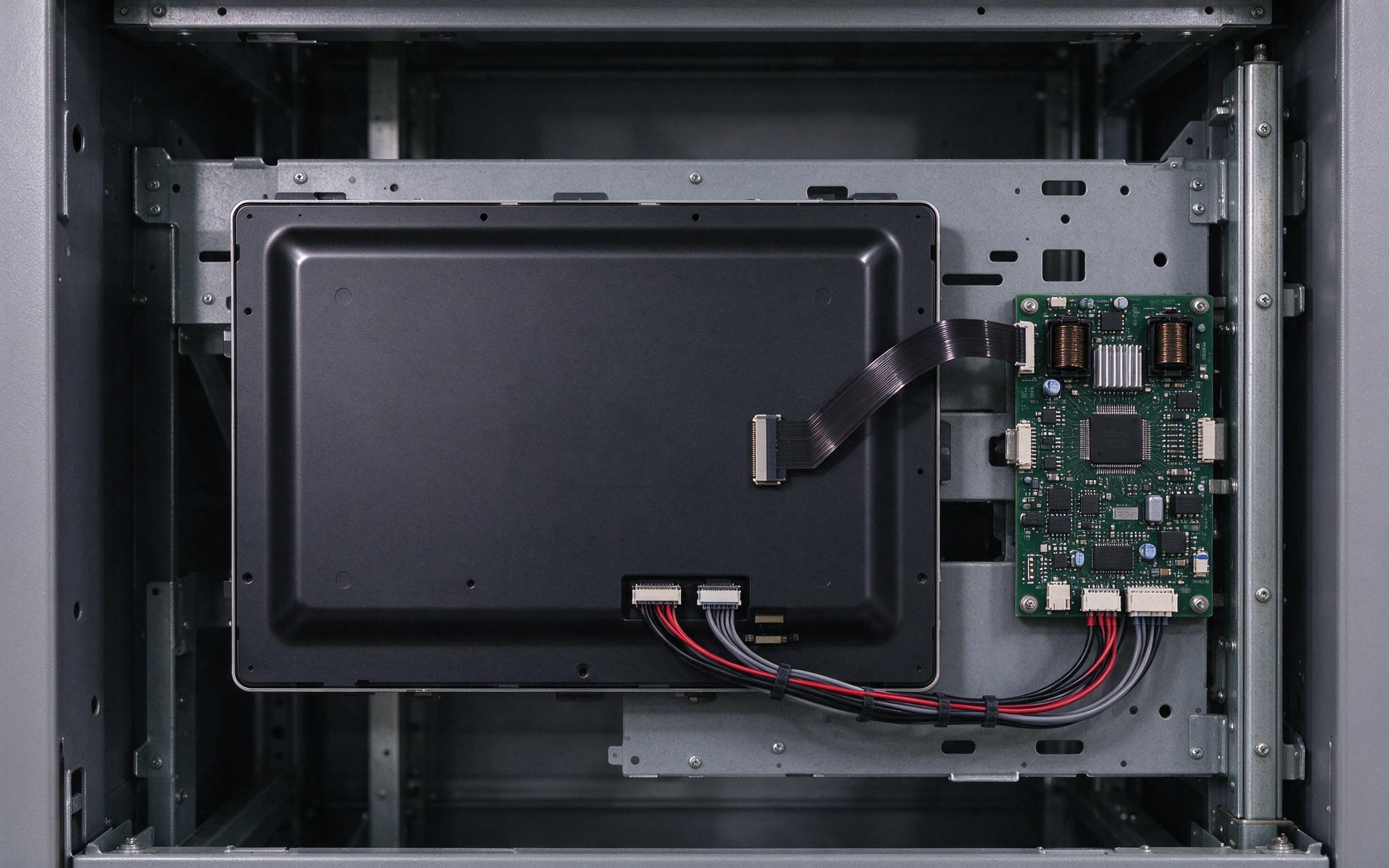
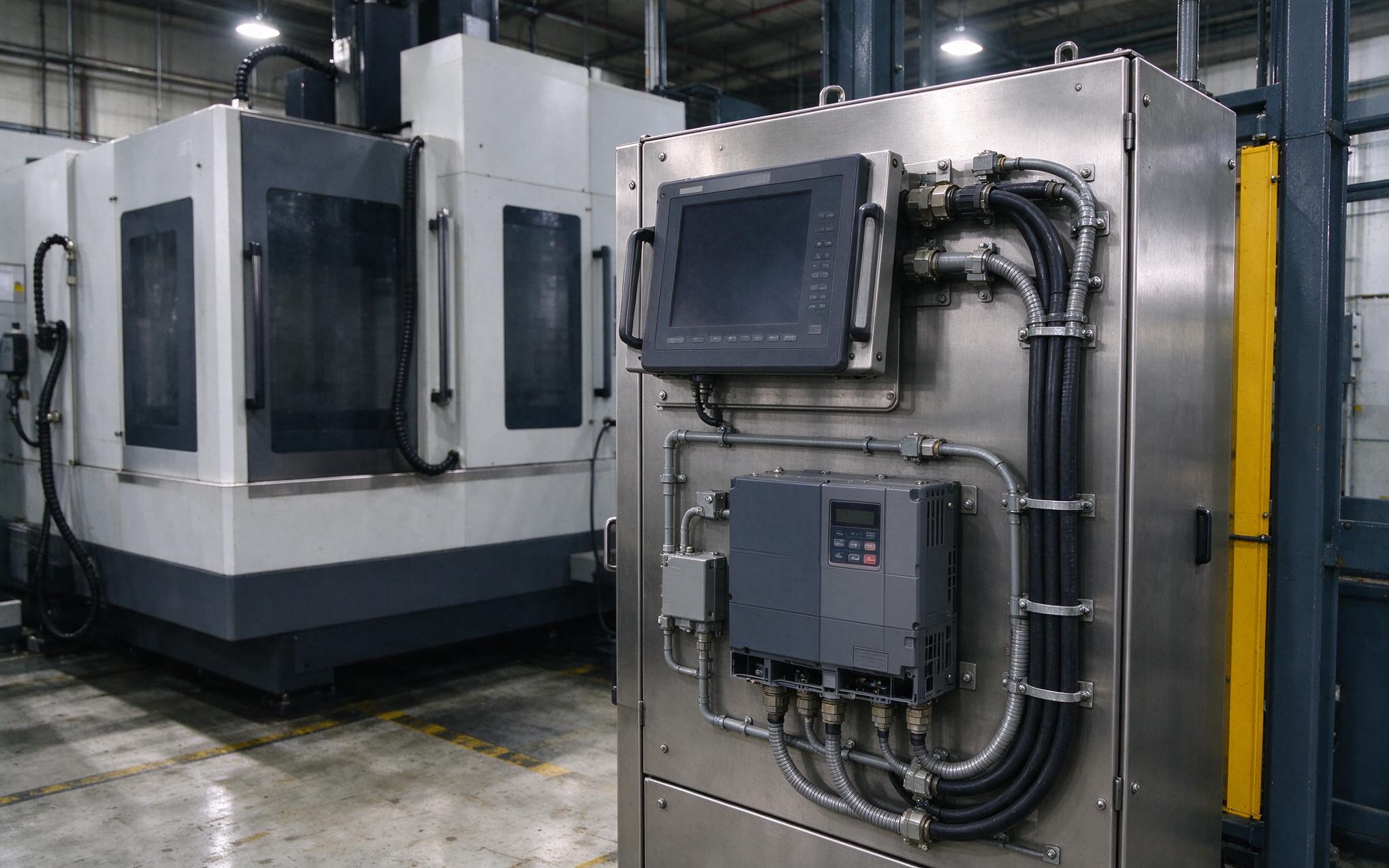
Front panel sealing addresses only half the ingress path. Enclosures from suppliers such as KOXIAN pair rear sealing strategies with front panel gasket design, addressing the complete ingress path rather than treating the front bezel as the sole protection point. In paint booths, solvent vapors circulate throughout the workspace, reaching the rear of mounted equipment through booth ventilation. Cable entries must be sealed with compression-type glands rated to the same protection level as the front bezel. Standard plastic glands degrade under paint solvents, losing compression within months and creating a direct path to the power supply board. Metal glands with chemically resistant seals maintain integrity across the full range of booth chemicals. Connector panels must use IP-rated circular connectors rather than exposed RJ45 or USB ports, and cable routing must include drip loops that stop liquid from traveling along jackets into the enclosure.
When evaluating an industrial grade touch screen for paint shop deployment, verify gasket material and compression specification, confirm wet touch support for the glove types actually in use, assess optical bonding under booth lighting, and inspect rear gland material. An ingress rating confirms front panel resistance under laboratory conditions, but field reliability depends on the complete sealing system from glass surface through rear cable entry. Request test reports referencing IEC 60529 and IEC 60721, then validate a sample in the actual operating environment before full deployment.