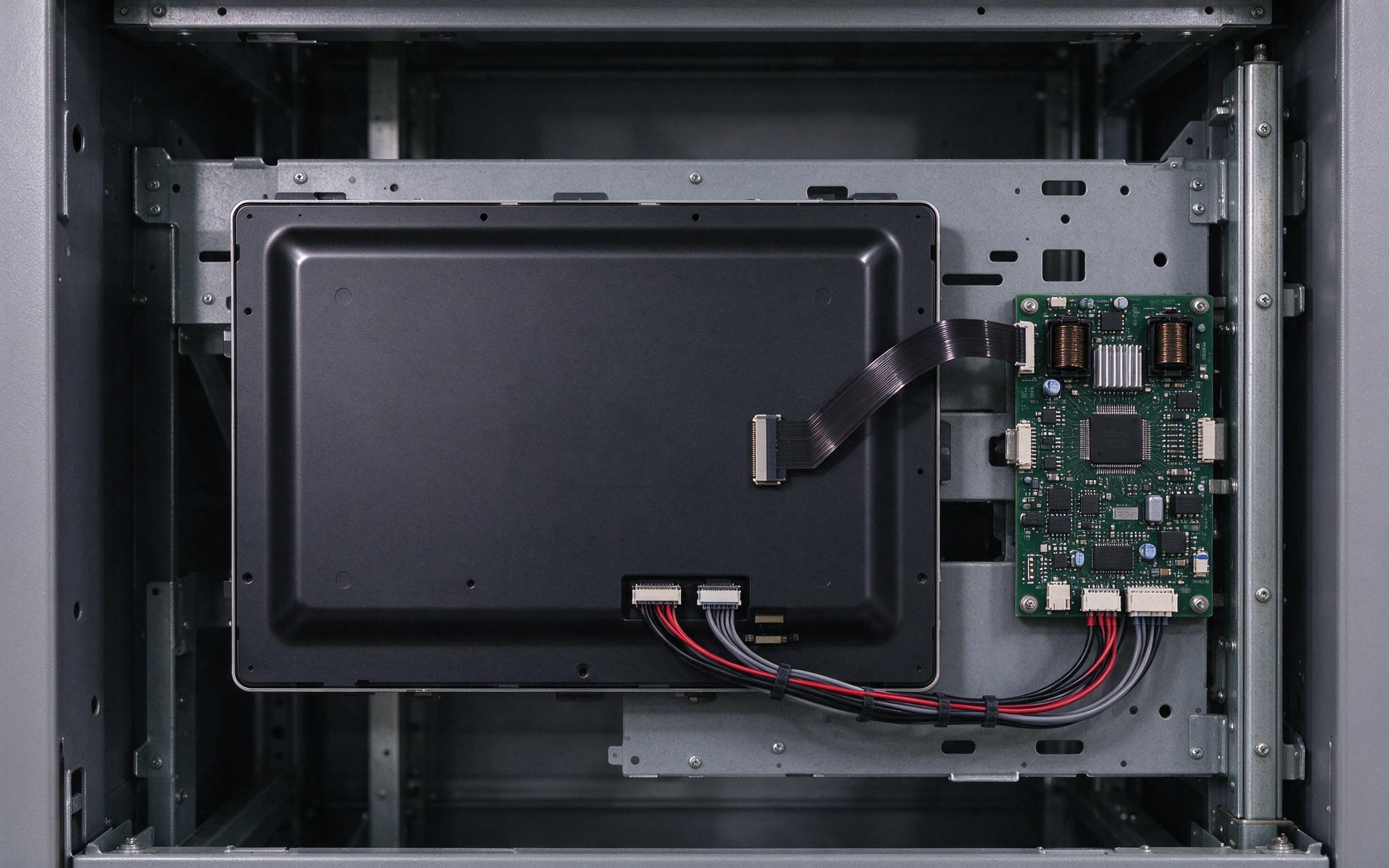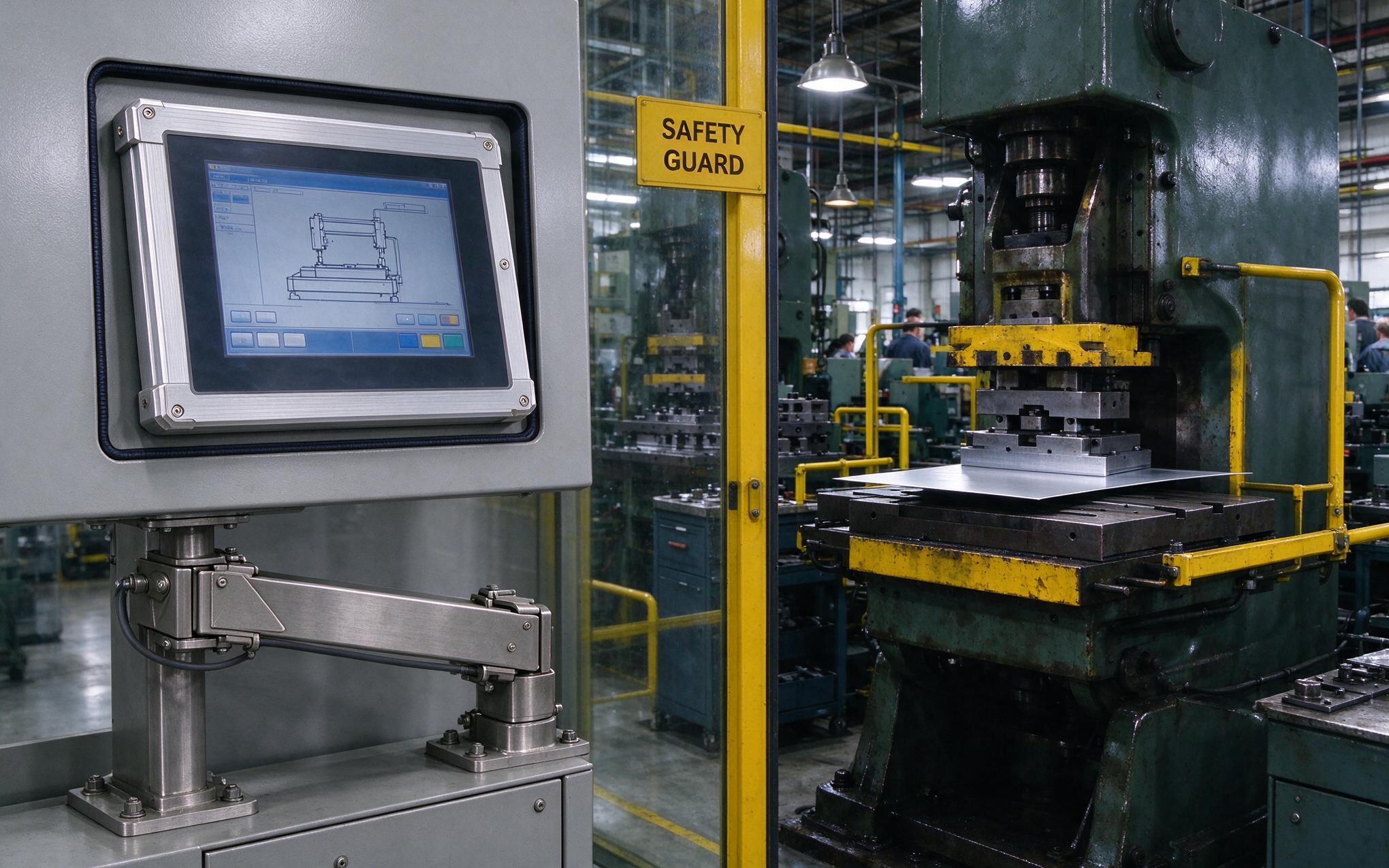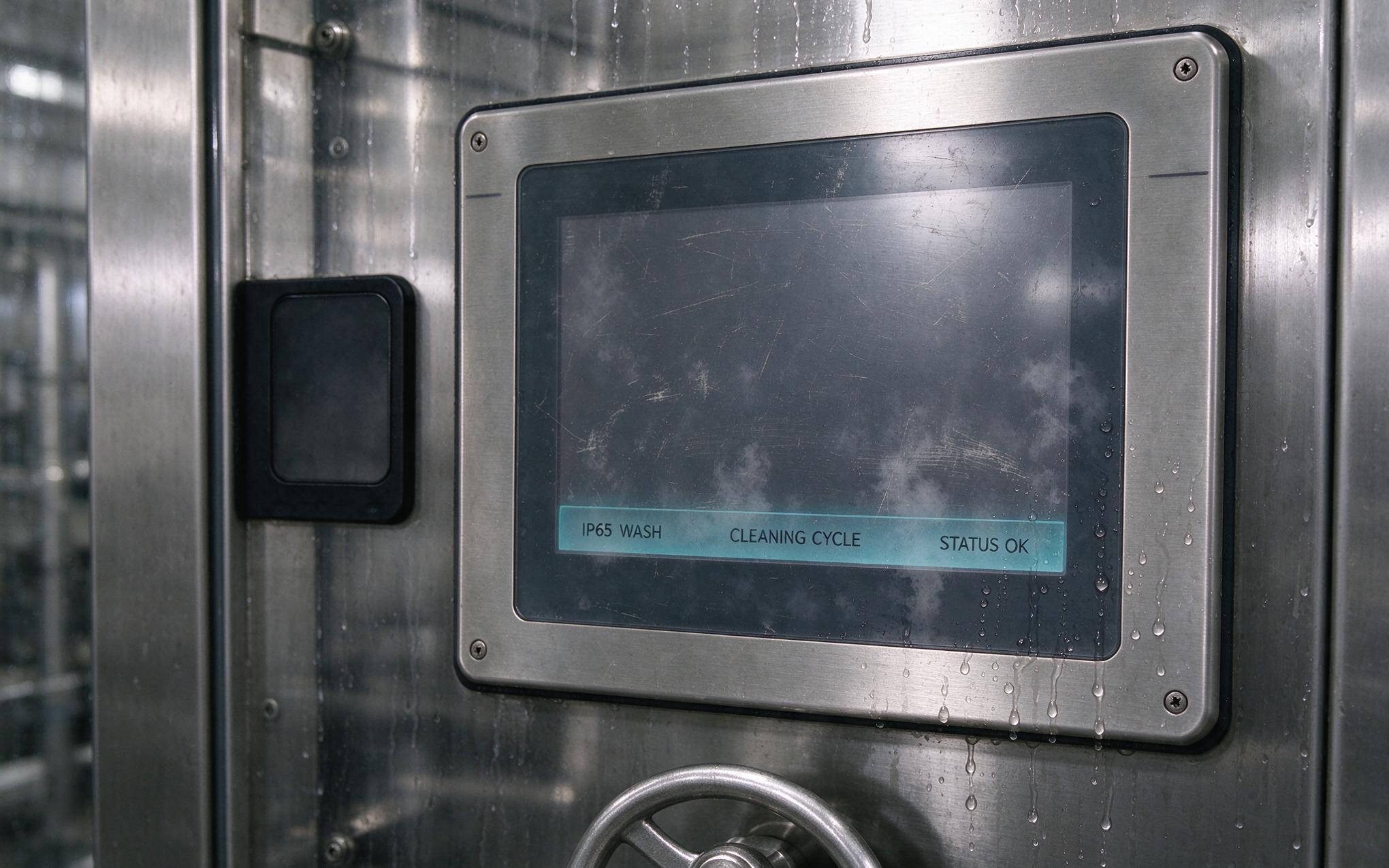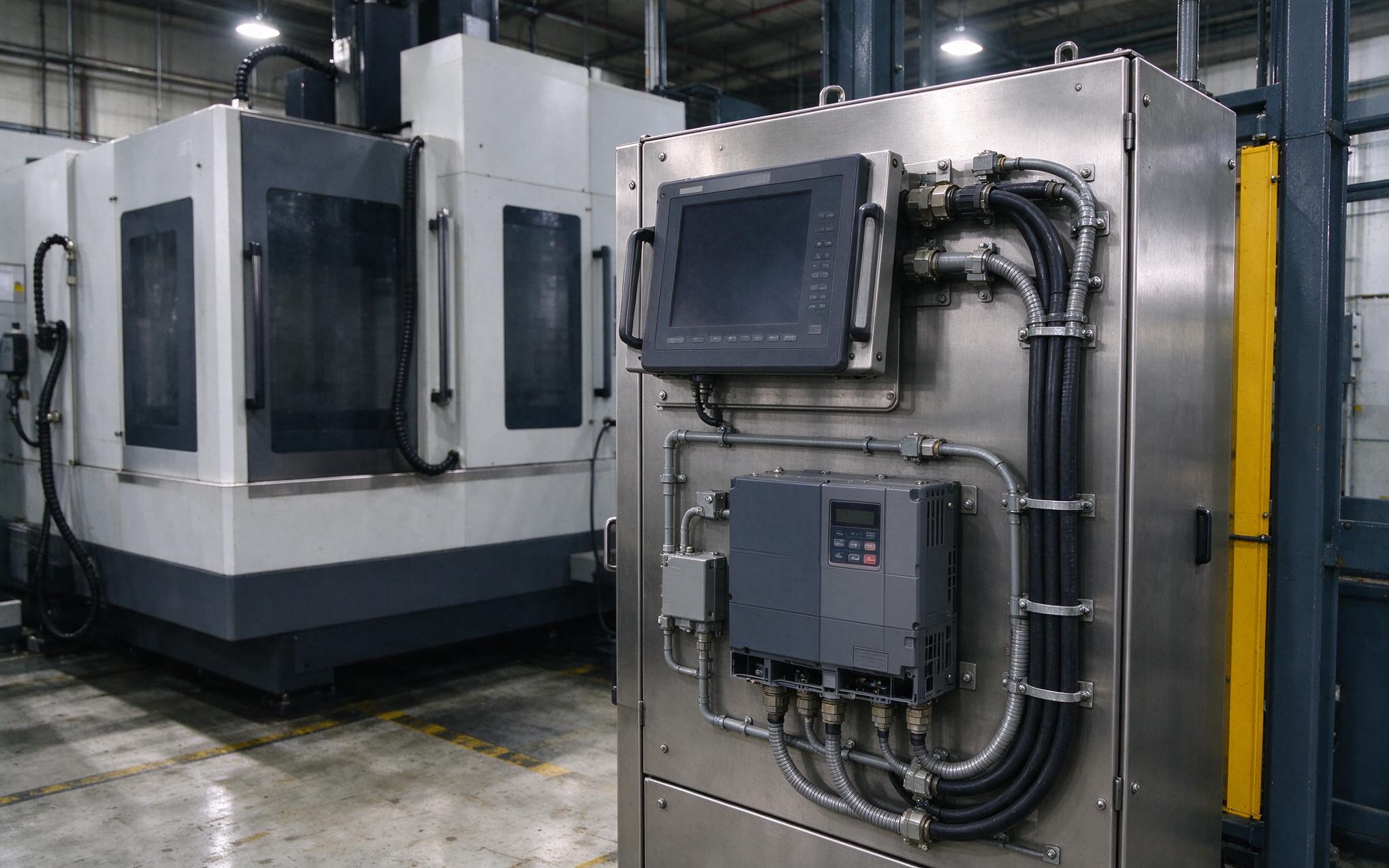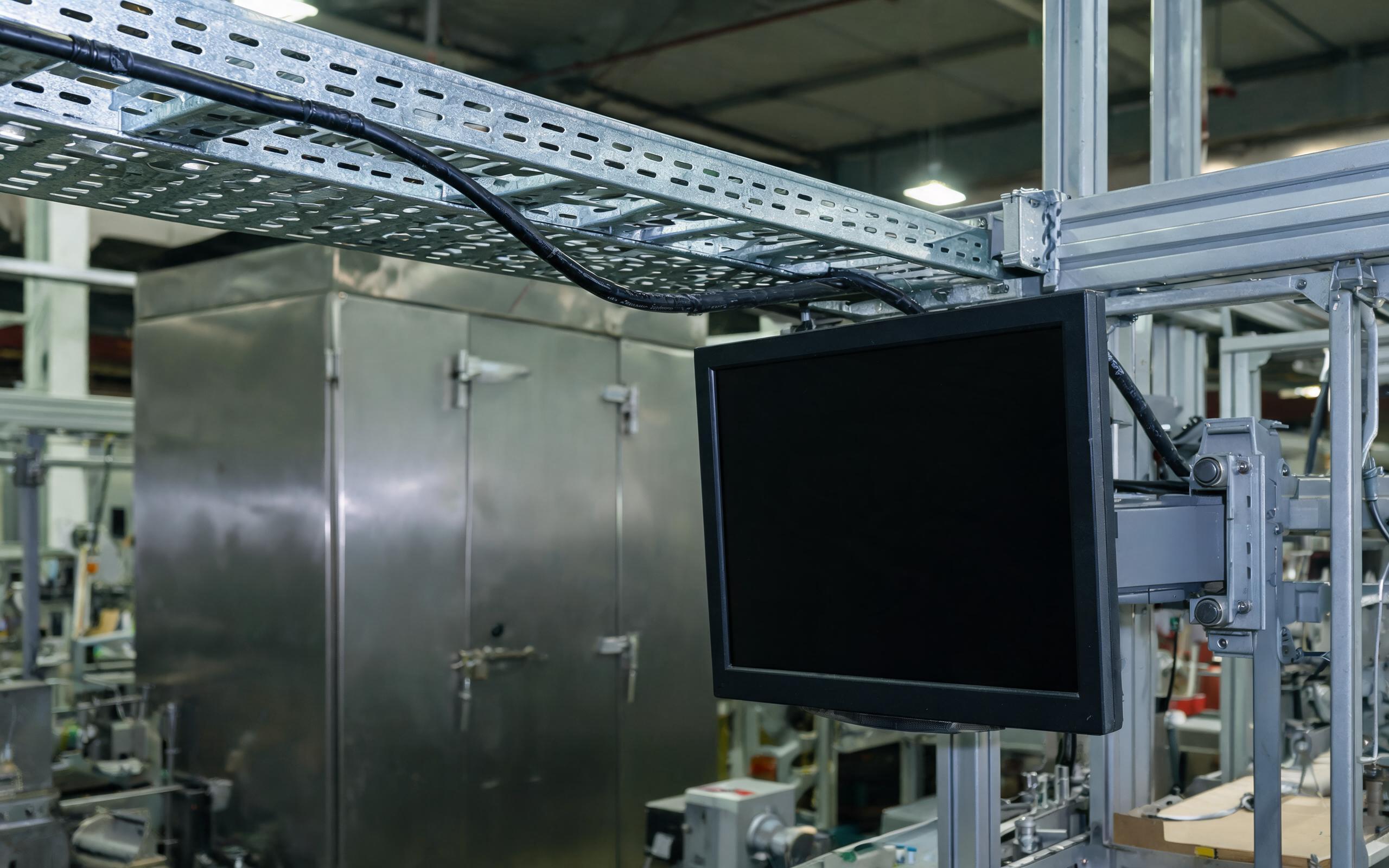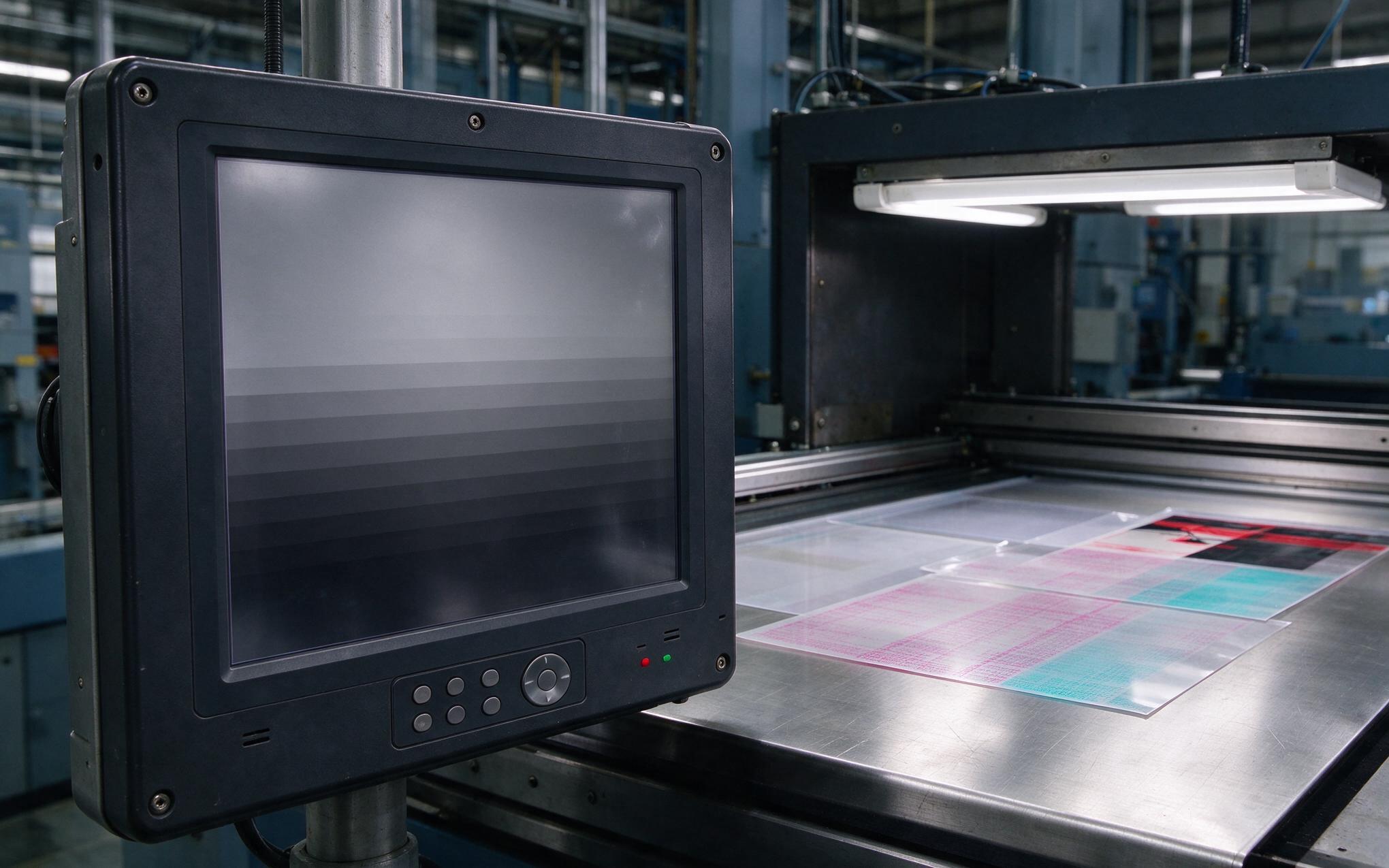
Three days after a controller relocation on a CNC machining line, the industrial display screen started flickering at random intervals. The maintenance team replaced the panel, reseated every connector, and reflashed firmware before a junior technician suggested checking the cable routing. A 12-meter HDMI run had been laid alongside a variable-frequency drive power line, and electromagnetic coupling had degraded the signal-to-noise ratio below the receiver threshold. The artifacts on screen were electrical, not optical. Misdiagnosis of this kind wastes maintenance hours across factory floors, and it highlights why cable-related signal integrity in industrial display screen deployments deserves the same engineering attention as IP65 sealing or thermal management.

Understanding Attenuation in Long Cable Runs
Every cable introduces parasitic resistance, capacitance, and inductance that collectively form a low-pass filter. As signal frequency increases in LVDS, eDP, and HDMI interfaces, attenuation per meter rises sharply. A standard HDMI cable rated for 1080p at 5 meters may introduce unacceptable loss at 15 meters when carrying 4K signals. In industrial display screen setups where controllers sit in climate-controlled enclosures while displays face the production line, cable distances routinely exceed 10 meters, pushing commodity cables beyond their effective bandwidth. The physics are straightforward: copper conductors exhibit skin effect losses, and dielectric absorption in PVC insulation compounds the problem. Even a 3 dB loss at the receiver causes visible banding or color shift. Selecting low-loss polyethylene dielectric rather than standard PVC extends reliable operating distance by 40 to 60 percent, reducing field failures that demand costly troubleshooting.

Selecting Shielded Cables for Signal Integrity
Cable selection for industrial display screen deployments differs from consumer environments. Factory floors present electromagnetic interference from welding equipment, motor drives, and switching supplies. Shielded cables with braided copper or foil wraps provide the primary defense, but effectiveness depends on proper termination. A cable with 95 percent braided coverage loses its benefit if the drain wire is grounded at only one end, creating an antenna that amplifies noise. Manufacturers like KOXIAN specify cables with dual-layer shielding — braided copper for low-frequency magnetic interference and aluminum foil for high-frequency coupling — along with strain relief at connector junctions. When evaluating cables for display installations, engineers should verify that the assembled cable meets EMI attenuation ratings. A cable that performs well on a bench may fail in a tray sharing space with 480V motor feeds.

Routing and Grounding on Factory Floors
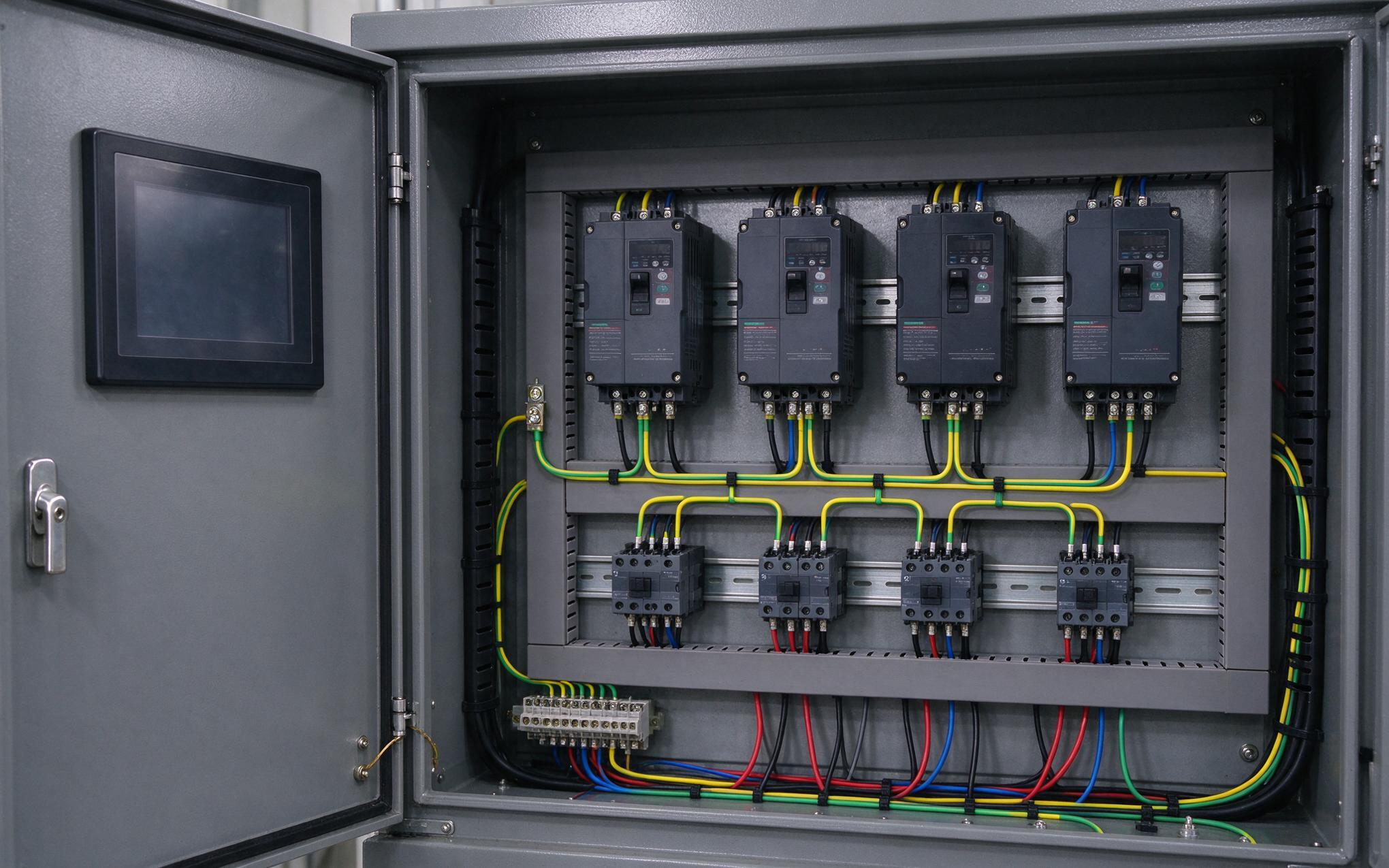
Physical routing and grounding of the signal path determines whether the installation survives factory noise. Cables should maintain at least 300 millimeters separation from power conductors, crossing at 90 degrees where unavoidable. In metal trays, placing signal cables in a dedicated partition or using conductive-lined conduit reduces exposure to broadband interference from variable-frequency drives. A star-ground topology — where each display, its controller, and peripherals connect to a single grounding point — prevents ground loop currents from introducing differential noise. Ferrite chokes near the display input suppress common-mode noise without attenuating the differential signal when rated for the correct frequency range. These measures transform marginal installations into systems that operate reliably under continuous 24/7 duty cycles in heavy manufacturing environments.

Protocol Choices for Extended Distances
When cable runs exceed native HDMI or DisplayPort reach, protocol conversion offers alternatives. HDBaseT extenders transmit uncompressed 4K video over Cat6A cable up to 100 meters, suitable for large production halls. Fiber-optic HDMI or DisplayPort cables convert signals to light at the source, eliminating copper-based attenuation and EMI susceptibility entirely. The trade-off is cost, added complexity, and additional power draw for the active components in the signal chain. HDBaseT extenders add active electronics at both ends, while fiber demands careful handling to avoid micro-bend losses. OEMs such as KOXIAN recommend matching cable and protocol to specific constraints — not defaulting to the longest-rated commodity cable — as the difference between a reliable installation and one that fails at shift change.
Reliable signal delivery across long cable runs is not an afterthought — it is a design parameter that must be addressed during system specification. By combining proper cable selection, disciplined routing, effective EMI shielding, and appropriate protocol choice, engineers can eliminate the class of intermittent display failures that consume maintenance hours and disrupt production. Investing in industrial display screen signal integrity upfront pays dividends in reduced downtime and extended service life across a factory’s operational horizon.