Industrial computing systems live and die by their connectors. A single corroded pin on a USB port, a degraded contact on a power input terminal, or a green patina spreading across an Ethernet jack can disable an entire machine — often without warning. Unlike dramatic failures of hard drives or power supplies, connector corrosion is a slow, silent killer. It creeps across copper alloy surfaces over months or years, gradually increasing contact resistance until signals become intermittent, data packets drop, and the link fails entirely. In environments from coastal wastewater treatment plants to sulfur-rich paper mills, I/O connector degradation is among the most common root causes of industrial PC field returns. Understanding why it happens and how to prevent it is essential for anyone specifying or maintaining hardware in harsh industrial settings.
The Chemistry of Connector Corrosion: Four Primary Mechanisms
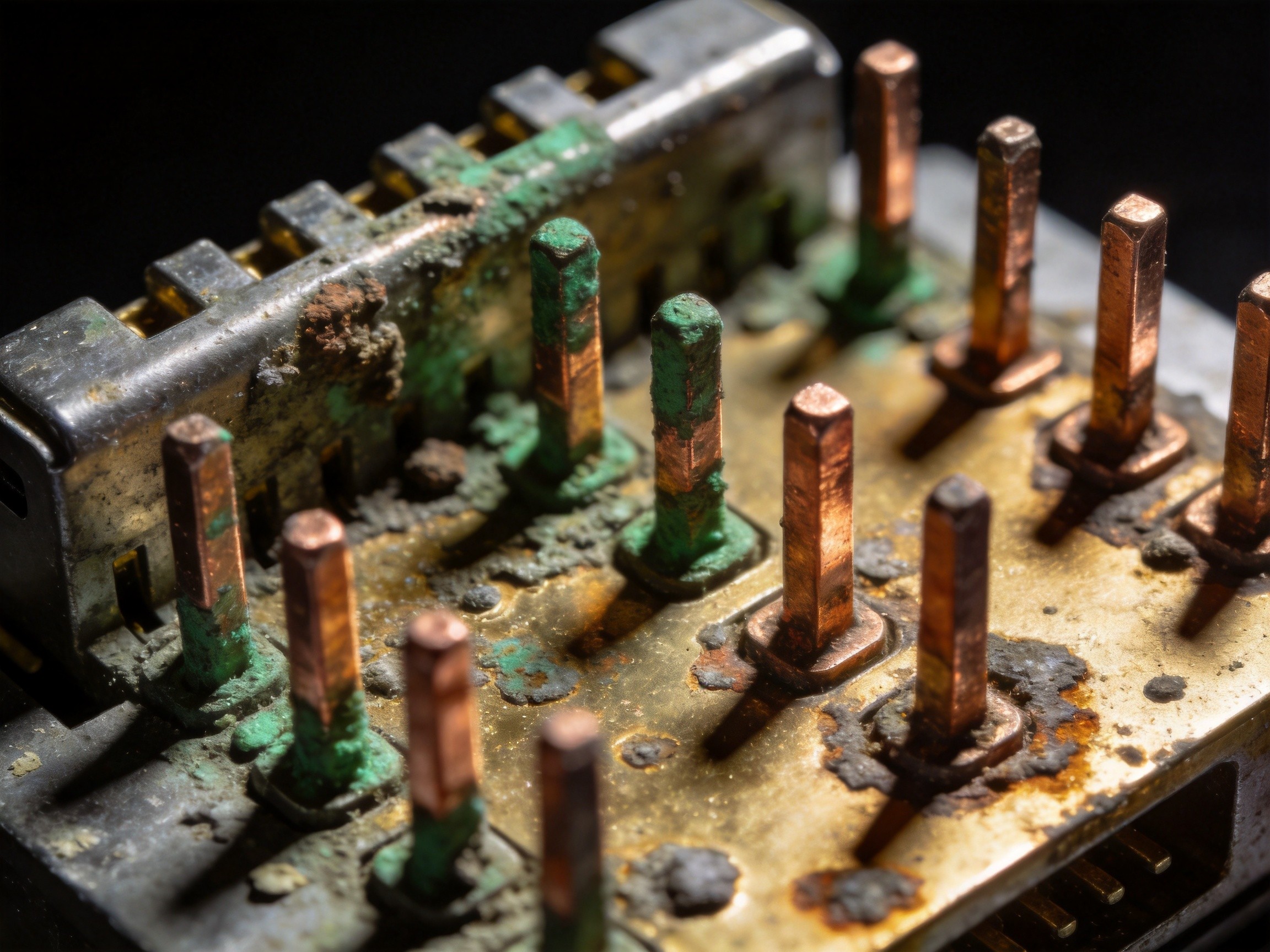
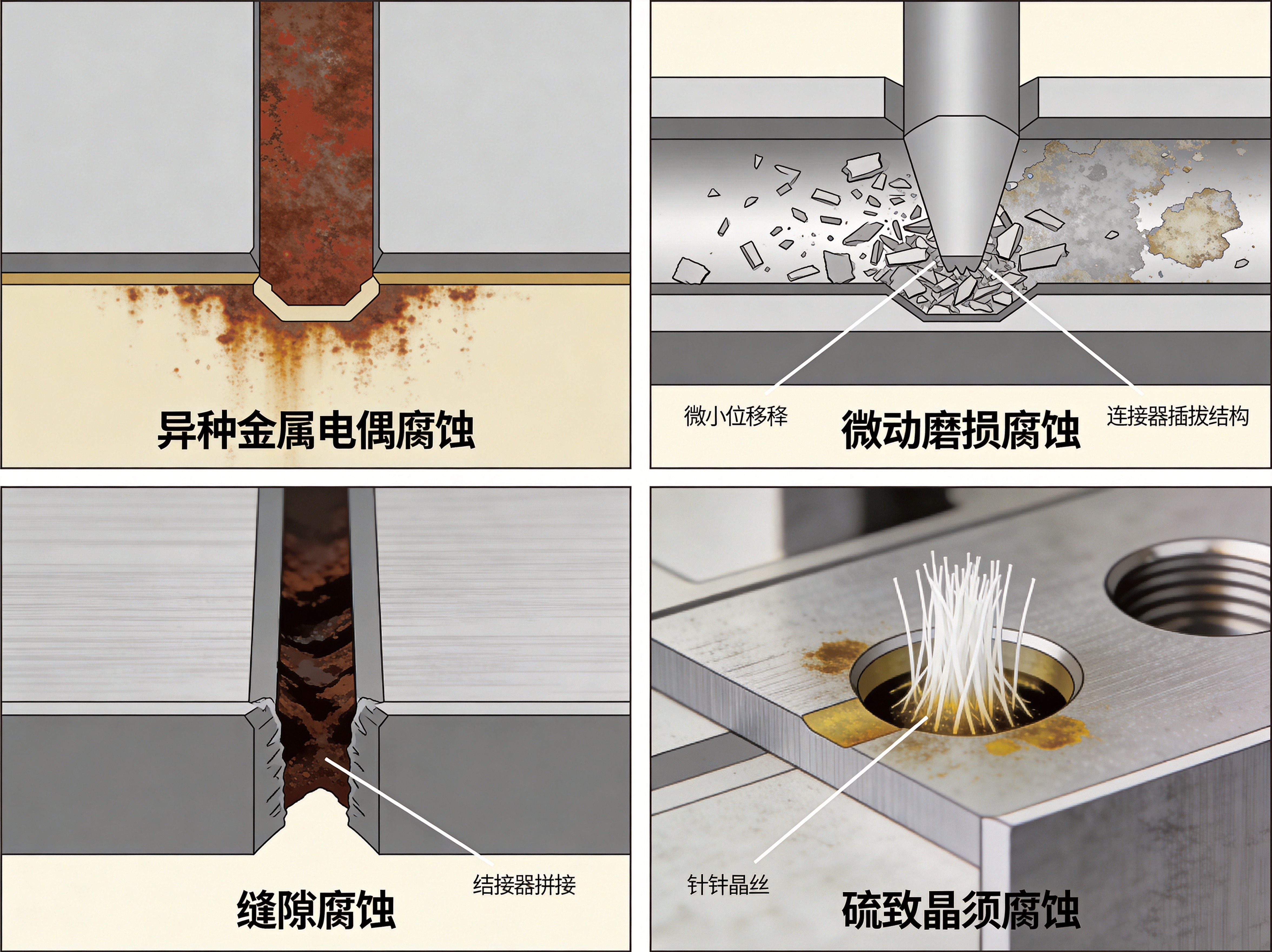
Connector degradation in industrial environments is not a single phenomenon but a collection of distinct electrochemical processes. Galvanic corrosion occurs when two dissimilar metals in contact — such as a gold-plated contact mated with a tin-plated socket — form a miniature battery in the presence of an electrolyte like condensed moisture. The less noble metal sacrificially corrodes, pitting the surface and increasing resistance. Fretting corrosion, common in high-vibration environments, arises from microscopic relative motion between mated contacts, wearing away protective oxide layers to expose fresh metal that immediately oxidizes again. Crevice corrosion attacks the stagnant micro-environment inside a connector shell where chloride ions concentrate, particularly in coastal installations. Sulfur-induced corrosion — prevalent in paper mills, rubber processing, and geothermal areas — forms non-conductive silver sulfide whiskers that can bridge adjacent contacts. Each mechanism requires different countermeasures, and multiple often operate simultaneously, making connector protection a multi-layered challenge.
Plating Selection: The First Line of Defense
The choice of contact plating material is the single most consequential design decision affecting connector longevity. Gold plating over nickel underplate remains the gold standard — literally — for industrial applications. Gold does not oxidize, and a properly specified 30 to 50 micro-inch gold layer over a nickel diffusion barrier provides decades of stable low-resistance contact in clean indoor environments. But gold is not universal. In environments with high sulfur dioxide or hydrogen sulfide concentrations, gold’s inertness is irrelevant because corrosion attacks the exposed base metal at the contact edges. For these conditions, palladium-nickel alloy plating offers superior resistance to sulfur-induced creep corrosion. Tin plating, while cost-effective, is vulnerable to fretting corrosion and whisker growth, making it risky for vibration-prone applications. The KOXIAN engineering team specifies contact plating based on the target deployment environment, selecting gold-flash, heavy gold, or palladium-nickel depending on the expected corrosive agents.
Sealing and Enclosure Design: Keeping the Environment Out
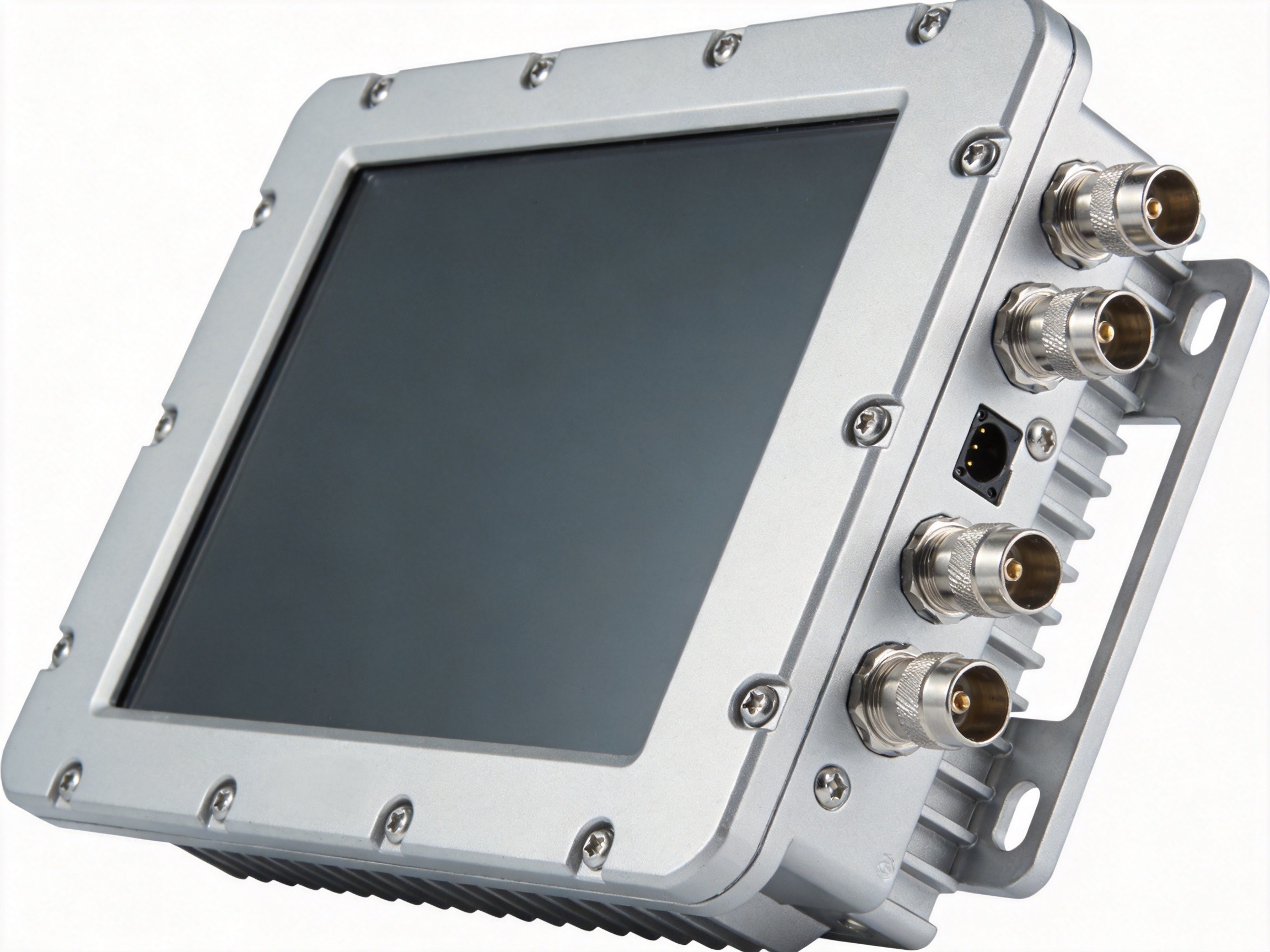
The most effective way to prevent connector corrosion is to prevent corrosive agents from reaching the contacts. Sealed connector systems — M12 circular connectors with O-ring gaskets and IP67 or IP68 ratings — create a barrier against moisture and particulates. For standard I/O ports, protective caps and gasketed covers provide a secondary defense. The enclosure itself is also part of the protection system. A well-designed industrial PC routes all I/O through a sealed bulkhead, with internal connectors protected by the enclosure’s overall IP rating. Condensation management is equally important: temperature cycling can draw moist air into a connector shell through breathing action. Specifying vented designs or incorporating desiccant packs mitigates this risk. Industrial PC manufacturers like KOXIAN that invest in rigorous enclosure-level ingress protection testing deliver measurably lower field failure rates compared to systems relying on connector-level sealing alone.
Detection, Monitoring, and Preventive Maintenance
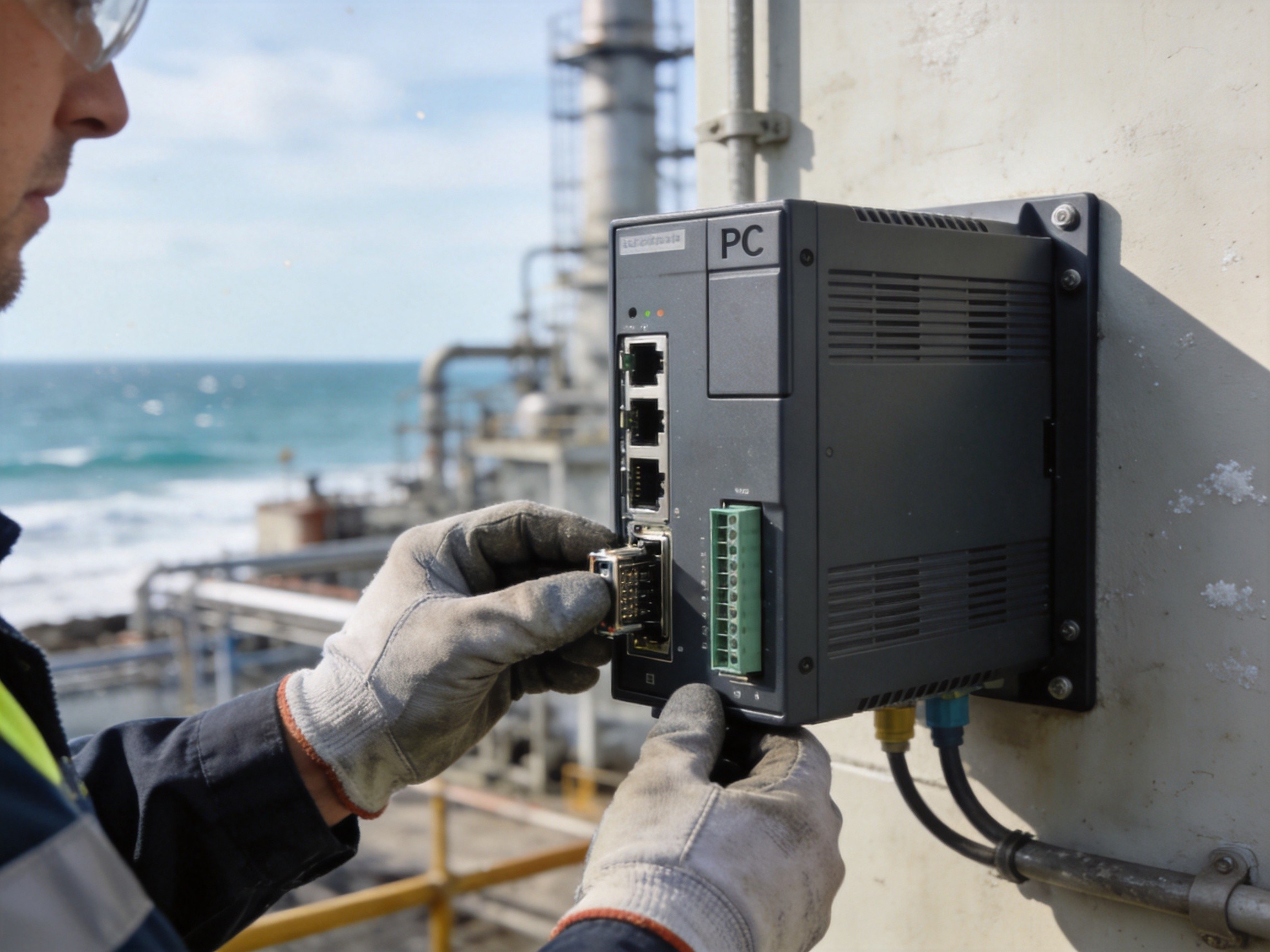
Even with the best plating and sealing, connectors in harsh environments will eventually degrade. The key is detecting degradation before it causes a failure. Contact resistance monitoring — measuring voltage drop across a connector pair under known load — can identify increasing resistance trends months before reaching the failure threshold. Visual inspection remains valuable: green discoloration on copper alloy contacts, white powdery deposits on aluminum shells, and black sulfide tarnish on silver-plated surfaces are all early warning signs. Maintenance protocols should include periodic re-seating of connectors to break through light oxide films, replacement of UV-degraded protective caps, and re-application of dielectric grease on connector seals. For deployments in particularly aggressive environments — coastal, chemical processing, geothermal — a scheduled connector replacement program may be more cost-effective than waiting for failures to occur.
I/O connector corrosion is a predictable, preventable failure mode. It follows well-understood electrochemical pathways and can be countered with proven material and design strategies. The industrial computing systems that survive longest in the field are not the ones with the fastest processors — they are the ones where every connector was chosen with the deployment environment in mind, where plating specifications were treated as engineering decisions rather than cost-cutting opportunities, and where enclosure design integrates connector protection as a system-level requirement. For engineers specifying hardware today, the lesson is clear: ask about connector plating, sealing, and corrosion testing before you ask about clock speed.