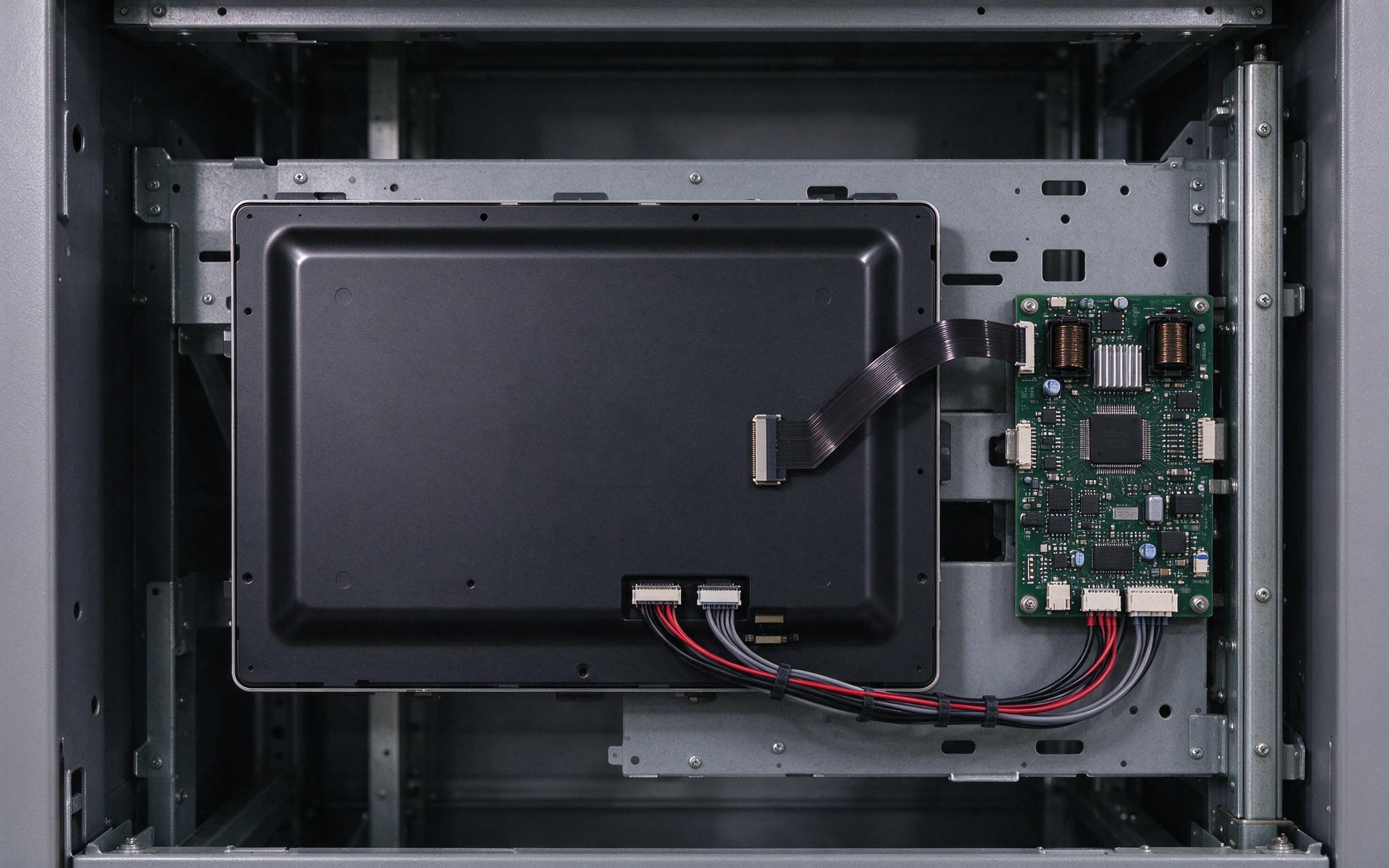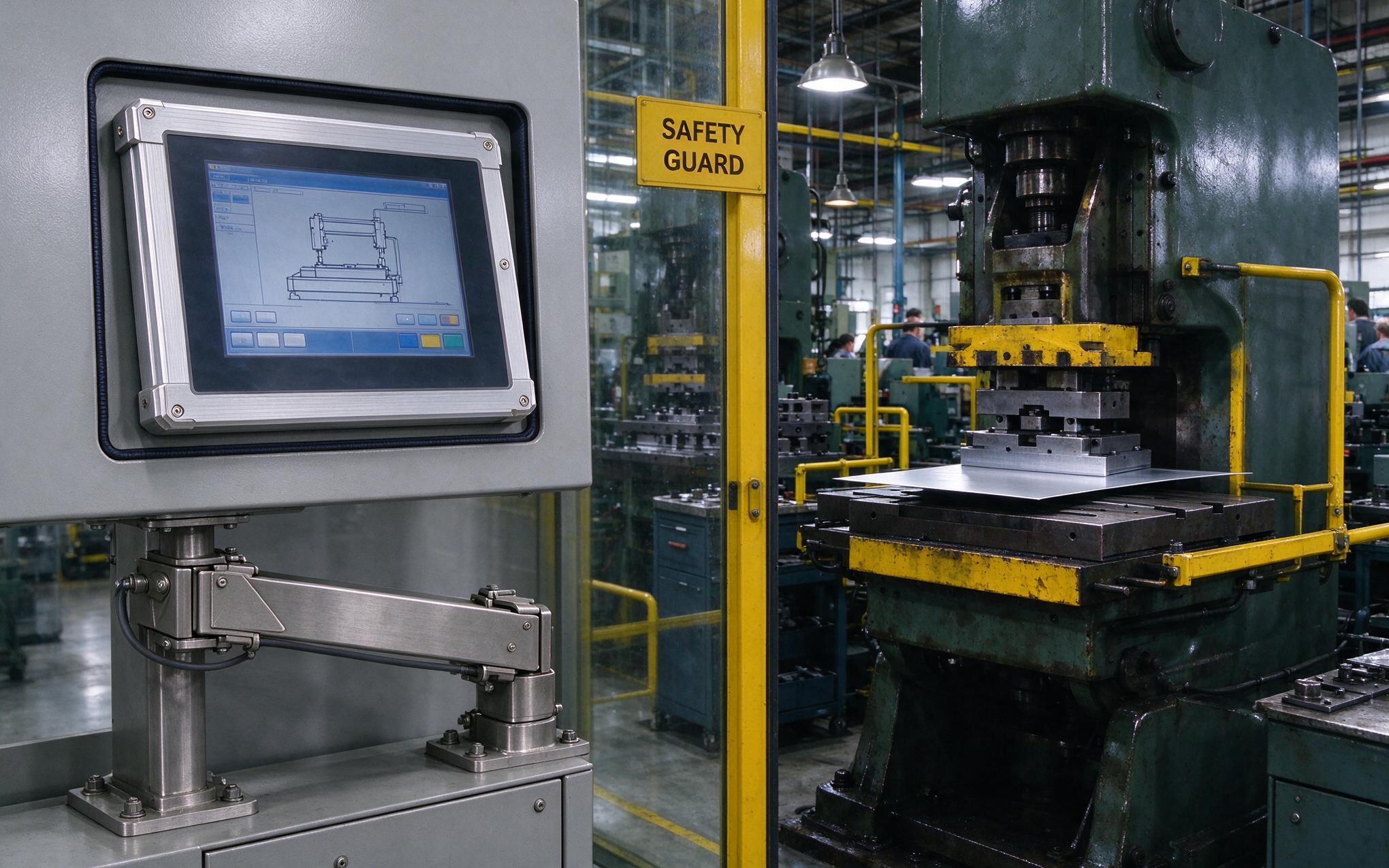
Maintenance staff replacing a failed operator terminal often discover that the sensing technology matters more than the computing platform behind it. Surface acoustic wave sensing detects the energy absorbed when a finger contacts a bare glass sheet, while projected capacitive sensing measures a field change through a laminated stack. Touch screen manufacturers offering both routes are describing two different failure profiles rather than two grades of the same product, because one depends on an uncontaminated glass surface and the other depends on a stable dielectric environment.

Glove Thickness Limits on Each Sensing Route
Touch screen manufacturers face a hard physical boundary on glove compatibility. Acoustic sensing responds to mechanical energy absorption, so it registers contact from a gloved finger, a wooden dowel or a knuckle, and glove thickness has almost no effect because the mechanism does not rely on electrical coupling. Projected capacitive sensing detects a field disturbance whose magnitude falls sharply with separation, which limits usable glove thickness unless the controller drives higher sensitivity and the stack is designed for it. Well tuned capacitive designs handle thin nitrile easily and heavy leather with configuration work, while cotton gloves behave inconsistently. Sites where operators wear whatever glove the task requires therefore encounter fewer complaints with acoustic sensing, and sites with a standardized thin glove gain the multi touch capability that only the capacitive route provides.

Glass Thickness and Impact Resistance Trade-offs
Front glass thickness pulls the two routes offered by touch screen manufacturers in opposite directions. Acoustic sensing propagates waves along the glass surface itself, so the sensing element is the glass, and increasing thickness attenuates the signal and shifts the wave characteristics the controller expects. That constrains the front sheet to a narrow range and rules out the thick cover glass that impact prone positions want. Capacitive sensing measures through the cover material, which permits six millimeter chemically strengthened glass or thicker over the sensor film at the cost of reduced sensitivity that the controller compensates for. Product literature from touch screen manufacturers rarely frames the choice this way, yet it explains why heavy industry positions exposed to tool strikes converge on capacitive stacks with thick cover glass while lighter duty positions retain acoustic panels. Optical bonding also differs, filling the air gap in a capacitive stack while acoustic designs need the glass surface unencumbered.

Water Behavior During Washdown and Condensation
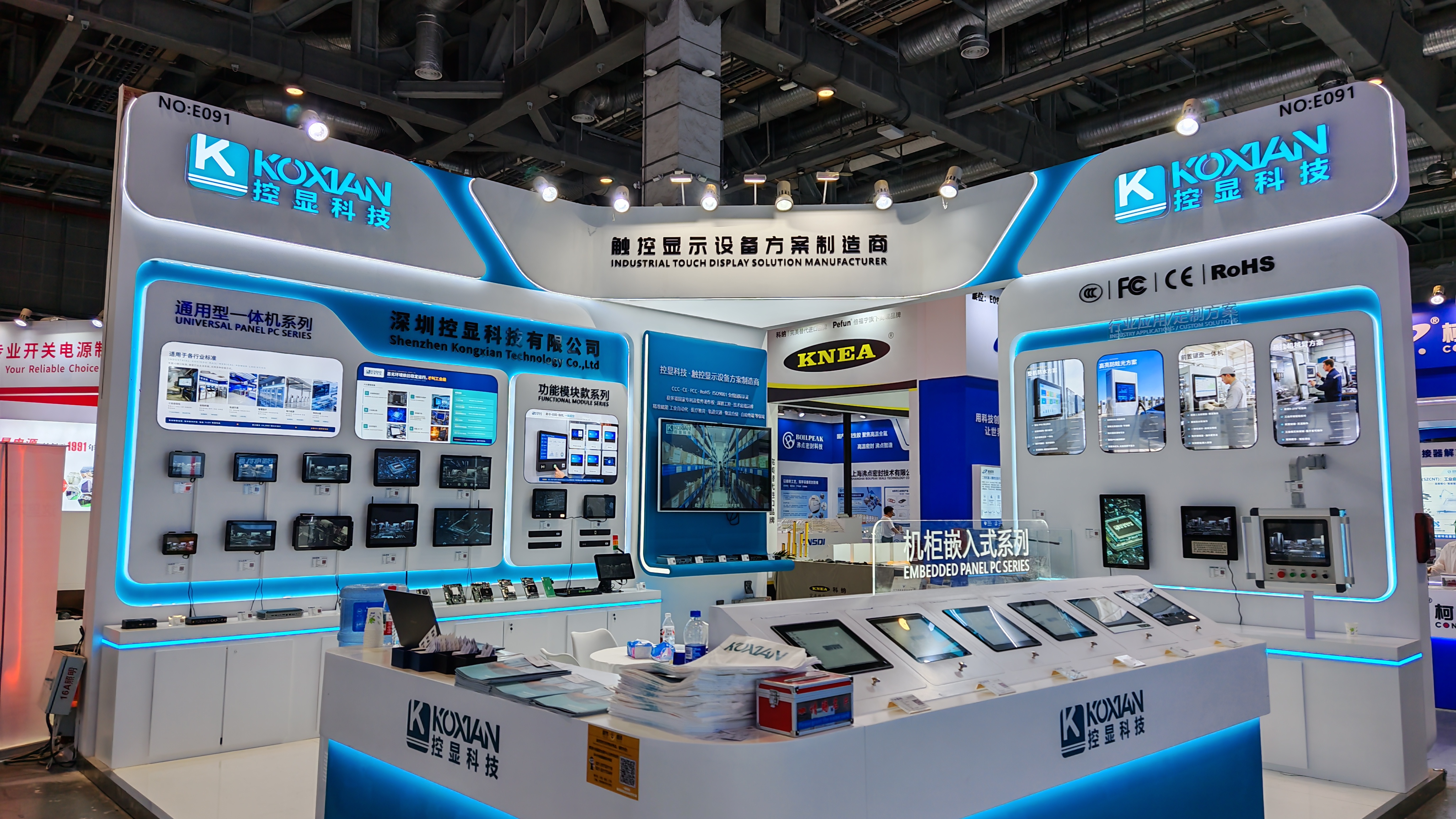
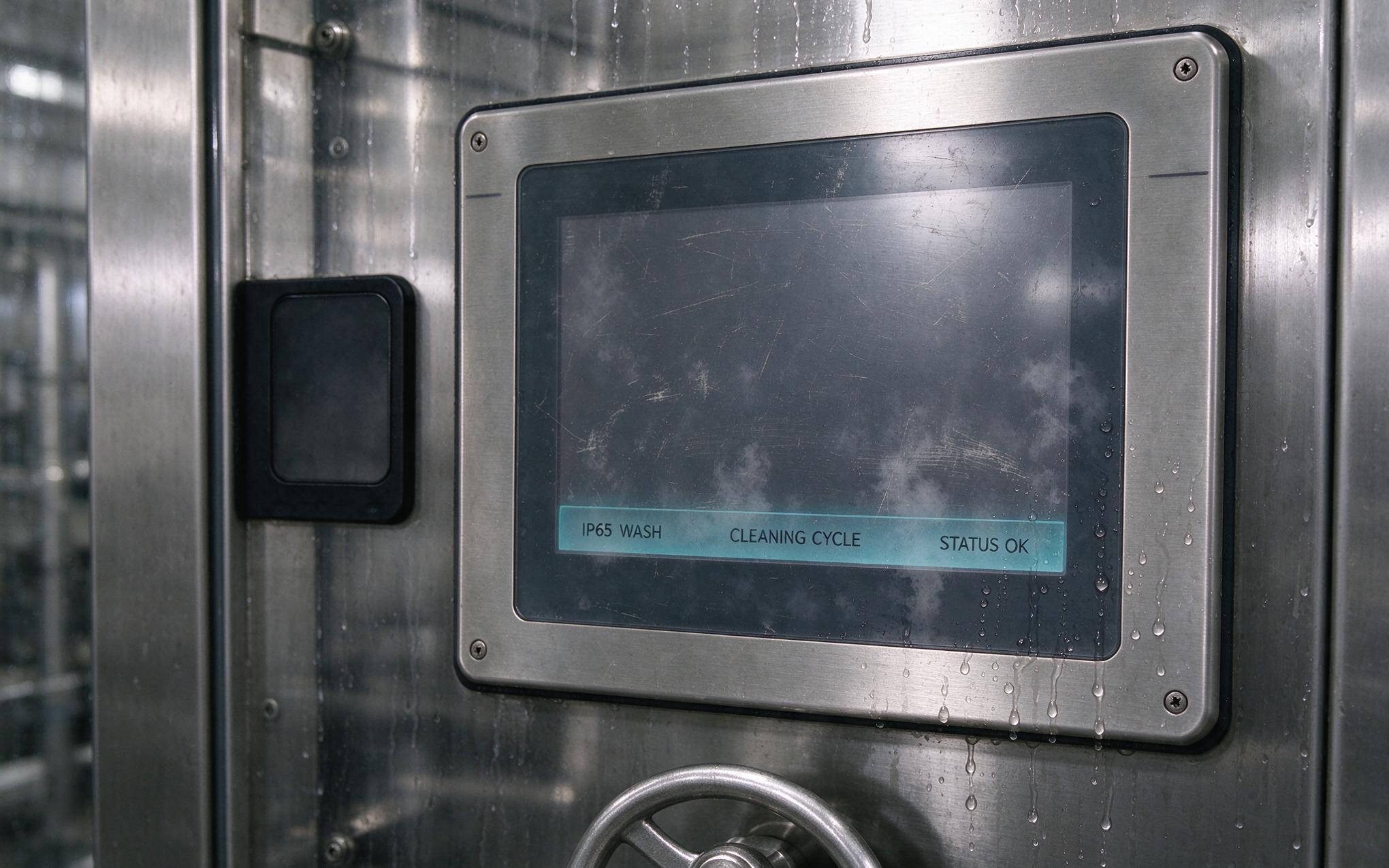
Free water separates the two technologies more clearly than any datasheet line. Acoustic sensing treats a water droplet as a mechanical absorber, and a droplet resting on the surface produces a persistent false contact that remains until the surface dries, which makes the technology unsuitable for positions that see spray or condensation. Capacitive sensing sees water as a dielectric change, and modern controllers reject uniform wetting reasonably well while struggling with moving droplets and with a wet hand approaching the surface. Practical implementations at vendors including KOXIAN combine water rejection firmware with a sloped bezel that sheds liquid rather than pooling it against the glass edge, since the mechanical detail determines how often the firmware faces a case it cannot resolve. Positions with unavoidable spray get better results from capacitive sensing plus a physical shroud than from firmware tuning alone.

Surface Wear and Long Term Calibration Stability
Abrasion history determines which route offered by touch screen manufacturers ages more gracefully. Acoustic sensing depends on a clean, undamaged surface, and accumulated scratches scatter the propagating wave until localized dead zones appear across worn areas, typically where the same button has been pressed for years. Capacitive sensing tolerates surface damage because the sensor sits below the cover glass, so scratches degrade appearance without affecting response, and an applied protective film changes nothing electrically provided its thickness is accounted for. Application notes from suppliers such as KOXIAN describe the film thickness limits that keep a capacitive stack within its tuned range. Calibration differs too: acoustic controllers need recalibration after any change in surface condition or mounting stress, while capacitive baselines drift with temperature and humidity and are corrected continuously. Positions with heavy repeated contact on a small screen area favor the capacitive route for that reason alone.
Choosing between the two routes is a matching exercise rather than a quality judgment. Acoustic sensing suits dry positions with varied glove types and moderate impact exposure, while projected capacitive sensing suits wet positions, thick cover glass, multi touch interaction and heavy repeated contact in one screen region. Documenting the glove inventory, the presence of free water and the expected impact exposure at each position gives touch screen manufacturers what they need to quote the correct route, and it produces fewer replacements driven by behavior neither technology was going to deliver.