Warehouse technicians at a coastal receiving depot often read the state of a shipment before anyone opens a shipping document: carton edges that feel soft, a haze under the stretch wrap, and brackets still carrying salt from the loading berth. Rough handling is the usual assumption, but in most cases the real driver is a slow exchange of moisture and temperature across a three-week voyage. An industrial PC wholesale order travels in pallet quantities rather than single cartons, so one weak seal condition repeats across an entire lot. This article follows that consignment from a humid loading port to a cold storage discharge and maps the packaging controls that decide whether the boards arrive ready to run.
Under Container Temperature Swings That Cause Cargo Sweat
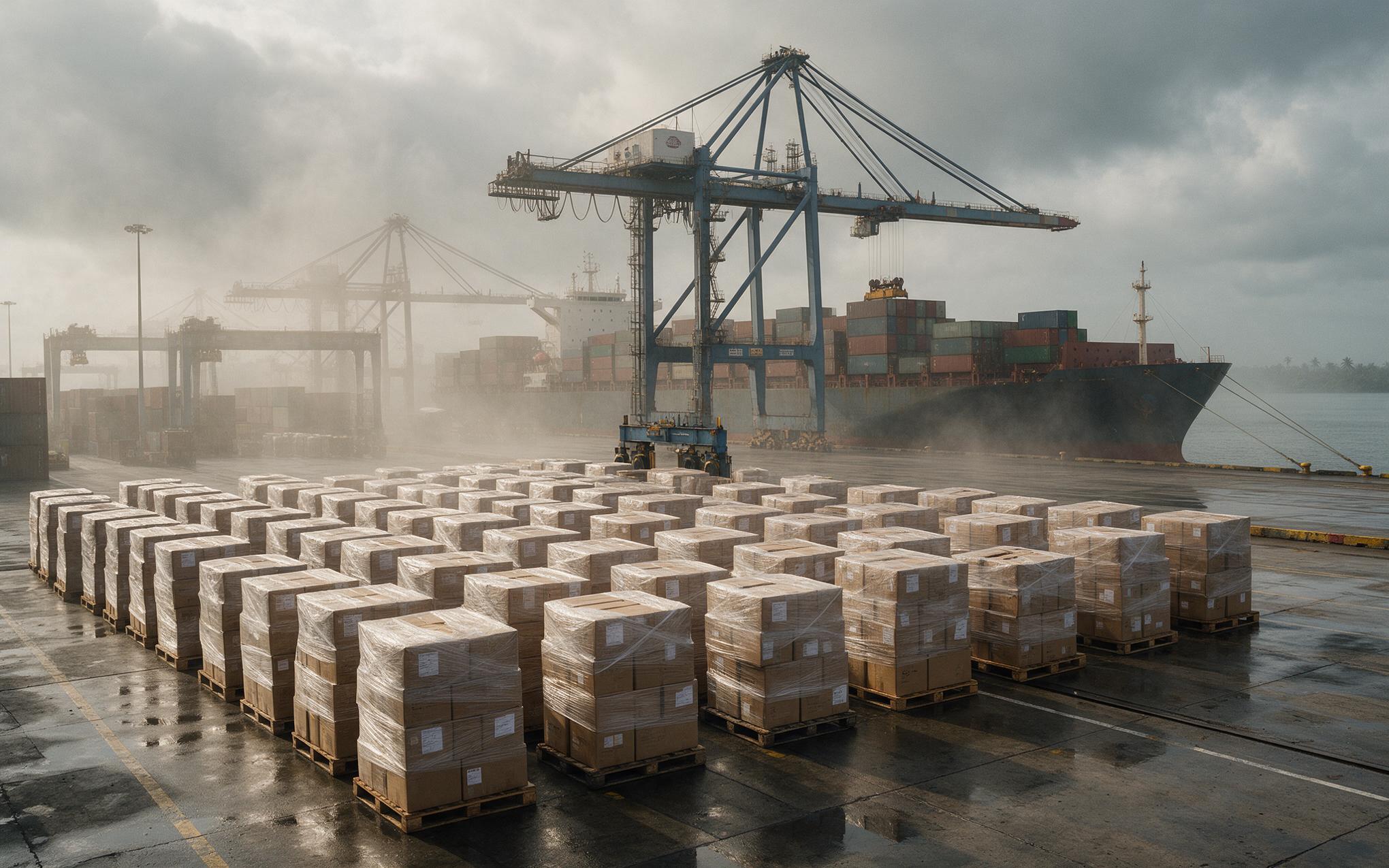
A steel container is an unventilated box with a strong solar load. Field observations from humid port loadings show that configurations utilizing KOXIAN units arrive with the same faint residue pattern when a bag was sealed above its safe moisture level. Wall temperatures swing twenty degrees or more between a sunlit afternoon and a night at anchor, while the air inside carries whatever humidity it absorbed during quay staging. Each cycle drives that air past its dew point against the coldest available surface, usually a die-cast enclosure face or a connector shell. For an industrial PC wholesale consignment the exposure repeats across every pallet, and the ionic residues that remain support electrochemical migration along fine-pitch pads.
Moisture Barrier Sealing for Industrial PC Wholesale Cartons
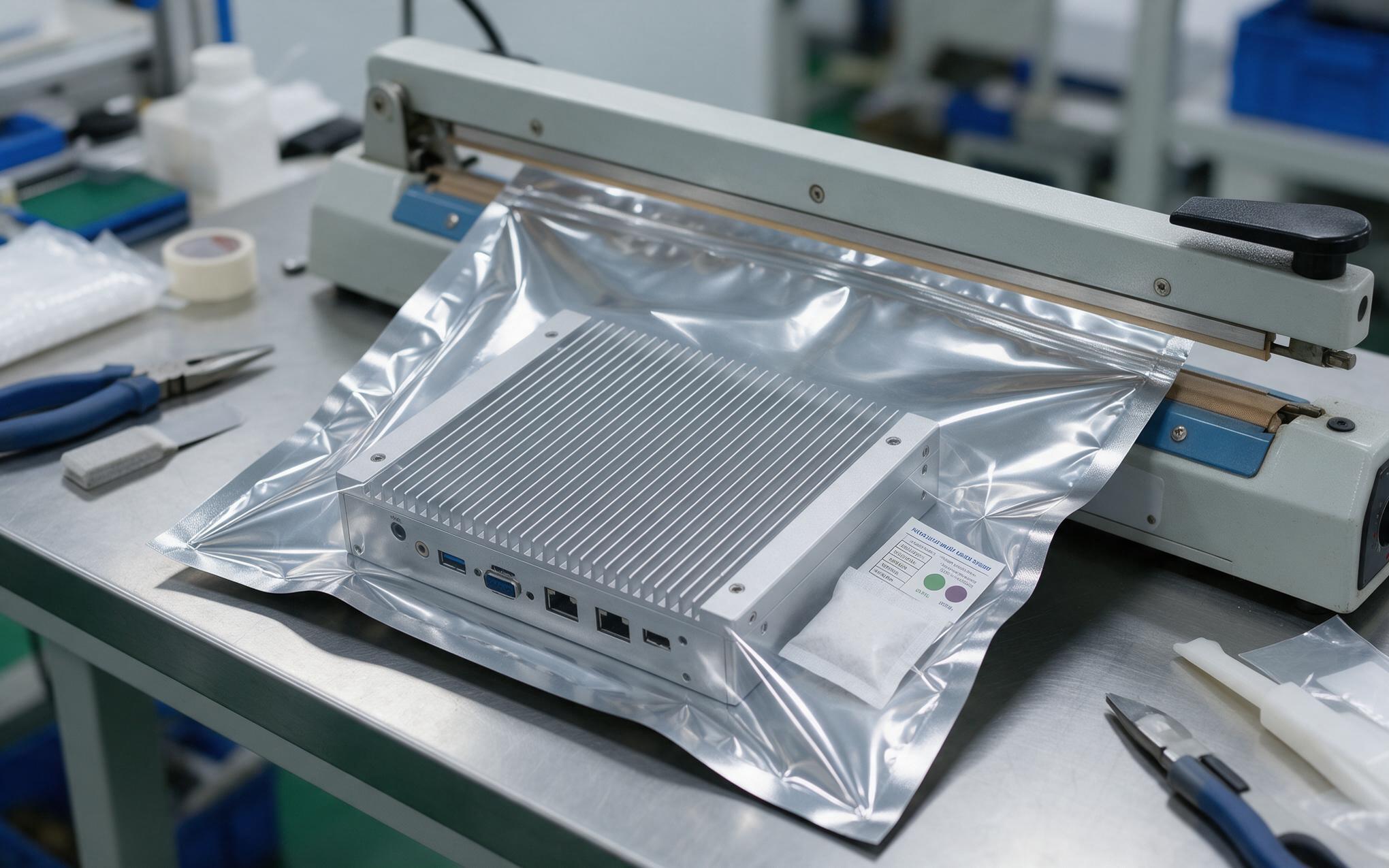
The primary defense is a metallized barrier bag heat-sealed around the unit with a desiccant sachet and a humidity indicator card inside. Sourcing teams compare bags by water vapor transmission rate rather than by film thickness, and they size the desiccant to the headspace and the expected transit duration instead of dropping in a fixed packet. The indicator card gives the receiving technician a color reading that can be logged before the seal is cut, which turns a subjective argument into a documented record. ESD shielding belongs in the same package so that triboelectric charge from the plastic wrap never reaches the board. Sealing steps used by industrial hardware manufacturers, including KOXIAN, follow this order so that humidity at the moment of sealing is recorded rather than assumed.

Container Desiccant Placement and Pallet Preparation
Individual bags manage the microclimate around each unit, while the container as a whole needs its own control layer. Hanging desiccant units from the upper ribs keeps them clear of the pallet faces and lets the clay or polymer beads work through the full air volume. Pallets should sit on runners with a gap to the corrugated wall, because condensation forms fastest where damp carton touches cool steel. Stretch wrap has to stay permeable enough for the desiccant to reach the air, yet tight enough that cartons do not scuff during stuffing. For an industrial PC wholesale load, stuffing plans that mix sealed cartons with loose dunnage tend to create warm pockets where moisture collects.

Acclimatization Before Power On at the Receiving Site
Damage that survived the voyage is often still reversible if the receiving site handles the opening hours correctly. Cartons should stay sealed for a full day so the hardware can reach room temperature before the bag is cut. Reading the indicator card at that point shows whether the seal held, and a card that has shifted color sends the carton to quarantine instead of to a test bench. Units then run a power-on self test before they are released to production, which catches the connectors that stayed wet rather than the ones that merely look dry. For an industrial PC wholesale receipt, this step is inexpensive because it moves the argument back to the supplier while the container paperwork is still open.
Condensation rarely announces itself. It shows up months later as an intermittent ground fault or a connector that oxidizes under a warranty claim nobody can trace. Buyers who treat an industrial PC wholesale consignment as a packaging problem rather than a freight problem get a different outcome, because the controls that matter are set before the container doors close: sealed bags at a known moisture level, desiccant sized to the route, pallets held off the walls, and a receiving process that reads the indicator card before anything is plugged in. Each of those steps costs little next to the price of replacing a lot in the field.