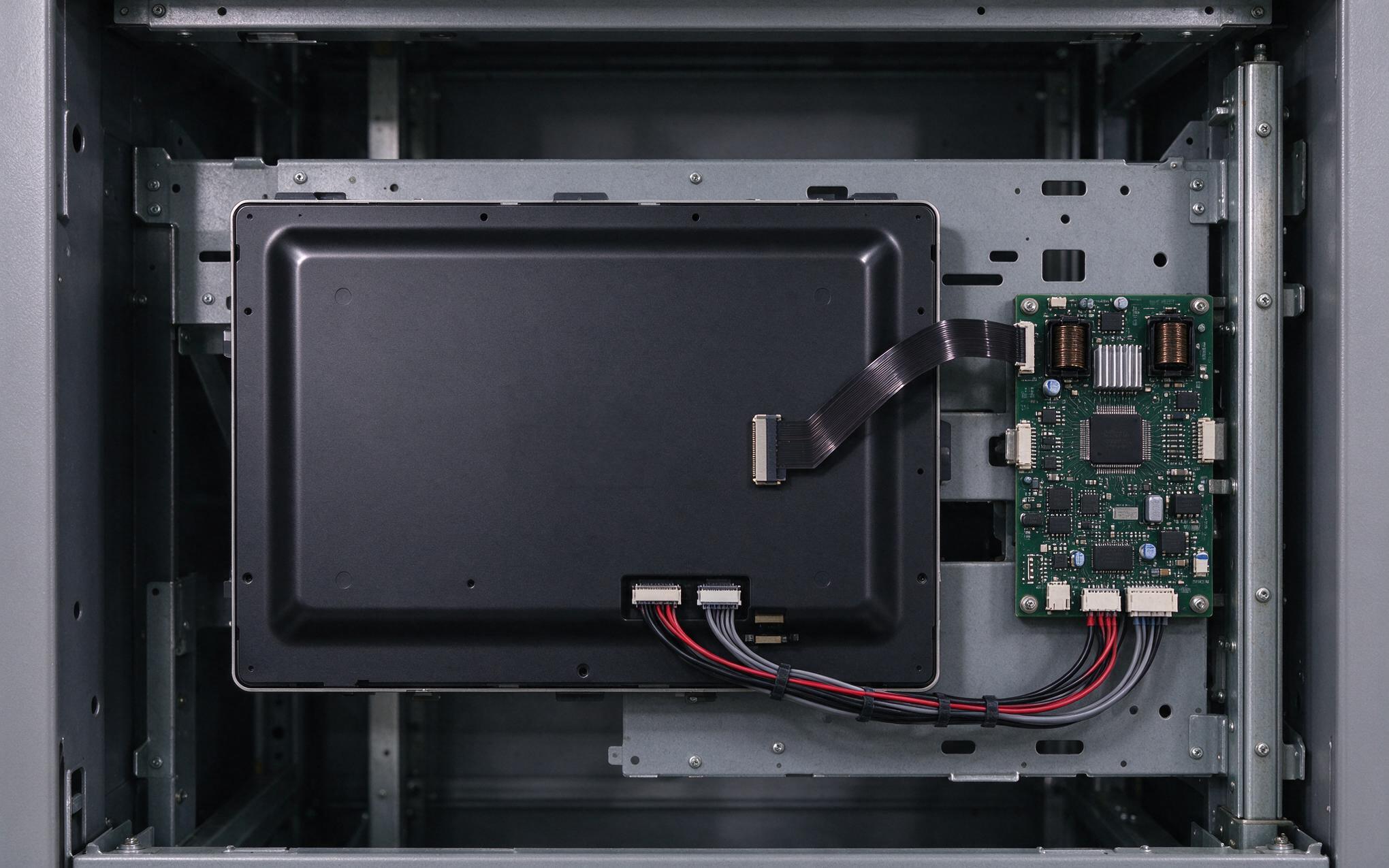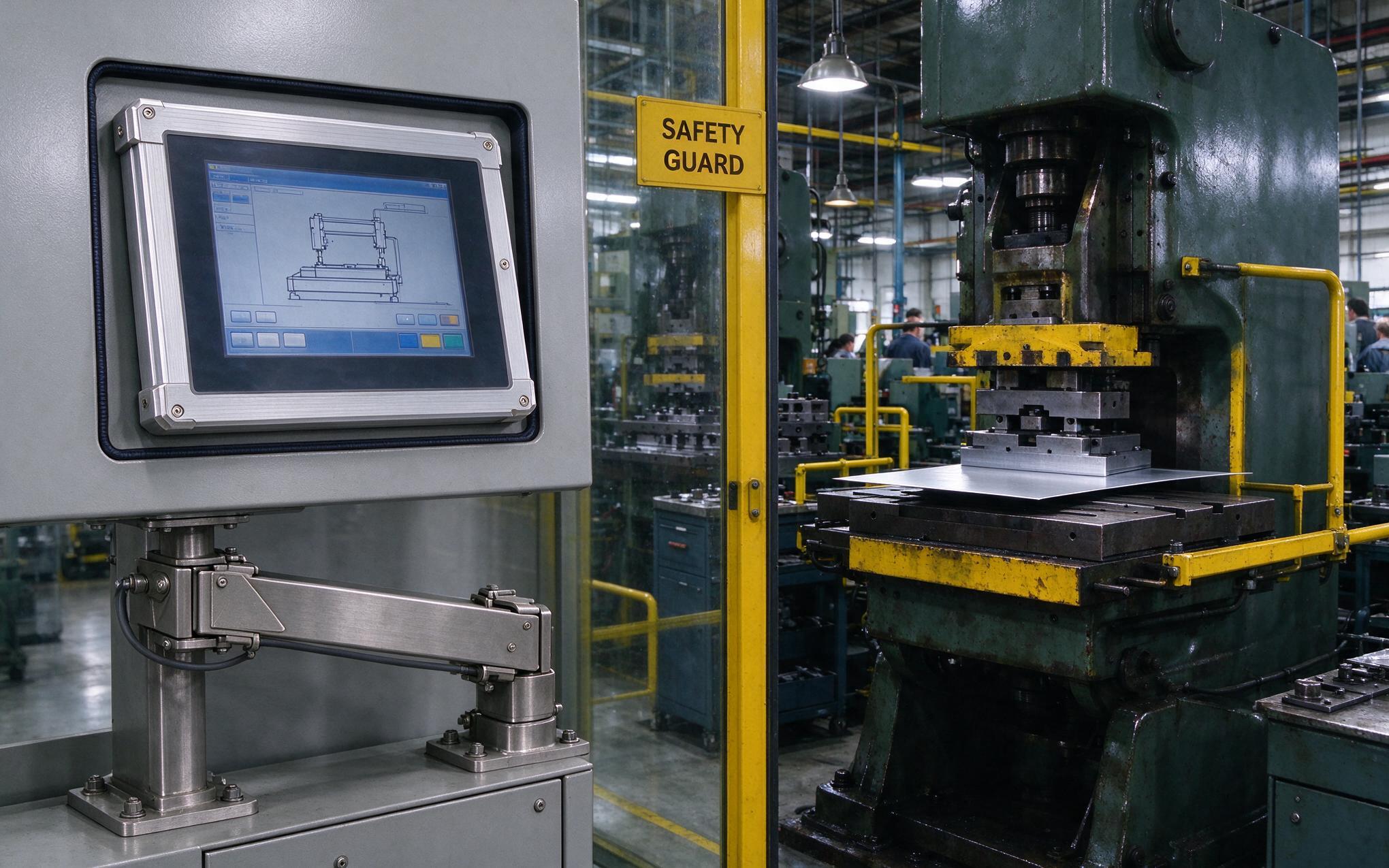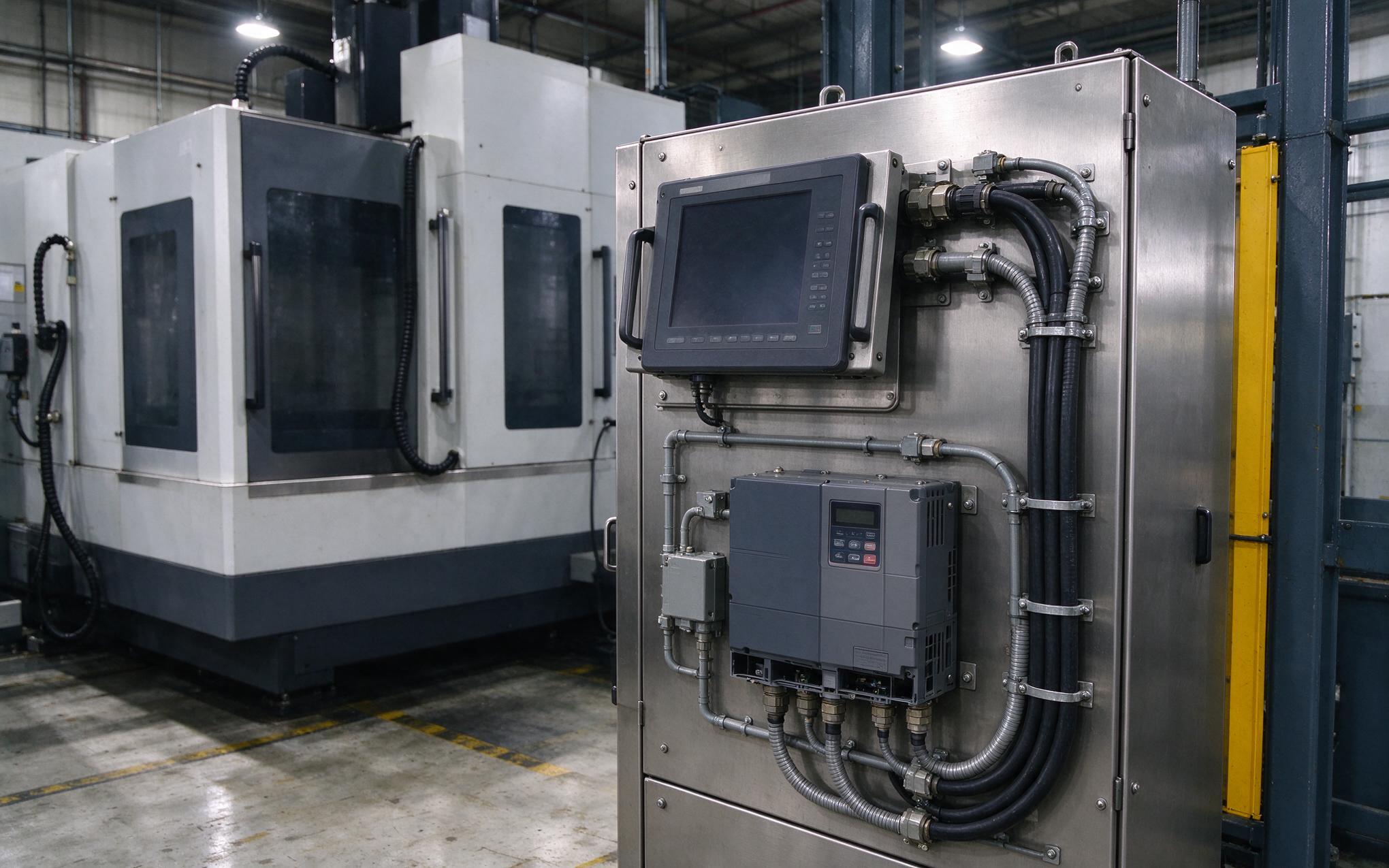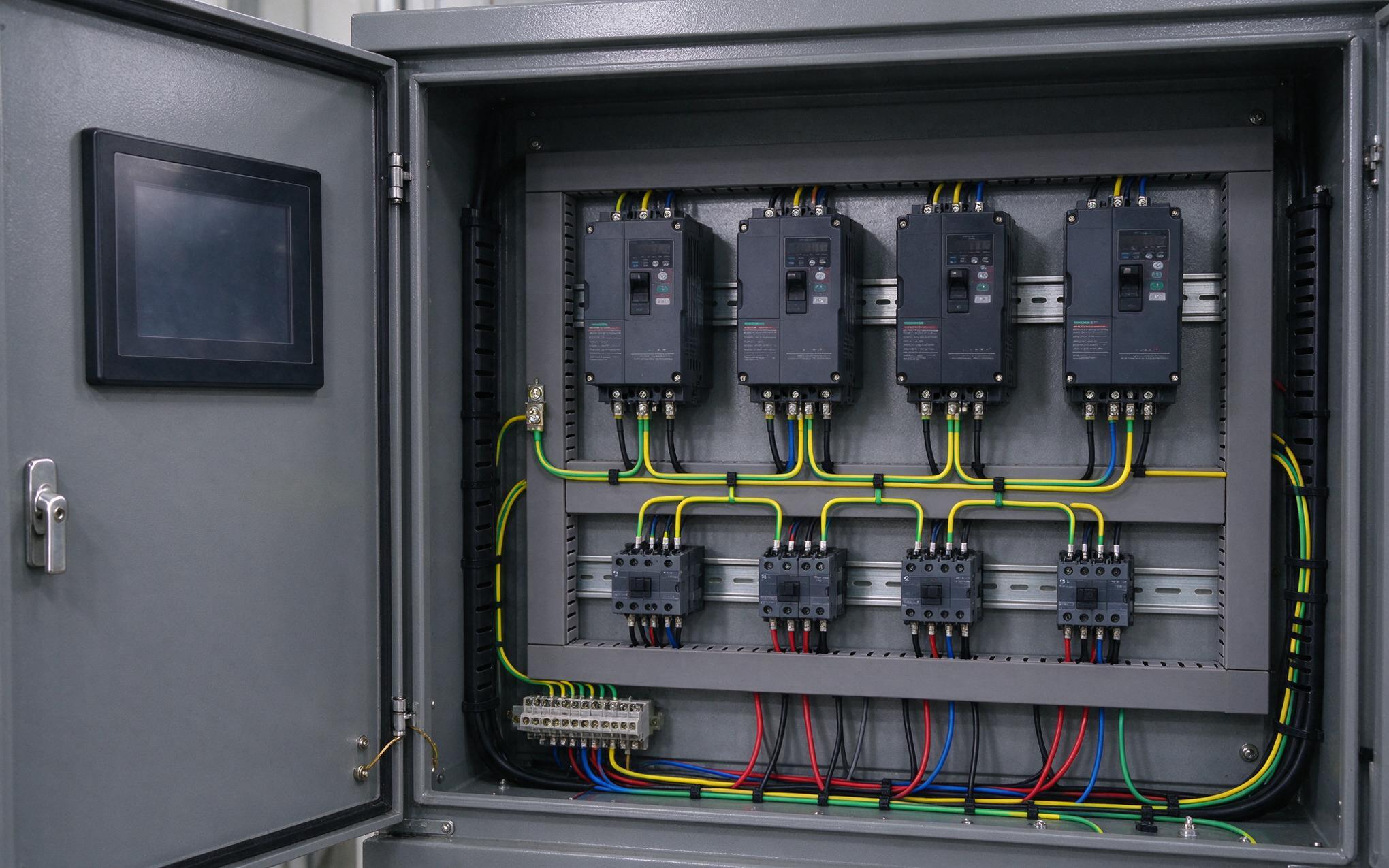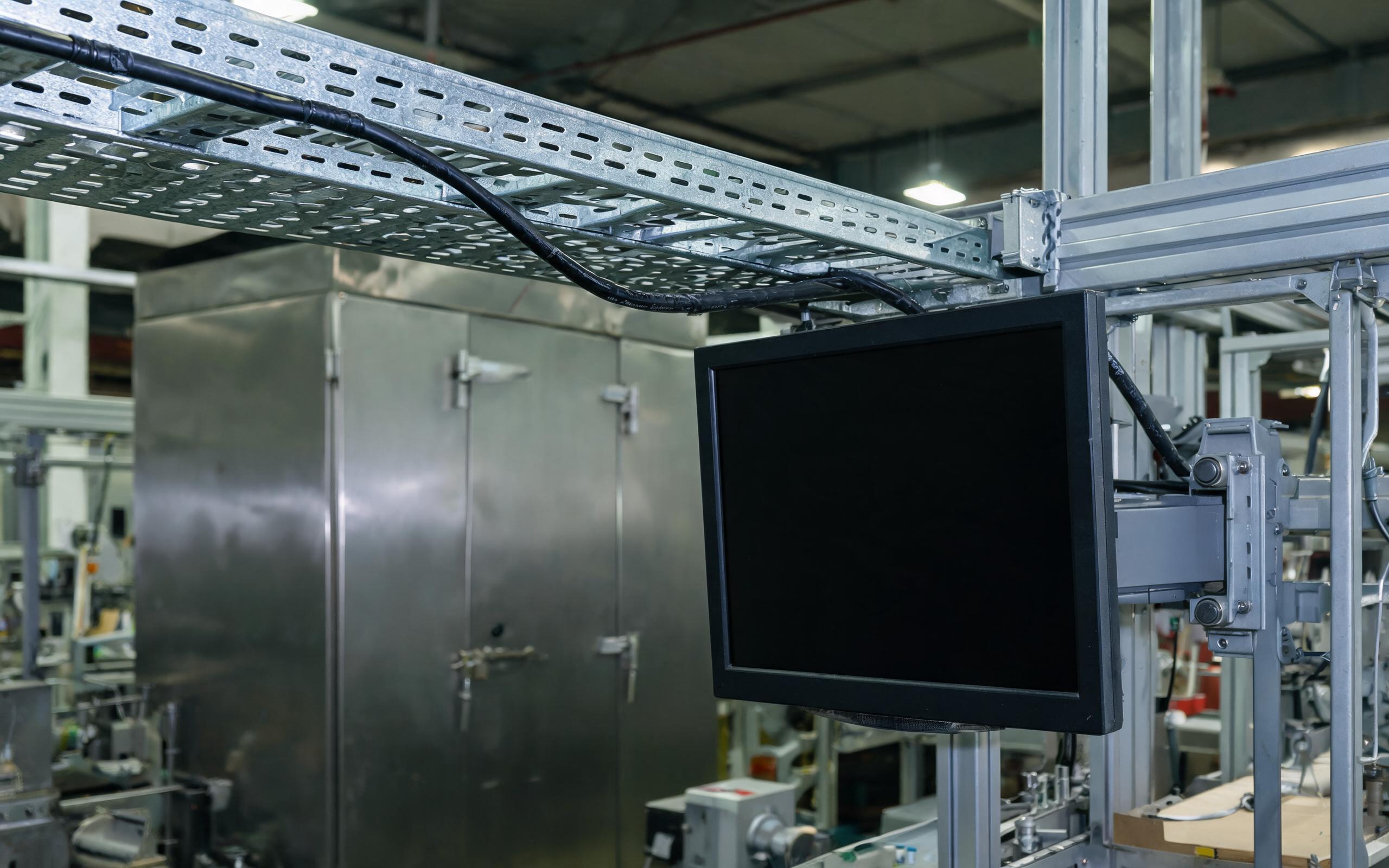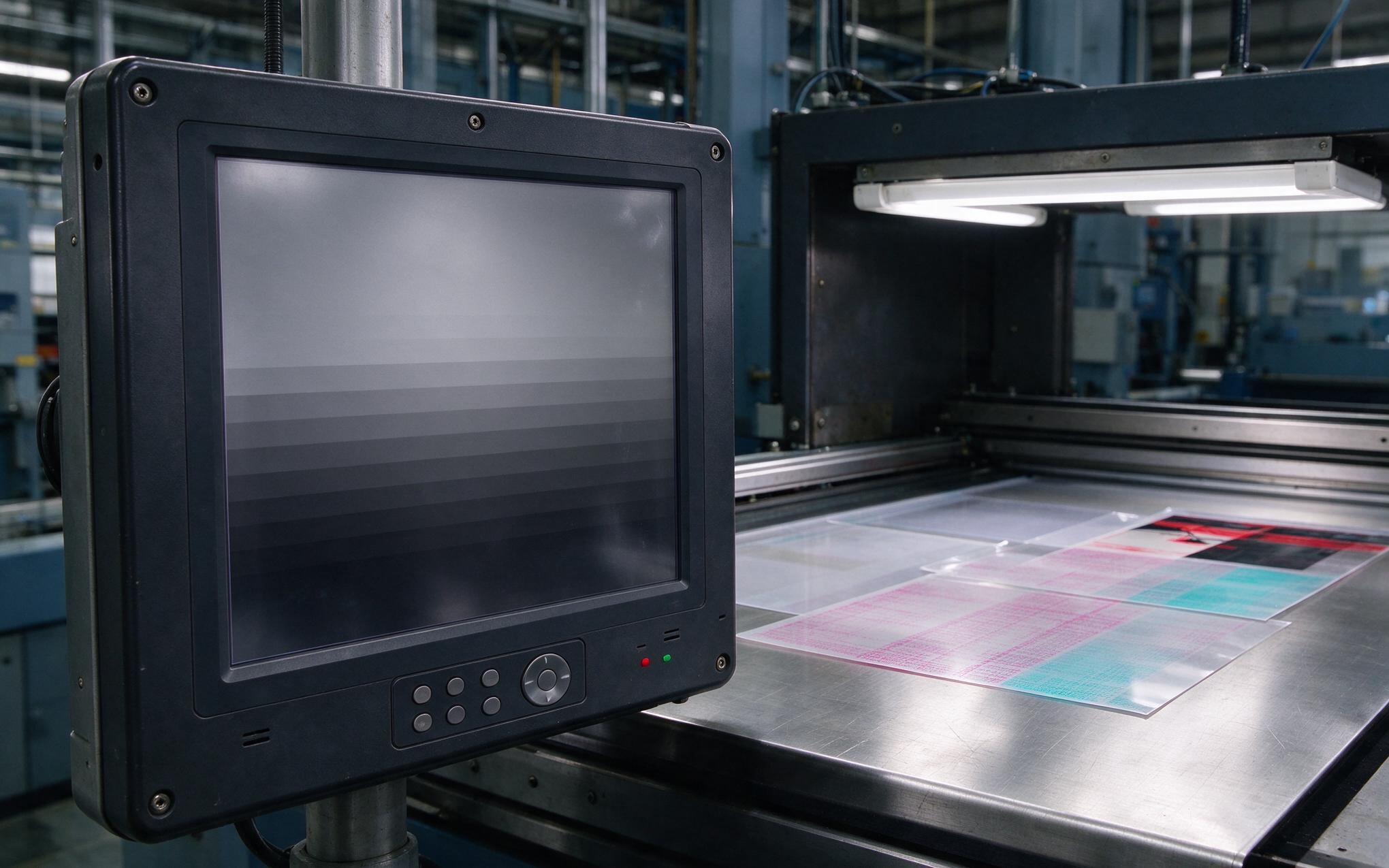
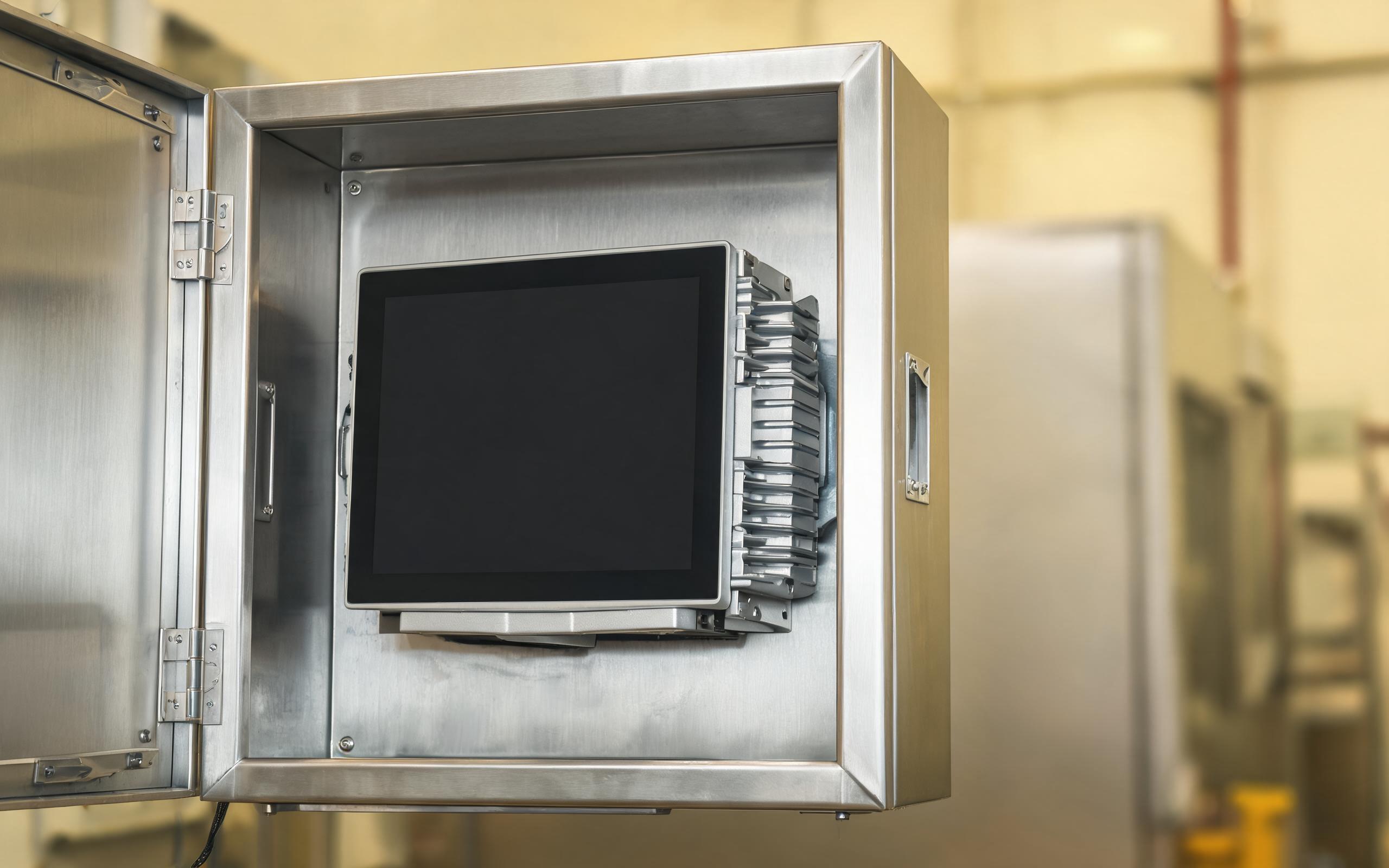
A commissioning engineer bolts a sealed operator terminal into a wall cabinet, closes the door, and watches processor temperature climb through an entire shift. That sequence captures the cooling problem behind every fanless panel pc installed in a tight enclosure. With no fan to force air, heat must cross internal spreaders, the rear housing, and the cabinet skin before it can leave. Third-party analysts value the global fanless PC segment in the multi-billion-dollar range and project growth near 8 percent annually, naming sealed, maintenance-free builds as a central driver. Most field failures in these units are not component defects but thermal siting errors that remain correctable at the panel layout stage.
Reading the Thermal Path of a Fanless Panel PC in a Sealed Cabinet
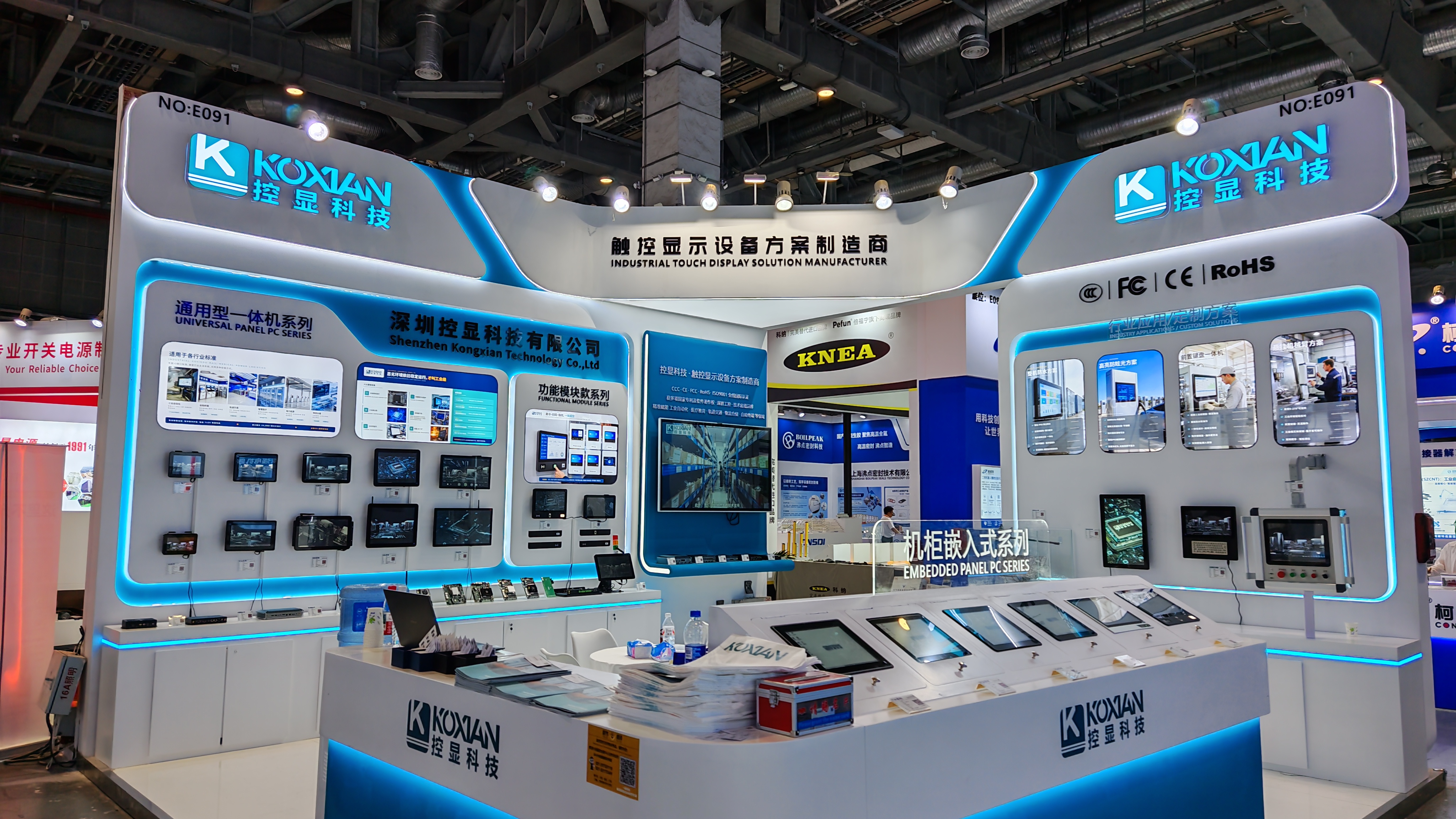
Heat leaves a sealed processor through conduction rather than convection. The die couples to a cold frame through stacked interface layers, the frame spreads the load into the rear housing, and the housing transfers energy to the air or cabinet surface it contacts. Because the chain is only as effective as its weakest interface, enclosure designers, including KOXIAN, specify flat machined contact zones and controlled interface material thickness rather than one massive fin. A fanless panel pc rated for 50 degrees Celsius on an open bench can surrender a large share of that margin once a closed cabinet blocks the rear chimney. Reading the path backward shows where the temperature rise accumulates.
Fin Stack Orientation and the Chimney Effect
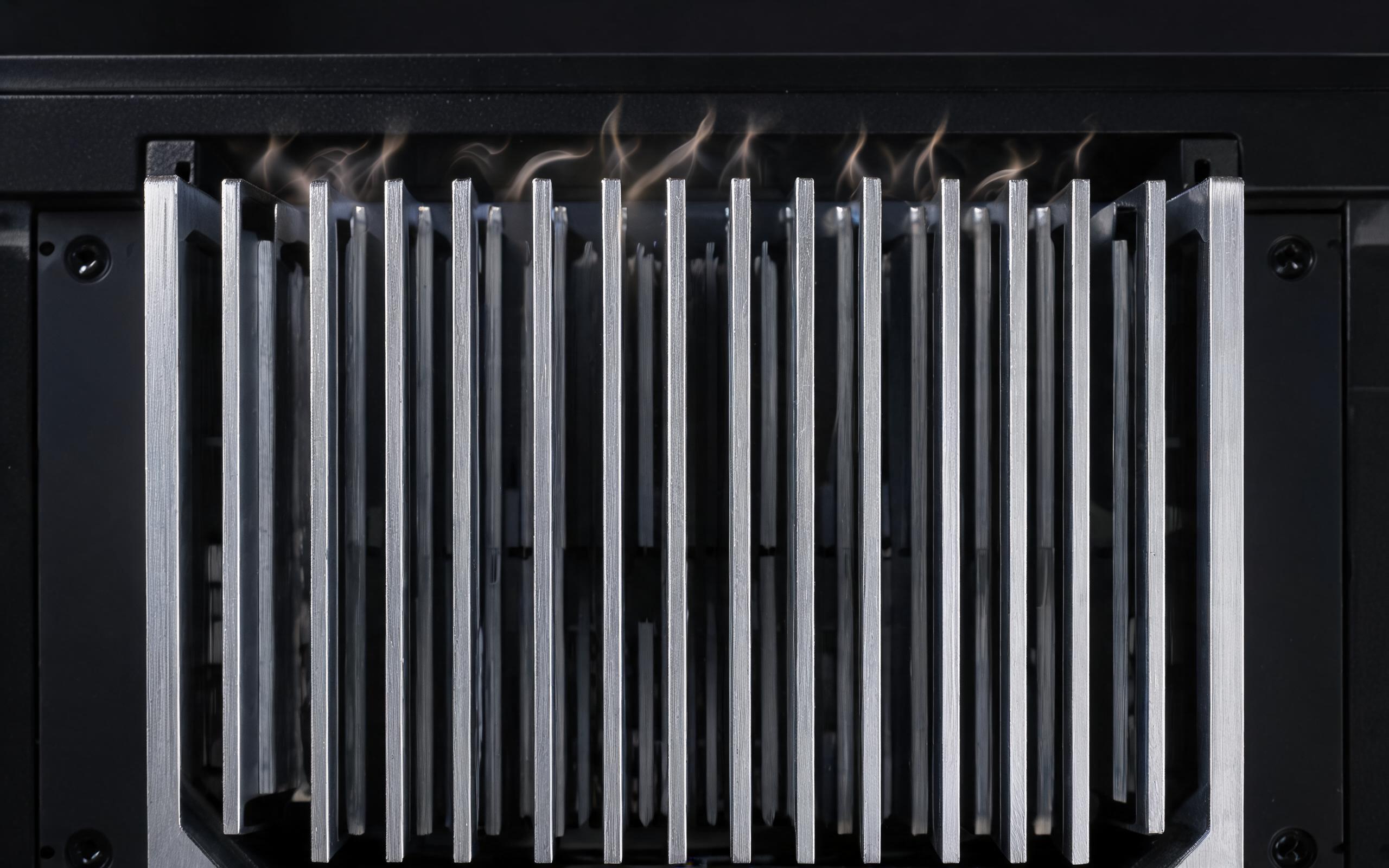
Passive fins do not generate their own airflow; buoyancy does. Warm air rises along a vertical surface and draws cooler air in below, so fin channels act as a chimney only when they stand vertical with open gaps at both ends. Lay the stack on its back and that pumping pressure largely disappears, leaving stagnant pockets between fins. Fin pitch also matters in dusty plants, where narrow channels gain area but collect matting over years of service. Independent thermal write-ups repeatedly name orientation among the most under-specified variables in sealed builds. Structural details such as the extruded vertical fin array on the KOXIAN G1 chassis show how a fanless panel pc sustains its rated load without a moving part.
Across Clearance, Cable Ducts, and Confined Cabinet Siting
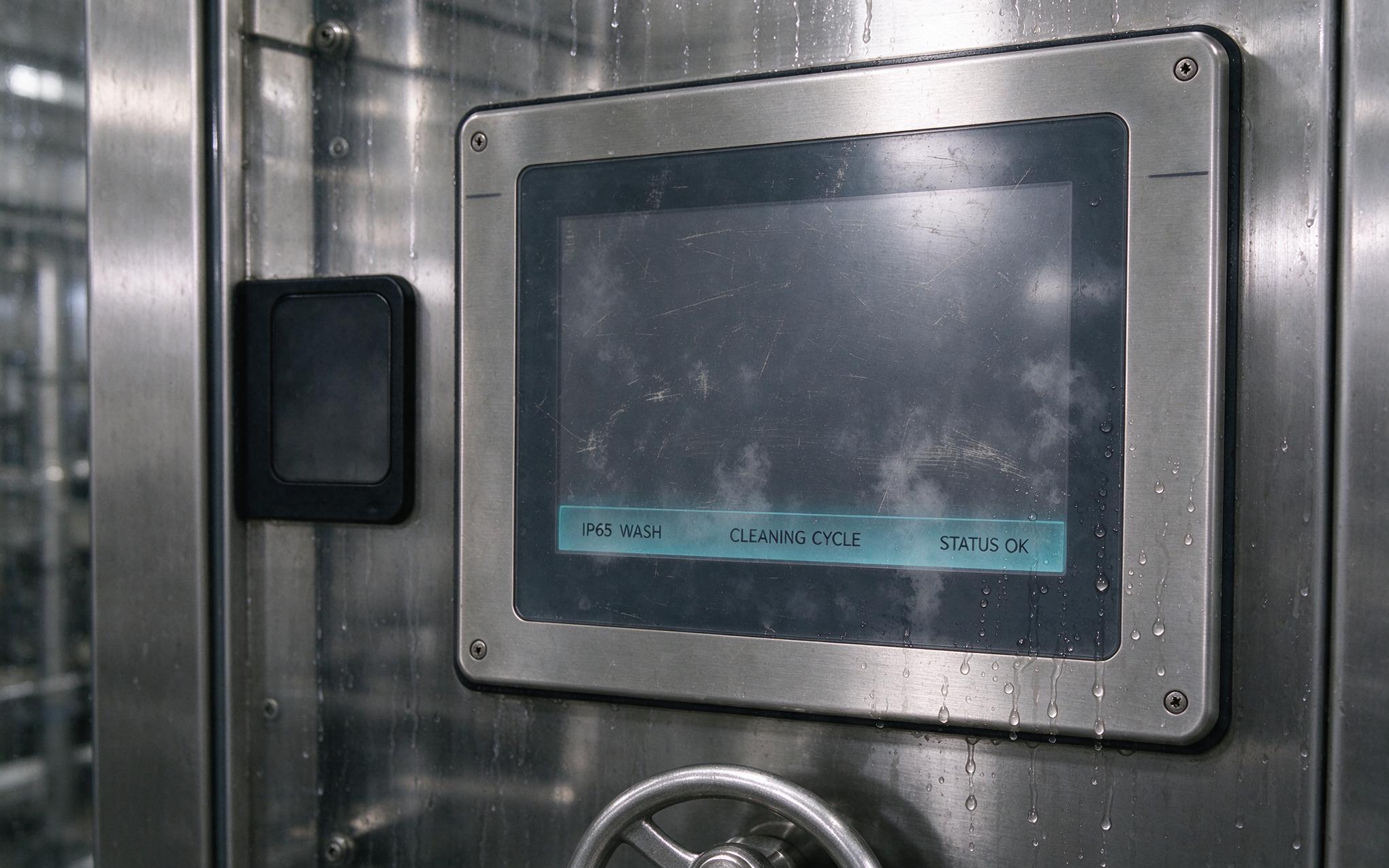
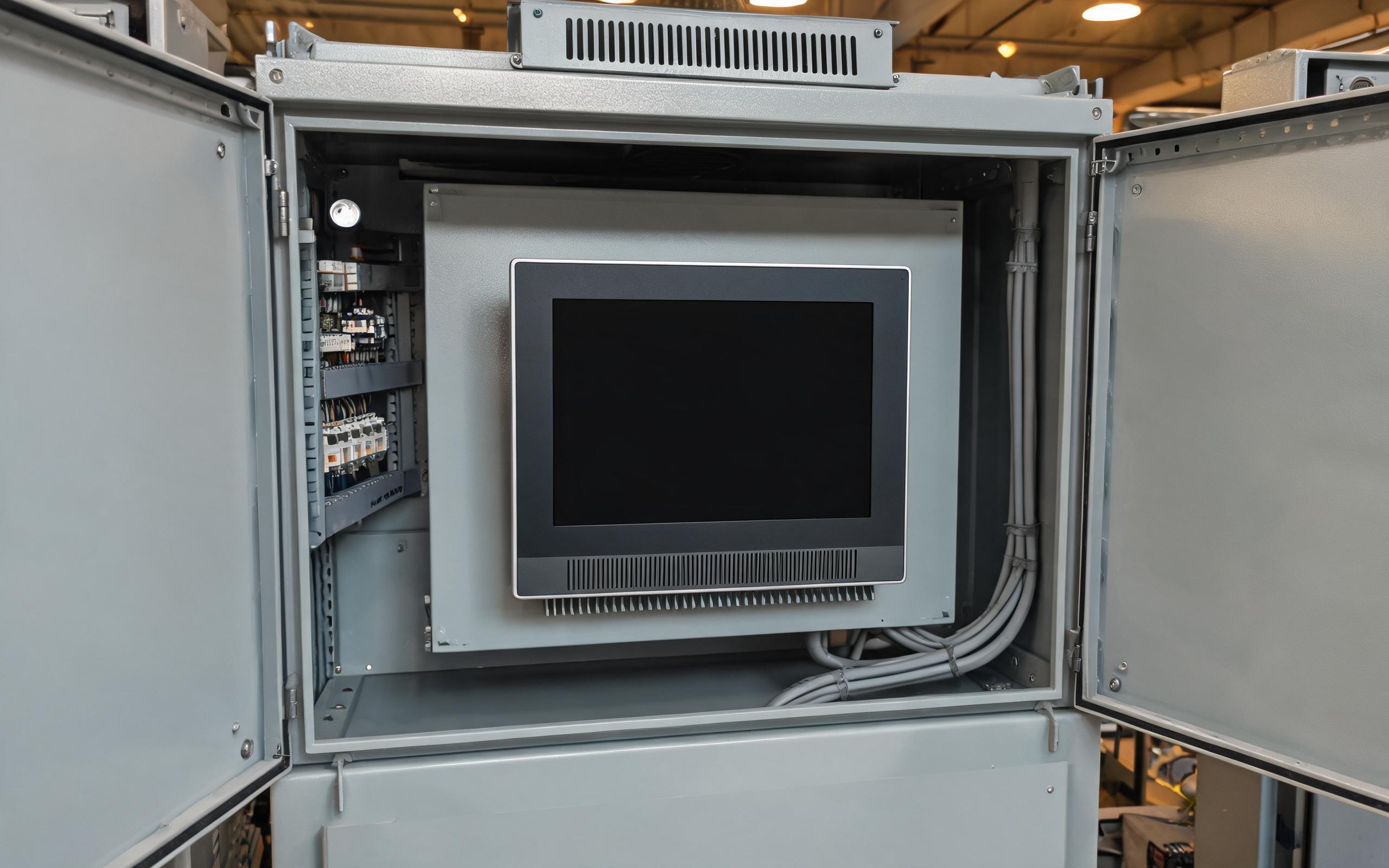
A sealed front bezel guards the display face but cannot cool the rear housing on its own. Engineers planning a retrofit should reserve an air gap above and below the unit, route cables away from the fin inlet, and avoid stacking a drive over the exhaust channel. A side-mounted duct or vented chimney plenum can carry warm air out while the surrounding enclosure stays sealed. A fanless panel pc built to IP65 keeps that rating only while glands and door gaskets stay intact, so adding vents means re-verifying ingress rather than assuming the rating survives. In tightly packed cells, an embedded industrial pc with lower thermal design power often fits the chimney better than forcing a high-wattage unit into a dead corner.
Verifying Sustained Load Before Line Commissioning
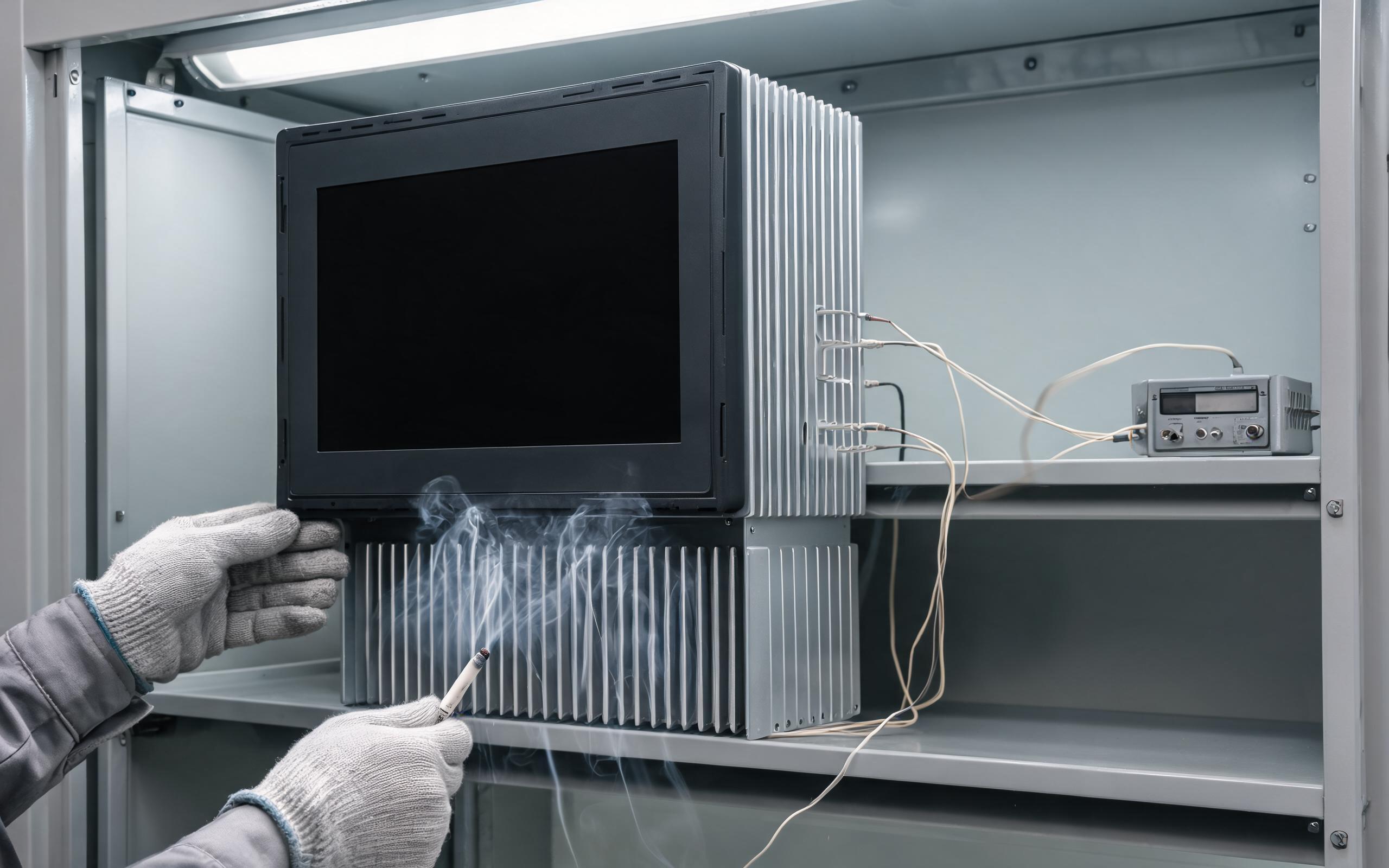
For sealed retrofits, chassis families modeled on the KOXIAN K series expose the same vertical fin channels used in qualification, so engineers can replicate worst-case siting on a bench. A smoke pencil or thread tuft taped beside the lower inlet reveals whether a real chimney forms when the door closes. Thermocouples on the heat frame, rear housing, and exhaust are logged through a sustained workload rather than an idle screen, because turbo limits and short burst tests hide the equilibrium temperature a continuous shift reaches. If the logged margin looks thin at room ambient, the summer cabinet condition will erase it. A fanless panel pc should therefore be signed off at its planned orientation and clearance, with the real harness and neighboring drives installed, rather than validated bare on a desk.
Sealed cooling is a siting problem as much as a component specification. The same chassis can hold its processor rating in one cabinet and throttle in the next, depending on fin orientation, vertical chimney gaps, cable placement, and the verification method used at sign-off. Engineers should read the conductive path backward, keep fin channels vertical and open, preserve clearance around inlet and exhaust, and log temperature under sustained load in the real enclosure. When those steps hold, passive cooling delivers the maintenance-free uptime that drives sealed builds on continuous production lines.