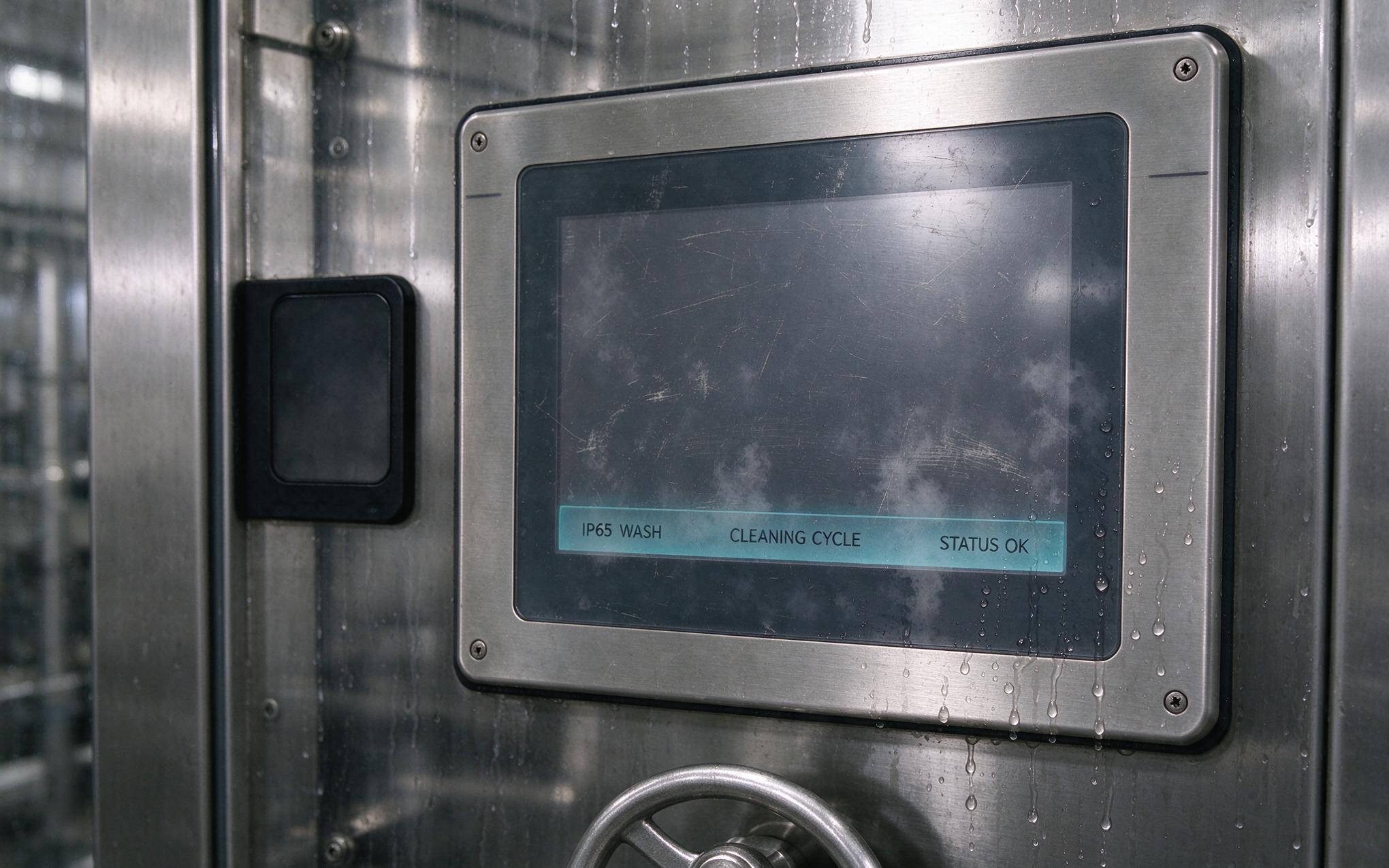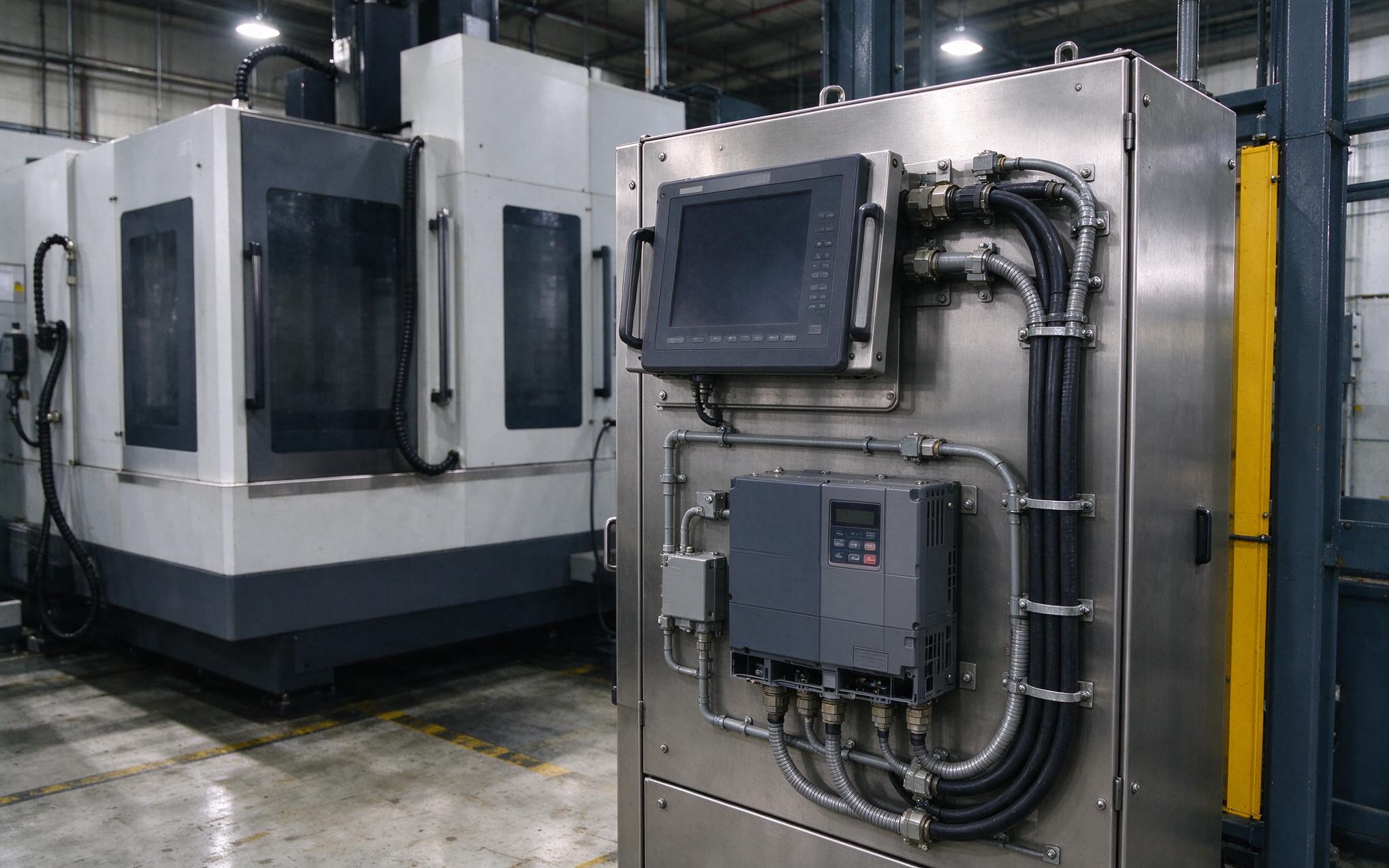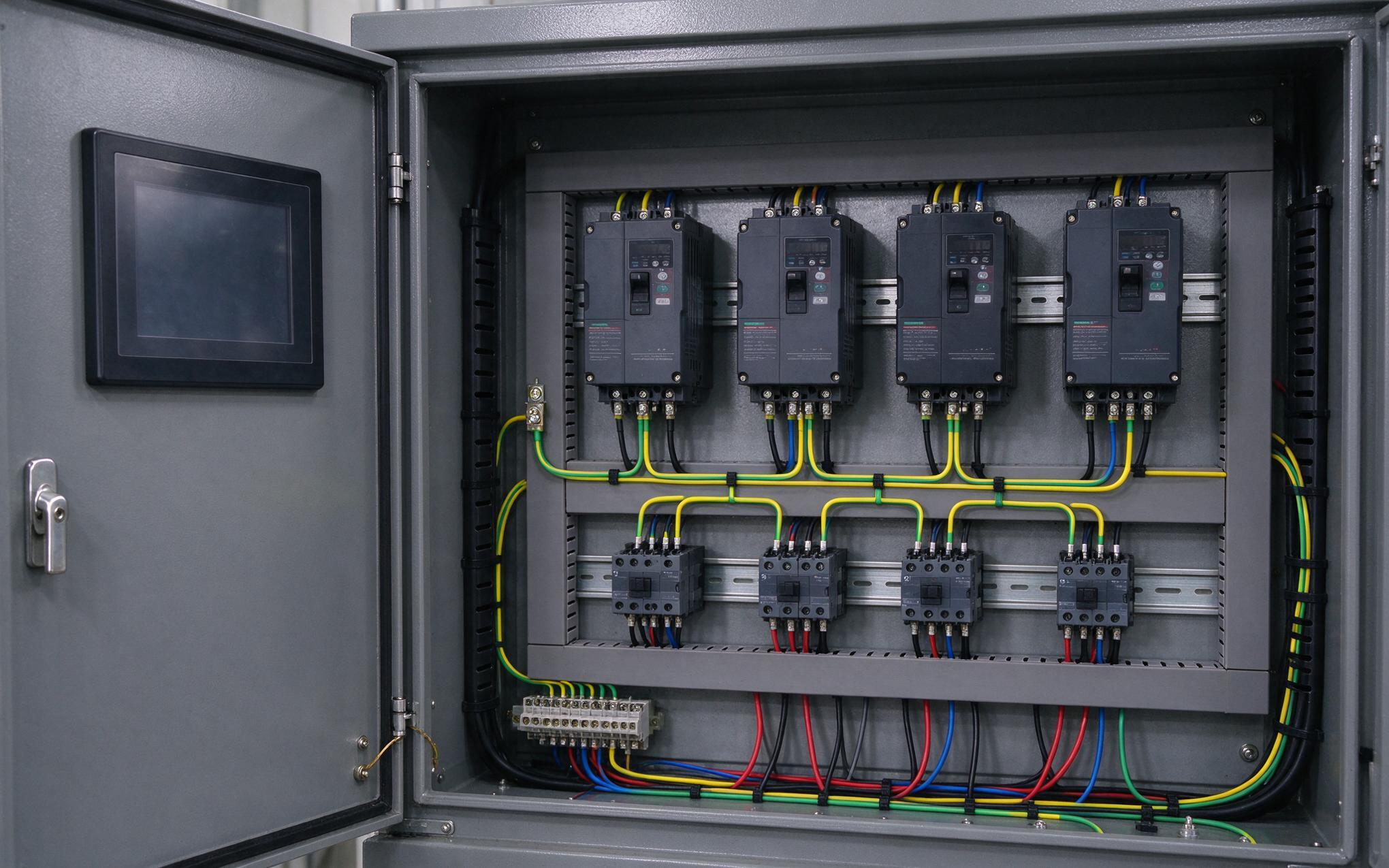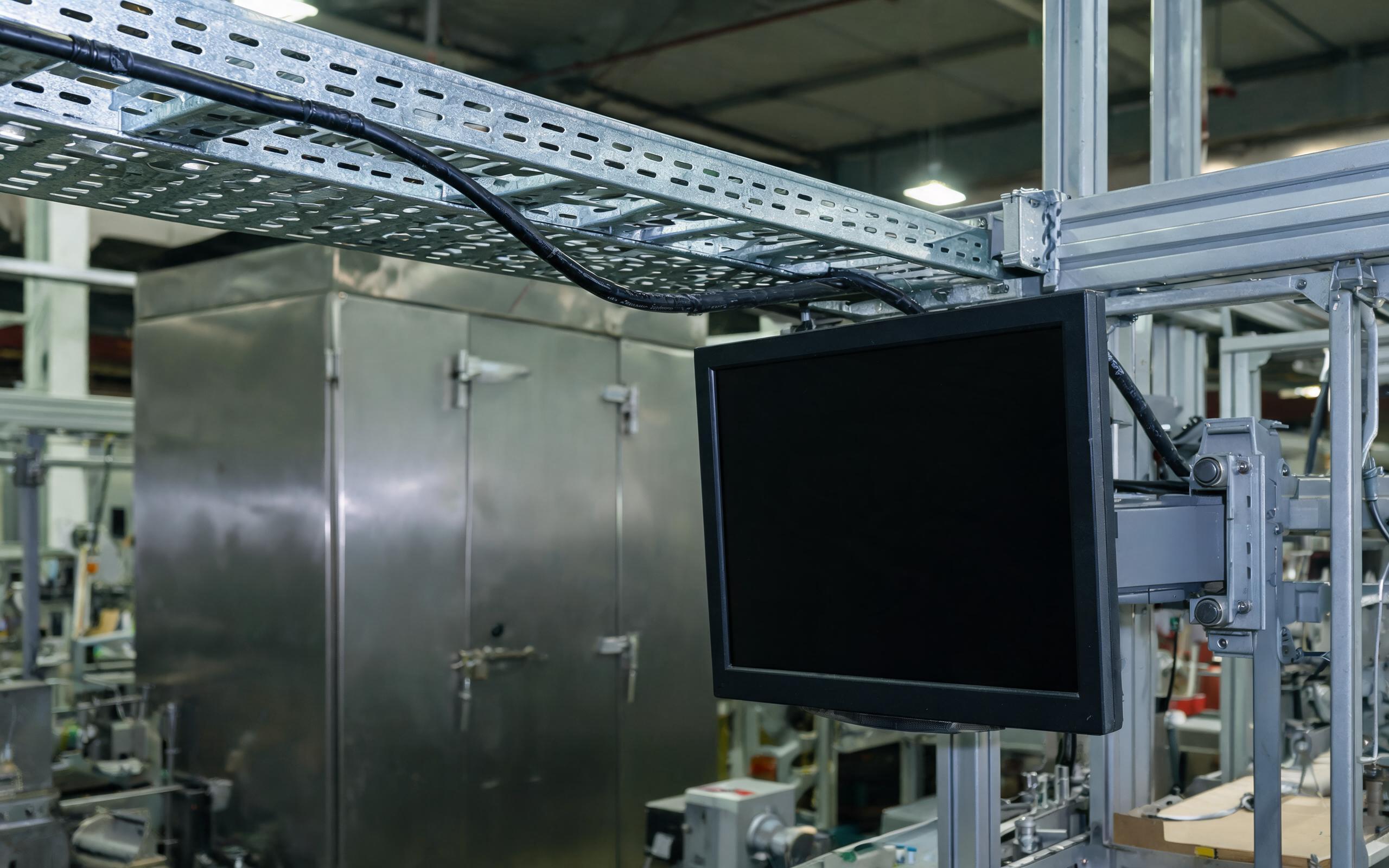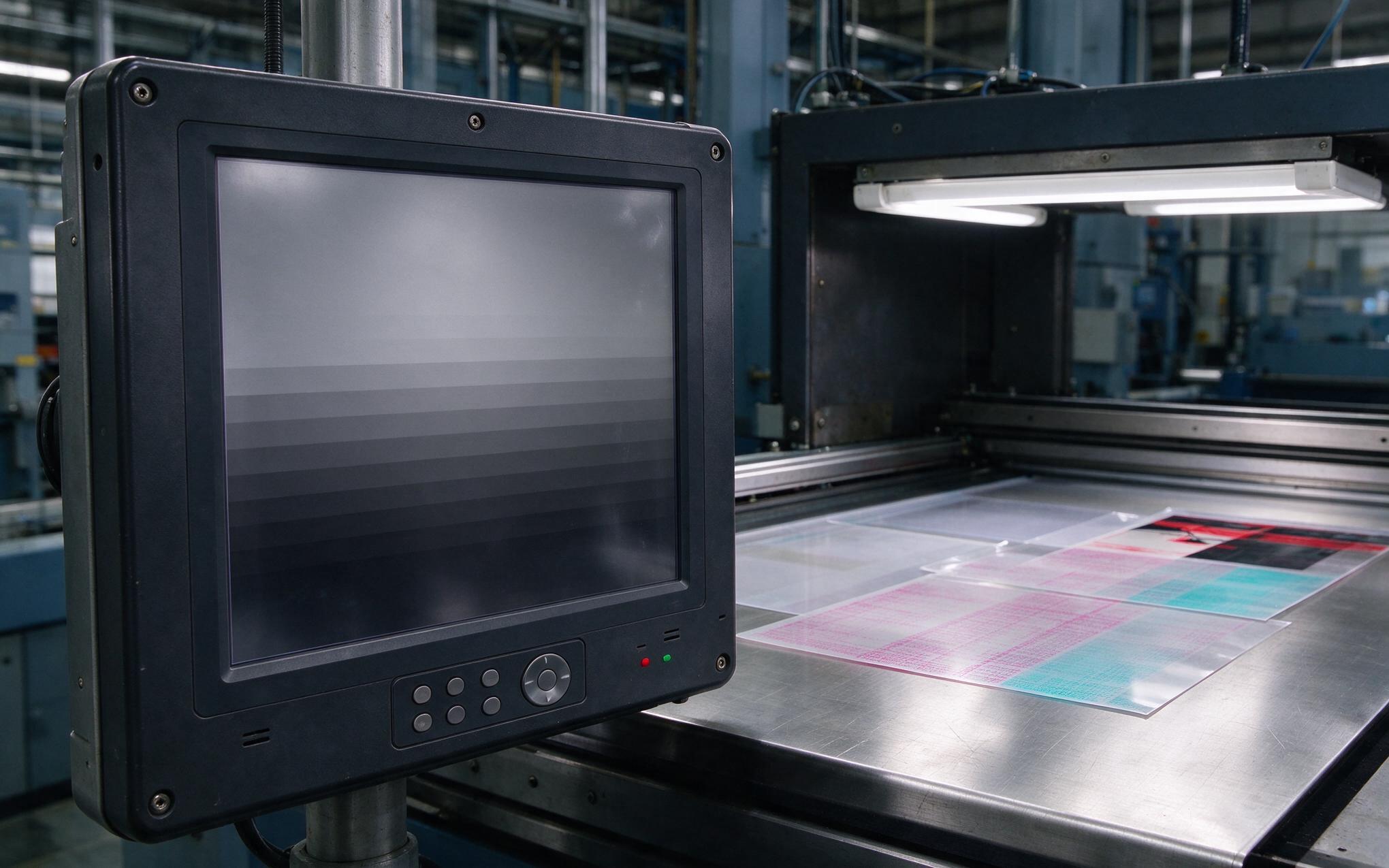
Three display units failed at a Wisconsin cheese packaging facility after just two seasons. The industrial panel mount monitors sat at the boundary between 2°C cold storage and 28°C filling halls, where every cold room door opening triggered condensation behind the front glass. Touch response degraded within minutes, optical layers fogged, and all three units required replacement. The root cause was not a defective IP65 seal but a mismatch between the enclosure’s thermal expansion rate and the mounting bracket material — a problem that wide temperature designs must solve at the engineering stage.

Mapping the Thermal Gradient and Dew Point Boundary
Condensation on an industrial panel mount monitor occurs when the front glass surface temperature drops below the dew point of surrounding air. In food processing, pharmaceutical manufacturing, and cold chain logistics, this happens multiple times per shift as operators open cold room doors, activate CIP washdown systems, or move product between climate-controlled zones. The IEC 60068-2-14 thermal cycling standard defines the test profiles that separate genuine wide temperature designs from marketing claims. A monitor rated for −20°C to 60°C must survive hundreds of cycles between those extremes without seal degradation, solder joint fatigue, or panel delamination. However, the standard does not account for the humidity spike that accompanies a rapid temperature rise in a food plant — an event that introduces moisture through condensation rather than ingress. This gap between standard testing and real-world conditions is where many industrial panel mount monitor installations fail.

Evaluating Seal Compression Under Thermal Expansion
KOXIAN panel mount monitors address gasket compression loss by pairing silicone seals with spring-loaded retention clips that maintain constant pressure regardless of thermal expansion. Every sealed enclosure relies on gasket compression to maintain its IP rating, and when temperatures swing from −20°C to +50°C, the gasket material, the aluminum bezel, and the tempered glass front all expand and contract at different rates. Silicone gaskets — the most common choice for wide temperature panel mount monitors — retain flexibility across this range, but their compression set increases with each thermal cycle. After 500 cycles at a 70°C delta, a silicone gasket may lose 15–20% of its original compression force, creating micro-gaps that allow humid air to reach the LCD backlight and optical layers. This approach decouples the seal force from dimensional changes in the enclosure, ensuring consistent IP65 protection even after years of cycling. Field failure data from food processing installations shows a clear reduction in condensation-related returns when spring-loaded designs replace static gasket compression.

Comparing Front Panel Materials for Condensation Control
The choice of front panel material directly impacts condensation resistance. Standard tempered glass has a thermal conductivity of approximately 1.0 W/m·K, which means it transfers heat quickly — useful for defogging, but also useful for condensation formation when the glass surface temperature drops below the dew point of surrounding air. Chemically strengthened glass with anti-fog coating provides a partial solution, but the coating degrades under repeated chemical cleaning cycles common in food and beverage facilities. An alternative approach uses heated front panels with embedded resistive elements. These panels maintain surface temperature 3–5°C above ambient dew point, preventing condensation without relying on chemical coatings. For industrial panel mount monitors deployed in environments where temperature transitions exceed 40°C within a single hour, heated panels represent a meaningful reliability improvement. The trade-off is increased power consumption — typically 8–15W for a 15-inch panel — which must be factored into the electrical budget for battery-backed or solar-powered installations. Companies such as KOXIAN also integrate thermally conductive adhesives between the glass and frame to distribute heat more evenly, reducing cold spots where condensation tends to nucleate.
The intersection of wide temperature ratings and real-world humidity conditions demands that specifiers look beyond the datasheet temperature range. A genuine condensation-resistant industrial panel mount monitor must survive not just the extremes, but the transitions between them — and the moisture events that those transitions inevitably produce. Evaluating gasket compression retention, front panel heating options, and thermal cycling test data under humid conditions provides the engineering foundation for reliable long-term deployment in demanding food processing, pharmaceutical, and cold chain environments.