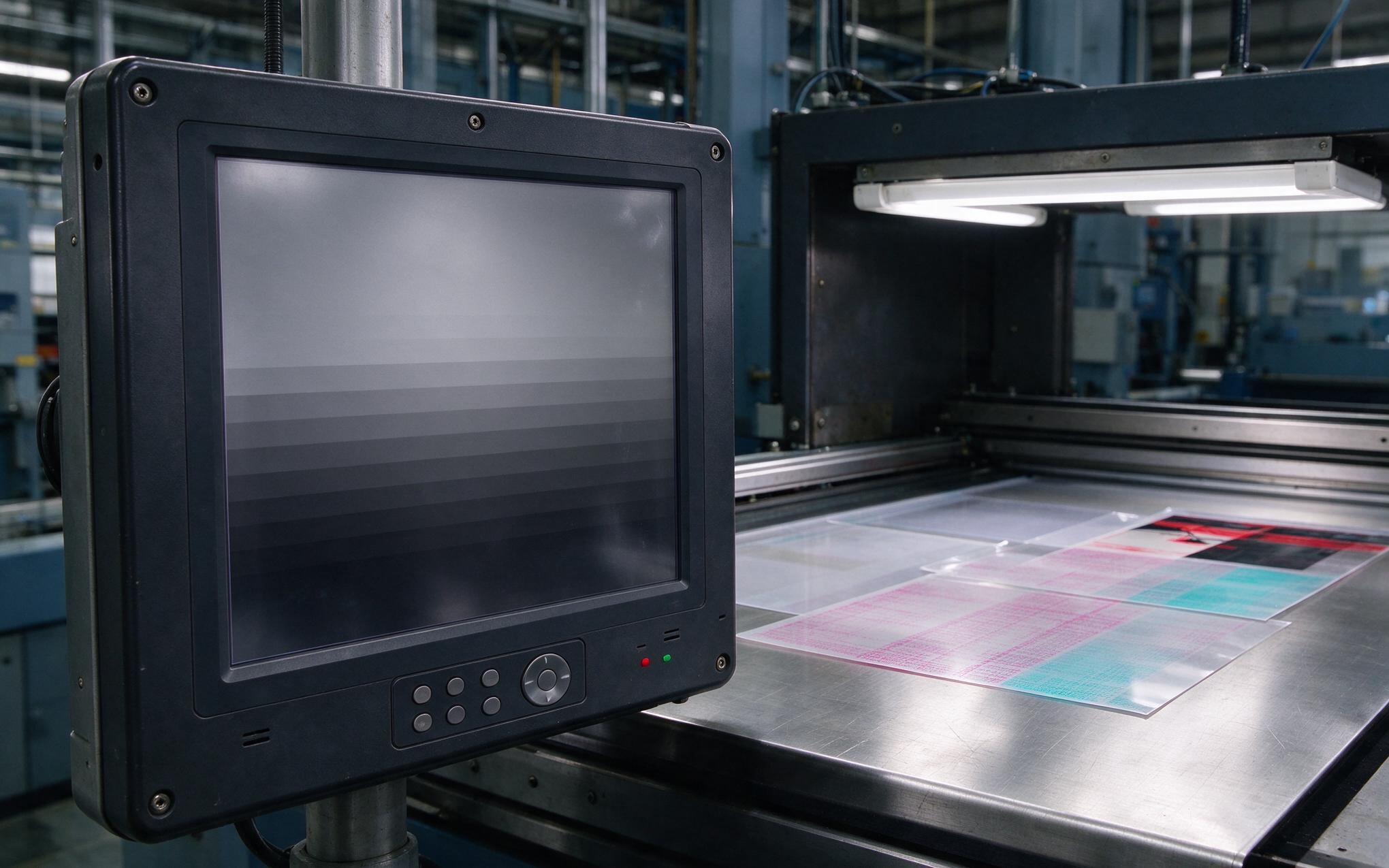
An industrial touch pc puts a sealed operator interface directly on a rolling chassis, where the power environment behaves nothing like a factory floor outlet. Forklifts, tuggers, yard tractors, and agricultural haulers share one hard truth: the starter motor can drag the 12 V rail below 6 V for several hundred milliseconds, and the same rail later sees load-dump spikes above 40 V. A unit booted from raw battery voltage will reboot mid-crank, corrupt open data files, or drain the battery after the operator walks away. Ignition timing, rather than processor speed, decides whether a vehicle mount computer survives a full shift without service calls.
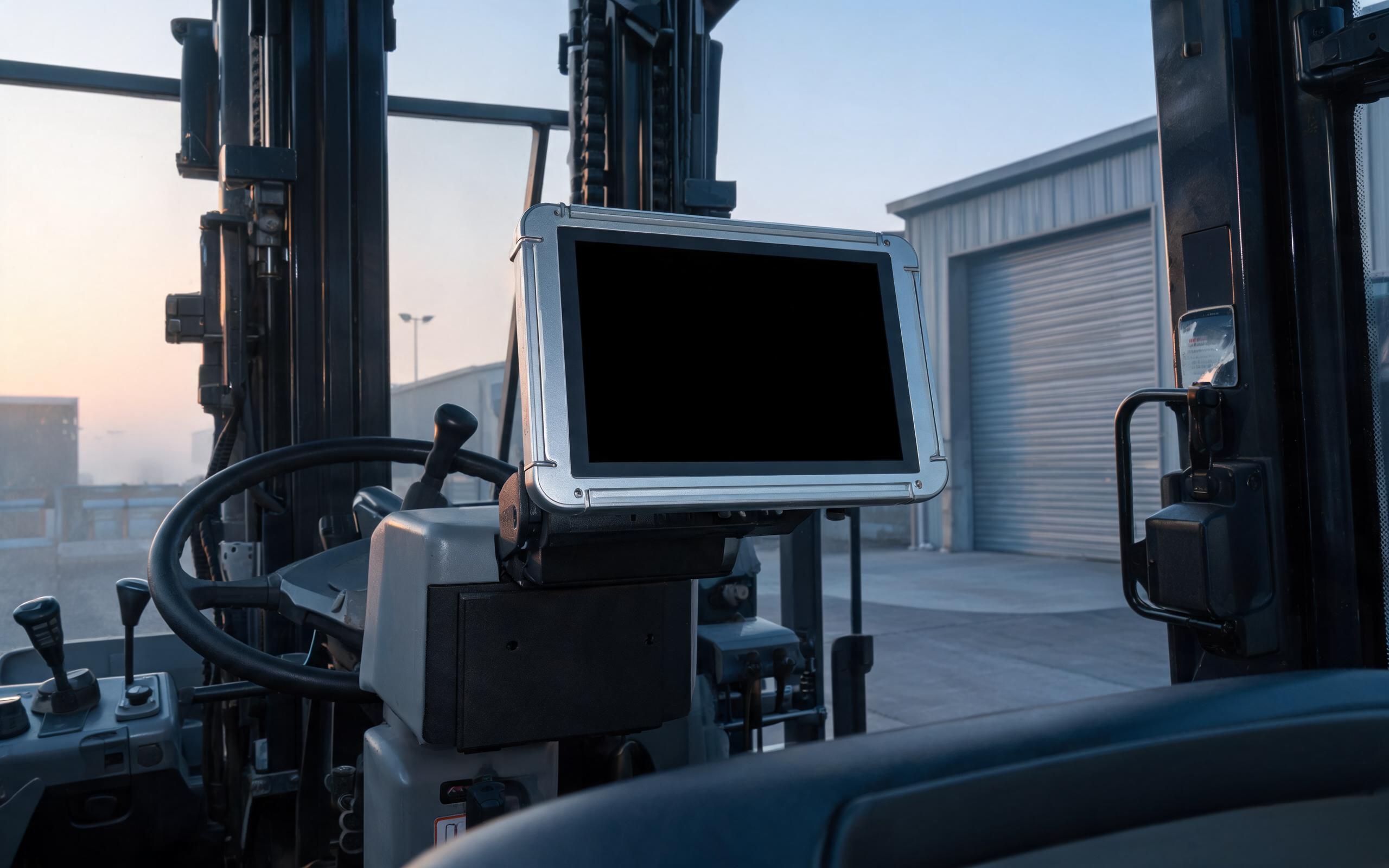
Within the Crank Dropout Window on Mobile 12 V Rails
When a diesel engine turns over on a cold morning, the starter briefly draws several hundred amps. Builders of vehicle-grade hardware, including KOXIAN, specify front-end stages rated below the cold-crank floor rather than trusting the nominal 12 V rail. Battery internal resistance and long frame cables turn the starter surge into a crank dropout, with the rail sagging toward 4.5 V for 50 to 300 ms before recovering. Consumer-grade power stages stop regulating well above that floor, so the industrial touch pc resets while the touch controller re-enumerates, which operators see as a black screen when the engine fires. Repeated ungated power removal also shortens storage life, even when no file is visibly lost.
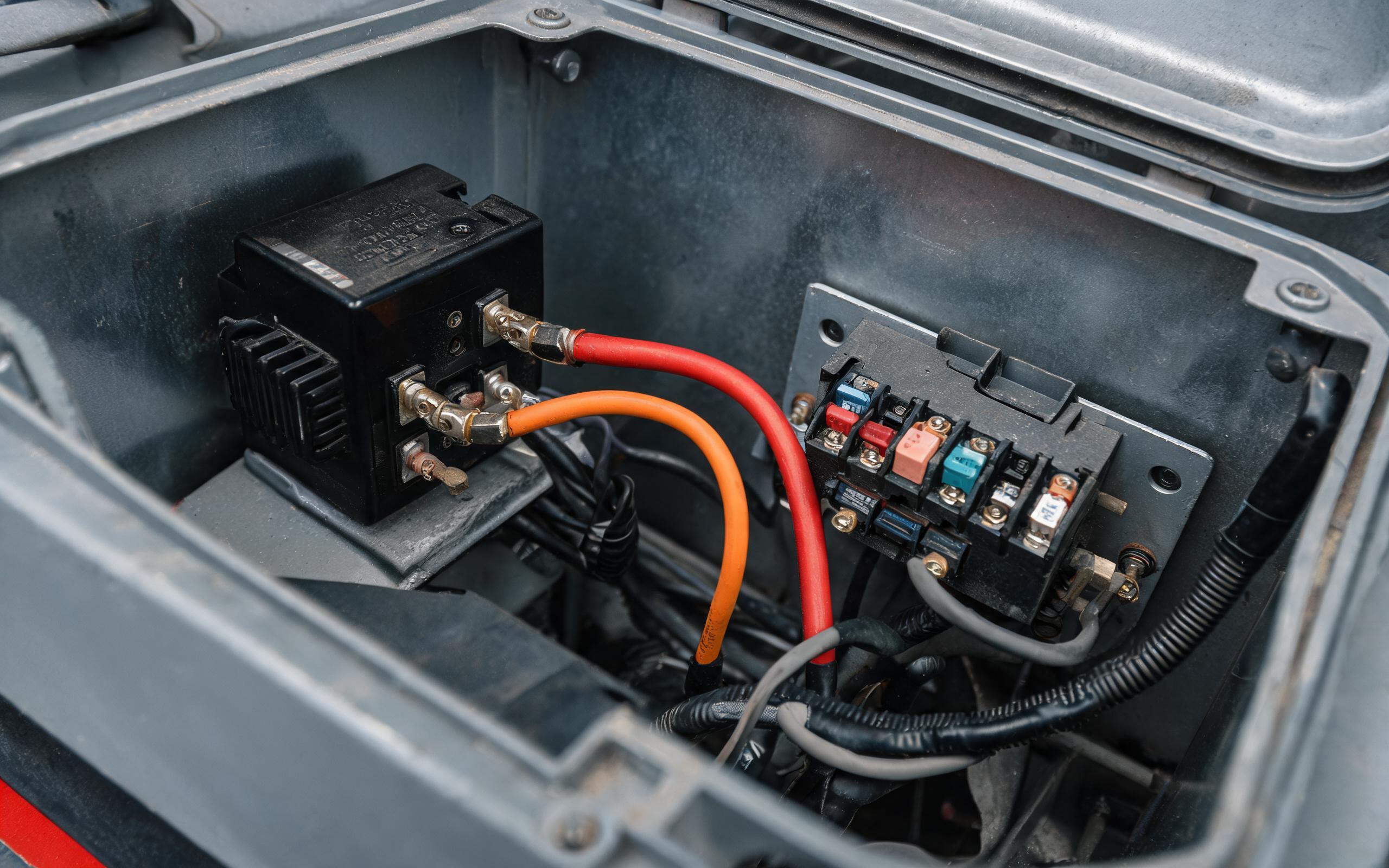
Reading Ignition Sense to Separate Starts from Shutdown
An ignition control module does not merely pass battery power. It listens to the vehicle ACC and RUN lines, distinguishes a momentary key turn from a genuine end-of-shift, and holds the output stable while the starter cranks. Two timers do the heavy work. A crank-ignore window keeps the DC output alive for a short interval whenever ignition drops, absorbing both normal starts and key bounce. A hard-off delay, commonly 30 seconds to 10 minutes, keeps the industrial touch pc powered after the operator removes the key so the operating system closes logs, flushes buffers, and parks storage activity. A third low-battery threshold overrides every timer: if bank voltage stays below a programmable floor, the module forces shutdown to preserve enough starting capacity for the next shift.
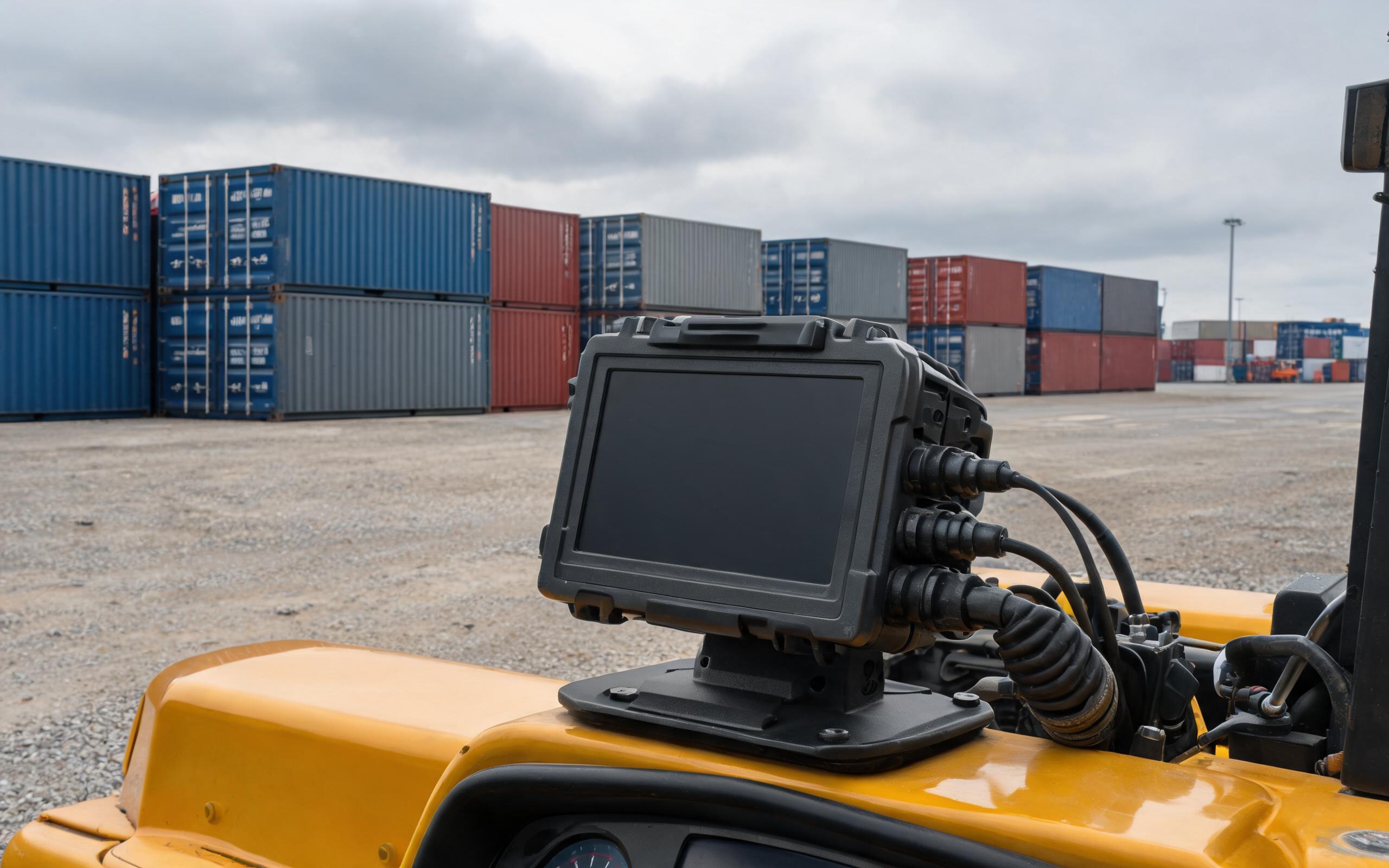
Wide-Voltage Regulation and Hold-Up Stages in an Industrial Touch PC
Between the ignition controller and the motherboard sits the conversion chain that bridges the sag. A wide-input DC-DC regulator, commonly rated from 9 to 36 V with cold-crank versions extending toward 6 V, keeps internal rails in regulation through normal starts. Downstream hold-up capacitors or a small supercapacitor bank store enough energy to ride out longer brownouts and finish an ordered shutdown when input fails. Transient suppressors clamp load-dump energy released when a heavy load disconnects while the alternator charges. The ISO 7637-2 pulse profiles define both sag depth and surge amplitude a qualified design must survive, so integrators compare tested pulse classes rather than advertised ranges. For cranking service, vehicle-mount designs following the KOXIAN power architecture pair a wide-range regulator with a hold-up bank sized to the shutdown profile.
Does Every Vehicle Need the Same Timing Profile?
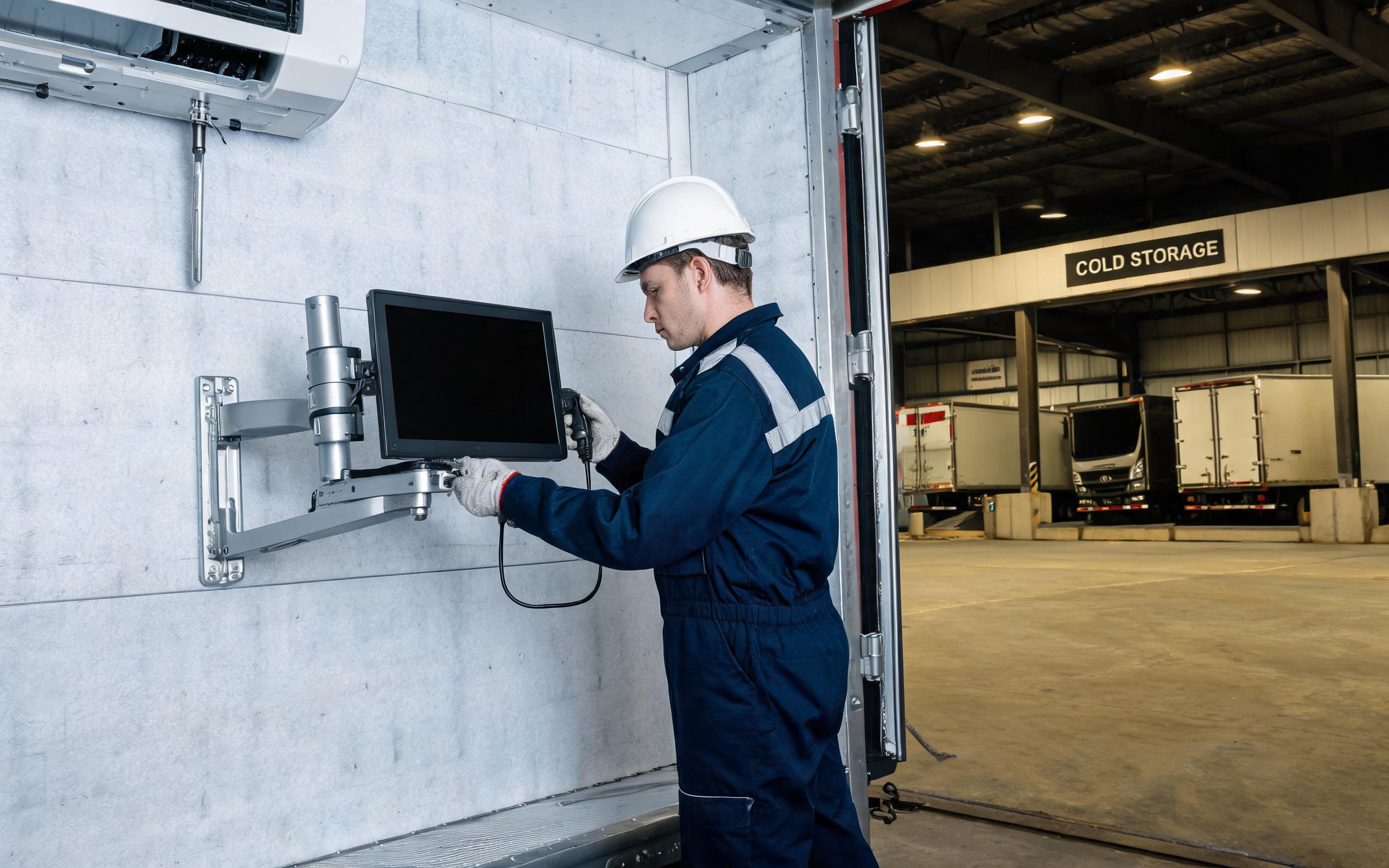
A sit-down forklift and a yard spotter truck share the same 12 V nominal label but present different power histories, so one fixed configuration rarely fits both. Propane forklifts see short, frequent starts with mild cranking, while diesel yard tractors start once outdoors and run a full shift in vibration and weather; refrigerated units add compressors that sag the rail when the clutch engages. Electric guided vehicles and 48 V trucks replace crank events with deep discharge curves, so the low-battery threshold matters more than the crank window. Location matters too, since a unit near the starter sees sharper sags than a cab-mounted display on a dedicated fused branch. Integrators document battery chemistry, cable gauge, starter type, and alternator rating, then set the thresholds on the industrial touch pc once during commissioning.
Vehicle deployments fail more often from power discipline than from processor limits. The crank dropout window, ignition-sensed timers, wide-voltage regulation, and hold-up energy each address a distinct segment of the start cycle, and skipping any one shifts the problem to unplanned reboots or a dead battery. Procurement should ask for tested pulse performance, programmable timers, and a documented low-battery threshold, while integrators should size cabling and verify thresholds in the actual vehicle. Specified as a system, an industrial touch pc on a rolling chassis becomes as dependable as the panel-mounted equipment bolted to a fixed production line.