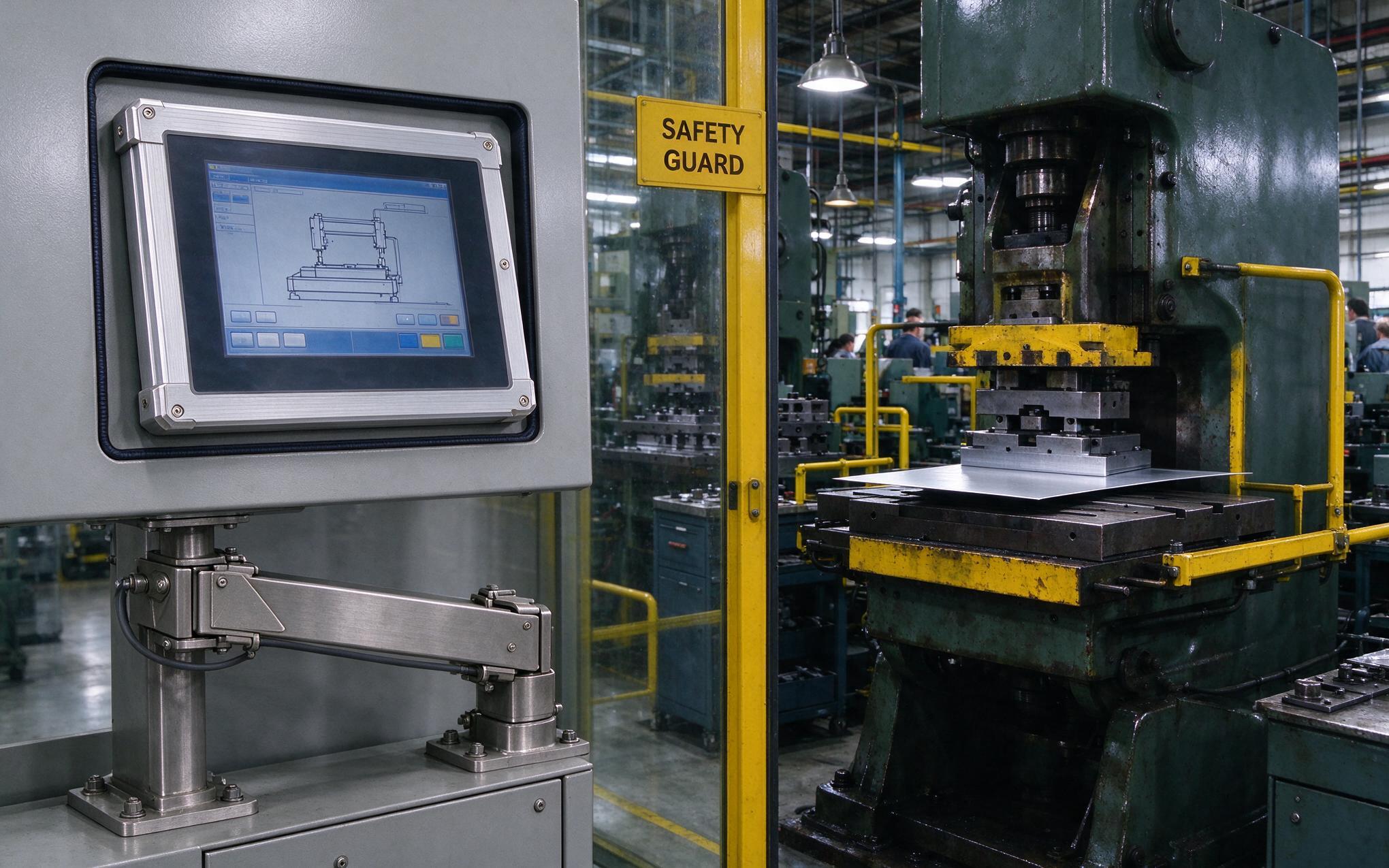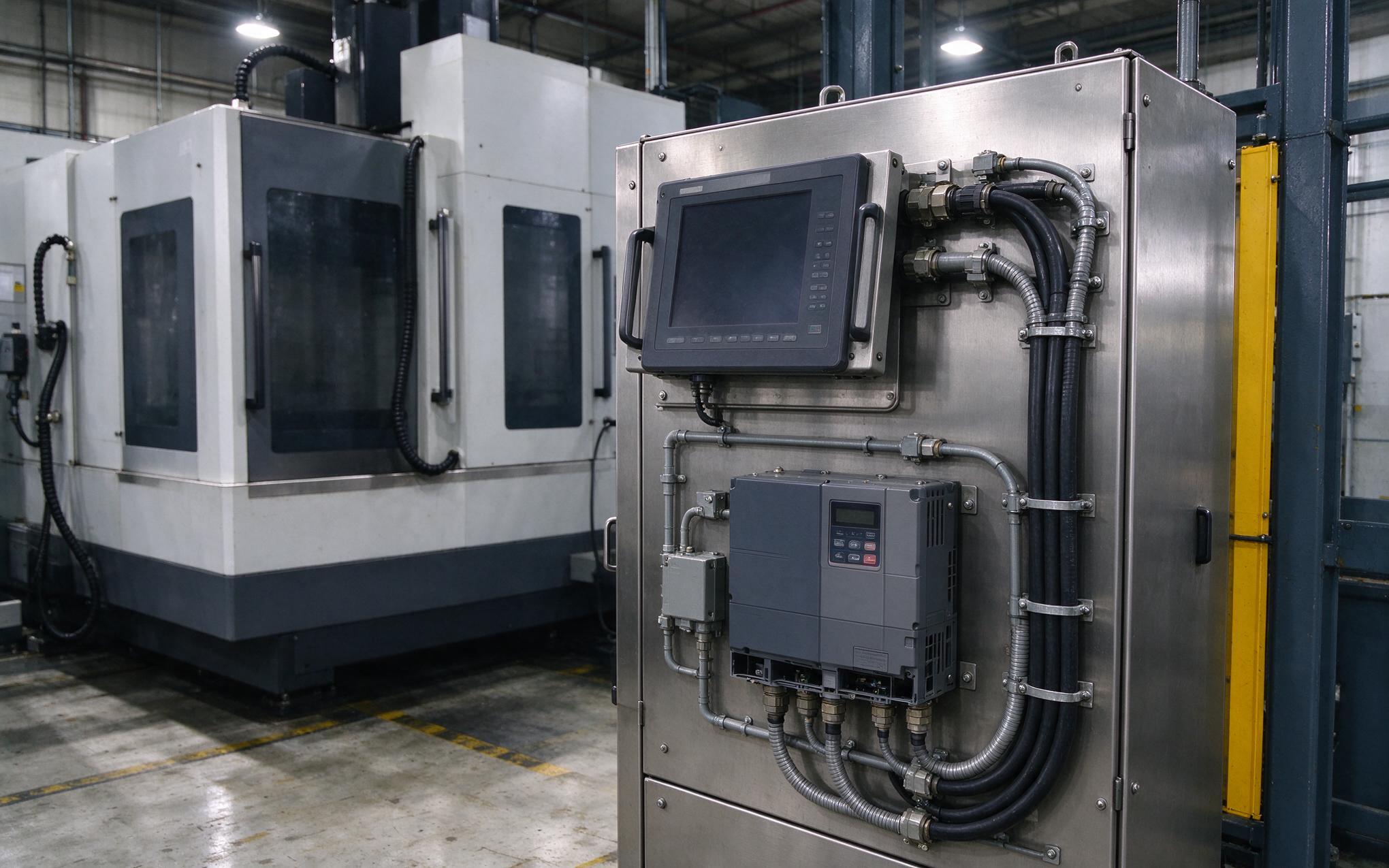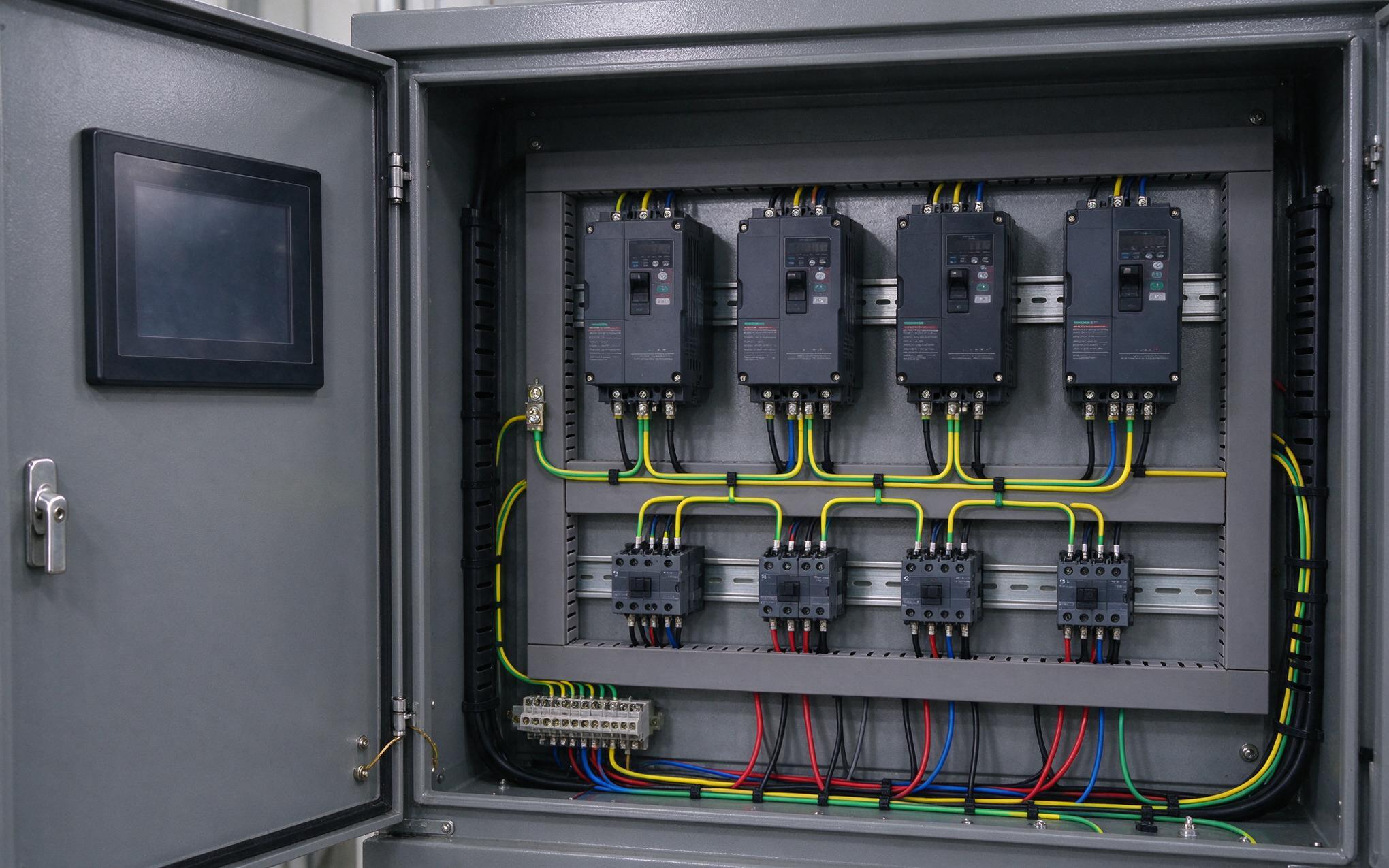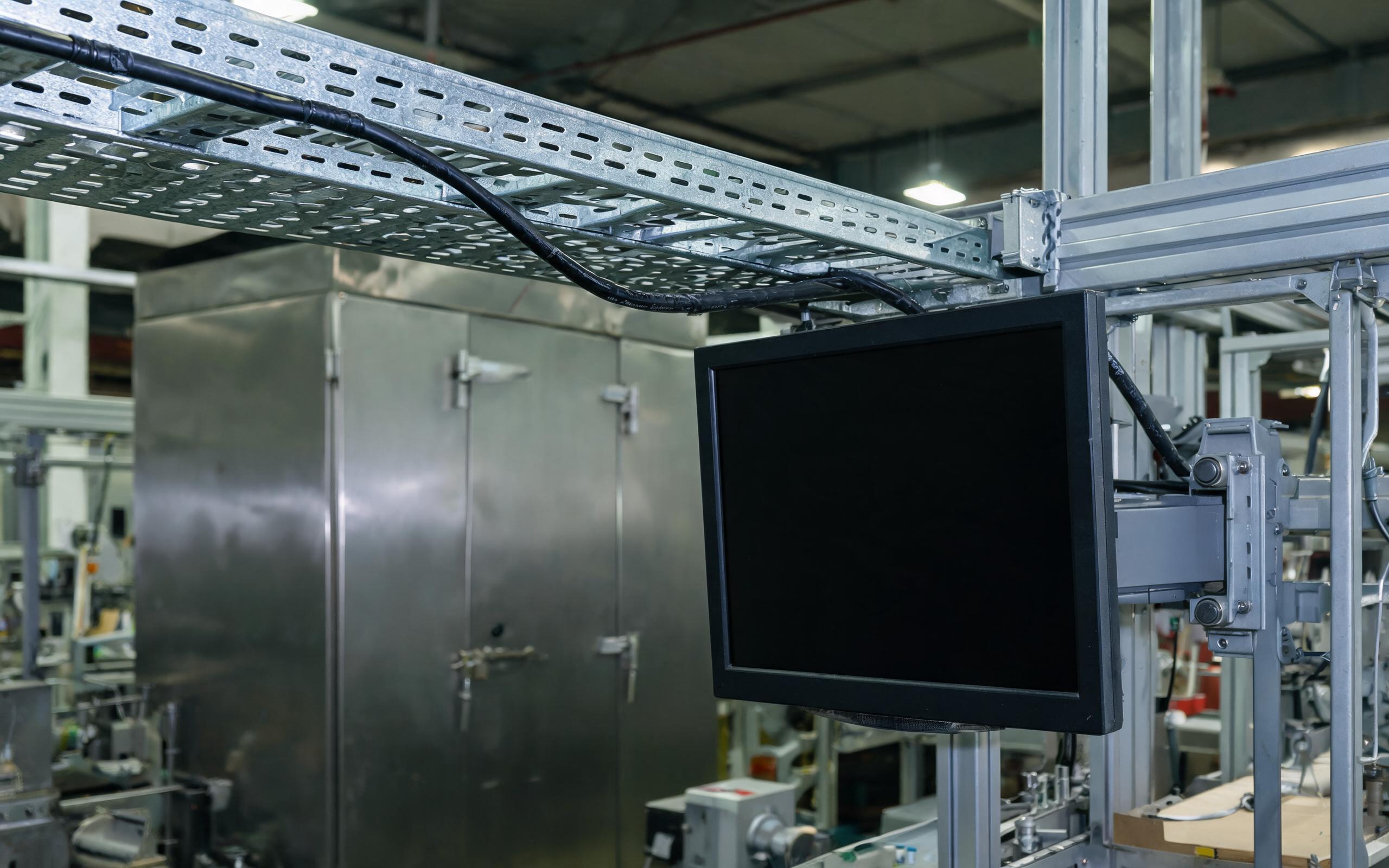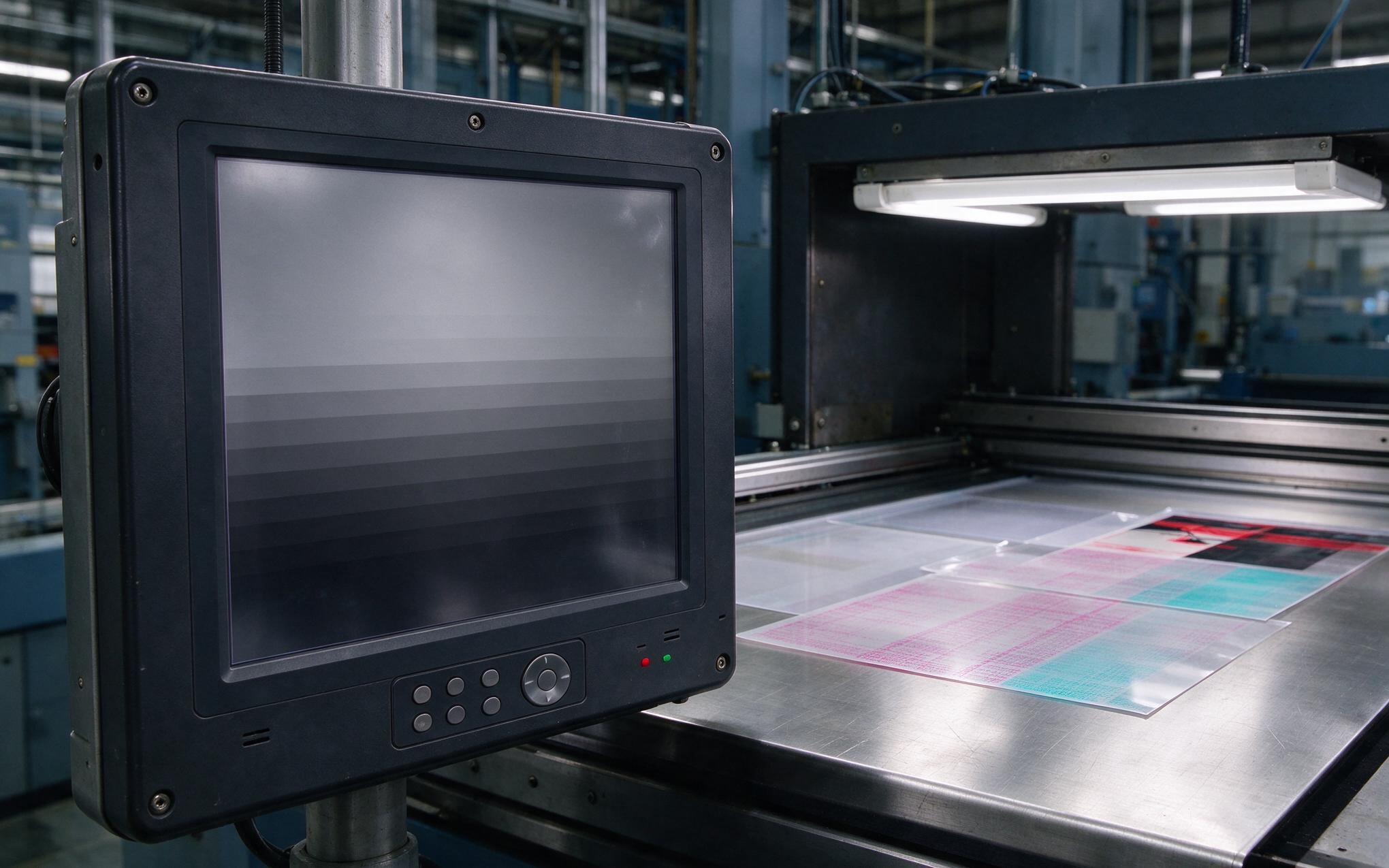
A fault reported on a beverage packaging line filled the maintenance log for three shifts. Whenever the main motor contactor bank pulled in, every industrial touch panel pc on the line froze for two seconds, and several screens logged a phantom tap that advanced a recipe screen. Oscilloscope traces at the terminal block showed no lasting overvoltage, so surge suspicion pointed the wrong way. Mechanical contacts bounce as they close, interrupting inductive coil current and radiating short repetitive transients onto power and control wiring. IEC 61000-4-4 defines these events as electrical fast transients and gives integrators a reproducible test. The sections below trace the coupling path, separate bursts from related disturbances, and explain hardening and verification for noisy factory floors.
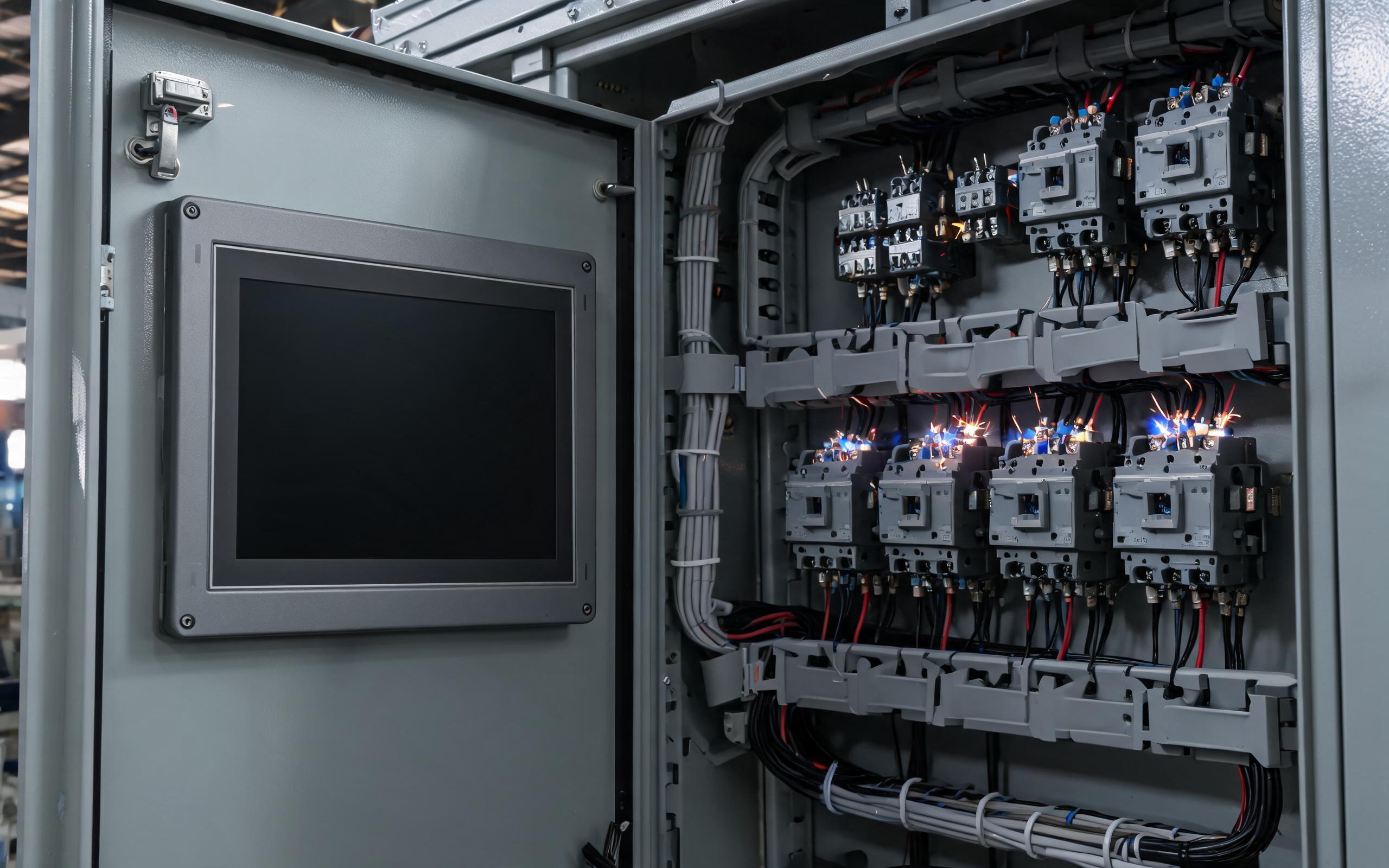
Tracing EFT Bursts from Contactor Coils to the Front Glass
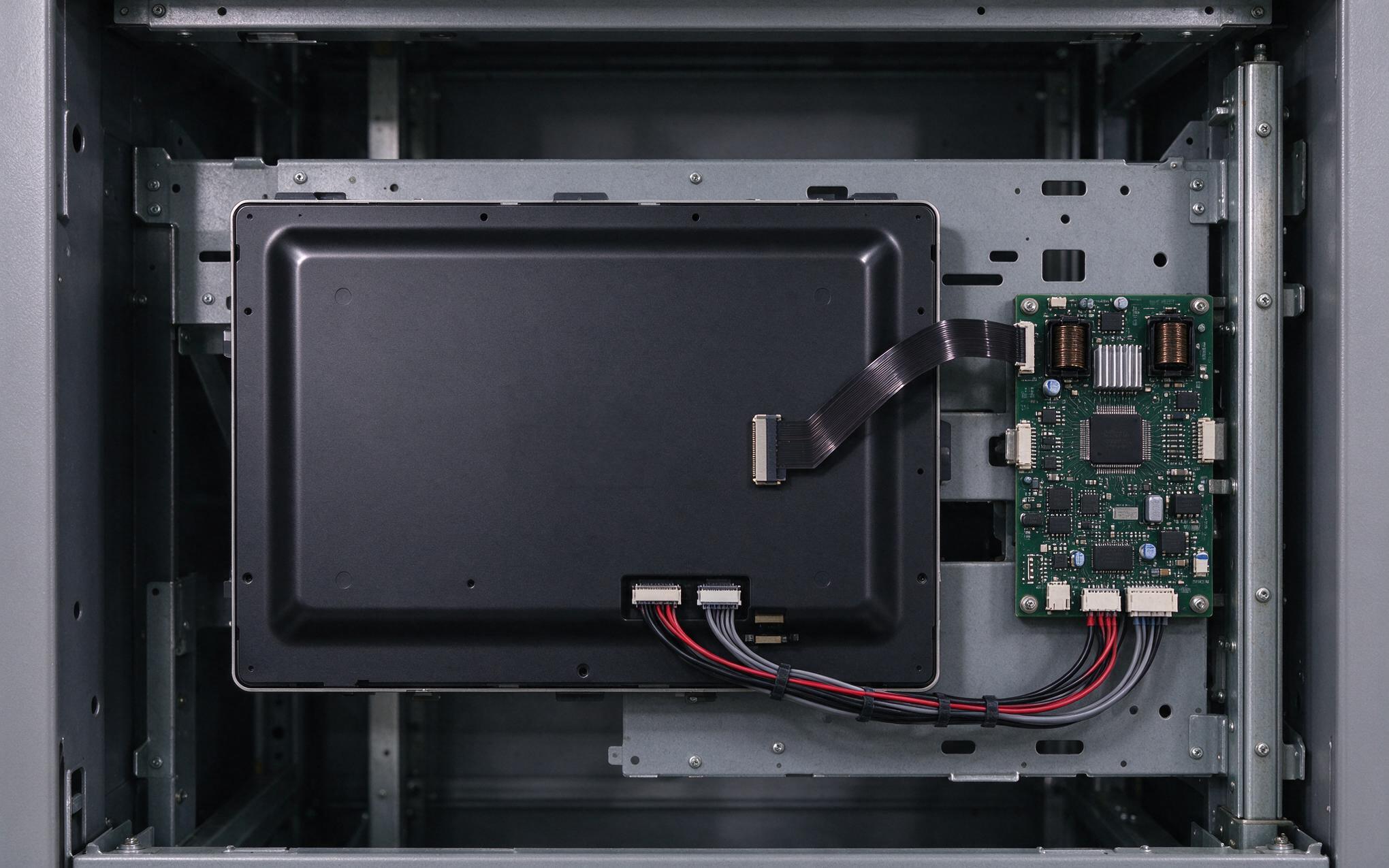
A contactor coil stores energy in its magnetic field, and when worn contacts chatter open and closed, each microscopic arc launches a pulse only tens of nanoseconds wide. IEC 61000-4-4 groups these pulses into 15 millisecond bursts at 5 kilohertz, repeated every 300 milliseconds, which makes the disturbance repetitive rather than a single strike. The pulses couple onto supply conductors, signal cables, and protective earth as common-mode energy. Inside an industrial touch panel pc, the touch controller connects through a thin flex circuit to a matrix of high-impedance electrodes, exactly the path on which a fast common-mode edge converts into a differential voltage. The controller may then reset its scan, report a false coordinate, or drop its USB enumeration until the burst train ends.
Separating EFT Events from Static Discharge and Surge Events
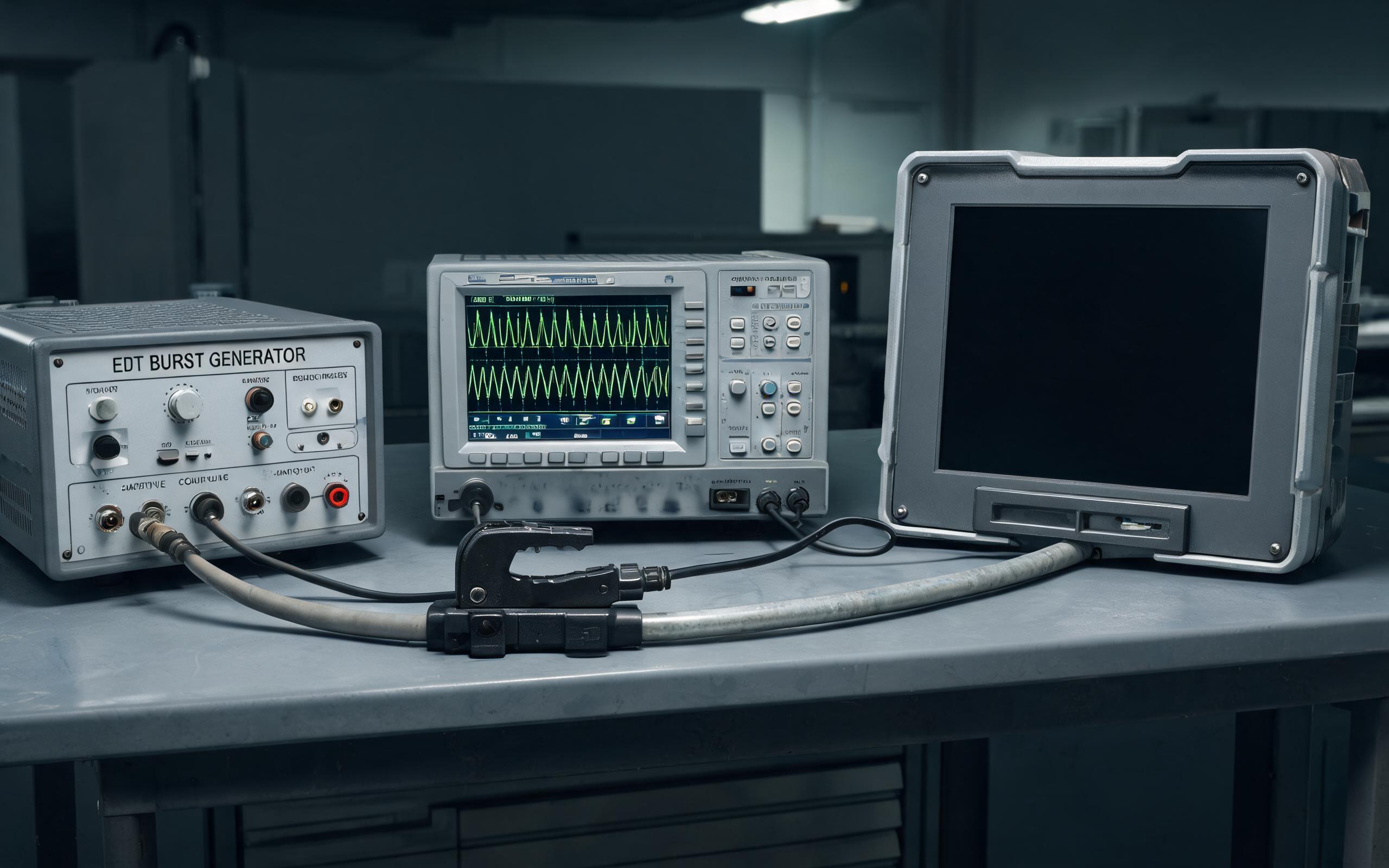
Fast transients are often confused with two neighboring phenomena, and the distinction matters because a remedy aimed at the wrong standard leaves the line exposed. IEC 61000-4-2 models a single static discharge from a charged operator, a high-voltage event delivered by air or direct contact. IEC 61000-4-5 models a longer surge propagated from grid switching or lightning activity. The burst standard instead describes many low-energy, tightly spaced pulses that harass digital logic for a full second or longer. An industrial panel pc can therefore pass its enclosure discharge checks and still lose touch input whenever a relay bank changes state. Bench reproduction uses a coupling clamp rather than a spark tip, which is why cabinet evidence is rarely repeatable without the defined generator.
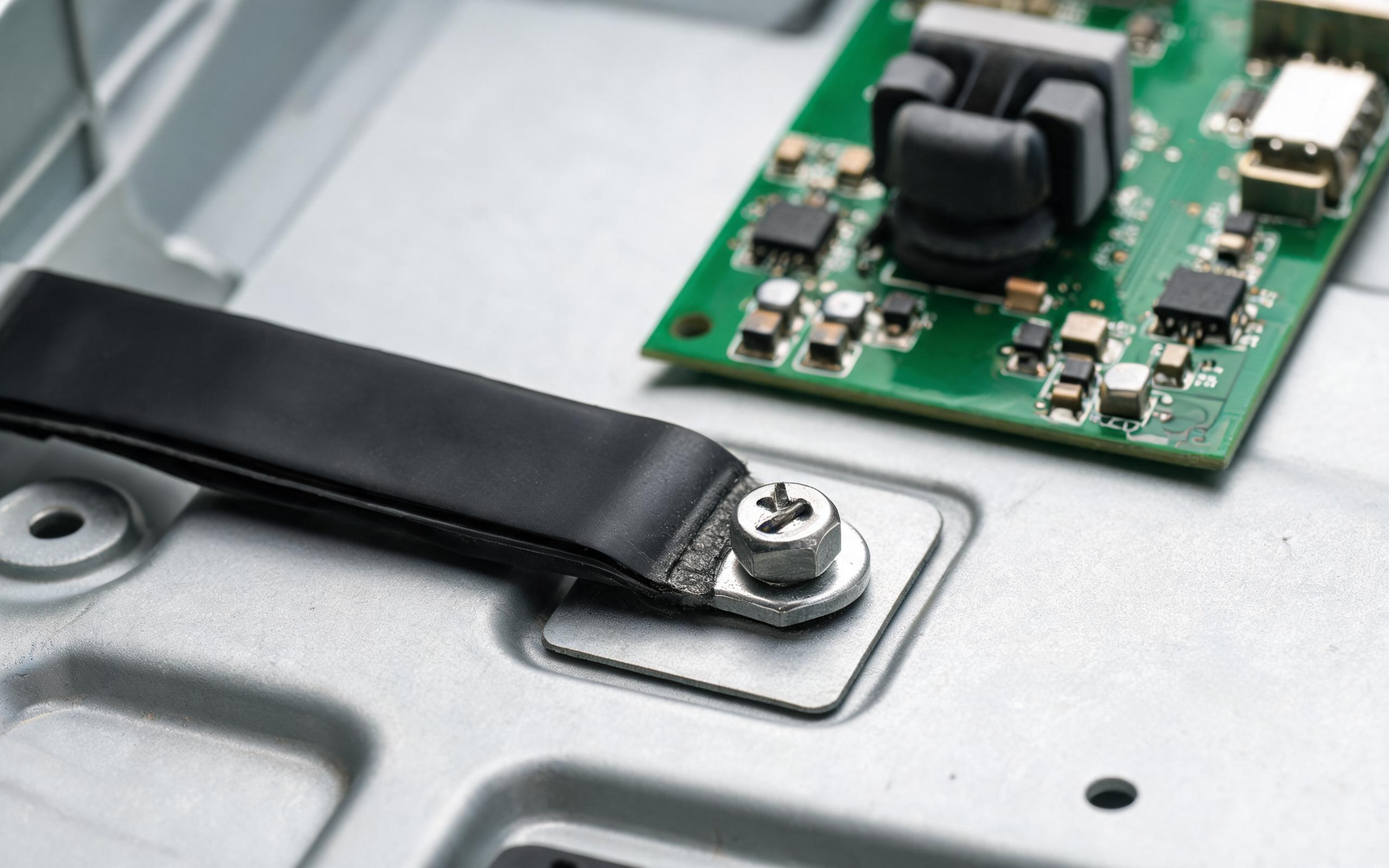
Hardening the Touch Chain from Power Port to Sensor Flex
Hardware manufacturers, including KOXIAN, treat the burst path as a chain and harden every link instead of trusting one filter. RC snubbers or diode clamps across inductive coils suppress arcs at the source, and contactors with electronic coil drivers remove most chatter before it reaches the cabinet. On the dc input, a common-mode choke followed by ceramic decoupling near the controller raises the impedance seen by each pulse, while transient voltage suppressors clamp the residual. The sensor flex uses a continuous shield bonded across its full edge rather than a single drain wire, and that shield references the same unpainted chassis point as the display ground of the industrial touch screen. Separate earth conductors for cabinet rail and panel avoid daisy-chained ground drops that turn earthing into an antenna.

Verifying Immunity on the Coupling Clamp Before Line Acceptance
Acceptance testing converts the anecdote into a repeatable contract. The IEC 61000-4-4 setup clips a capacitive coupling clamp onto supply and signal cables while a generator injects defined levels, commonly 1 and 2 kilovolts for factory-floor ports, at 5 kilohertz and 100 kilohertz repetition rates. Pass criteria should be written for a touch device in particular: no false actuation of machine commands, self-recovery within a defined window, and no loss of stored configuration. Field observations from packaging-line acceptance trials show that units built around a KOXIAN industrial touch panel pc recover input within one scan cycle across repeated burst sequences when clamp position and grounding match the production harness. A scripted touch routine, run during injection, catches dropped taps that an idle screen never reveals.
Contactor chatter is a normal part of factory switching, and an industrial touch panel pc has to survive it without false commands. IEC 61000-4-4 gives integrators a precise model of the burst train, distinct from static discharge and surge events, plus a clamp-based test that mirrors cabinet reality. Source suppression, chained filtering, continuous flex shielding, and common earthing keep the disturbance away from the touch electrodes, while acceptance criteria written around false actuation and recovery time prove the design on the bench. Specifying the test level and touch-specific pass behavior before purchase protects both the line and the operators running it.