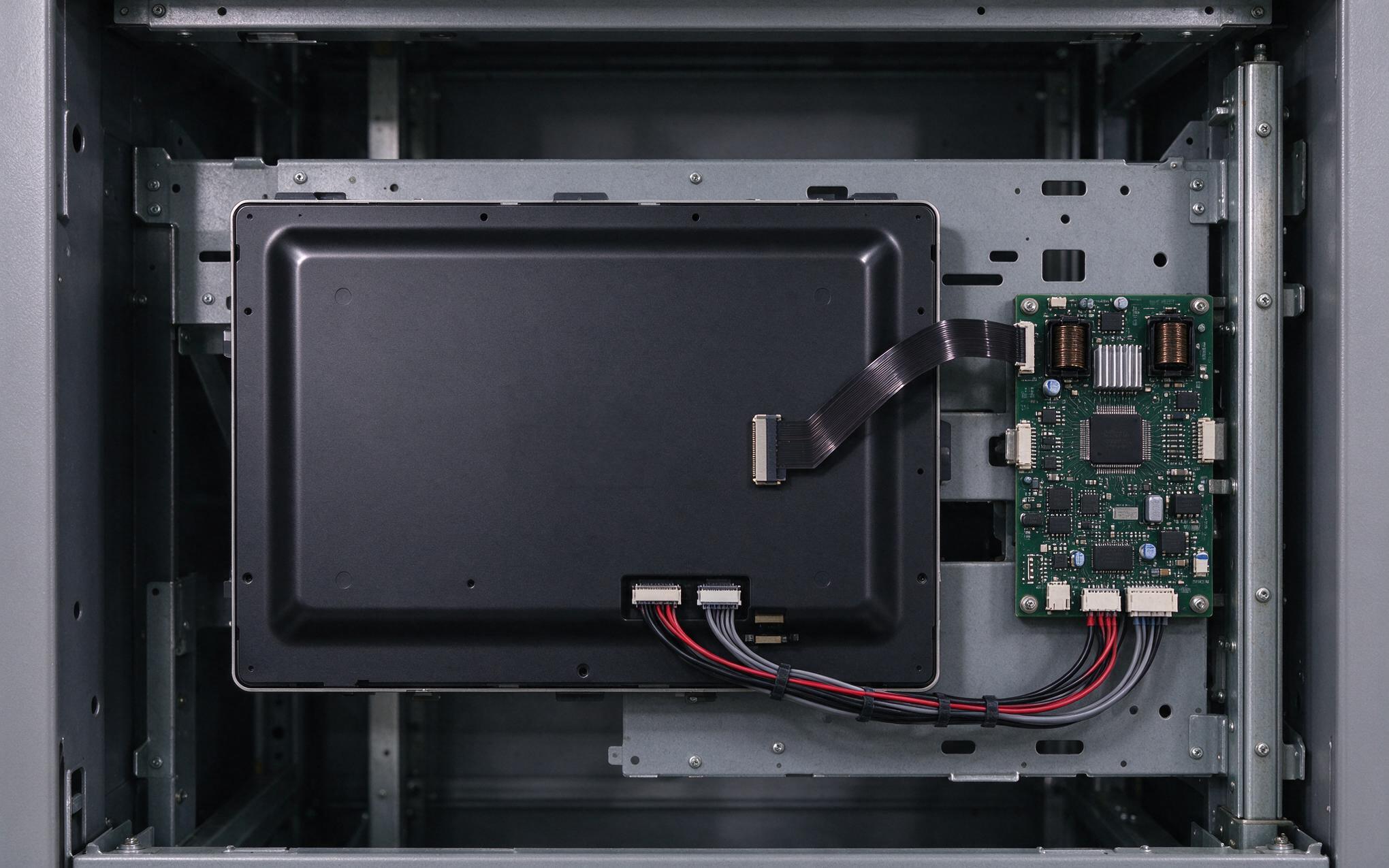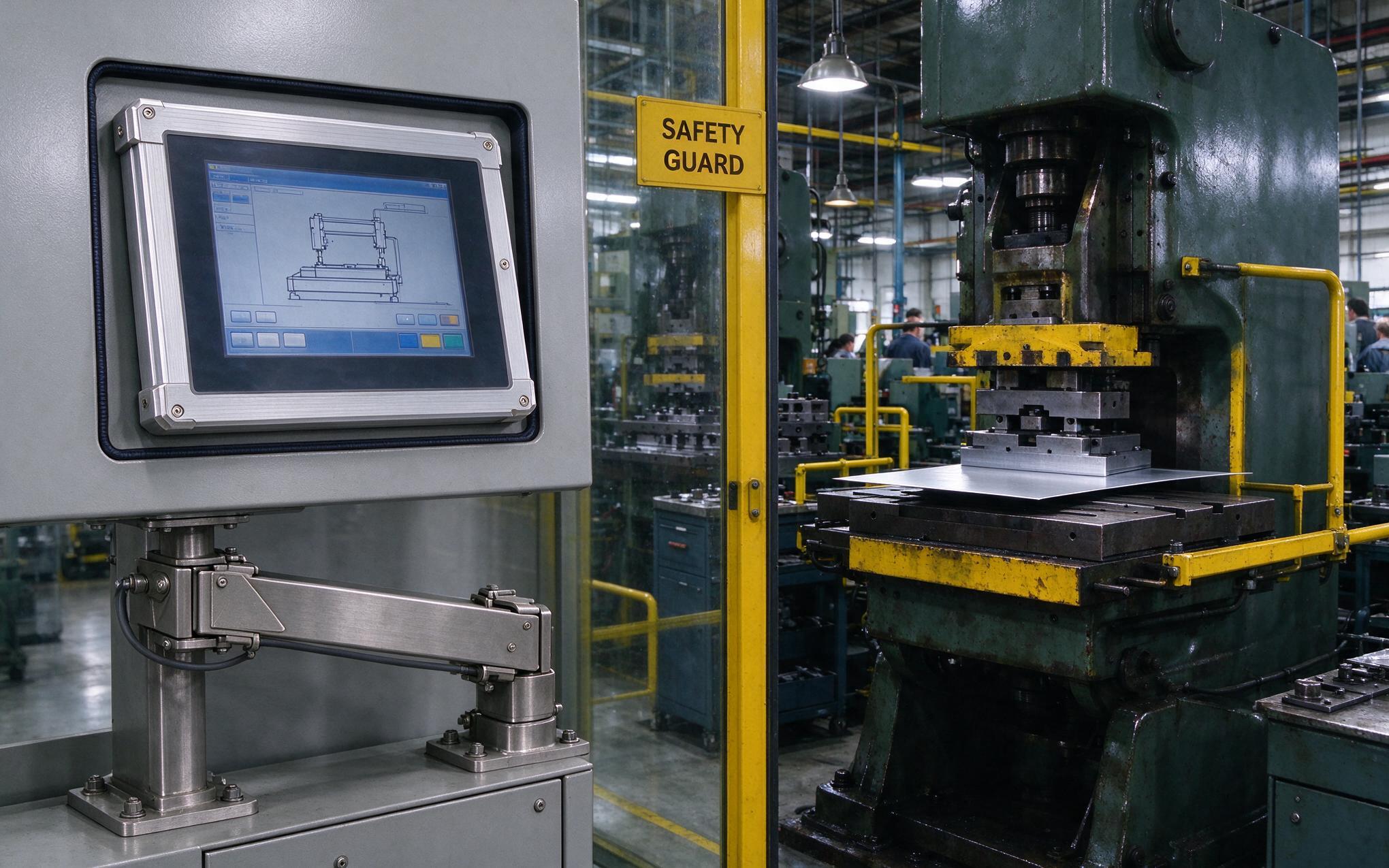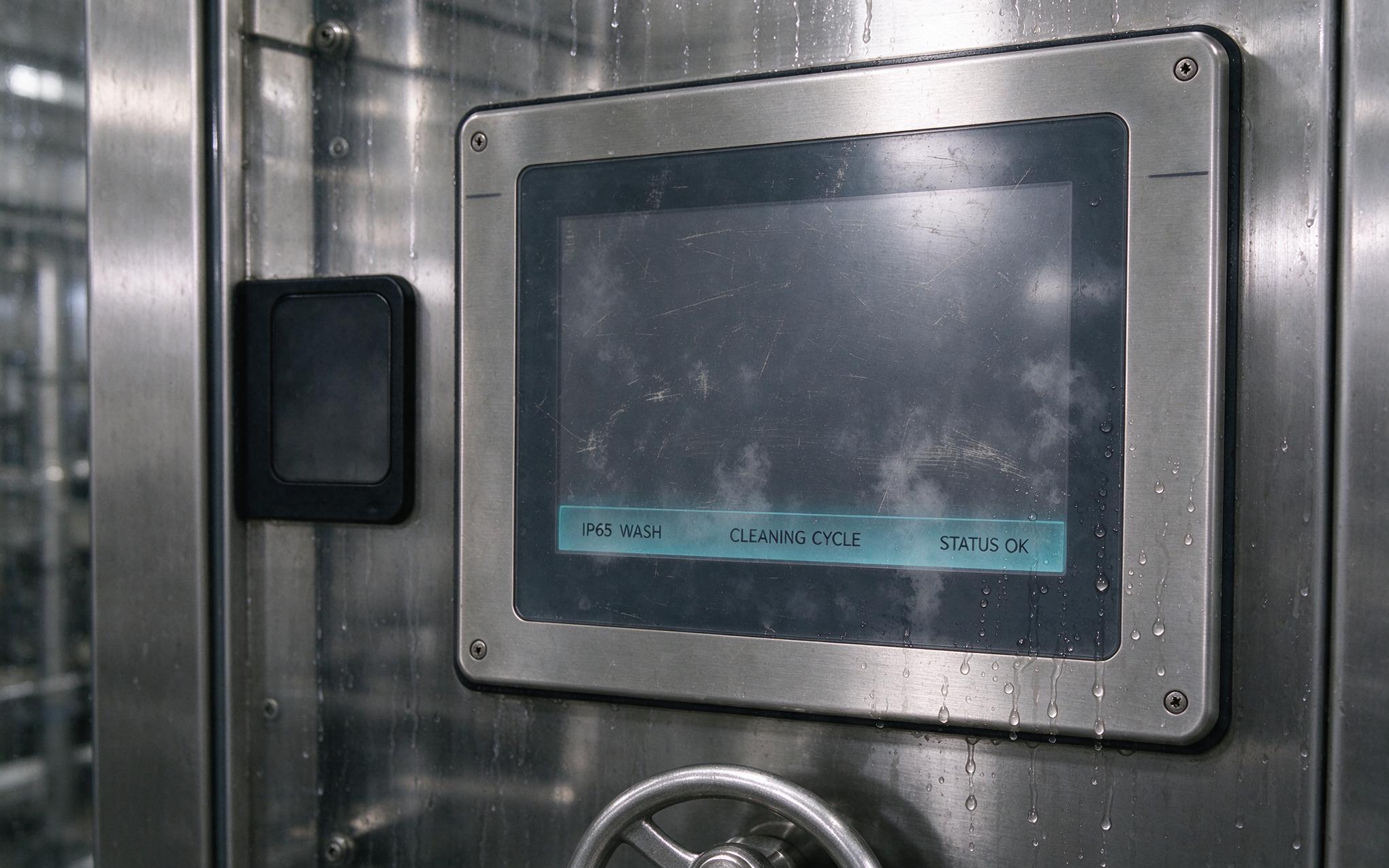
At the end of a washdown shift, water sheets down the front of a fanless industrial panel pc and pools along the lower bezel edge, where a thin elastomer cord pressed into the cover groove is the only barrier between that moisture and the mainboard. The enclosure itself looks unremarkable. There are no fan vents to leak, no filter to clog, and no moving parts to service, so the ingress rating reads like a permanent property of the metal. It is not. Every sealing face is a polymer under continuous clamp load, and after a year of heating and cooling cycles it has lost some of the force it was installed with.
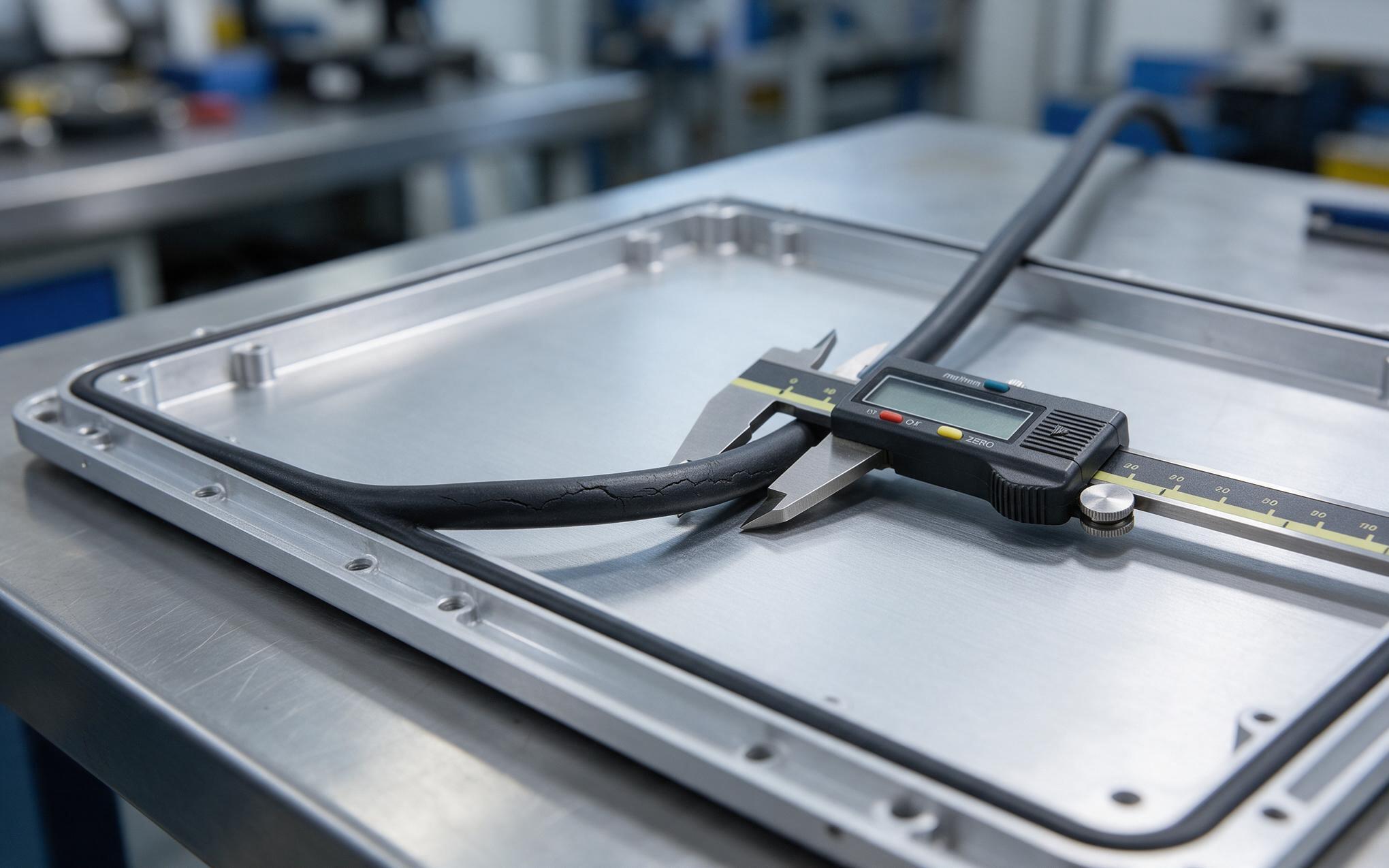
In the Gasket Groove of a Fanless Industrial Panel PC
Design choices such as the KOXIAN G1 series cover groove show how groove depth and cord diameter are matched so the installed elastomer stays inside its elastic range instead of flattening under clamp load. Compression set is the permanent deformation an elastomer keeps after the load that squeezed it is removed, and it quietly ends most gasket service lives. With every thermal cycle the polymer recovers a little less, contact pressure against the front frame falls a little further, and the cord stops behaving like a spring and starts behaving like a spacer. Two figures decide whether the specification of a fanless industrial panel pc holds up: compression deflection at installed clamp, and the contact pressure maintained across the full perimeter. Continuous cord outperforms spot-bonded strips, and sealed cabinet guidance points to at least 0.5 mm of deflection and roughly 15 psi of contact force through repeated thermal cycles.
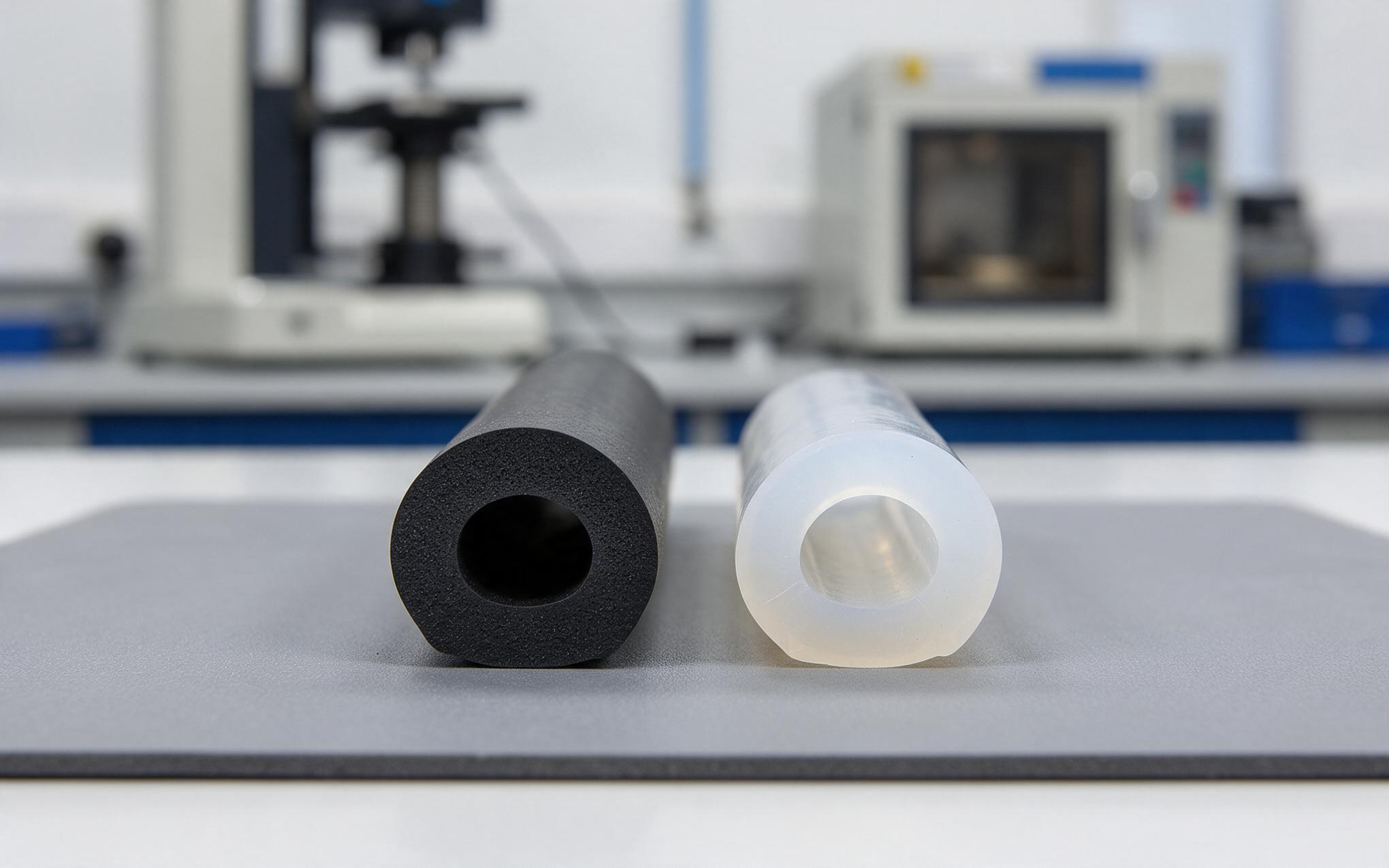
Why Silicone and EPDM Age Differently in the Same Groove
EPDM earns its place in sealed cabinets because it shrugs off water, steam, ozone, and the alkaline detergents used in weekly washdowns, while holding a low compression set through moderate heat. Silicone answers with a wider usable temperature range, staying elastic in cold rooms where EPDM stiffens, and with better ultraviolet stability on outdoor skids. The trade is mechanical: silicone tears more easily at screw corners and resists oils and solvents less effectively, while untreated EPDM cracks sooner under direct sunlight. Specifying a gasket for a fanless industrial panel pc therefore starts from the dominant exposure at the site, not from the compound on a rival datasheet. A unit in a food hall and the same unit on a sun-facing dock need opposite answers.
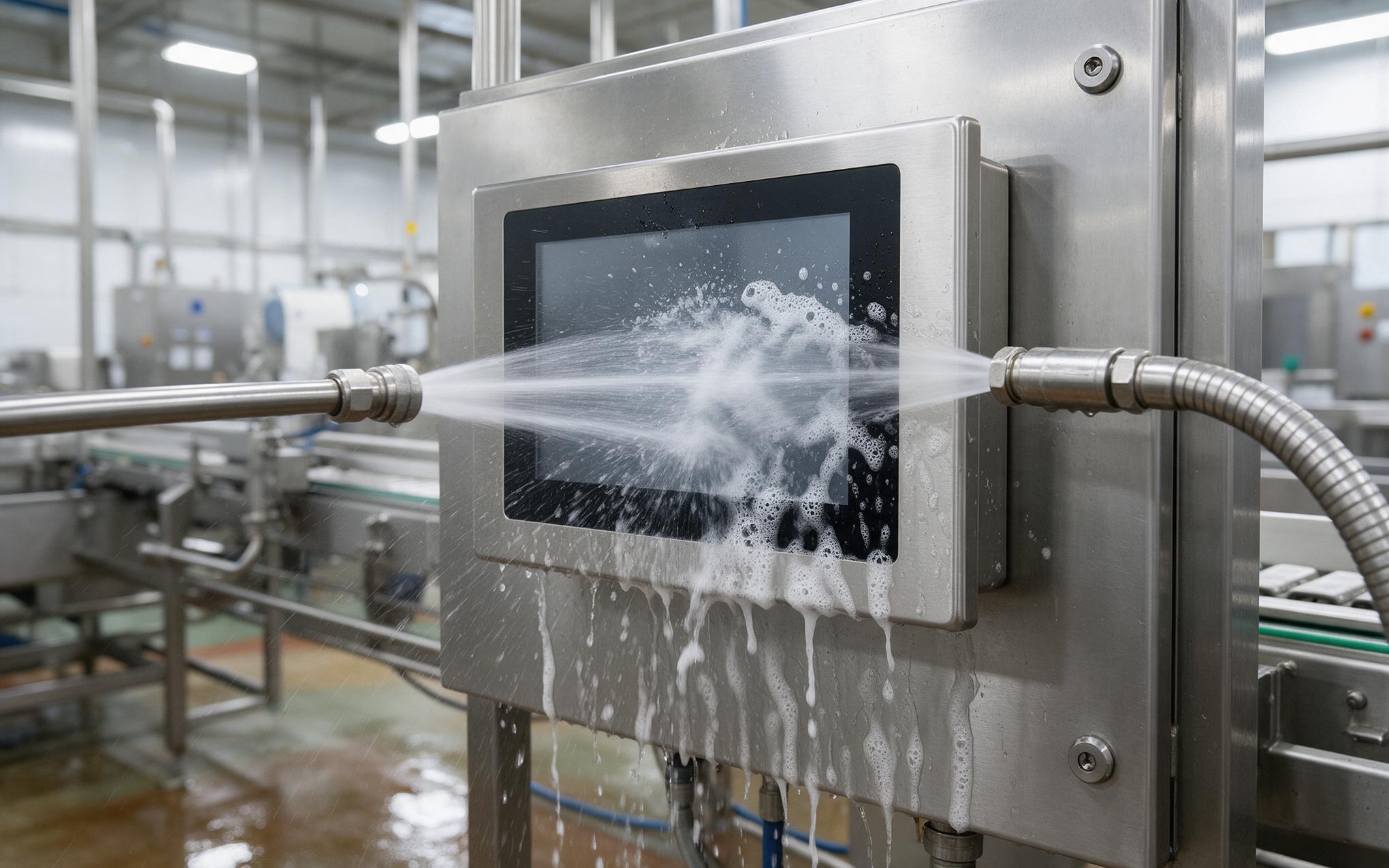
Exposure Maps That Separate Silicone From EPDM
Reliability teams usually begin by mapping what actually touches the seal. Chlorinated rinse water, fatty acids, and steam favor EPDM, which resists polar chemistry without swelling. Hydrocarbon oils, hydraulic mist, and solvent wipes push the decision toward silicone or a fluorosilicone upgrade, because EPDM swells and softens when those fluids sit on the surface for hours. Outdoor installations add ultraviolet load and ozone generated near welding stations or electric motors, both of which crack untreated rubber over a couple of seasons. Industrial hardware manufacturers, including KOXIAN, publish the expected exposure range on the datasheet so integrators can match the compound to the cleaning schedule instead of discovering the mismatch at a cabinet low point.
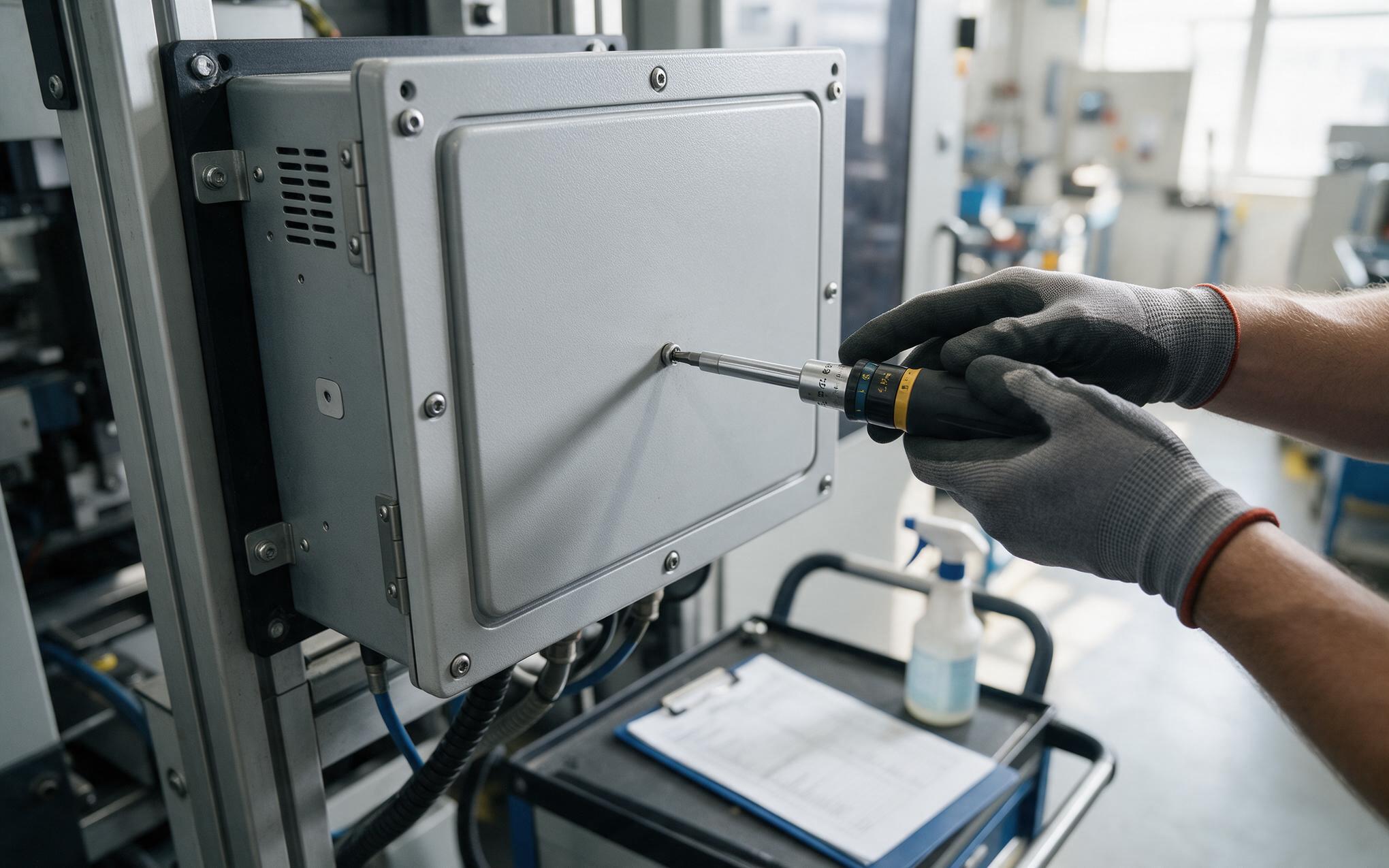
Inspecting and Retorquing Aging Seals on Schedule
Even the right compound loses clamp load when the assembly is never revisited, and most teardown reports point to the same three signatures: permanent set deeper than a quarter of the cord diameter, detergent residue baked into the groove, and fasteners that no longer sit at install torque. A scheduled cycle answers all three. Wipe the groove, check the cord for permanent flattening or surface cracking, retorque the cover screws in a cross pattern, then repeat a low-pressure water spray from about three meters to confirm the joint still holds. Field observations show that panels on a fixed 12-month re-torque cycle, such as KOXIAN units in washdown duty, hold their spray-test results longer than panels opened only after a leak.
A fanless industrial panel pc removes the vents, the filter, and the fan bearing from the failure list, which is why sealed panel computers get specified for wet and dusty plants. What remains is a polymer joint under constant clamp load, aging one thermal cycle at a time. Specifying the compound from the site exposure, holding the groove to a defined compression, and revisiting the fasteners on a fixed interval turns the gasket from a silent liability into a maintainable part. Plants that treat the seal as serviceable rather than permanent keep the ingress rating they paid for, long after the datasheet was filed.