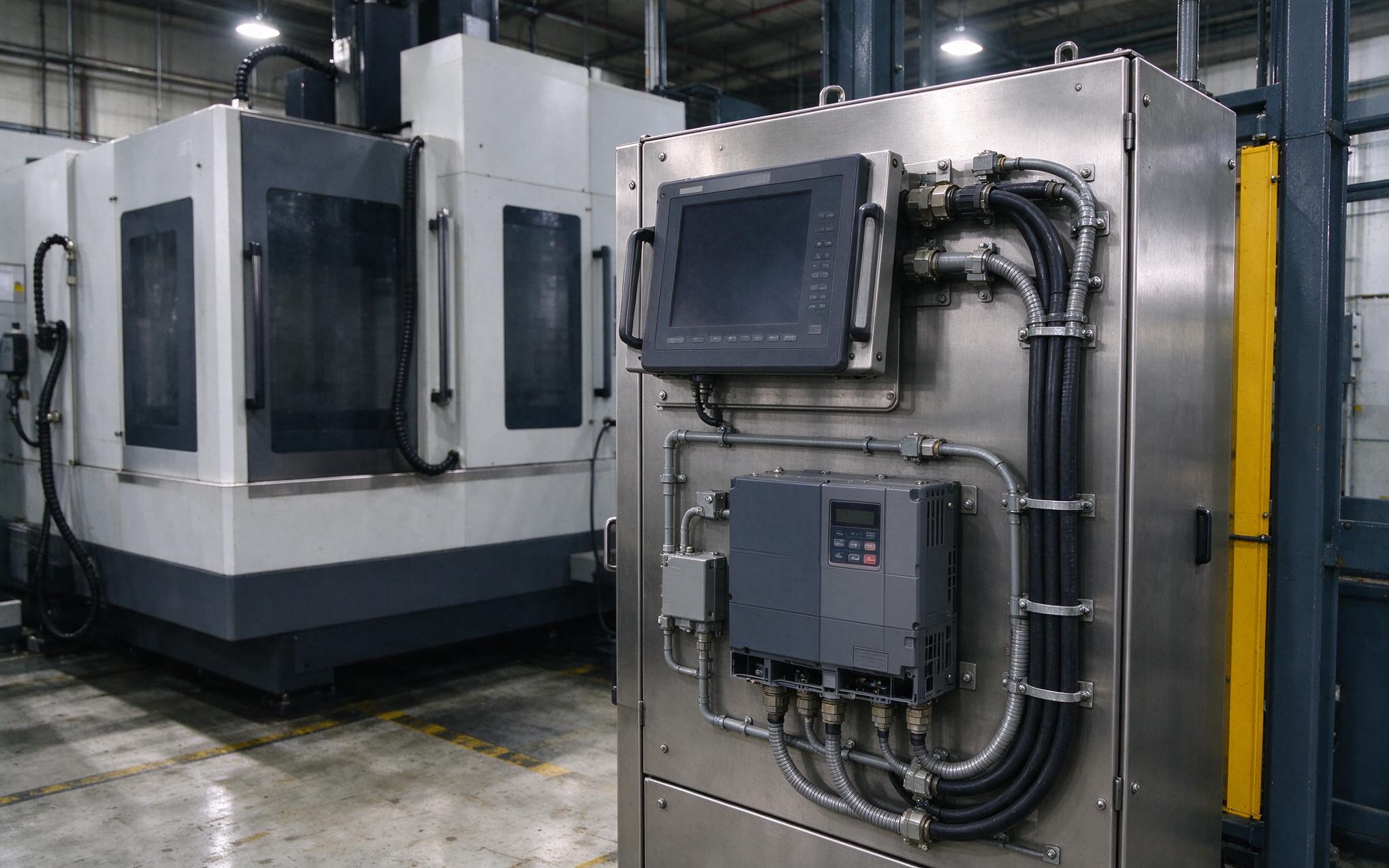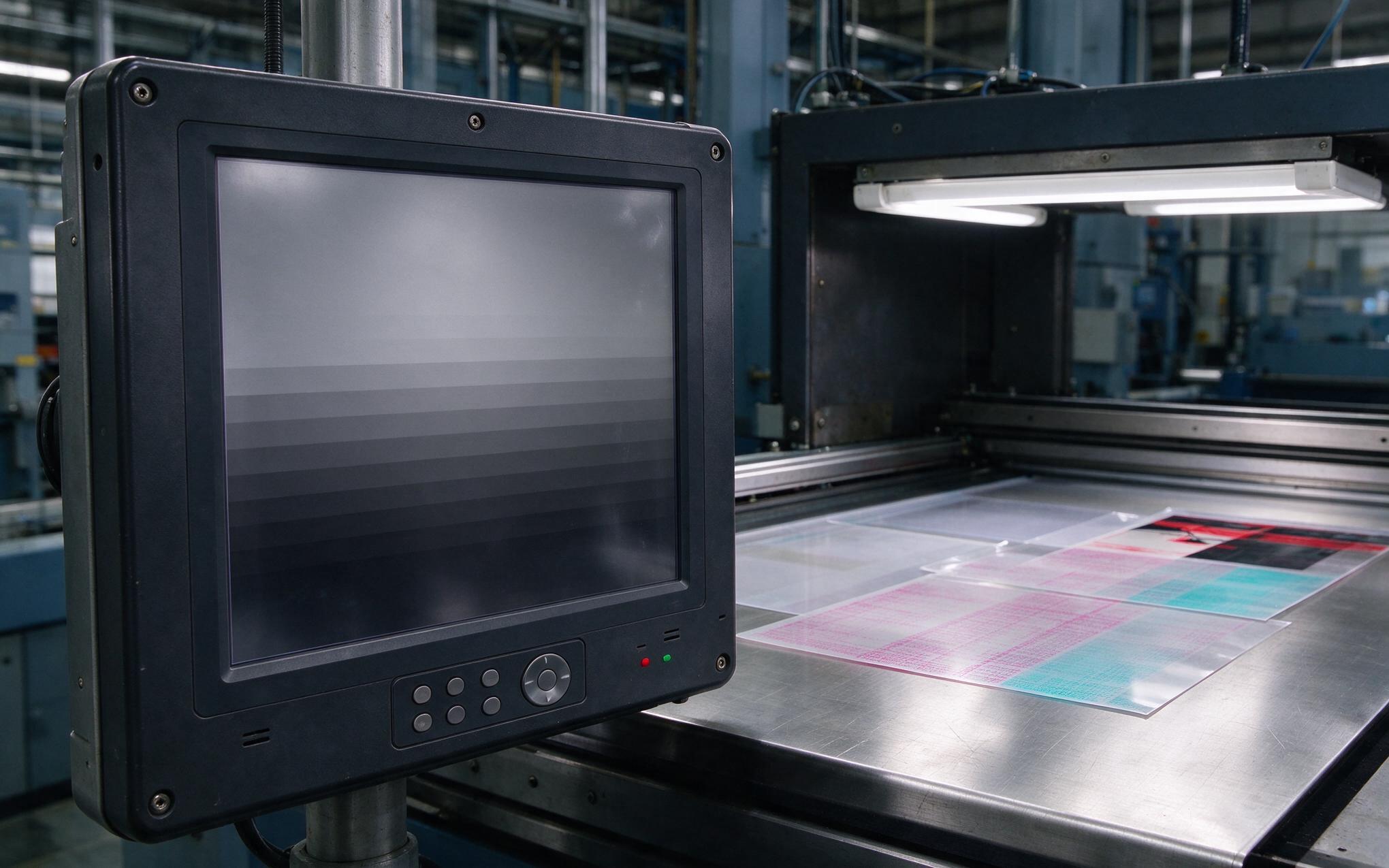
When selecting a touch screen monitor for industrial use, electromagnetic interference is the hidden threat that most procurement teams overlook. On a pharmaceutical filling line in the Midwest, unshielded ribbon cables allowed RF energy from adjacent variable frequency drives to couple into the touch controller, producing phantom touch events that froze the screen for hours. The maintenance team traced the fault to a VFD cable routed within 30 mm of the display signal path. A replacement panel with proper EMC shielding resolved the issue permanently. This failure mode recurs across food processing, metal fabrication, and chemical plants worldwide. Electromagnetic noise penetrates enclosures, disrupts signal integrity, and degrades touch accuracy long before hardware reaches its rated lifespan.

Enclosure Material and Shielding Effectiveness
The primary barrier against electromagnetic interference is the enclosure itself. For manufacturers like KOXIAN, die-cast aluminum with gasket-sealed seams is the standard choice because aluminum alloy chassis provide broadband attenuation across the frequency ranges most commonly generated by industrial equipment, typically 150 kHz to 1 GHz. Steel enclosures offer higher magnetic shielding effectiveness below 1 MHz where switching power supplies and motor drives concentrate their energy. A sealed aluminum housing with conductive gaskets at every seam can achieve attenuation values exceeding 60 dB across the critical band, reducing external field strength at the PCB plane by a factor of one thousand. For industrial touch display installations in high-noise zones, enclosure material selection directly determines whether the touch controller sees a clean signal or a corrupted one.

Display Cable Routing and Antenna Effects
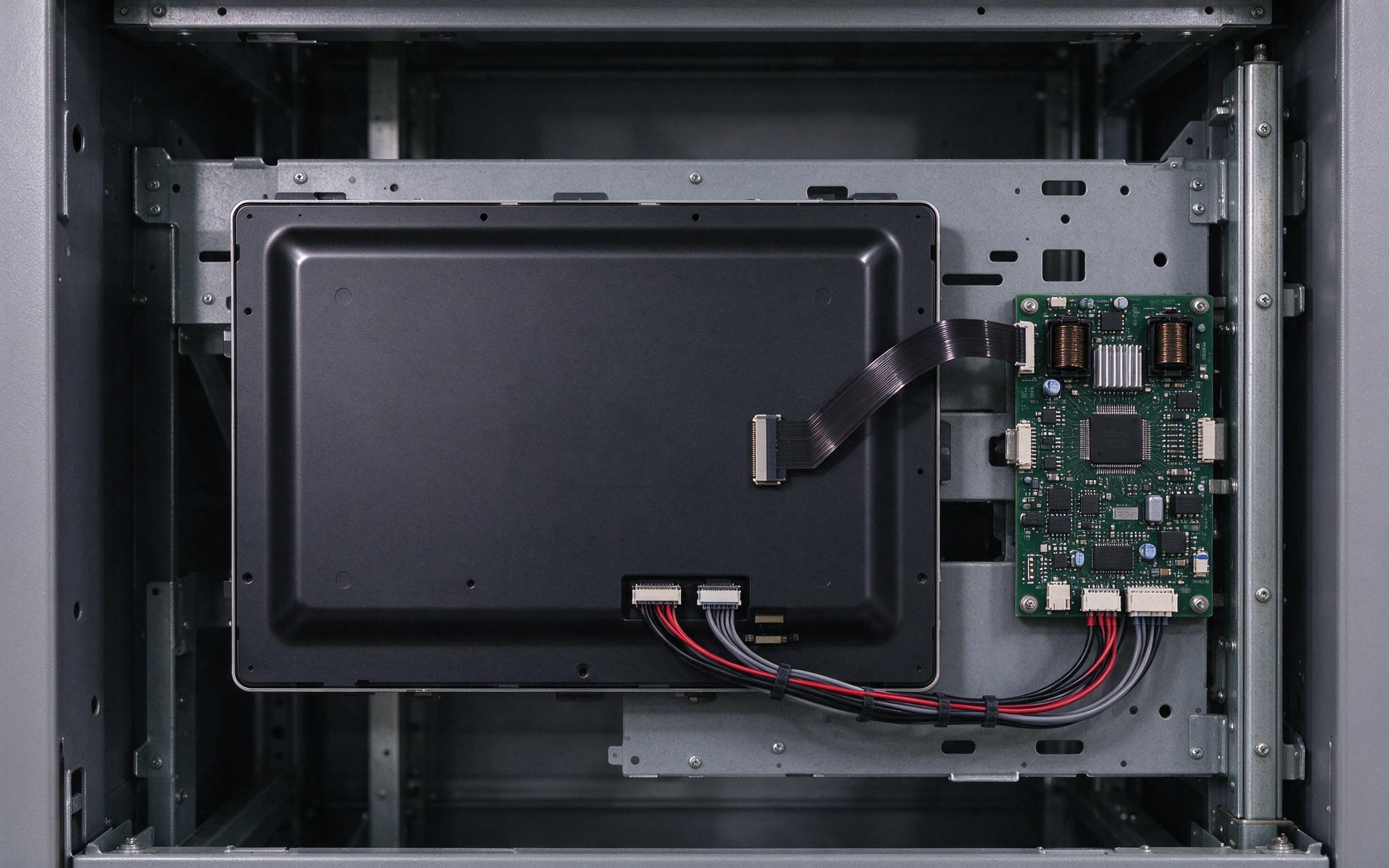
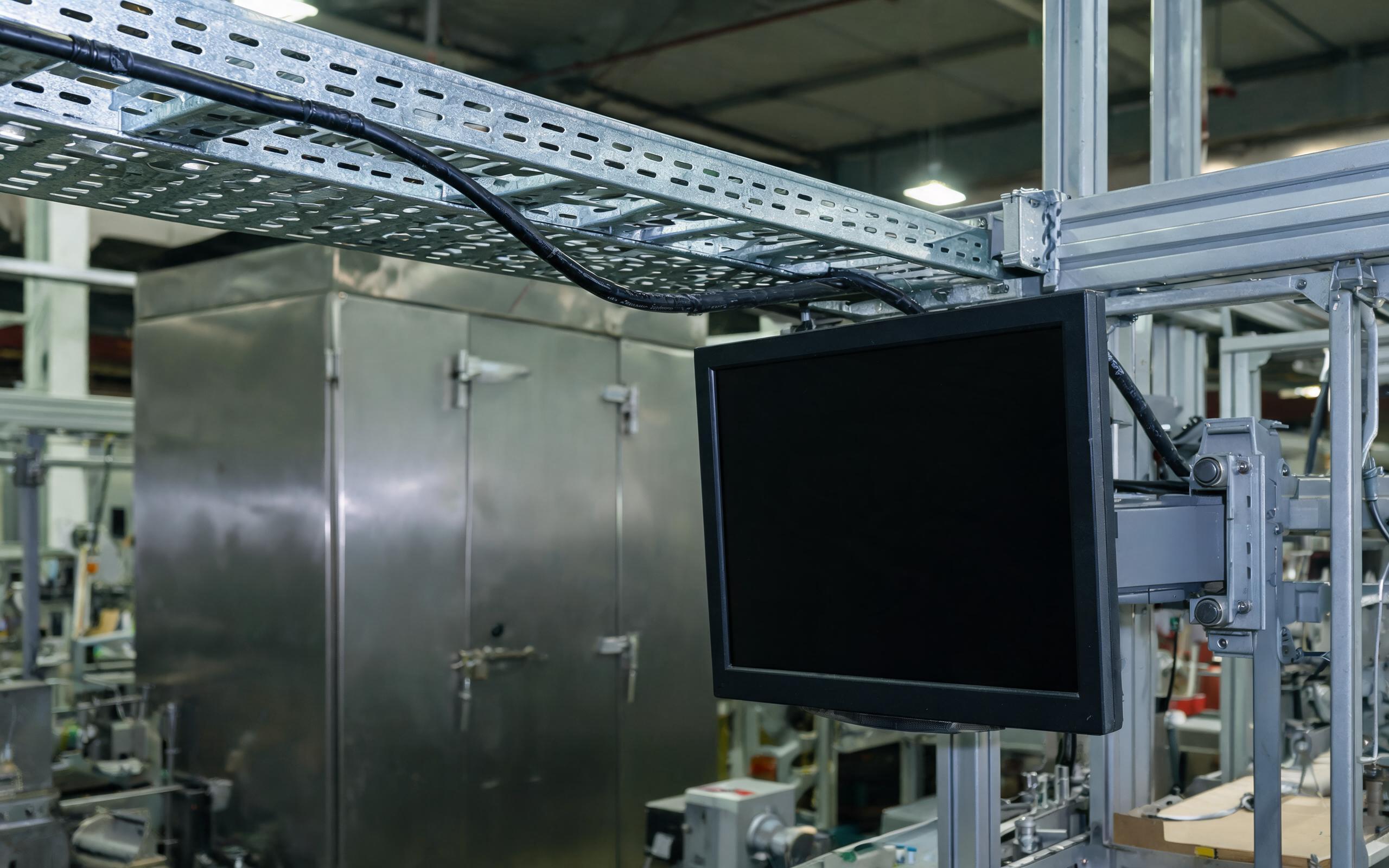
Shielding the enclosure means little if the display cable acts as an antenna. LVDS and eDP ribbon cables routed parallel to high-current conductors pick up common-mode noise that bypasses front-panel shielding entirely. With KOXIAN panels, shielded differential pairs and ferrite suppression are applied to every display cable to maintain signal integrity. Standard practice calls for minimum 100 mm separation between signal cables and power conductors, with shielded twisted-pair or differential signaling where available. Where space constraints force closer routing, ferrite cores clamped at both cable ends suppress common-mode currents before they reach the display driver IC. Cable length also matters: every additional 100 mm of unshielded ribbon increases the effective antenna aperture by roughly 6 dB in the 100 MHz to 500 MHz band.

Panel-Level Grounding Architecture
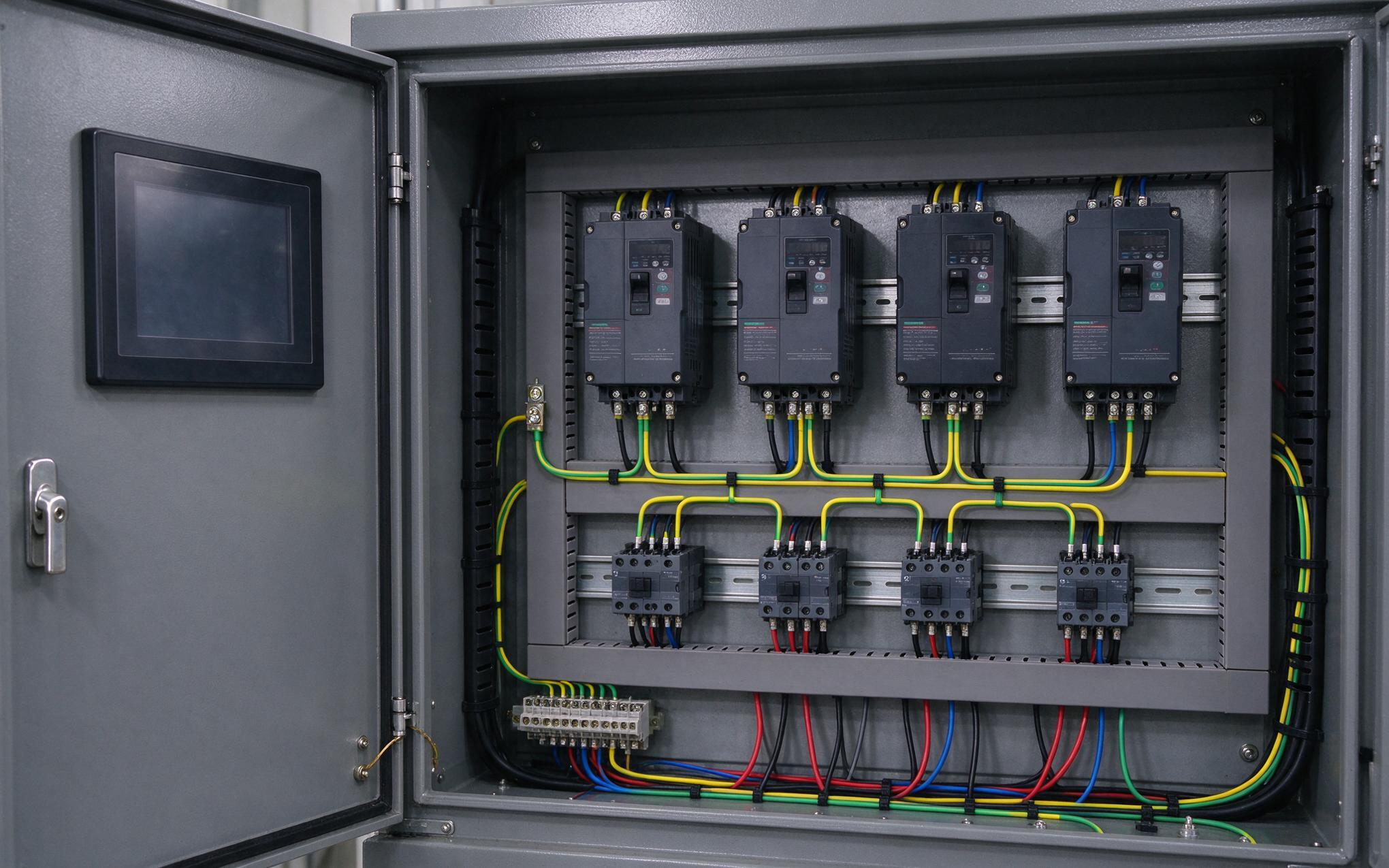
Grounding ties the entire shielding strategy together. A single-point ground bus bonded to the enclosure chassis, display panel frame, and touch controller ground plane creates a low-impedance return path for induced currents. Without this bond, differences in ground potential between chassis sections create circulating currents that generate secondary magnetic fields inside the enclosure. A dedicated ground strap from the touch controller PCB to the enclosure ground lug must maintain impedance below 0.1 ohm at frequencies up to 100 MHz. The ground strap length must be minimized—every additional centimeter adds roughly 10 nH of inductance, which degrades high-frequency grounding performance.

EMI Pre-Compliance Testing
Field validation separates theoretical shielding from operational reality. For manufacturers like KOXIAN, pre-compliance testing is a standard step before shipping any panel to a factory environment. A near-field probe connected to a spectrum analyzer can map the electromagnetic environment around a planned installation point, identifying frequency bands where interference peaks. Baseline measurements taken before installation establish the noise floor. Post-installation sweeps confirm that the touch controller ADC samples remain within specification. The IEC 61000-6-2 generic immunity standard defines test levels for industrial environments: 10 V/m radiated immunity from 80 MHz to 2 GHz, and 10 V conducted immunity on power ports from 150 kHz to 80 MHz. A touch screen monitor for industrial use that meets these thresholds without false touch events under simultaneous RF and electrical fast transient stress is one that will survive years of continuous factory operation.
EMC performance in touch screen monitors is not a single specification but a chain of design decisions spanning enclosure material, cable management, grounding topology, and pre-compliance validation. Factories that treat electromagnetic shielding as an afterthought end up with intermittent failures that are expensive to diagnose and disruptive to production. Engineering teams that evaluate touch screen monitor for industrial use against these four dimensions during procurement avoid the cycle of troubleshooting phantom touch events and unplanned downtime. The payoff is straightforward: a display that stays responsive, a controller that processes clean signals, and a production line that runs without electromagnetic surprises.