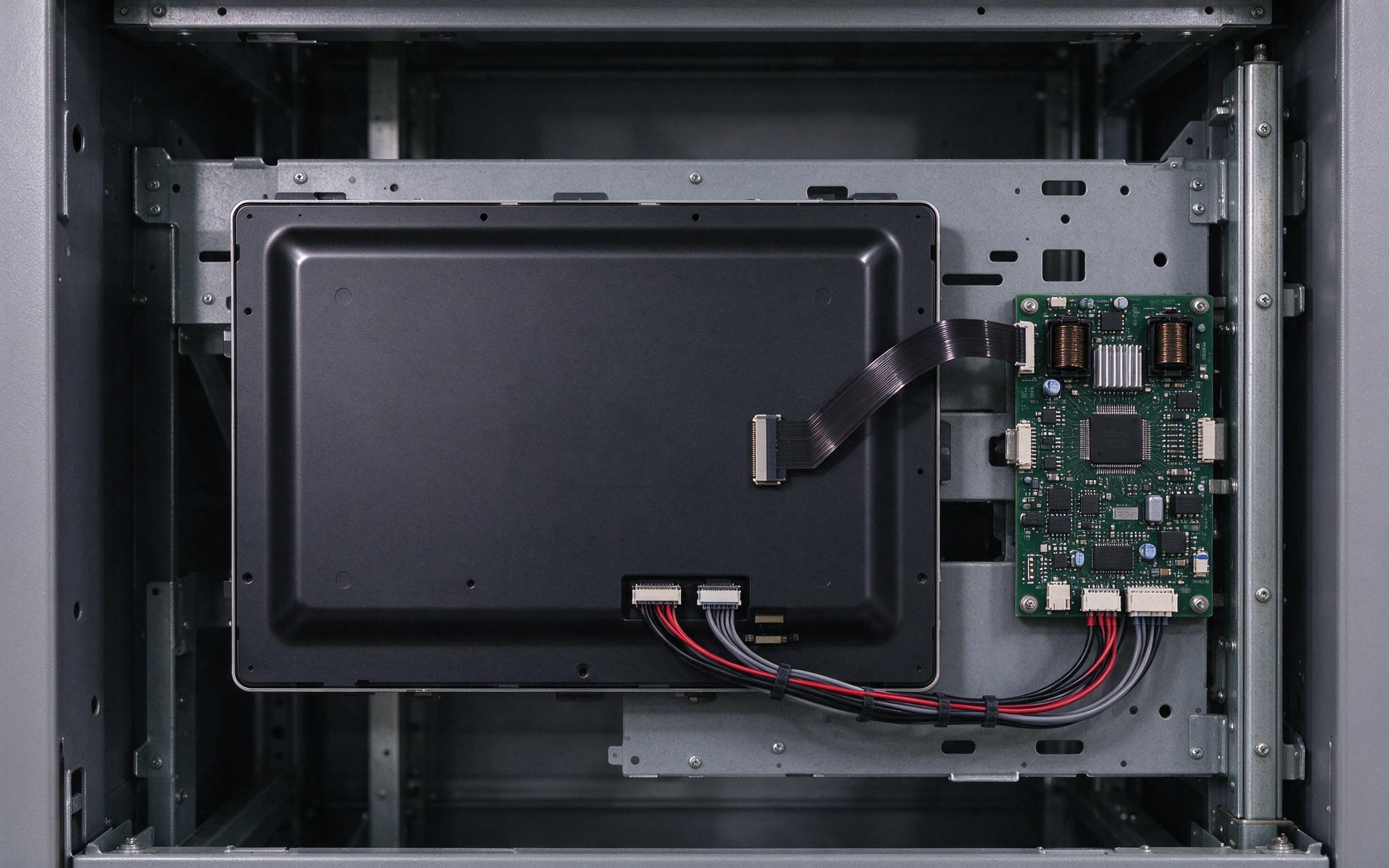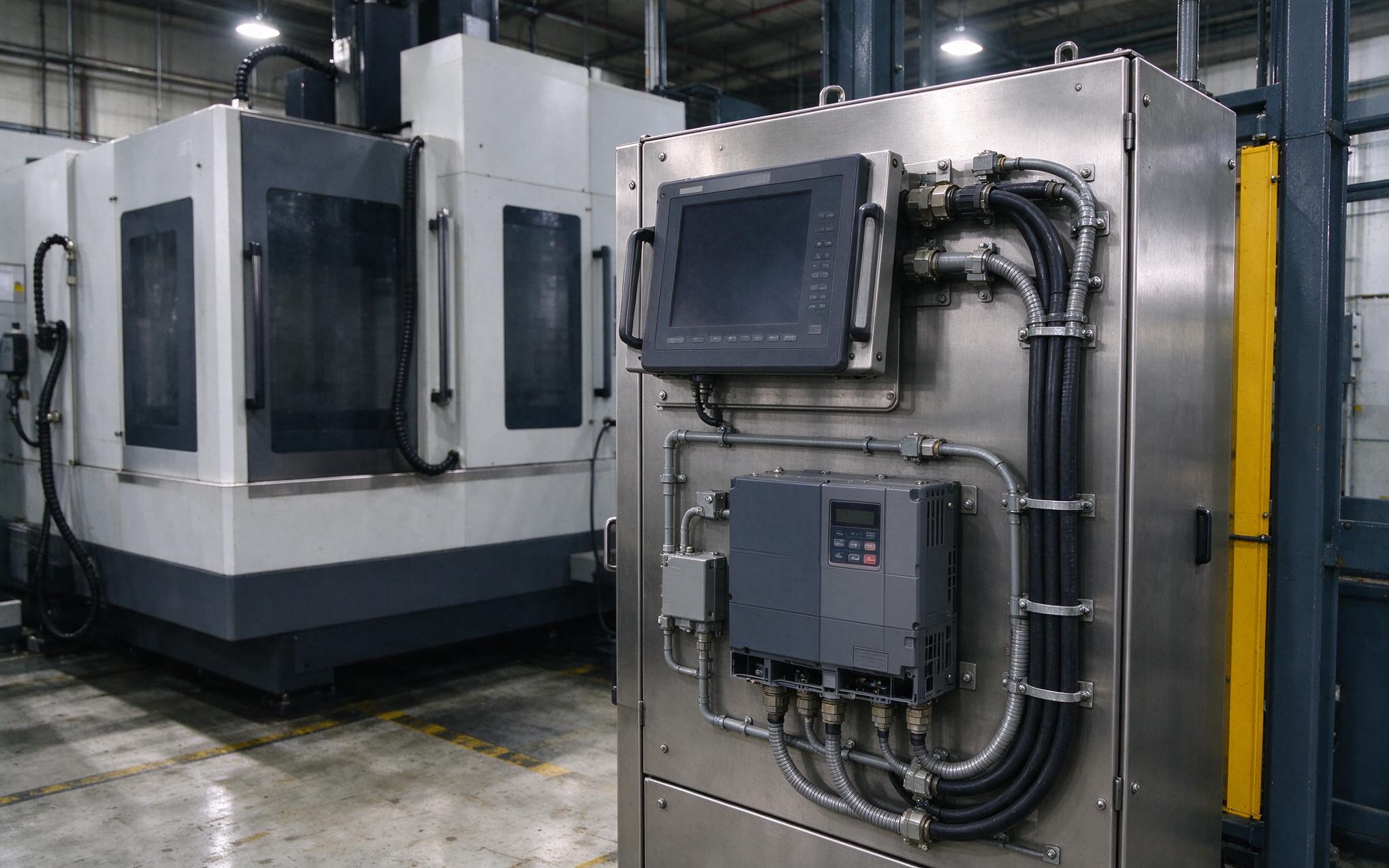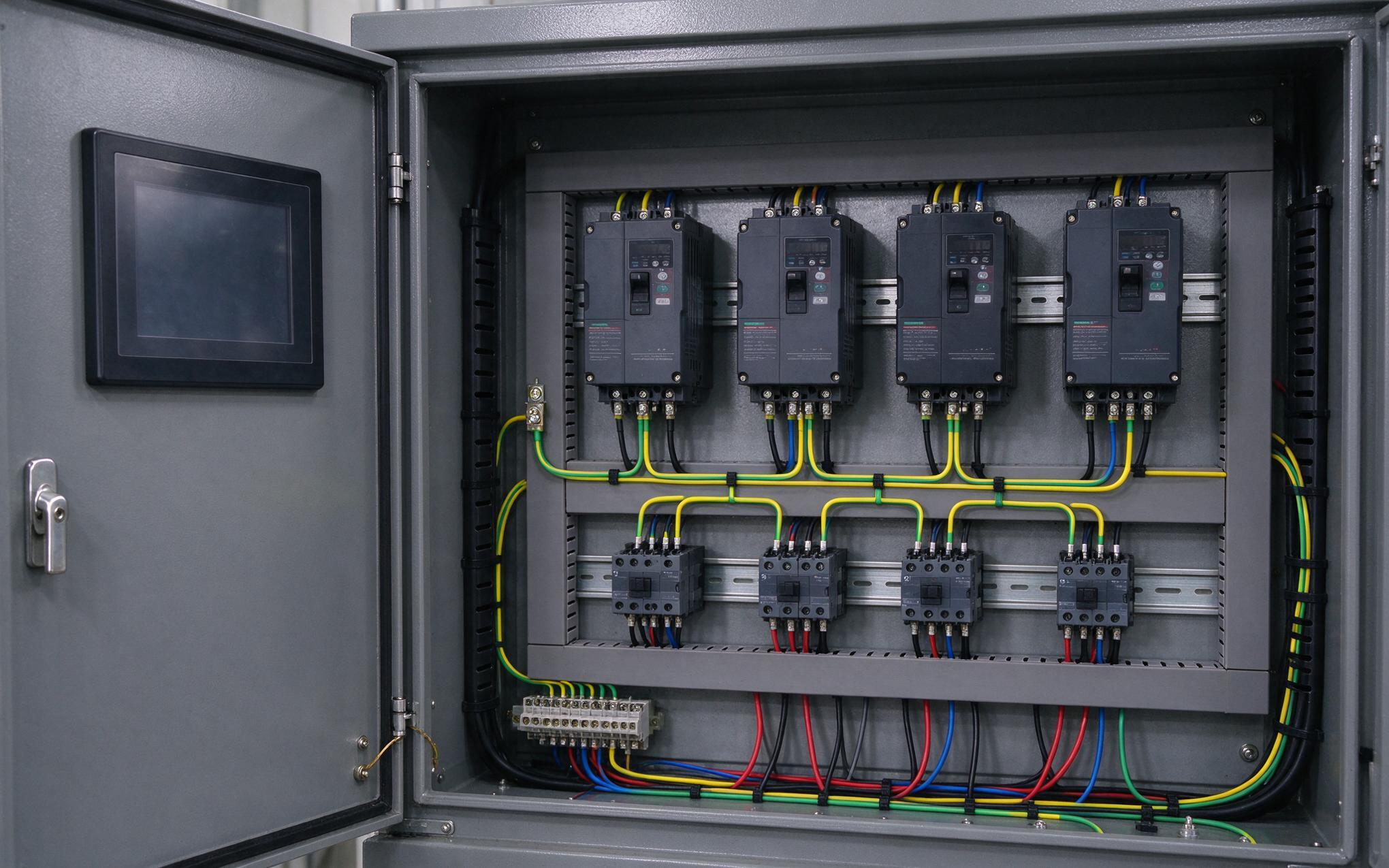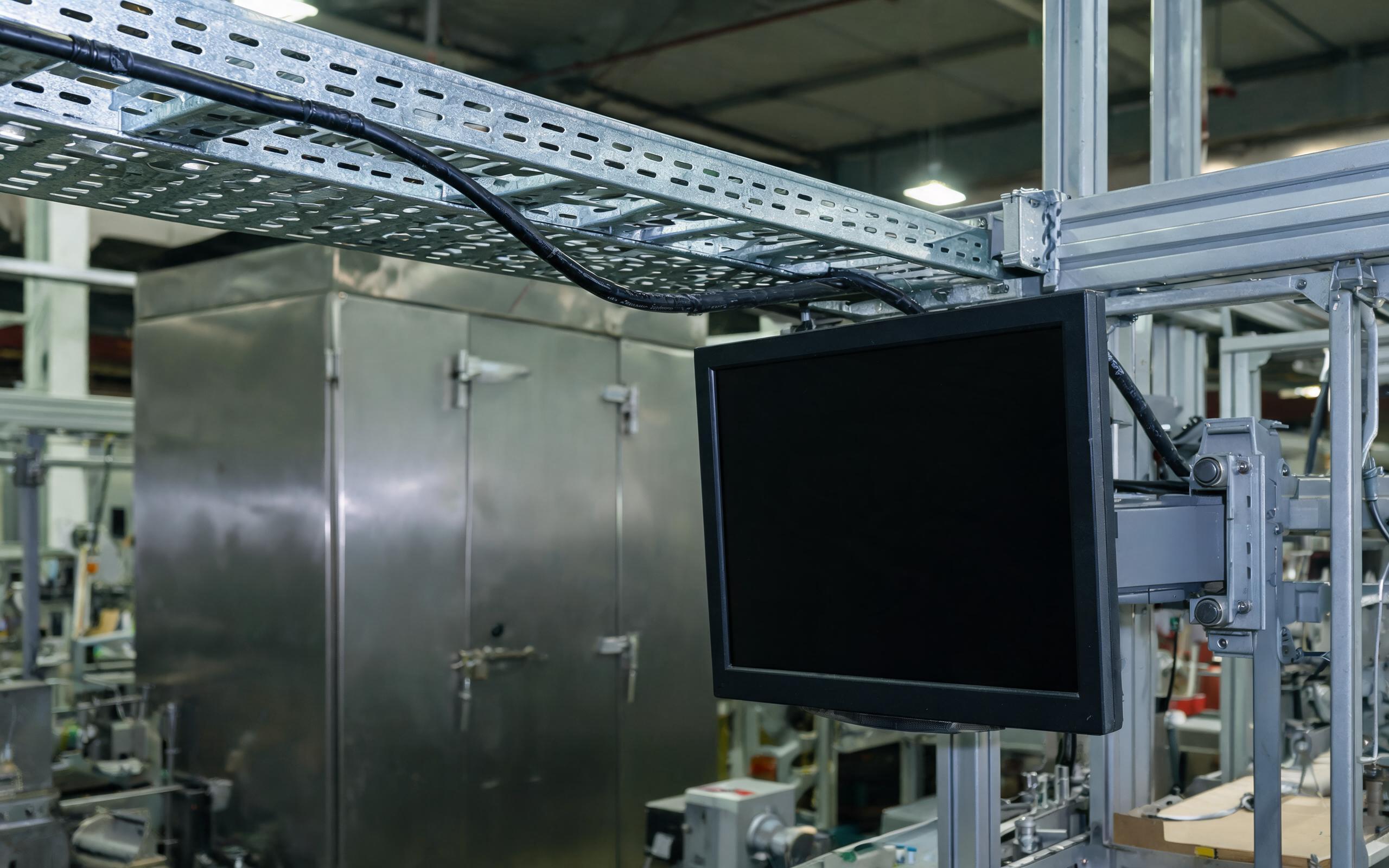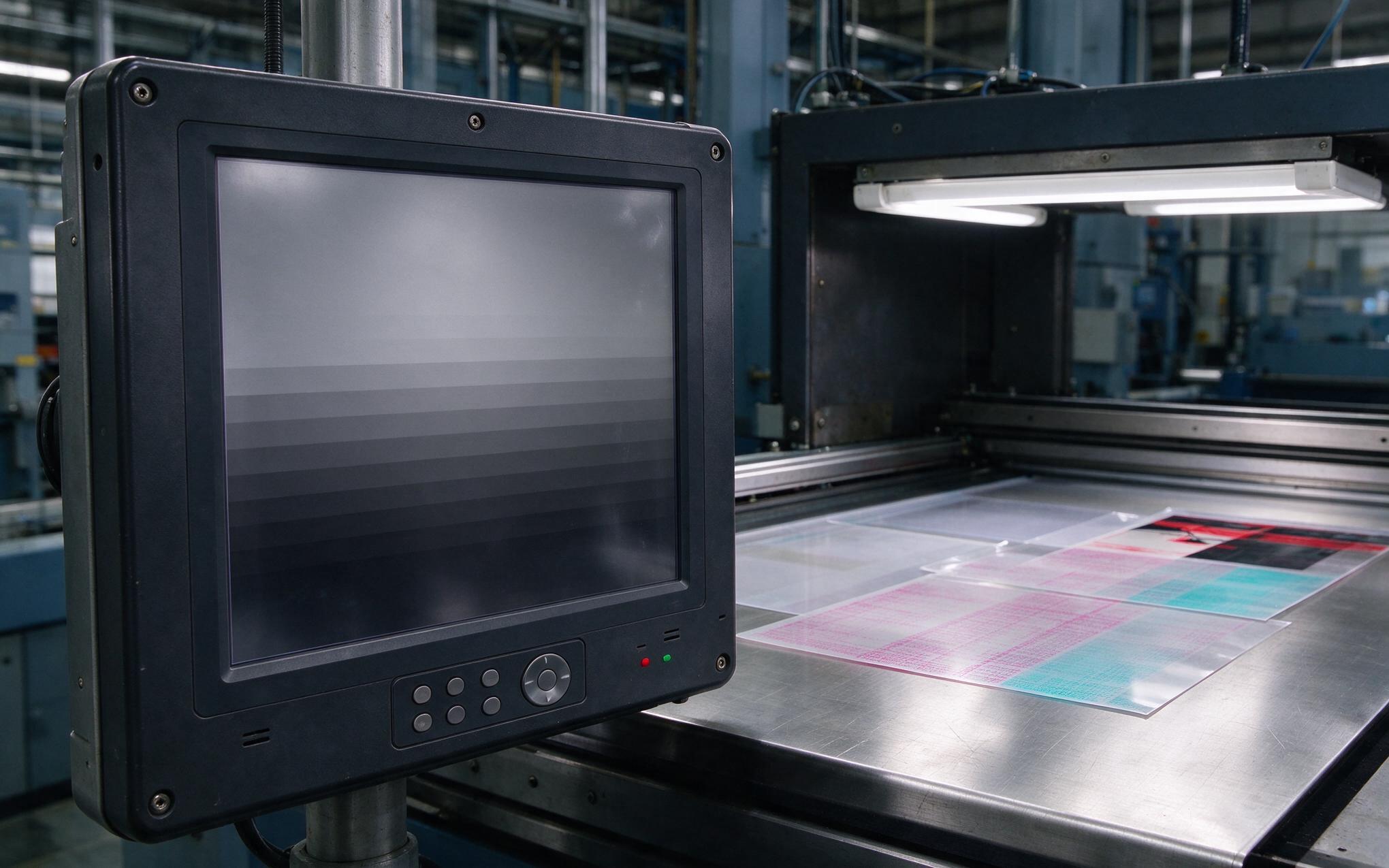
A warranty return from an outdoor weighing station arrived with no electrical fault recorded: the display powered normally, but touch accuracy had drifted several millimeters near the lower edge and a faint cloudy band had appeared along the same border. The cause was mechanical rather than electronic. Adhesive in the bonded stack of the embedded touchscreen monitor had moved under two years of daily thermal cycling, and that slow viscoelastic flow, known as creep, had shifted the sensor relative to the panel beneath it. Failures of this type appear gradually and are easy to misdiagnose as software calibration loss.

Within the Bond Line: How Creep Develops
Optical bonding fills the air gap between the cover glass, the touch sensor, and the display panel with a liquid or film adhesive that cures into an elastic layer. That layer improves contrast and eliminates internal reflection, but it also becomes the mechanical coupling between materials whose thermal expansion coefficients differ substantially. Glass expands very little, plastic layers expand several times more, and each temperature swing puts the adhesive into shear. Because the adhesive is viscoelastic, part of that strain does not recover when the temperature returns; it accumulates. Over hundreds of cycles the residual displacement becomes measurable, and in an embedded touchscreen monitor it manifests as a touch coordinate offset largest at the edges, where cumulative shear is highest.

Under Field Conditions: Loads That Accelerate Movement
Three site conditions accelerate creep. Direct solar gain on a south-facing enclosure produces daily excursions far wider than the ambient specification suggests, and dark bezels raise the peak further. Sustained elevated temperature matters more than peak alone, since adhesive flow rate rises with temperature and an assembly held near its upper limit for hours each afternoon accumulates strain quickly. An embedded touchscreen monitor behind unshaded glazing therefore ages faster than its rating implies. Mechanical preload adds a third contribution: a bezel clamped tightly against the cover glass introduces a constant compressive stress that biases the direction of flow. Hardware manufacturers, including KOXIAN, mitigate this by specifying a controlled clamp force with a compliant gasket rather than rigid metal-to-glass contact, so that expansion is accommodated instead of resisted.

Before Deployment: Qualification and Adhesive Selection
Adhesive class sets the baseline for an embedded touchscreen monitor. Optically clear resin generally tolerates thicker bond lines and irregular surfaces, while optically clear film gives more consistent thickness and lower shrinkage during cure but needs flatter substrates. Cure shrinkage deserves attention because residual stress present from day one adds to whatever thermal cycling contributes later. Meaningful qualification uses thermal cycling across the rated range for several hundred cycles, followed by measurement rather than visual inspection alone: optical transmittance, touch linearity, and bond line integrity under angled illumination. An industrial touchscreen monitor that passes a high-temperature soak but was never cycled has not been tested for the mechanism that causes this failure.

After Installation: Detection and Service Options
Early detection on an embedded touchscreen monitor relies on periodic measurement instead of user complaints. Recording touch accuracy at several fixed points during scheduled maintenance produces a trend, and an offset that grows monotonically toward one edge separates bond line movement from ordinary calibration drift. Optical inspection at a shallow angle reveals haze or interference patterns before they are visible straight on. Field observations from outdoor terminal deployments indicate that an embedded touch panel pc using KOXIAN bonding practice holds touch linearity where enclosure shading limits the daily temperature swing at the glass. Repair is rarely economical once separation begins, since delamination cannot be reversed in the field, which makes shading, ventilation, and correct clamp force the practical countermeasures.
Adhesive creep is a slow mechanical process that reaches the user as an optical or touch accuracy complaint. The controls are established before installation: an adhesive class matched to the substrate flatness, a documented thermal cycling qualification with measured transmittance and touch linearity, and clamp geometry that accommodates differential expansion. On site, reducing solar gain and sustained high temperature at the glass does more to extend service life than any recalibration routine, and periodic accuracy measurement catches the trend while replacement can still be scheduled.