A field logistics company lost three weeks of route data when a fleet-mounted computer rebooted during engine cranking. The root cause traced to a power supply that could not hold its output below 9V during cold-start transients. This type of failure is preventable with proper power engineering, yet it remains one of the most overlooked vulnerabilities in mobile edge computing deployments. Selecting the right power architecture for an embedded industrial PC operating on vehicles and mobile platforms requires careful attention to input range, transient behavior, and shutdown sequencing.

Wide Voltage Input Requirements in Vehicle-Mounted Systems
Vehicles present a uniquely hostile electrical environment. During normal operation, a truck alternator delivers 13.5V to 14.5V, but engine cranking can pull the rail below 6V for hundreds of milliseconds. At the opposite extreme, load dump events can spike the line above 40V. A robust power supply design for an embedded industrial PC must regulate across the full 9V to 48V DC range, absorbing both low-voltage dips and high-voltage transients without interrupting output to the processor and storage subsystems. Without this wide-voltage headroom, mobile edge devices experience unexpected reboots that corrupt logs, lose GPS fixes, and trigger costly field service dispatches.

Integrating Ignition Sensing for Graceful Shutdown
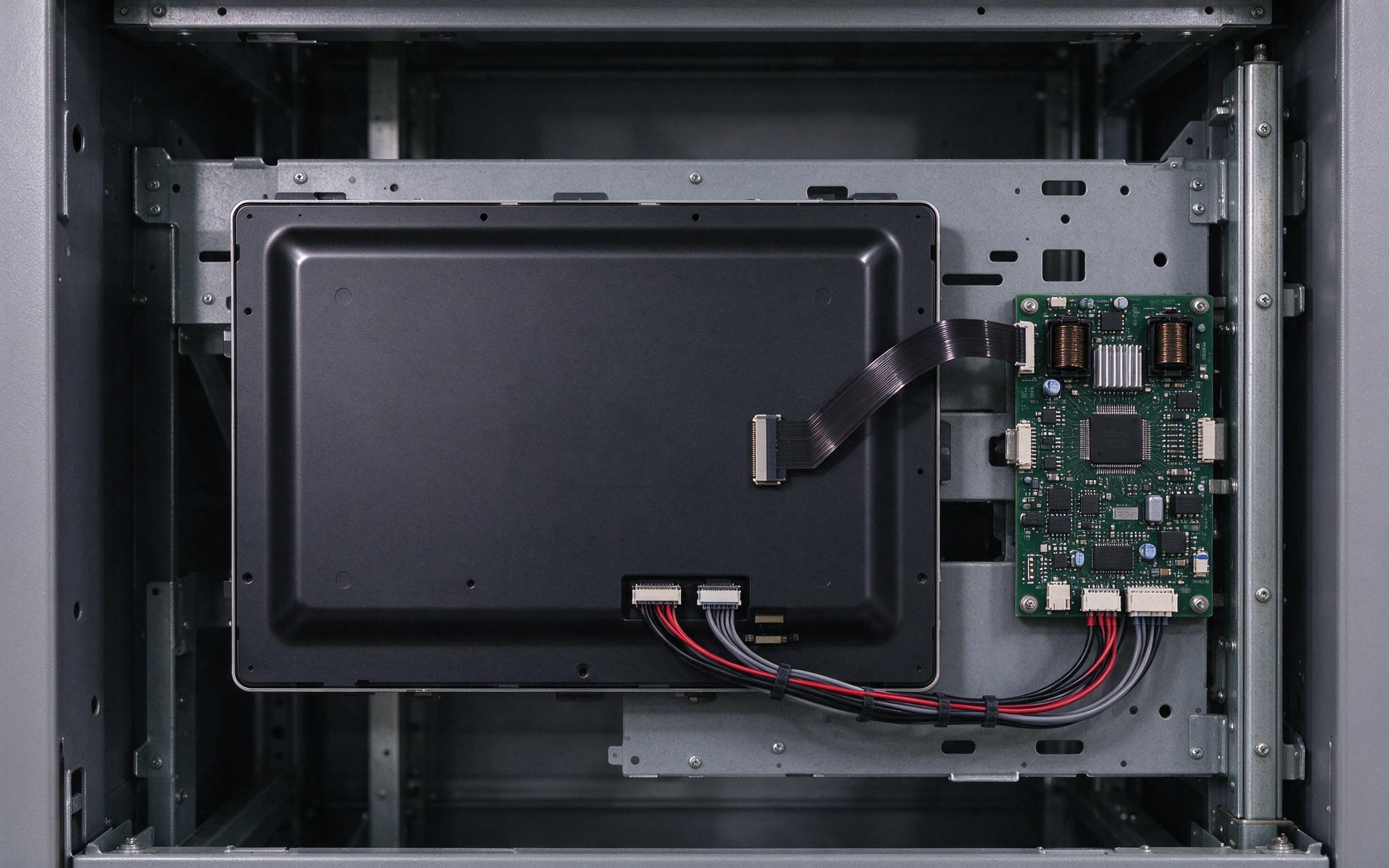
KOXIAN mobile-edge models integrate ignition sensing into the power management circuit, allowing the system to detect the transition from accessory-on to key-off and initiate a controlled shutdown before the battery rail collapses. During this window, the operating system flushes pending writes to storage, stops background services, and parks the file system journal. Without this coordination, an embedded industrial pc that loses power abruptly risks partial writes that corrupt the root filesystem and require manual recovery. Manufacturers like KOXIAN equip their mobile-edge models with supercapacitor-based ride-through modules that bridge the key-off-to-power-down gap. This approach provides an additional safety margin against momentary power glitches during vehicle shutdown and reduces the likelihood of filesystem corruption in edge-deployed units.

MIL-STD-810H Vibration Testing and Power Delivery Reliability
Power supply reliability extends beyond electrical design into mechanical robustness. In a vehicle-mounted deployment, the embedded industrial pc endures continuous vibration at frequencies from 5Hz to 500Hz, with random profiles reaching 5Grms. Solder joints on power regulators, inductor windings, and connector pins experience fatigue that can open-circuit over thousands of operating hours. MIL-STD-810H method 514.8 testing subjects the complete system to these vibration profiles, validating that the power delivery chain maintains regulation throughout. Designers achieve this through conformal coating of critical components, shock-isolated mounting brackets for heavy inductors, and lockable M12 connectors that resist vibration-induced loosening. For embedded industrial pc platforms, these mechanical safeguards form the foundation of MIL-STD-810H compliance. Vendors like KOXIAN that carry MIL-STD-810H certification provide documented proof that the power supply and all subsystems withstand the mechanical stress of real-world mobile deployment, giving fleet operators measurable assurance rather than marketing claims.

Transient Protection and EMC Compliance Evaluation
Beyond steady-state voltage range, mobile power supplies must survive transient events defined by ISO 7637-2 and ISO 16750-2 standards. These include pulse 1 (load dump at 87V), pulse 2a (fast transient burst), and pulse 5a (cold crank). Each pulse applies energy that can damage unprotected semiconductor junctions or cause latch-up in voltage regulators. Any unit intended for mobile edge use should incorporate transient voltage suppressor (TVS) diodes at the input, followed by an EMI filter stage and a multi-stage buck converter topology that isolates the sensitive downstream rails from input disturbances. Compliance with CISPR 25 conducted and radiated emissions limits further ensures the power supply does not interfere with vehicle communication systems, which is essential for fleet telematics and emergency vehicle applications.
Power supply engineering is the foundation of reliable mobile edge computing. An embedded industrial PC that handles wide-voltage input, integrates ignition sensing for graceful shutdown, and passes MIL-STD-810H vibration testing delivers the resilience that fleet operators and field engineers depend on. Evaluating these power architecture features early in the procurement process prevents the costly mid-deployment failures that derail mobile edge projects.