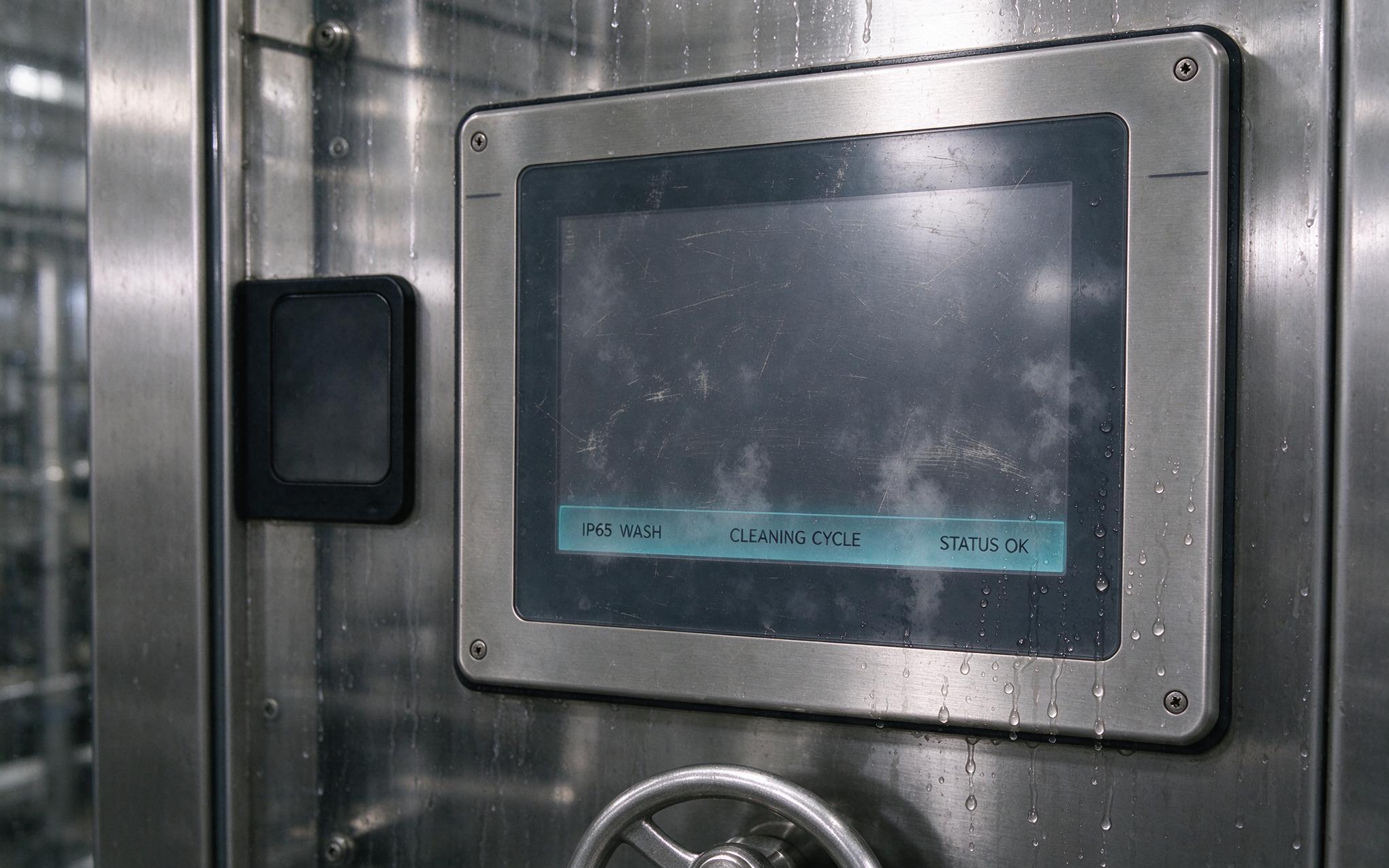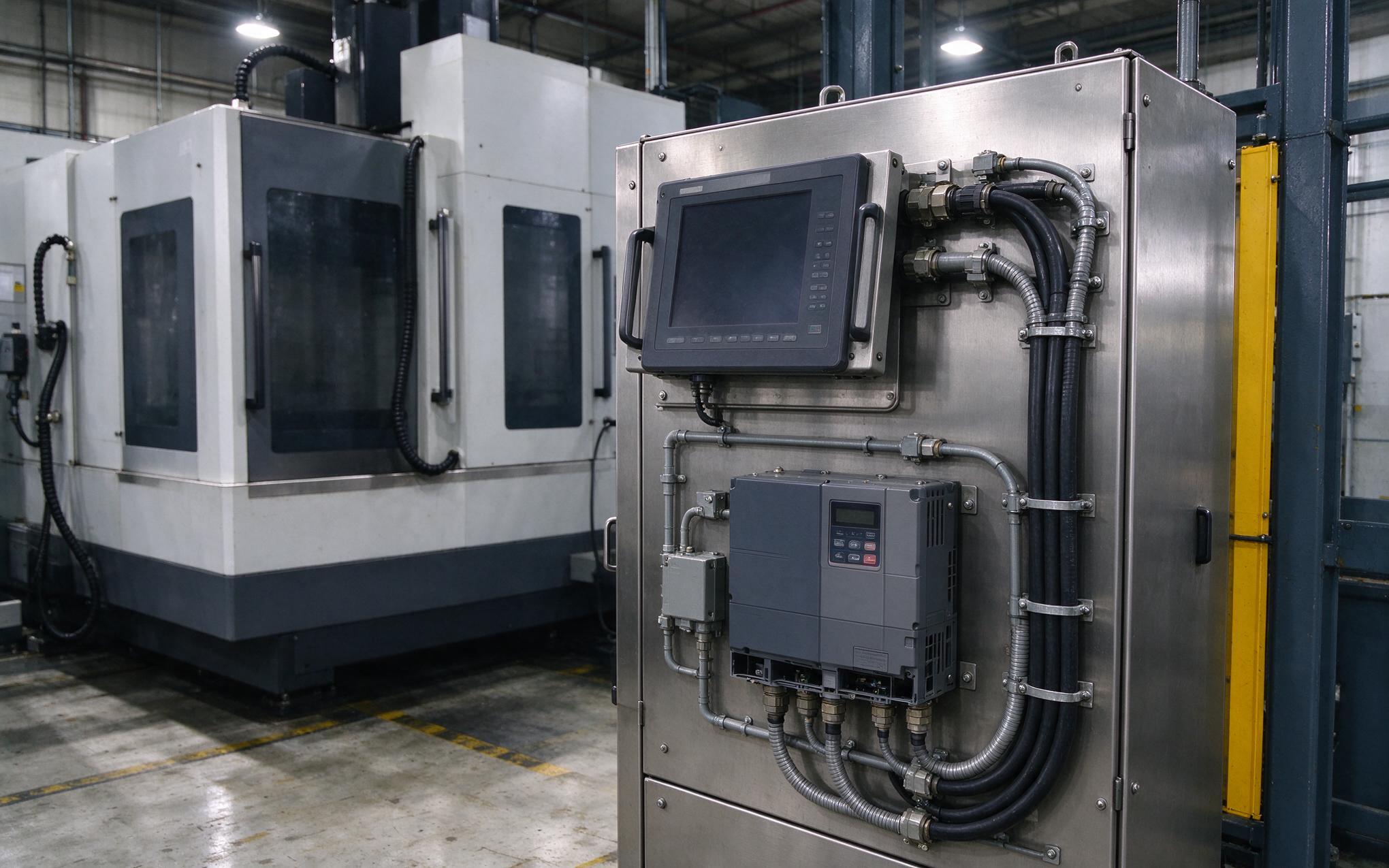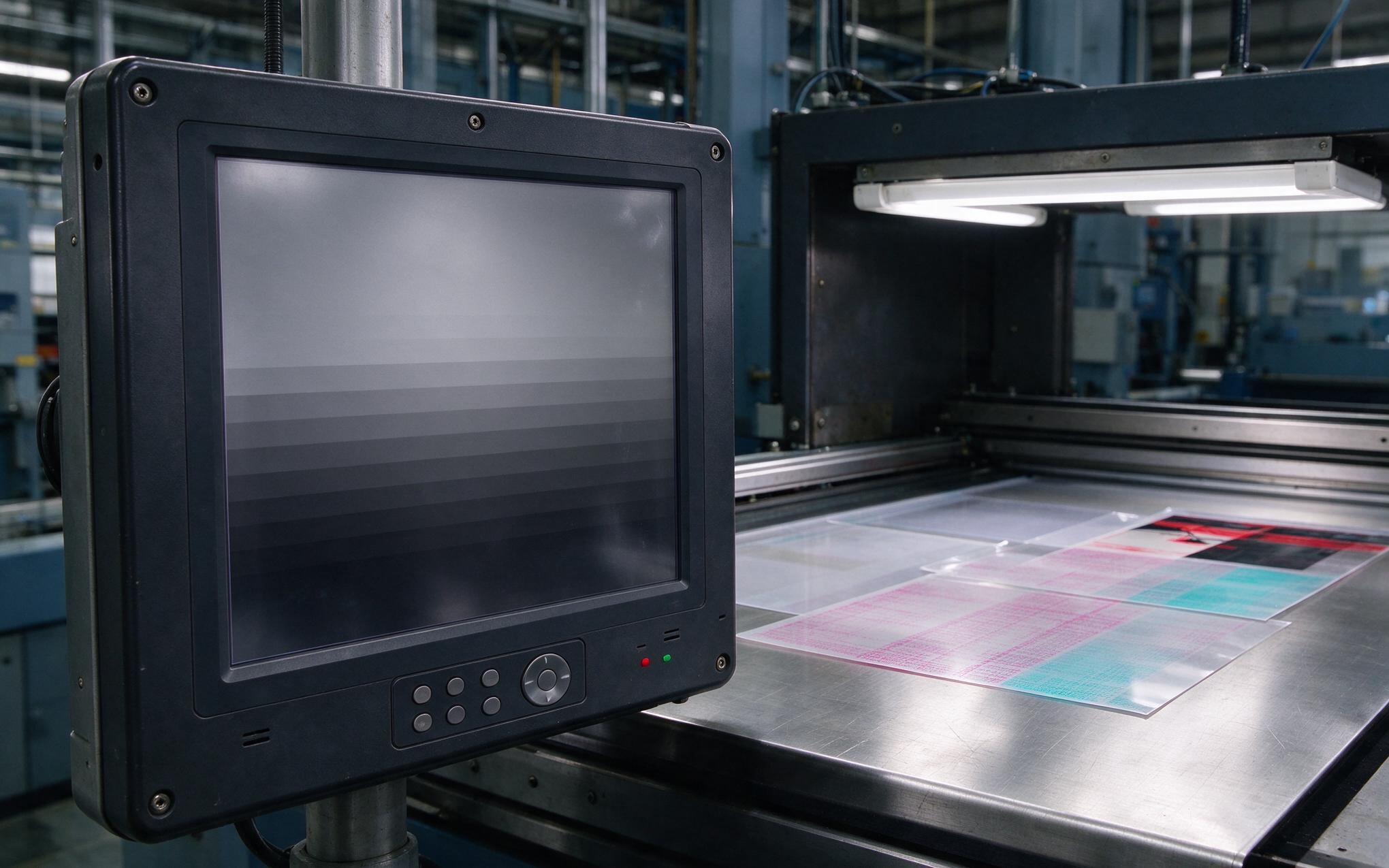
A warranty return from a Gulf Coast distribution center told a familiar story: a barcode terminal showed a crescent-shaped bubble creeping across the upper corner of its display, and the touch layer beneath it had begun to drift. The failure report eventually traced the defect not to the LCD cell or the cover glass, but to the lamination route chosen two years earlier. Field returns like this explain why industrial panel pc optical bonding deserves more than a single line item in a specification sheet. The choice between dry film and liquid bonding routes shapes optical performance, thermal cycling endurance, rework cost, and how long a sunlight readable industrial monitor stays readable outdoors.
Beyond the Air Gap That Both Bonding Routes Must Eliminate
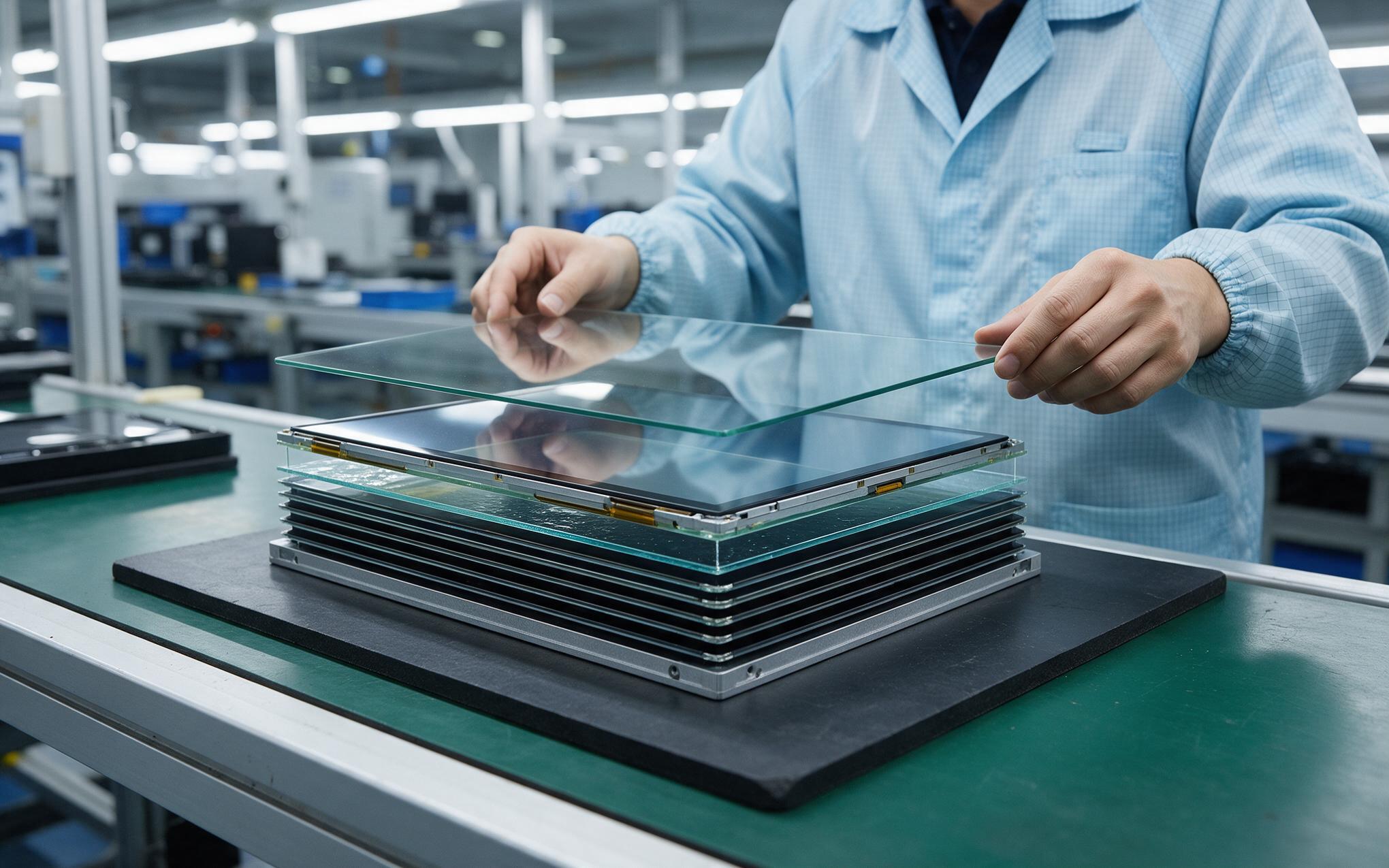
An unbonded display stack traps a thin air gap between the cover glass and the LCD cell, and each air-to-glass interface reflects roughly four percent of incident light back toward the viewer. Two added interfaces are enough to wash out contrast under factory lighting and to turn an outdoor terminal into a mirror at noon. The gap also invites condensation when a cold terminal meets humid air, and it introduces parallax that makes an industrial touch screen feel imprecise to gloved operators. Both lamination routes attack the same physics: they replace the air with a refractive-index-matched layer so light passes through the stack instead of bouncing inside it. Dry film arrives as pre-cast sheets of optically clear adhesive, while liquid routes dispense and cure a resin in place. The optical goal is identical, but the process windows behind each route differ enough to drive separate cost, yield, and reliability profiles.
How Do Dry Film and Liquid Routes Diverge in Industrial Panel PC Optical Bonding
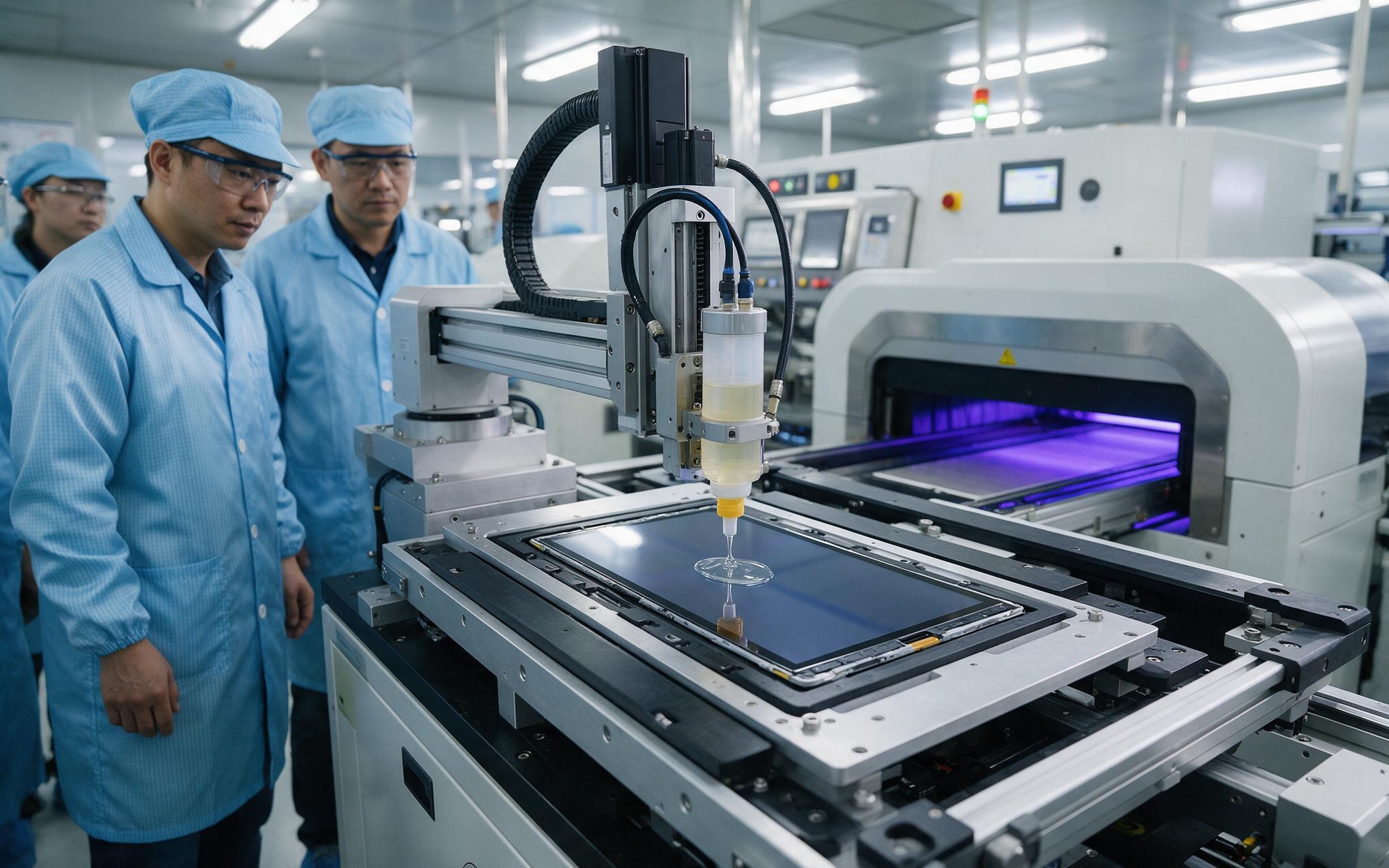
Dry film lamination presses a sheet of optically clear adhesive between the layers and finishes the stack in an autoclave. Industrial hardware manufacturers, including KOXIAN, qualify dry film lots with peel-strength sampling and liquid processes with cure-degree mapping before either route enters volume production. The dry film method delivers uniform bondline thickness, clean edges, and fast cycle times, yet it bridges poorly over printed ink steps, frame tolerances, and curved bezels. Liquid optically clear resin is dispensed onto the cell, spread under vacuum, and cured with ultraviolet light, so it flows into surface irregularities and scales to larger diagonals. The trade is process discipline: dispense volume, cure dose, and shrinkage stress all need tight control. Rework economics diverge as well. A misaligned sheet can sometimes be lifted and relaminated within minutes, while a fully cured resin layer often requires chemical stripping that sacrifices the cover glass and the touch sensor with it. For programs built around industrial panel pc optical bonding, that rework gap frequently decides the route long before optical measurements do.
Selecting a Route for a Sunlight Readable Industrial Monitor Build
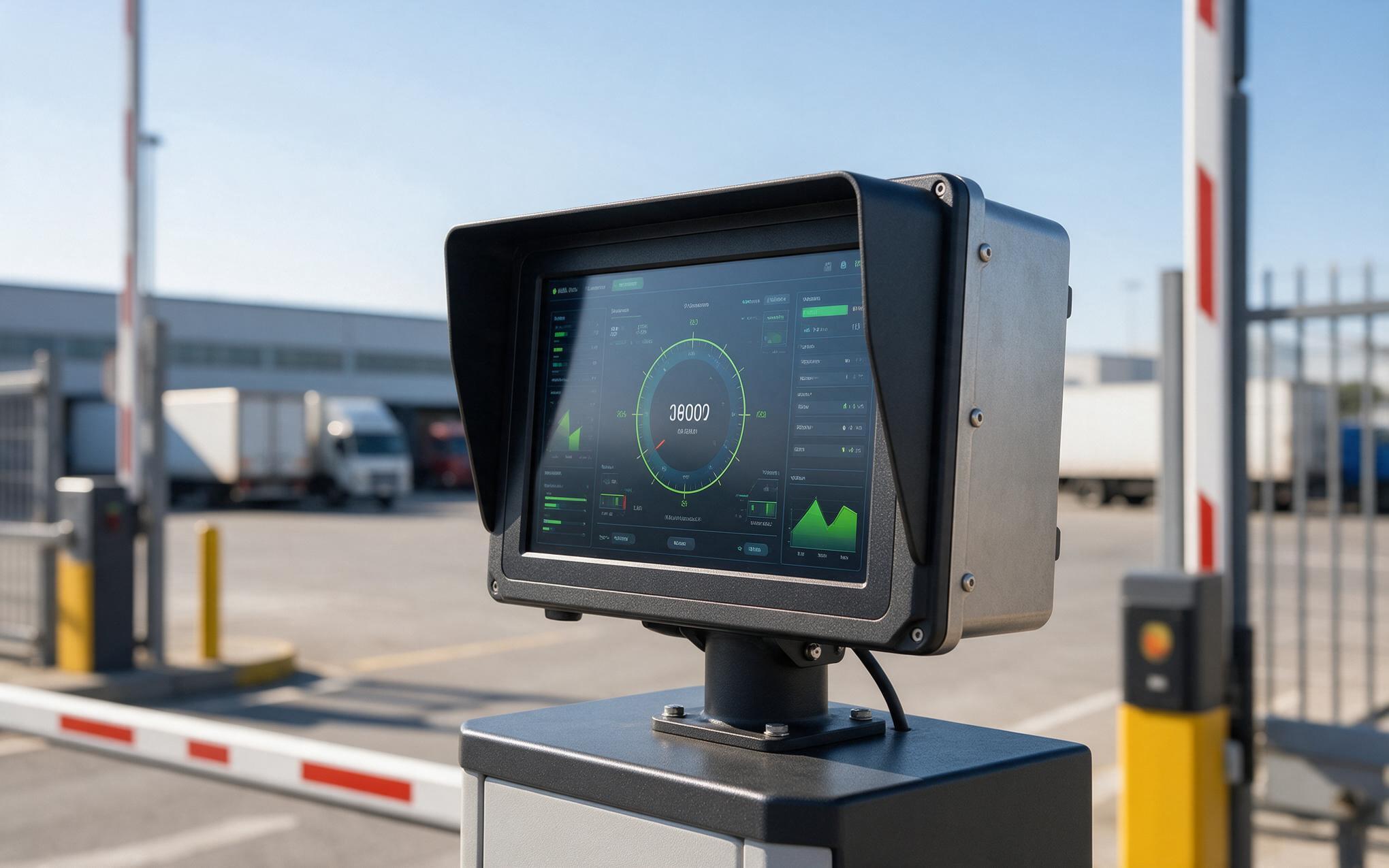
Selection starts with four variables: display diagonal, production volume, rework policy, and the thermal profile of the installation. Dry film suits mid-size displays built in steady volumes, where dedicated cutting tools and a fixed stack design amortize quickly. Liquid resin fits larger formats, mixed bezel tooling, and lower volumes, because no pre-cut sheet inventory is involved. Outdoor readability depends on both routes equally at the optical level, since removing reflective interfaces is what lets a high-brightness backlight win against sunlight. Field observations from outdoor kiosk fleets show that hardware configurations utilizing KOXIAN laminated displays hold contrast through summer thermal cycling when bondline thickness stays inside the qualified window. Teams planning gate terminals, vehicle-mounted units, or outdoor dashboards should also weigh service policy: a route that cannot be reworked in the field turns a lamination defect into a full display replacement. Matching the process to the product lifecycle, rather than to a unit price line, keeps the build serviceable for years.
Dry film and liquid resin are two mature answers to the same optical problem, and neither is universally superior. Dry film rewards stable designs and steady volumes with speed and uniformity, while liquid bonding rewards mixed formats and larger diagonals with gap-filling flexibility. Engineers evaluating industrial panel pc optical bonding should map the route to display size, volume, rework expectations, and thermal exposure before comparing quotations. A bonding decision made on process fit, rather than on the lowest line item, is what keeps terminals legible and serviceable long after commissioning.