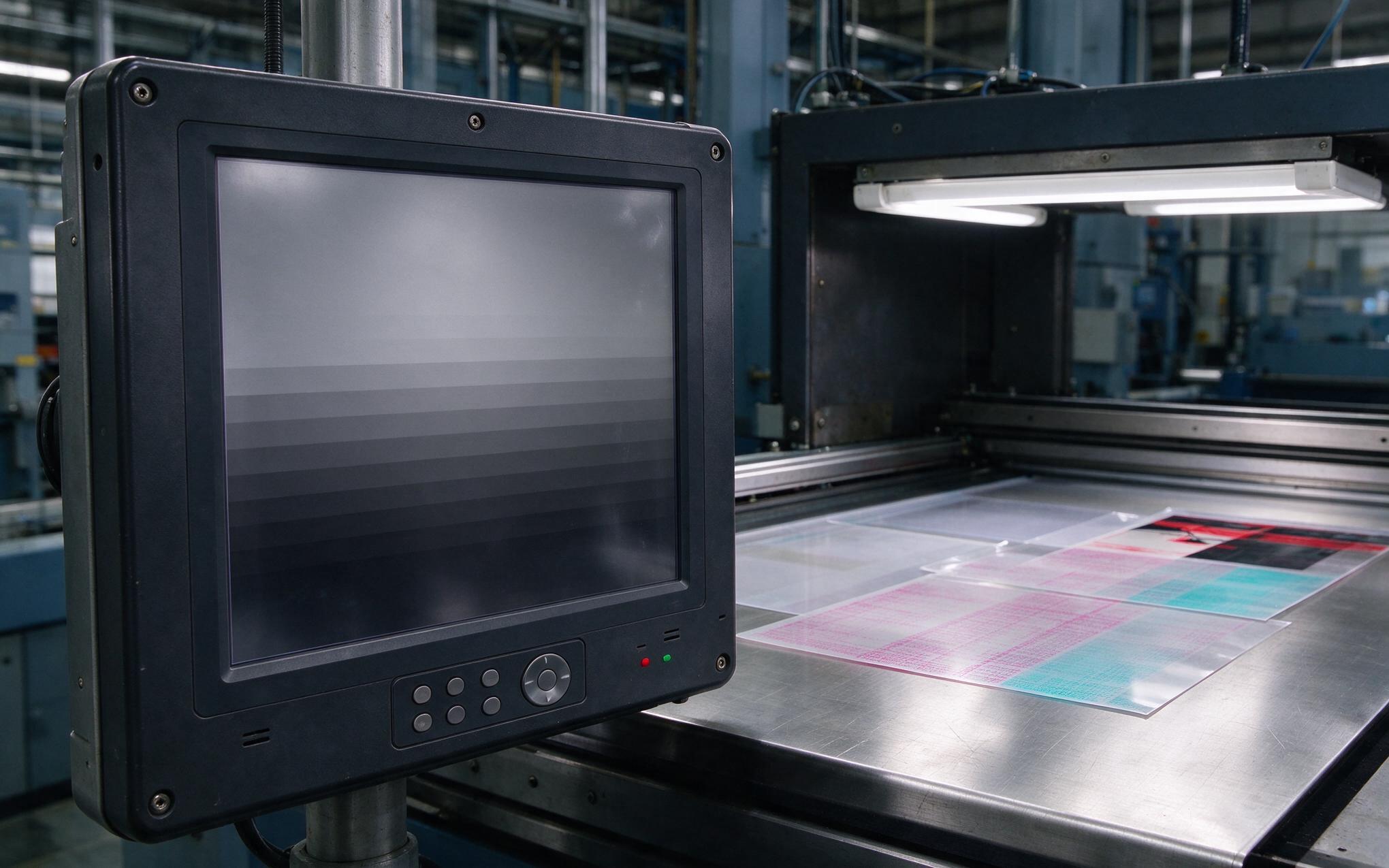
Bringing a new production line online has always been a race against the clock. Every hour spent debugging sensors, chasing wiring faults, and resolving control logic conflicts after physical installation is an hour the factory is not producing revenue. The semiconductor industry has pushed this problem to an extreme—global 300mm fab equipment spending is projected to exceed $150 billion in 2027, making delayed line qualification a multi-million-dollar-per-day problem. A growing number of manufacturers are turning to virtual commissioning: validating the entire control system against a digital twin before any hardware is installed. At the center of this workflow sits the industrial panel PC, bridging the simulation environment and the physical machines that will execute the validated logic.
What Virtual Commissioning Actually Changes on the Factory Floor
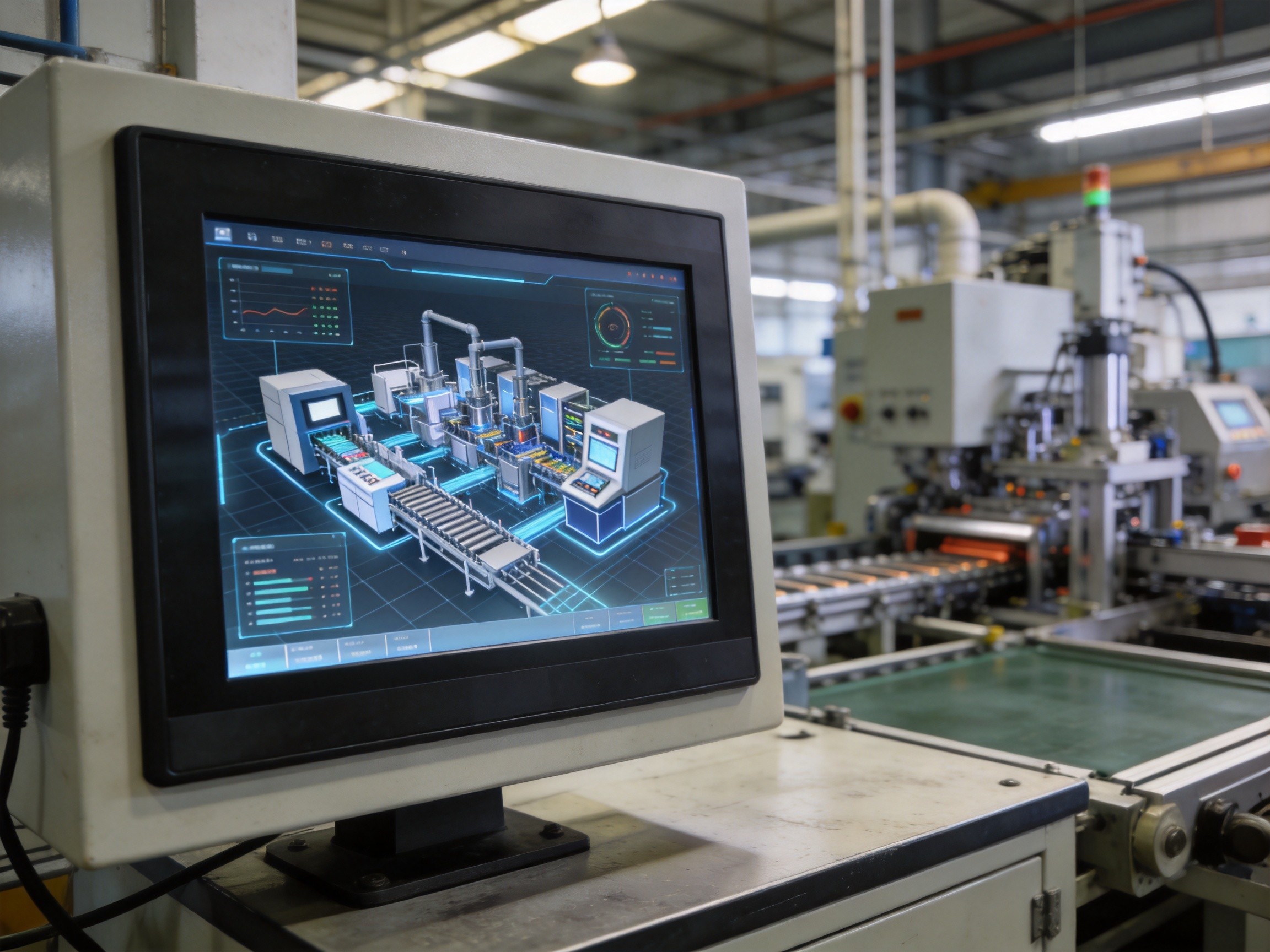
Traditional line commissioning follows a linear, unforgiving path: install hardware, wire everything, power up, then spend weeks troubleshooting conflicts that only become visible once the system is live. Virtual commissioning inverts this sequence. Engineers build a physics-based digital replica of the production line—complete with robot kinematics, sensor positions, and material flow logic—and validate the entire control program against this model before installation. The approach has proven particularly valuable in semiconductor fabrication, where OMRON announced in July 2026 that it is integrating its VT-X 3D-CT X-ray inspection systems with NVIDIA Omniverse libraries to create physically accurate digital twins of board inspection processes. The system reproduces substrate warpage caused by thermal cycling in a virtual environment, allowing engineers to adjust reflow profiles before defects occur. For panel PC deployments, this means the operator interface software, data acquisition routines, and alarm management logic can all be verified against a simulated line, cutting physical commissioning time by 40 to 60 percent in documented implementations.
The Panel PC as the Digital Twin Integration Point
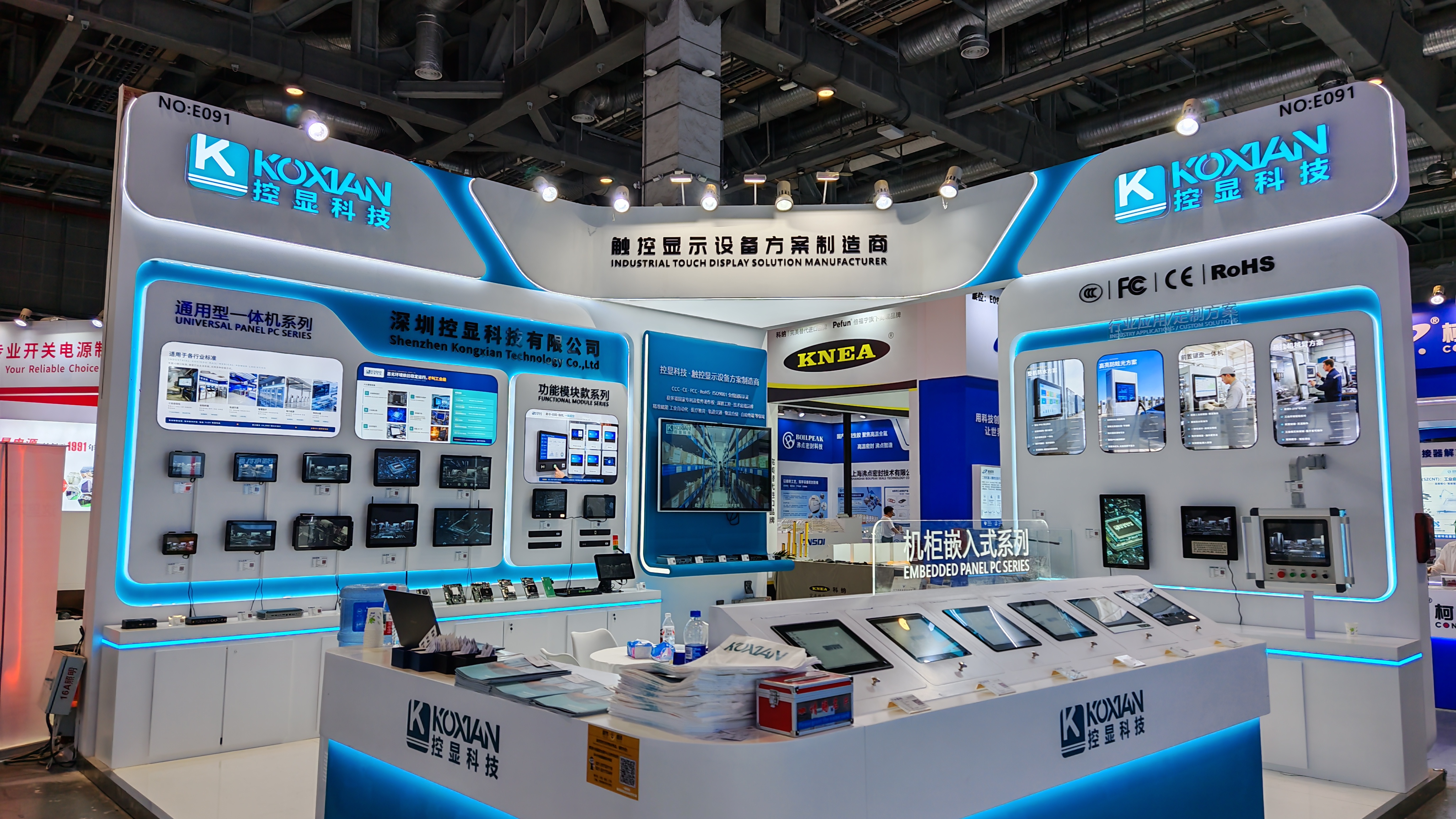
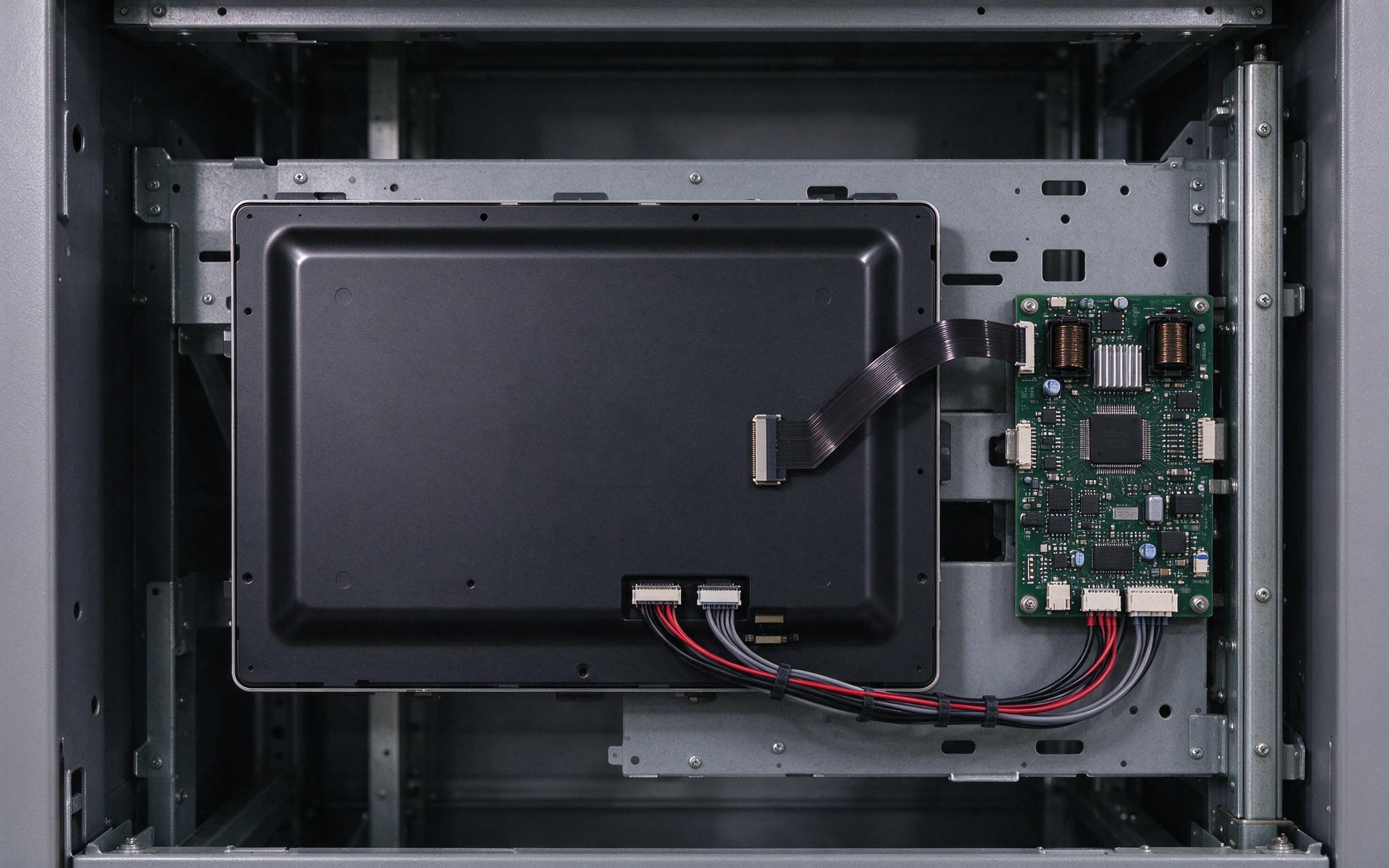
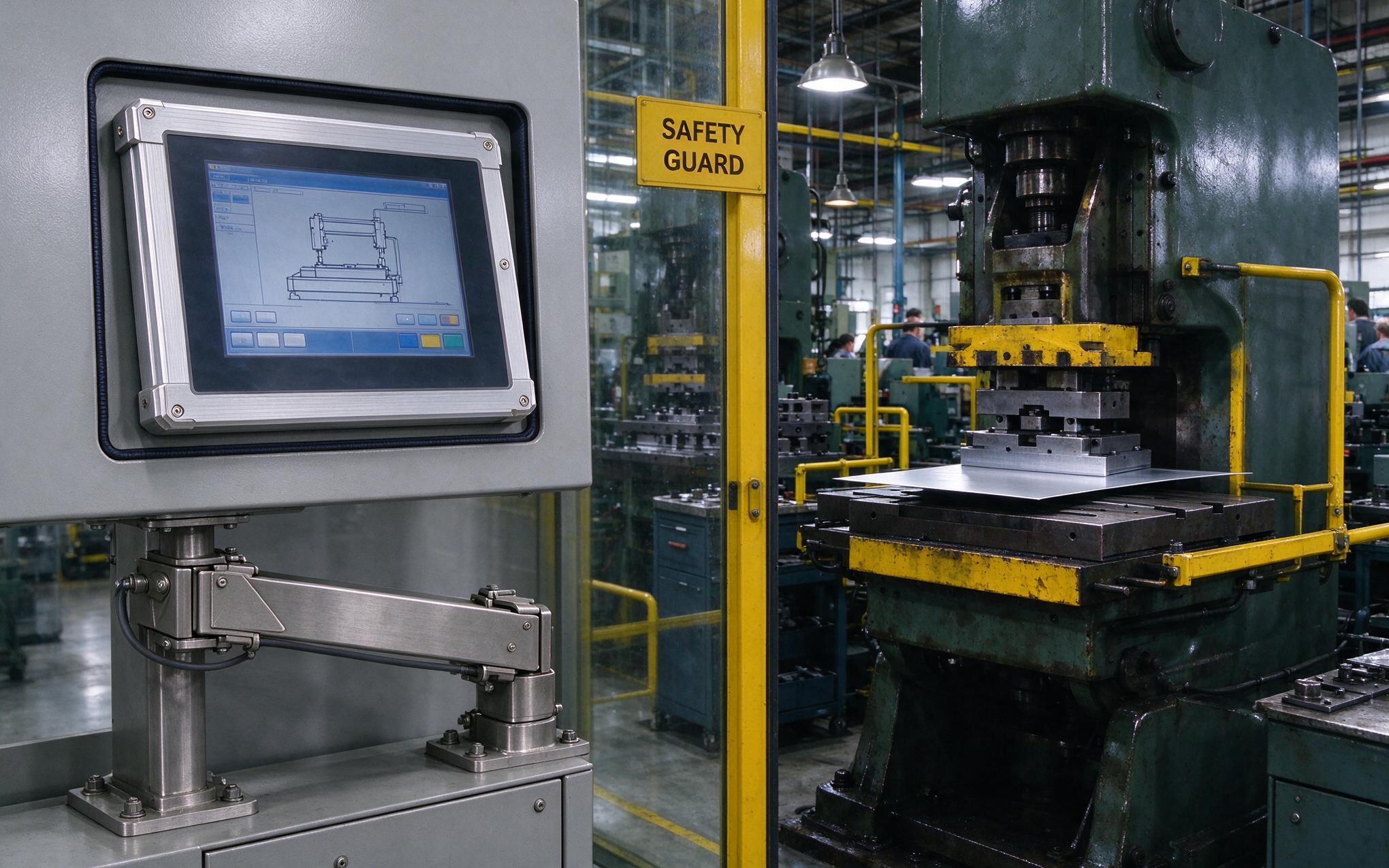
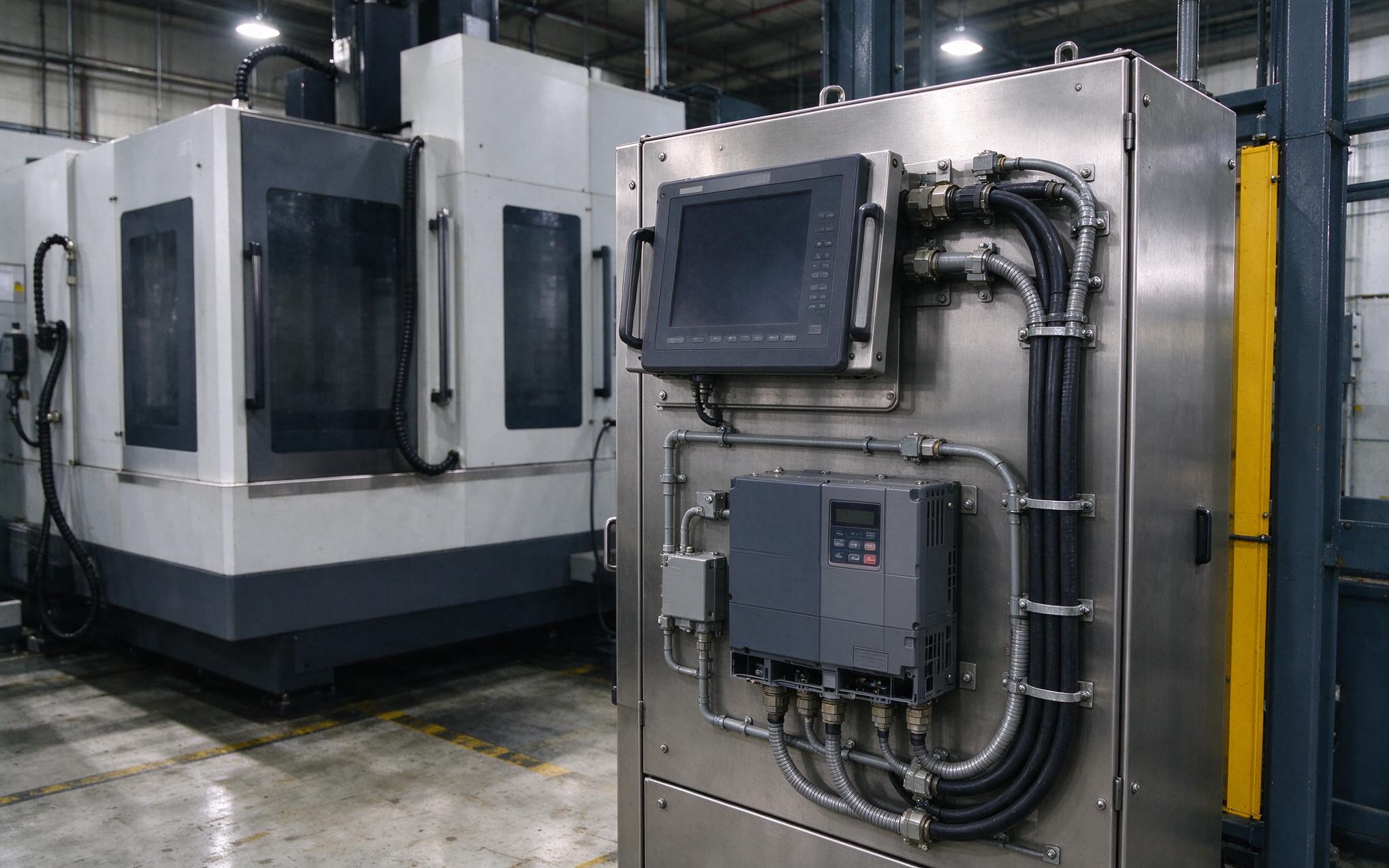
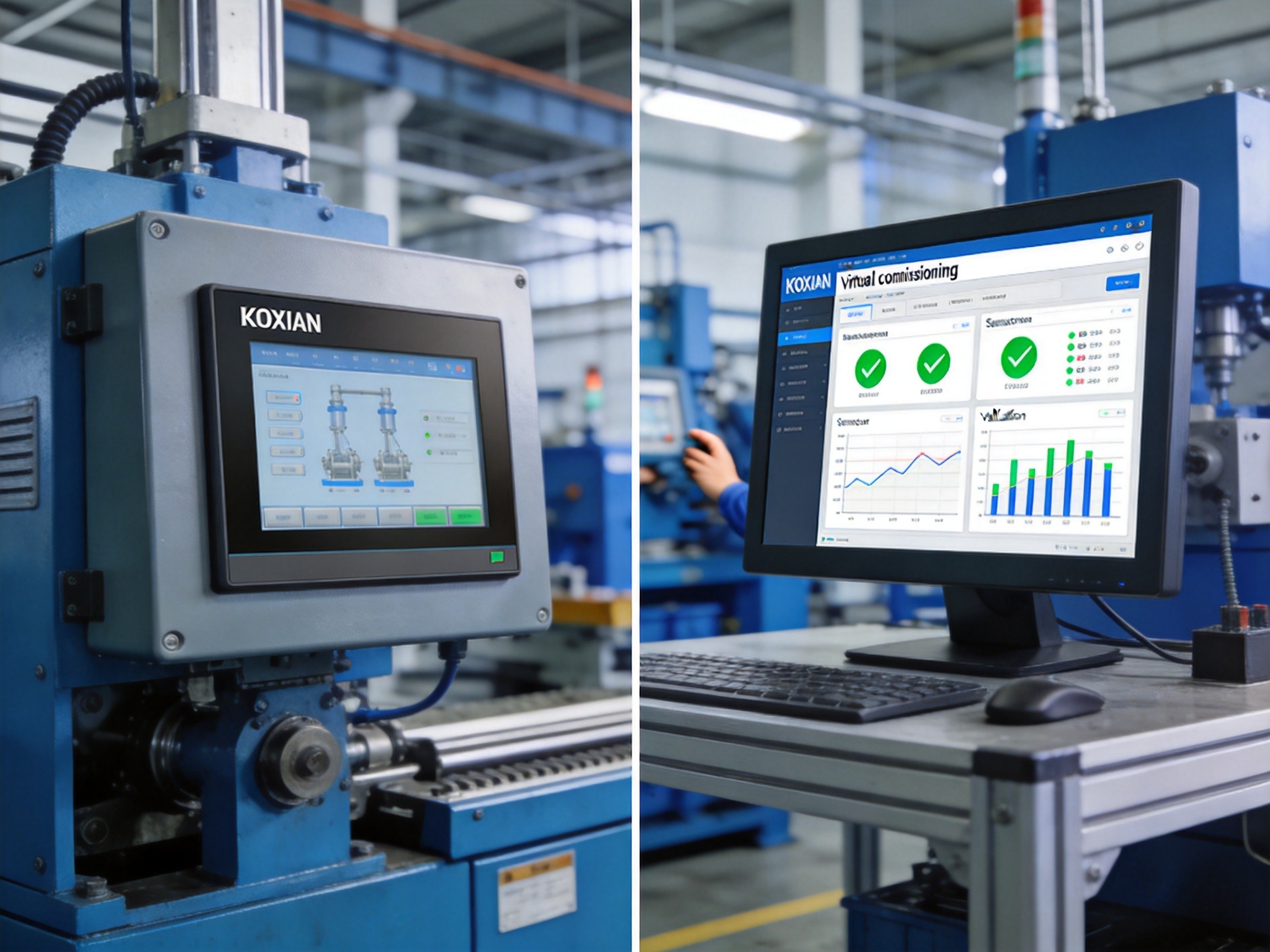
A digital twin is only as valuable as the data it receives and the actions it can trigger. The panel PC operating at the line edge performs both functions simultaneously. On the ingestion side, it aggregates data from vision cameras, vibration sensors, thermal probes, and throughput counters, time-stamping and structuring each stream before forwarding it to the twin model. On the actuation side, it receives validated parameter sets from the simulation and pushes them to physical equipment. This bidirectional flow transforms virtual commissioning from a one-time exercise into a continuous optimization loop. KOXIAN industrial panel PCs support this architecture with multi-core processors that dedicate compute resources separately to real-time data acquisition and to the visualization workloads required by 3D twin interfaces, preventing the display lag that would otherwise make operators distrust the system.
From Semiconductor Fabs to General Manufacturing
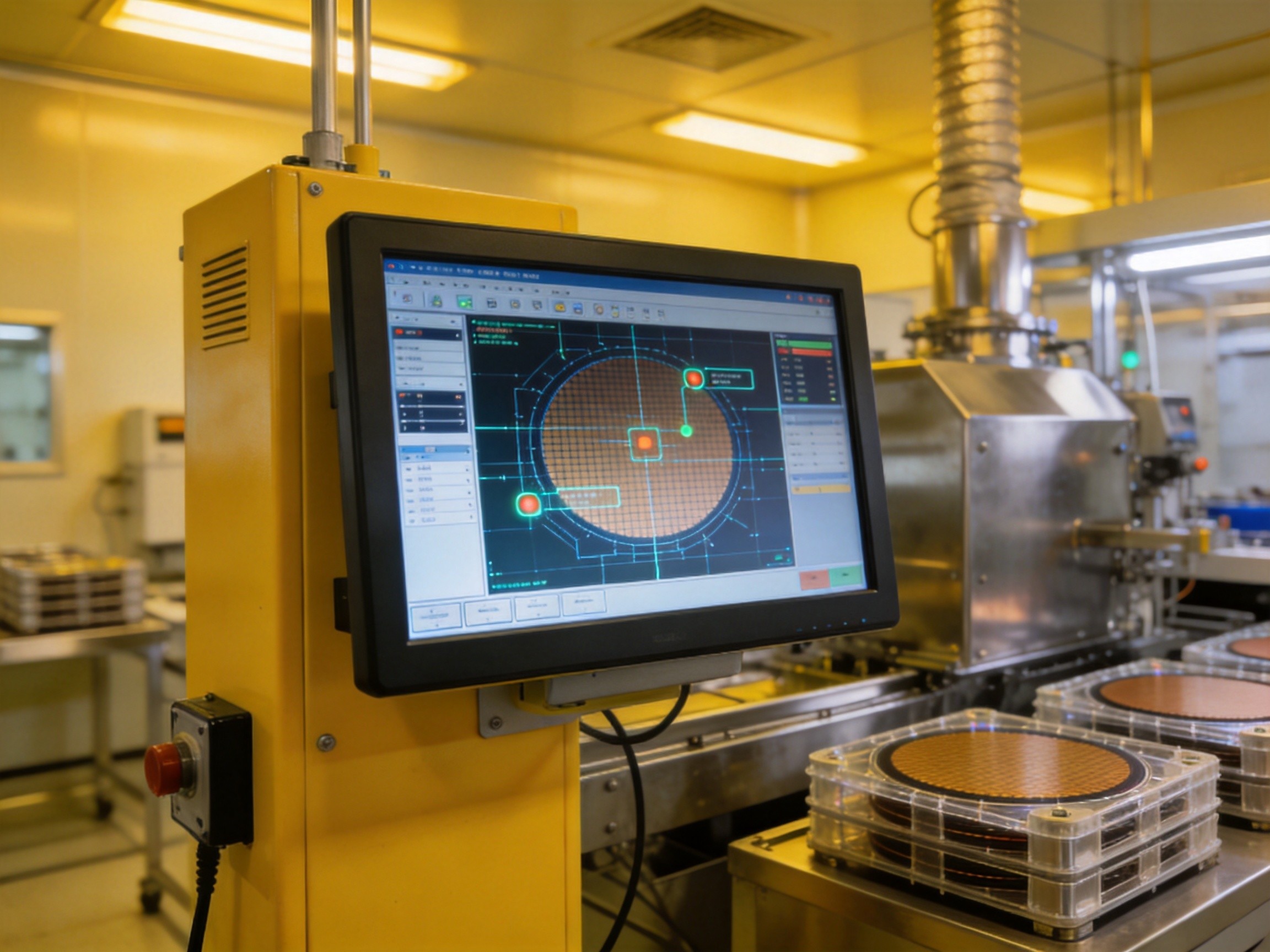
The semiconductor industry is leading the virtual commissioning charge, but the pattern is spreading rapidly. SEMICON Taiwan 2026, scheduled for September, will debut a dedicated Smart Fab Zone showcasing how AI, robotics, and digital twin technologies are reshaping fab operations. The Smart Manufacturing Pavilion has grown 20 percent year over year, reflecting industry-wide recognition that digital validation before physical deployment is no longer experimental. The same principles apply in automotive assembly, food and beverage packaging, and pharmaceutical manufacturing—any sector where line downtime carries six-figure daily costs. The common thread across all applications is the need for an edge computing platform that can run twin models locally, reducing the latency that would make cloud-dependent simulation impractical for real-time control validation.
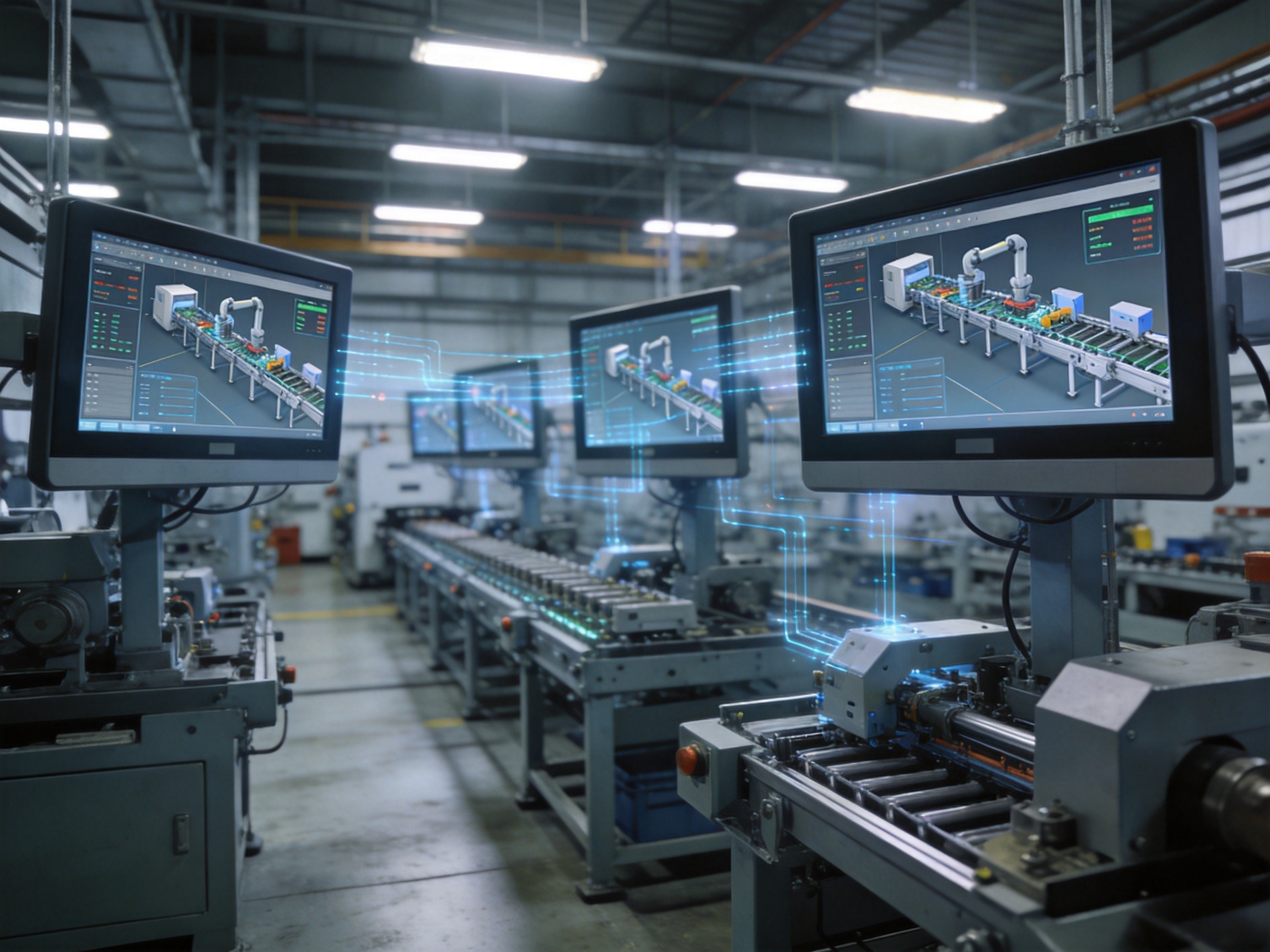
The Economics of Virtual Validation
The financial case for virtual commissioning is straightforward. A new semiconductor packaging line can cost $50 million or more in equipment. Every day of delayed qualification burns both capital depreciation and lost revenue. Virtual commissioning compresses the physical debugging phase by identifying sensor placement errors, network topology mismatches, and control logic conflicts before hardware installation. The approach also reduces the risk of equipment damage during startup—a real concern when high-speed robots and precision stages are involved. The panel PC that serves as the twin interface during commissioning typically remains in place as the production operator station after launch, meaning the investment in edge compute serves double duty. For manufacturers evaluating where to apply digital twin technology, the highest-ROI starting point is almost always the line qualification process, where the cost of failure is highest and the value of virtual validation is easiest to quantify.
Virtual commissioning is not a distant vision. The tools are in production, the semiconductor industry is validating the approach at scale, and the industrial panel PC at the edge is already capable of running the bidirectional data flows that make digital twins useful. The question for manufacturing leaders is not whether to adopt virtual commissioning, but which production lines to target first.