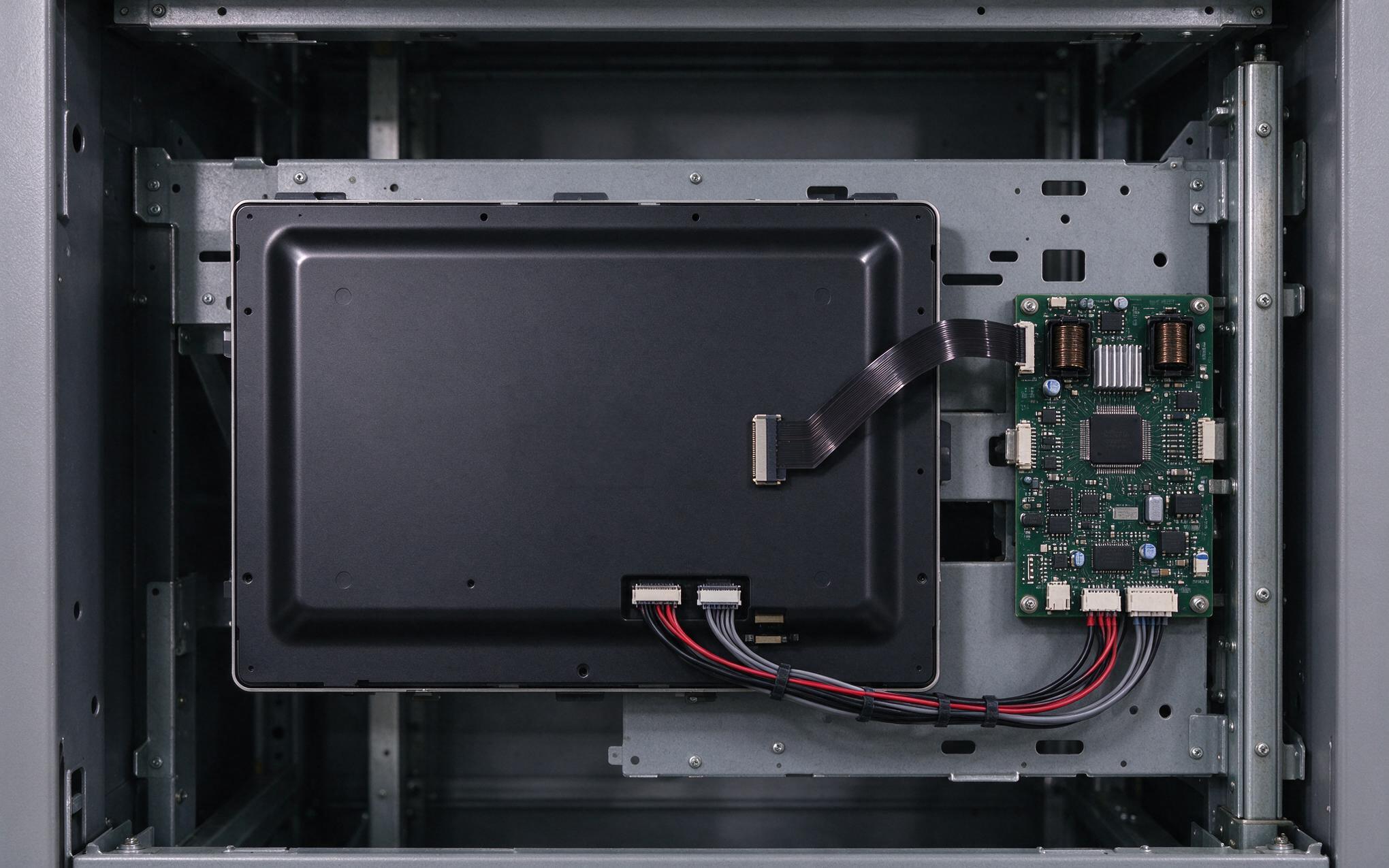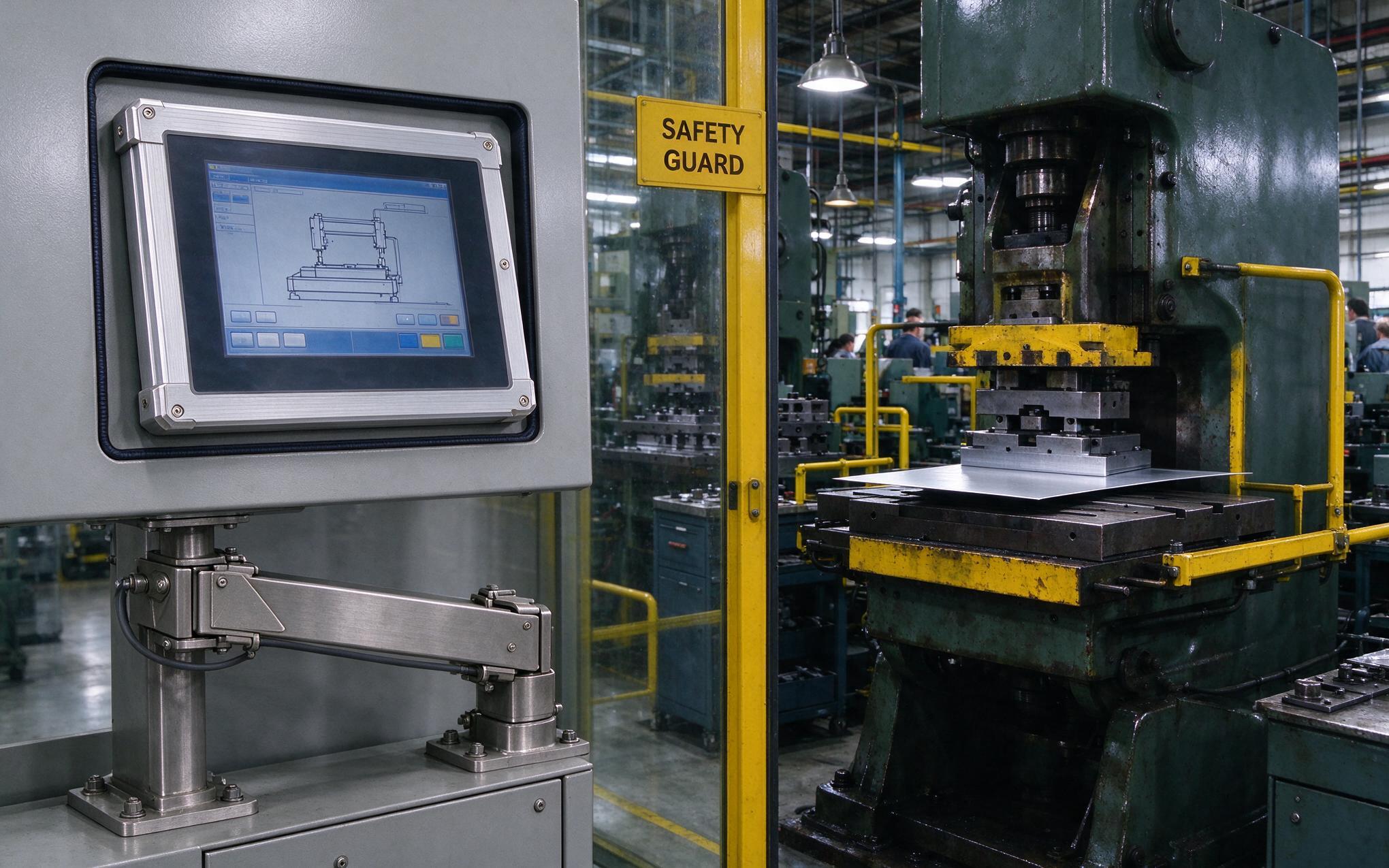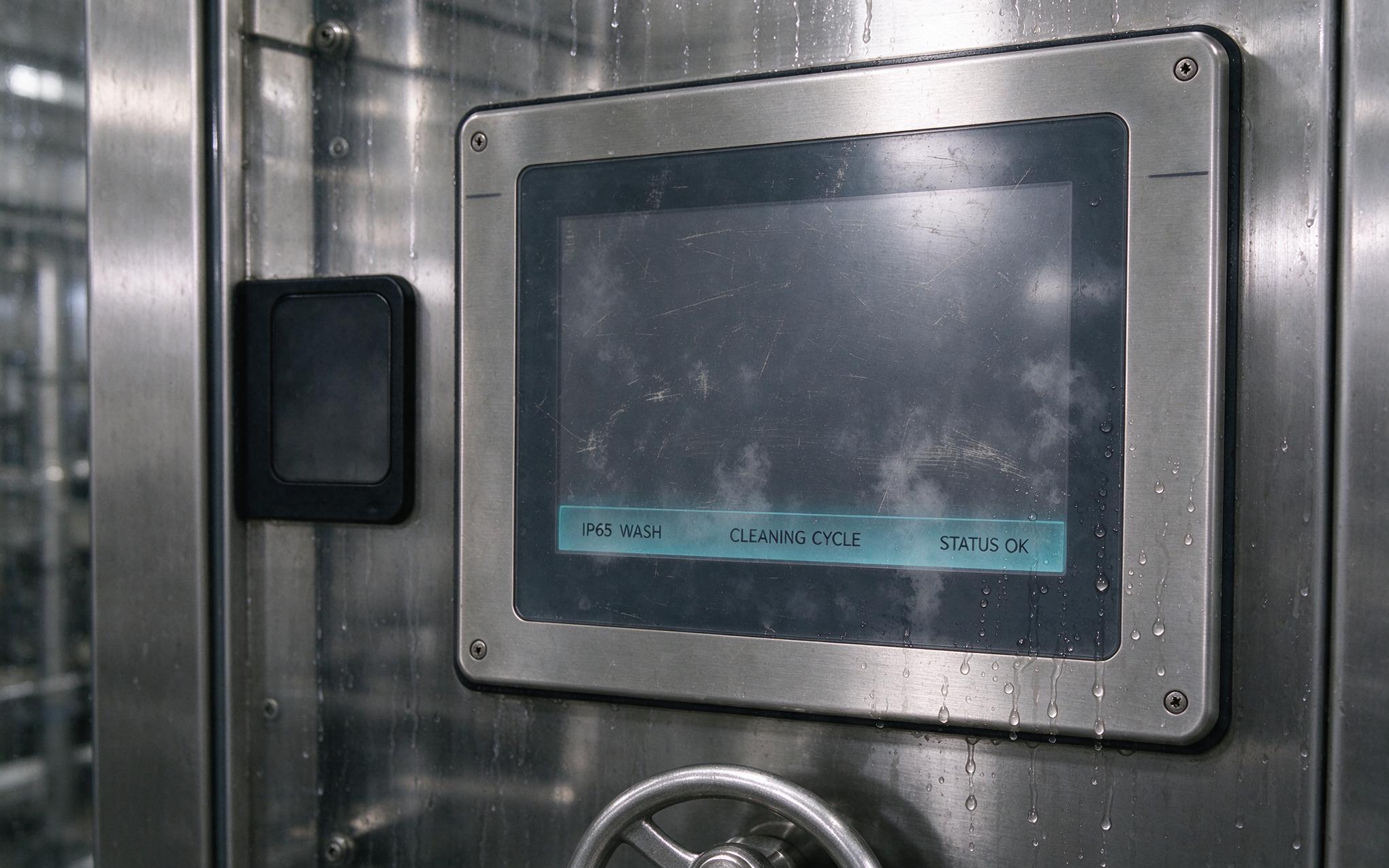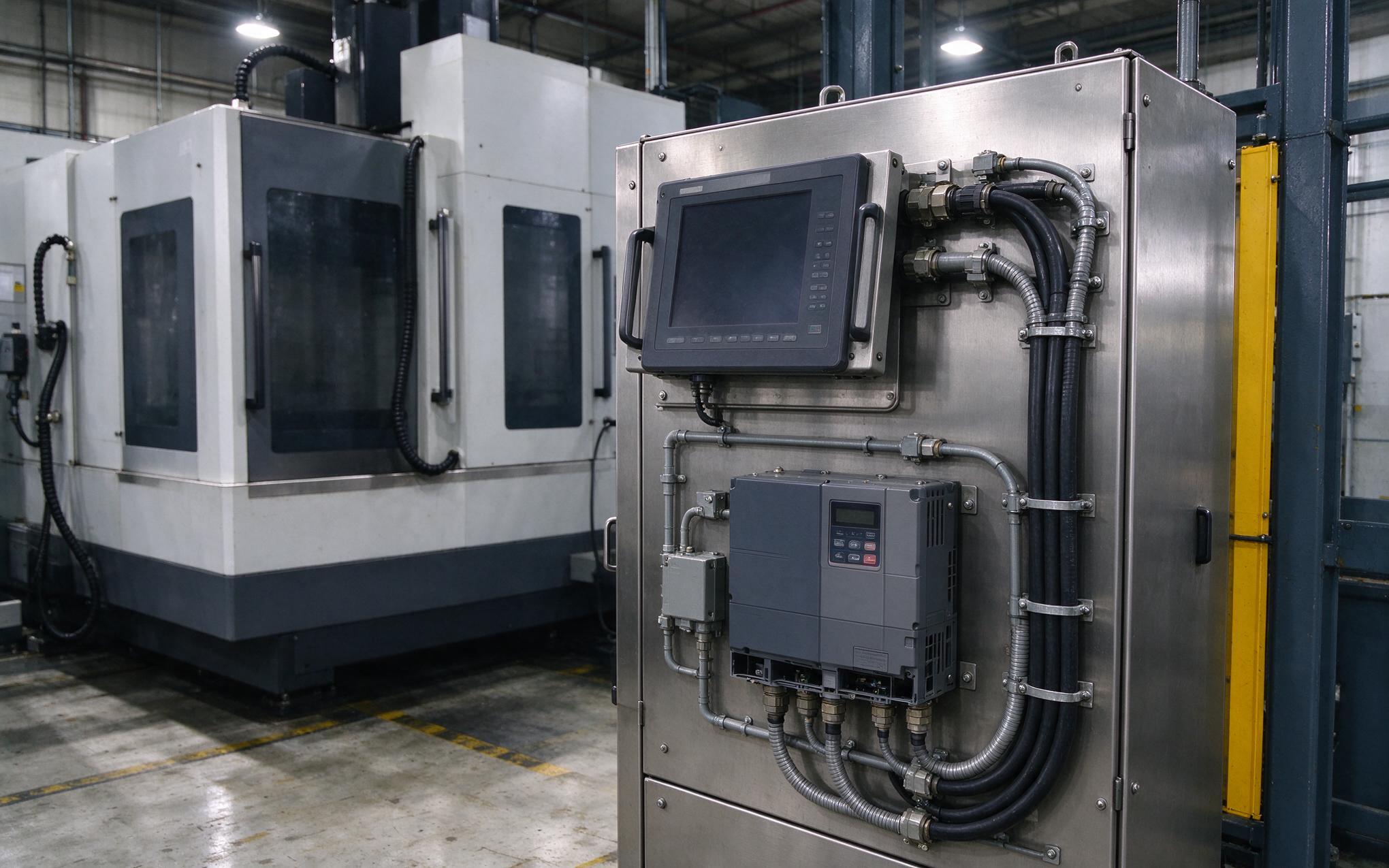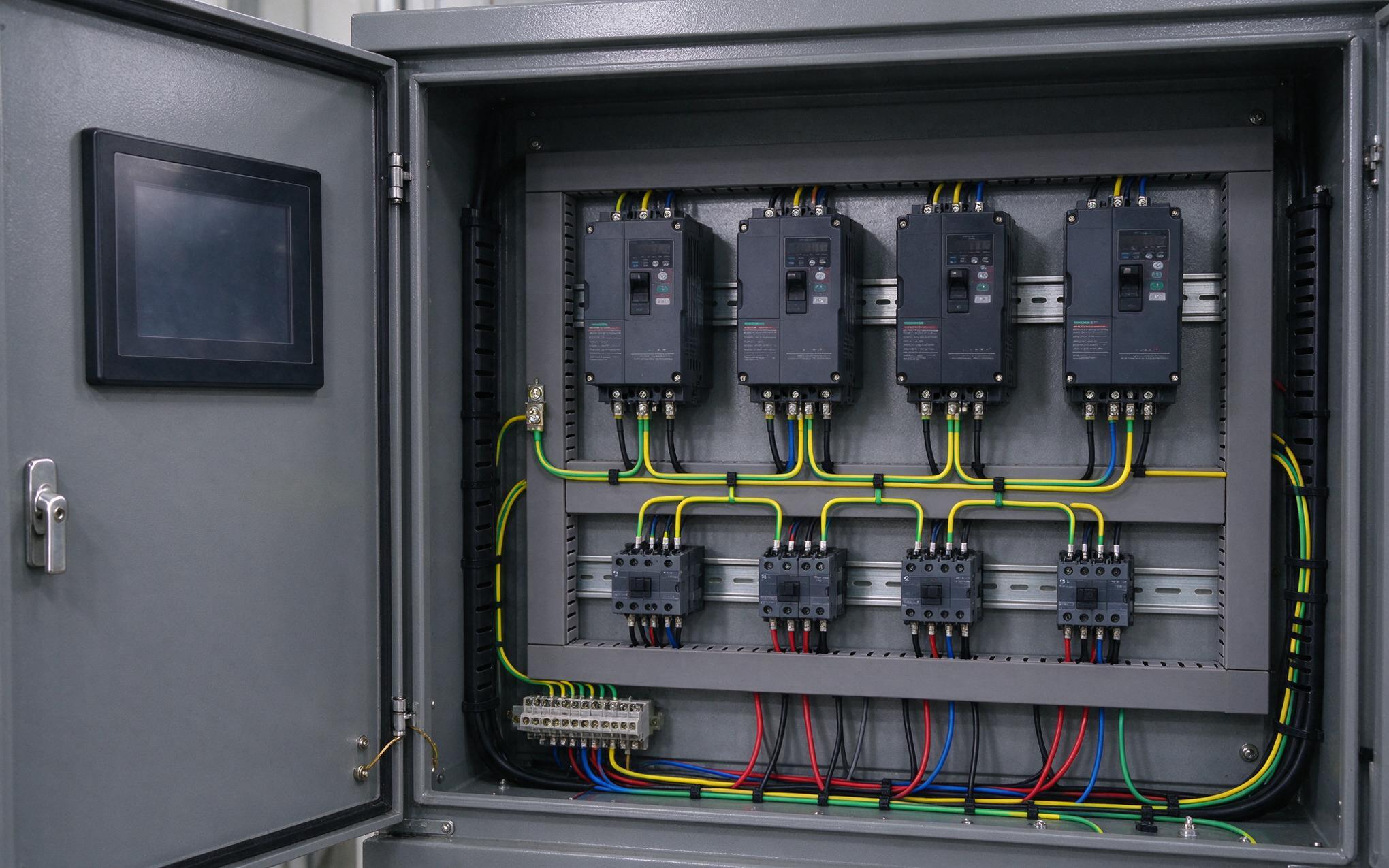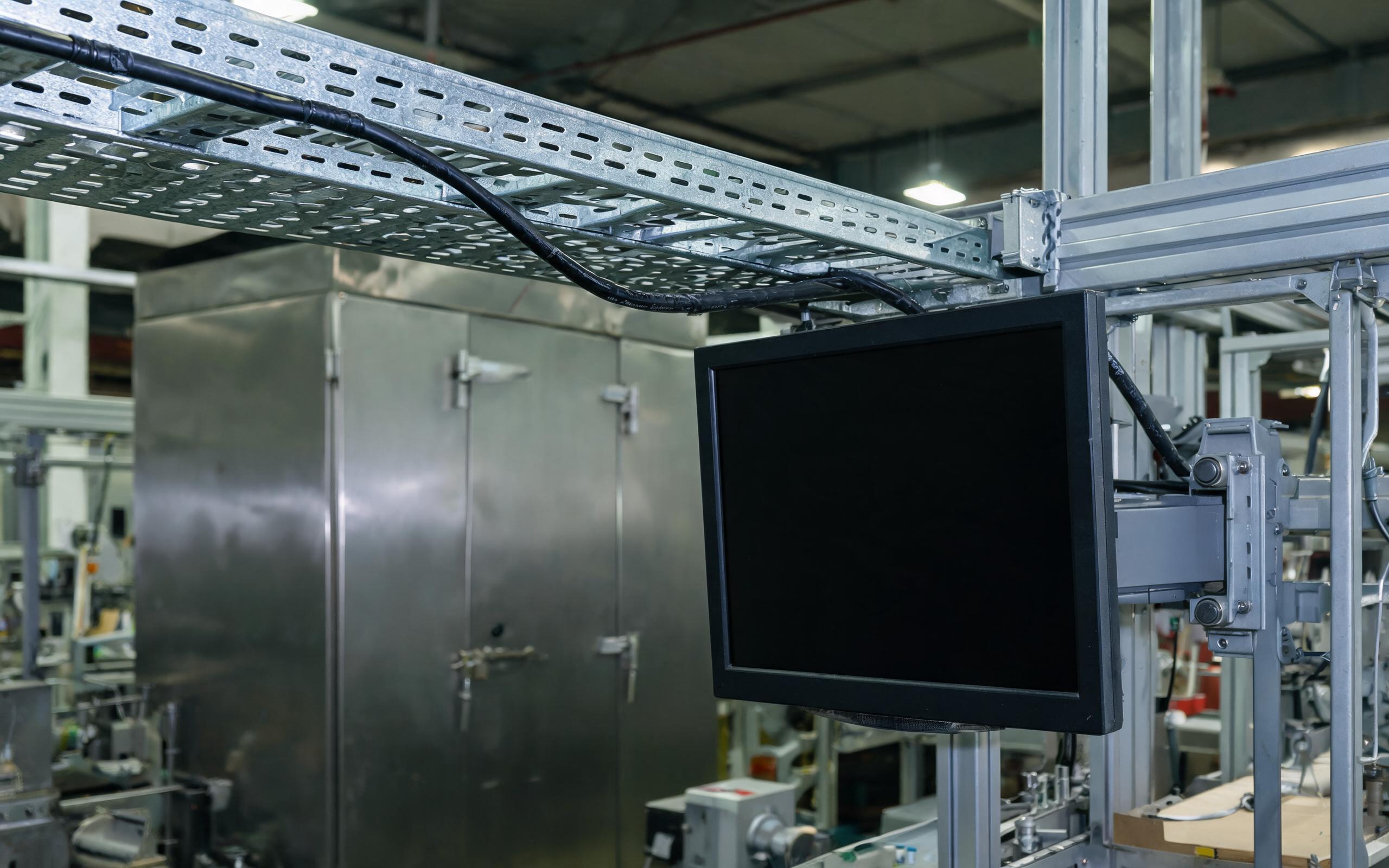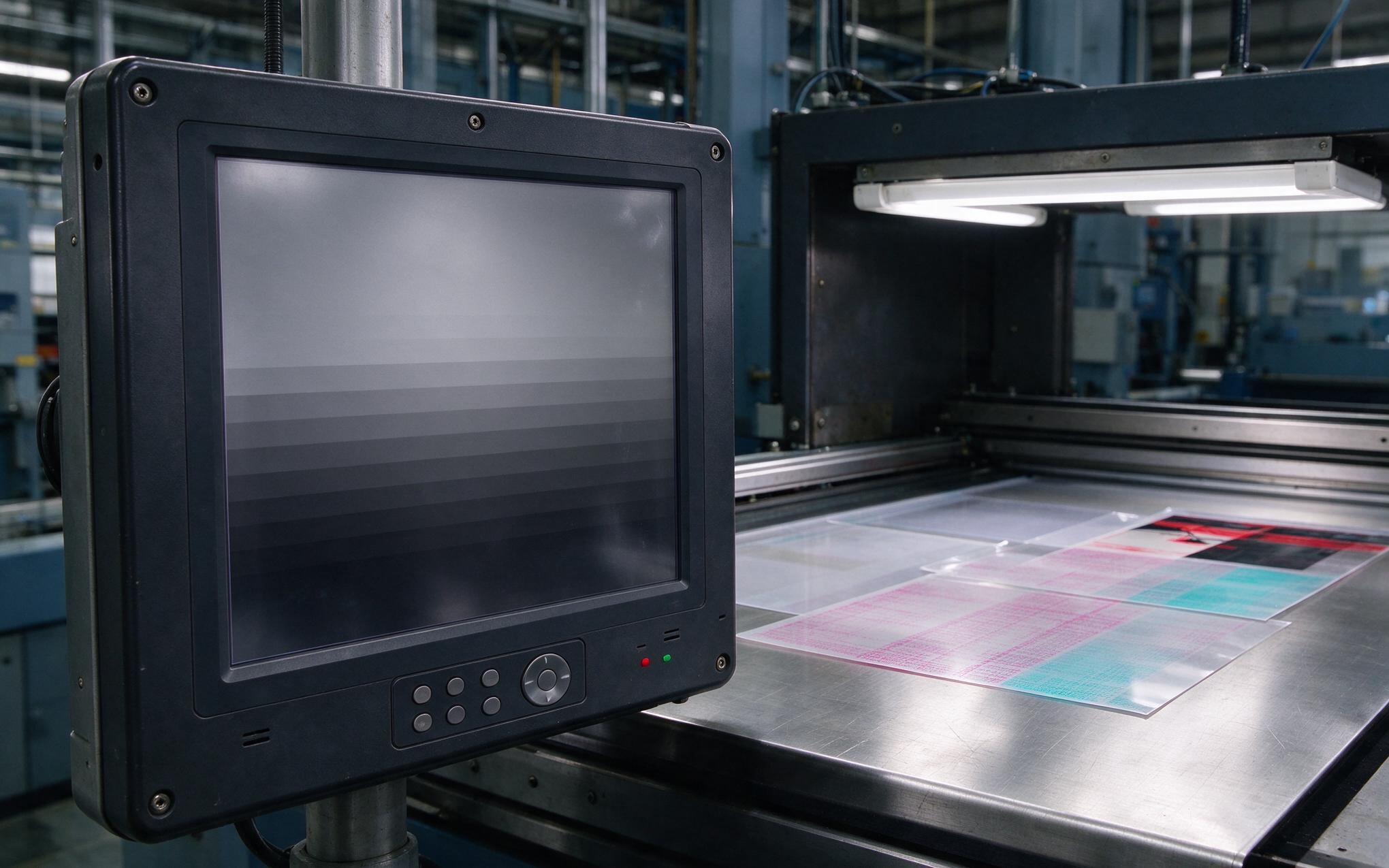
A warranty callback at a packaging line started with a service ticket that blamed the operator interface itself. Two weeks after commissioning, an embedded touchscreen monitor on a washdown cabinet showed phantom taps at the lower-left corner, and the same gasket corner showed a faint water trail after nightly foam cleaning. The replacement unit developed the identical symptoms. Cabinet inspection told a different story: the cutout sat beside a welded reinforcement, the panel bowed roughly a millimeter under a straightedge, and every mounting clip had been driven with an impact driver. The hardware was sound; the installation had loaded the frame beyond its design assumptions.
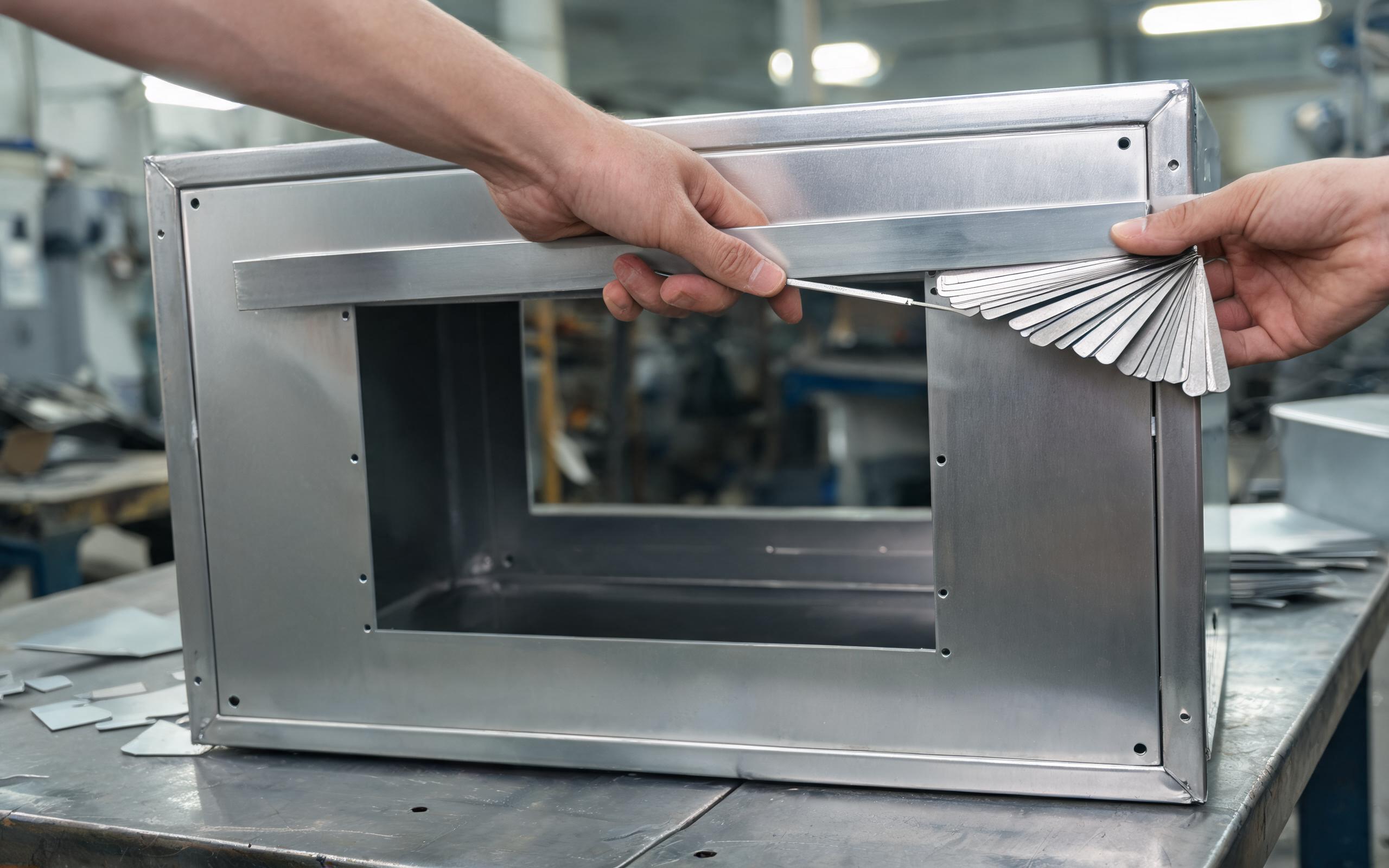
Cutout Flatness in Welded Sheet Metal Enclosures
Every panel mount touch monitor is engineered around one assumption: the mounting surface is a flat, continuous piece of sheet metal. Cutout drawings hold dimensional tolerance near a millimeter, but the key requirement concerns the gasket land, the panel ring the seal compresses against. Builders of sealed panel hardware, KOXIAN among them, call out a flat land in a single piece because a seam or removable strip under the gasket creates a path no clip can close. Welded reinforcements and folded ribs bow that land after fabrication, and rework heat near the opening can load one bezel corner. A straightedge and feeler gauges across both diagonals expose the condition before an embedded touchscreen monitor ever reaches the cabinet. Checking the enclosure, not the hardware, stops this failure at lowest cost.
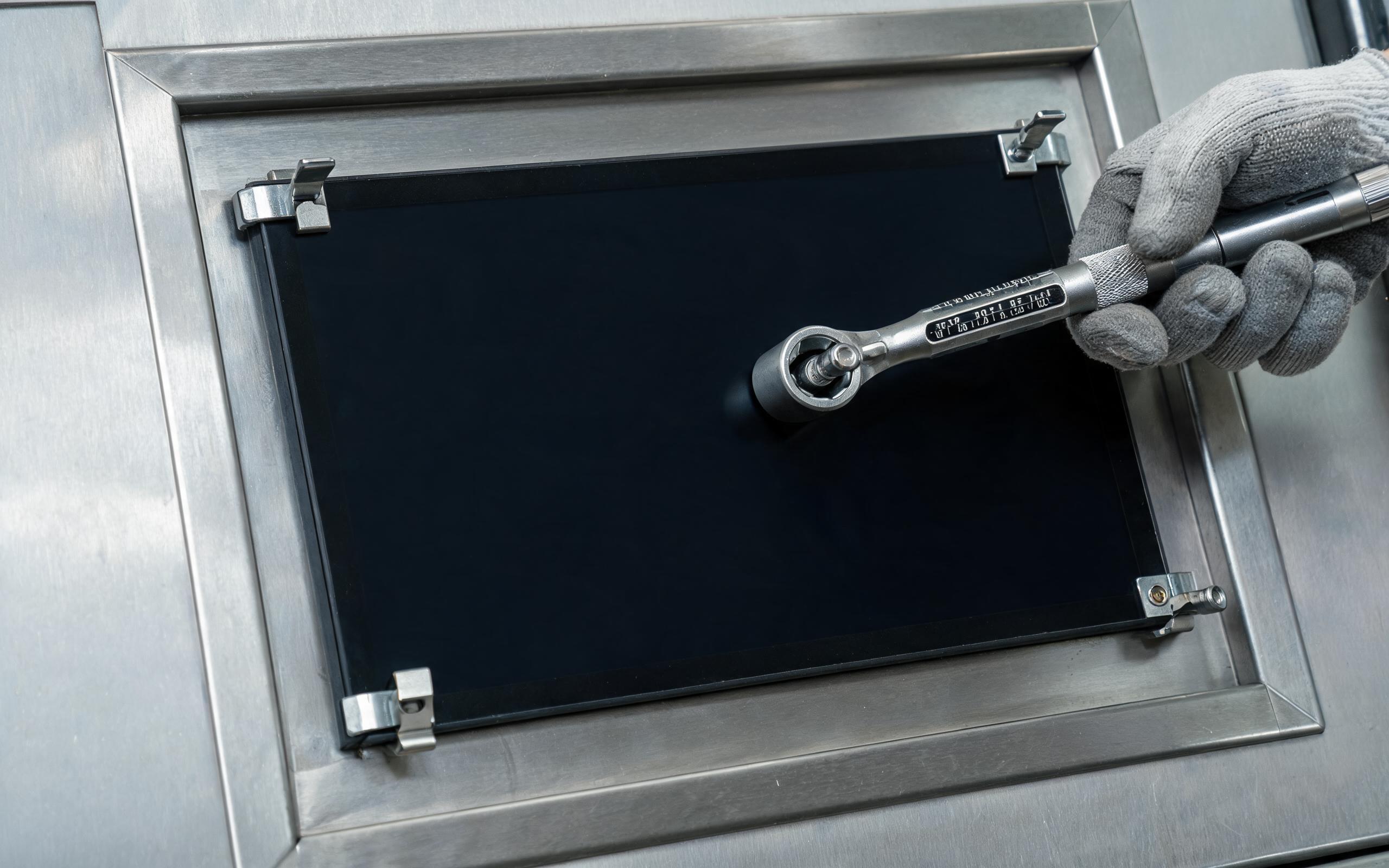
Torque Sequence and Bezel Load Distribution
Mounting clips are not ordinary fasteners: their job is compressing a foam or elastomer gasket to a defined thickness rather than clamping metal to metal. Sealed-install instructions commonly specify 0.5 to 0.9 newton-meters on clip screws, with larger 12-inch class units around 10 to 15 inch-pounds, and describe diagonal passes repeated twice so compression builds evenly. Seating one corner to full torque pivots the bezel and leaves the opposite edge loose; an impact driver jumps past the target and can crack clip bodies or strip the sheet. When an embedded touchscreen monitor goes into the same opening, torque-sequenced clips hold bezel pressure uniform and keep the visible gap inside the band the gasket designer intended. Skipping an alternating clip concentrates the load on its neighbors.
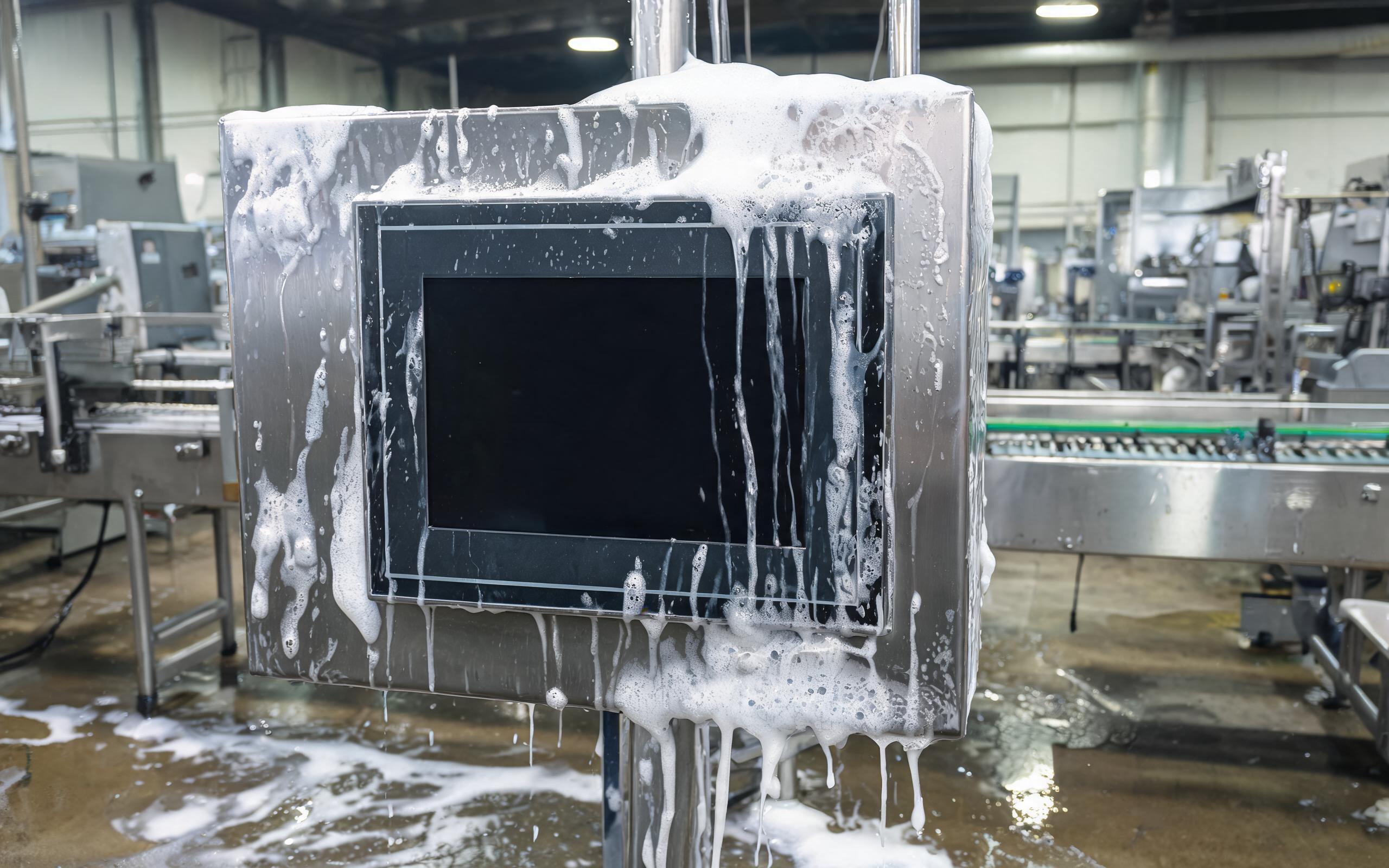
Gasket Compression Set and Ingress Paths
Foam and elastomer gaskets absorb tolerance only inside a defined compression window. Under-compression leaves open cells along a bowed land; over-compression crushes the material into permanent compression set, so it cannot recover after a service removal. Both extremes appear as the same symptom in washdown areas, water tracking the corner with the least clamp force. Ratings such as IP65 describe a tested assembly of bezel, gasket, and panel, and ignoring torque or flatness on an embedded touchscreen monitor voids that rating without touching the electronics. A gasket flattened by one installation compresses differently on its next use, so teams should treat the seal as a service part and the torque wrench as a required rating tool, not optional equipment.

Frame Stress and False Touch in an Embedded Touchscreen Monitor
Capacitive touch cells read capacitance across the cover glass, and a bezel held under bending stress shifts the baseline those cells compare against. The result resembles a firmware fault, phantom taps in one corner, a dead edge strip, or drag gestures that jump when the cabinet door closes. Field observations from packaging and dairy lines show that sealed front assemblies using KOXIAN hardware settle once load is redistributed with shim stock and a diagonal torque pass, with no replacement of the touch controller. Verification follows the install sequence: loosen every clip, shim any land gap, torque in two passes, then run the touch diagnostic along every edge. A powered splash test confirms both the seal and the input baseline under washdown conditions.
Most embedded-display service calls trace to decisions made at the enclosure rather than the motherboard. Flatness decides whether the gasket land can seal, the torque sequence decides how clamp force spreads across that land, and gasket condition decides whether an IP rating survives repeated washdown cycles. Those same mechanical loads set the touch baseline, so a warped install produces both leaks and phantom input. Specifiers should request cutout drawings with flat-land callouts, include torque values in the bill of materials, and commission with straightedge and torque wrench. Specified and installed as a mechanical assembly, an embedded touchscreen monitor delivers the sealed, stable interface its ratings promise on a cabinet built to receive it.