Unplanned shutdowns from conformal coating delamination account for a significant share of intermittent controller faults in packaging plants, yet the problem rarely surfaces during incoming inspection. At a Midwest facility, a board that had been in service for barely eighteen months failed when its coating allowed moisture to creep along solder joints and initiate electrochemical migration. Conformal coating industrial PCB failures develop gradually and surface only when unexpected shutdowns disrupt throughput, making them among the most difficult faults to diagnose and repair in continuous-process factories.

Root Causes of Conformal Coating Failure in Industrial PCB Protection
The most common failure mode begins with poor adhesion. Flux residues, silicone contamination from nearby gaskets, or handling oils left on the board surface prevent the coating from forming a continuous bond. Once adhesion is compromised, moisture finds pathways beneath the film. In environments with repeated thermal cycling, the mismatch in coefficients of thermal expansion between the coating and the FR-4 substrate generates micro-cracks that widen with each temperature swing. These cracks create capillary channels where condensation accumulates, accelerating copper trace corrosion. PCB conformal coating that passes initial quality checks may still fail months later if surface preparation was inadequate.
Manufacturers like KOXIAN specify coating grades tailored to each installation zone for conformal coating industrial PCB assemblies, rather than relying on a single universal formulation across all product lines. UV exposure presents a different challenge. Acrylic-based coatings degrade under prolonged ultraviolet radiation, becoming brittle and prone to flaking. Silicone-based formulations offer superior UV resistance but demand more careful application to achieve uniform thickness. The choice must match the deployment environment, with acrylic selected for rework-intensive builds, silicone for extreme temperatures, and polyurethane for chemical resistance.

Material Selection for Industrial PCB Conformal Coating Applications
Acrylic conformal coatings provide the simplest rework path. A technician can remove localized sections with common solvents, rework a faulty component, and recoat without disturbing adjacent areas. This makes acrylic practical for prototype runs and low-volume industrial builds where field serviceability matters. Silicone coatings withstand temperature extremes from minus sixty to over two hundred degrees Celsius, making them the default for engine-bay electronics and foundry controllers. Polyurethane coatings deliver the strongest chemical resistance, standing up to oil mist and coolant splash that would dissolve acrylic films within weeks.
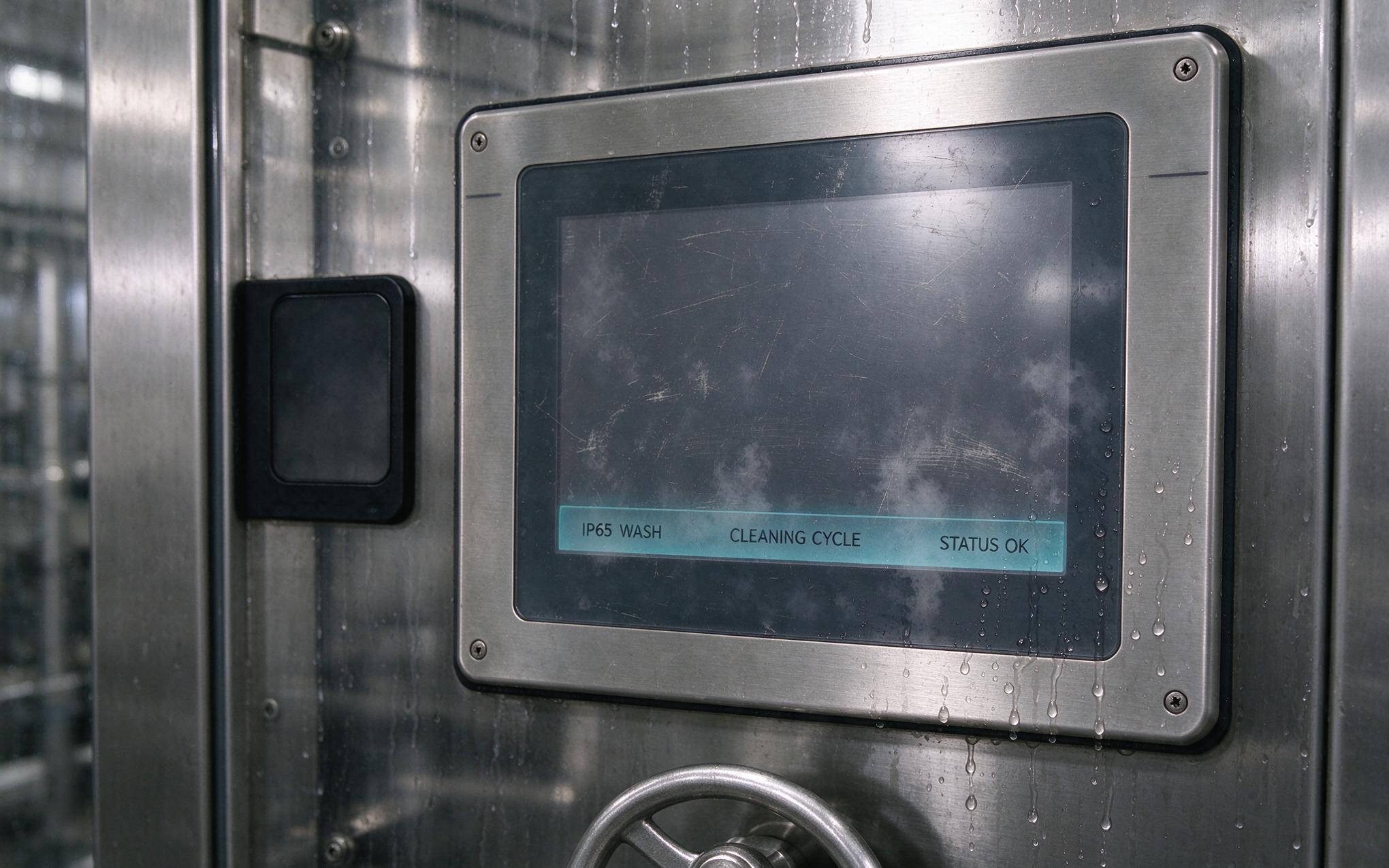
A board in a food processing washdown zone faces different stressors than one in a climate-controlled cabinet. Conformal coating industrial PCB assemblies deployed in multiple zones require strategies tailored to each environment, and the selection decision must account for actual operating conditions rather than just datasheet specifications. Manufacturers like KOXIAN apply environment-specific coating protocols during manufacturing to address this variability across facility types.

Application and Cure Control for Consistent Industrial PCB Coating
Application method directly determines coating uniformity for conformal coating industrial PCB assemblies. Selective dispensing systems route material around connectors, test points, and heat sinks that must remain uncoated. Batch dipping provides faster throughput for high-volume runs but requires careful masking. UV-curable coatings cure in seconds under calibrated lamp arrays, while thermally cured formulations demand oven dwell times measured in minutes. Each approach introduces variables that must be controlled to maintain the film thickness range specified by IPC-CC-830, typically between twenty-five and seventy-five micrometers.
Post-application verification closes the quality loop. Fluorescent tracer additives allow inspectors to detect thin spots under ultraviolet light, and electrical insulation testing confirms dielectric withstand requirements. Without these verification steps, defective coating may pass through production undetected, only to fail months later in the field.

Closing the Gap Between IPC-CC-830 Compliance and Field Reliability
Compliance with IPC-CC-830 establishes a minimum performance threshold for conformal coating industrial PCB assemblies, but real-world reliability depends on how faithfully the specification is implemented. Boards that pass laboratory testing can still fail if coating thickness is inconsistent, keep-out areas were incompletely masked, or the cure cycle was shortened to meet production deadlines. The gap between specification compliance and field reliability is where most conformal coating failures originate, and closing it requires process discipline at every stage from incoming material inspection through final electrical test.
For procurement teams evaluating industrial PCB assemblies, the question is not whether conformal coating is applied but how it is controlled. Specifying the coating material grade, film thickness range, and verification method in purchase requirements ensures that supplier quality systems address the full scope of industrial PCB protection rather than treating coating as a checkbox step in the assembly process. Documented coating specifications for each product configuration help ensure consistent protection across production runs.