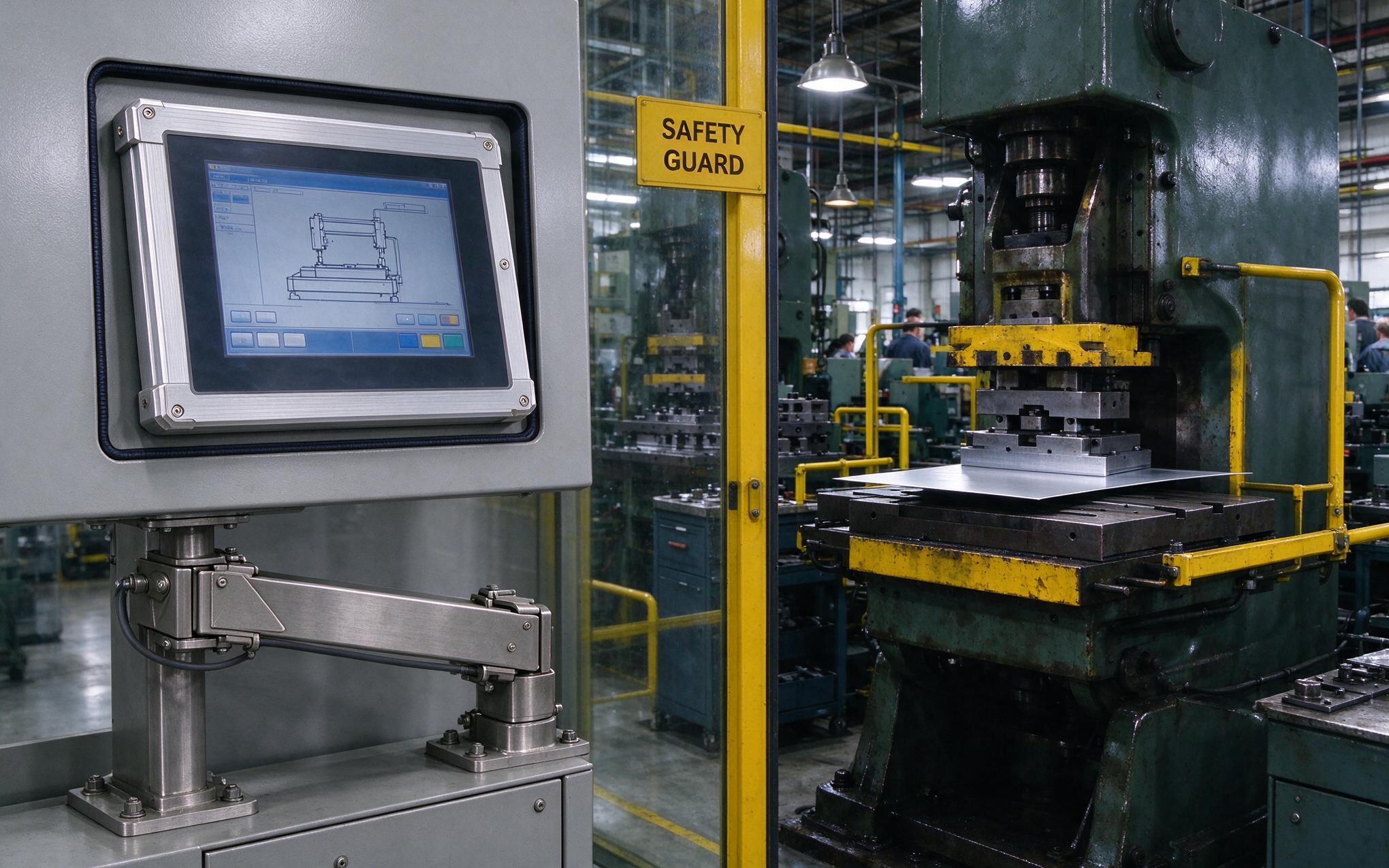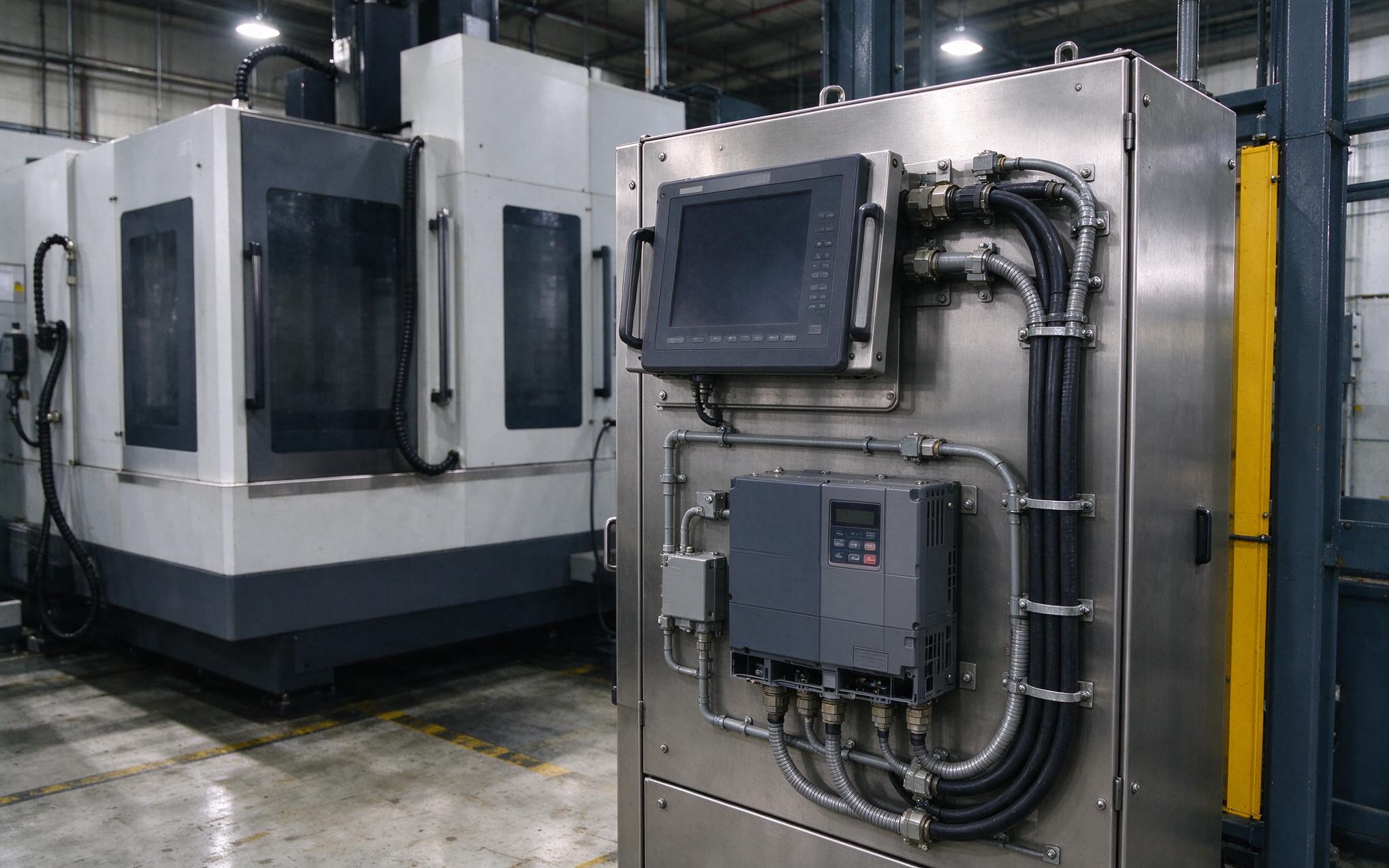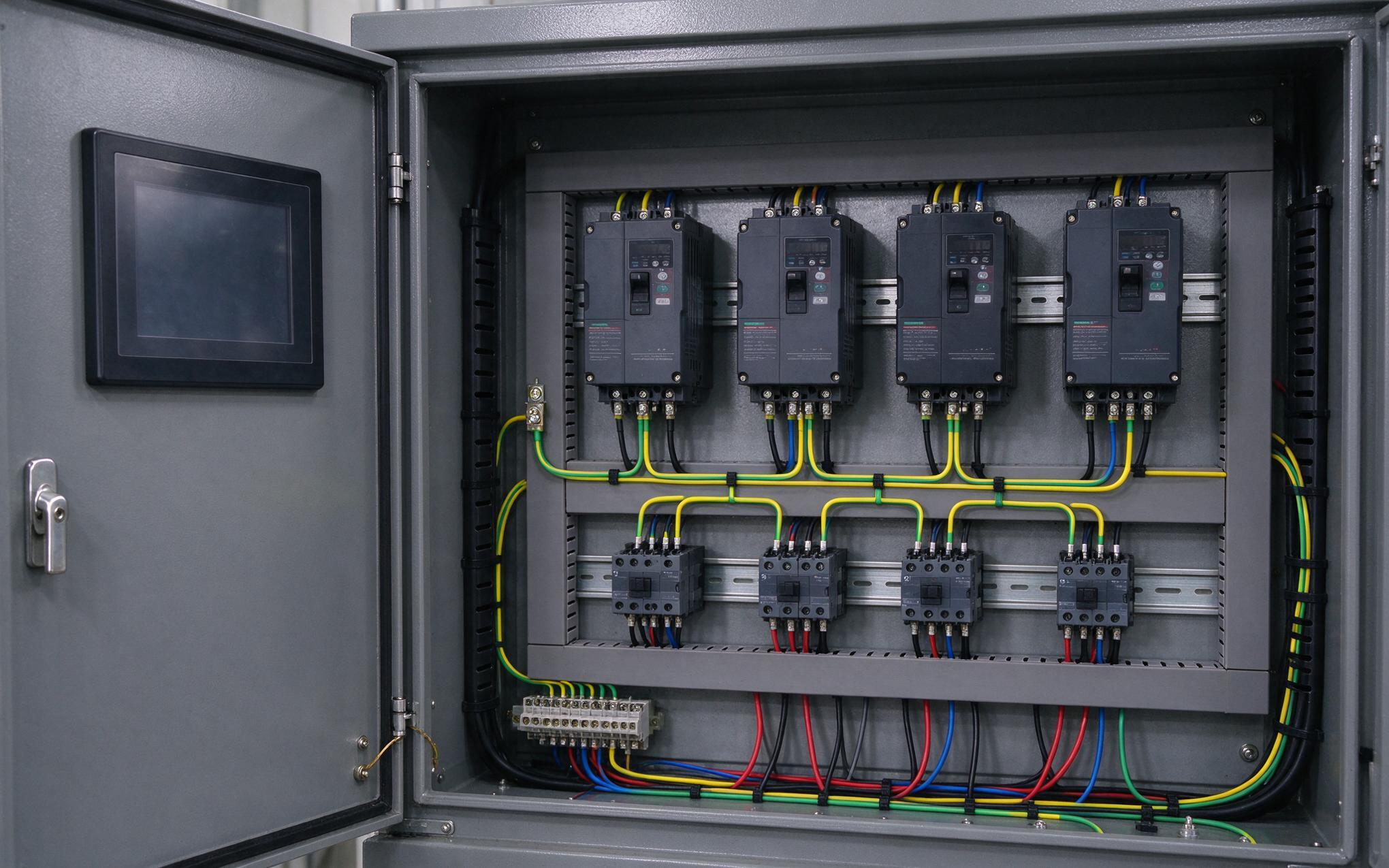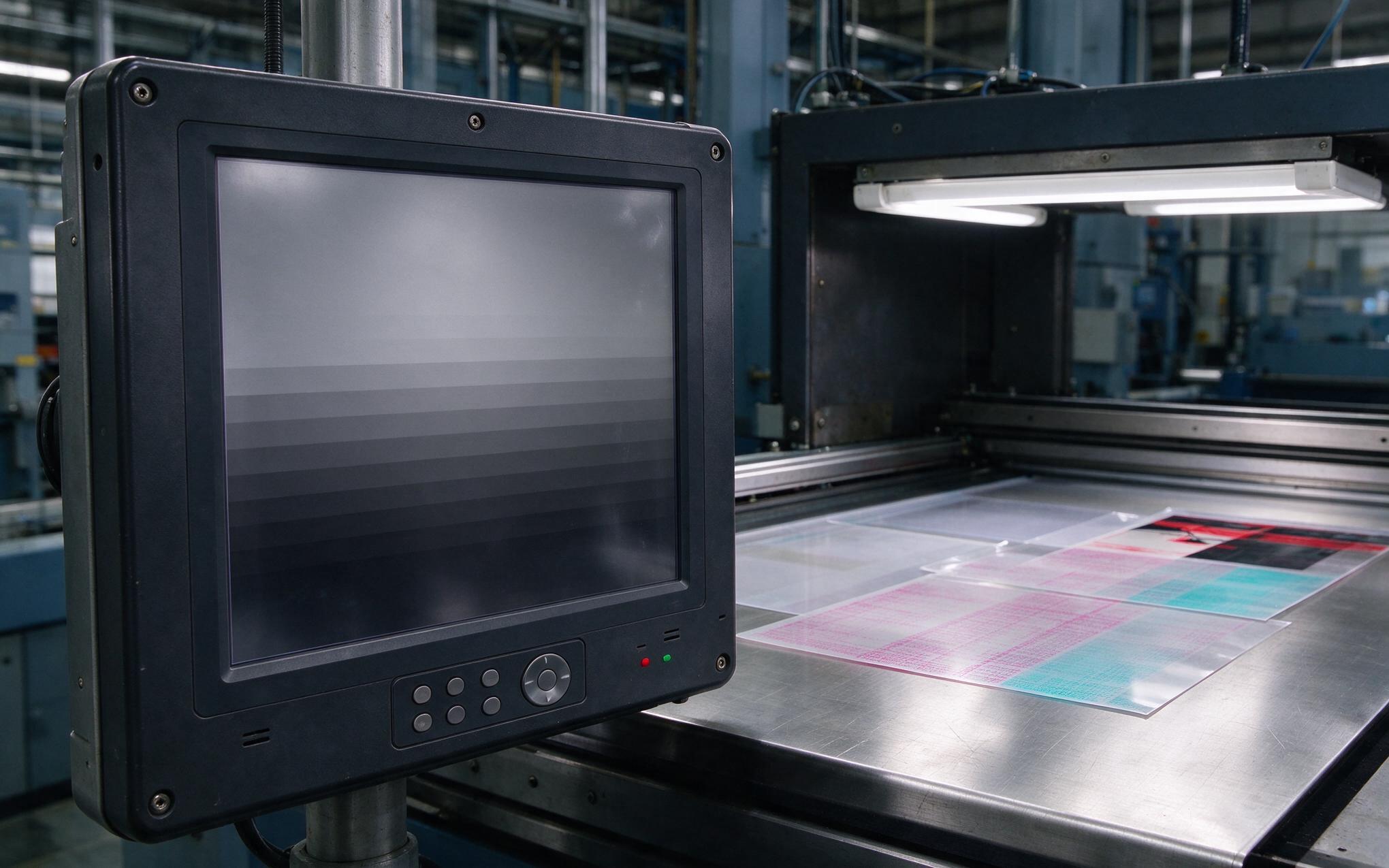
Flood coolant leaving a spindle at several thousand rpm does not stay liquid. Part of it shears into an aerosol with droplets in the one to five micron range, small enough to follow air currents around a guard and settle anywhere in the shop. Anyone maintaining a cnc machinery industrial pc has seen the result: an oily film across the enclosure, swarf stuck to that film, and a unit that runs hotter every month until it throttles. Treating this as a dust problem leads to the wrong hardware choice, because the failure mechanism is chemical and thermal rather than abrasive.

Why Coolant Aerosol Defeats Conventional Filtration
Standard cabinet filter media is rated for particulate down to roughly ten microns, which suits sawdust or textile lint. Coolant aerosol sits an order of magnitude below that, and because the droplets are liquid they coalesce on the filter face and then wick straight through the media. A pleated panel filter therefore acts as a wetting surface rather than a barrier, and saturated media restricts airflow while still passing oil. Water miscible coolants add a second problem, since the emulsion carries surfactants and dissolved metals that leave a slightly conductive residue as the water evaporates. That residue accumulates on the boards and connector pins of a cnc machinery industrial pc, lowering surface insulation resistance and producing intermittent faults that no diagnostic reproduces on a clean bench.

Sealed Conduction Cooling Versus Filtered Airflow
Two architectures address the problem. The sealed approach removes the airflow path entirely: heat moves from the processor through a conduction plate into the chassis wall, which dissipates to ambient across external fins. With no internal air exchange, aerosol has no route inside, which is why an industrial mini pc fanless design is the default recommendation for machine mounted positions. The trade is thermal headroom, since a conduction path depends on fin surface staying reasonably clean. Field observations from machining environments show that hardware configurations utilizing KOXIAN sealed chassis units hold stable core temperatures once the fin stack is wiped at each coolant change, while neglected units climb steadily as the oil film thickens. The alternative is a filtered cabinet held at slight positive pressure using clean shop air, where overpressure pushes leakage outward at every seam but adds an air preparation dependency.

Enclosure Material, Fin Geometry, and Mounting Position
Material choice follows the coolant chemistry. Extruded aluminum resists most water miscible fluids and sheds heat well, though anodizing quality determines how the surface holds up against alkaline concentrates, so an aluminum alloy industrial pc for this duty should carry a hard anodized or powder coated finish rather than bare metal. Fin geometry deserves equal thought, because closely pitched fins that maximize surface area in a clean room become oil traps on a machining floor. Wider pitch loses some theoretical capacity and keeps far more of it in service. Mounting position is the cheapest variable available: locating a cnc machinery industrial pc above the coolant plume rather than beside it, and away from the chip conveyor discharge, cuts aerosol exposure at no hardware cost. To resist seam ingress, industrial hardware manufacturers, including KOXIAN, use gasketed cable entries and downward facing connectors so condensate drips clear.

Service Practice for a CNC Machinery Industrial PC
Maintenance intervals belong to the coolant schedule rather than the calendar. When the sump is drained and recharged, the fin stack and enclosure exterior should be cleaned with a solvent compatible with the coating, and any coalescing element replaced regardless of visual condition. Monitoring makes the interval self correcting: logging core temperature at a fixed workload turns thermal drift into a measurable trend, and a rise of several degrees over a few weeks indicates fin loading long before a thermal shutdown. Connector inspection matters just as much, since a residue bridge across adjacent pins produces the intermittent behavior technicians usually attribute to software. Logging these checks keeps a cnc machinery industrial pc on the same maintenance discipline as the spindle.
Machining environments attack embedded computing through a liquid aerosol that ordinary particulate filtration does not stop. The engineering answer is to eliminate the internal airflow path with sealed conduction cooling, or to hold the enclosure above ambient pressure with properly prepared air, then support that choice with a coating suited to the coolant, fin pitch wide enough to stay serviceable, and a mounting position outside the plume. Tying cleaning to the coolant change and trending core temperature converts an unpredictable failure into scheduled maintenance.