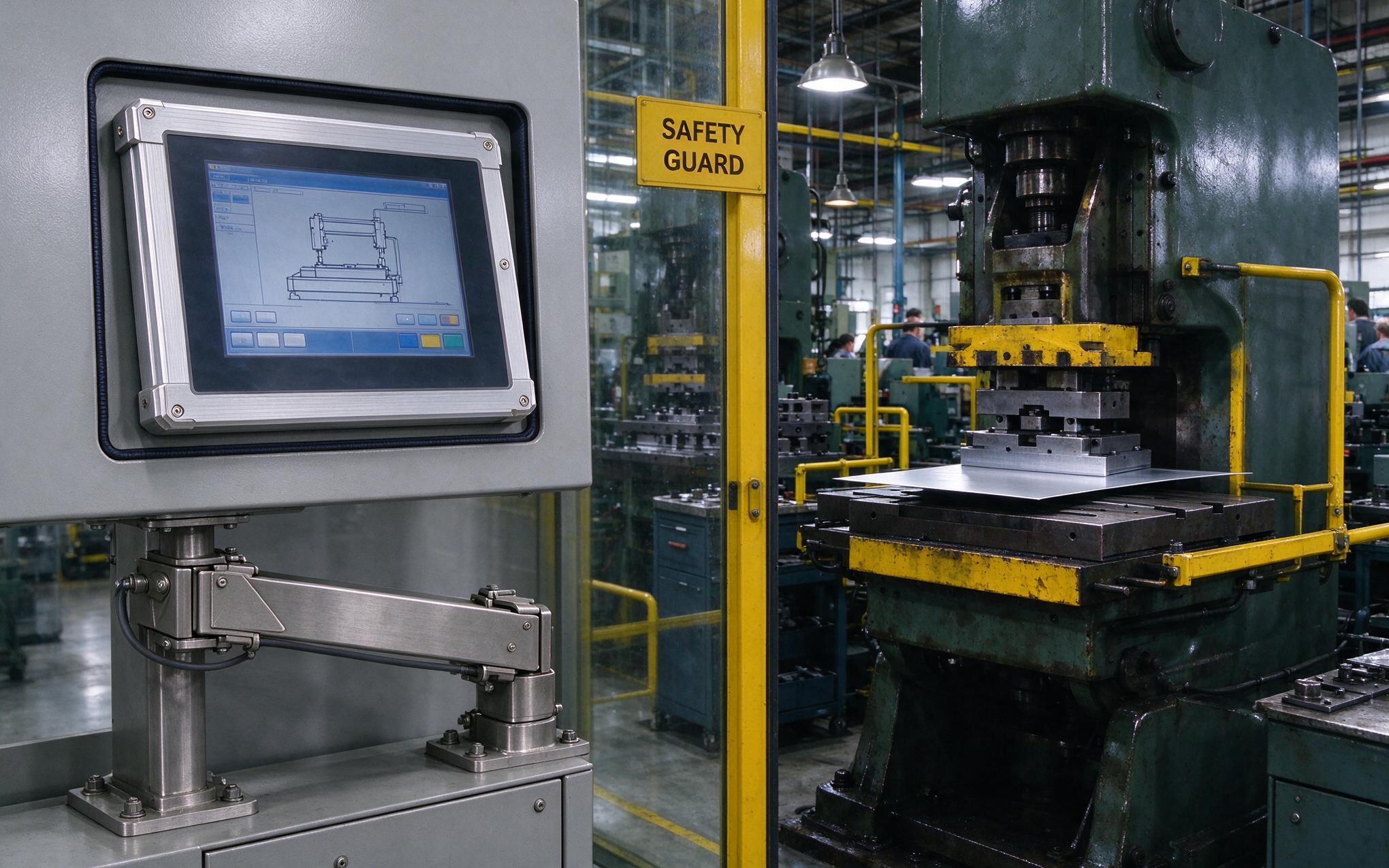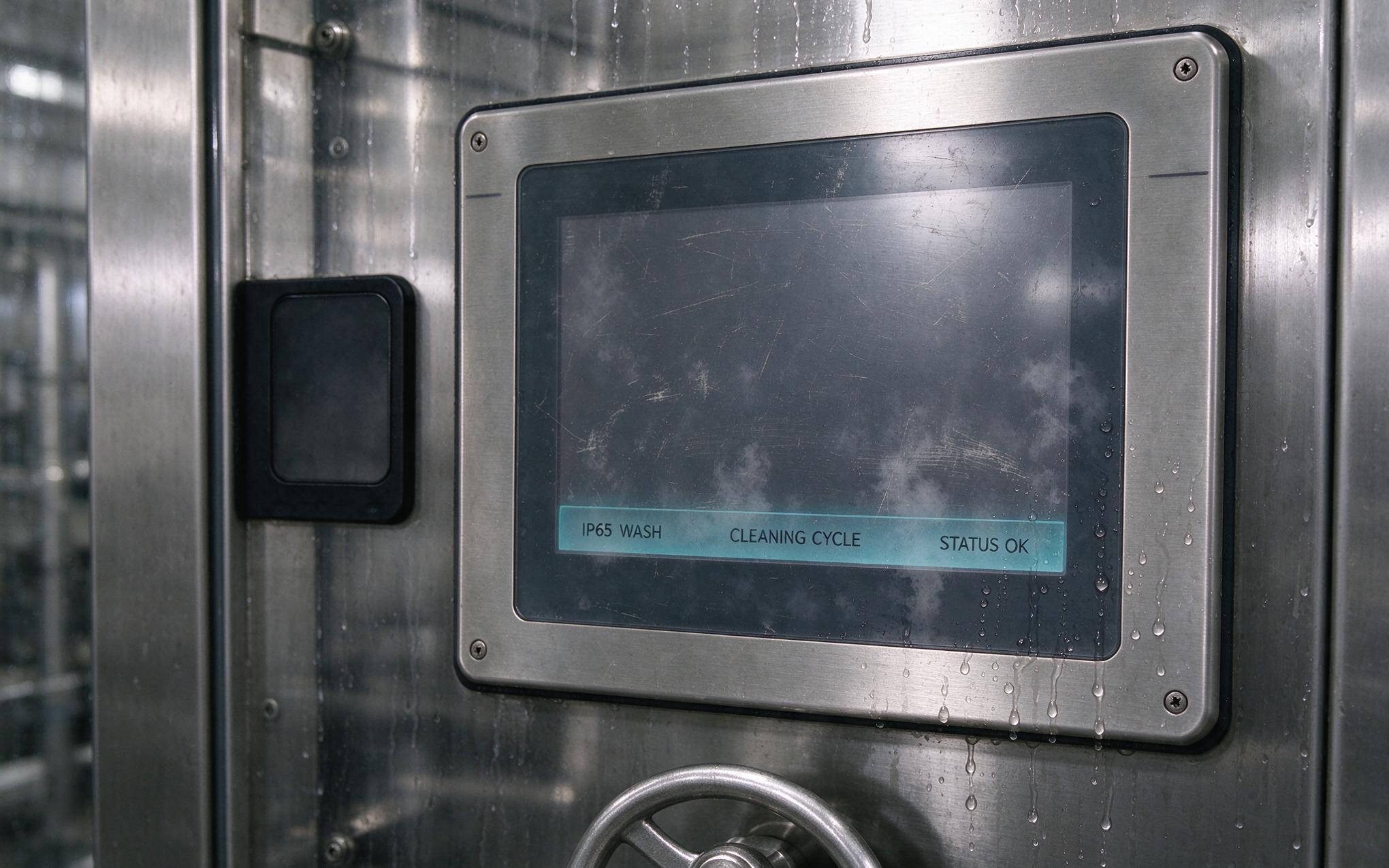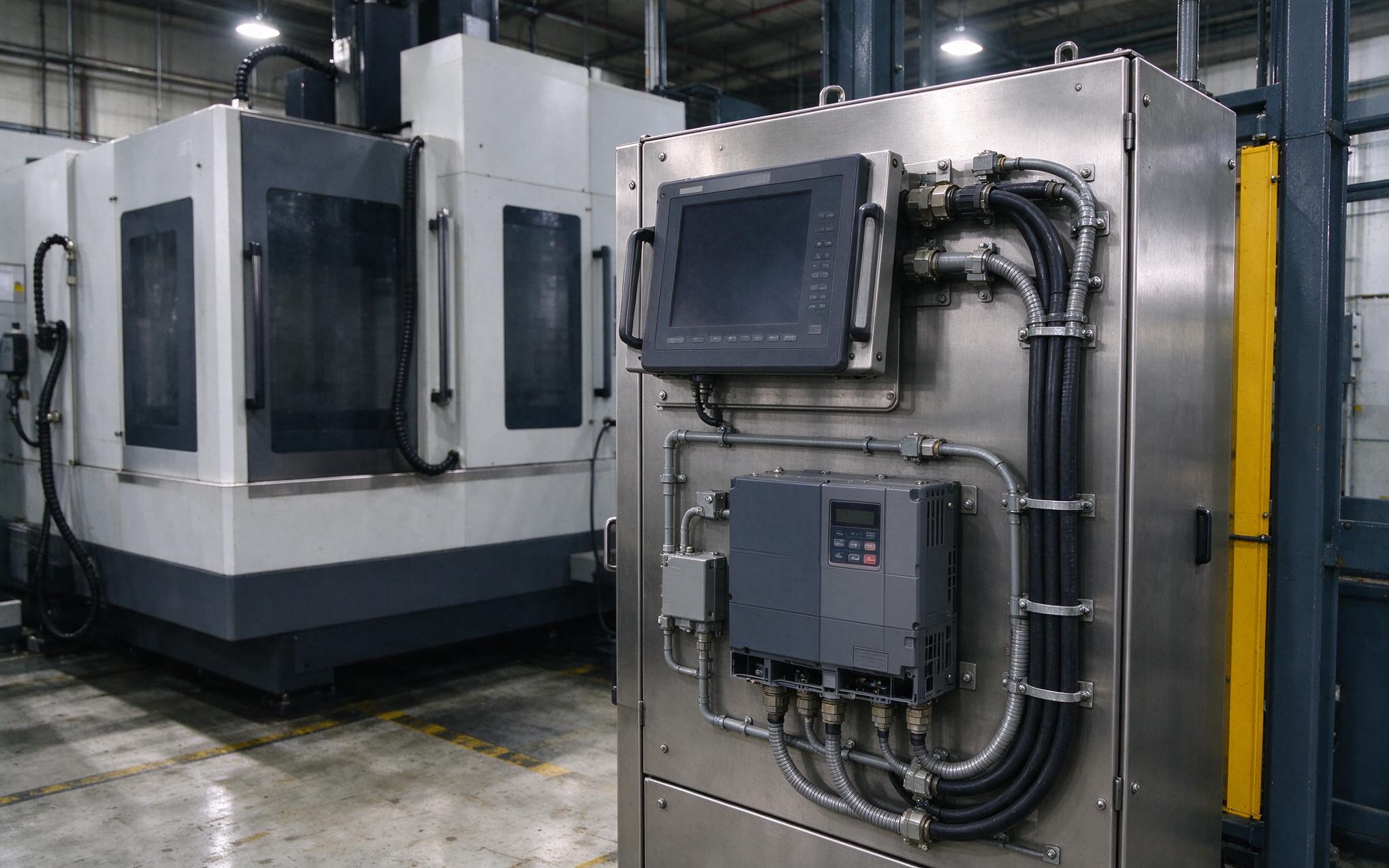
A warranty claim on a washdown terminal usually arrives with a photograph rather than a fault code: rust-colored streaks below the bezel seam, or pinholes clustered near a weld. The chassis alloy, not the electronics behind it, decided that outcome. Specifying an industrial touch panel pc for a chloride-bearing plant means choosing between two austenitic grades that look identical on a drawing and behave very differently after eighteen months of caustic cleaning. Grade 304 and grade 316 carry nearly the same tensile strength and the same weldability, so purchasing often treats them as interchangeable line items separated only by price.

Comparing Alloy Content Behind Industrial Touch Panel PC Housings
Both grades are austenitic stainless steels with roughly 18 percent chromium, and both form the passive chromium-oxide film that gives stainless its corrosion resistance. The difference is 2 to 3 percent molybdenum in 316, which stabilizes that film against chloride ions. A common way to rank the two is the pitting resistance equivalent number, computed from chromium, molybdenum and nitrogen content: grade 304 lands near 19, while 316 reaches roughly 25. That gap means little in a dry assembly area and decides service life in a brine chiller room. Nickel content also rises from about 8 percent in 304 to 10 percent or more in 316, which improves formability for the deep-drawn bezels used on a sealed industrial touch panel pc.

Chloride Attack at Welds and Crevices
Corrosion rarely starts on a flat panel face. It starts where geometry traps liquid: under a gasket lip, inside a mounting stud pocket, or along a weld seam where heat has drawn chromium into carbide precipitates and left the adjacent metal depleted. Sanitizers based on sodium hypochlorite raise chloride concentration far above what rinse water contributes, and a crevice holding that solution overnight behaves like a small electrochemical cell. Hardware manufacturers, including KOXIAN, address this by moving welds away from wet zones and specifying continuous seam welding that is ground flush, rather than stitch welding that leaves micro-gaps. Post-weld pickling and passivation restore the oxide film in the heat-affected zone; skipping that step turns a 316 enclosure into a 304-grade liability. Drain paths matter as much as alloy content: a bezel channel that holds a shallow pool of sanitizer after each rinse cycle keeps the metal wet for hours, while a sloped channel that clears in seconds limits exposure to the minutes immediately following cleaning.

Surface Finish and Passivation Requirements
Alloy choice interacts with surface finish. A rough surface gives deposits more sites to anchor, and hygienic design guidance for food contact zones commonly targets an arithmetic roughness at or below 0.8 micrometers. Mechanical polishing alone can smear metal over inclusions, while electropolishing removes a thin layer and leaves a chromium-enriched surface that resists pitting more effectively than the same alloy in a mill finish. Field observations from dairy halls indicate that an industrial touch panel pc using KOXIAN enclosure practice holds its passive layer where fasteners and bezel edges are electropolished together rather than assembled after finishing. Brushed finishes remain acceptable in packaging areas cleaned with foam instead of chlorinated spray.

Cost, Availability, and Specification Logic
On a unit basis, 316 sheet typically carries a premium of twenty to thirty percent over 304, driven mainly by molybdenum and nickel pricing, and that premium narrows once fabrication and finishing labor enter the quotation. The practical decision rule is exposure, not industry label. Dry assembly, warehousing, and electronics plants tolerate 304 without measurable penalty. Any process using chlorinated sanitizers, seawater, deicing salt, or acidic descalers pushes the specification to 316, and coastal outdoor installations belong in the same group. Procurement teams comparing an industrial touch panel pc across suppliers should request the mill certificate instead of accepting a datasheet line that reads only stainless steel. Lead time deserves equal attention, since molybdenum-bearing sheet in the thickness range used for deep-drawn bezels is stocked less widely than 304 and can add several weeks to a build schedule.
Grade selection is a corrosion-chemistry decision that outlives the display module inside the housing. Where chlorides are absent, 304 delivers equivalent mechanical performance at lower cost. Where sanitation chemistry, salt spray, or acid cleaning form part of daily operation, molybdenum-bearing 316 with flush ground welds and an electropolished finish is the specification that avoids premature replacement. Recording the alloy, the weld method, and the finish on the purchase order keeps that intent from being substituted downstream.