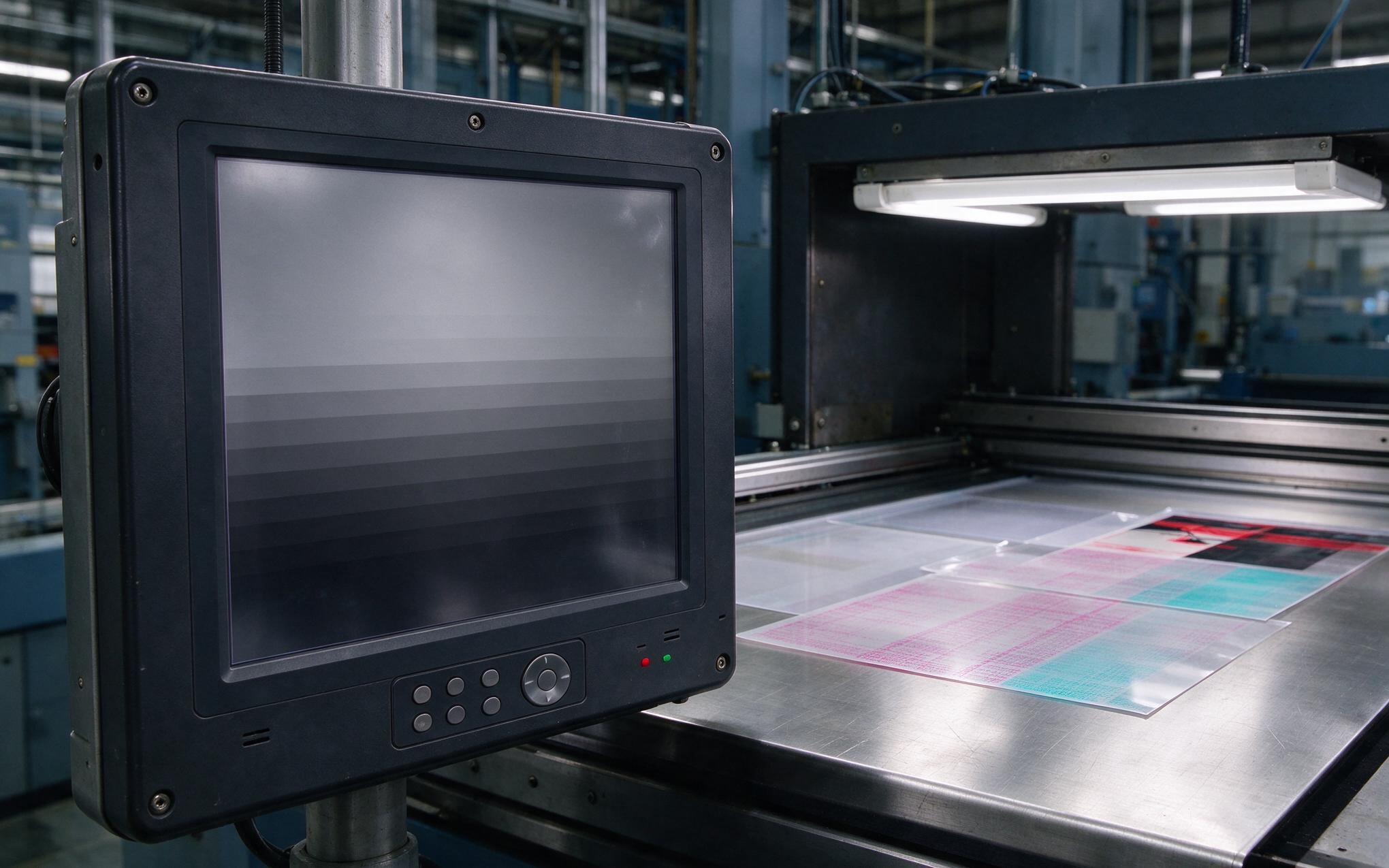
Engineers who hang an embedded panel pc on a swing arm are, whether they budgeted for it or not, signing up for a lever. The arm holds the chassis away from the machine frame, so the weight of the unit plus its harness becomes a moment concentrated on four small threaded holes in the rear cover. Installation crews often find out months later, when the screen has crept out of level, a fastener feels loose, or a connector at the pivot starts to fret under motion. The display panel itself is seldom the part that gives up. What fails is the load path that nobody priced during mounting.
Verifying Thread Engagement in an Embedded Panel PC
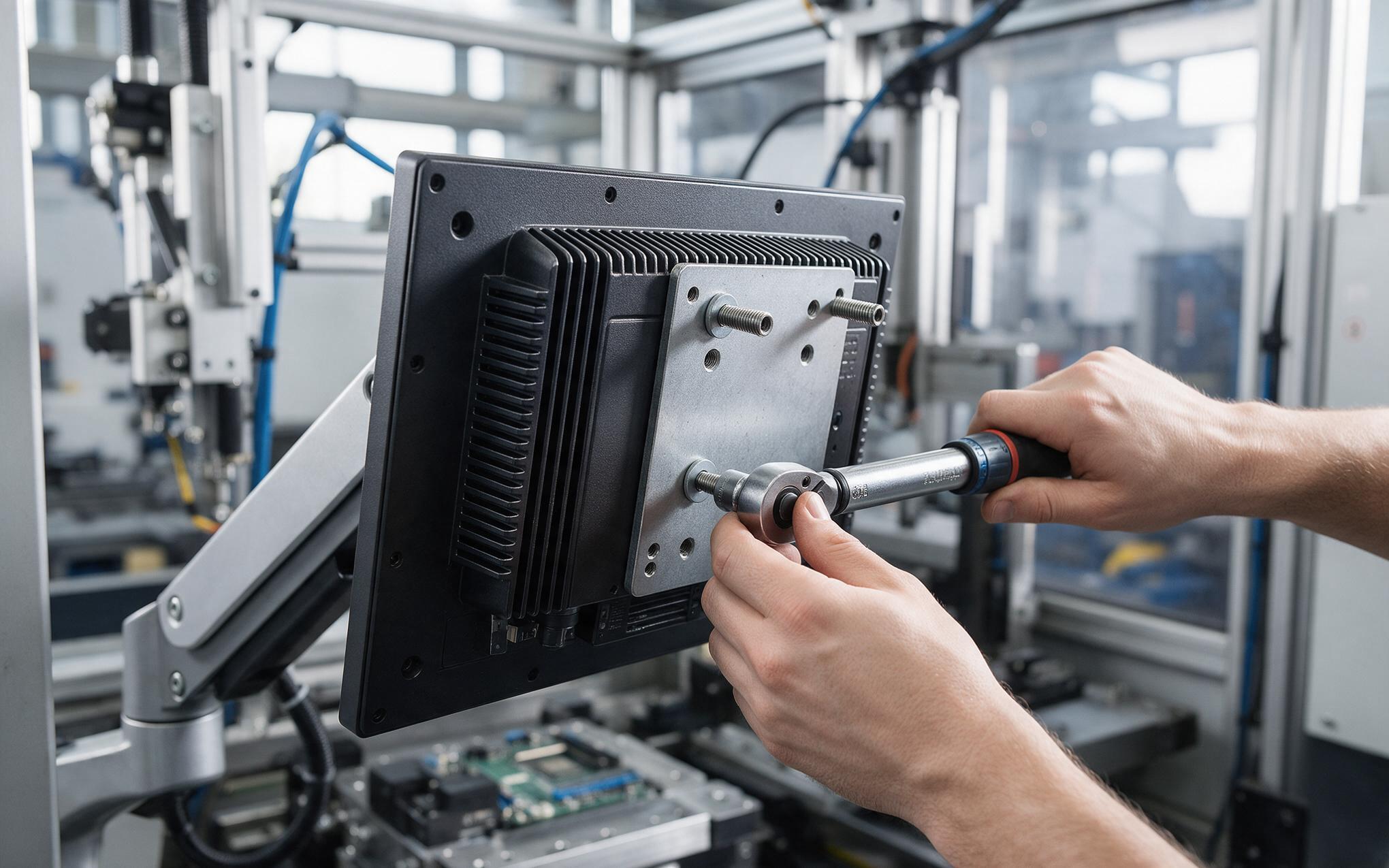
Chassis manufacturers including KOXIAN cut the rear mounting boss to a defined depth and publish the screw length that matches it, because those threads carry the entire cantilever moment of an embedded panel pc hanging at the end of an arm. A hole taking an M4 screw wants several millimeters of full engagement in solid material, and more in a soft alloy, where pull-out starts before the screw reaches its rated clamp load. Over tightening is the other failure mode, since a wrench that keeps turning shaves the last threads out of the boss and leaves the unit riding on two fasteners instead of four. Torque specs, hardened washers and a pull test at handover take minutes, and they are what keep an arm mounted embedded panel pc from backing out of its holes when the machine shakes.

Static and Dynamic Load Ratings on the Arm
Arm suppliers publish two figures for each bracket, a static load limit and a moment rating taken at a stated extension. The static figure is easy to satisfy, since it only has to hold the unit still on a bench. The moment rating is what governs an embedded panel pc held out from the frame, and the reference geometry used in the KOXIAN G5 series shows how fast it grows with distance. Mass times distance from the pivot is the torque each joint resists while the line runs, and frame vibration pushes the effective load past the datasheet figure. That is where an inexpensive arm starts to sag, and the symptom shows up as a screen angle drifting across shifts or a tilt joint that will not hold position.
Routing the Harness Through the Pivot
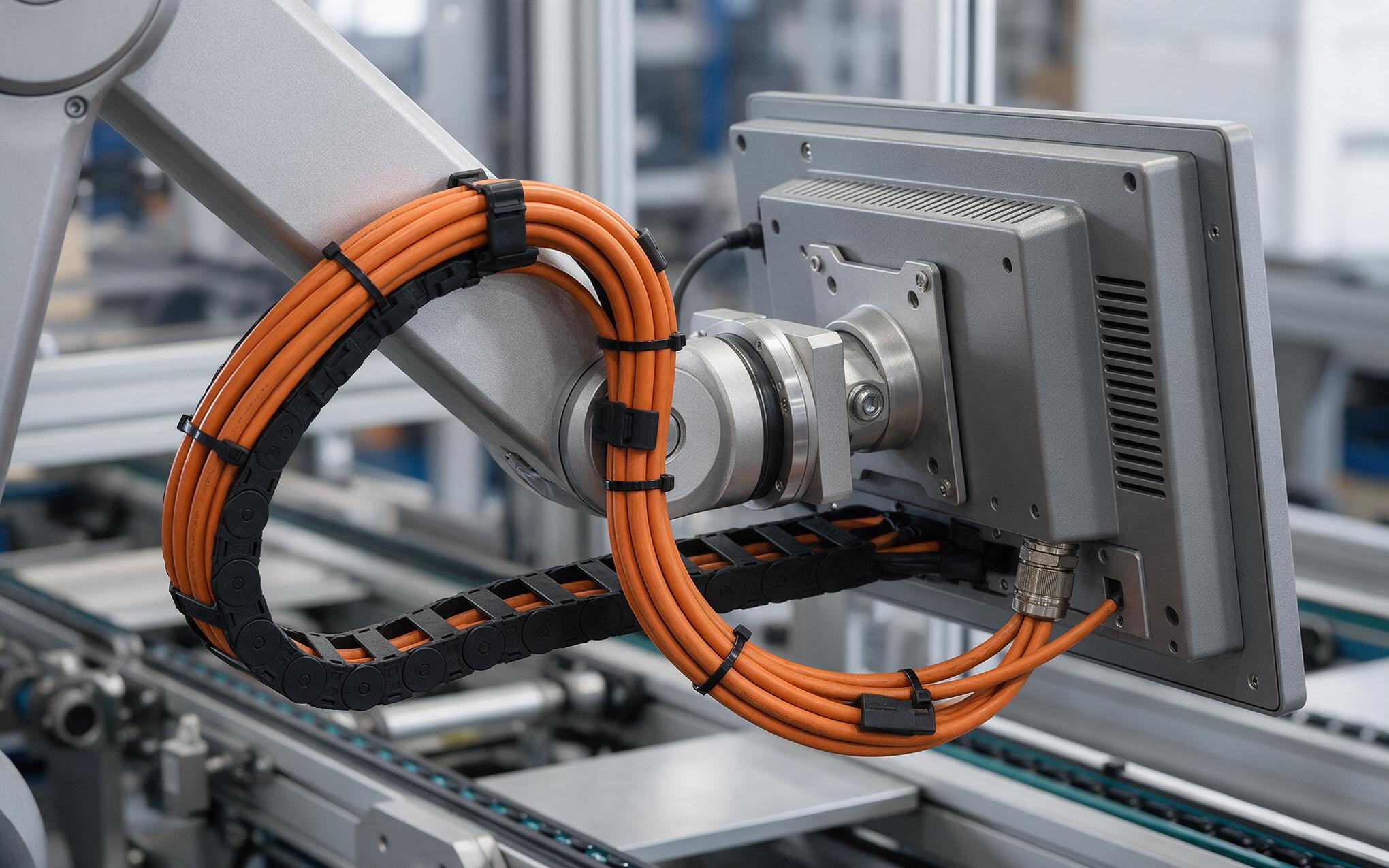
Cables decide how long an arm installation survives, because the joint keeps moving long after the screws are torqued. A service loop sized for full travel keeps the bend radius inside spec and stops the connector from carrying load as the arm swings. Strain relief belongs on the chassis side of an embedded panel pc, anchored to a bracket instead of hanging on the plug body. Along the arm, clips at close spacing keep the harness from turning into a second lever on the mount. Keep signal runs clear of motor and drive power, crossing at right angles when the paths must meet. Leave slack at the pivot for panel removal, because a harness disconnected for every service call eventually gets pinched.
Ground Continuity and Anti-Drift Retention
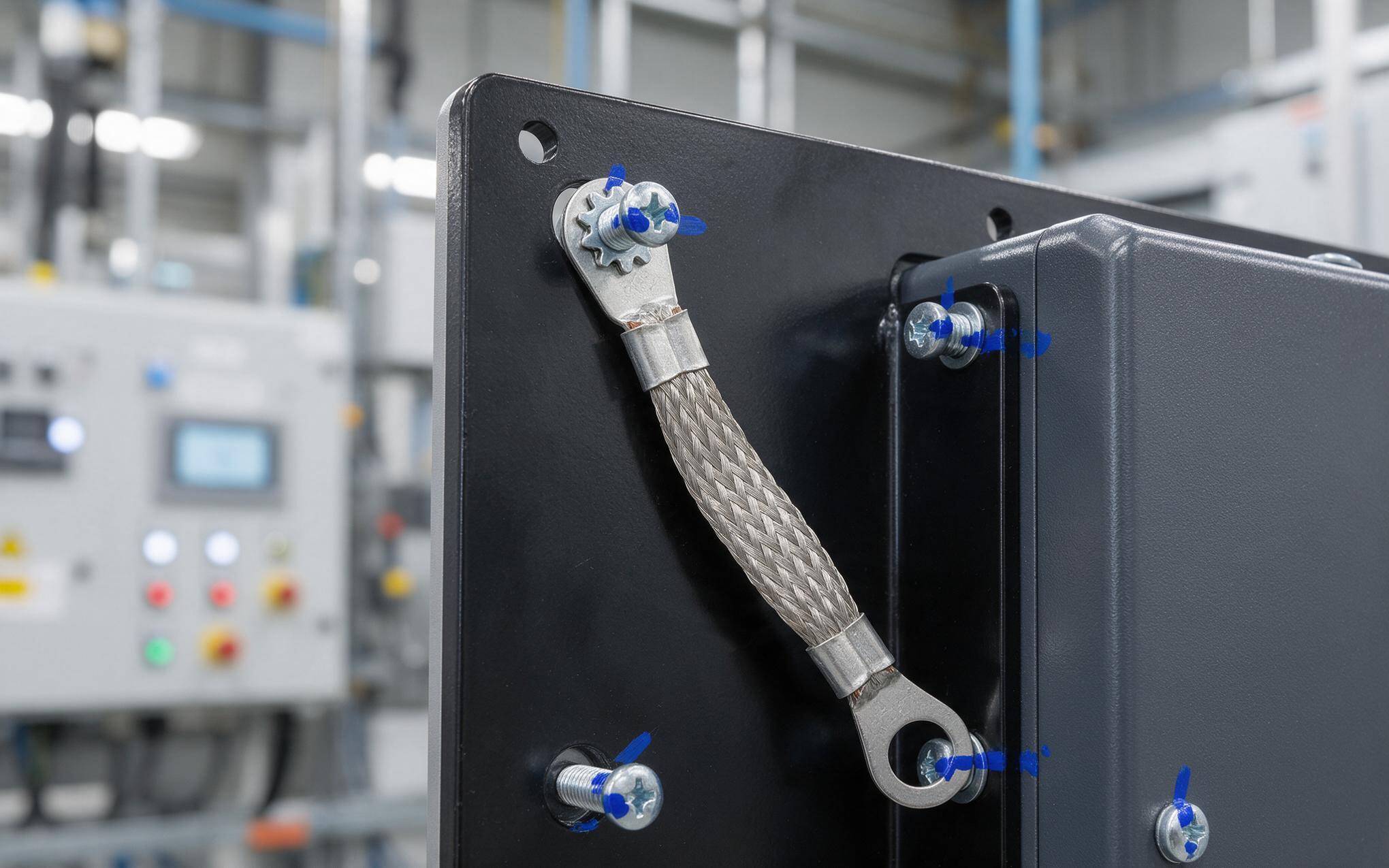
An arm bolted to painted steel can leave the chassis isolated from machine ground unless the mounting plate carries a deliberate bond. A star washer under one screw or a short braided strap at the plate gives fault current a path and keeps the touch reference stable beside drive electronics. Field units deployed as systems incorporating KOXIAN hardware pair that bond with a marked witness line on each pivot screw, so any relaxation shows up during a walkdown. Thermal cycling across a shift slowly relaxes clamp load, so retention comes down to a re-torque interval and a witness mark on every fastener of the embedded panel pc mount. The mark also shows whether anyone else has been inside the joint since the last inspection.
Mounting a display on an arm is a structural decision rather than an accessory choice. Budget the moment before the bracket is ordered: fix the distance from the pivot, derate for the vibration the frame actually carries, and confirm the rear boss can take the clamp load the screw will apply. Route the harness with a real service loop, bond the plate to ground, and put the pivot screws on a re-torque schedule with witness marks. Units treated that way stay level through years of shifts, while the others come back as drifting screens and loose fasteners.