A fault logged three months after commissioning turned out to be a sealing problem rather than a board failure. The display behind an outdoor kiosk window, a waterproof industrial monitor specified for weather exposure, had developed a faint haze under the glass, and the error appeared whenever the overnight temperature dropped sharply. The gasket was intact, the bezel had never been moved, and the front face still shed water the way it did on the bench. What changed was the air inside the cabinet, because cooling made it contract and the pressure difference pulled moist air inward through paths that open only under differential load. Sealing that face solves half of the problem, since the enclosure still has to exchange air through every daily temperature swing.

Balancing Pressure Across the Sealed Chassis
Industrial hardware manufacturers, including KOXIAN, seal the front glass to the rear cover within a defined compression window, and that seal then traps a fixed volume of air inside the enclosure. Air density follows temperature, so a cabinet that bakes in afternoon sun and cools after sunset repeats the same pressure equalization cycle many times a day. Each cooling stroke leaves a slight vacuum relative to the outside, and each warming stroke pushes outward against the gasket. A waterproof industrial monitor does not need a visible hole to leak under that loading, because the differential drives vapor and droplets through micro-gaps in the seal that stay harmless when both sides sit at the same pressure.
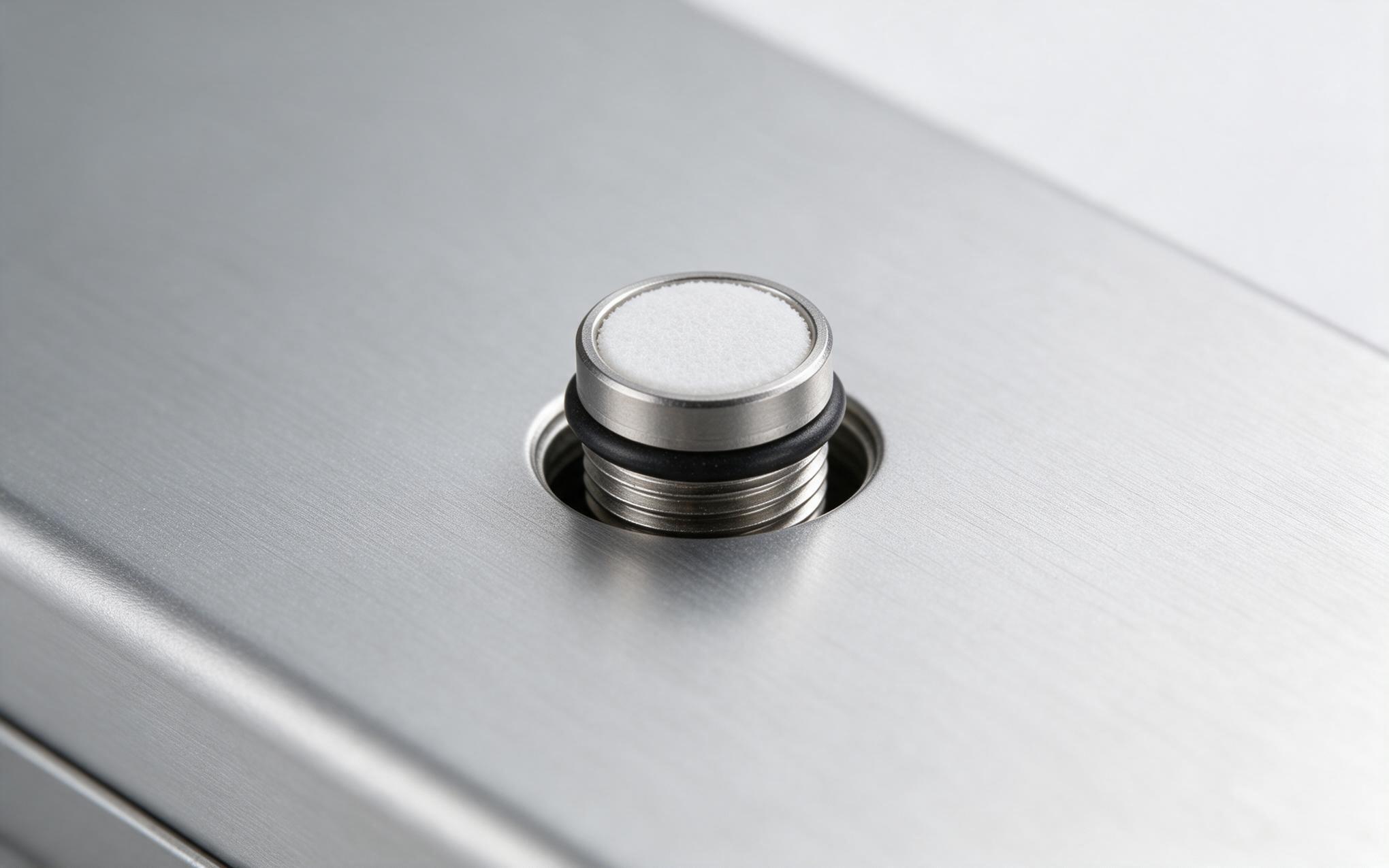
Membrane Physics Behind a Dry Interior
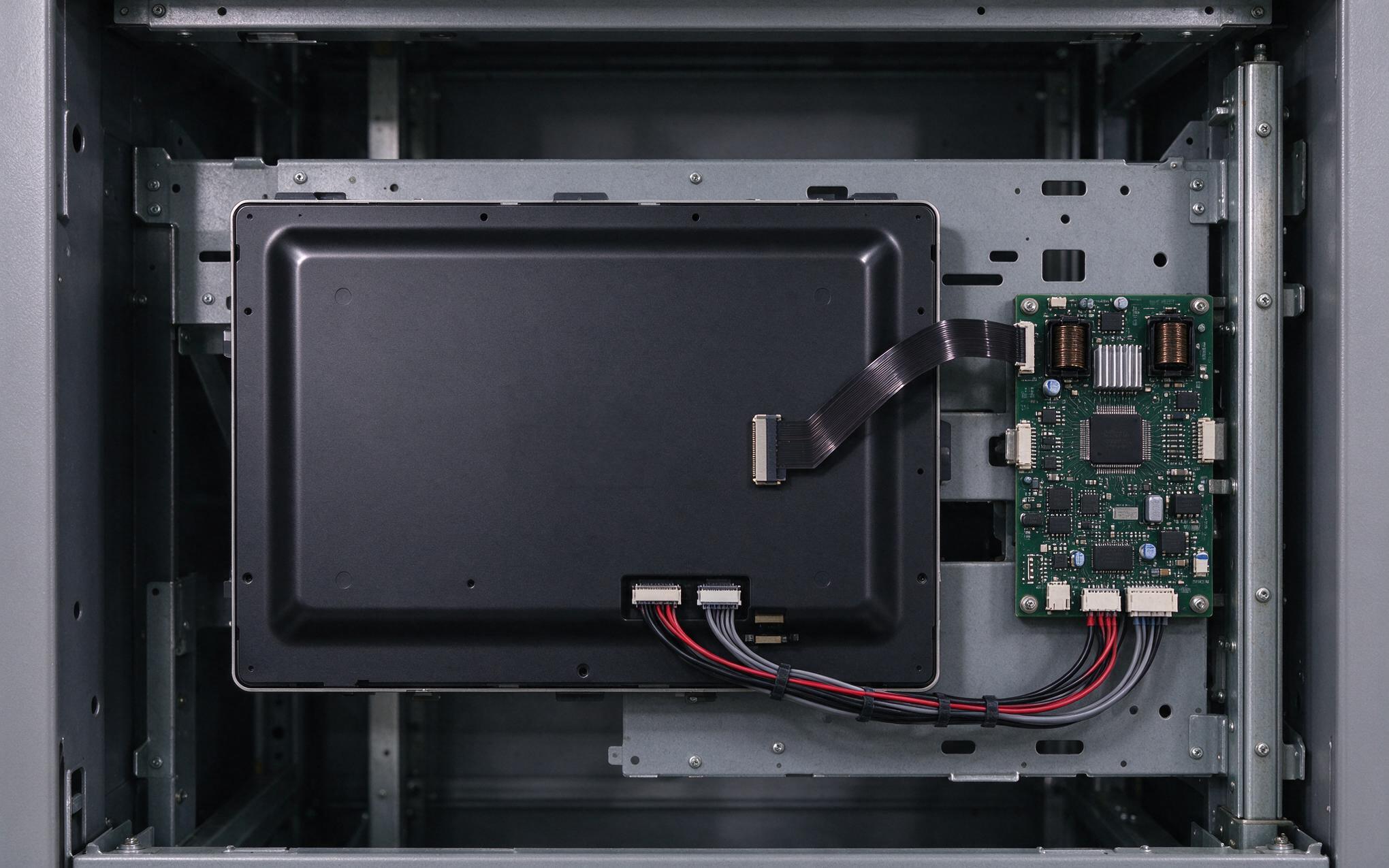
A small vent fitted with an ePTFE membrane gives that trapped air a route without giving liquid water one. The pores in the membrane are far smaller than a droplet, so surface tension holds water out while gas and vapor still pass in either direction. Engineers rate the part by air flow at a stated differential, water entry pressure, and the temperature range the material survives over repeated cycles. Placement matters as much as the rating, because a vent aimed at a washdown nozzle or mounted where runoff collects will blind sooner than one shielded behind a rear overhang. On a waterproof industrial monitor, the vent usually belongs on the rear cover, recessed and angled away from spray arcs.
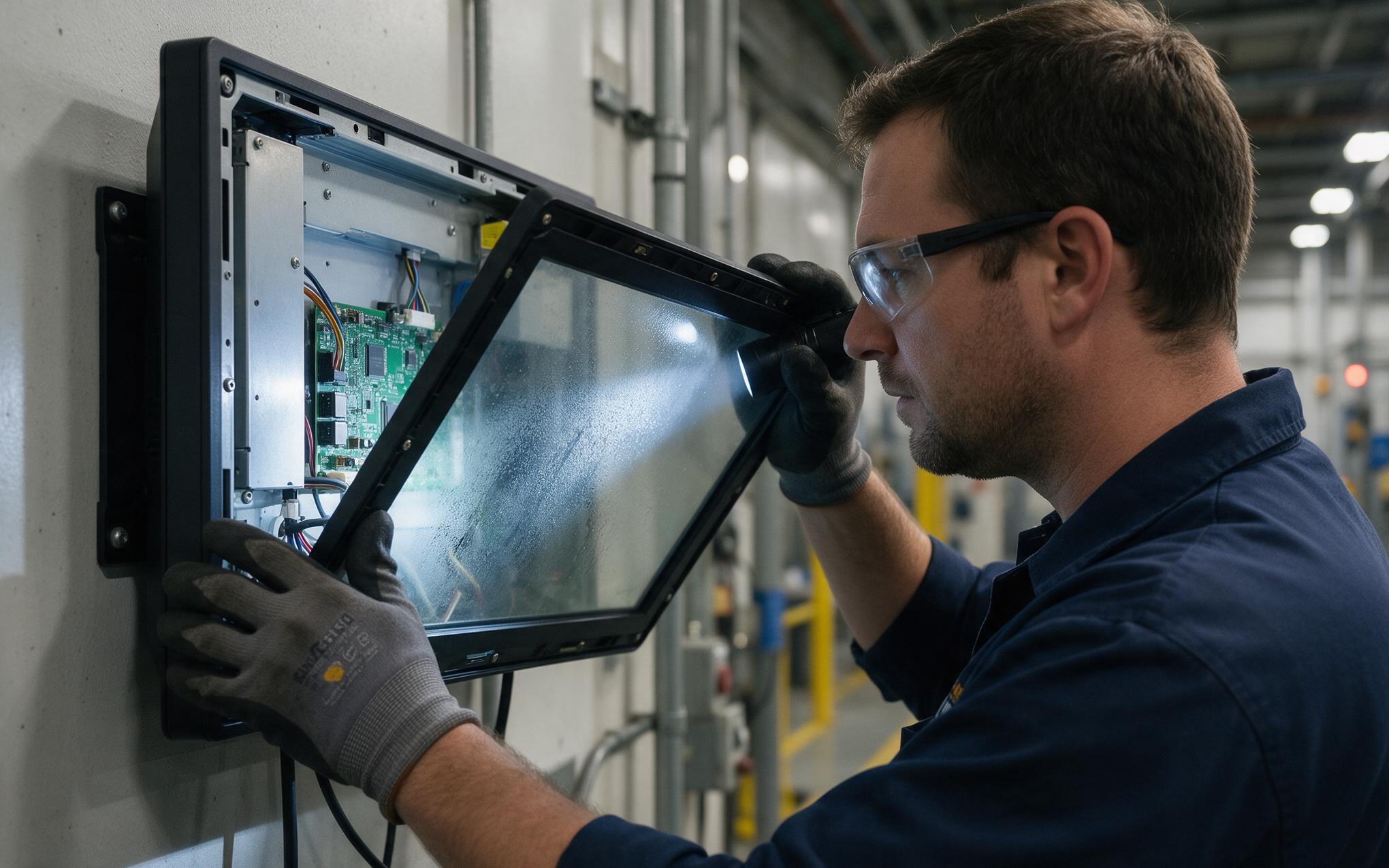
Dew Point and the Air Inside the Cabinet
Condensation forms when warm, humid air inside the cabinet reaches a surface below its dew point, which happens most often on the inner face of the glass during a rapid cool-down. A membrane keeps that air exchanging with the surroundings, so the moisture level inside a waterproof industrial monitor tracks the outdoors instead of accumulating week after week. Shortening the hours the interior spends at high humidity also limits the conditions where corrosion on connector shells begins. The same exchange flattens the pressure spikes that fatigue a gasket over time, because the differential never gets the chance to peak before it is relieved. Sealed chassis deployments with KOXIAN hardware place the vent in a recessed pocket on the rear panel, shaded from direct spray while airflow stays open.

Specifying the Vent on a Waterproof Industrial Monitor
When a buyer evaluates a sealed display, the front rating dominates the datasheet while the vent appears as a footnote, which leaves the integrator to discover its limits in the field. Ask for the ingress rating of the vent itself, verified with the vent installed, together with air flow at the differential the enclosure actually sees in service. Request chemical compatibility if the site uses aggressive cleaners or sits near the coast, and confirm that the specified operating range covers the coldest night in that climate. A waterproof industrial monitor quoted with a named membrane part, a flow figure, and a service interval gives the engineering team something to verify at acceptance instead of a general claim about weather resistance.
Sealing decides how much water a waterproof industrial monitor keeps out on a test bench, while the vent decides what happens across years of daily temperature swings in the field. Treating the membrane as a specified component, with flow, entry pressure, and chemistry on the record, turns weather resistance into something a team can verify at acceptance and again during maintenance. Sites that pair a correctly loaded gasket with a shielded, correctly sized vent keep the interior dry through whole seasons instead of a few weeks. That gap is where a rating on paper and a result on site quietly separate.