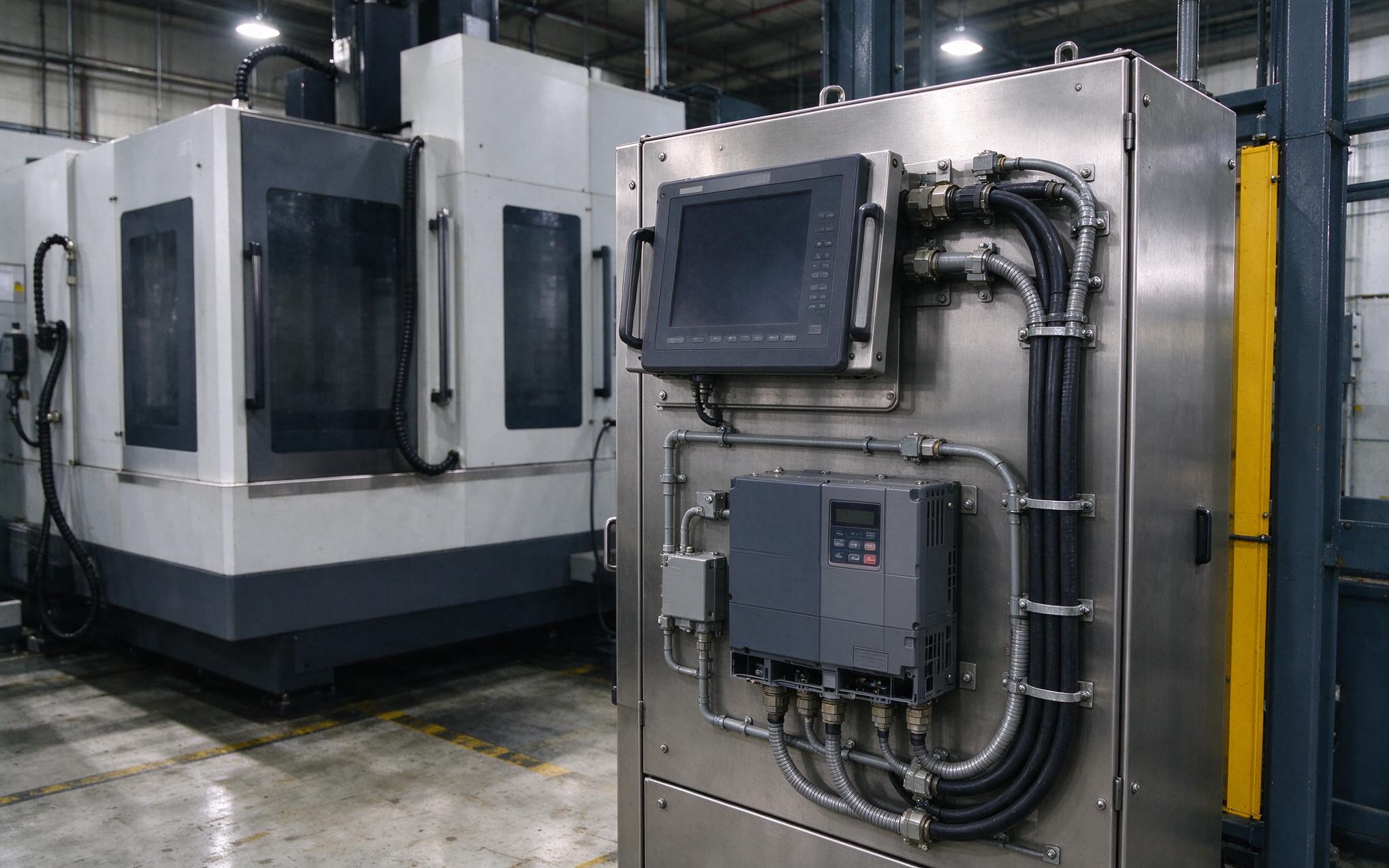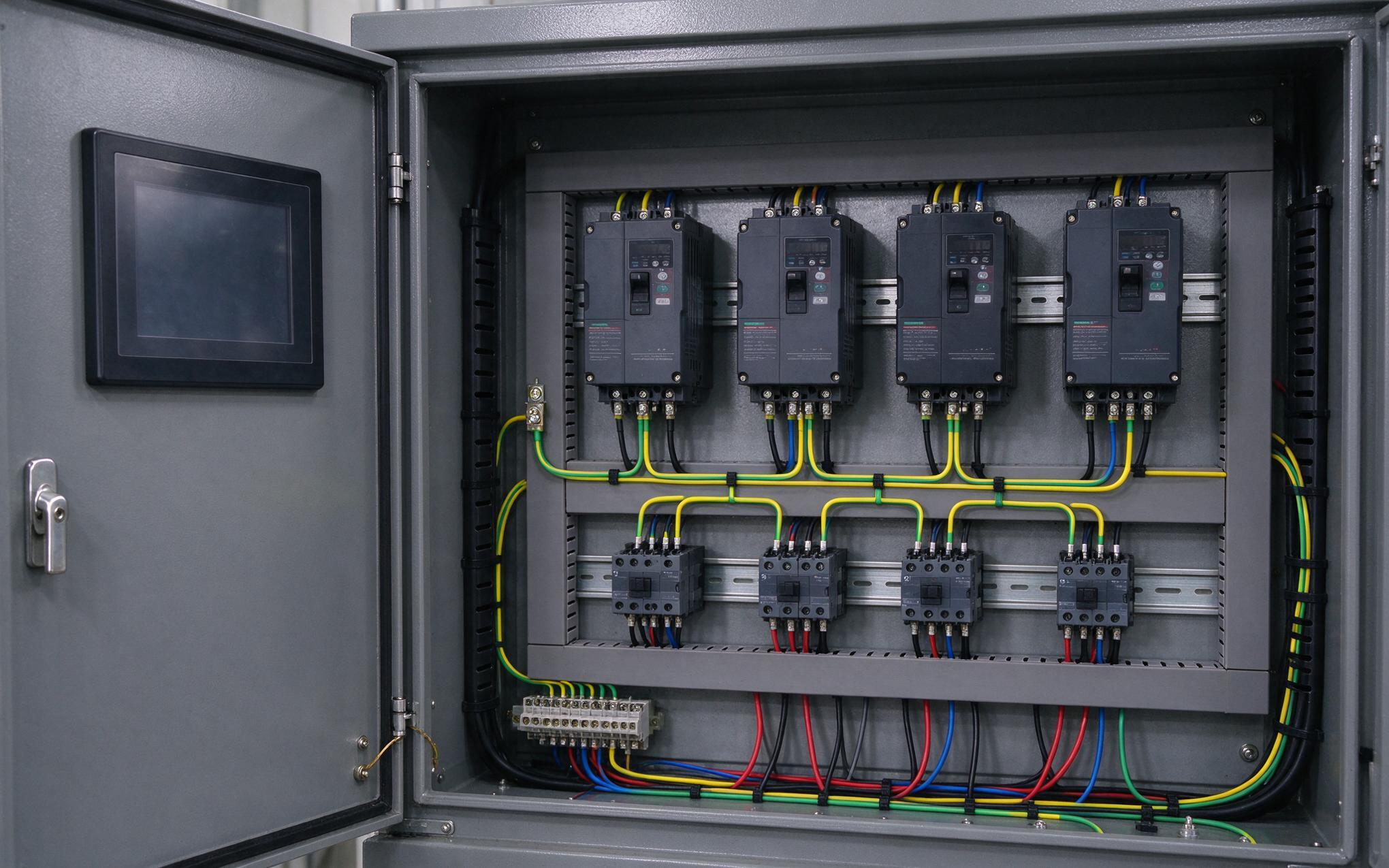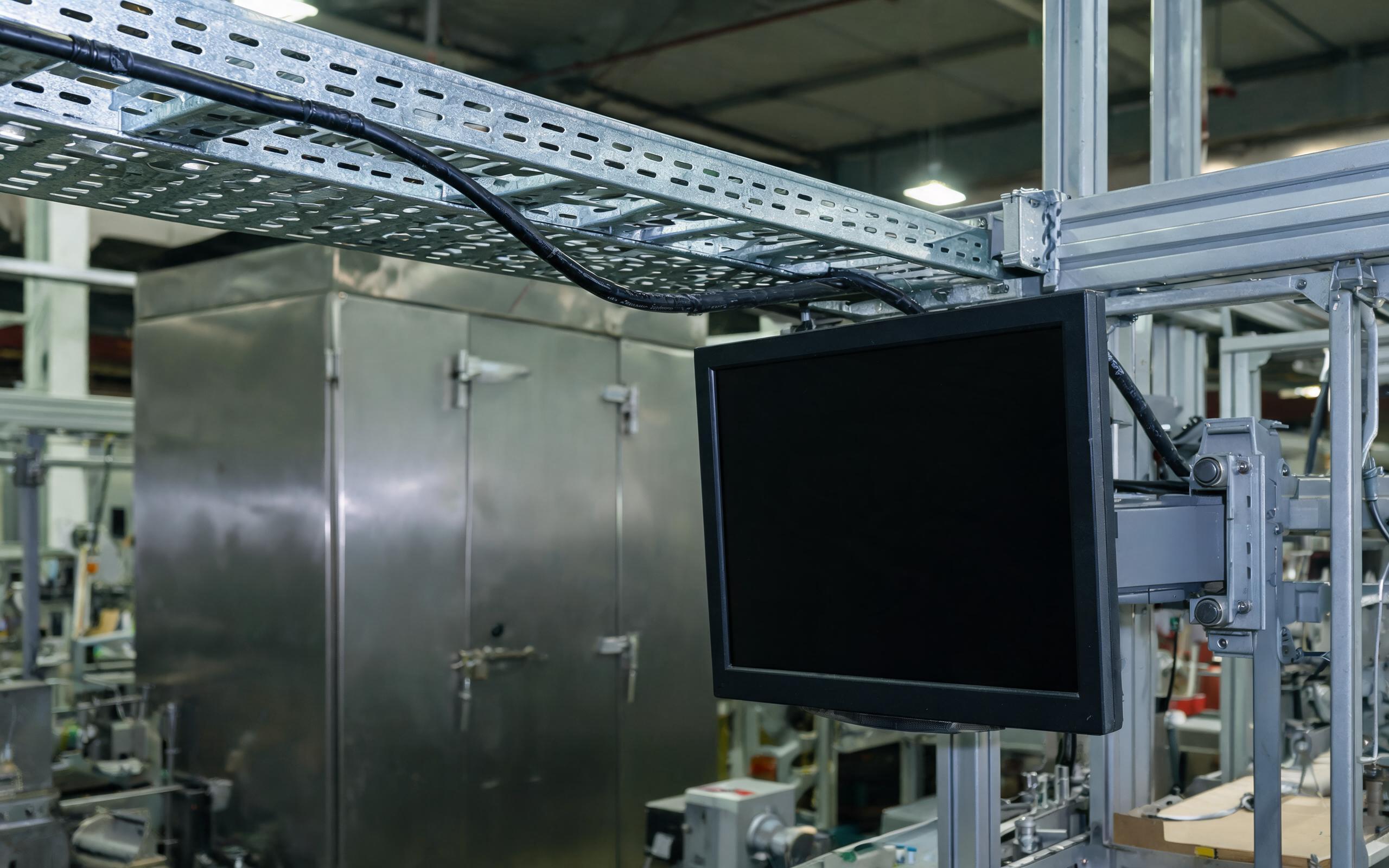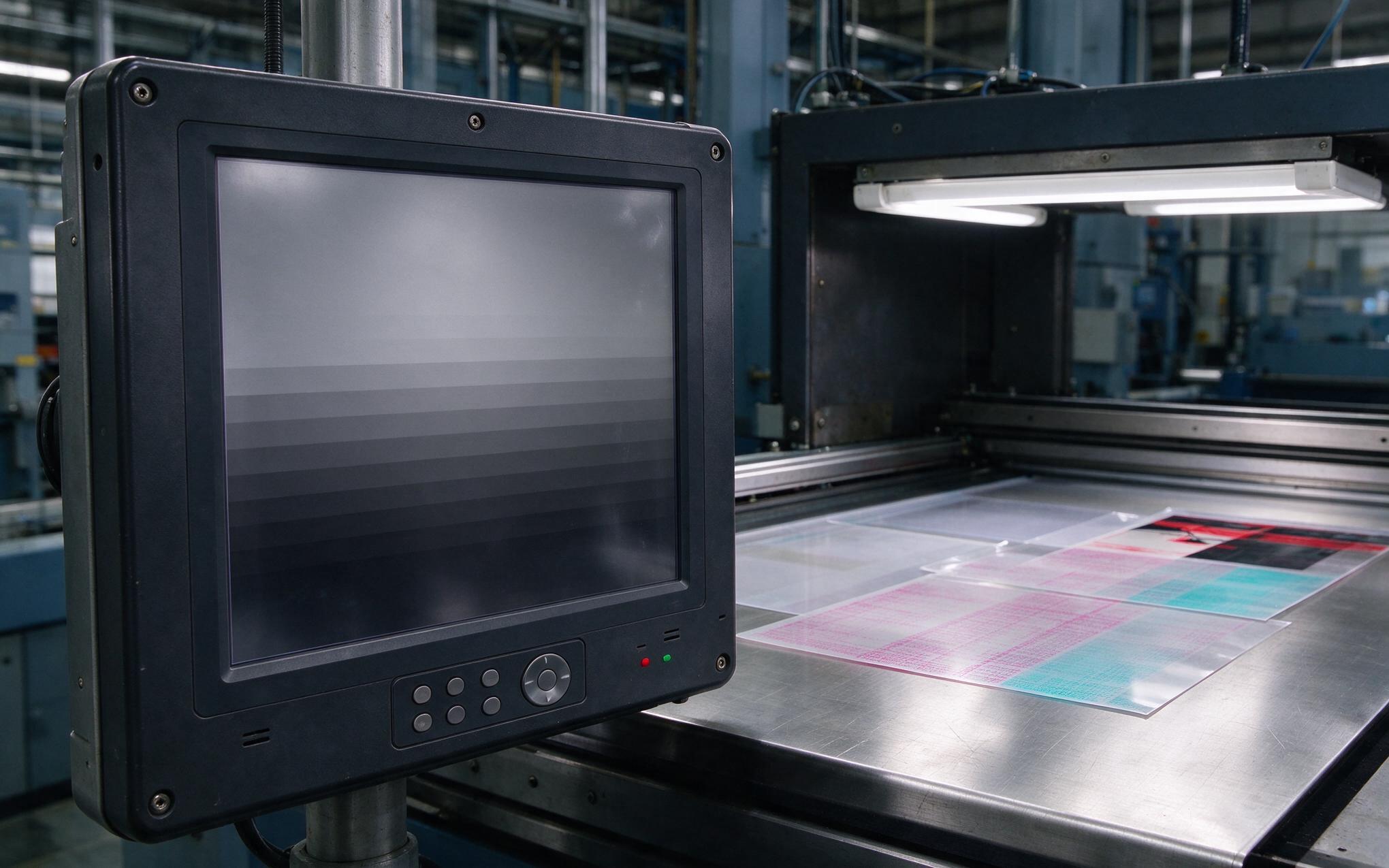
The outage that took down an entire packaging terminal row lasted under a second, and it repeated three times in one week, always as the main contactor reclosed after a utility dip. Each unit tested clean on the bench. Input capacitors across eight terminals charged from zero simultaneously, a few milliseconds during which every supply behaves close to a short circuit and pulls tens of amps from a device whose nameplate reads under two. Steady-state load had nothing to do with it, and an industrial panel pc installation fails this way only at the moment of energizing.

Breaker Curve Response to Capacitor Charging Pulses
Protective devices respond to current over time, not to instantaneous magnitude alone. Thermal-magnetic breakers combine a slow thermal element with a fast magnetic trip, and it is the magnetic stage that reacts to inrush. Curve selection determines the outcome, because a type B device trips magnetically at three to five times rated current while a type C allows five to ten and a type D up to twenty. Cabinets populated with switch-mode supplies are conventionally protected by type C or D for that reason. Charging current is limited only by source impedance, so a short cable run from a stiff transformer produces a sharper pulse than a long one. An industrial panel pc supplier normally publishes peak inrush alongside the steady-state figure, and that number rather than the wattage should drive breaker selection. Cold conditions worsen the picture, since capacitor series resistance falls as temperature drops and the pulse grows steeper on a winter restart.

Why Do Multiple Terminals Compound the Pulse
Inrush adds arithmetically when devices energize simultaneously. Eight terminals at forty amps peak each present a theoretical three hundred twenty amp pulse upstream, and while cable impedance and slight timing differences reduce that in practice, the aggregate remains far beyond what a steady-state calculation predicts. Distribution design for an industrial panel pc group assumes diversity that does not exist at power-on, because a single contactor closing after an outage removes all natural spread between loads. Where hardware makers such as KOXIAN publish per-unit peak inrush and charge duration, an integrator can total the expected pulse across a feeder and size protection against a measured figure rather than a guess. Sequencing is the structural fix, and staggering groups of terminals across separate contactors with a short delay reduces the aggregate pulse without changing any hardware.

Mitigation Routes in an Industrial Panel PC Cabinet
Several remedies exist and they differ in cost and side effects. Upgrading a breaker curve from type B to type C is cheapest but reduces sensitivity to genuine faults, so it should follow a coordination check. Active inrush limiters ahead of a group of supplies hold peak current to a defined ceiling using a resistor that is bypassed once charging completes, which preserves breaker sensitivity while solving the pulse. Thermistor types are inexpensive but need a recovery interval before they limit again, making them unsuitable where rapid power cycling occurs. Field observations across automated production lines show that installations using KOXIAN fanless panel pc units with a shared limiter module clear plant restoration without nuisance trips, provided the limiter is rated for the total capacitance rather than a single unit. Soft-start behavior inside the supply is the cleanest answer, and an industrial panel pc built around a controlled pre-charge stage limits its own pulse without external components.

Verifying Inrush Behavior Before Commissioning
Measurement removes the guesswork that datasheet arithmetic leaves behind. A current probe on the feeder with an oscilloscope captures both peak amplitude and duration, and duration matters because a two millisecond pulse and a twenty millisecond pulse of equal height place very different demands on a magnetic trip. Testing should replicate the real switching arrangement, energizing the full group through the actual contactor. Repeating the capture near the low end of the operating range accounts for the cold-start effect. Recording the result matters more than the number itself, since the next engineer to extend that industrial panel pc feeder needs to know how much headroom remains. Design practice among panel builders, KOXIAN included, documents peak inrush at both nominal and minimum input voltage, and the lower voltage figure gives the conservative case for sizing.
Nuisance trips at power-on are a distribution design problem, not a defective terminal. Peak inrush and its duration govern whether a magnetic trip reacts, and those figures scale with the number of units sharing a feeder rather than with total wattage. Curve coordination, staggered contactor groups, active limiters or dedicated feeders each address the mechanism. Cabinets commissioned with a recorded inrush capture avoid rediscovering the problem the next time an industrial panel pc group is extended.