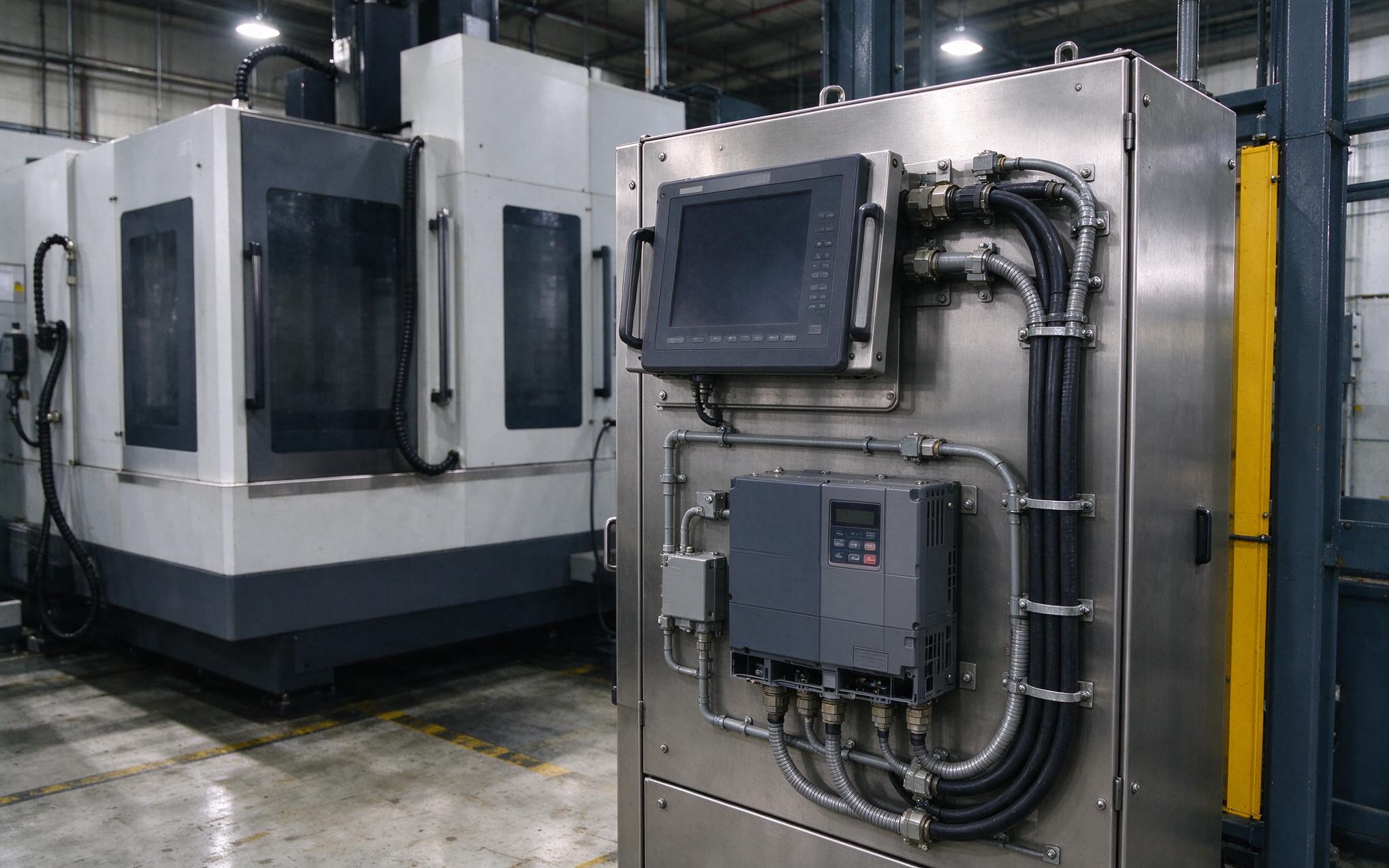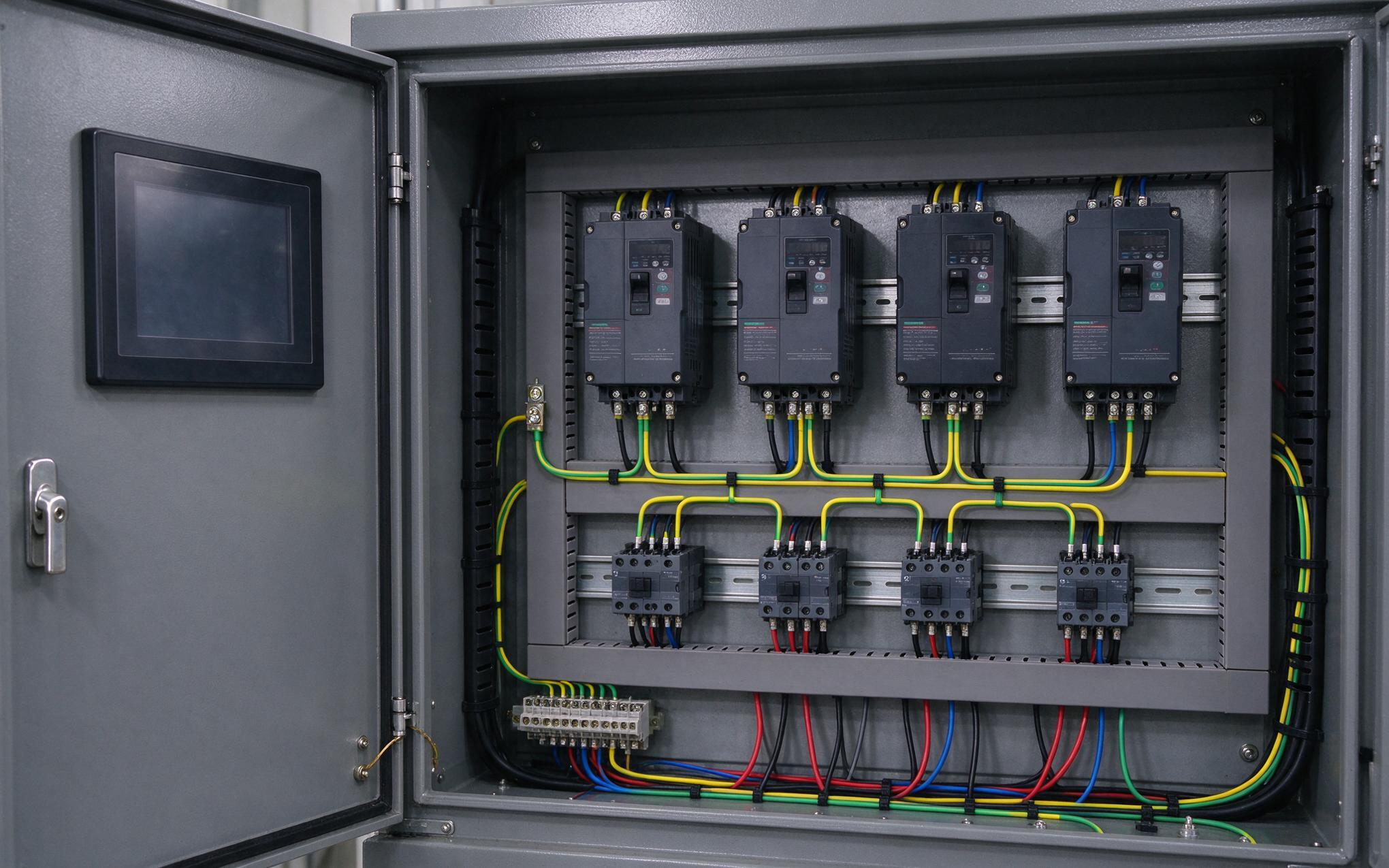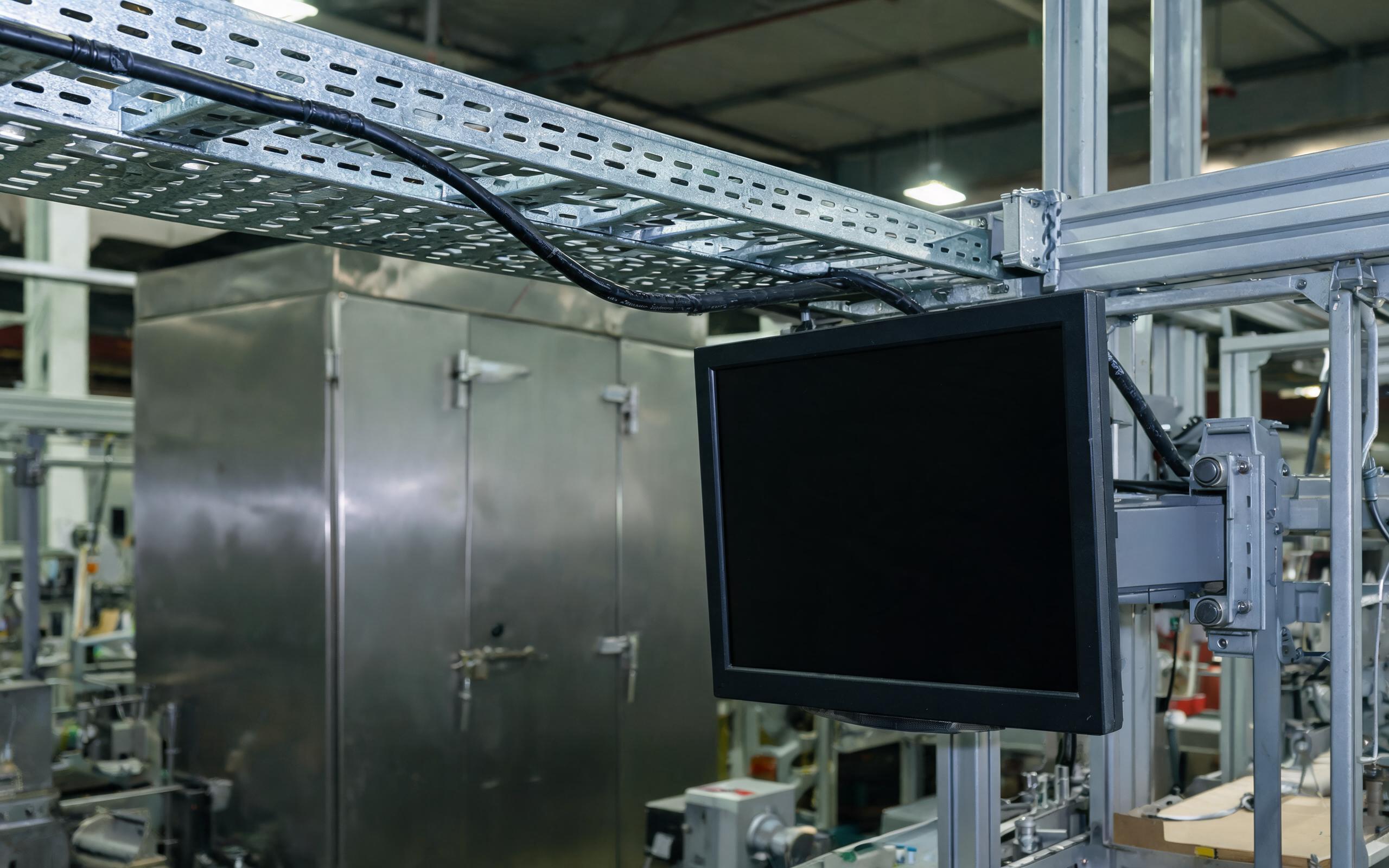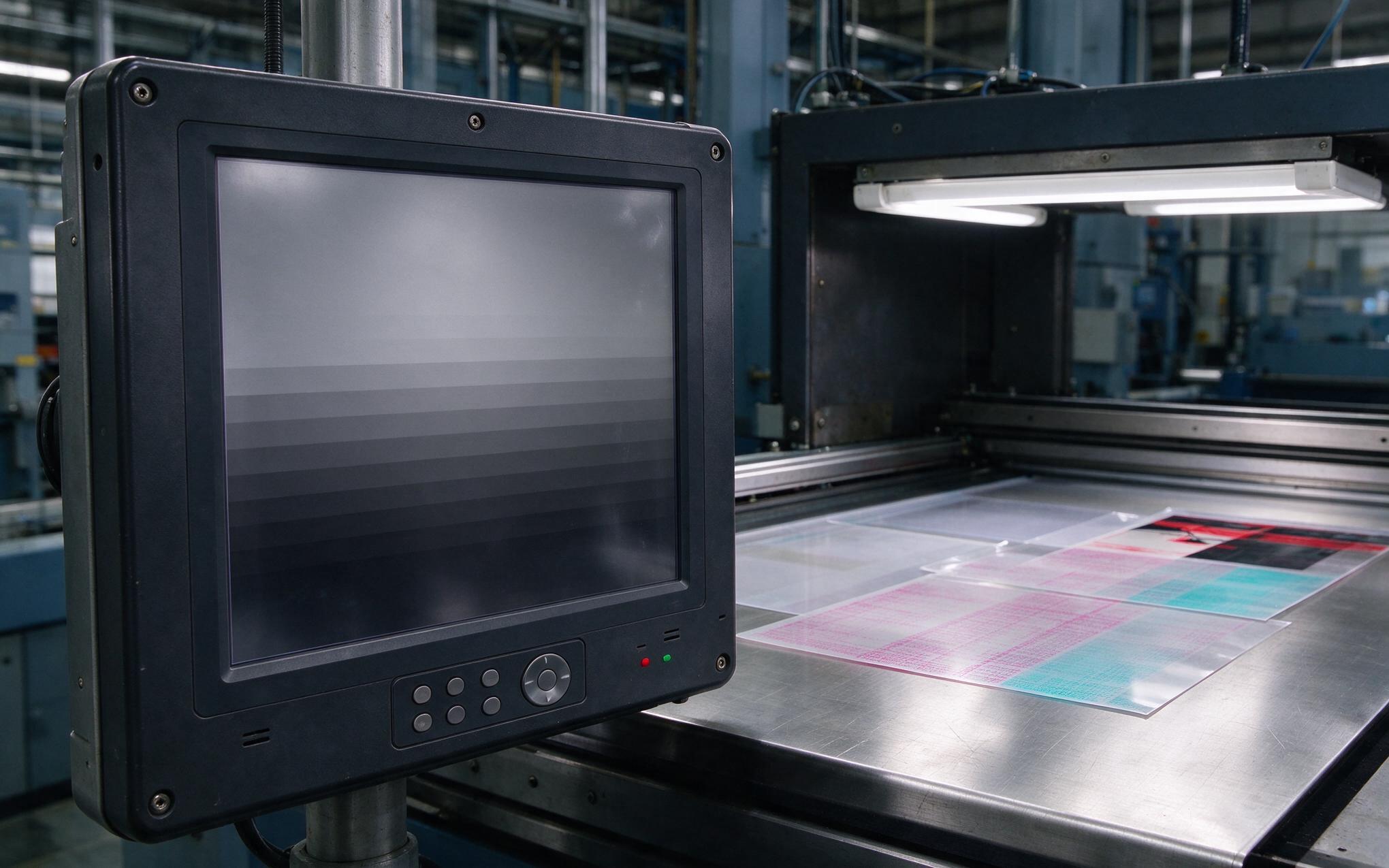
Industrial displays operating in continuous twenty-four-seven duty cycles face a physics challenge consumer-grade panels are never designed to address: LED backlight lumen depreciation. Unlike smartphones accumulating a few thousand hours annually, a panel PC on a factory floor or outdoor kiosk may log over eight thousand seven hundred hours of backlight-on time per year. Over a five-to-seven-year lifecycle, cumulative operating hours can exceed fifty thousand — a threshold at which even high-quality LED backlights exhibit measurable luminance degradation. Understanding the mechanisms behind this decay and implementing effective compensation strategies is essential for maintaining readability and color accuracy throughout the equipment’s service life.
The Physics of LED Lumen Depreciation: Junction Temperature and Current Density
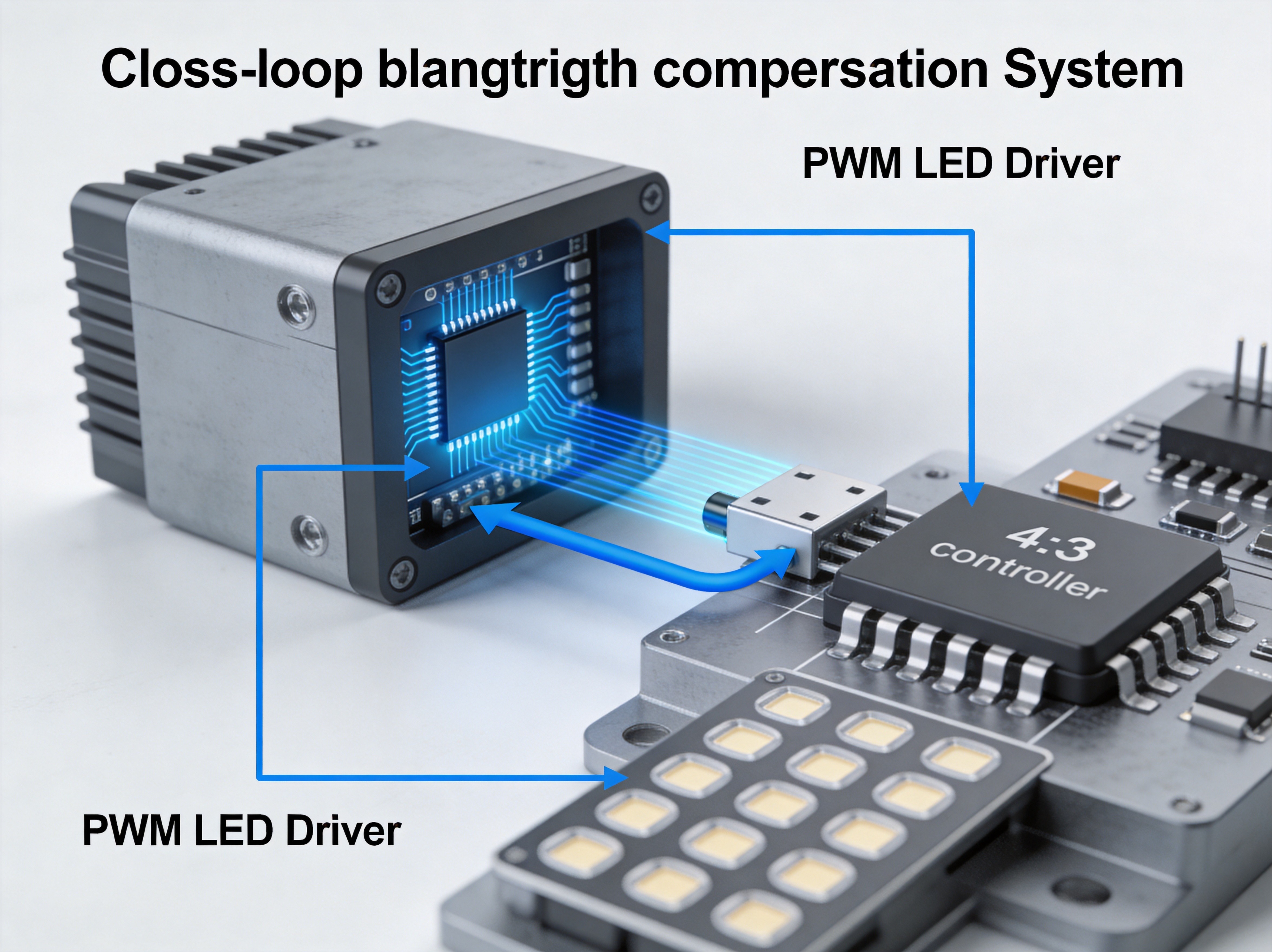
LED lumen depreciation follows an exponential decay curve governed by junction temperature and forward current density. At elevated junction temperatures — common in fanless industrial panel PCs where the backlight shares thermal pathways with the processor — the rate of non-radiative recombination accelerates. Gallium nitride quantum wells develop crystalline defects as thermal stress induces lattice dislocations. Each defect site acts as a non-radiative recombination center, converting electrical energy into heat rather than photons. The industry-standard metric is L70 — the operating hours at which luminous flux drops to seventy percent of its initial value. For mid-grade LEDs at a junction temperature of eighty-five degrees Celsius, L70 typically falls between thirty thousand and fifty thousand hours. Reducing junction temperature by just ten degrees Celsius can extend L70 by approximately forty percent, making thermal management of the backlight assembly a first-order design priority.
Chromaticity Shift: When Brightness Loss Is Not the Only Problem
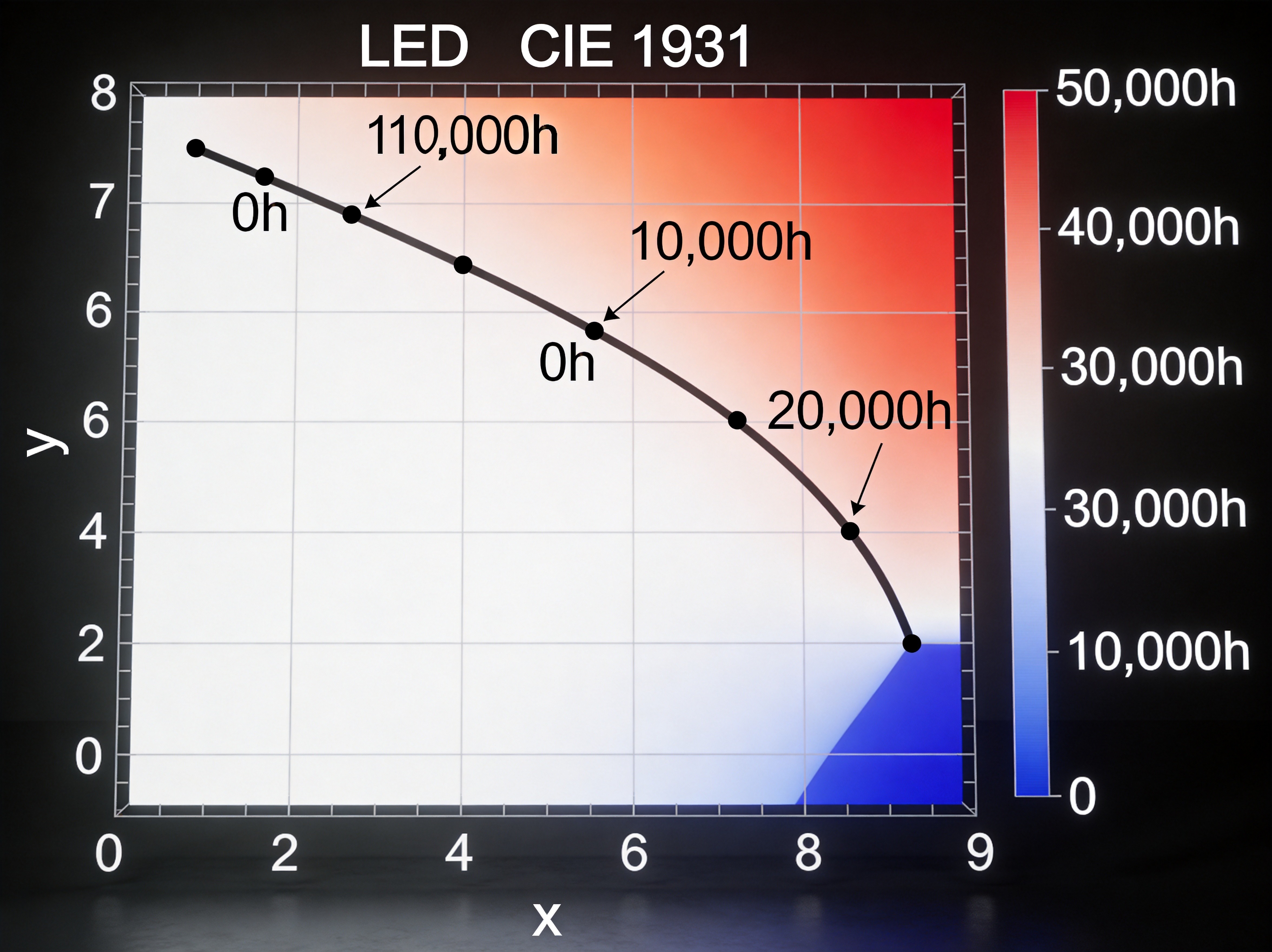
Lumen depreciation is rarely uniform across the visible spectrum. The phosphor layer in white LEDs — yttrium aluminum garnet doped with cerium — degrades at a different rate than the underlying blue LED die. As phosphor conversion efficiency declines, correlated color temperature shifts toward blue, altering the appearance of color-coded alarm indicators, process graphics, and quality inspection images. This spectral shift is particularly problematic where operators rely on color discrimination for critical decisions, such as distinguishing between product grades on a sorting line. CIE 1931 color space coordinates of a degraded backlight can drift by up to 0.015 in both x and y values over fifty thousand hours, a shift perceptible to the human eye. Displays in color-critical applications should use backlight units with multi-phosphor formulations that exhibit matched degradation rates, minimizing chromaticity drift even as luminous flux declines.
Active Luminance Compensation: Closed-Loop Feedback Strategies
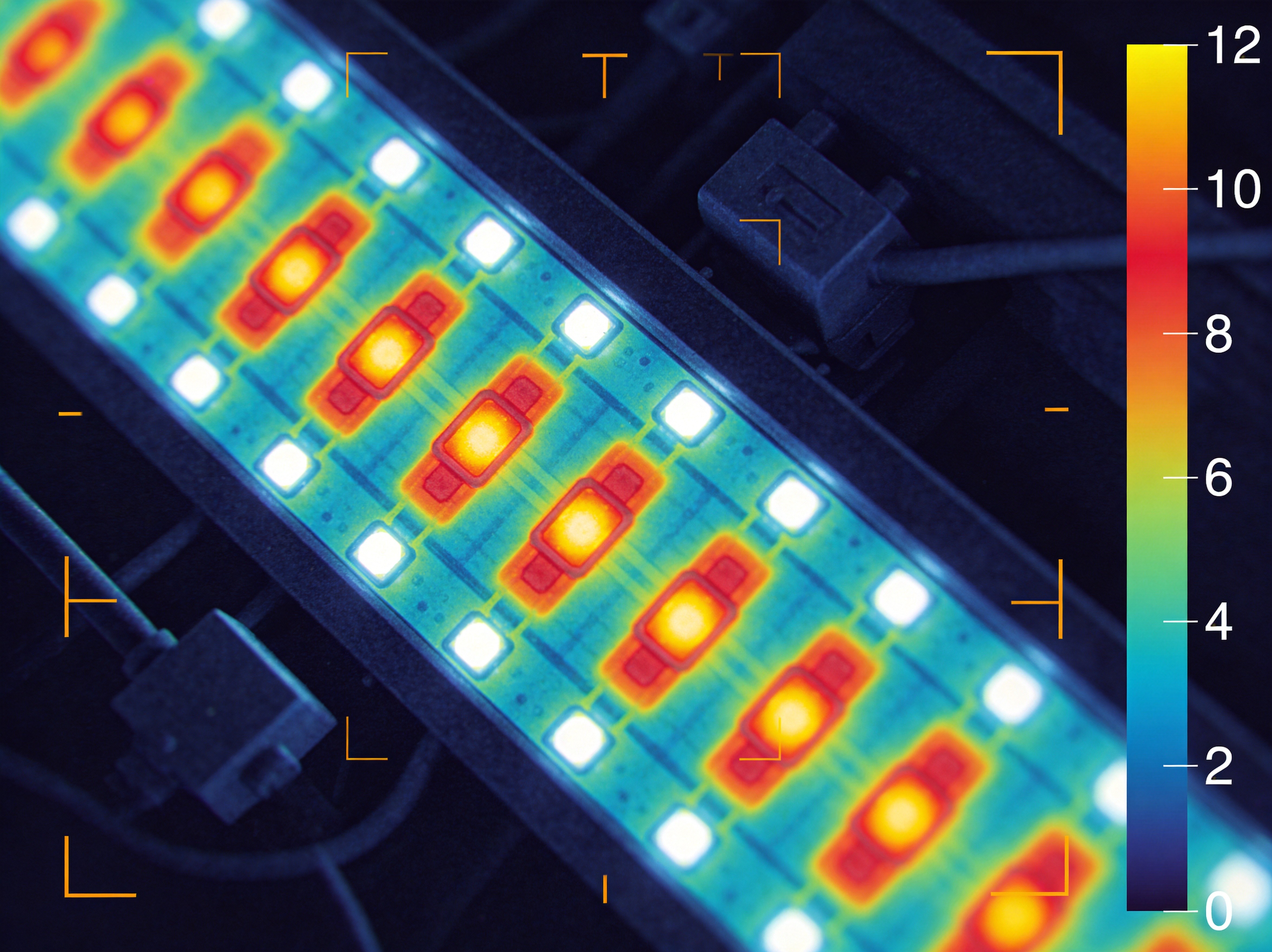
Passive approaches to managing backlight degradation — such as over-specifying initial brightness or scheduling preventative backlight replacement — are either energy-inefficient or logistically impractical for large fleets of deployed panel PCs. Active luminance compensation employs an onboard photodiode positioned within the backlight cavity to continuously monitor luminous output. The sensor data feeds into a closed-loop control algorithm that adjusts the LED driver’s PWM duty cycle to maintain a target luminance level. KOXIAN industrial displays equipped with closed-loop backlight compensation sustain consistent brightness within a three-percent tolerance band across the full rated operating life, even as individual LED strings degrade at different rates. The compensation range is typically limited to approximately thirty percent above nominal drive current, defining the practical endpoint at which the backlight assembly requires service.
Predictive Maintenance Through Backlight Health Monitoring
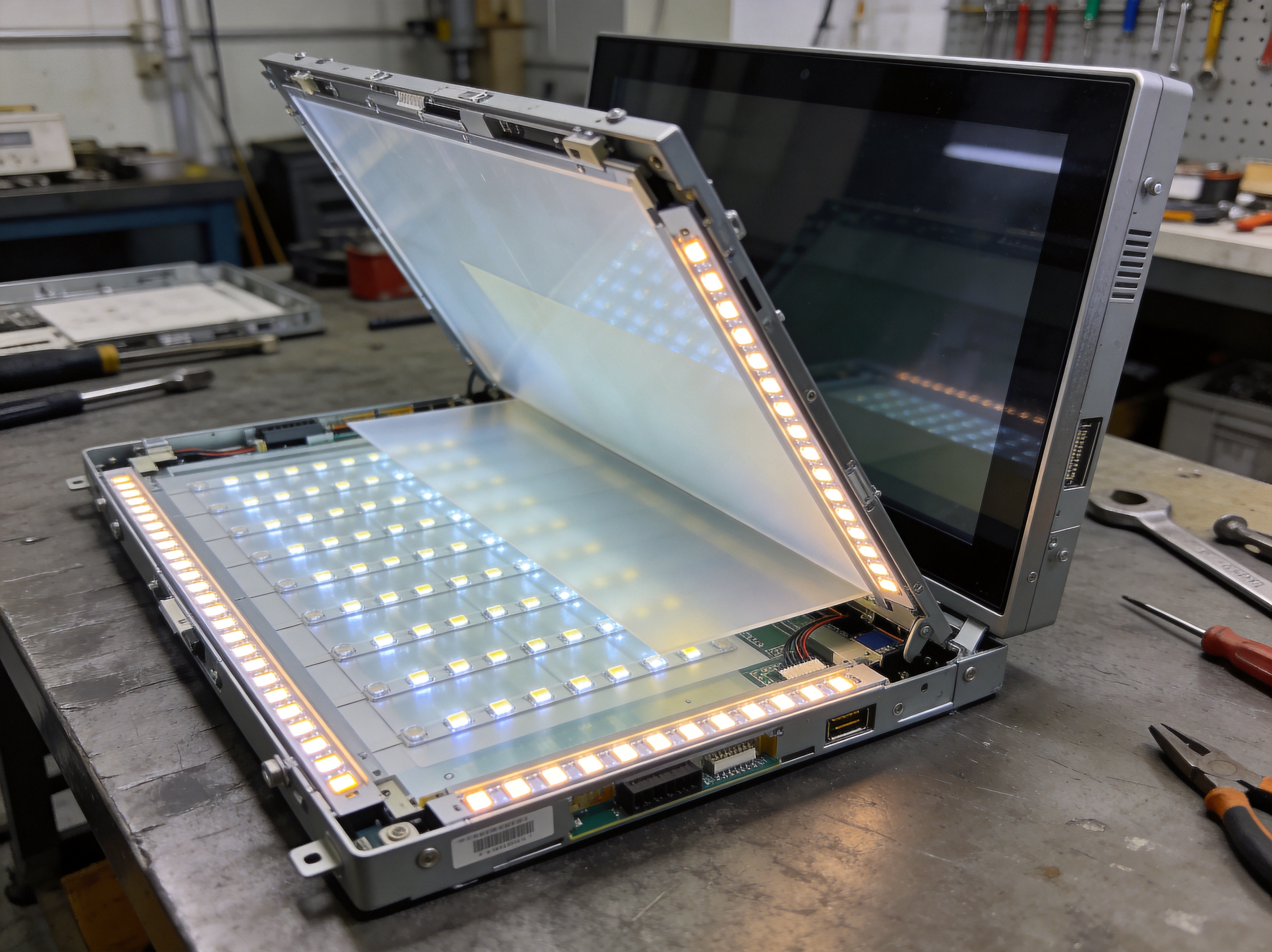
The same photodiode sensor used for real-time luminance compensation also generates a continuous health data stream for predictive maintenance. By logging the PWM compensation ratio, maintenance teams track the rate of backlight degradation for each panel PC and forecast when individual units approach the compensation ceiling. This data can be transmitted over standard network protocols to a centralized asset management platform, where degradation curves for hundreds of displays are aggregated and analyzed. Displays in high-temperature locations or experiencing accelerated degradation can be flagged for proactive service, transforming backlight aging from an unpredictable failure mode into a managed degradation process with scheduled intervention windows.
LED backlight degradation in twenty-four-seven industrial displays is an inevitable physical process, but not unmanageable. Thermal-aware backlight design, multi-phosphor spectral engineering, closed-loop luminance compensation, and predictive health monitoring together enable panel PCs to maintain readable, color-accurate displays throughout multi-year deployment cycles. KOXIAN industrial display platforms integrate these compensation strategies as standard features, recognizing that backlight longevity should carry equal weight to resolution and brightness in selection criteria for continuous-duty applications.