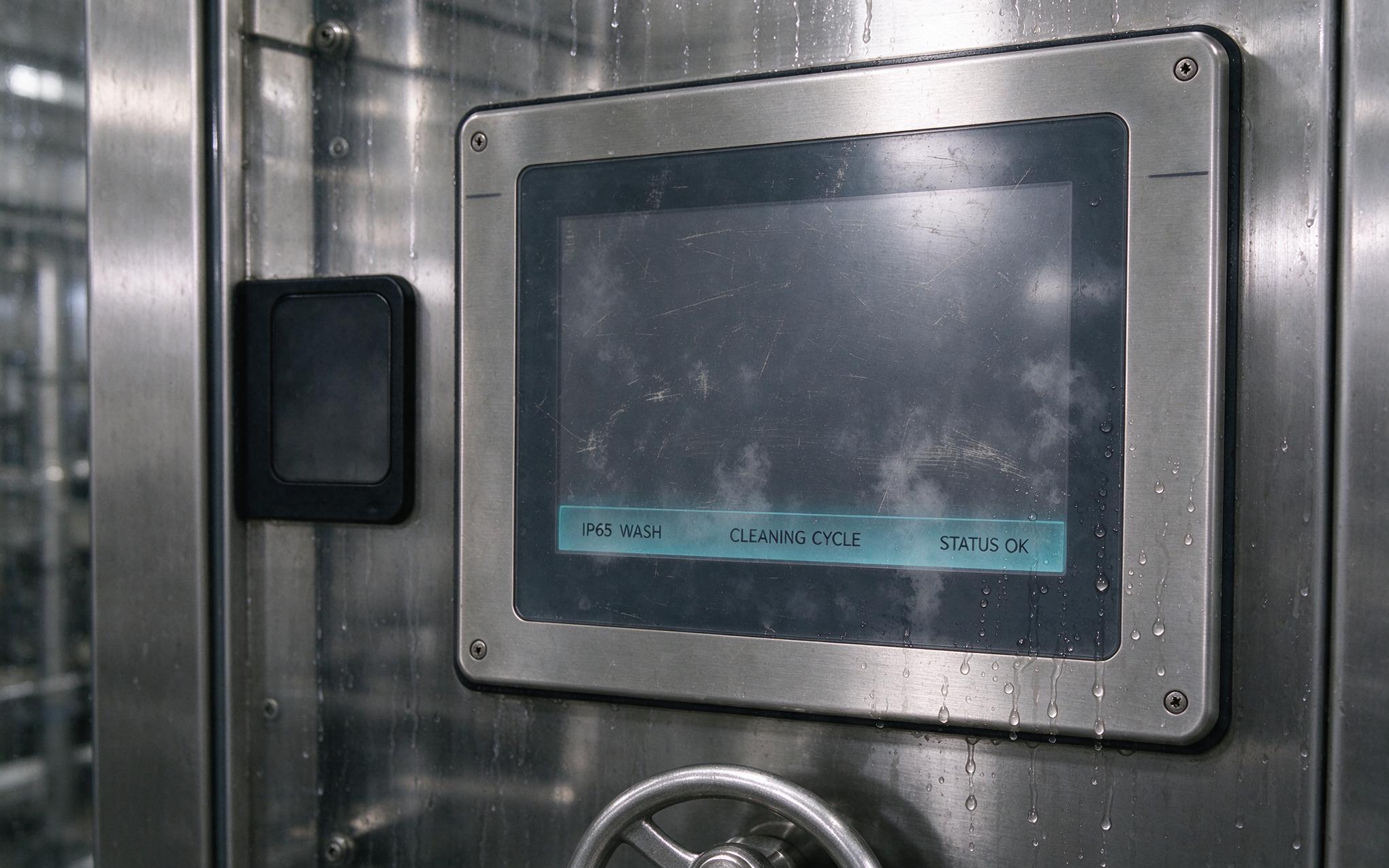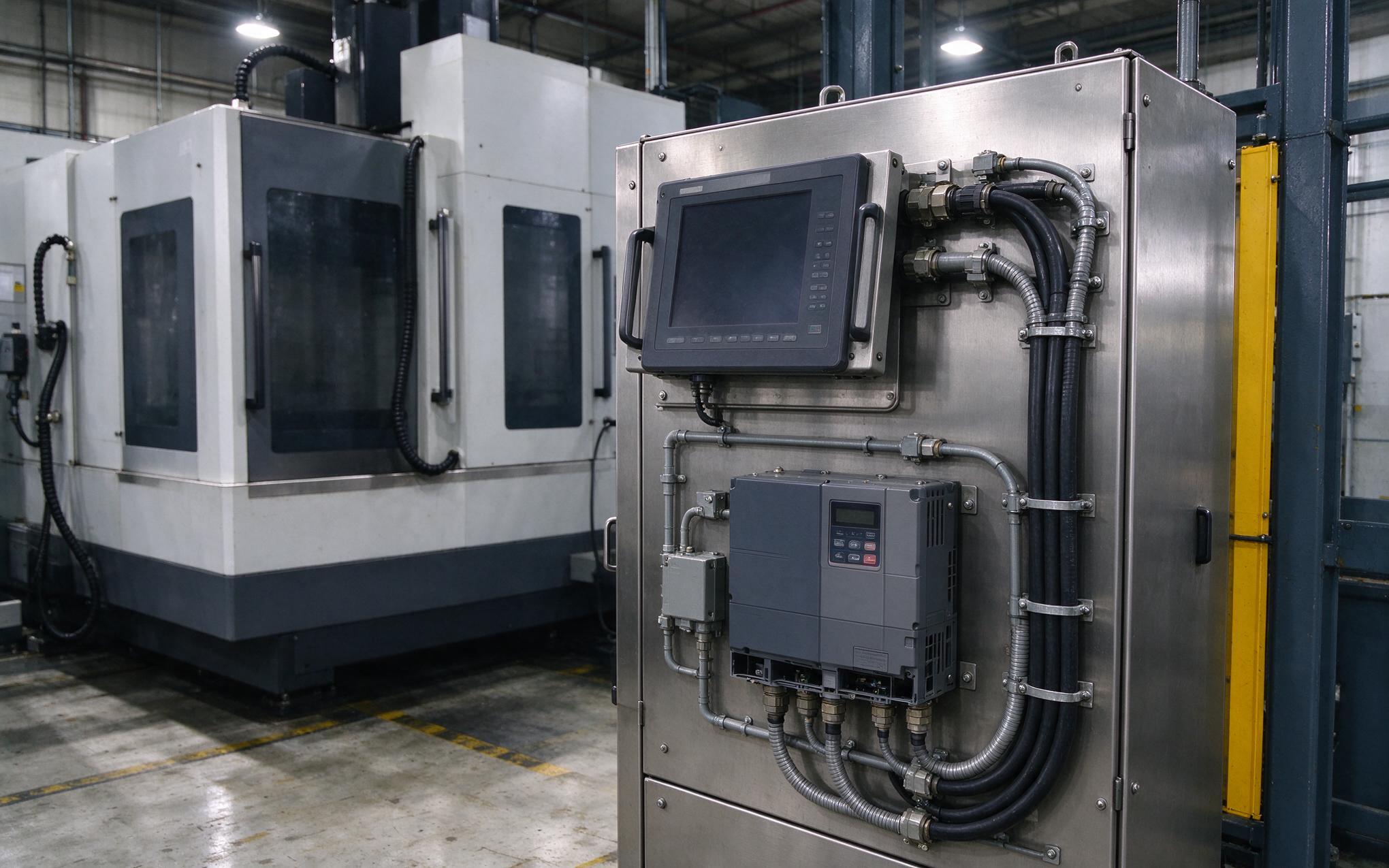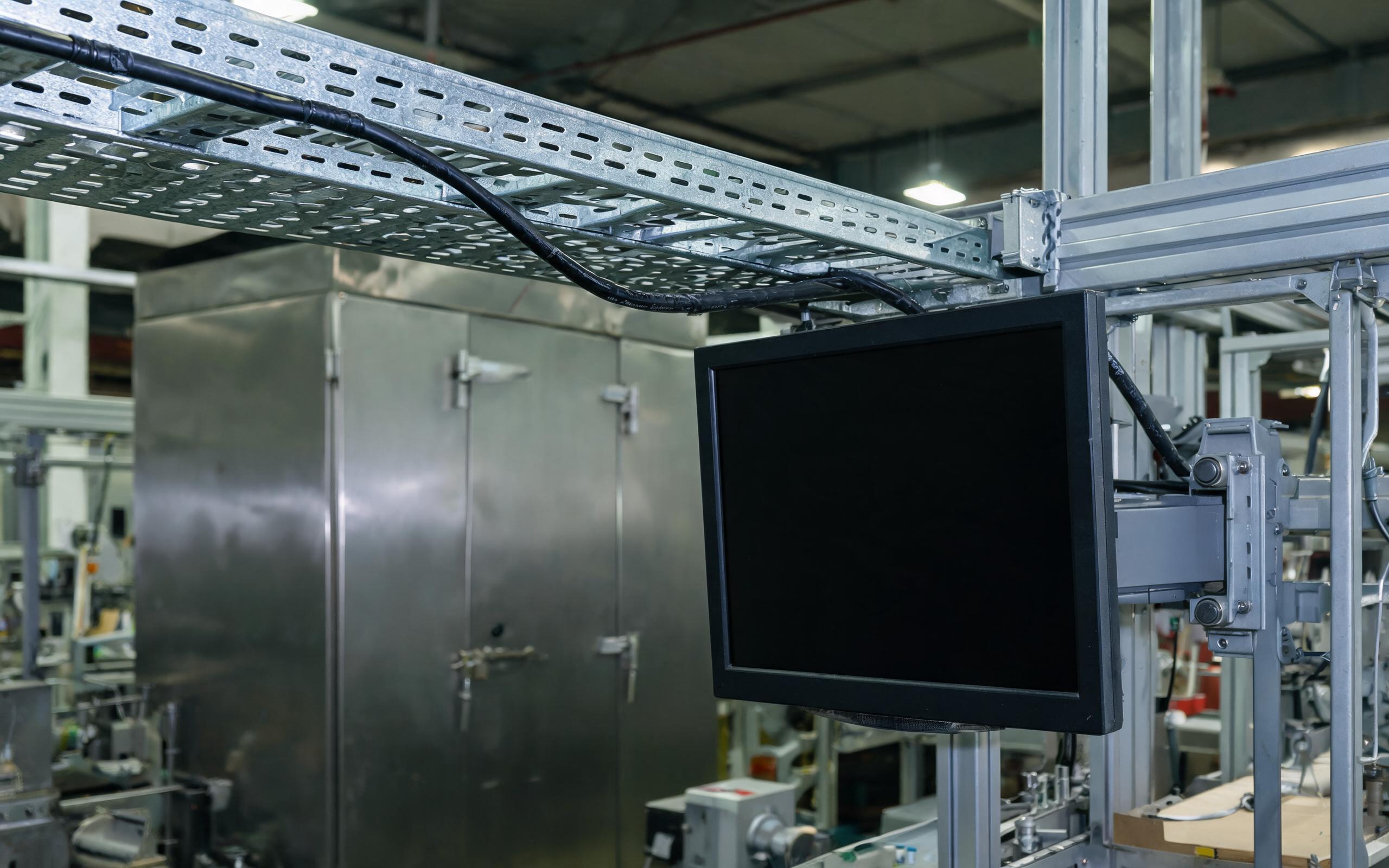
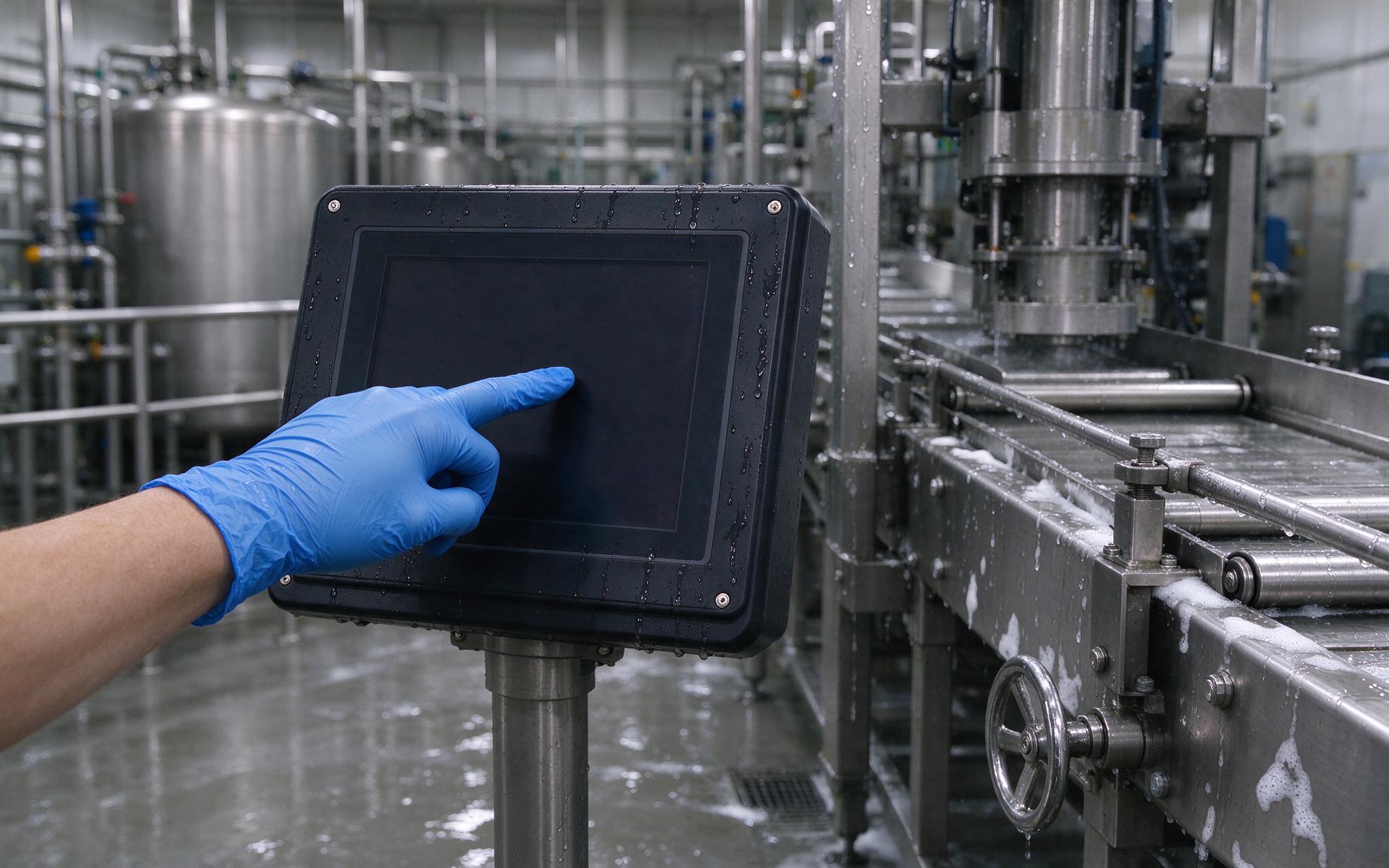
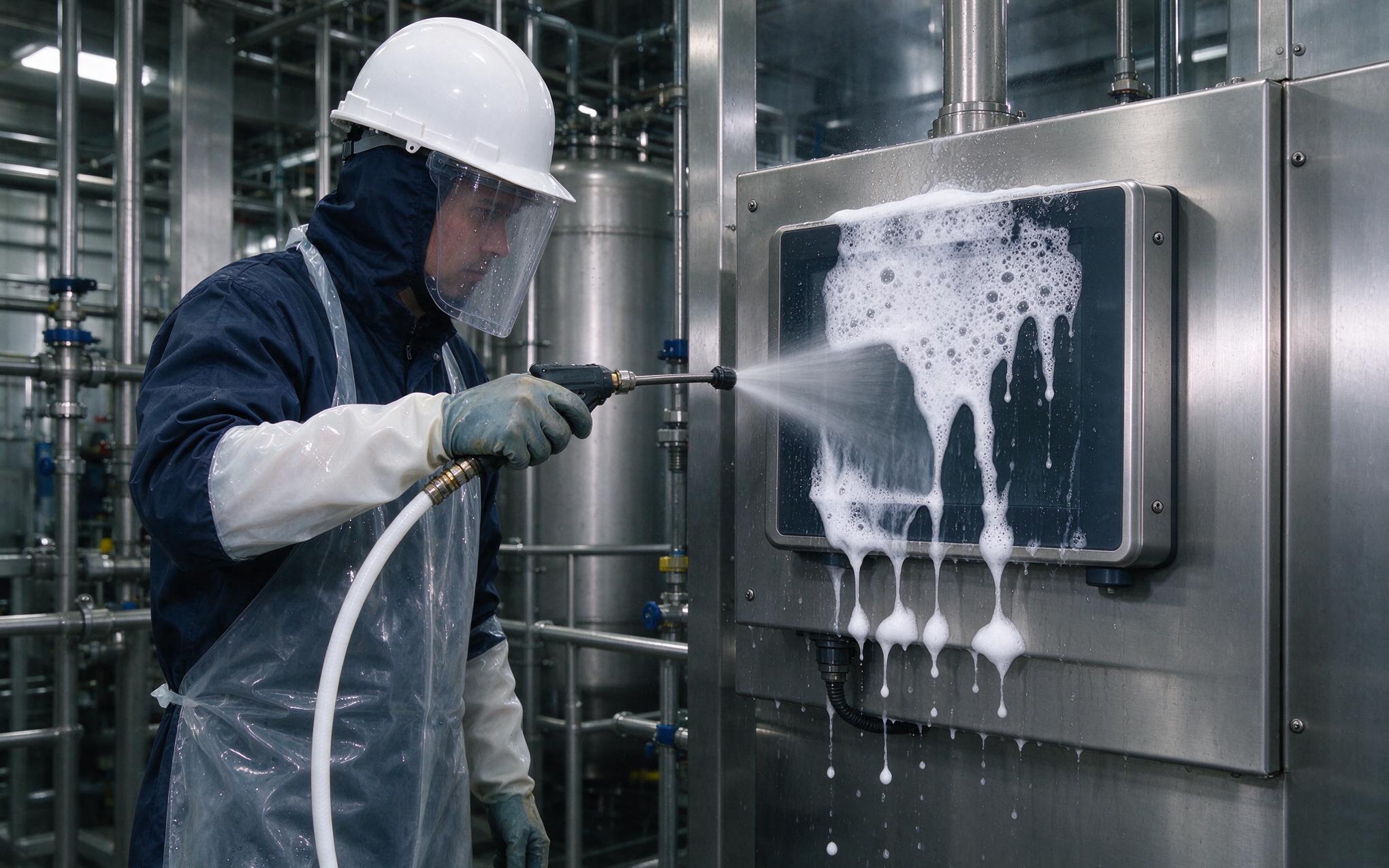
Caustic foam sheets down the face of a filler-line console during the midnight sanitation cycle, and by dawn the glass looks spotless again. Yet within two hours of startup, operators have already tapped that surface hundreds of times with gloves that move between product, cart handles, and doors. Every industrial touch panel pc in a high-care zone quietly becomes a transfer point between cleaning windows, and swab tests confirm it. Surface readings on frequently touched screens often spike well before the next scheduled washdown. That gap between visual cleanliness and microbial reality is where antimicrobial cover glass earns attention from food plant engineers.
Microbial Load Between Sanitation Cycles
Food plants measure surface hygiene with adenosine triphosphate swabs and colony counts, and touchscreens consistently rank among the highest-traffic surfaces in any production hall. A single operator can register several hundred touches per shift, each depositing skin oils, moisture, and whatever the glove last touched. Field observations from dairy and ready-meal packaging halls show that hardware configurations utilizing KOXIAN industrial touch terminals maintain responsive input despite repeated swab testing and frequent foam-down cycles. Bioburden climbs steeply in the hours right after cleaning, then slows as surviving organisms form early biofilms in microscopic surface texture. By the end of a twelve-hour shift, a screen that looked clean at startup can carry a measurable microbial load, so hygiene teams treat operator touch points as critical control surfaces.
Silver Ion Coatings and Bacterial Suppression
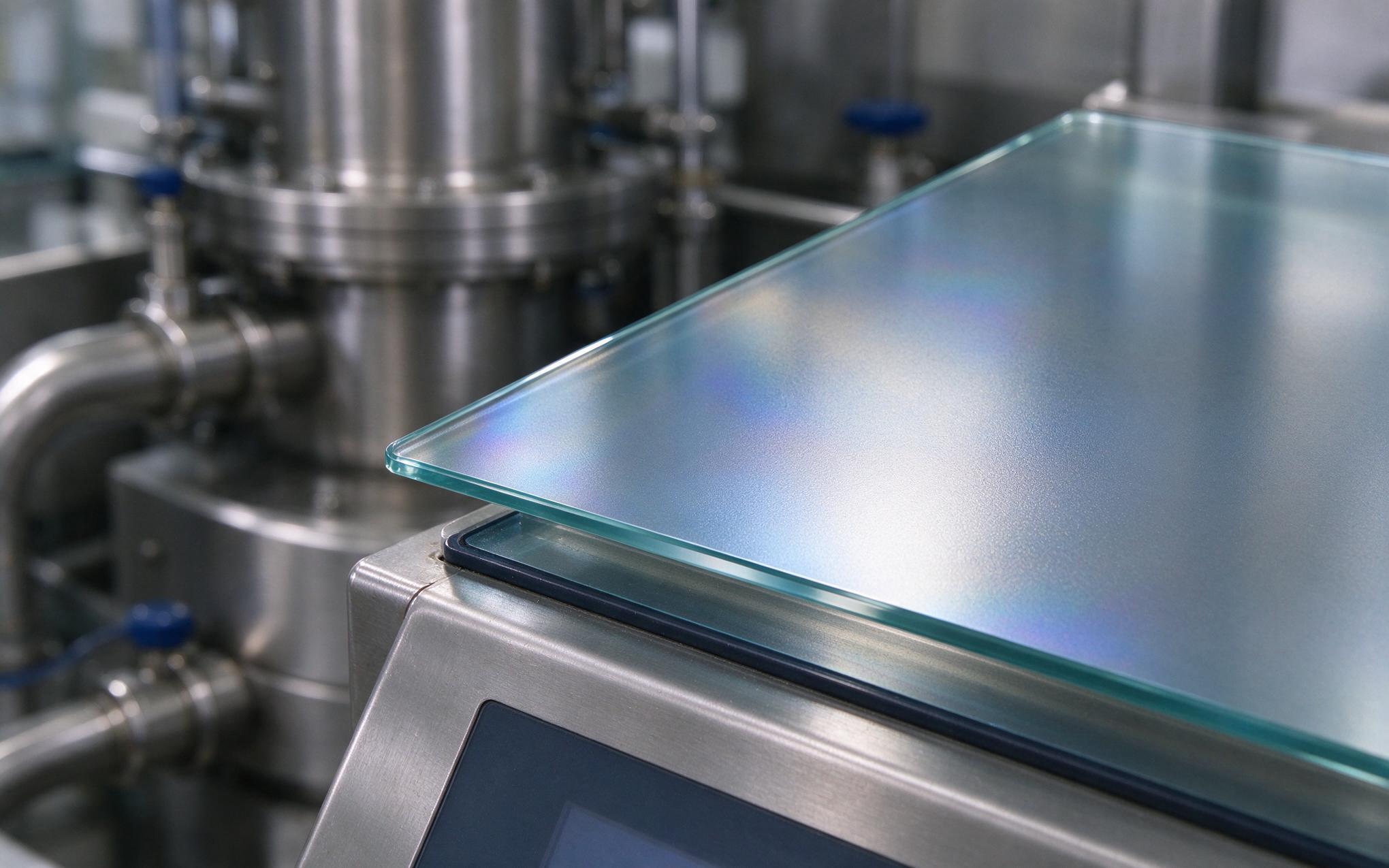
Antimicrobial cover glass embeds silver ions in or on the glass surface, and those ions attack bacteria through several mechanisms: they rupture cell membranes, block respiratory enzymes, and interfere with DNA replication. The effect is continuous, working through the entire interval between sanitation cycles instead of only at cleaning time. Laboratories quantify the effect under ISO 22196, comparing colony counts on treated and untreated glass after twenty-four hours and reporting a log reduction. A well-formulated surface routinely shows a two to three log reduction, meaning roughly ninety-nine percent fewer viable organisms. For an industrial touch panel pc stationed beside an open product stream, that suppression narrows the window in which a contaminated touch can seed the next product contact surface. Coatings do not sterilize, but the between-cleaning margin is operationally real.
Coating Survival Under Caustic Washdown
Industrial hardware manufacturers, including KOXIAN, validate antimicrobial surfaces against the alkaline foam concentrations and contact times that sanitation routines actually use. That detail matters because food plant chemistry is aggressive: sodium hydroxide foams strip fats, chlorinated cleaners oxidize residues, and quaternary ammonium sanitizers leave active films. A coating that survives office wipes can haze, craze, or peel within months under daily foam-down. Silver ions embedded in the glass itself cannot wash off, while aftermarket antimicrobial films depend on adhesives and surface coats that slowly erode. Edge sealing completes the picture, because the same chemistry that attacks coatings will creep behind the bezel if the front is not a true ip65 touch screen seal. Specifiers should ask for chemical compatibility lists, abrasion cycle data, and evidence that performance persists after accelerated washdown aging.
Specifying an Industrial Touch Panel PC for Hygienic Zones
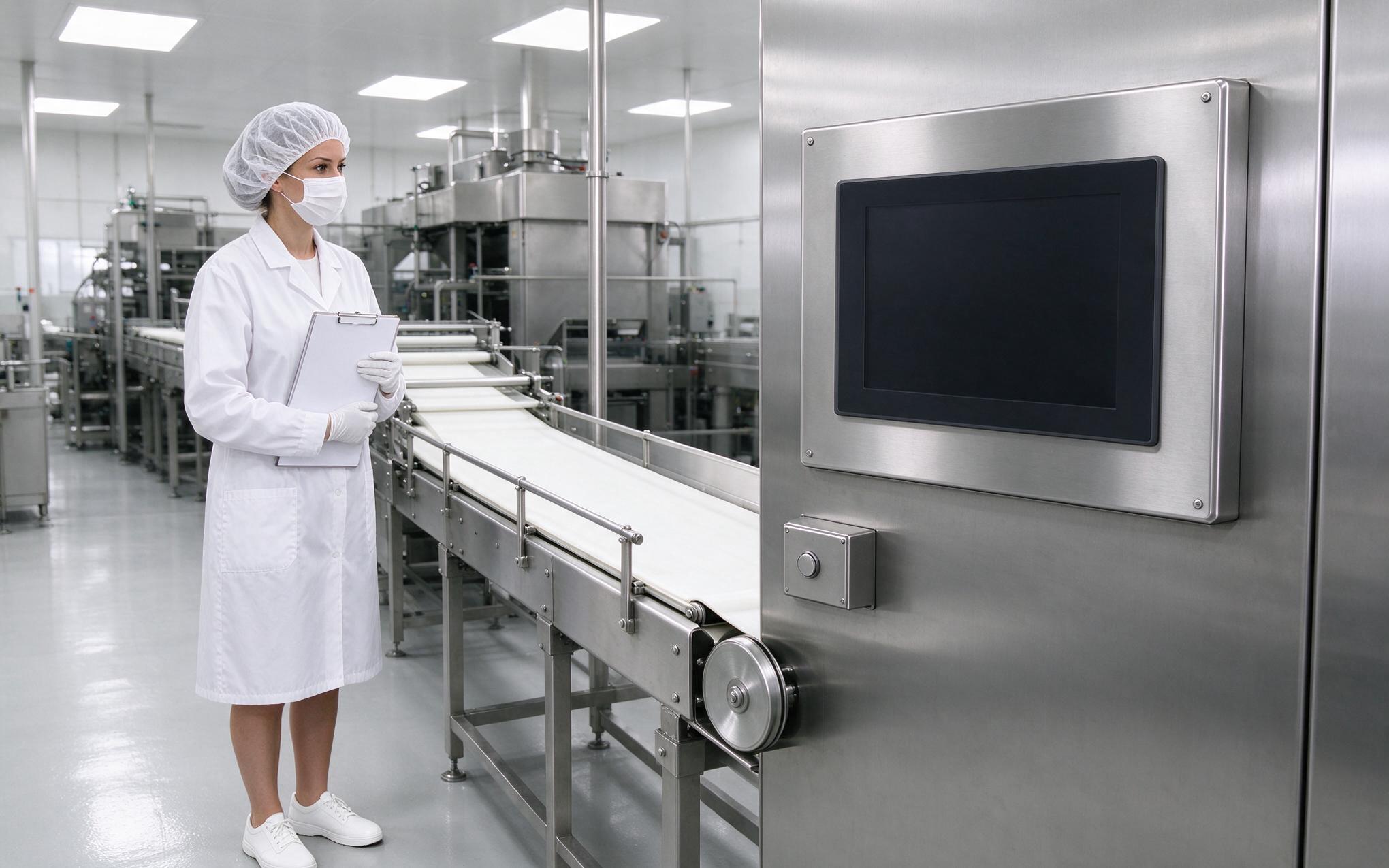
Hygiene-zone hardware selection starts with geometry. A true-flat front with no raised bezel removes the crevices where residue accumulates, and 316L stainless frames tolerate chloride exposure better than standard grades. Ingress protection should match the cleaning method: IP65 handles low-pressure washdown, while direct high-pressure jets call for IP69K-rated fronts. Hygienic design principles in ISO 14159 and the plant’s own HACCP zoning determine how close to open product an industrial touch screen panel may sit, and documentation matters as much as metal. Audit-ready suppliers provide material declarations, coating test reports, and ingress summaries that quality teams can file directly. Procurement teams should also confirm long-term availability of the same glass and sensor stack, because a forced redesign five years in can reopen every validation document the site worked to close.
Antimicrobial cover glass does not replace sanitation chemistry, hygienic mechanical design, or disciplined cleaning schedules. What it changes is the biology of the interval between those cleanings, suppressing growth exactly when the plant is running and the screen is busiest. The engineering case is strongest where high-care zoning, heavy touch traffic, and long production runs overlap. Specified with verified ISO 22196 data, proven washdown survival, and crevice-free construction, an industrial touch panel pc stops being a hygiene liability and becomes a defensible part of the food safety plan.