When procurement teams evaluate industrial panel PC connectivity, the hardware module cost is often the only figure on the comparison spreadsheet. This narrow focus obscures a far more significant reality: over a five-year deployment lifecycle, cellular data plan charges typically exceed hardware costs by a factor of three to eight, making the subscription the dominant cost driver in the total cost of ownership equation.
Hardware Module Costs: The Visible Entry Point
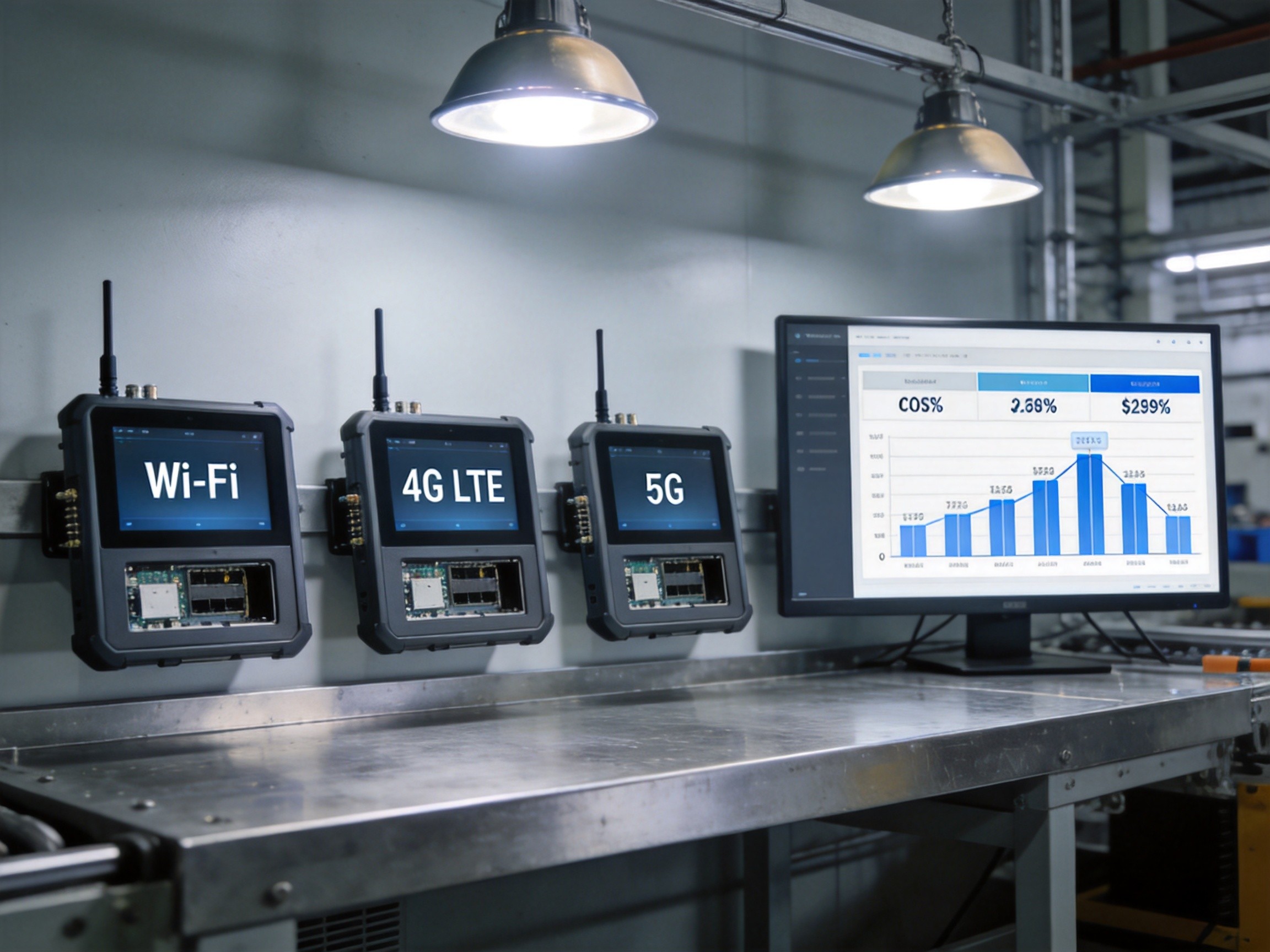
Wi-Fi modules are integrated into virtually all industrial panel PC platforms at negligible incremental cost, typically $15 to $30. 4G LTE embedded M.2 or mPCIe modules cost $60 to $120 per unit at industrial temperature ratings. 5G modules remain the premium option, with industrial-grade sub-6 GHz modules priced at $180 to $350, and mmWave-capable variants commanding $400 or more. The hardware cost differential between Wi-Fi-only and 5G-equipped panel PCs—roughly $300 to $400 per unit—is visible on the purchase order and attracts disproportionate attention during budgeting. However, this figure represents only 10 to 15 percent of the total five-year connectivity spend for a cellular-equipped device.
Data Plan Economics: The Dominant Cost Driver
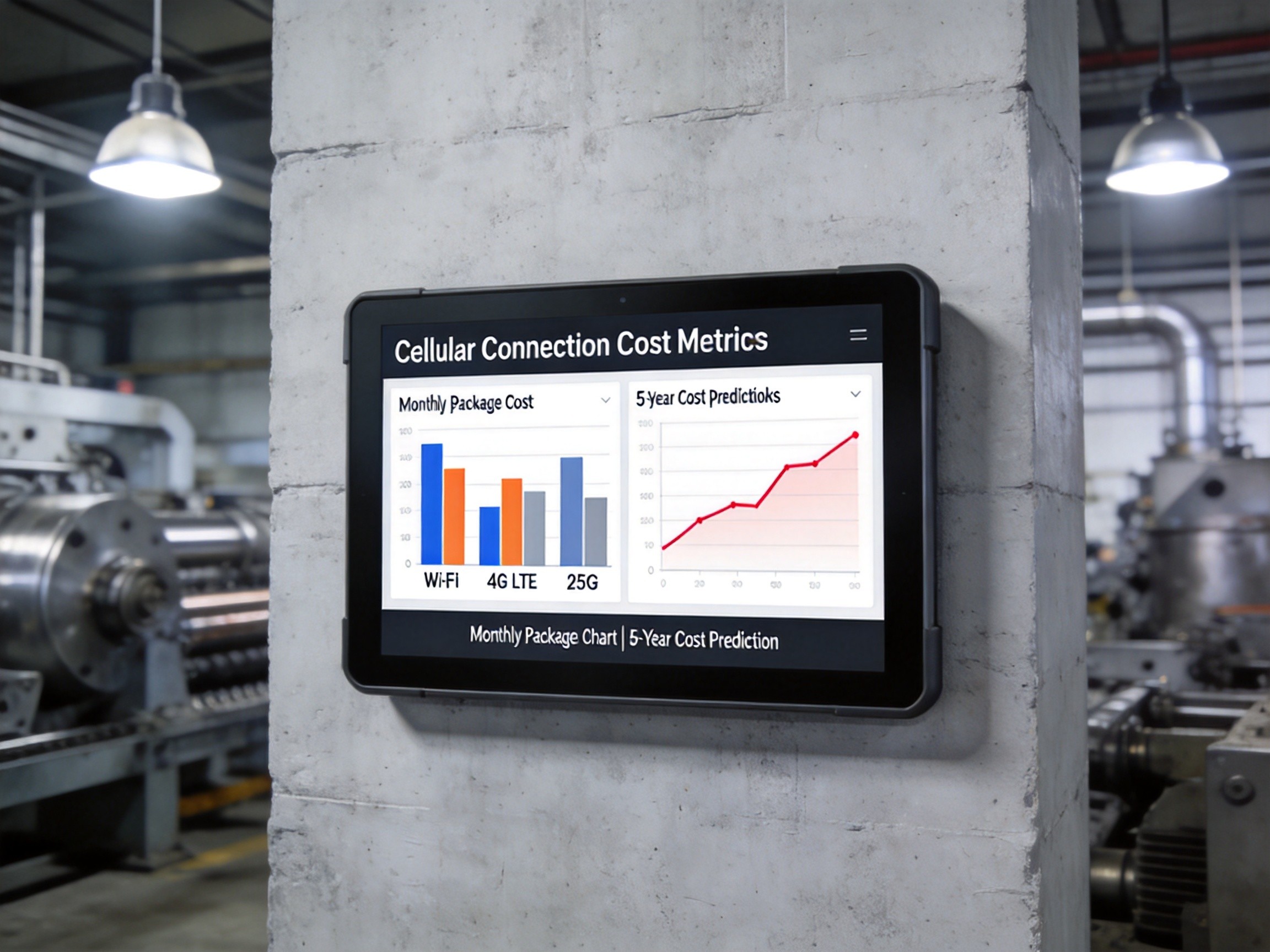
Industrial MES terminals and remote monitoring stations typically generate 50 to 500 MB per month for structured data, with higher volumes when software updates or remote desktop sessions are required. A 500 MB monthly plan for a single 4G LTE-connected panel PC ranges from $12 to $25 per month depending on carrier and region. Over five years, that subscription costs $720 to $1,500 per device—already exceeding the hardware cost. For 5G, carriers price IoT data plans at a 20 to 40 percent premium over 4G, pushing five-year costs to $900 to $2,100 per device. In a factory with 50 connected workstations, the five-year subscription commitment ranges from $36,000 to $105,000—a figure demanding the same rigorous scrutiny as any capital equipment purchase.
The 5-Year TCO Comparison Framework
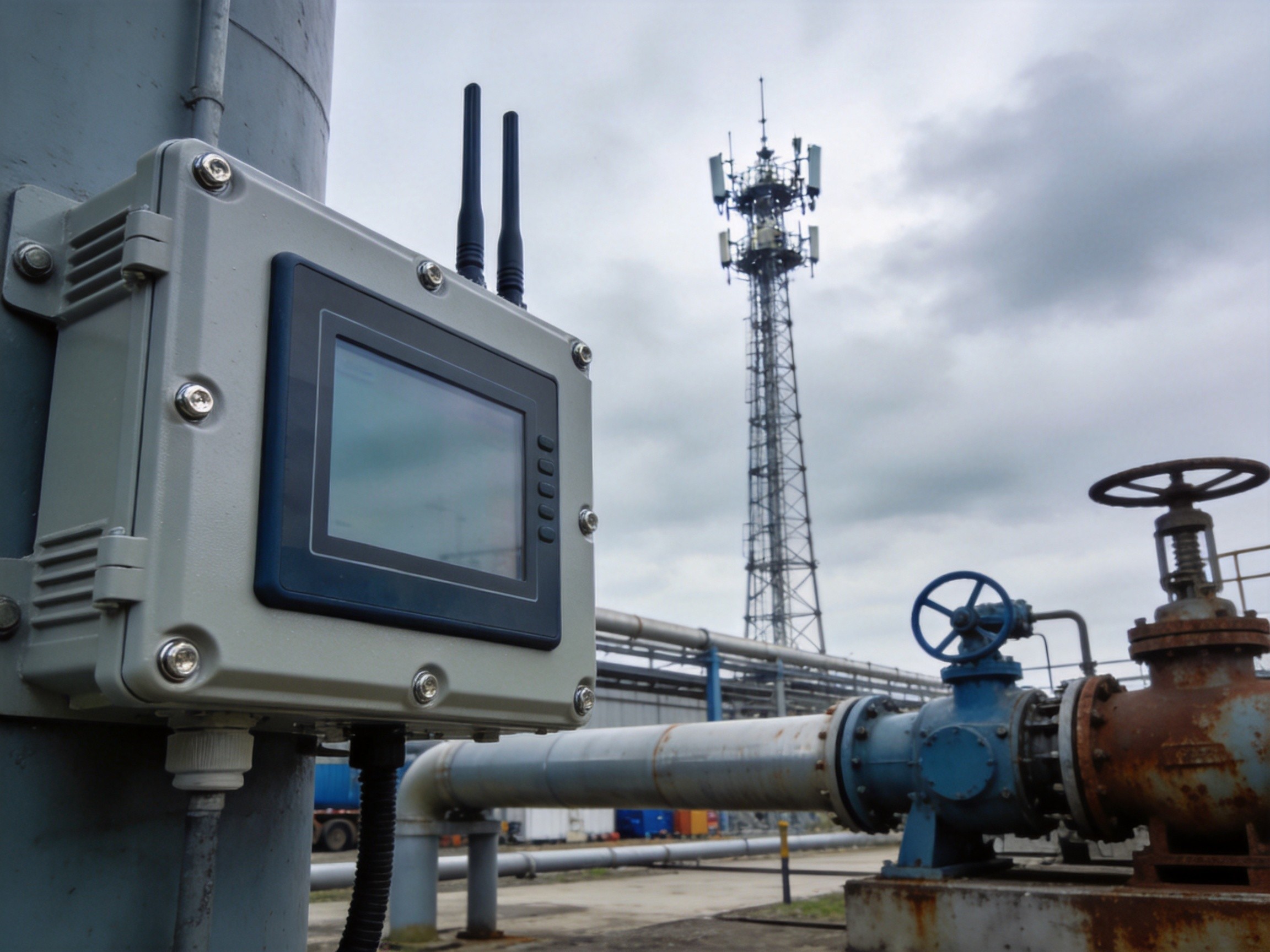
A comprehensive TCO framework for industrial panel PC connectivity must account for five categories: hardware module cost, data plan subscription fees, SIM management and carrier administration overhead, network infrastructure (access points, controllers, cabling for Wi-Fi), and downtime cost from connectivity failures. For a Wi-Fi deployment serving 50 panel PCs, hardware cost is negligible but infrastructure—industrial-grade access points at $400 to $800 each, a wireless LAN controller, and certified Ethernet cabling—typically totals $8,000 to $15,000. For 4G LTE, infrastructure costs are near zero but five-year data plan subscriptions for 50 devices reach $36,000 to $75,000. The crossover point where cellular becomes more expensive than Wi-Fi occurs at approximately 15 to 20 devices. For geographically distributed assets where Wi-Fi infrastructure is impractical—remote pumping stations, outdoor logistics terminals, mobile equipment—the infrastructure cost of Wi-Fi is effectively infinite, making cellular the only viable option regardless of TCO comparison.
Procurement Justification: Building the Business Case
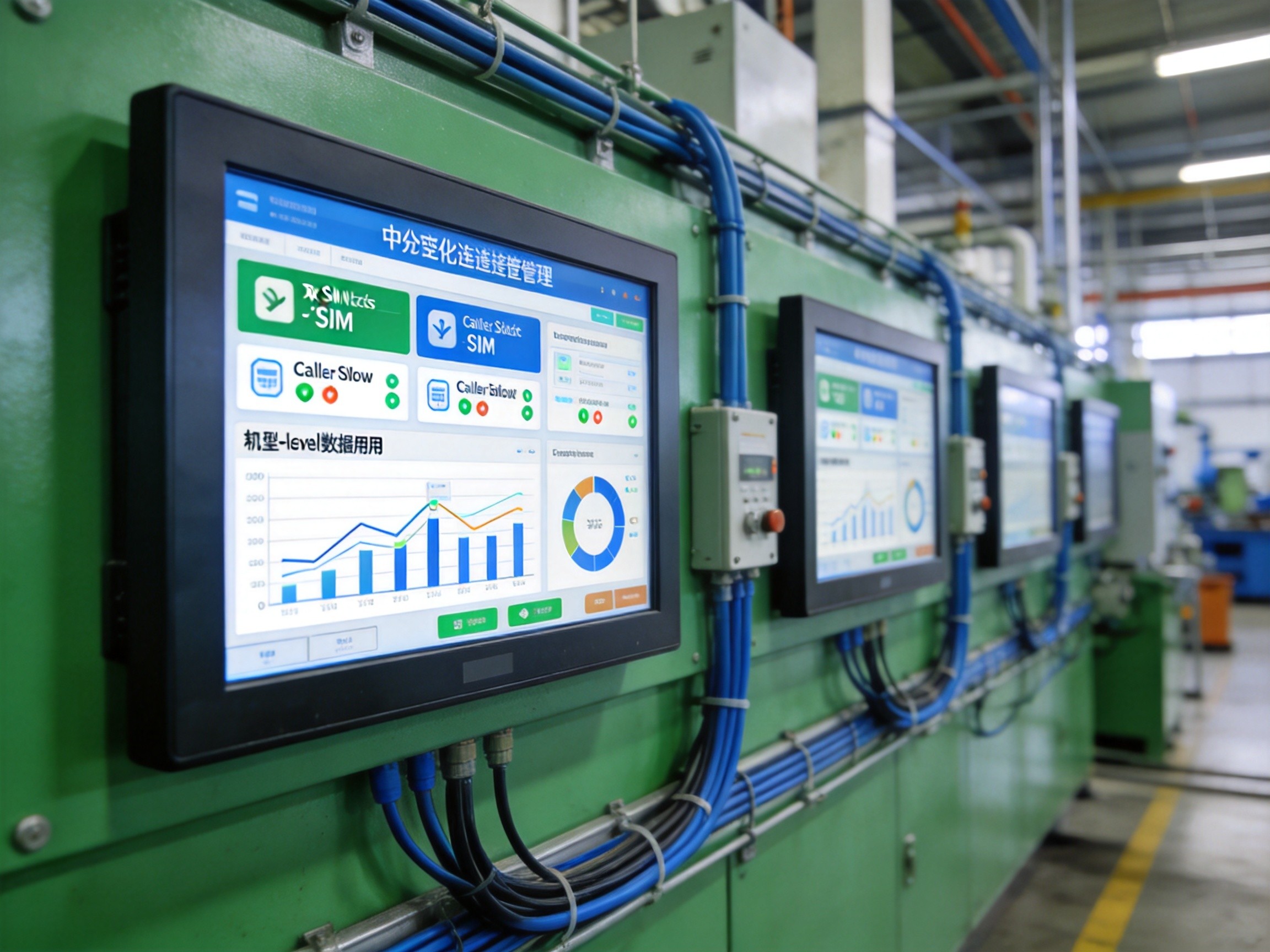
The most effective procurement strategy separates hardware and connectivity purchasing decisions while analyzing them together. Negotiating data plan pricing across the entire fleet rather than device-by-device typically yields 15 to 30 percent discounts from carrier list prices. Pooled data plans, where multiple devices share a common data allowance, reduce per-device costs when individual usage is low and variable. For mission-critical deployments, dual-SIM configurations with automatic carrier failover add approximately $40 to $80 in hardware cost but eliminate the single-point-of-failure risk of single-carrier deployments. The cost of a single hour of unplanned production line downtime—often $5,000 to $50,000—dwarfs the entire five-year connectivity cost for a single workstation, making redundancy a straightforward insurance decision. KOXIAN industrial panel PCs with dual-SIM capability and carrier-agnostic modem firmware provide the hardware foundation for this redundancy strategy.
Conclusion
The five-year connectivity cost for industrial panel PCs is overwhelmingly dominated by recurring data plan charges, not hardware module costs. Procurement teams that treat connectivity as a capital expense—comparing only module prices—are optimizing the wrong variable. A disciplined TCO analysis that projects five-year data plan commitments, negotiates fleet-level pricing, and evaluates redundancy against downtime cost exposure produces materially different outcomes than a hardware-cost-only comparison. Connectivity choices should be treated as an operational expenditure planning exercise with the same rigor applied to any recurring cost commitment in the manufacturing budget.