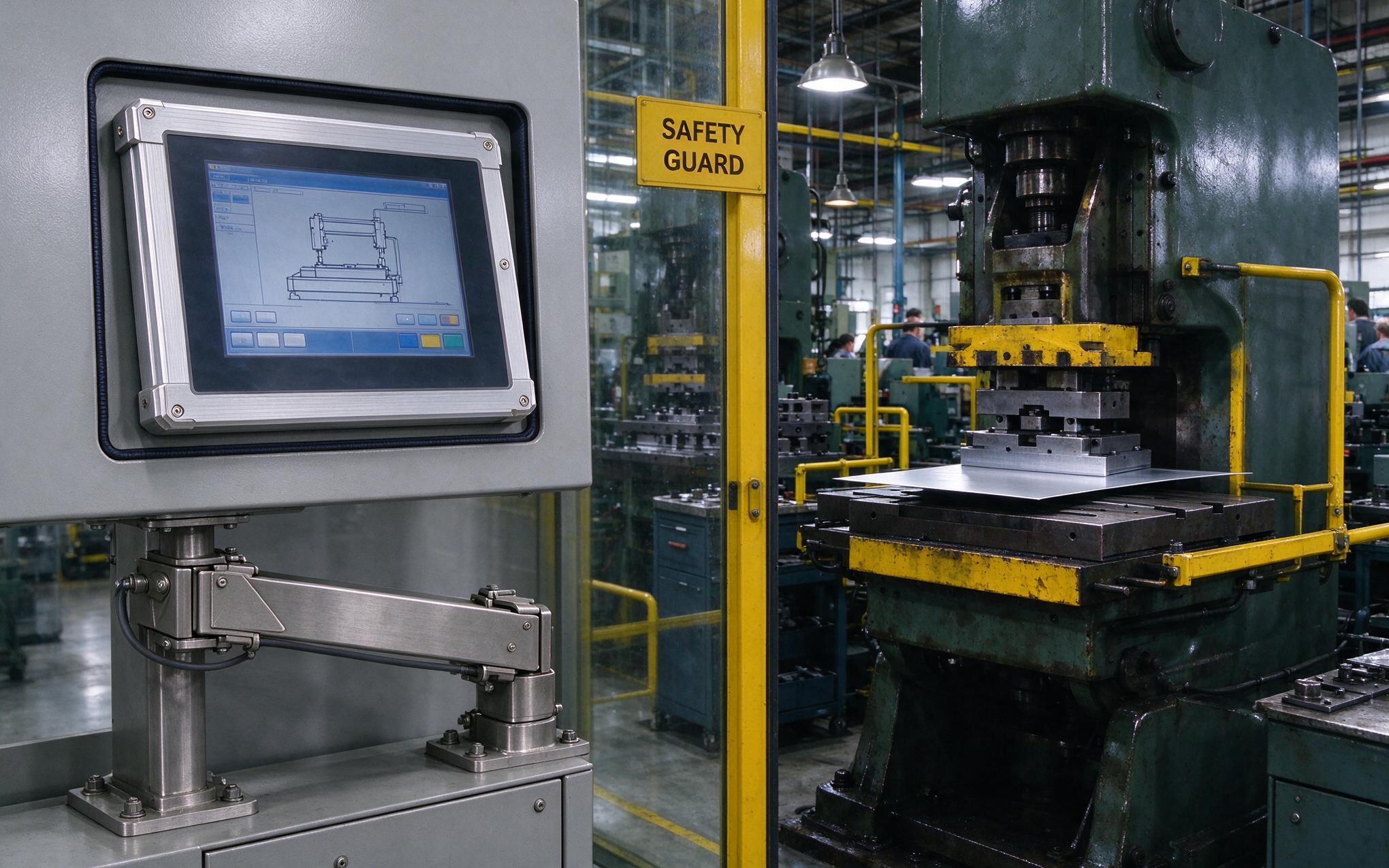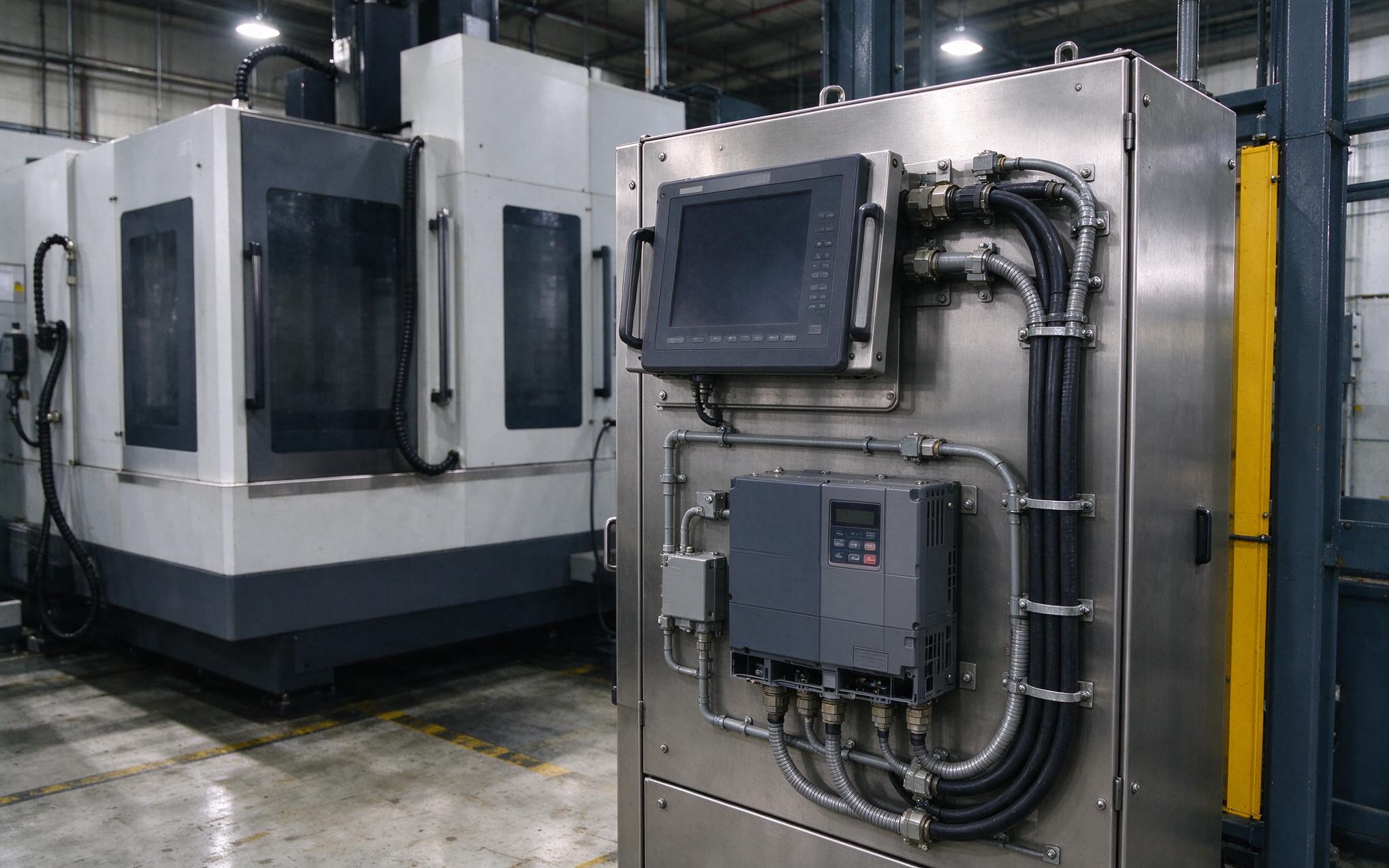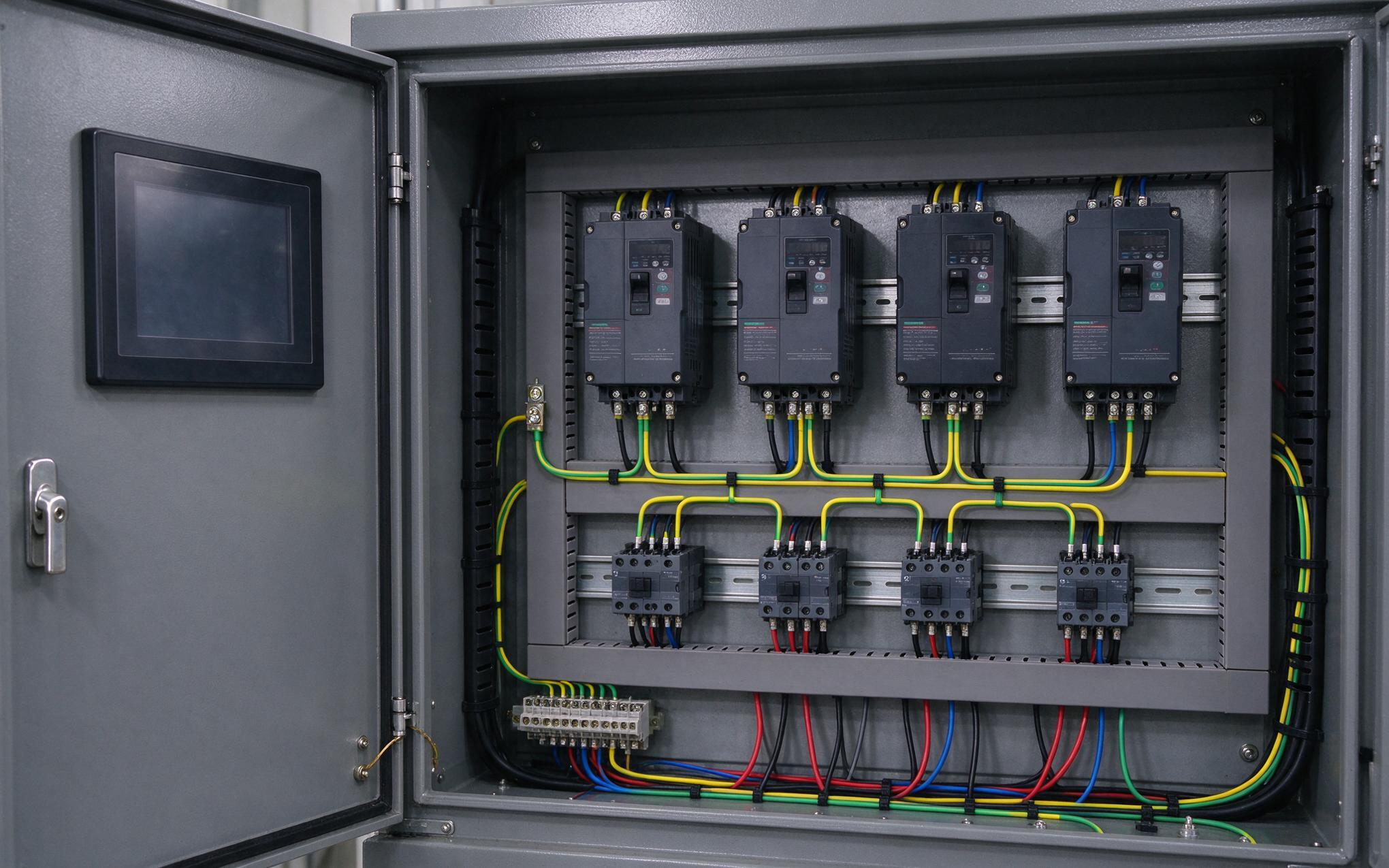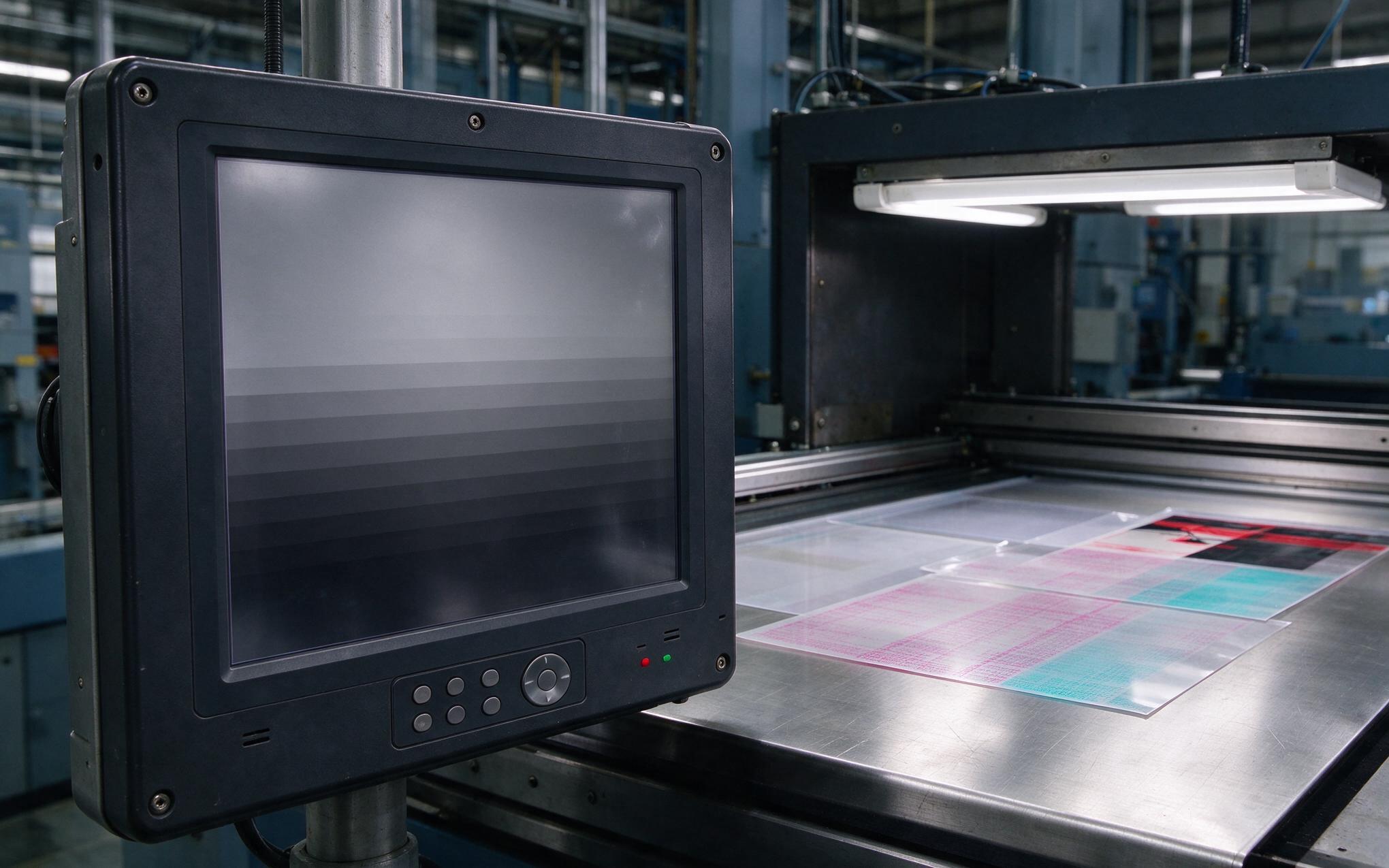
Industrial power grids rarely deliver clean, stable voltage. A 24 V DC bus in a steel mill can swing from 18 V during motor start-up to 32 V when regenerative braking feeds energy back into the line. According to IEC 61000-4-5, transient surges on 24 V systems can exceed 40 V for microseconds. For an industrial IP65 panel pc mounted on a packaging line or a bottling filler, a narrow input window means immediate shutdown or silent data corruption when the line sags. Wide voltage input designs address this by accepting a broad DC range — typically 9 V to 36 V — without external regulation, keeping the unit running through the exact conditions that knock consumer-grade terminals offline.
Switching Regulator Topologies for Stable Operation Across Voltage Swings
The core of any wide voltage input architecture is a switching regulator that maintains a constant internal rail regardless of the supply fluctuation. Buck converters step down high input voltages to the 5 V or 12 V rails required by the processor and memory, while buck-boost topologies handle situations where the input drops below the target output. In industrial IP65 panel pc designs, manufacturers like KOXIAN specify regulators with efficiency above 90 percent across the full input range, minimizing waste heat inside a sealed enclosure where convective cooling is the only available path. This matters because every watt of lost efficiency becomes a watt of heat trapped behind the gasket, pushing junction temperatures toward the rated ceiling. Industrial-grade regulators also include soft-start circuits that ramp up output voltage gradually, preventing inrush currents that could trip upstream breakers on a shared 24 V bus feeding multiple devices.
EMC Filtering and Surge Protection in Sealed Enclosures
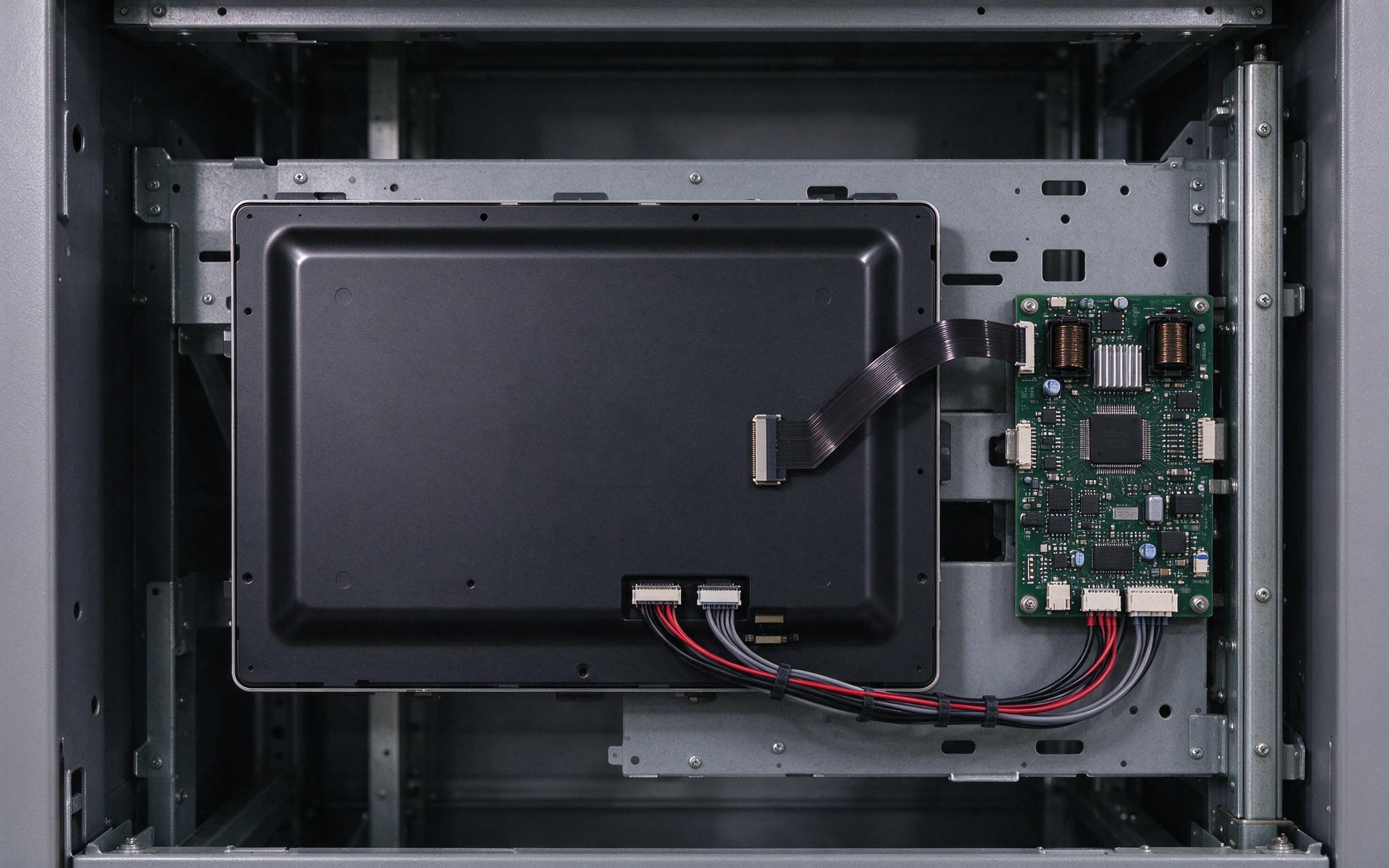
A wide voltage input range is only useful if the power stage can survive the transients that define real industrial environments. IEC 61000-4-5 defines the surge immunity test for equipment connected to DC distribution networks, and industrial panel PCs targeting factory floors must pass Level 3 or higher — meaning survival of 2 kV differential-mode and 4 kV common-mode surges. Inside an IP65-rated enclosure, there is no room for a separate surge protection module; the filtering must be integrated onto the main board. Multi-stage EMI filters combine common-mode chokes, differential-mode inductors, and metal oxide varistors (MOVs) in a compact footprint. The challenge is thermal: MOVs absorb surge energy as heat, and in a fanless sealed chassis, that heat must dissipate through the aluminum back plate to the mounting surface. Designs from KOXIAN route surge protection components directly against the conductive back panel, using thermal interface materials to bridge the gap between the MOV and the aluminum skin. This direct coupling reduces the thermal resistance path and prevents the varistor from reaching its de-rating threshold during repeated surge events — a common failure mode in sealed industrial computing hardware where airflow is nonexistent.
Selection Criteria for Wide Voltage Input Industrial Panel PCs
Procurement teams evaluating industrial IP65 panel pc models should verify four specifications beyond the headline input range. Confirm the actual operating range under load — some manufacturers quote 9–36 V at no load but derate to 12–30 V at full CPU utilization. Check whether the unit carries UL 508 or EN 61010-2-201 certification for industrial control equipment, which validates the power stage design against safety standards rather than just functional performance. Review the transient response specification: a regulator that recovers from a 10 V step change in under 500 microseconds will prevent processor resets during line sags, while slower recovery times can cause watchdog timer trips. Examine the input reverse polarity and overvoltage protection ratings — a panel PC deployed on a mobile platform or temporary installation may encounter miswired connectors, and a 36 V absolute maximum rating without reverse polarity protection is a field failure waiting to happen. Wide voltage input designs that address all four criteria deliver measurable uptime gains in environments where power quality is a daily variable rather than a given.
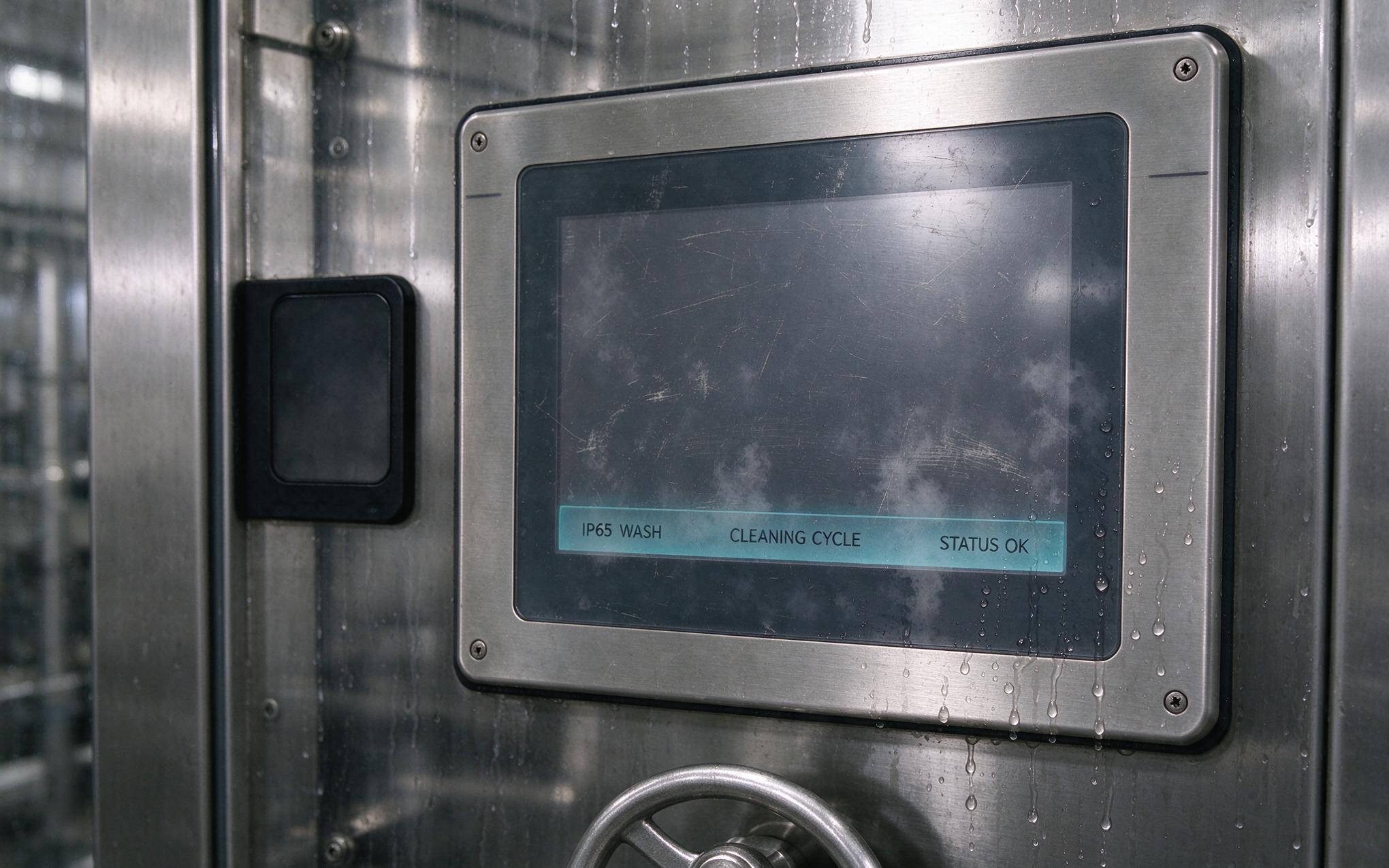
Reliable power handling is not a luxury feature in industrial computing — it is the baseline requirement that determines whether a panel pc survives its opening month on a factory floor or becomes an expensive paperweight. Wide voltage input architectures, paired with proper EMC filtering and thermally integrated surge protection, give industrial IP65 panel pc hardware the electrical resilience to match its mechanical sealing. For system integrators specifying equipment for environments where voltage instability is the norm rather than the exception, the power stage design is as critical as the ingress protection rating stamped on the front bezel.