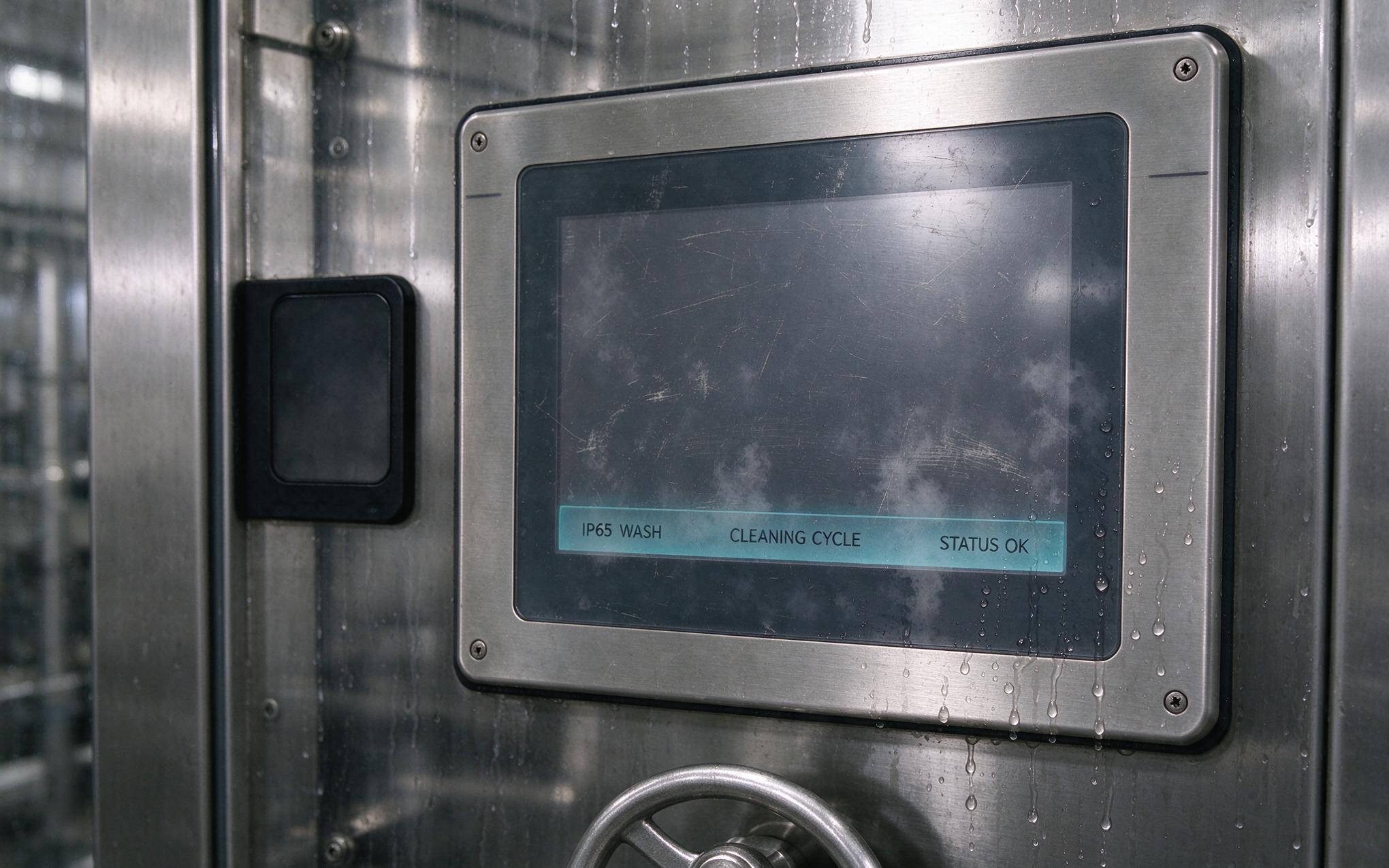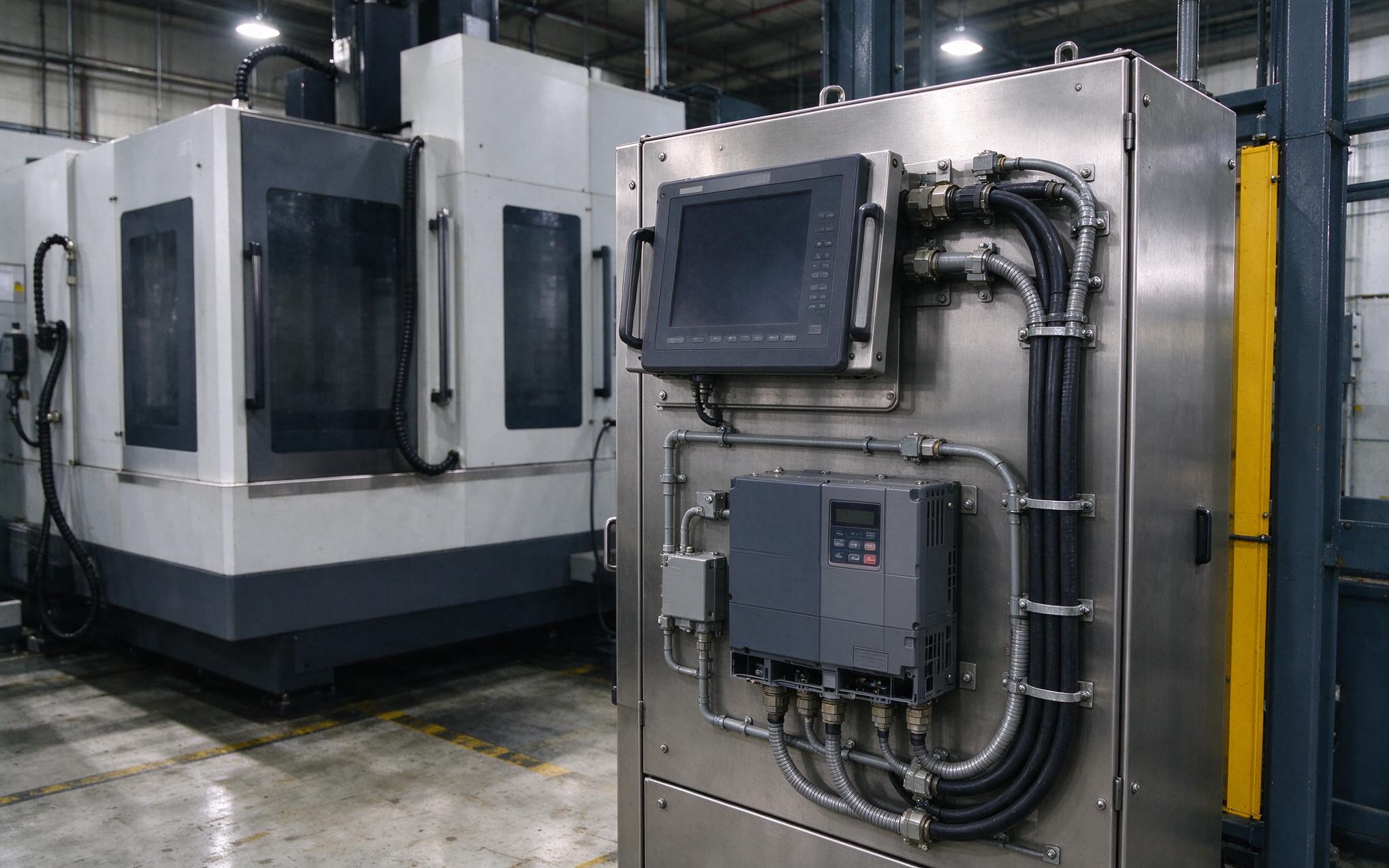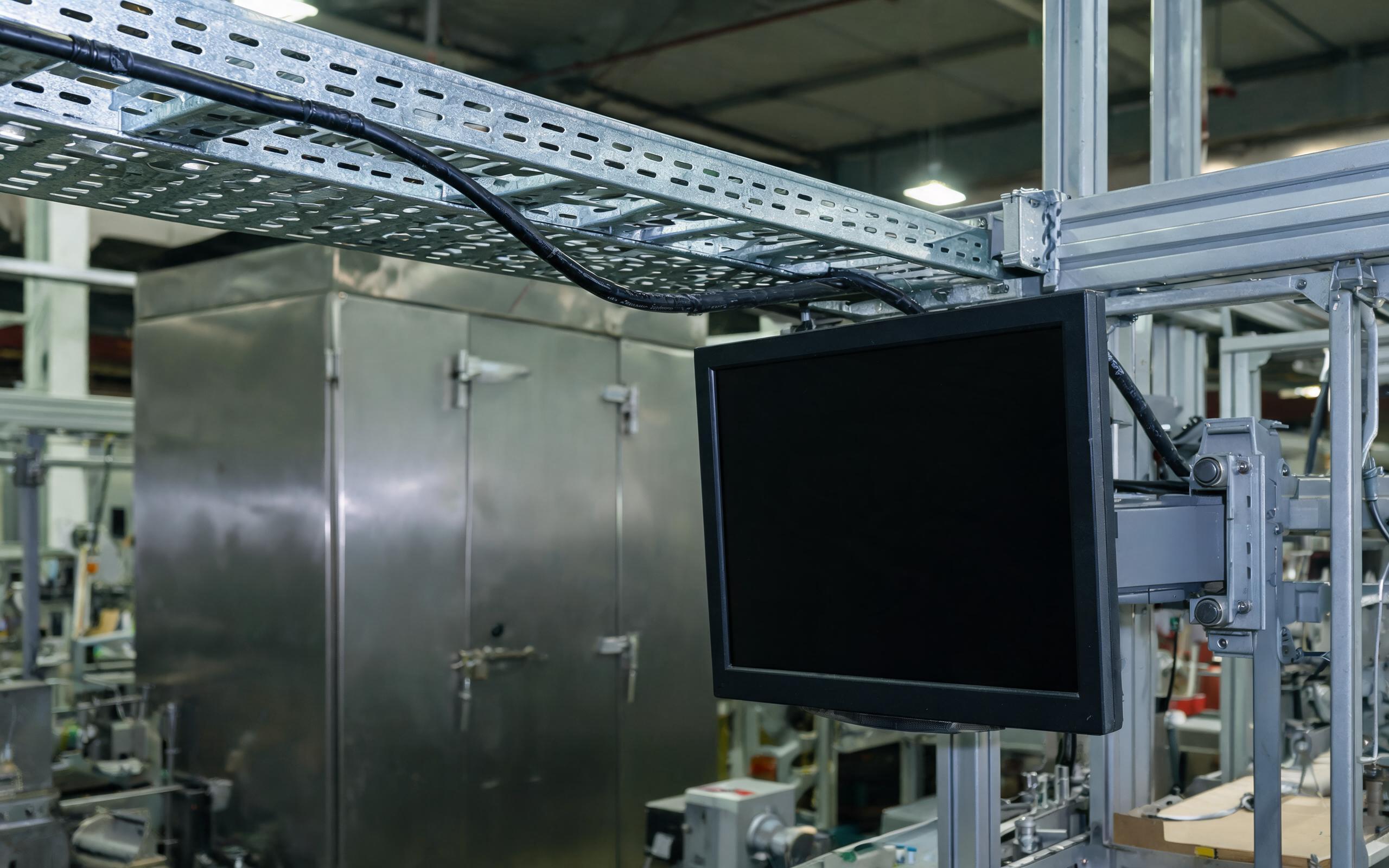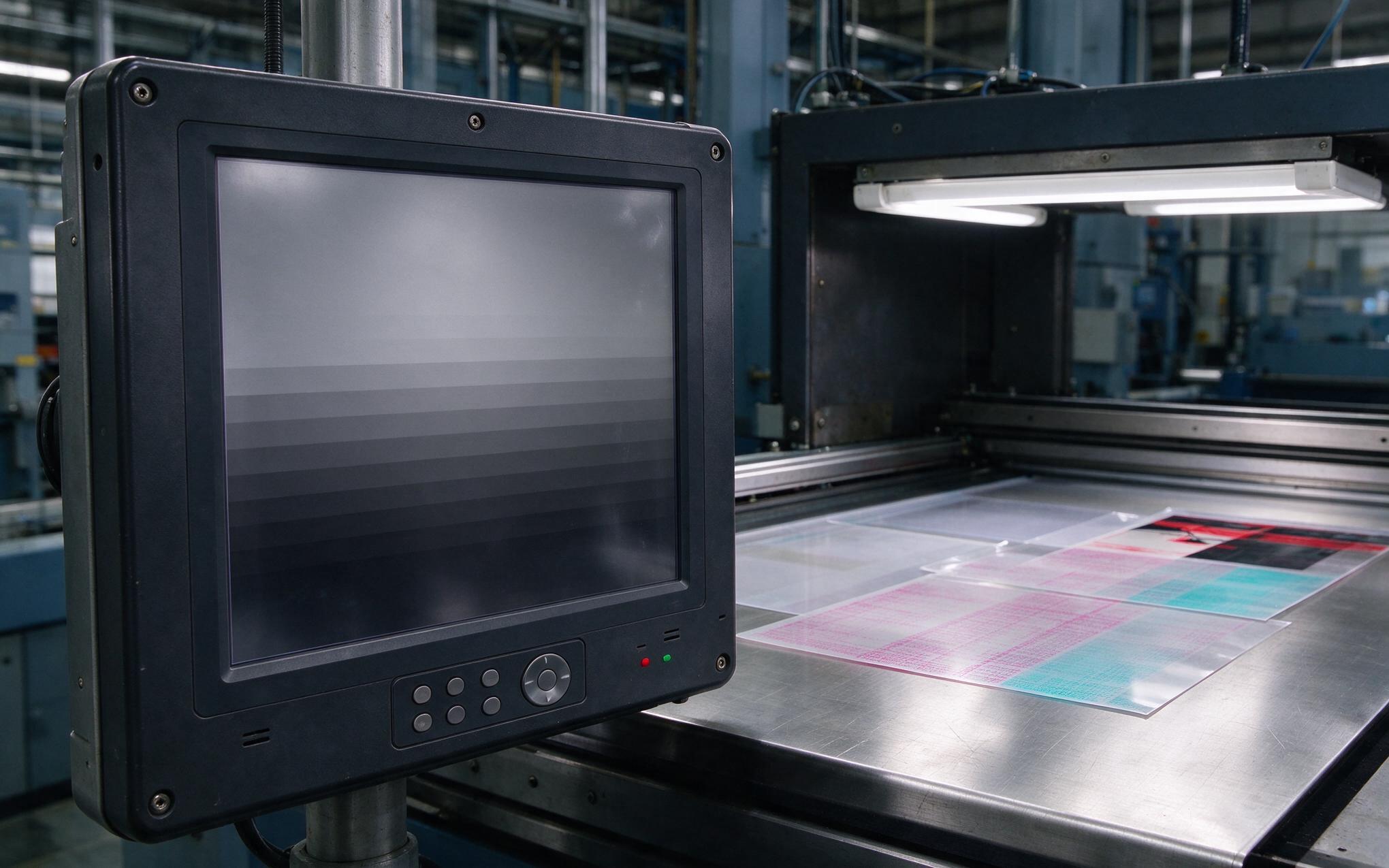
A warranty claim from a container terminal described housing perforation on units barely two years old, while identical hardware at the same operator’s inland rail yard showed no measurable degradation after six. Nothing was wrong with either batch. The coastal installation sat within 400 meters of open water, where airborne chloride settled continuously on every surface and turned ordinary condensation into an electrolyte. A rugged industrial monitor selected against inland experience carries no defense against that mechanism, because the ingress rating that governs dust and water says nothing about what dissolved salt does to metal once it arrives.

Understanding Galvanic Coupling at Mounting Interfaces
Corrosion accelerates wherever two dissimilar metals share an electrolyte, and mounting hardware is where that condition is created almost by accident. An aluminum housing bolted to a painted steel column with stainless fasteners forms a galvanic couple, and salt film completes the circuit. The aluminum acts as anode and loses material, concentrated at the fastener where current density is highest, which is why perforation appears at bracket holes rather than across a panel face. Separation in the galvanic series predicts severity, so aluminum against stainless is considerably worse than aluminum against zinc plating. Specifying isolation for a rugged industrial monitor through nylon shoulder washers, isolating gaskets, or matched fastener alloys costs very little and removes the fastest failure path at a coastal site.

Recognizing Chloride Deposits as a Persistent Load
Salt exposure differs from rain because it does not dry harmlessly. Chloride deposits are hygroscopic, drawing moisture from humid air and maintaining a conductive film on surfaces long after any visible spray has stopped. A structure 400 meters from surf can receive several hundred milligrams of chloride per square meter each day, and enclosure faces, vent louvers, and cable entries collect it steadily. That film then works on the housing of a rugged industrial monitor between rain events rather than during them. ISO 9223 classifies these conditions as corrosivity categories C4 or C5, whereas most inland industrial sites fall in C2 or C3, a distinction worth quoting directly in a specification because it converts a vague reference to marine air into a defined design condition.

Selecting Alloys for Rugged Industrial Monitor Housings
Material choice does more work than coating thickness at a coastal site. The 5000 series aluminum alloys resist chloride attack considerably better than 2000 series alloys, whose copper content invites pitting, and hard anodizing outperforms simple paint because it does not create a film that can chip and trap electrolyte underneath. Stainless grade matters too, since 304 pits readily in chloride service while 316 with its molybdenum content holds up far better for exposed fasteners and brackets. Field observations from port terminals show that configurations using KOXIAN anodized aluminum housings with isolated stainless hardware retain surface integrity where painted steel equivalents in the same row show rust bleed within two seasons. A waterproof industrial monitor rated for immersion still corrodes if the metal underneath was selected for an inland assumption.

Setting Service Intervals That Match Site Corrosivity
Coastal installations need a maintenance rhythm rather than a one-time material decision. A fresh water rinse on a defined schedule removes accumulated chloride and interrupts the corrosion cycle for the cost of a few minutes per unit, which is why marine operators fold it into existing washdown rounds. Inspection on a rugged industrial monitor should target fastener heads, bracket interfaces, and cable gland threads, since those hide damage that a painted face never reveals. When specifying a rugged industrial monitor for these locations, design approaches such as those adopted in the KOXIAN G1 series document alloy grade and fastener material explicitly so that a replacement bracket fitted years later does not reintroduce a galvanic couple. Inland sites can safely run longer intervals, and applying coastal frequency there simply consumes labor without measurable benefit.
Distance from open water changes the failure mechanism rather than its severity, which is why a specification validated inland can perform poorly at a terminal without any manufacturing defect. Galvanic coupling at mounting hardware, hygroscopic chloride films, and alloy selection govern coastal service life, while inland deployments are dominated by dust and thermal cycling instead. Stating an ISO 9223 corrosivity category, naming alloy and fastener grades, and setting a rinse interval matched to the site turns recurring corrosion claims into a documented engineering position.