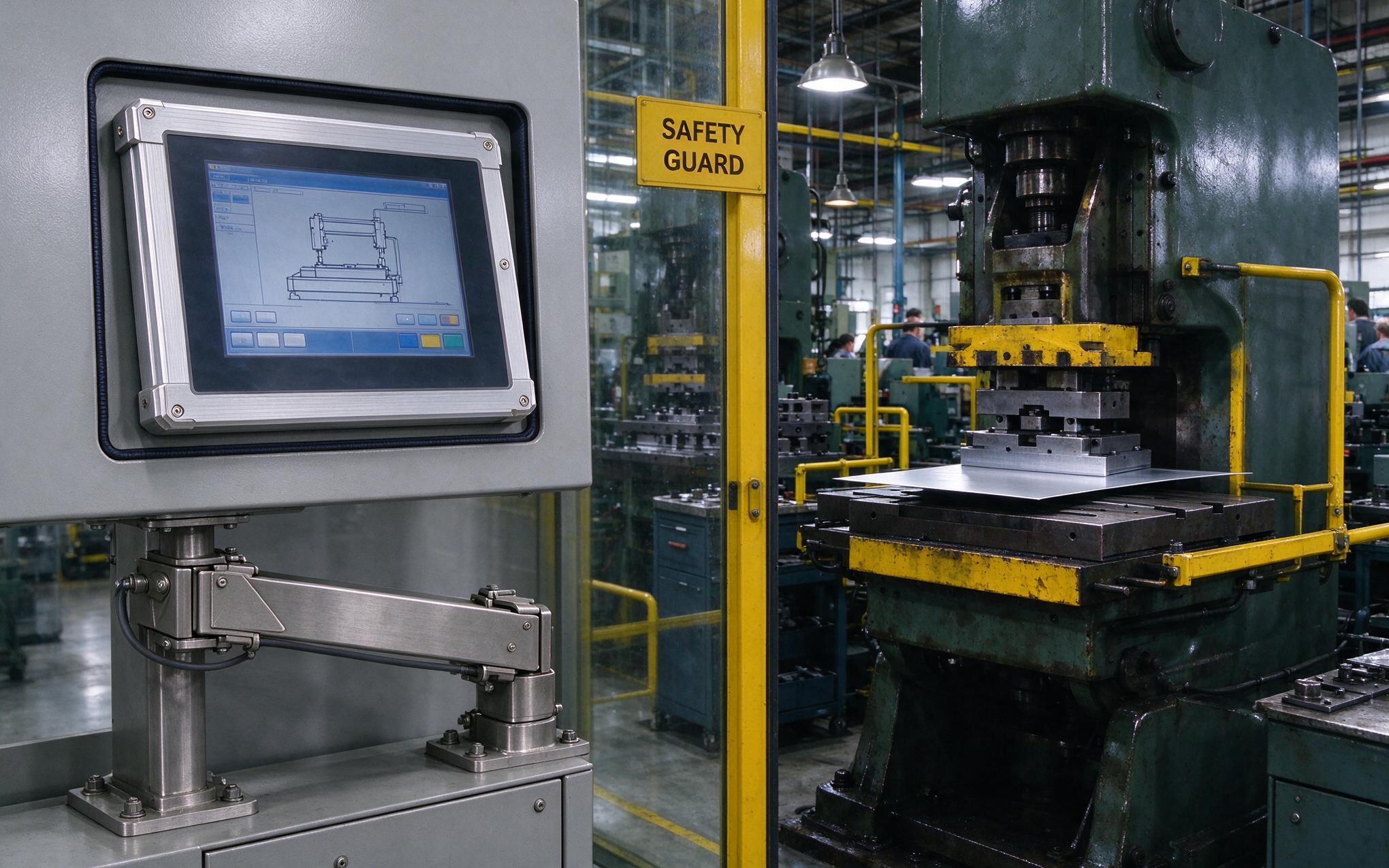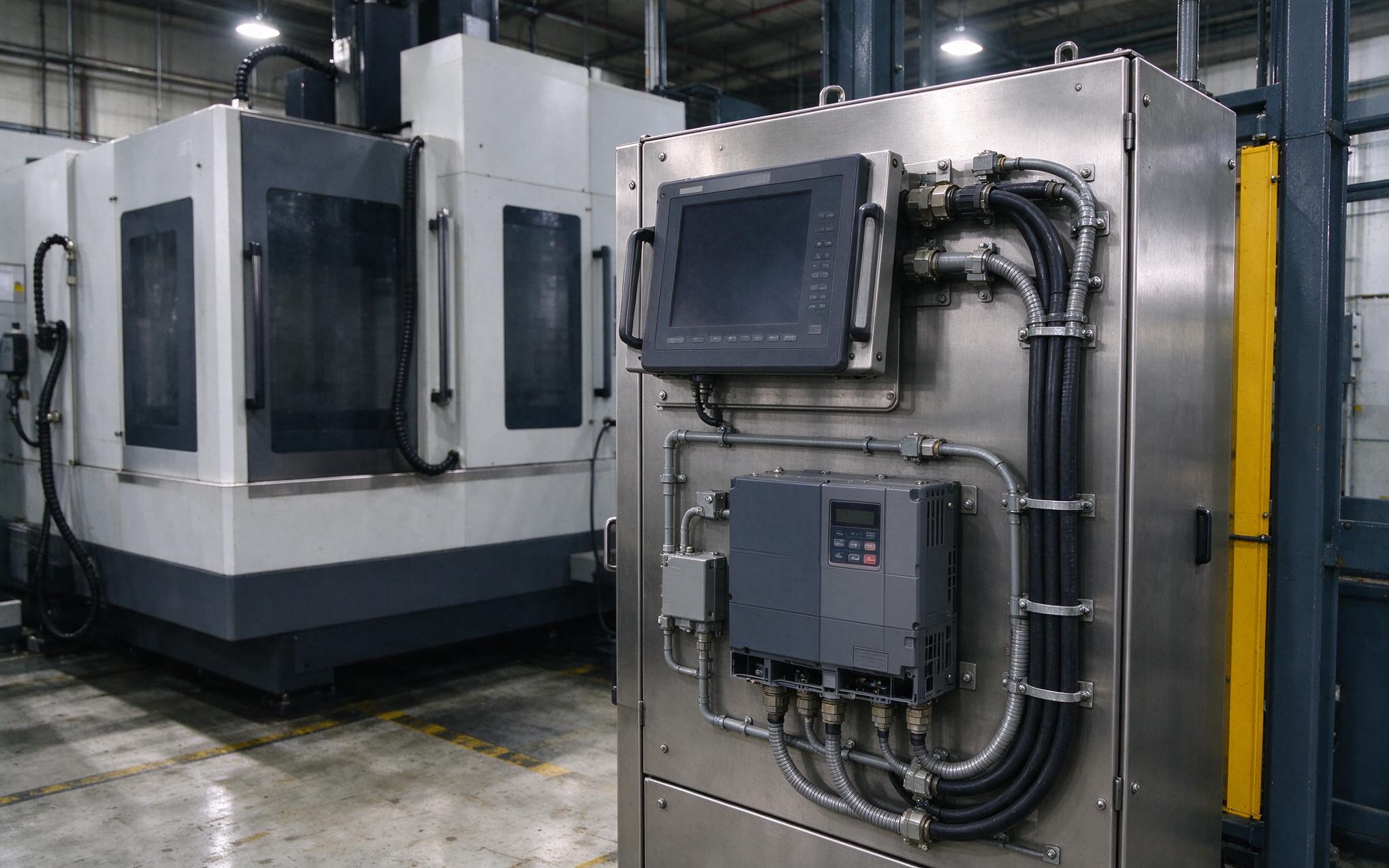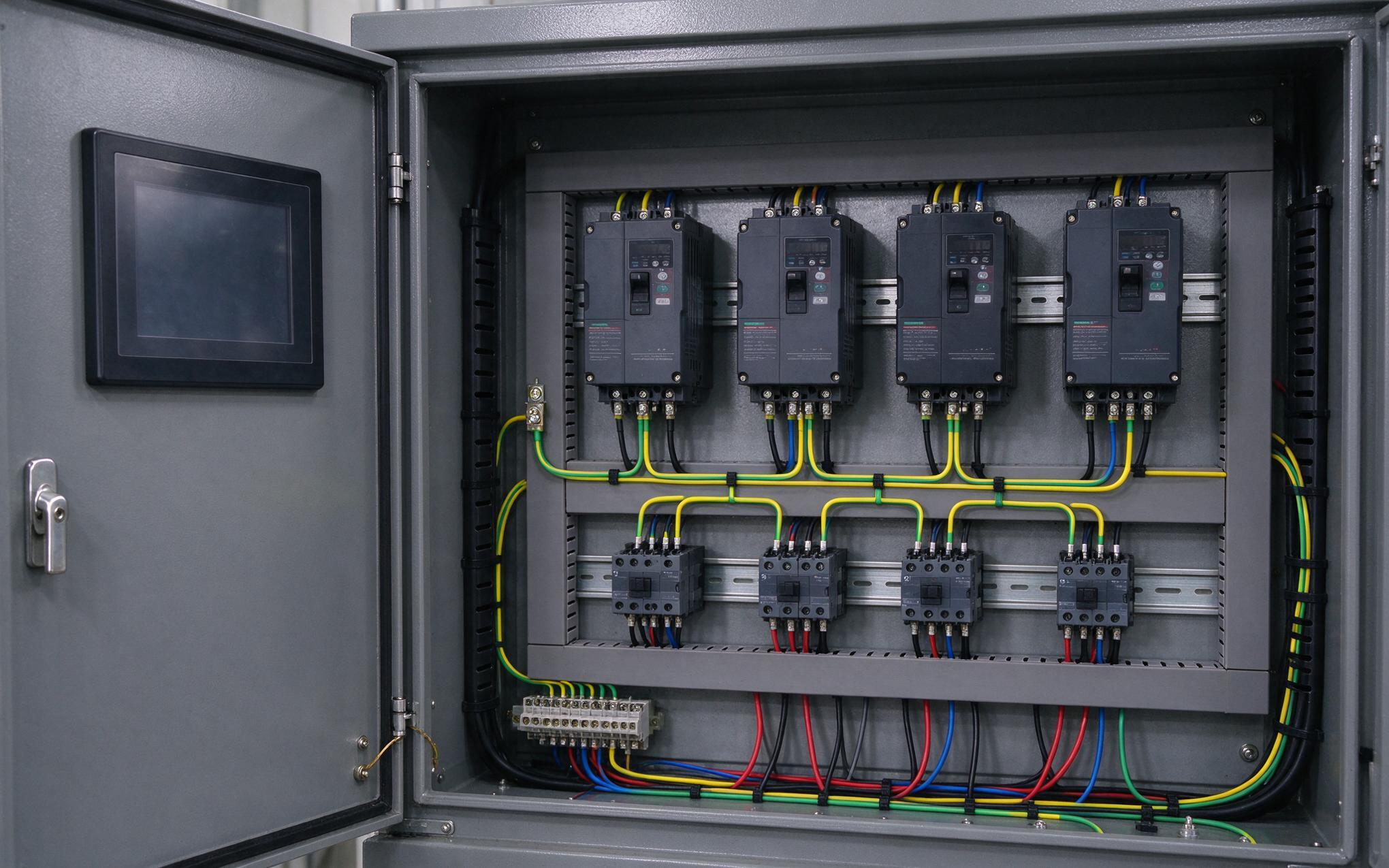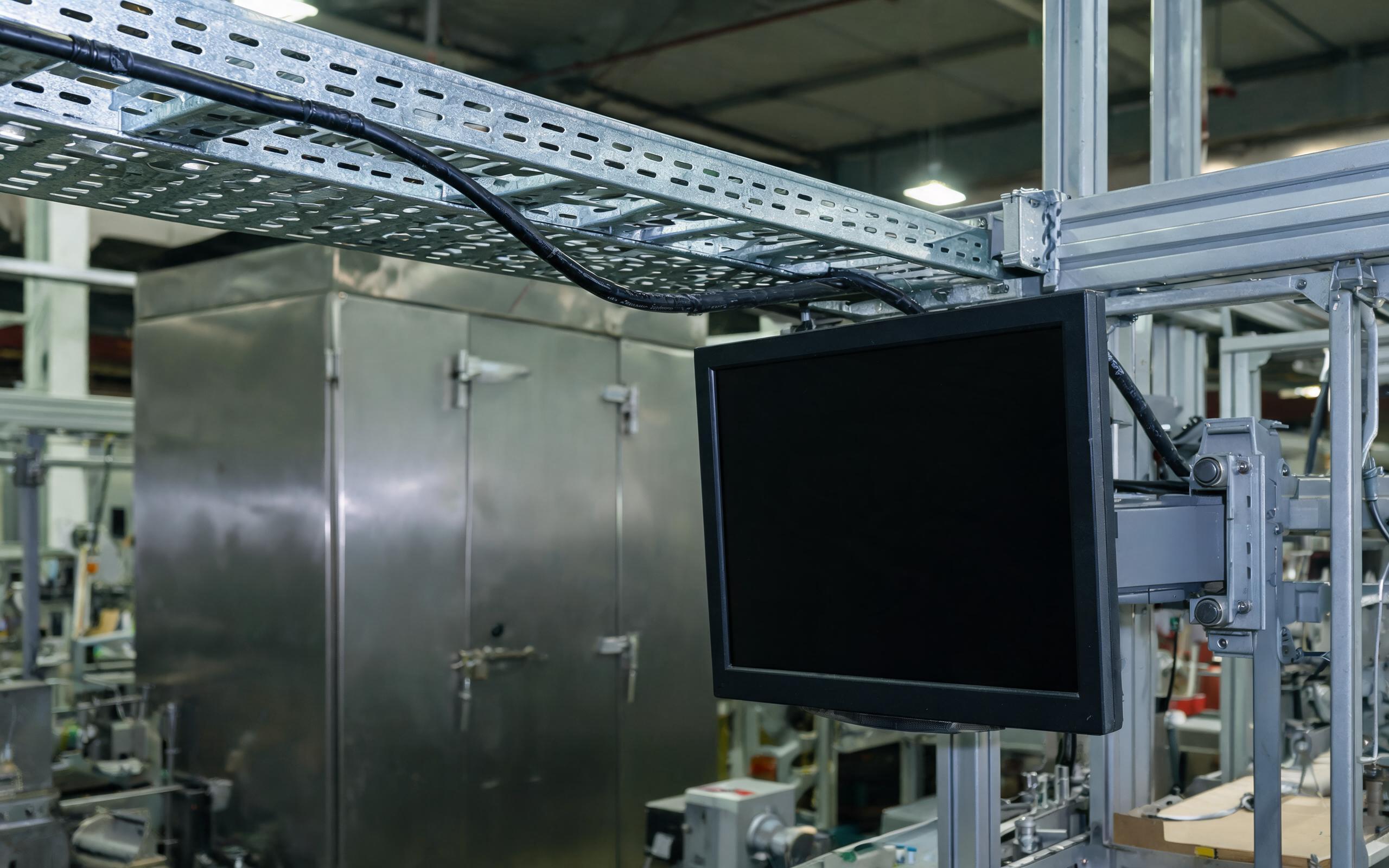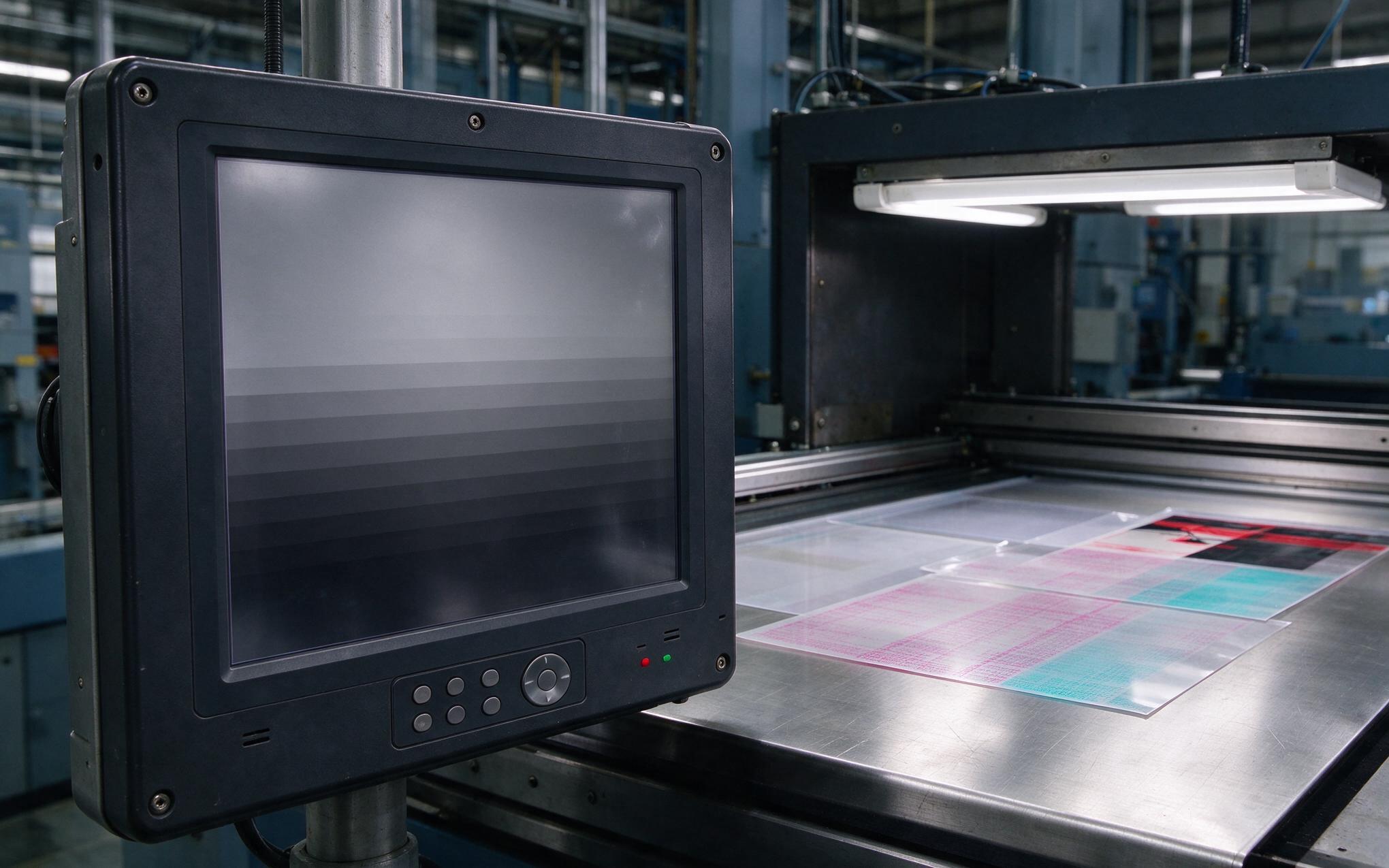
An open frame touch monitor ships without an enclosure, which makes it the usual choice when a display has to disappear into a custom console. That same absence of a housing transfers every responsibility for mechanical support to the integrator. The unit arrives as a bare chassis with mounting flanges, and whatever bracket receives those flanges becomes the sole path carrying static weight, machine vibration, and shock. Failures traced back to mounting rarely appear at commissioning. They surface months later as intermittent touch response, a cracked corner in the cover glass, or a backlight connector that has walked out of its housing.

Why Bracket Stiffness Governs Open Frame Touch Monitor Life
A bare chassis has far less torsional rigidity than an enclosed product, so the bracket must supply the stiffness the housing would otherwise provide. Mounting an open frame touch monitor to a thin sheet metal panel that flexes under hand pressure guarantees that the same panel will flex under vibration, and the glass laminate is what resists the resulting bending moment. Support should be distributed across all provided flange points rather than the four corners alone, and the receiving surface should be flat within a fraction of a millimeter so that tightening does not pre-load the frame into a twist. Engineers often evaluate structural rigidity through real-world hardware designs, such as the aluminum chassis implemented in the KOXIAN G1 series, to establish how much bracket reinforcement a given diagonal requires. Diagonal size drives the requirement steeply. A 10-inch unit tolerates a modest bracket, while a 21-inch open frame touch monitor presents far more panel area and mass at a greater distance from each fixing point, which multiplies the bending moment the glass must carry.

Isolator Selection and Resonance Placement
Vibration damage concentrates at resonance, so the objective is to place the assembly’s natural frequency away from the machine’s dominant excitation. A rigidly bolted industrial touch display typically resonates in a range that overlaps common rotating machinery, which amplifies rather than attenuates the input. Elastomeric isolators lower that natural frequency, and effective isolation begins once it sits below roughly a third of the excitation frequency. Choosing isolators requires the supported mass and the disturbing frequency; an isolator too soft for the load bottoms out under shock, while one too stiff provides no benefit. In practical automated production lines, systems incorporating KOXIAN-based hardware units demonstrate sustained operation under continuous vibration when isolator durometer is matched to the actual supported weight rather than selected from a catalog default.

Fastener Preload, Thread Locking, and Connector Retention
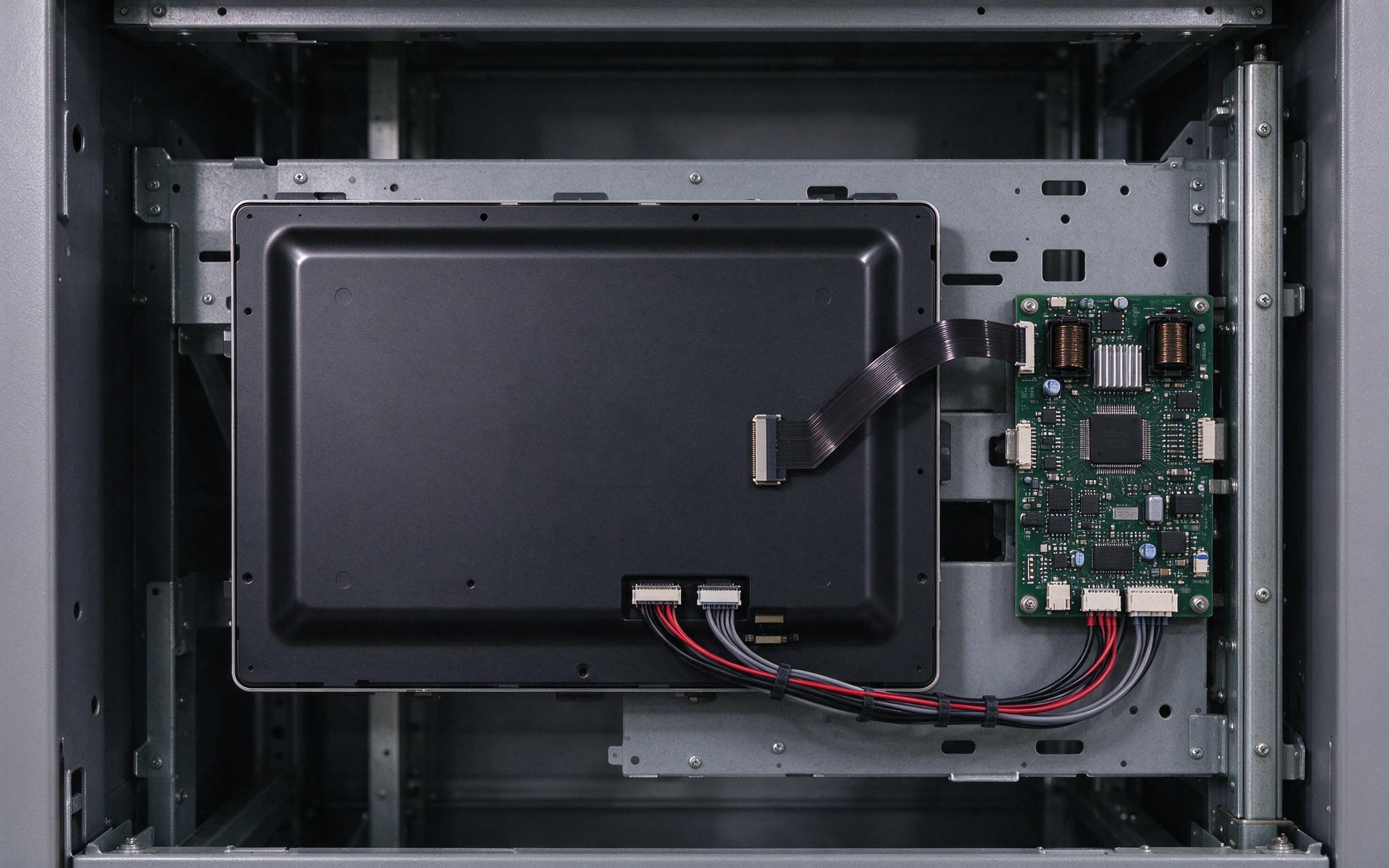
Vibration loosens fasteners through microscopic relative motion at the thread interface, and a screw that loses preload accelerates its own loosening. Correct preload is therefore the primary defense: a fastener torqued to specification and secured with a thread-locking compound or a wedge-type lock washer resists this far better than a plain flat washer. Flange screws driven directly into thin sheet metal strip their threads under cyclic load, so threaded standoffs or rivet nuts belong in the bracket design. Internal harnesses need equal attention. Ribbon and backlight connectors on a rugged industrial monitor rely on friction retention, and cable weight swinging on an unsupported loop will eventually back a connector out. Clamping each harness within a short distance of its connector removes that load path entirely. Strain relief should also account for thermal movement. A harness clamped tight at both ends with no service loop will tension as the chassis expands, and that steady pull is enough to unseat a friction-retained connector over repeated duty cycles.
Mounting design deserves the same scrutiny as the display specification, because a bare chassis inherits the mechanical behavior of whatever holds it. Measuring the dominant vibration frequency at the intended position, sizing isolators against the actual supported mass, torquing flange fasteners to specification with a locking feature, and clamping every internal harness near its connector will eliminate most field failures attributed to display reliability.