
Why Standard PCAP Panels Struggle in Dust-Heavy Factories
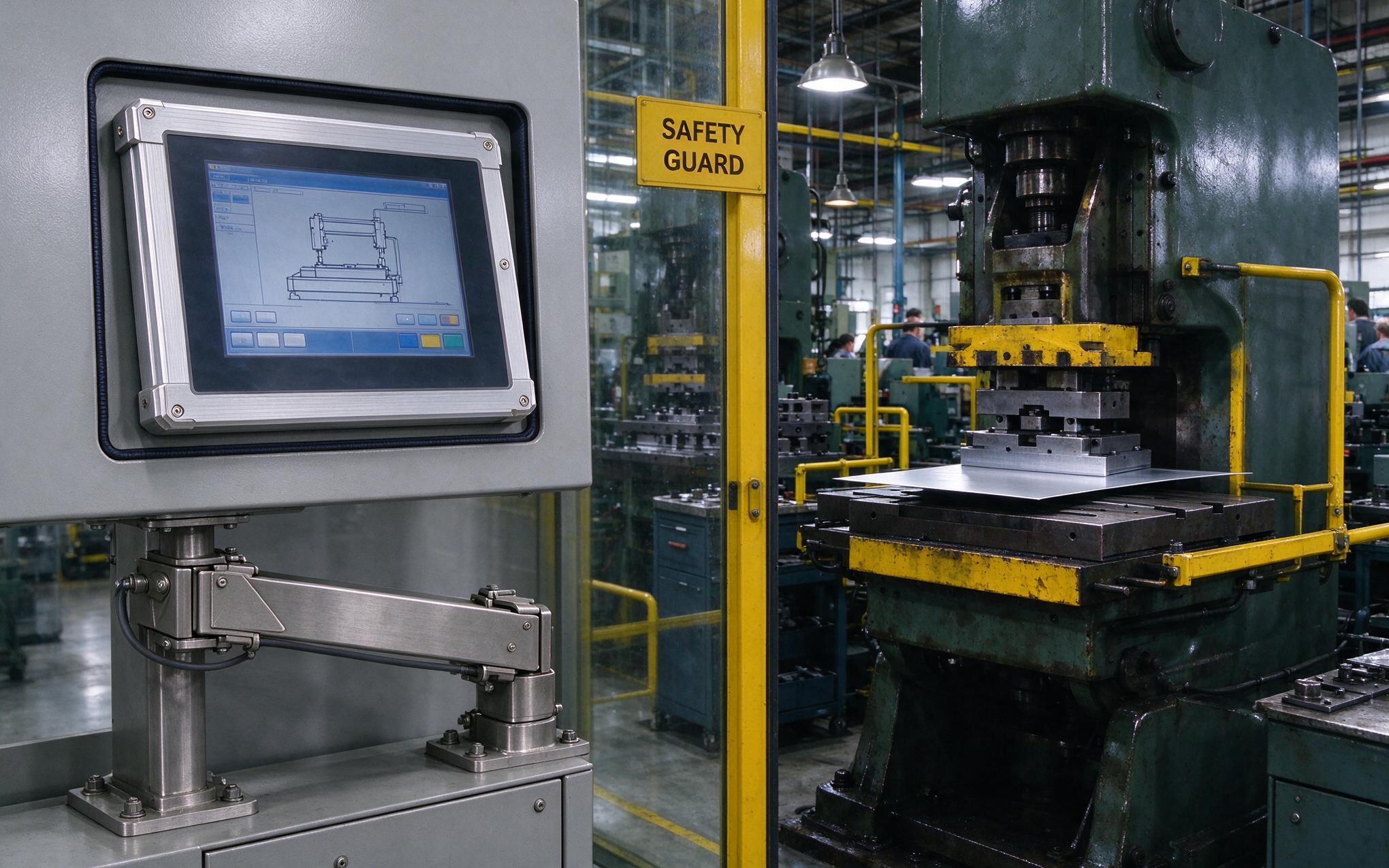
Two years into a retrofit at a Midwest aluminum casting facility, engineers traced a recurring fault to dust accumulation on the shop-floor touch screen display. Operators reported phantom touches, erratic menu selections, and intermittent unresponsiveness that no software update could resolve. Root-cause analysis identified airborne aluminum oxide particles as the culprit—fine enough to settle on the sensor surface yet conductive enough to distort the capacitive field.
In grain elevators, cement plants, foundries, and woodworking shops, airborne particulate matter routinely exceeds 10 mg/m³—orders of magnitude above what consumer-grade panels tolerate. For factory engineers selecting interactive interfaces, understanding how projected capacitive touch technology interacts with heavy dust loads is a prerequisite for avoiding unplanned downtime.

Understanding Projected Capacitive Touch Technology Basics
Projected capacitive (PCAP) touch panels operate by generating a uniform electrostatic field across a grid of transparent electrode traces laminated beneath a cover glass. When a conductive object approaches the surface, it draws current from the nearest electrodes, and the controller translates the resulting capacitance change into X-Y coordinate data.
Unlike resistive touch, which relies on physical pressure to bridge two conductive layers, PCAP requires no mechanical contact. This gives it a durability advantage: no flex points to wear out, no overlay to scratch through, and no air gap that traps moisture. Industrial PCAP touch screen display manufacturers have leveraged these properties to build panels rated for 50 million touch operations—far exceeding the lifecycle demands of most factory applications.
However, the mechanism that makes PCAP elegant also makes it sensitive to surface contaminants. The controller’s baseline calibration assumes a constant dielectric environment at the sensor face. When dust accumulates on the cover glass, it introduces parasitic capacitance that shifts the reference point. In light conditions, adaptive firmware compensates automatically. In heavy-dust factory environments—where deposition may reach several microns per hour—the drift exceeds the correction range, producing false touches or dead zones.
For procurement teams evaluating display options, a panel rated “capacitive touch” without further qualification may perform flawlessly in a cleanroom yet fail within hours on a grain sorting line.

Designing Sealed Enclosures for Dust-Heavy Factory Environments
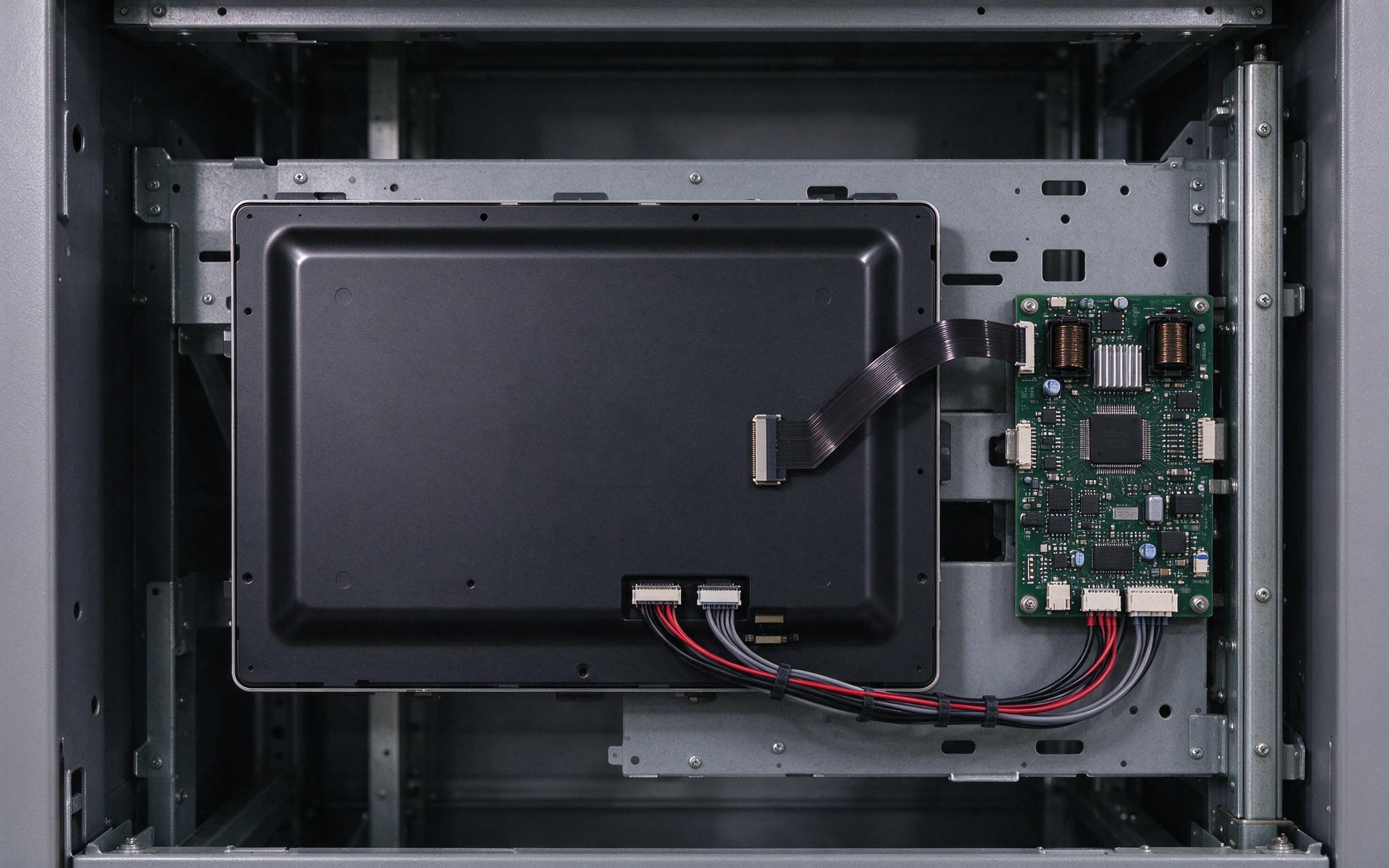
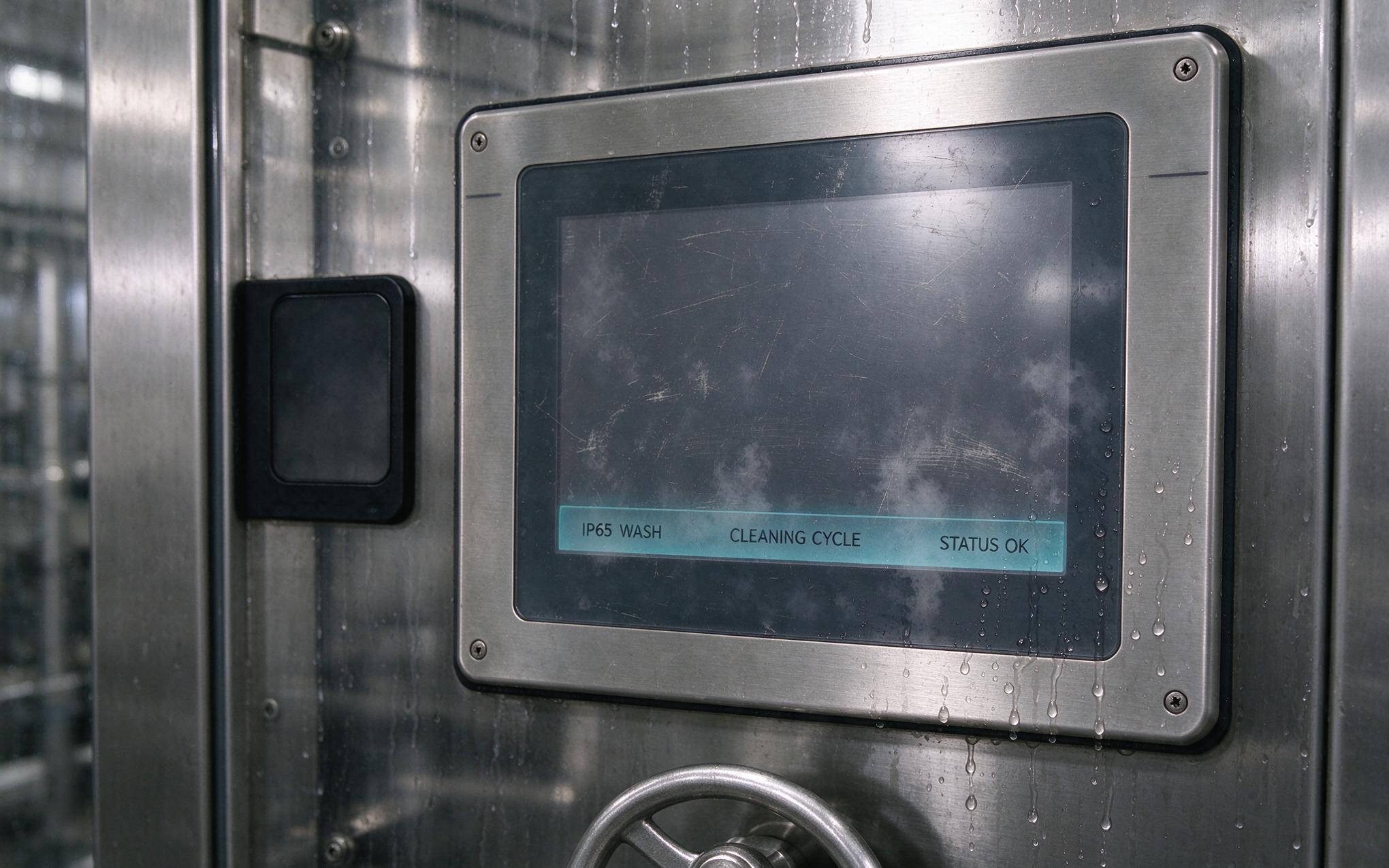
Mitigating dust-related touch failures requires solutions at multiple levels. A primary line of defense is the front bezel seal. An IP65-rated front panel—tested against sustained dust ingress—provides the minimum threshold for dusty factory environments. Higher-rated IP66 enclosures with continuous gasket seals around the cover glass perimeter prevent fine particles from migrating behind the panel where they interfere with internal electronics and the sensor ribbon cable.
Optical bonding eliminates the air gap between cover glass and LCD cell by filling it with optically clear adhesive. This removes the secondary accumulation zone where dust settles between layers and creates capacitive artifacts. The bonded assembly also improves optical contrast—a practical benefit on factory floors where overhead lighting compounds visibility problems on dusty screens.
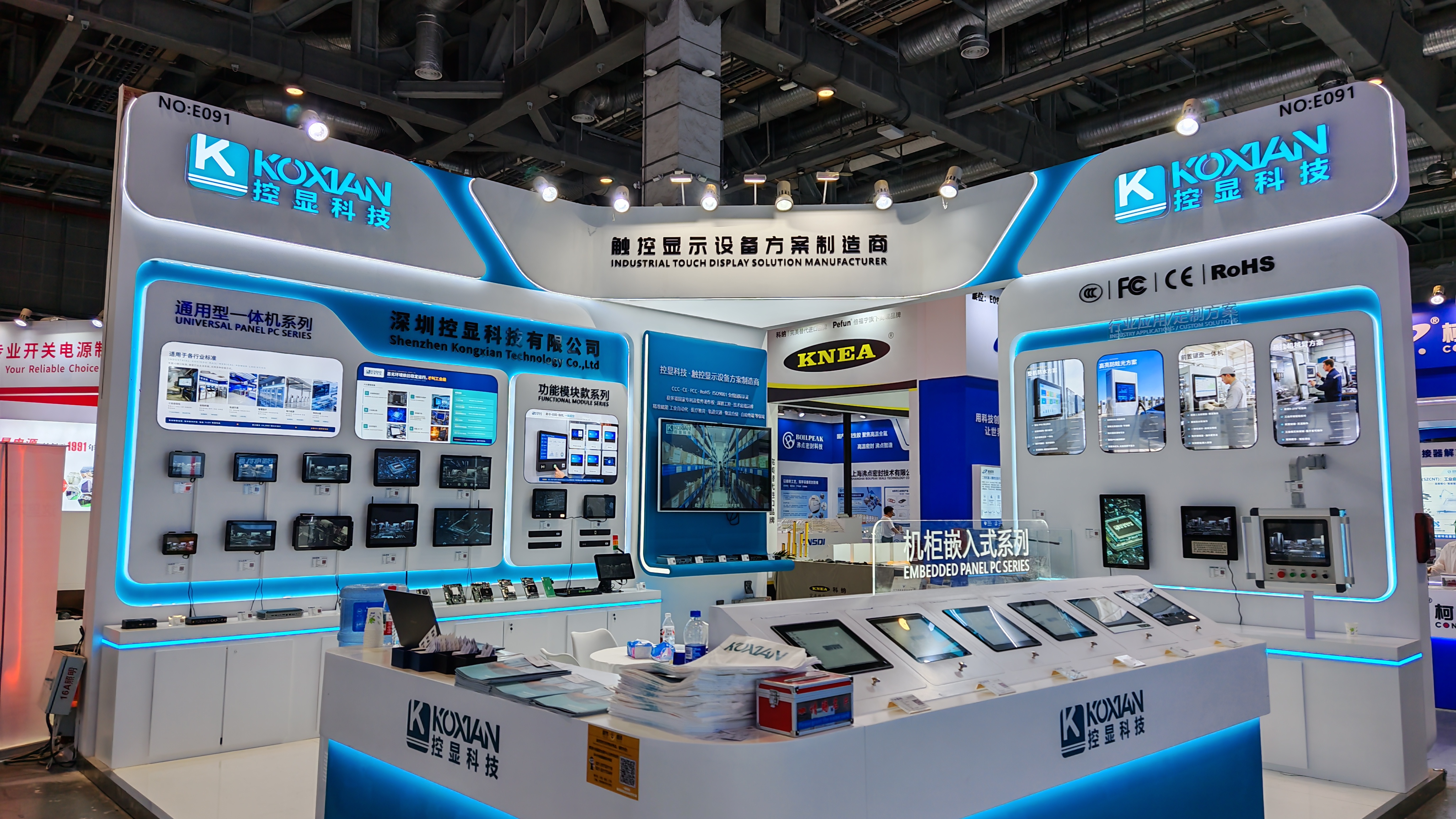
On the sensor side, manufacturers like KOXIAN integrate anti-static surface coatings that actively repel fine particles before they bond to the glass. Combined with adaptive PCAP firmware that continuously recalibrates the touch threshold, these designs maintain accuracy even under continuous particulate exposure. The result is a touch screen display that sustains sub-10-millisecond response times across eight-hour shifts without manual cleaning interventions.

Evaluating Touch Screen Displays for Your Factory Floor
When specifying a touch screen display for dusty factory environments, procurement engineers should evaluate four criteria. Confirm the IP rating of the front bezel—IP65 is the baseline, with IP66 preferred for washdown-adjacent zones. Verify whether optical bonding is standard or optional, as post-purchase retrofit is rarely feasible. Request documentation on the PCAP controller’s adaptive filtering capability and its tested particulate tolerance range. Evaluate the cover glass: chemically strengthened soda-lime glass suits most applications, but Gorilla Glass or aluminosilicate alternatives offer higher surface hardness for abrasive environments.
Field validation provides data no datasheet can replicate. Requesting a sample panel for a 30-day dust-exposure trial on the actual factory floor yields empirical measurements of touch accuracy drift, false-positive rate, and response time degradation under cumulative particulate load. Facilities that adopt this approach—paired with sealed enclosure designs from industrial touch screen display suppliers like KOXIAN—consistently report lower maintenance intervals and fewer unplanned stops.
As factories automate inspection, material handling, and process control interfaces, the reliability of the touch screen display becomes a direct determinant of line uptime. Selecting a panel engineered for projected capacitive touch in dusty factory environments—rather than repurposing a cleanroom or commercial-grade unit—translates directly into measurable gains in operational continuity.