Two identical IP65 touch screen units can leave the same production line and age in opposite ways: one keeps a clear window through a season of hose-down duty over a wash bay, the other fogs and drips above a dry assembly department that never sees a water jet. The difference rarely shows up on the label. It shows up in how the sealing system was specified, installed, and verified, because an ingress rating is a property of the whole enclosure, not of the glass alone.

Locating Where the Sealing Boundary Really Sits
IEC 60529 defines the code precisely: the 6 in IP65 means dust tight, and the 5 means protection against water jets from a 6.3 mm nozzle delivered from any direction. The test, however, is performed on a complete assembled enclosure inside a chamber, not on a display bolted into a door with field-run cabling. That gap is where site rules begin. The front bezel of an IP65 touch screen is only one boundary in the system; the rear entry plate, the gland seats, the clip bosses, and the cutout edge form the rest of it. Washdown-heavy plants often step up to IP66, IP67, or IP69K hardware, the last rated under DIN 40050-9 for close range, high pressure, hot water spray, precisely because integrators have learned that the installation itself is the weak link.

Selecting Cable Glands for an IP65 Touch Screen
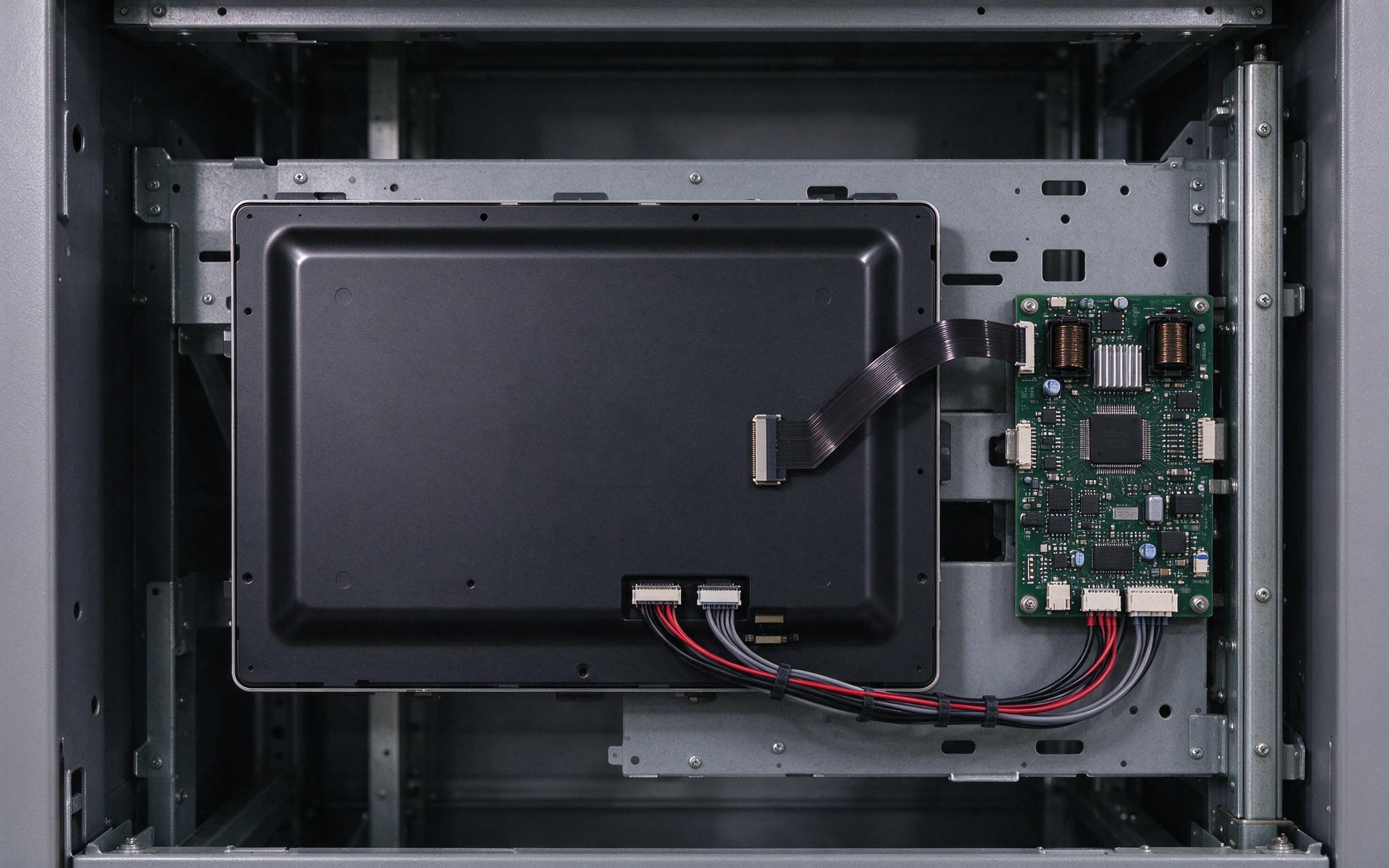
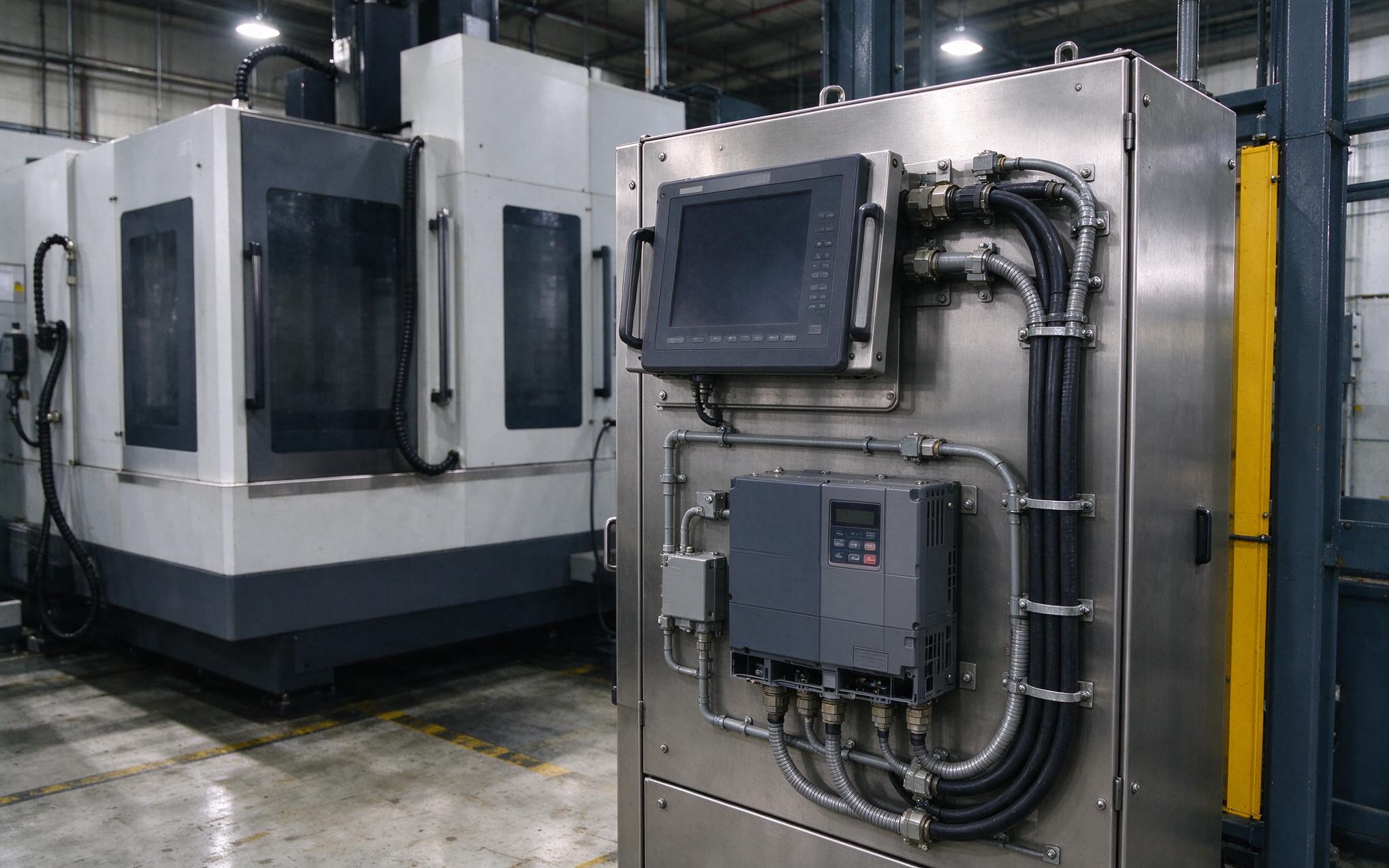
Every cable that crosses the enclosure wall carries the rating on its back. A gland only seals when its clamping range matches the actual outer diameter of the cable being used, so a round jacketed power cable and a flat overmolded touch tail rarely share the same part. Seal elastomers must also survive the cleaning chemistry on site, whether that is chlorinated foam in a dairy or solvent wipes in an electronics bay. Entry hardware inspired by KOXIAN rear connector layouts, one matched gland per cable with blanking plugs in every unused hole, keeps the back of an IP65 touch screen as dry as its front bezel. Routing matters as much as hardware: entries belong on the bottom face or behind a drip loop, never aimed at a jet, and gland nuts need a torque check once thermal cycling has settled the elastomer.

Cutout Workmanship and Bezel Clamping Pressure
The cutout is the part of the installation nobody certifies and everybody inherits. Burrs left on a plasma-cut opening keep the bezel gasket from seating flat, and a door panel that is slightly bowed opens a gap at the corners exactly where clamp pressure matters most. Side clips tightened unevenly, or driven past their torque spec with an impact driver, bow the bezel inward and lift the sealing line at the opposite edge. Gasket contact pressure, not gasket presence, decides whether the joint survives; a compliant foam profile needs even compression all the way around the frame. Beads of silicone smeared over a leaky corner hide the symptom, block the designed drain path, and turn a five minute reseat into a bonded repair on the next service visit.

Proving the Seal Under Real Washdown Load
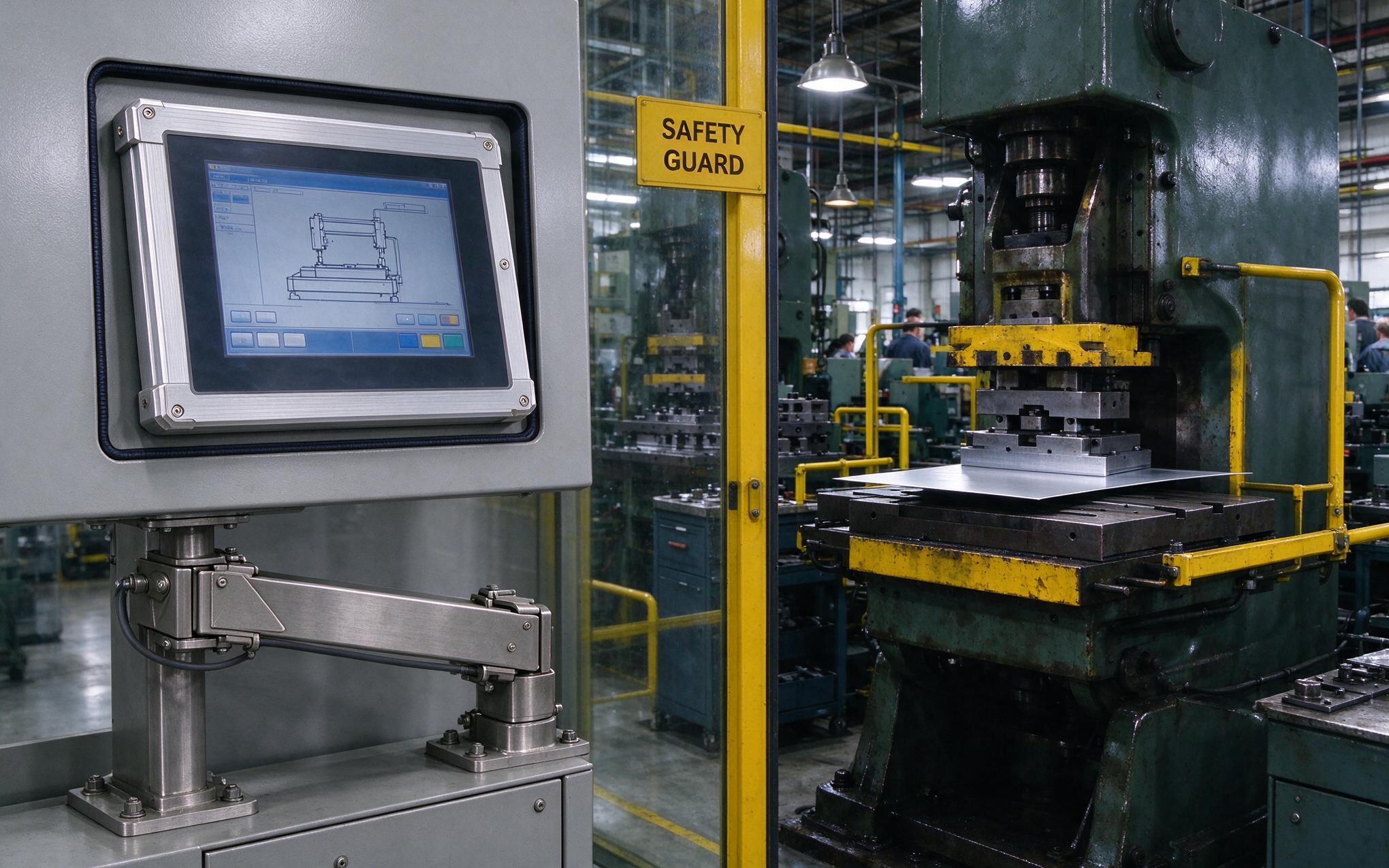
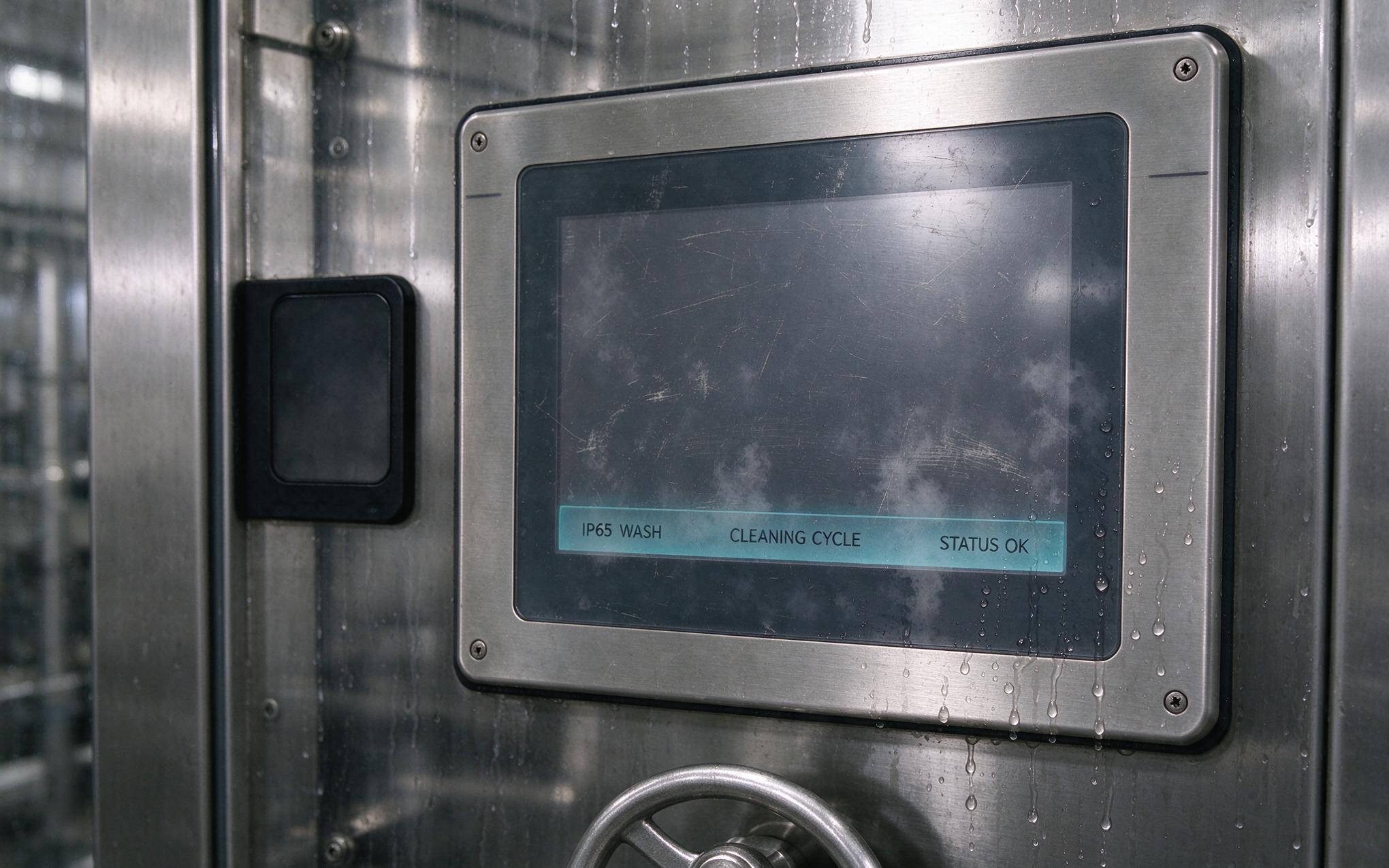
Verification belongs on the machine, not on a bench. Once the display is mounted and wired, run the plant’s real cleaning cycle with the cabinet closed, then inspect the inside of the enclosure after the initial temperature swing, when contracting air pulls moisture through any capillary path the jet found. Re-torque the gland nuts and the clamp screws after a week of service, because elastomer cold flow and panel flex both relax the pressure set on day one. Site rules differ by zone: dry assembly areas mostly fight dust drawn through knockouts and unused entries by fan airflow, while a wet zone around an IP65 touch screen adds jets, thermal shock, and pressure differentials that actively hunt for the weakest boundary. Field observations gathered across KOXIAN washdown installations point the same way, the seals that hold are the ones inspected after the initial hundred cleaning cycles, not the ones trusted on the strength of a datasheet.
A gasket on a label does not decide whether a panel survives its site; the entry hardware, the cutout workmanship, and the verification routine do. Wet washdown and dry assembly areas stress an IP65 touch screen through different physics, jets and pressure differentials in one, dust migration and fan airflow in the other, so the sealing rules differ even when the printed rating does not. Specify glands for the actual cable, seat the bezel on a clean cutout, and prove the installation under the plant’s own cleaning cycle.