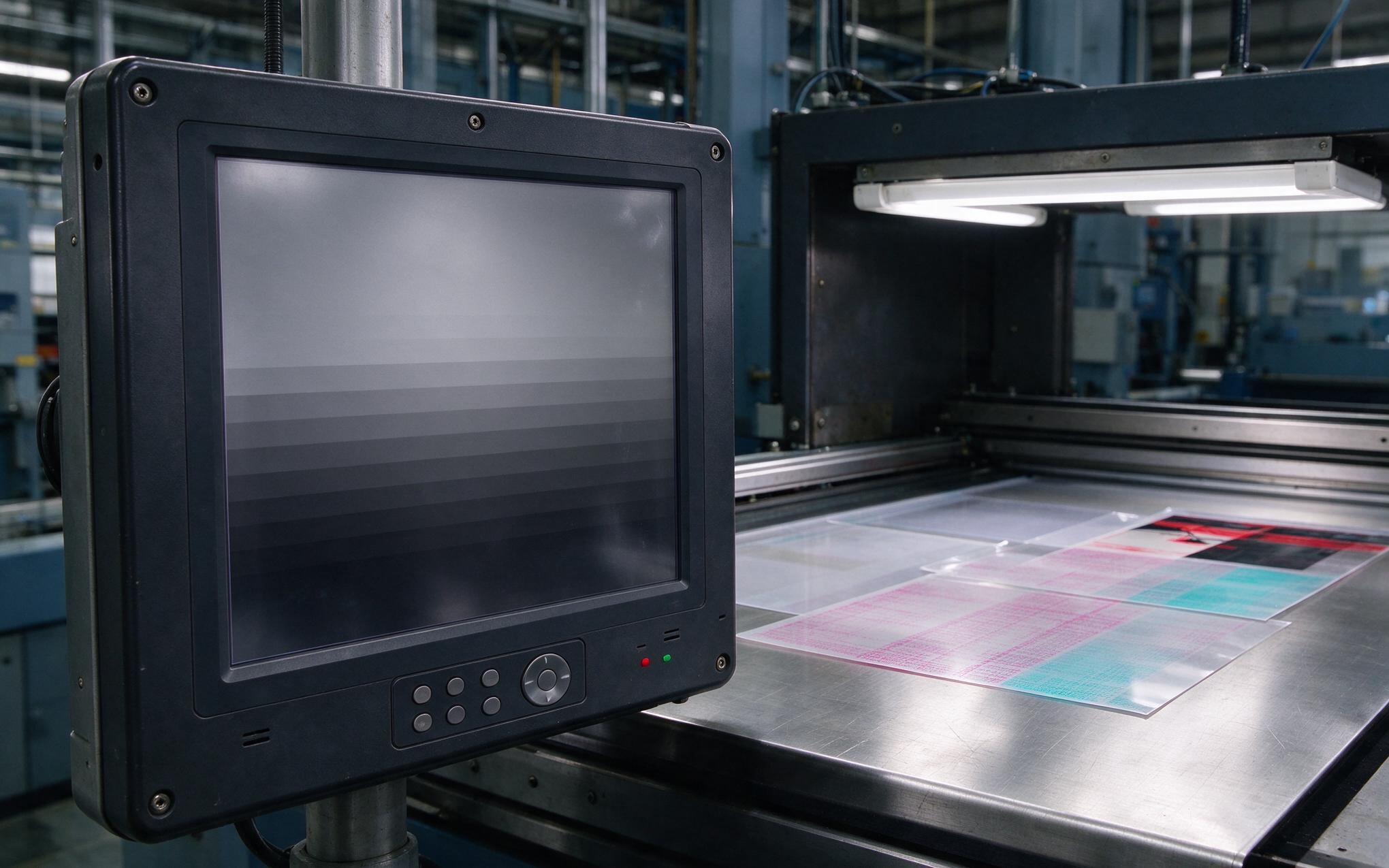
A human walking across a dry factory floor in January can accumulate 15 kV of body charge, while the projected capacitive controller inside an industrial touch screen display senses charge transfers measured in picocoulombs. That gap of nine orders of magnitude explains why one fingertip discharge can freeze a touch interface, inject phantom inputs, or force a controller reset. As heating season pushes relative humidity below 30 percent in many North American and European plants, ESD-related touch faults climb sharply. This article examines how front-end protection, controlled discharge paths, and firmware recovery logic keep touch input stable when electrostatic events are routine rather than exceptional.
Within the Touch Stack Where ESD Couples Into Sensor Lines
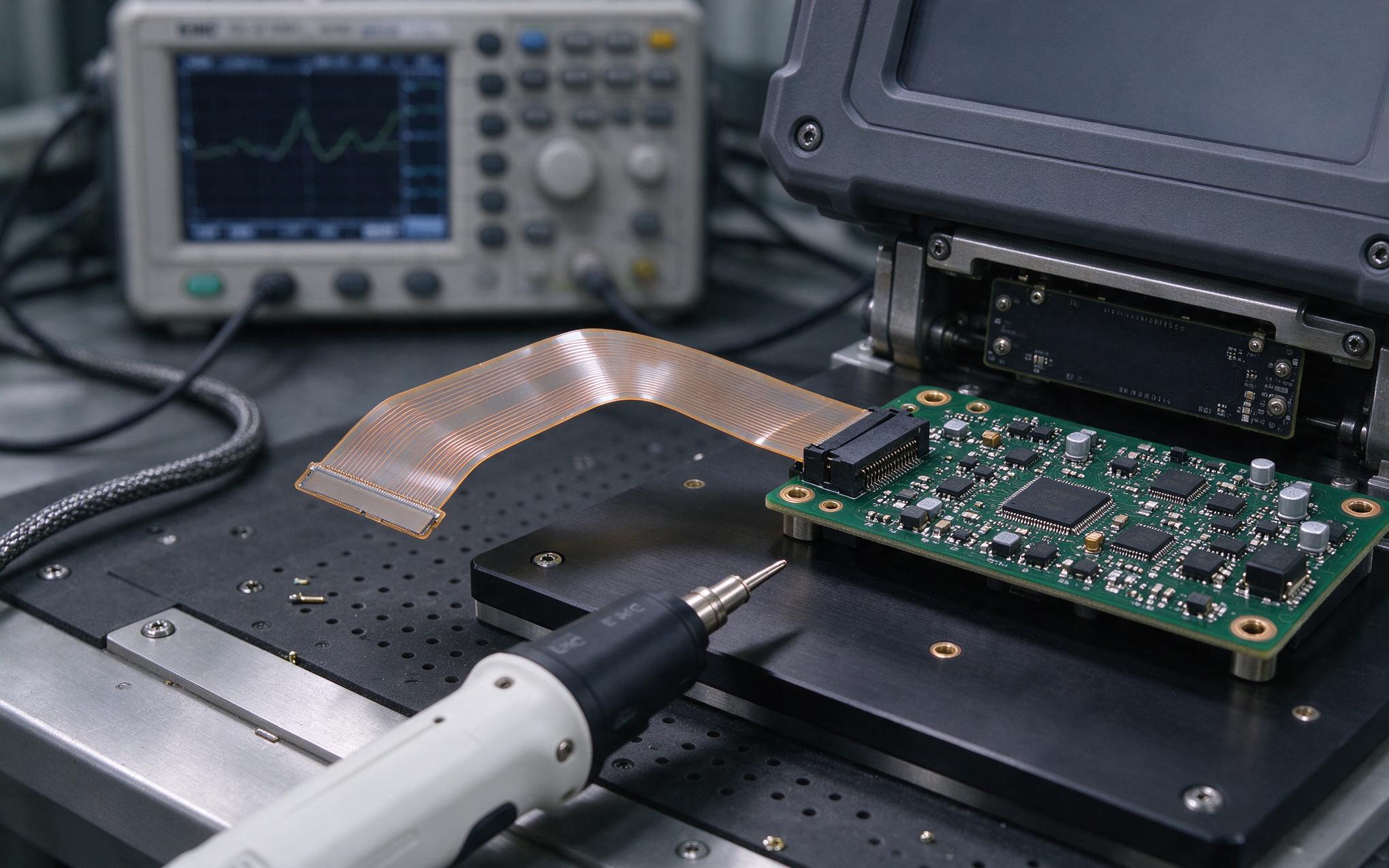
A projected capacitive stack places a transparent ITO sensor grid microns behind the cover lens, connected through a fine-pitch FPC tail to a controller IC. When an operator discharges onto the lens, charge couples capacitively through the glass and raises the common-mode reference of every sensor channel at once. When the discharge instead finds a seam around the bezel, current hunts for the lowest-impedance return, and the sensor flex often provides it. In an industrial touch screen display the result is either a saturated front end that reports phantom coordinates or a latched-up scanning IC that stops responding entirely. Neither failure requires visible damage, which is why these events are frequently misdiagnosed as software bugs in the application layer.
IEC 61000-4-2 Levels for an Industrial Touch Screen Display
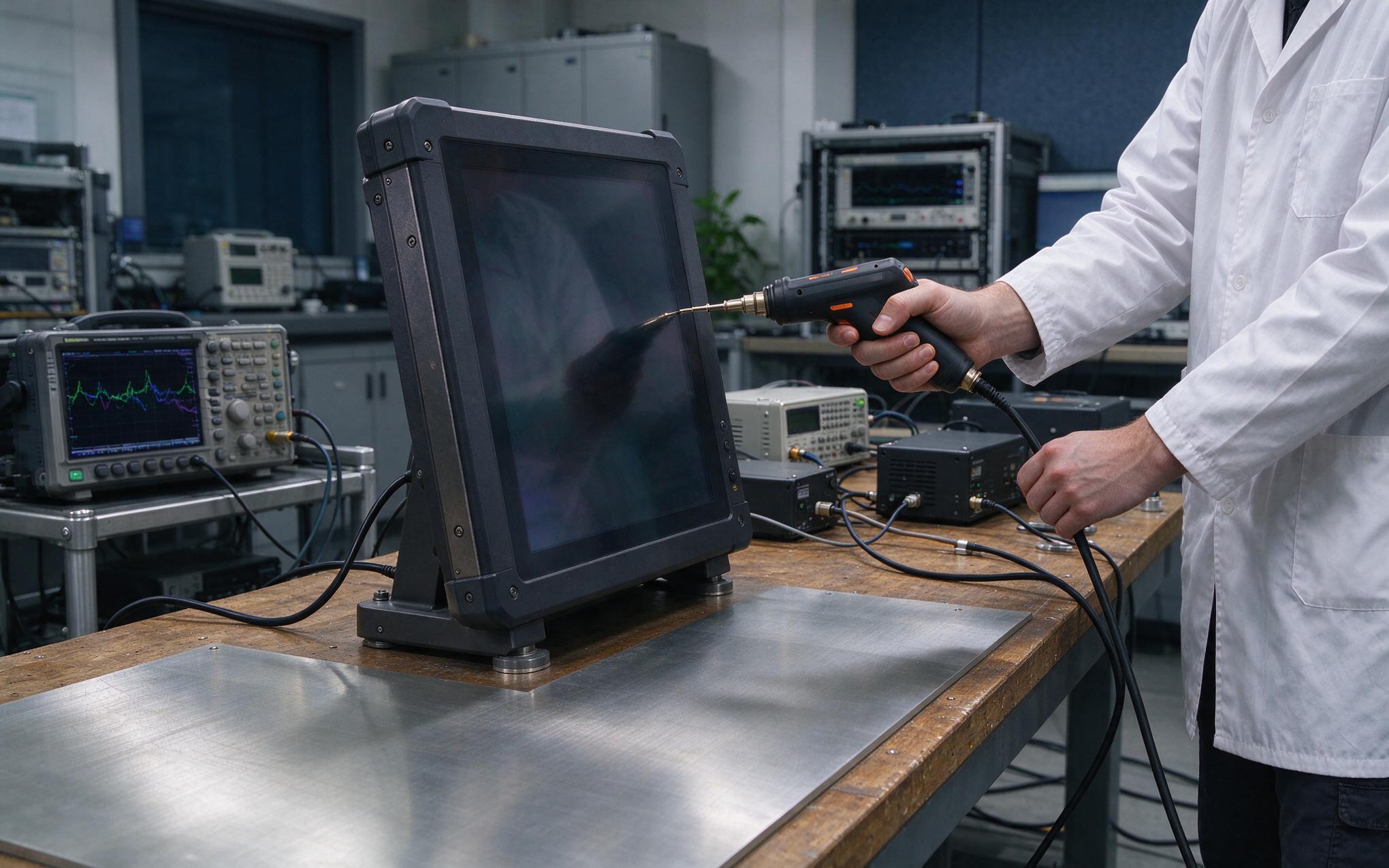
The immunity standard defines contact discharge up to ±8 kV and air discharge up to ±15 kV at Level 4, with a current waveform that peaks within a nanosecond. Performance criteria matter as much as voltage: Criterion A tolerates no functional deviation during the test, while Criterion B permits temporary upset provided the device recovers without operator intervention. The 2025 edition of the standard retains the familiar waveform while refining generator verification and test-setup requirements. For an industrial touch screen panel mounted at an operator station, Level 4 contact discharge with Criterion B recovery is the realistic procurement floor, and field signatures such as ghost touches near shift change or resets on dry mornings usually trace back to hardware qualified only at Level 2.
Front-End Protection Devices and Controlled Discharge Paths
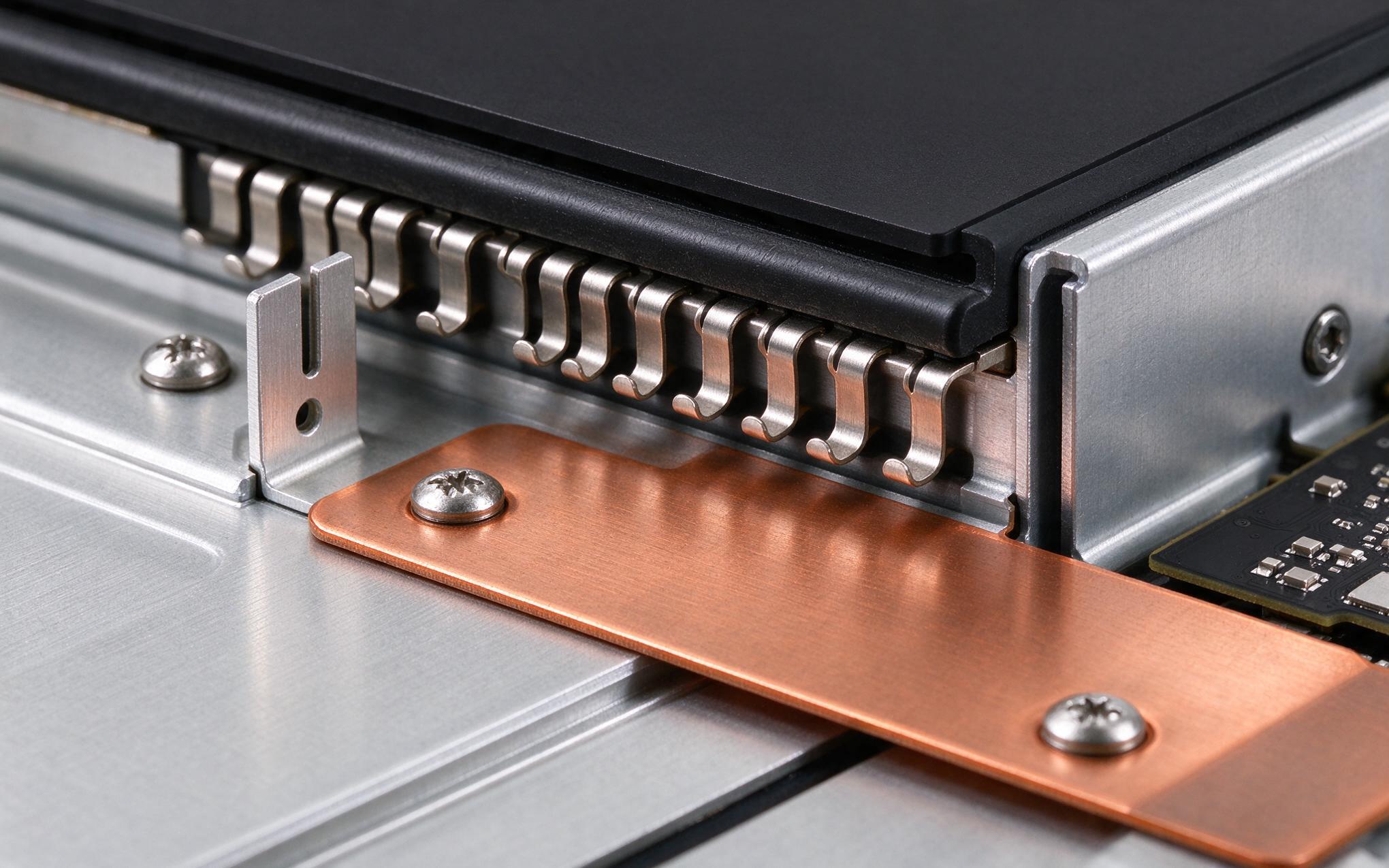
Hardware front ends cannot simply bolt TVS diodes onto every sensor line, because added capacitance detunes the sensing channels. Practical designs combine series damping resistors, a grounded shield layer behind the sensor, and guard rings that intercept fringe fields before they reach the receiver inputs. Industrial hardware manufacturers, including KOXIAN, bond the front bezel to chassis ground with conductive gaskets and short, wide bonding straps so that discharge current never detours through the sensor flex. Interface lines leaving the enclosure, such as USB and DC power, carry their own low-capacitance TVS arrays referenced directly to the chassis. For an industrial touch screen display, the engineering objective is not to block the discharge but to give it a shorter, safer path than the electronics provide.

Firmware Re-Baselining and Recovery Logic After Discharge
Controller platforms implemented in hardware designs such as the KOXIAN G1 series show how firmware absorbs what the front end cannot fully divert. Baseline tracking continuously re-learns the quiescent capacitance of each channel, so a brief common-mode disturbance is classified as noise rather than a valid touch. Burst classifiers measure event duration and channel spread, rejecting the narrow, panel-wide signature of a discharge while preserving deliberate multi-touch gestures. When the controller does latch, a supervisory watchdog forces a soft reset and re-initialization within a few hundred milliseconds, fast enough that operators rarely notice. A rugged touch screen display that logs these recovery events also gives maintenance teams data to correlate faults with humidity, shift patterns, and specific stations.
ESD immunity in an industrial touch screen display is engineered at three layers: a mechanical discharge path that bypasses the sensor flex, front-end components that absorb residual energy, and firmware that recovers gracefully when a pulse still gets through. Procurement teams should request test reports stating the applied level, the performance criterion achieved, and the measured recovery time rather than accepting a bare compliance claim. Combined with basic humidity management on the production floor, these design features turn a seasonal reliability problem into a routine, verifiable specification.