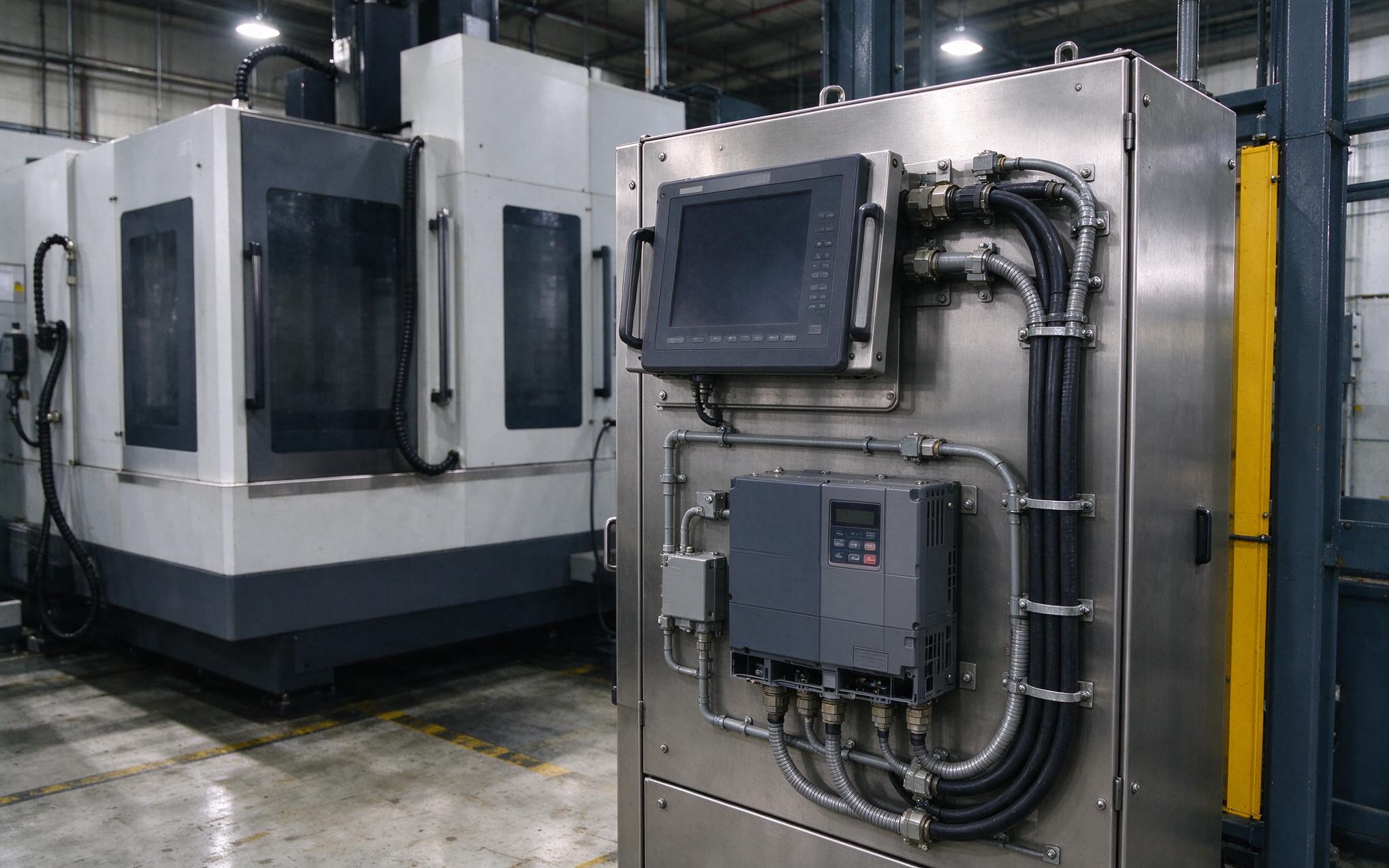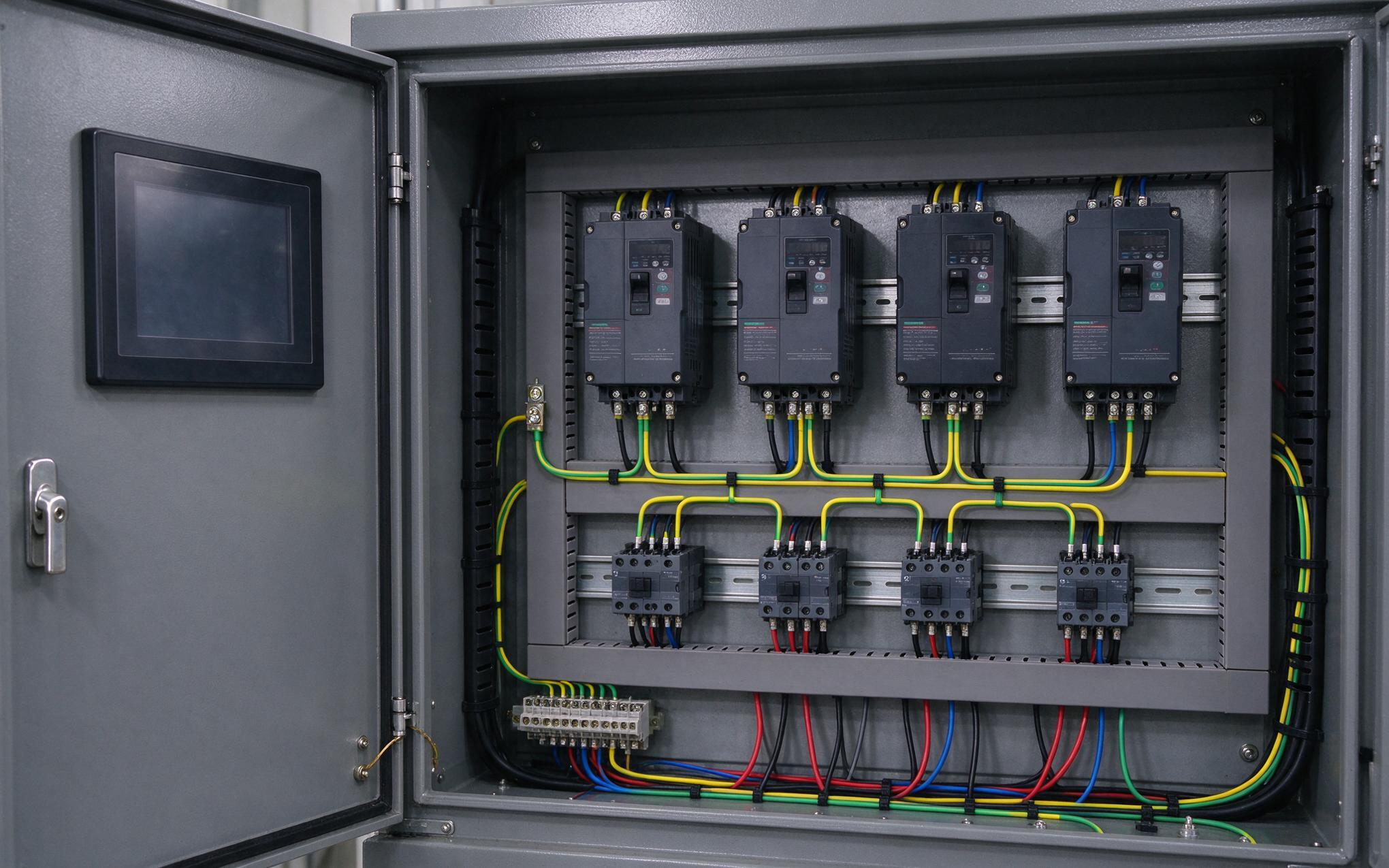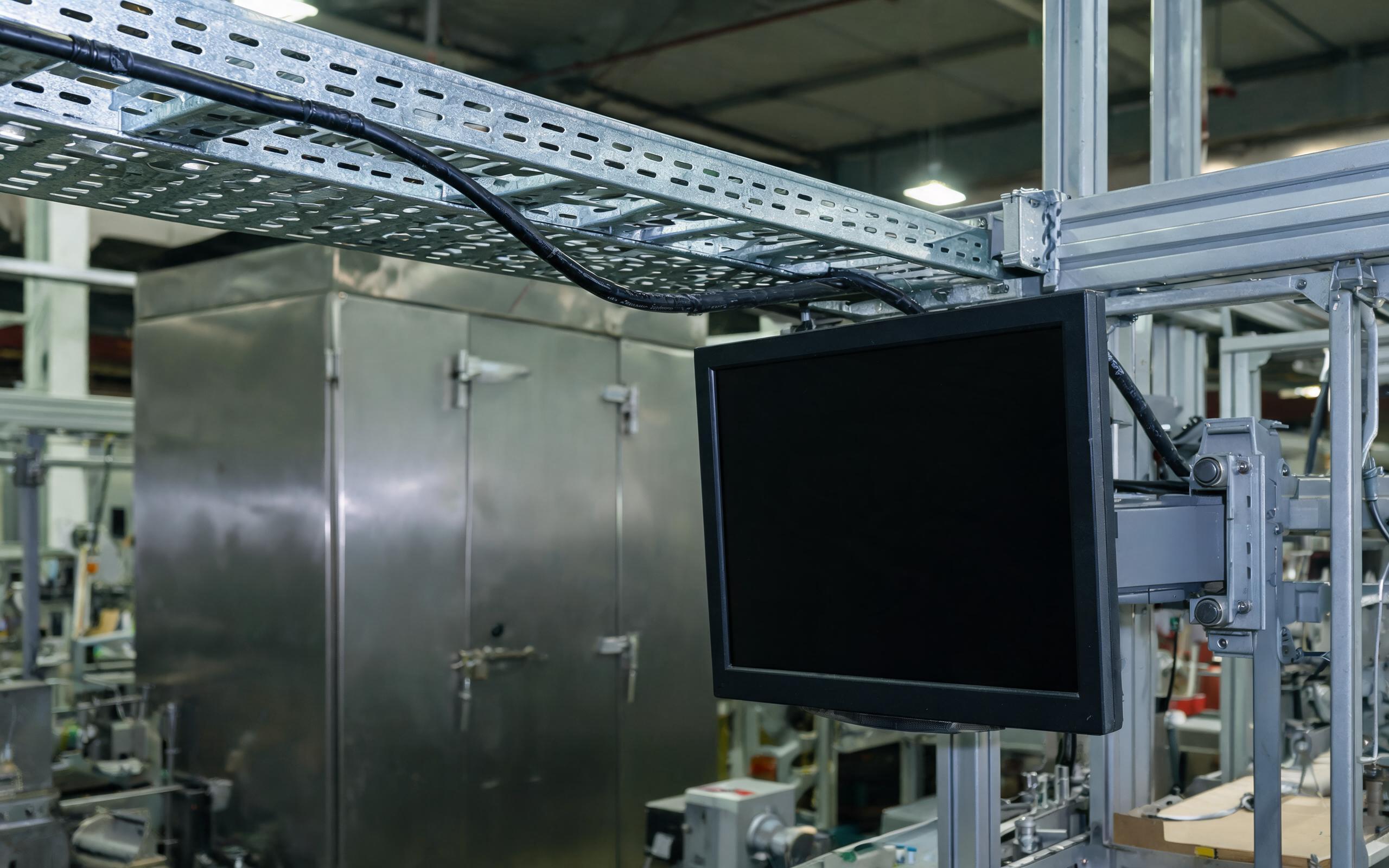
Two enclosures carrying identical IP65 documentation can age very differently after a year beside a brine chiller. One shows light surface staining that wipes away; the other develops rust blooms along a vertical joint, and within months chloride has worked under the gasket and into the bezel cavity. The divergence rarely comes from the stainless grade printed on the datasheet. It comes from how the box was joined together. Specifying an industrial panel mount monitor for coastal, marine, or refrigerated food environments means reading past the protection rating and asking how each seam was welded, ground, and passivated, because those three operations decide where corrosion starts.

Weld Bead Geometry Versus Bolted Flange Joints
A continuous seam weld and a bolted flange behave differently once salt mist condenses on the surface. A bolted flange relies on a compressed elastomer to exclude water, and every fastener hole is a discontinuity where the passive oxide layer has been mechanically disturbed. A seam weld removes those discontinuities, but only if the bead is ground flush and re-passivated afterward. An unground bead leaves a rough profile that holds droplets by capillary action, and heat tint left from welding is depleted in chromium, which makes the affected zone the most reactive area on the enclosure. Fabricators working to marine specifications generally grind the crown, blend the toe of the weld into the parent sheet, and treat the area chemically before the unit sees paint or gasket. Skipping the blend step is a common shortcut, and it shows under a flashlight held at a grazing angle.

Salt Fog Hours and Crevice Corrosion Onset
ASTM B117 salt fog hours are the usual shorthand for corrosion resistance, and they help when comparing finishes, though the test says little about crevice behavior. Crevice corrosion needs a tight gap, a stagnant electrolyte, and oxygen depletion inside that gap, conditions a chamber running uniform mist does not reproduce well. In service the gap is the space between a gasket and the panel cutout, or the lap under a mounting clip. Field observations from chilled processing halls show that units built with sealed stainless housings, such as designs in the KOXIAN G1 series, tend to degrade at these interfaces rather than through the sheet metal itself. That points specification effort toward joint detailing and drainage instead of thicker material. A 1.5 mm sheet with clean joints outlasts a 2 mm sheet carrying a rough weld and an unsealed clip.

Gasket Retention in an Industrial Panel Mount Monitor Bezel
Panel mount hardware transfers sealing duty to a narrow band of gasket squeezed between the bezel flange and the cutout edge, and two failure modes dominate. Compression set lets the elastomer relax until it no longer follows panel flatness variation. Chemical attack from cleaning agents hardens the surface until it cracks at the corners. Silicone handles temperature swings but swells in some solvents, while nitrile resists oils and stiffens in cold rooms. To keep sealing pressure even, industrial hardware manufacturers, including KOXIAN, specify a retained gasket seated in a machined groove rather than an adhesive-backed strip, so the compression stop is defined by metal rather than by installer torque. Groove depth then becomes a real line item on an industrial panel mount monitor drawing, and it is worth requesting that drawing rather than accepting a protection rating alone.

Passivation and Drainage Details After Fabrication
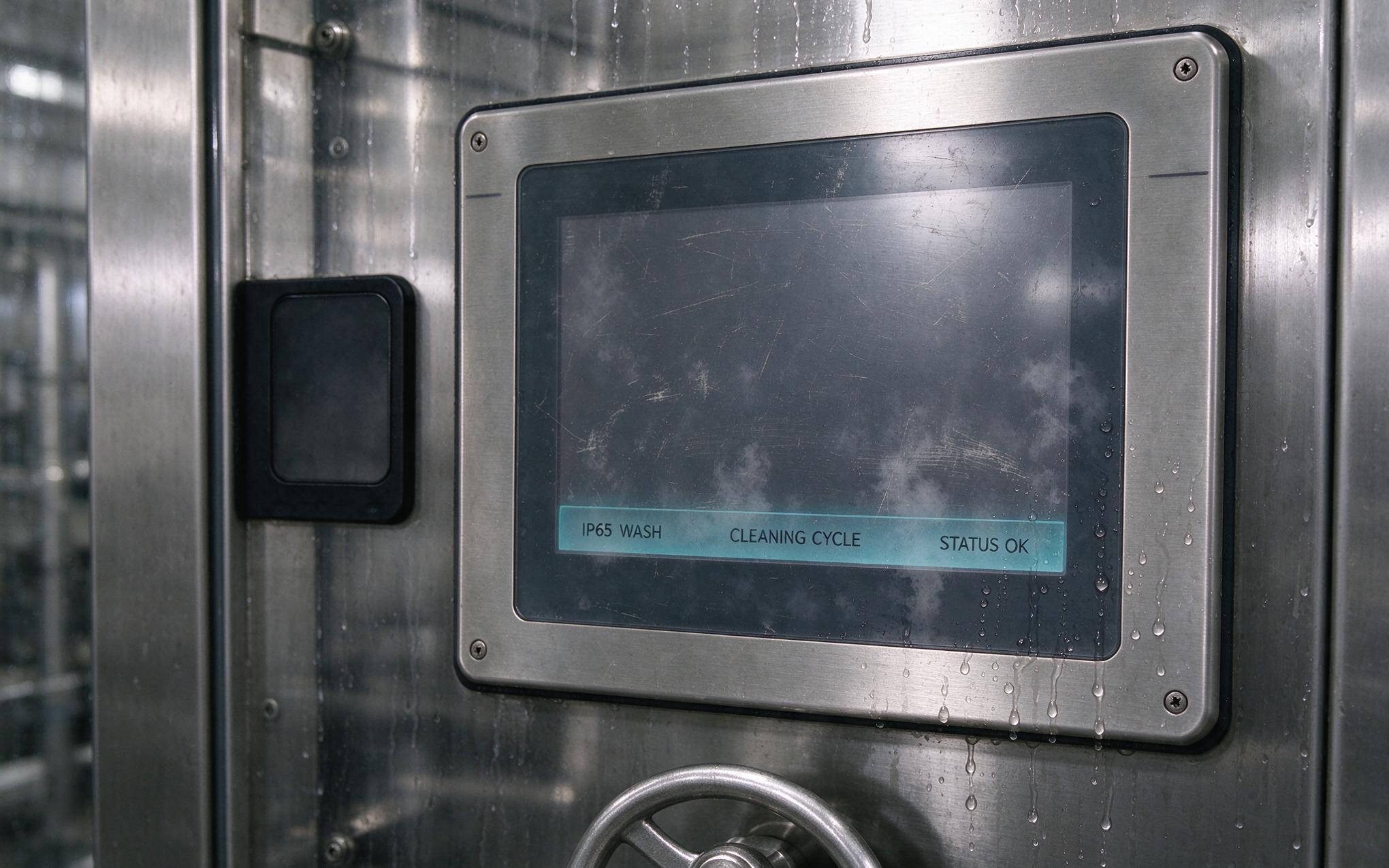
Cutting, drilling, and welding all smear free iron across a stainless surface, and that residue rusts even though the underlying alloy does not. Passivation dissolves the contamination and restores the chromium-rich film. Without it, a 316 housing can show orange staining within weeks and the wrong grade gets blamed. Orientation matters just as much. A horizontal ledge above a display holds standing wash water, while a sloped or radiused upper surface sheds it, and a drain path at the rear of the enclosure keeps condensate from pooling against the harness entry. When an industrial panel mount monitor sits on a bulkhead that sees daily washdown, cable glands should enter from below or through a drip loop so water is not driven along the cable jacket into the housing under hose pressure.
Corrosion in coastal and washdown installations is decided by joints, not by catalog alloy grades. A ground and passivated seam, a gasket captured in a machined groove, sloped surfaces that shed water, and glands routed to break capillary paths together contribute more service life than moving up one alloy step. Procurement teams reviewing quotations for chloride-exposed sites gain more from weld finish standards, documented passivation procedure, and gasket retention drawings than from comparing salt fog hours on an industrial panel mount monitor in isolation.