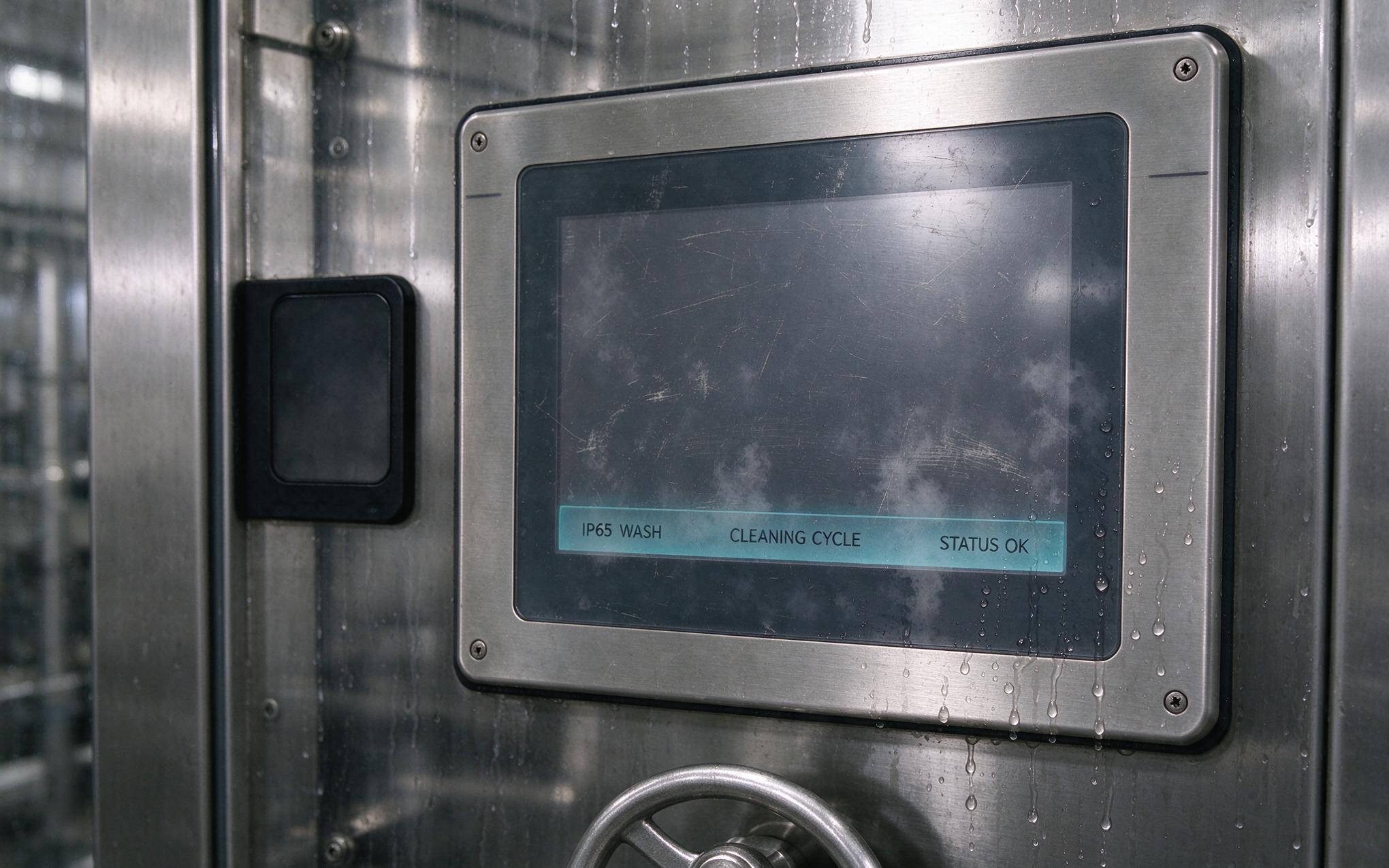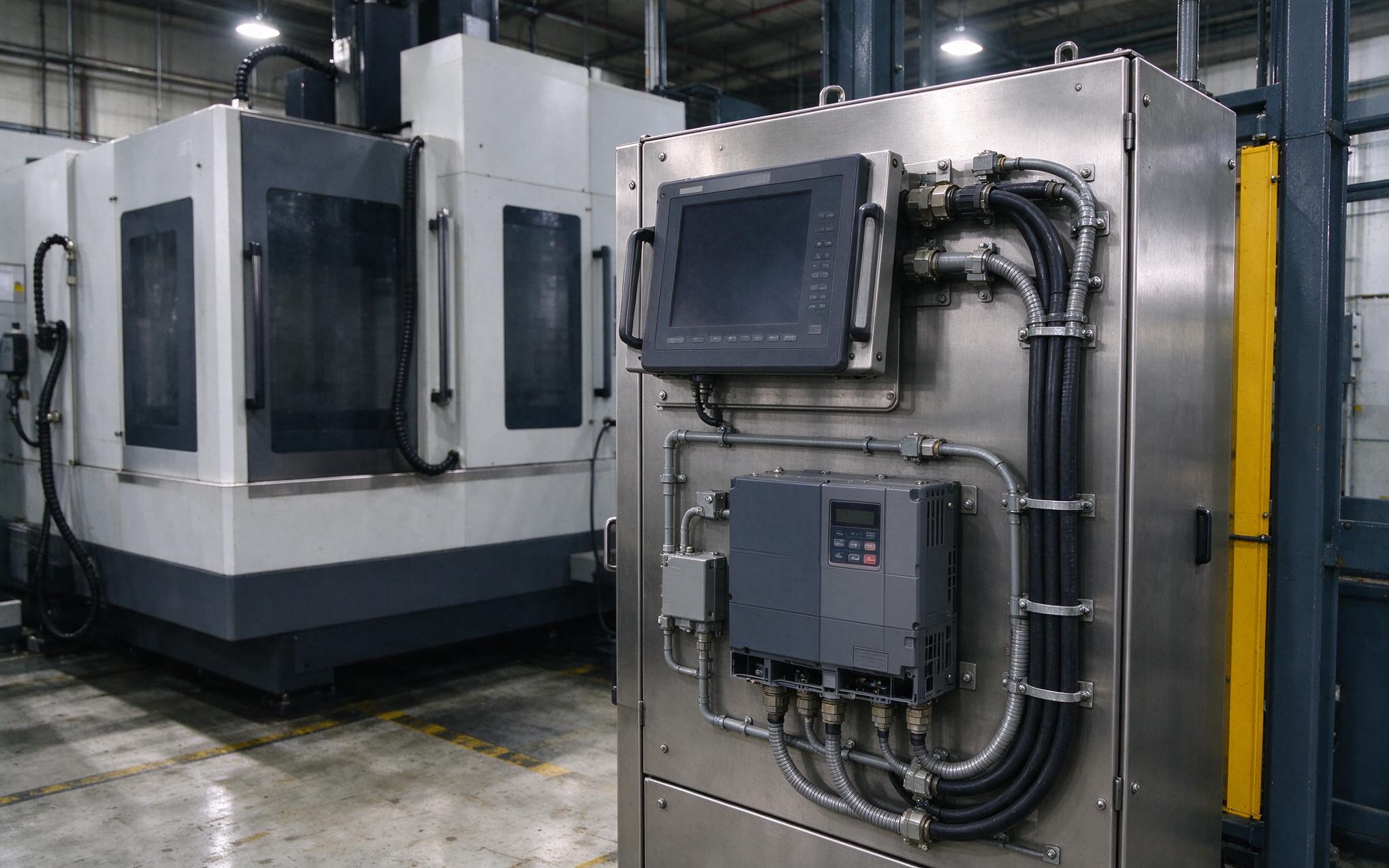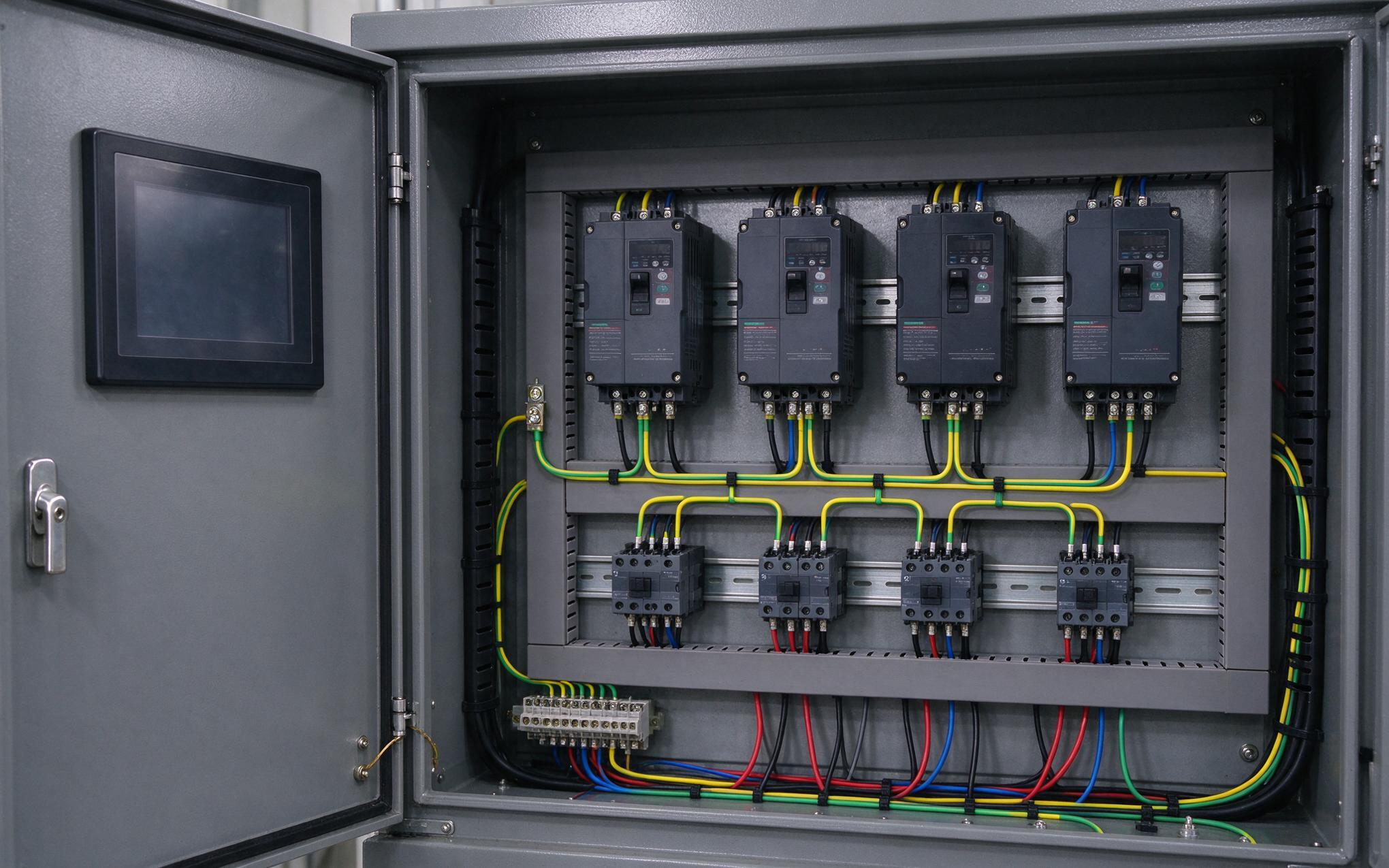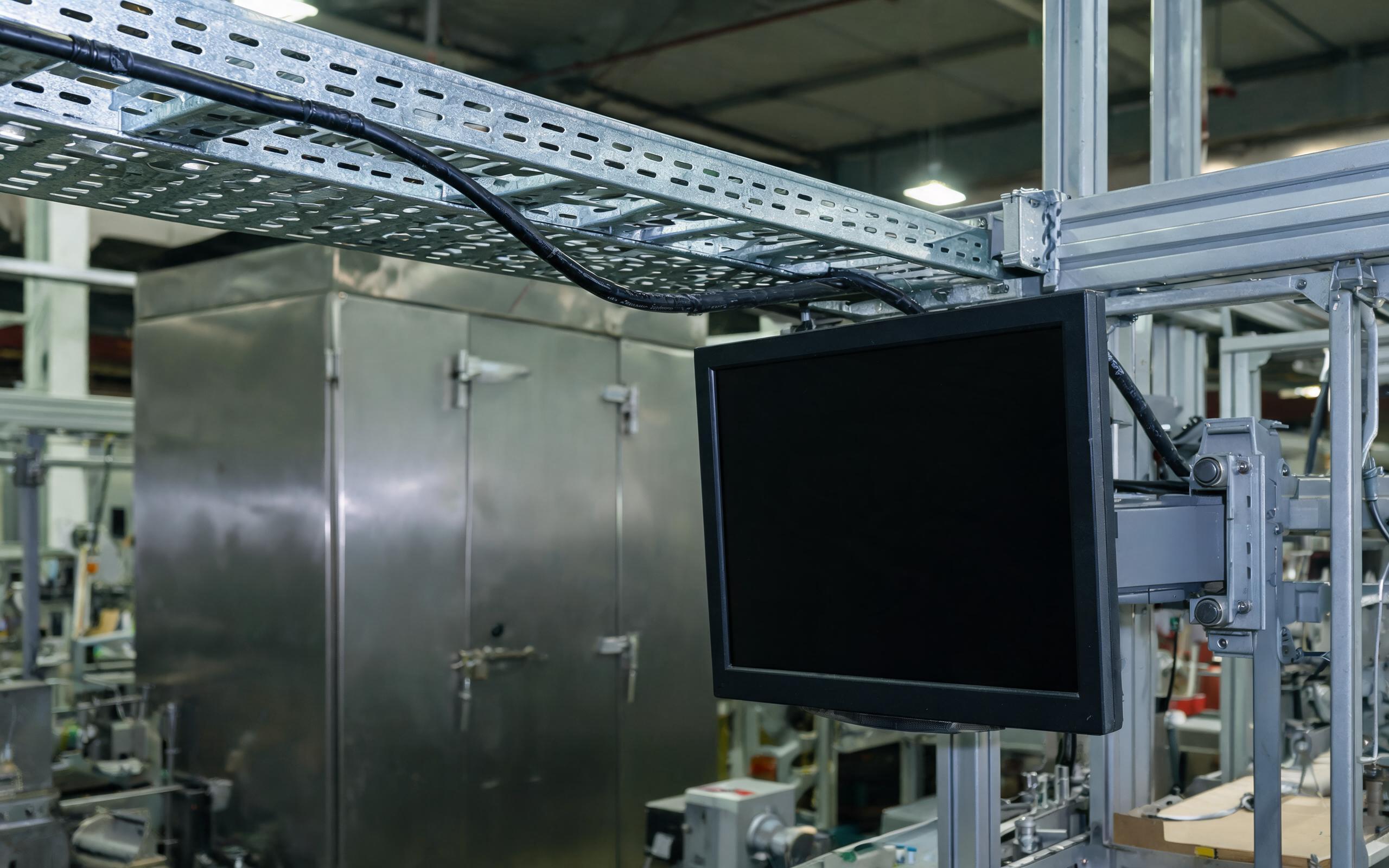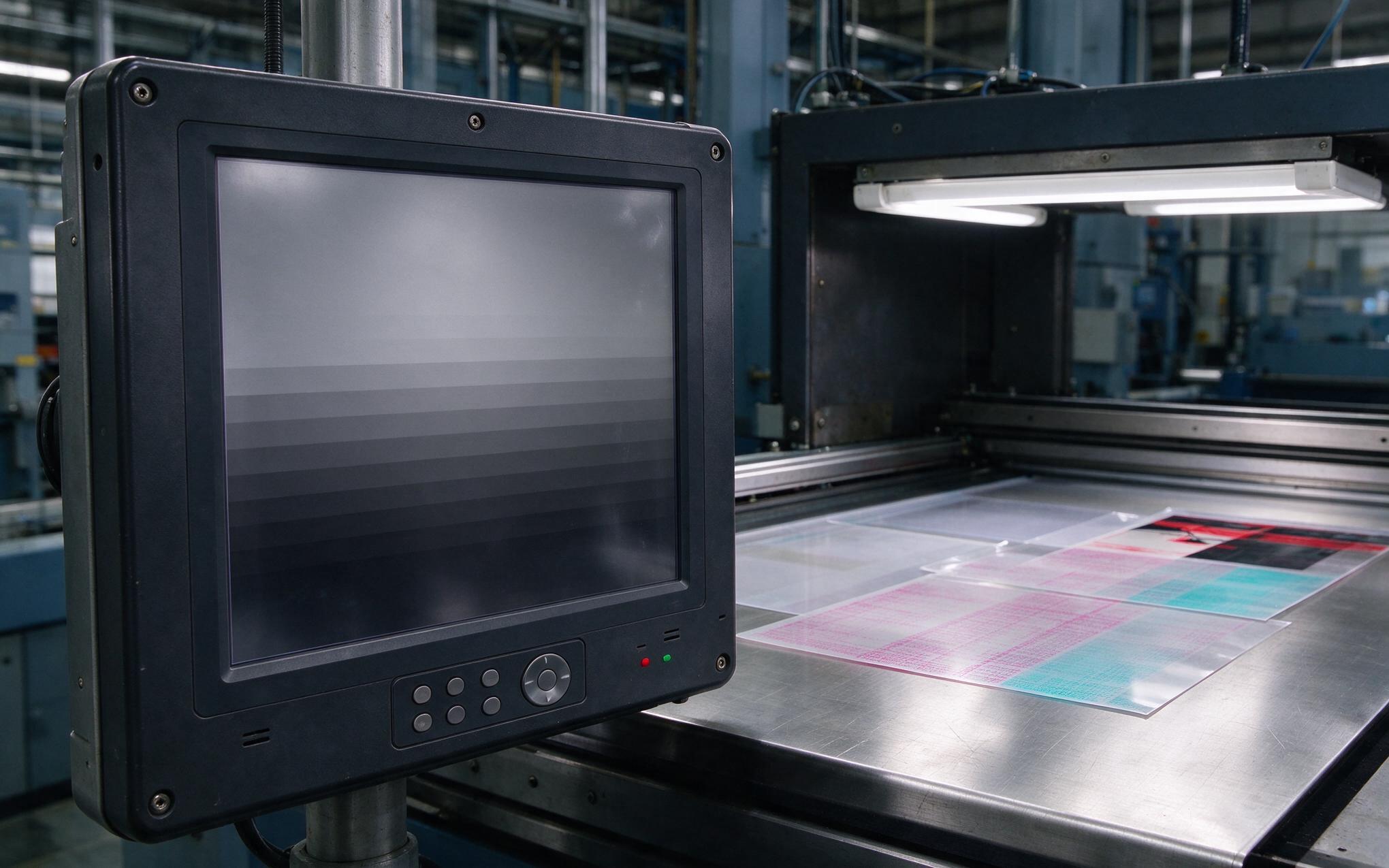
Water beads on the stainless steel surface as the washdown lance sweeps across the bottling line. The spray hits the front bezel of an industrial panel pc ip65 unit at 60 degrees Celsius, and within seconds the same condensation pattern repeats on the adjacent display. By the end of the shift, three of twelve units show moisture behind their front glass. The IP65 rating on each spec sheet promised dust-tight construction and low-pressure water resistance, yet the gasket seams tell a different story once thermal cycling and chemical exposure interact in ways the laboratory test never replicated.

What Does the IEC 60529 IP65 Test Actually Measure?
The IP65 rating is shorthand for two IEC 60529 tests. The digit 6 confirms dust-tightness: the enclosure sits in a sealed chamber with talcum powder for eight hours, and no visible deposit is allowed inside. The digit 5 tests water resistance using a 6.3 mm nozzle delivering 12.5 liters per minute at 30 kPa from 2.5 to 3 meters. The spray covers every angle for three minutes. A pass means no water entered in quantities that could affect circuit operation.
These conditions describe a controlled environment with clean water at ambient temperature. Real factory washdowns involve heated caustic solutions, high-pressure lances exceeding 80 bar, and chemical concentrations that attack gasket materials over time. The standard does not account for thermal cycling, chemical aging, or repeated mechanical compression. A panel PC that passes IP65 on day one may still lose seal integrity after hundreds of duty cycles if gasket material, geometry, and mounting torque are not engineered for the deployment.

Compression Set and Gasket Degradation in Sealed Enclosures
Every sealed enclosure relies on a gasket compressed between the front bezel and the enclosure body. When clamped, the gasket deforms to fill surface irregularities and create a continuous seal. Over time, the material undergoes compression set: it loses elasticity and does not spring back to its original cross-section. The degree depends on temperature, chemical exposure, and initial compression percentage. In a bottling line adjacent to a steam vent, a silicone gasket at 25 percent compression can lose 40 percent of its recovery force within six months.
Manufacturers address this by specifying gaskets with compression set values below 15 percent after 1000 hours at 125 degrees Celsius, tested per ASTM D395. Groove geometry matters too: a groove that is too shallow over-compresses the material, while one that is too deep allows the gasket to shift under vibration. For an industrial panel pc ip65 deployment, groove depth should position the installed gasket at 15 to 20 percent compression, leaving recovery margin for thermal expansion cycles. Data sheets from KOXIAN, for example, specify a 15 to 20 percent compression window for each gasket groove geometry.

Material Selection for IP65 Seal Longevity
Silicone and EPDM are the two most common gasket materials for IP65-rated enclosures, but they serve different thermal and chemical profiles. Silicone operates from minus 60 to plus 200 degrees Celsius and retains flexibility at cryogenic temperatures. EPDM performs from minus 40 to plus 150 degrees Celsius with superior resistance to ozone, steam, and polar solvents such as sodium hydroxide. For food processing washdown zones at 60 to 80 degrees Celsius, EPDM is generally preferred. For outdoor or cold-storage deployments below minus 20 degrees Celsius, silicone maintains seal integrity more reliably.
The choice also affects the industrial panel pc ip65 testing outcome. A silicone gasket that passes a static water jet test may still leak under dynamic thermal cycling because its compression set characteristics differ from EPDM. Test facilities at KOXIAN, for instance, subject each enclosure design to 500 thermal cycles between minus 20 and plus 80 degrees Celsius before certifying IP65 compliance, providing field-relevant data that single-point lab tests cannot replicate.
Compliance with IEC 60529 is a starting point, not a guarantee. Engineers evaluating an industrial panel pc ip65 procurement should request the full test report, verify that test conditions match their deployment scenario, and confirm that gasket material and compression design have been validated for the specific thermal and chemical environment. When the lab report and field conditions align, the IP65 rating becomes a reliable predictor of long-term sealing performance rather than a checkbox on a spec sheet.