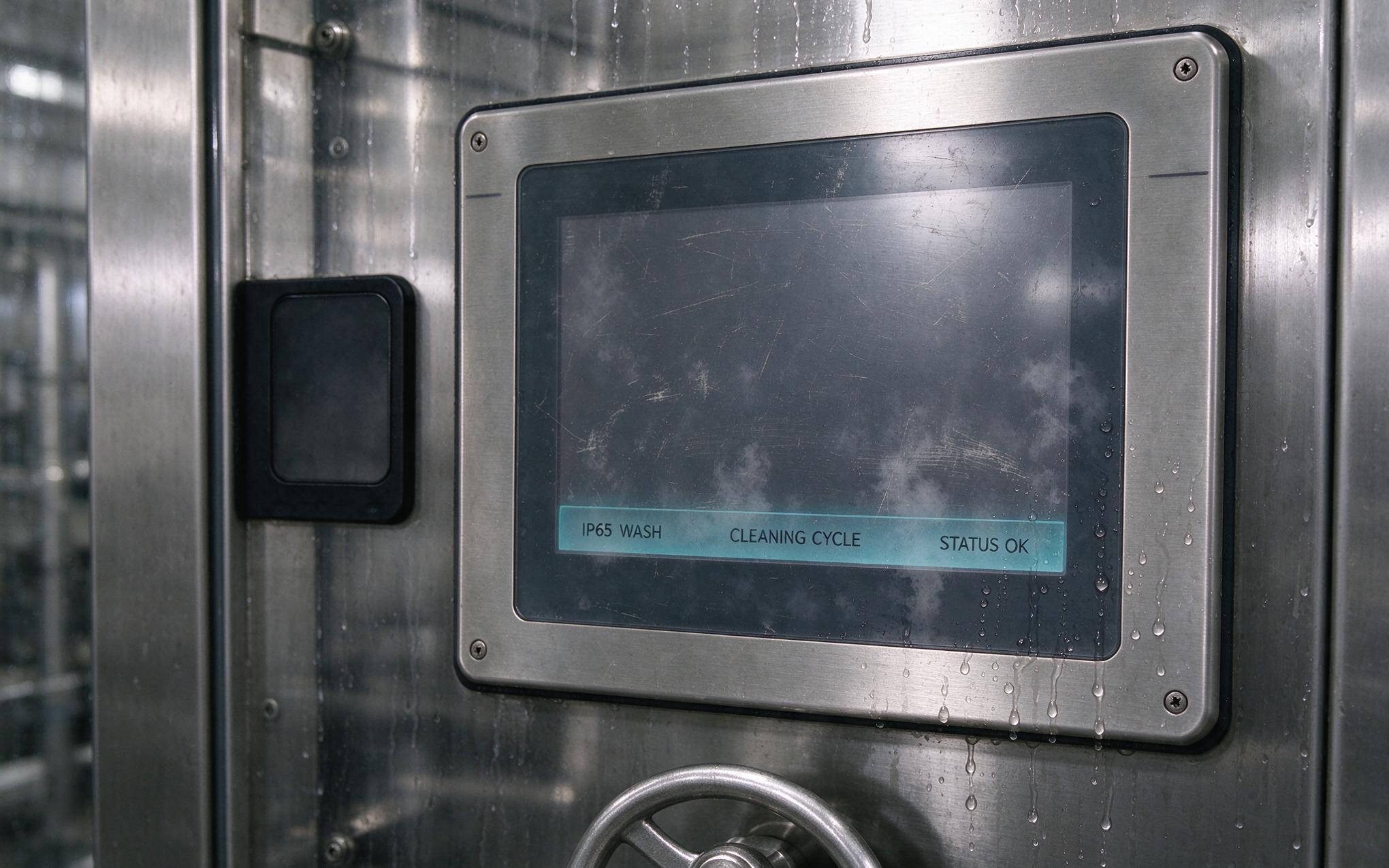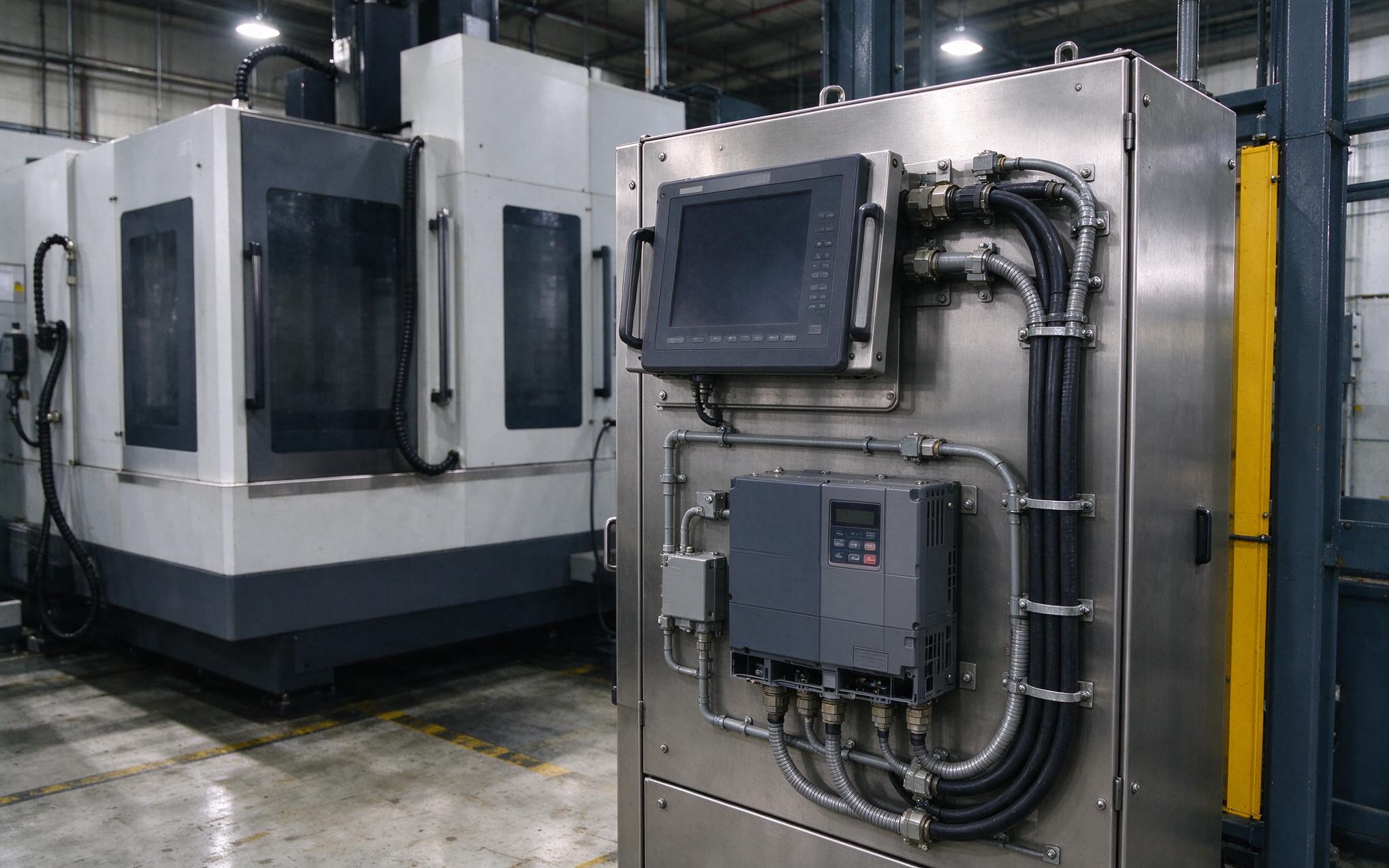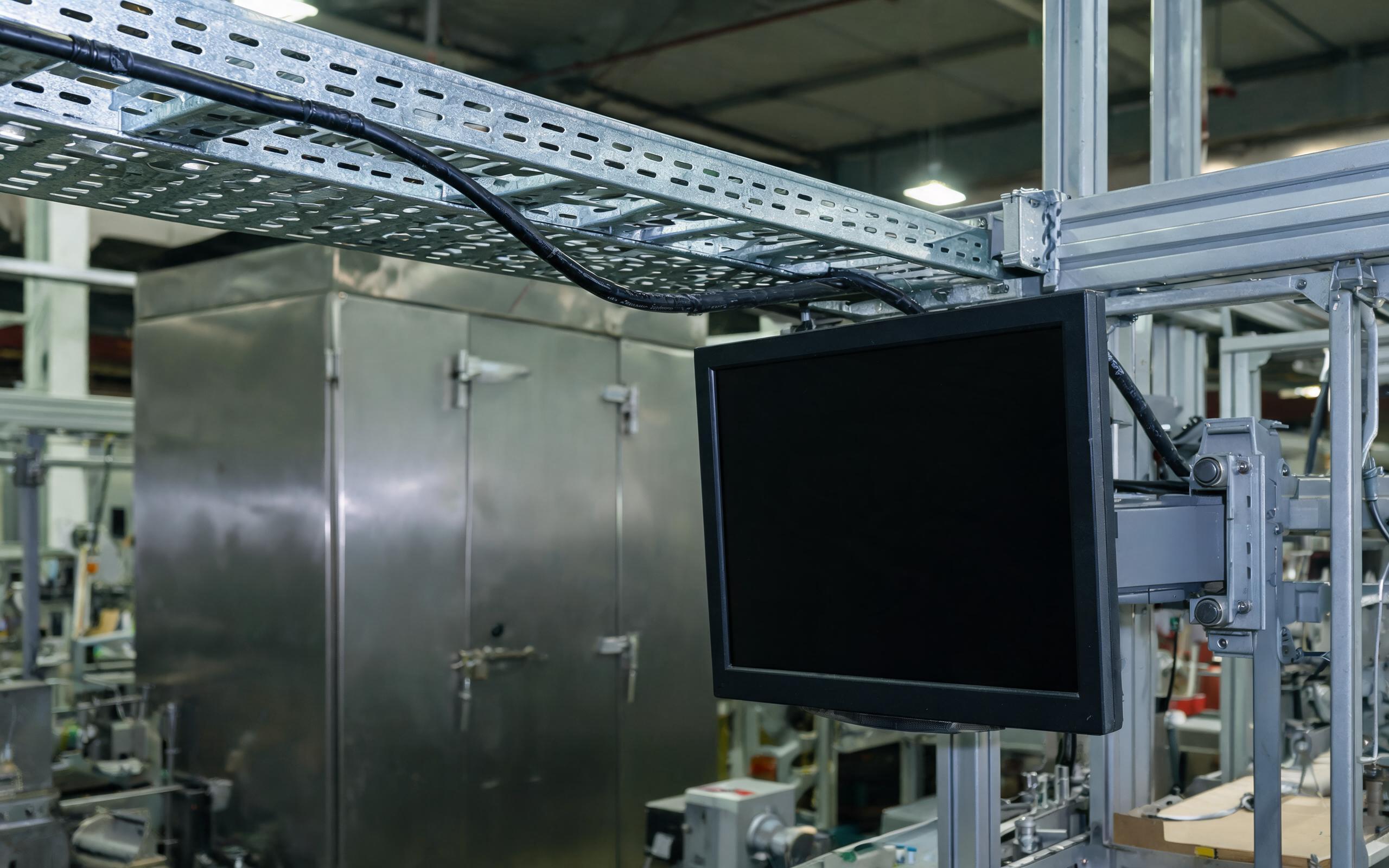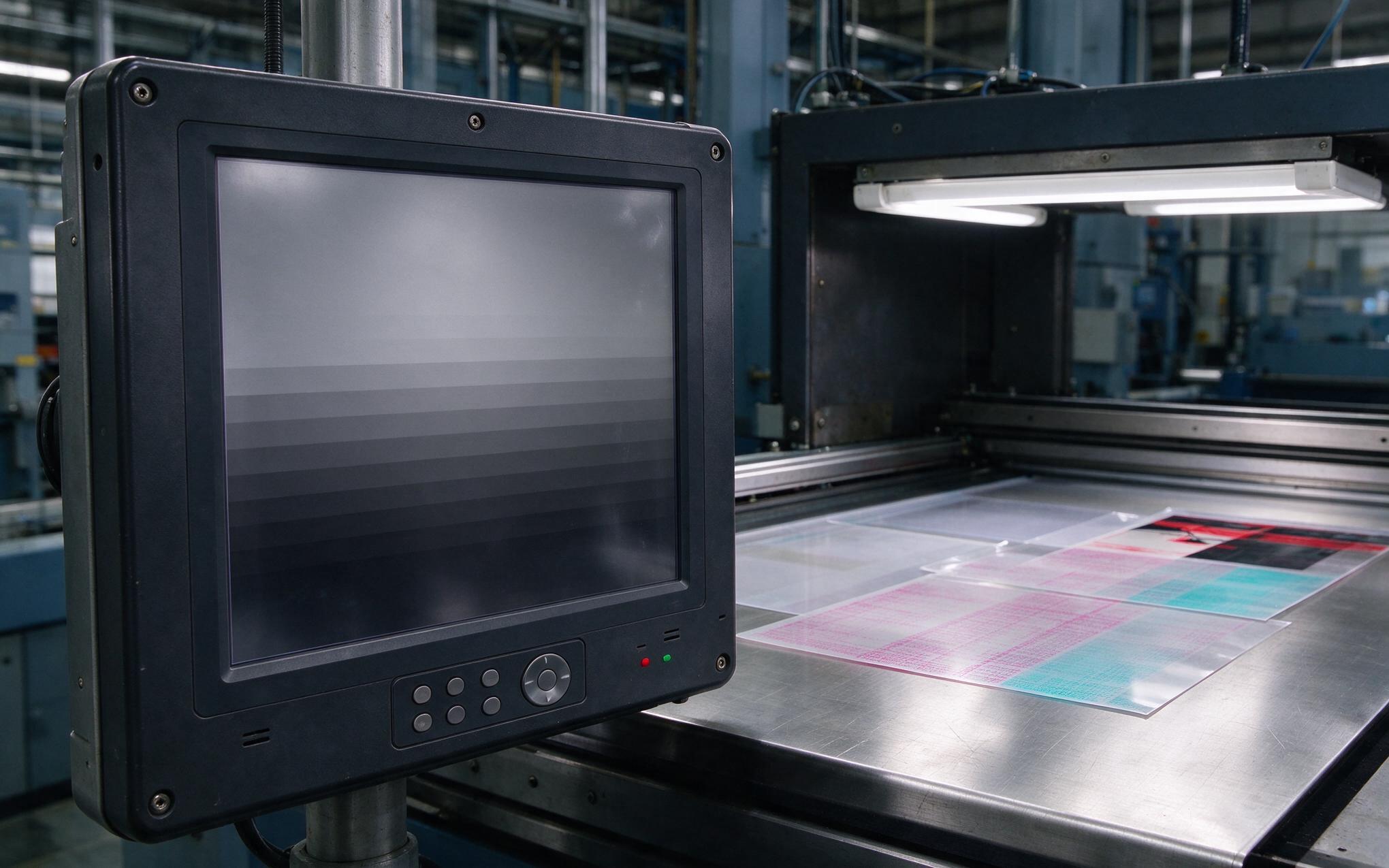
Two identical panel mount units left the same production batch and went into service in the same bottling hall. Eleven months later one reads cleanly under the overhead metal halide bank while the other shows a pale bloom across the lower third of its glass. Neither has an electrical fault and both pass touch calibration. What separated them was the optical bond behind the cover glass, and the failing unit sat two meters from a steam wand. Haze of this kind develops inside the laminate stack rather than on its surface, so cleaning changes nothing, and an industrial touch display that has begun to cloud will keep clouding until the adhesive layer stabilizes or the assembly is replaced.

Distinguishing Surface Film From Industrial Touch Display Bond Haze
Wiping the glass is the diagnostic that settles most of these reports, because surface film from aerosolized lubricant clears with isopropyl alcohol while bond haze does not change at all. Assemblies such as the aluminum framed laminates used in the KOXIAN G1 series place the adhesive between cover glass and polarizer, which means any scatter originating there is sealed behind four millimeters of glass and unreachable by cleaning. Viewing angle provides the second check, since bond haze brightens as the eye moves off axis and surface residue stays roughly constant. A third indicator is geographic: contamination collects wherever hands and spray reach, typically the lower bezel and around the frame, while bond degradation begins at the laminate perimeter and advances inward as a diffuse band. Recording which of these three signatures applies takes under a minute at the machine and determines whether the work order is a cleaning task or an assembly replacement.

Tracing Adhesive Shear Stress Through Thermal Cycles
Cycling drives the mechanism, not elapsed calendar time. Cover glass, optically clear adhesive and the polarizer film each expand at a different rate, and a hall that swings fifteen degrees between night shift and afternoon imposes a shear strain on the adhesive at every transition. The adhesive accommodates this elastically at the outset, then accumulates permanent set, and the perimeter carries the largest displacement because free edges have nothing to constrain them. Microvoids in an industrial touch display nucleate along that boundary and scatter transmitted light, which is why the visual defect nearly always presents as an inward migrating band rather than a central patch. Sealed aluminum framed assemblies of the kind KOXIAN builds constrain the laminate edge mechanically, which slows the onset without removing the mechanism. Steam and washdown accelerate the same process by raising local temperature quickly, so a unit exposed to intermittent hot vapor accumulates far more damage per shift than an identical assembly in a stable rack room. Any industrial touch display specified for a wet process area therefore deserves a cycling assessment based on its position relative to heat sources, since two installations in one building can differ by an order of magnitude in effective duty.

Quantifying Clarity Loss With Repeatable Field Readings
Subjective complaints resist trending, which is the practical argument for a measured baseline. A handheld haze meter referenced to ASTM D1003 reports diffuse against total transmittance and gives a number that survives a change of operator, whereas words like cloudy do not. Commissioning readings taken on every unit establish the comparison set, and an annual repeat against the same three positions on the glass converts a vague deterioration into a slope. Fresh industrial touch display laminates typically sit below one percent, operators begin remarking near two to three percent, and legibility under bright ambient light becomes genuinely marginal past five. Field practice on installations built around KOXIAN industrial monitors shows the value of logging ambient temperature and washdown frequency alongside each haze reading, because the two together predict which units reach the threshold next season. Ranking a fleet by measured slope rather than installation date lets a maintenance group replace the three assemblies that will fail legibility this year instead of rotating stock by age.
Bond haze is a mechanical outcome with an optical symptom, and it responds to placement far more than to purchase specification. Distinguishing industrial touch display film from bond scatter prevents wasted cleaning labor, mapping each unit against nearby heat and vapor sources explains why nominally identical hardware ages at different rates, and a haze reading logged at commissioning turns a subjective grievance into a maintenance interval. Plants that record these three things replace laminates on a schedule they control rather than during the shift when an operator finally misreads a setpoint.